
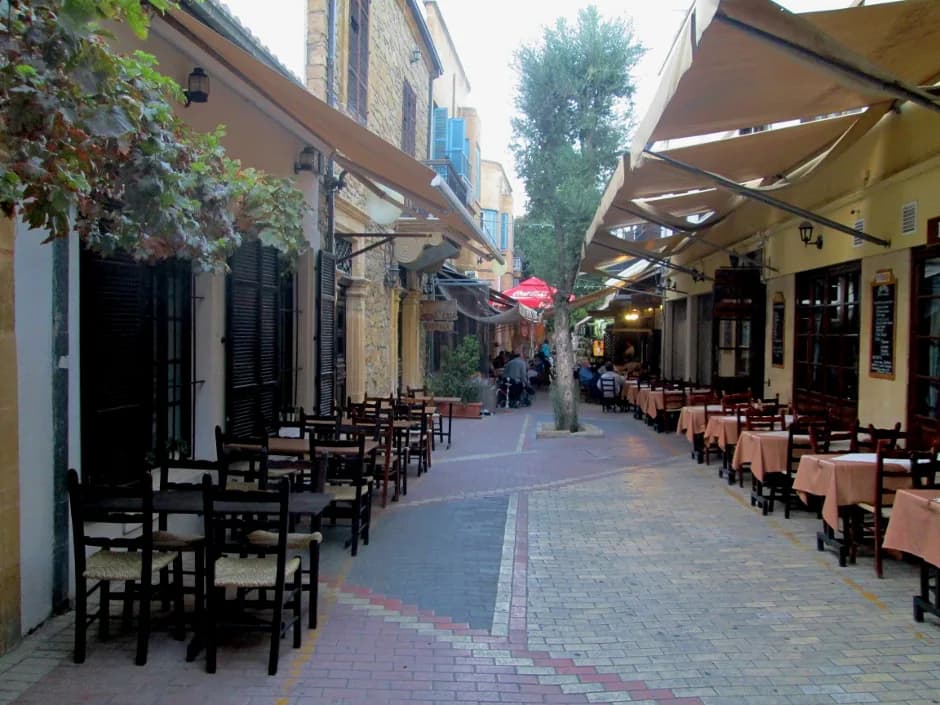
Laiki Geitonia: Nicosia's Traditional Quarter Inside the Walls

Laiki Geitonia is a small pedestrian quarter inside the walled city of Nicosia, and an hour is enough to walk it slowly. Its draw is the architecture: restored 18th-century townhouses in the traditional Cypriot urban style, now used as residences, shops, tavernas and craft centres. This guide covers where the quarter sits, how to reach it on foot from Plateia Eleftherias, how long to allow, who it suits, and how it differs from the separate Laiki Geitonia in Larnaca.
What Laiki Geitonia is
Laiki Geitonia is a pedestrian neighbourhood within the walls of Nicosia, also written Lefkosia. The name means something close to "popular neighbourhood", and the area works as a compact showcase of traditional town building rather than a museum with a turnstile. There is no single monument to tick off; you come for the streetscape itself.
Because it is pedestrian, the quarter is best treated as a short loop folded into a wider walk around the old city. Pair it with the streets around Plateia Eleftherias rather than making it a standalone outing. If you are building a day in the city, our guide to things to do in Nicosia helps you slot it in alongside the larger sights.
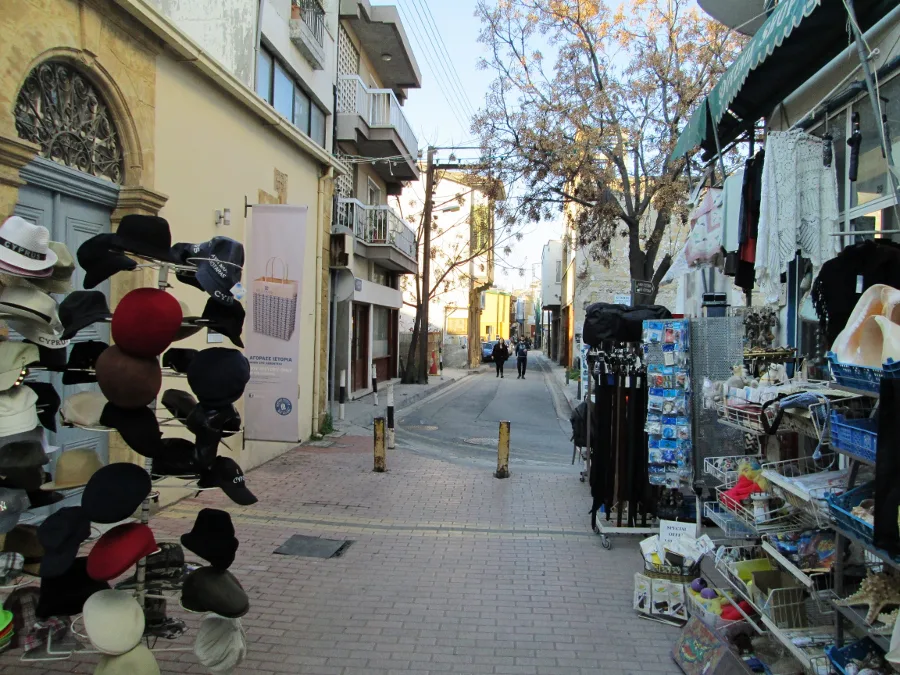

Where it sits: 200 m east of Plateia Eleftherias
The quarter lies 200 m east of Plateia Eleftherias, the main square just inside the old city near the municipal centre. That short distance makes it an easy add-on to any stop at the square, whether you arrive on foot from the modern city or from the Green Line crossings. Use the square as your anchor point and walk east; the pedestrian lanes take over quickly.
For orientation across the wider city, the Nicosia Neighborhoods: 5 Area Guides page sets out how the walled centre relates to districts such as Engomi, Nicosia and Strovolos, Nicosia out in the newer city. That context matters if you are deciding where to base yourself for a short break.
The buildings: restored 18th-century urban architecture
The houses here date from the 18th century and show traditional Cypriot town architecture at close range: thick walls, shaded courtyards and modest street frontages. Restoration has turned many of them into residences, shops, tavernas and craft centres, so the quarter is lived-in rather than preserved behind glass. Look up at the upper storeys and into open doorways; the interest is in the detail, not a headline sight.
Treat the architecture as the reason to come and you will get more out of it. Visitors expecting a large archaeological site or a reconstructed village will find the scale small and the signage modest. Those who enjoy old-town fabric, carved doors and shaded lanes will find an hour here well spent.
What is in the quarter now: tavernas, shops and craft centres
The restored buildings now house a mix of uses: tavernas for a sit-down meal, small shops, and craft centres where traditional work is sold or demonstrated. Opening hours and menus vary from unit to unit, so check at the door rather than relying on a fixed timetable. Because the quarter doubles as a residential area, some lanes are quiet in the middle of the day and busier in the evening.
Shopping here leans towards crafts and small souvenirs rather than big-name retail, and that is part of its appeal. Budget time to browse rather than to buy. If you want a wider spread of city sights and eating options, the main Nicosia guide covers the rest of the centre.
How long it needs and how to walk it from Plateia Eleftherias
Allow around 45 minutes to an hour for the quarter itself, plus whatever time you spend in a taverna or shop. Start at Plateia Eleftherias, walk the 200 m east into the pedestrian lanes, and loop back through the adjoining old-town streets. The distance is short enough to repeat later in the day if you want evening atmosphere as well.
Wear shoes that cope with uneven paving and steps, since the lanes are old and not all level. In summer, walk it in the morning or late afternoon when the heat is less punishing. The compact scale makes it a sensible addition to a day that also includes the city's larger sights.
Who it suits and who should skip it
Laiki Geitonia suits travellers who like old-town architecture, small craft shops and a leisurely taverna stop. It is an easy fit for a short break in Nicosia and for anyone already visiting Plateia Eleftherias. It is less suited to those who want a headline monument, a big museum or a full day out from a single address.
If your priority is the wider old city, treat this as one stop rather than the whole plan. It works well combined with the areas around the city centre, including Kaimakli and Aglantzia, Nicosia, which offer a different feel from the walled core.
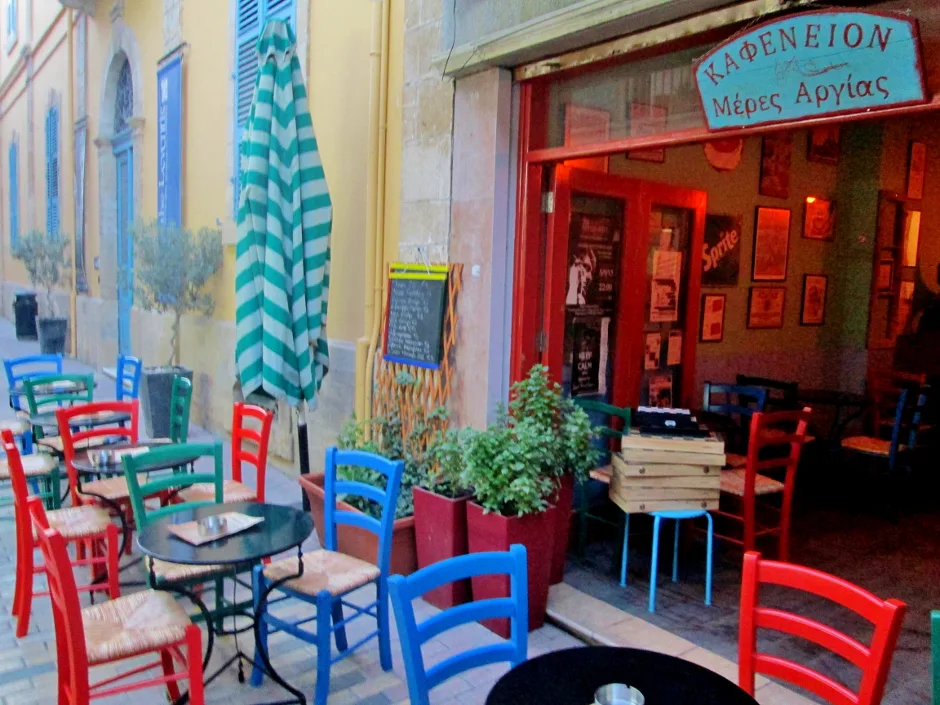

Safety at night and evening crowds
The quarter is pedestrian throughout, and its tavernas and shops make it a natural evening stop. As with any old-town area, keep to the lit streets after dark and use your usual city sense; there is no reason to treat Laiki Geitonia differently from the rest of central Nicosia. The quarter is small and close to Plateia Eleftherias, so you are never far from the main square.
Laiki Geitonia versus Larnaca's quarter of the same name
Nicosia is not the only Cypriot city with a quarter called Laiki Geitonia. Larnaca has its own, between Dionysos and Kosma Lysioti streets, developed in the late 1980s to represent a traditional town quarter of the early 20th century. That Larnaca version is known for its entertainment venues, food, drink and live music, and is one of the town's main nightlife areas.
The distinction matters when you are planning a route: Nicosia's quarter is an architectural enclave inside the walls, while Larnaca's is a purpose-built recreation with a stronger evening focus. If you are heading to Larnaca, check the Larnaca listings before you go; if you are in Nicosia, the quarter here is the one within walking distance of Plateia Eleftherias.
Is Laiki Geitonia worth an hour of your Nicosia day?
Yes, if you want a compact dose of traditional Cypriot town architecture within easy reach of Plateia Eleftherias. Give it an hour, walk it slowly, and plan a taverna stop rather than treating it as a sight to tick off. Skip it if your day is already full of major monuments; it is a pleasant extra, not the main event.
If you are staying outside the walls, the Strovolos, Nicosia and Engomi, Nicosia guides help you judge the trip into the centre. Keep an eye on shop and taverna hours as you go, since they vary by business and season.
Explore more Nicosia guides
Frequently Asked Questions
Which part of Cyprus is Nicosia in?
Nicosia is inland, in the centre of the island, and is the capital of the Republic of Cyprus. Its historic core lies inside the Venetian walls, and the city is divided by the Green Line, with crossing points for pedestrians.
What time zone is Nicosia in?
Nicosia uses Eastern European Time, the same as the rest of the Republic of Cyprus, and observes daylight saving in summer.