Troodos Mountains: Villages, Painted Churches and How to Plan a Day
Plan a day in the Troodos Mountains: group villages by area, see the painted churches and Kykkos, and check driving times from the coast and mountain buses.
On this page
The Troodos Mountains are best treated as a region rather than a destination: pick one entry point from Limassol, Paphos, Larnaca or Nicosia, then group two or three villages or sites within a single area instead of driving across the range twice. The reward is the island's highest ground, pine forest, frescoed churches and monastery sites that sit a world away from the coast. This guide sets out the five areas of Troodos National Park, the villages and monuments that suit each, how to drive or reach them by bus, and how altitude changes the day.
Allow one full day for two nearby villages, or one village plus a short forest walk, and treat any longer list as a second trip. Mountain roads are winding, village streets are narrow, and every stop takes longer than the map suggests.
Troodos Square and Mount Olympus: the high ground
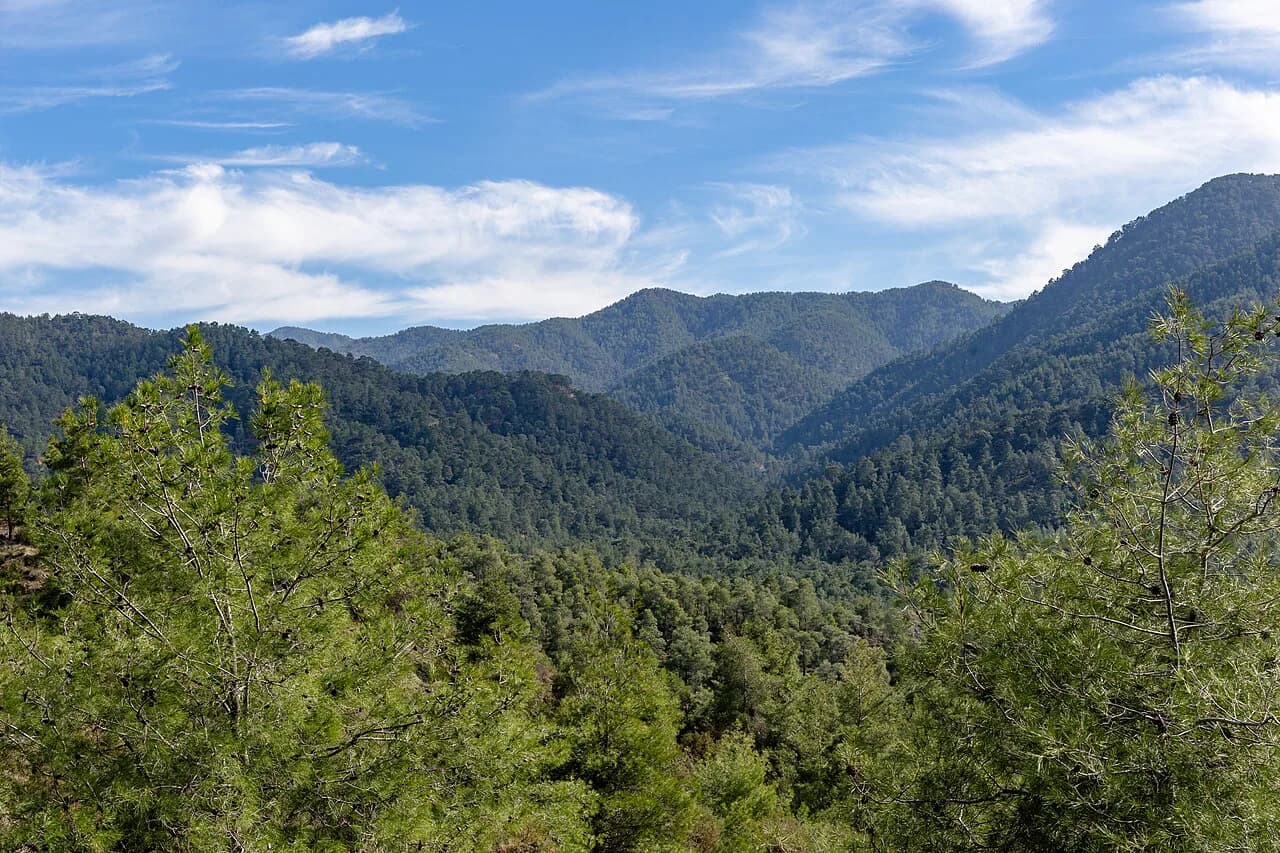
Troodos Square is the natural first stop for most visitors: a mountain resort settlement at the foot of Mount Olympus, the island's highest peak, with parking, cafés and the start of several forest walks. It sits high enough that the air is noticeably cooler than the coast even in midsummer, which is the main reason to come in July and August.
Mount Olympus rises to 1,952 metres, and the resort village below it is the usual starting point for seeing the summit area. The pleasure is the approach, the views and the forest on the slopes, and the Mount Olympus (Chionistra) guide covers the peak itself.
The altitude is the practical point. From Nicosia the drive is roughly 67 km and about an hour and a quarter by car, while Limassol is around 45 km and an hour; Larnaca Airport sits about 94 km away, roughly an hour and three quarters. Those figures assume clear roads and no long stops, so build in slack for village traffic and photo stops.
The five areas of Troodos National Park
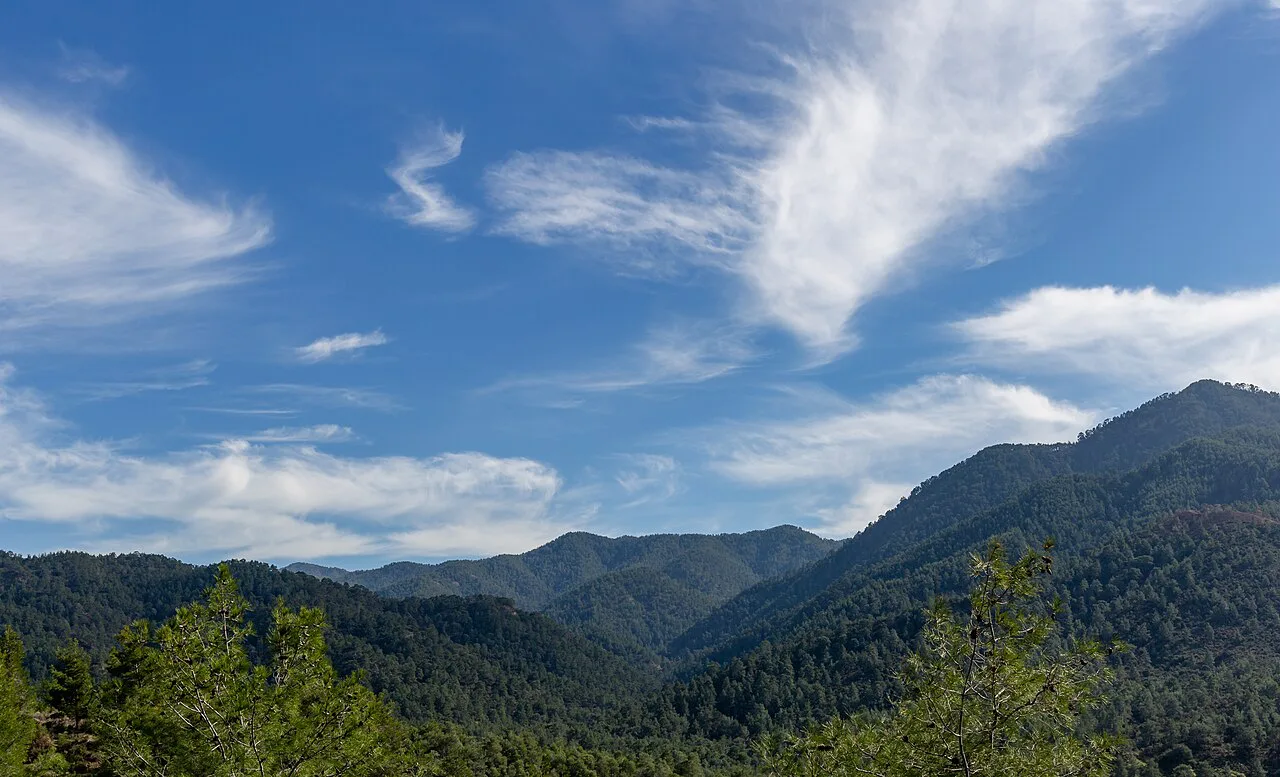
Troodos National Park is divided into five areas: Troodos village itself, Marathasa to the northwest, Solea towards the northeast, Pitsilia in the east and Machairas further east again. Each suits a different kind of day, so choosing an area first is quicker than choosing individual sights.
Troodos village and its surroundings suit a first visit with forest walks and the square as a base; Marathasa suits monastery and village lovers; Solea suits old-town strolls; Pitsilia and Machairas suit wine-country villages and quieter monasteries. If your time is short, the sensible move is to target the area closest to the coast you are staying on rather than crossing the range.
A map is worth more here than a list. Grouping places by area on paper before you leave avoids the common mistake of treating everything labelled Troodos as one compact stop.
Marathasa: Kykkos Monastery and Pedoulas
Marathasa, northwest of the park, holds Kykkos Monastery, the wealthiest and most famous monastery on the island, with lavish interiors that draw tour groups and pilgrims alike. It is an active monastic site, so dress modestly and keep voices low; photography rules are posted on site.
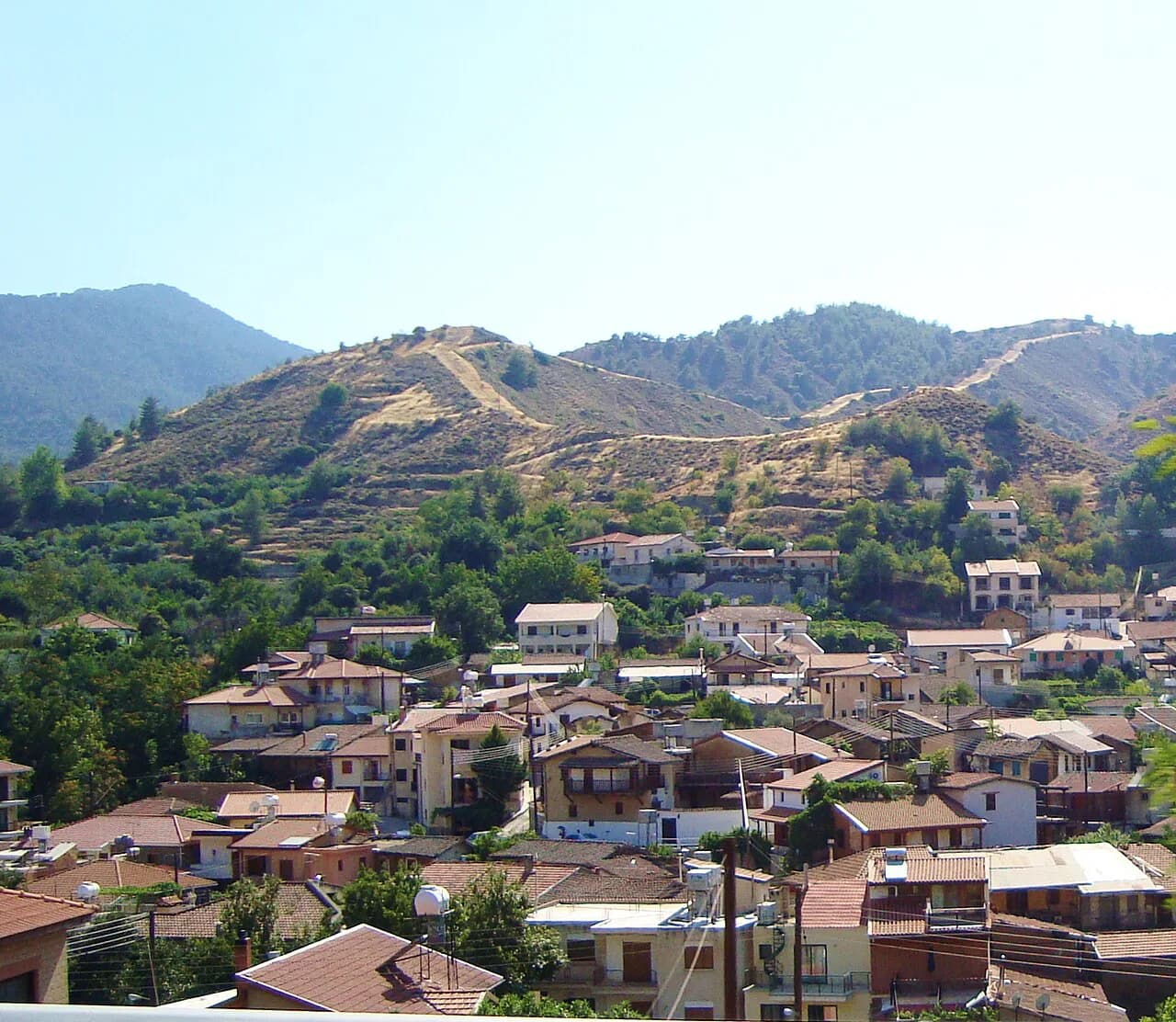
Nearby Pedoulas is a mountain village worth an hour for its lanes, its cool air and its church of Archangel Michael, built and frescoed in 1474. Pairing Kykkos with Pedoulas makes a coherent half-day rather than a dash between distant points.
The road up to Kykkos climbs through forest and takes longer than the distance suggests; drivers should expect tight bends and slow traffic in village centres. If you are heading this way from the Paphos side, the Makarios tomb on Throni Hill sits close to the monastery route and adds little extra driving.
Solea and the northwest: Kakopetria and Kalopanayiotis
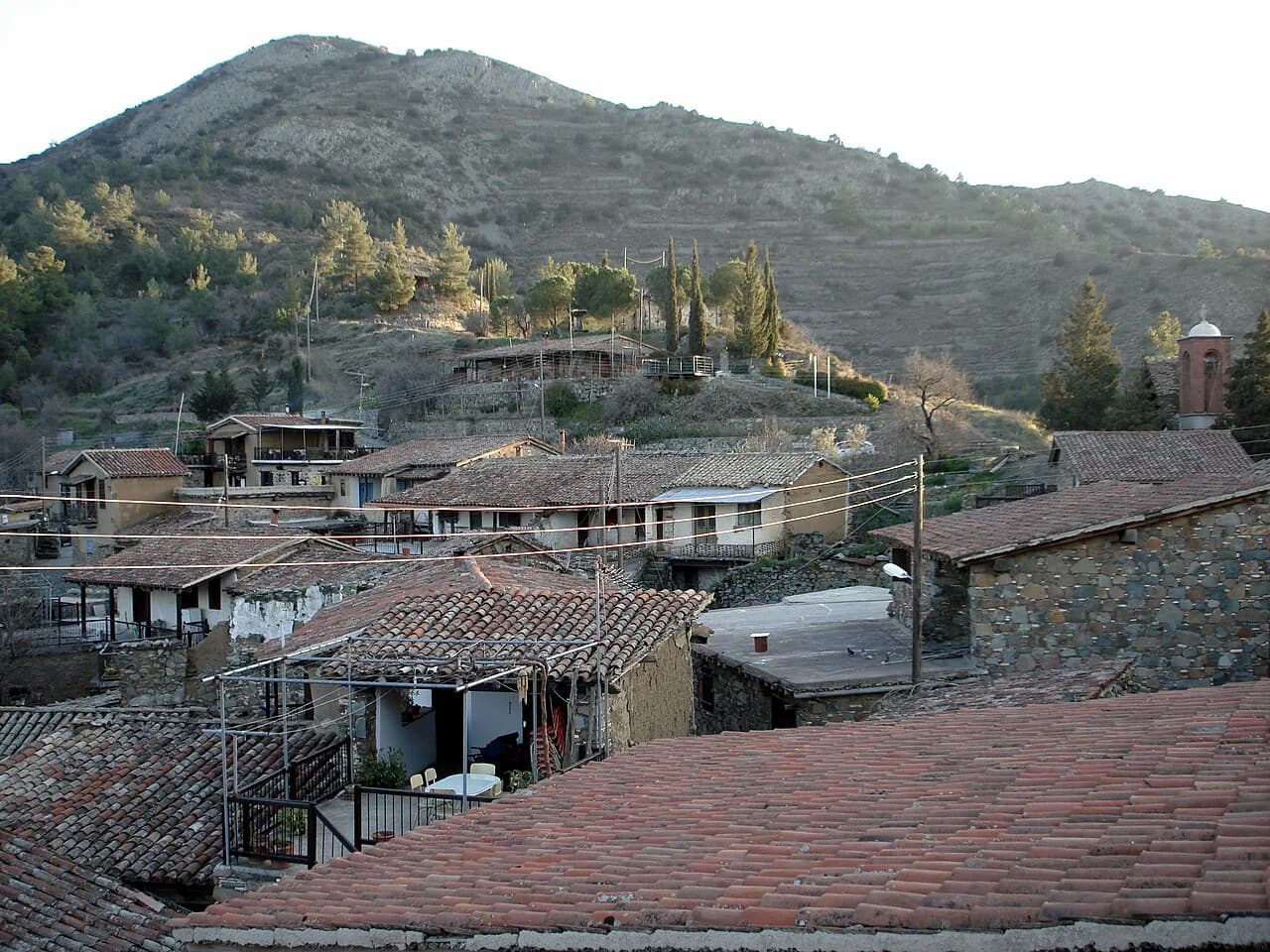
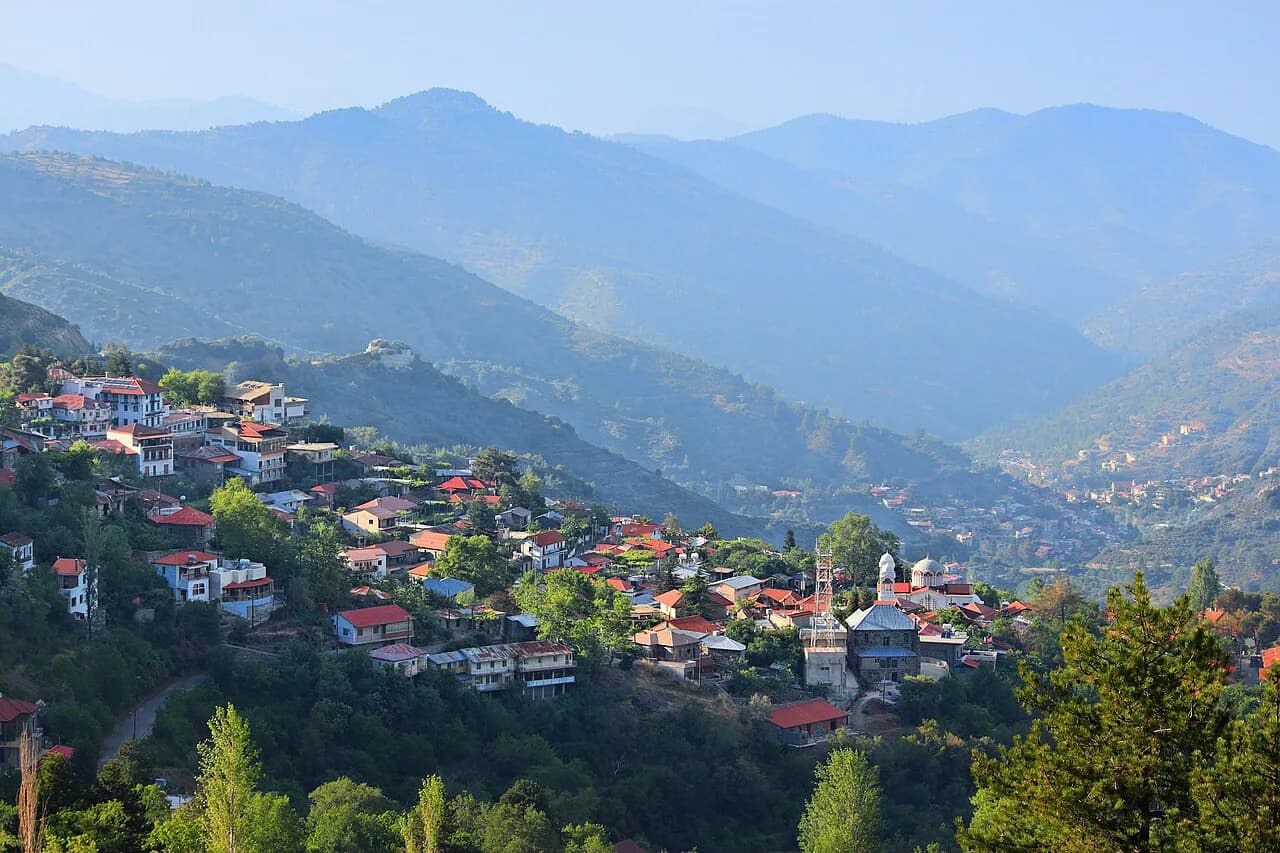
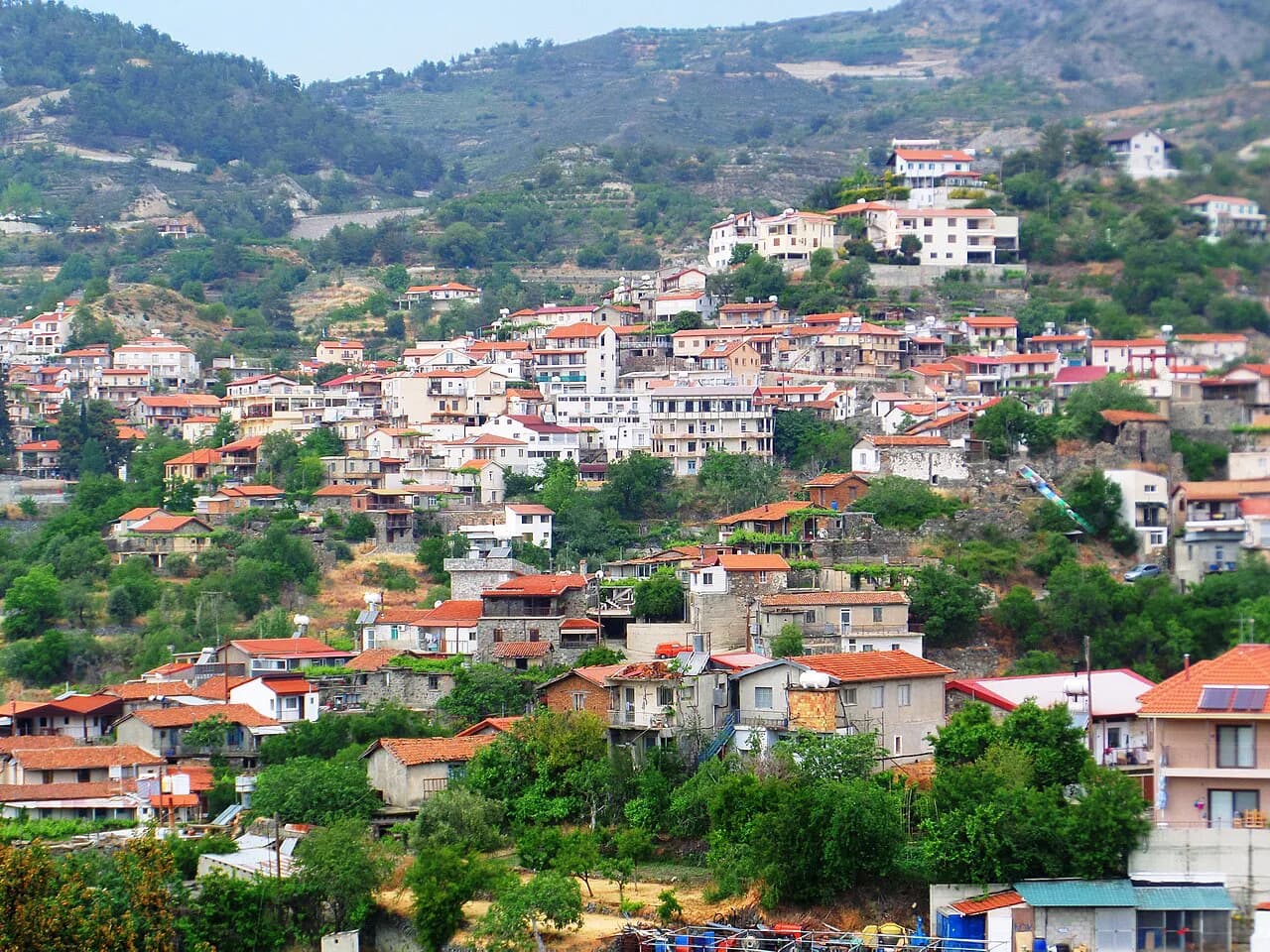
Solea, towards the northeast of the park, is where you go for old stone streets rather than mountain views alone. Kakopetria has a compact old quarter of narrow lanes and stepped alleys that rewards a slow hour on foot, and it is one of the easiest Troodos villages to reach from Nicosia.
Kalopanayiotis, in the same part of the mountains, holds the monastery of Agios Ioannis Lampadistis, a complex of churches with extensive frescoes and, in some seasons, a custodian and small religious shop on site. It is a working religious site, so opening depends on services and restoration work rather than a fixed tourist timetable.
Panagia tou Moutoulla at Moutoullas, with its distinctive wooden roof and 15th-century frescoes, is a short drive away and suits the same day. Park in the designated area and walk in: village lanes are steep and not built for cars.
The painted churches: scattered places of worship
The Troodos painted churches are a UNESCO-listed group of Byzantine and post-Byzantine monuments scattered across villages, not a single museum with one ticket and one entrance. That matters for planning: you visit them one by one, and each has its own access arrangement and caretaker.
For a single day, pick a cluster rather than a route across the range. Panagia tou Arakou at Lagoudera, with 11th-century iconography, and the churches around Pedoulas and Moutoullas sit within reasonable driving distance of each other, so one loop covers several interiors without doubling back.
These are active churches. Modest clothing is expected, silence is required, and flash photography is banned because light fades the frescoes; where a church is locked, the local kafeneion or taverna often holds the key, to be returned after your visit. Accept that a particular interior can be closed for a service or restoration and have a village walk ready as the fallback.
Pitsilia and Machairas: wine villages and quieter monasteries
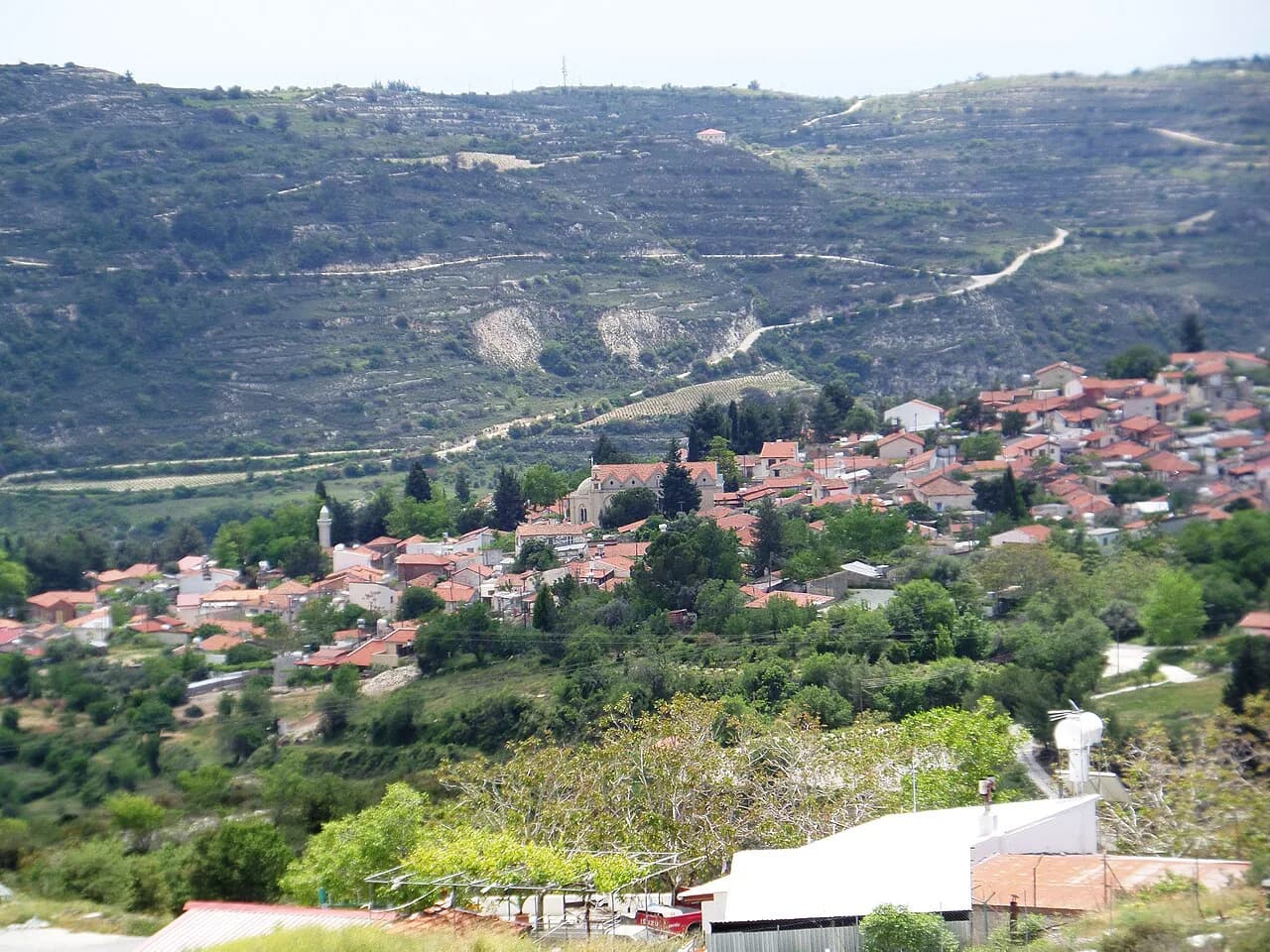
Pitsilia, in the east of the park, is the wine-growing side of the mountains, and Omodos is its best-known village, with a stone-paved centre and craft shops. It works well as a half-day combined with a drive through the surrounding vineyards rather than as a stop of twenty minutes.
Further east, Machairas Monastery is a substantial site in its own right, and the neighbouring village of Fikardou preserves traditional stone architecture. Both reward a slower pace, and both sit far enough east that combining them with Kykkos in one day would mean hours in the car.
Lefkara is the other name worth knowing in this part of the mountains, known for lace and silverwork, and it pairs naturally with a Pitsilia loop for anyone coming up from Larnaca or Limassol.
Platres, forest walks and the foothills
Platres, on the southern side below Mount Olympus, is the classic forest base: cool, wooded and within easy reach of waymarked nature trails. It suits travellers who want a walk in the pines rather than another village street, and it is the most straightforward Troodos stop from Limassol.
The south-facing foothills below the range are vineyard and woodland country, with marked trails of varying length and climb; the word circular describes the shape of a route, not its ease. Read the current trail description, note the exact start point, and carry water even at altitude, where UV exposure stays high.
The national park holds around 750 species of plants, birds and animals, including the rare Bonelli's eagle and wild sheep on the slopes. Binoculars earn their place here more than a checklist of villages does.
Driving to the Troodos Mountains
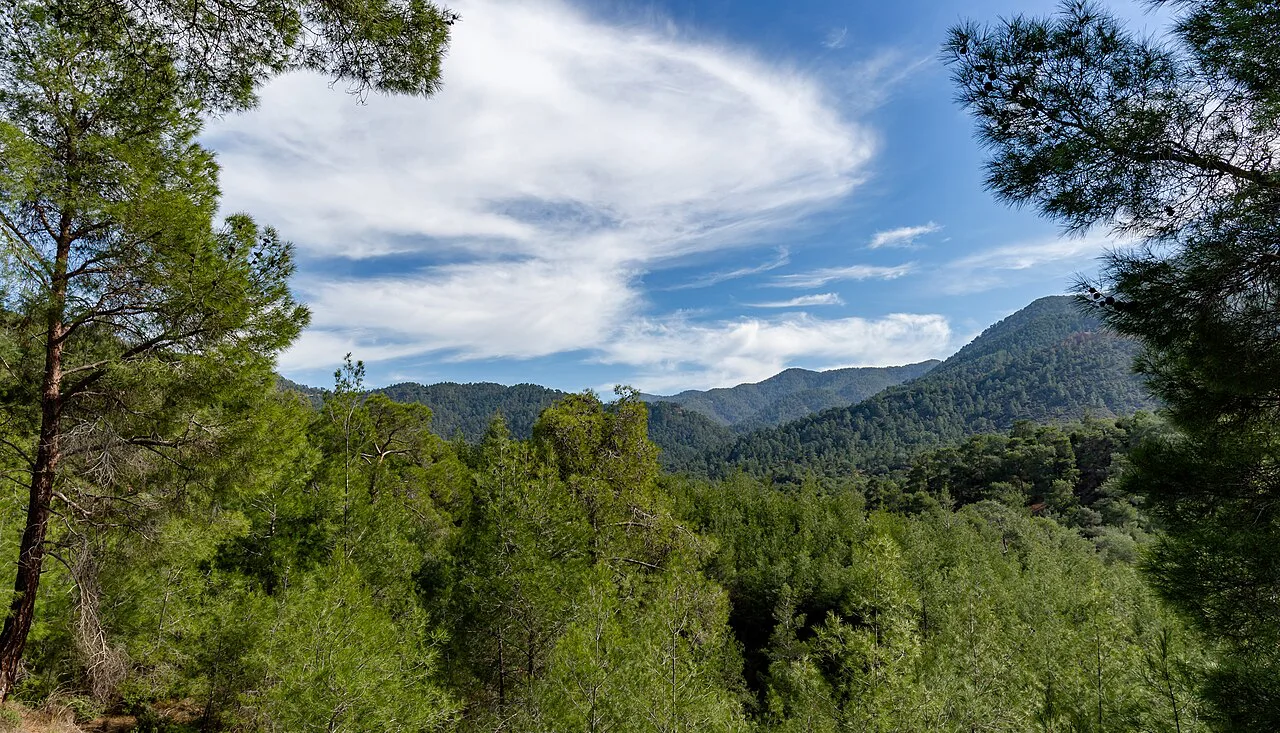
Driving is the practical way to see the mountains properly. Cyprus drives on the left, the main approach roads are well maintained, and the difficulties are narrow, winding sections and tight village centres rather than the surface; do not overtake without a clear view and give way generously on bends.
Approximate driving times are an hour and a quarter from Nicosia, an hour from Limassol, about an hour and a half from Paphos and around an hour and three quarters from Larnaca Airport, all via the B8 or B9 corridors and their connecting motorways. Add time for stops, slow lorries and village traffic, particularly on weekends.
Once in a village, find the designated car park first and walk in; sat-nav will happily send you down alleys that are steep, stepped or simply too narrow. Fuel up before you climb, since filling stations thin out above the foothills, and note that mountain roads climb steadily, which affects older hire cars.
Buses and organised tours
Public transport to the mountains is limited and shapes the day rather than serving it. An intercity service runs from Nicosia's Makario Stadium bus station to Troodos Square, roughly twice daily and taking about an hour and twenty-five minutes, with fares in the region of a few euros; rural village buses exist but run infrequently.
If you rely on buses, plan the whole day around the return departure rather than the outward one, because missing the last service leaves you with an expensive taxi. Organised tours solve the logistics and the driving but trade away flexibility: compare the length of stops and what is included before booking.
Taxis between villages should be arranged in advance and priced with waiting time included, since you will not hail one on a mountain road.
Summer and winter at altitude
Altitude is the reason to come in summer and the reason to prepare in winter. Typical summer averages on the mountains sit around 24°C against coastal highs of 30 to 38°C, so the same day feels entirely different up here, though sun protection and water remain essential.
Winter is genuinely cold by Cypriot standards, with January averages near 3°C, and snow falls on the higher slopes, which is when the island's small ski area comes into its own. Roads can be affected by ice and snow at that time, so check conditions before setting out rather than assuming a coastal forecast applies.
Autumn brings clear, comfortable walking weather in the mid-teens to low twenties, and spring is mild too; both are better for village wandering than high summer, when the coast is hot but the mountains are busy at weekends.
How long to allow and where to base yourself
One day covers two nearby villages, or one village plus a short forest walk, and no more. Trying to add Kykkos, Omodos and Troodos Square to a single outing from Paphos means most of the day in the car and little time on the ground.
For a longer stay, base yourself on one side of the range: Platres or Troodos village for forest and summit access, Kakopetria or Kalopanayiotis for Solea and Marathasa, Omodos for Pitsilia. Staying up in the mountains rather than driving up from the coast each day is what turns a rushed visit into a relaxed one.
The Troodos Geopark explains the geology that shaped all of this, and the Trooditissa monastery is another mountain site worth slotting into a Solea day if time allows.
Practicalities for a mountain day
Carry more water than you think you need, wear closed-toe footwear for trails and village steps, and take a light layer even in summer because the wind at altitude is cool. Mobile reception is patchy in valleys and gorges, so tell someone your route and keep a downloaded map rather than relying on signal.
Fires are strictly controlled in the forest: no open flames, no discarded cigarettes, and follow any instructions from emergency services if a trail is closed. In an emergency call 112 and give the trail name and nearest signpost.
A last practical note for travellers heading north later in the trip: the Kyrenia mountains offer a different, drier range with their own castles and views, and they make an interesting comparison rather than a substitute.
Which side of the Troodos should you enter from?
Choose your entry point by where you are sleeping, not by which sight sounds best: Limassol for Platres and the southern trails, Nicosia for Kakopetria and Solea, Paphos for Marathasa and Kykkos, Larnaca for Pitsilia and Lefkara. Then pick two or three places in that area and stop adding.
If you only have one day, Troodos Square plus a village and one forest walk gives the clearest sense of the range without a punishing drive. Anyone staying longer should sleep up high for at least one night, when the mountains are quietest and the light is best.
Explore more Troodos guides
Frequently Asked Questions
Is it safe to drive to the Troodos Mountains?
The main approach roads are well maintained and Cyprus drives on the left, so the drive is straightforward for confident drivers. The challenges are narrow, winding sections and tight village centres, plus ice or snow on the highest roads in winter, so allow extra time and park outside old alleys rather than following sat-nav into them.
Has it ever snowed in Cyprus?
Yes. Snow falls on the higher Troodos slopes in winter, where January averages sit near 3°C, and the island's small ski area operates at that time. Roads at altitude can be affected by ice and snow, so check conditions before driving up rather than relying on a coastal forecast.
What should I see first in the Troodos Mountains?
Start at Troodos Square below Mount Olympus for orientation, a coffee and a short forest walk, then add one nearby village or one monastery depending on which side you entered from. The painted churches are separate places of worship spread across villages rather than one ticketed site, so plan them as a cluster rather than a single stop.
Sources
Notes for your Cyprus trip
Optional updates to our Cyprus guides.
You might also like
Continue reading
More guides you'll find useful