Things to Do in Paphos: Ancient Sites, Old Town and the Harbour
Plan what to do in Paphos by area and theme: the mosaics at Kato Paphos, the fort, the old town, coastal walks and boat trips, with how long each takes.
On this page
Start with Kato Paphos Archaeological Park: its Roman mosaics are the single sight most visitors should not miss, and the harbour, fort and coastal path are a short walk away. Paphos rewards planning by area rather than by list, because the ancient park, the seafront and the old town sit in three different places. This guide sorts the main things to do in Paphos into walkable clusters, adds driving distances for the outlying sights, and gives honest trade-offs on heat, crowds and how many days you need.
The city divides into Kato Paphos, the coastal resort area around the harbour where the archaeological park, fort and hotel strip sit, and Ktima, the commercial centre on the hill inland. The two are a short bus or taxi ride apart, so treat them as separate half-days rather than one continuous walk. Almost everything else, from the Tombs of the Kings to Coral Bay, needs a car, bus or taxi.
The names assemble into a sensible plan: ancient ruins and the harbour in Kato Paphos, a morning in the old town, then a day out for the coast and hills. Grouping them this way saves the taxi fares and midday walking that a tick-box itinerary creates.
What to see in Paphos first: the short answer
If you only have a day, spend it in Kato Paphos: the archaeological park in the morning, the fort and harbour at midday, and the coastal path in the late afternoon. The park holds some of the Mediterranean's best-preserved Roman mosaics, with the House of Theseus and the House of the Four Seasons among the highlights, and the mosaics were uncovered by accident when a farmer ploughed his field in 1962. Two hours covers the main houses at an unhurried pace.
With two or three days, add the Tombs of the Kings, a wander through Ktima, and a half-day drive to Aphrodite's Rock or Coral Bay. That is enough to see Paphos properly without turning the trip into a coach schedule. The trade-off is heat: the archaeological park has little shade, so an early start matters more here than almost anywhere else in Cyprus.
The park is a UNESCO World Heritage Site and the headline attraction of the town, so it sets the shape of the day. Book any guided tour for the morning, when the mosaic pavilions and the site's exposed paths are at their coolest.
How Paphos is laid out: Kato Paphos, Ktima and the hotel strip
Kato Paphos runs along the coast and contains the archaeological park, Paphos Fort, the harbour and the main hotel strip stretching east. Most visitors base themselves here, and many of the attractions sit within walking distance of the harbour. The strip itself is a long, busy road, so pick a base with the seafront path in mind rather than the road.
Ktima, the old town, sits uphill about a ten-minute drive inland and is the everyday commercial centre rather than a resort. It has the market, the municipal gardens and a compact historic core, and it is where you go for a normal Cypriot town morning rather than a beach one.
Treat the two as separate outings: a Kato Paphos day of ruins and harbour, and a Ktima morning of streets and market. Trying to walk between them in summer heat is the most common planning mistake visitors make.
Kato Paphos Archaeological Park: the mosaics, the villas and the Odeon
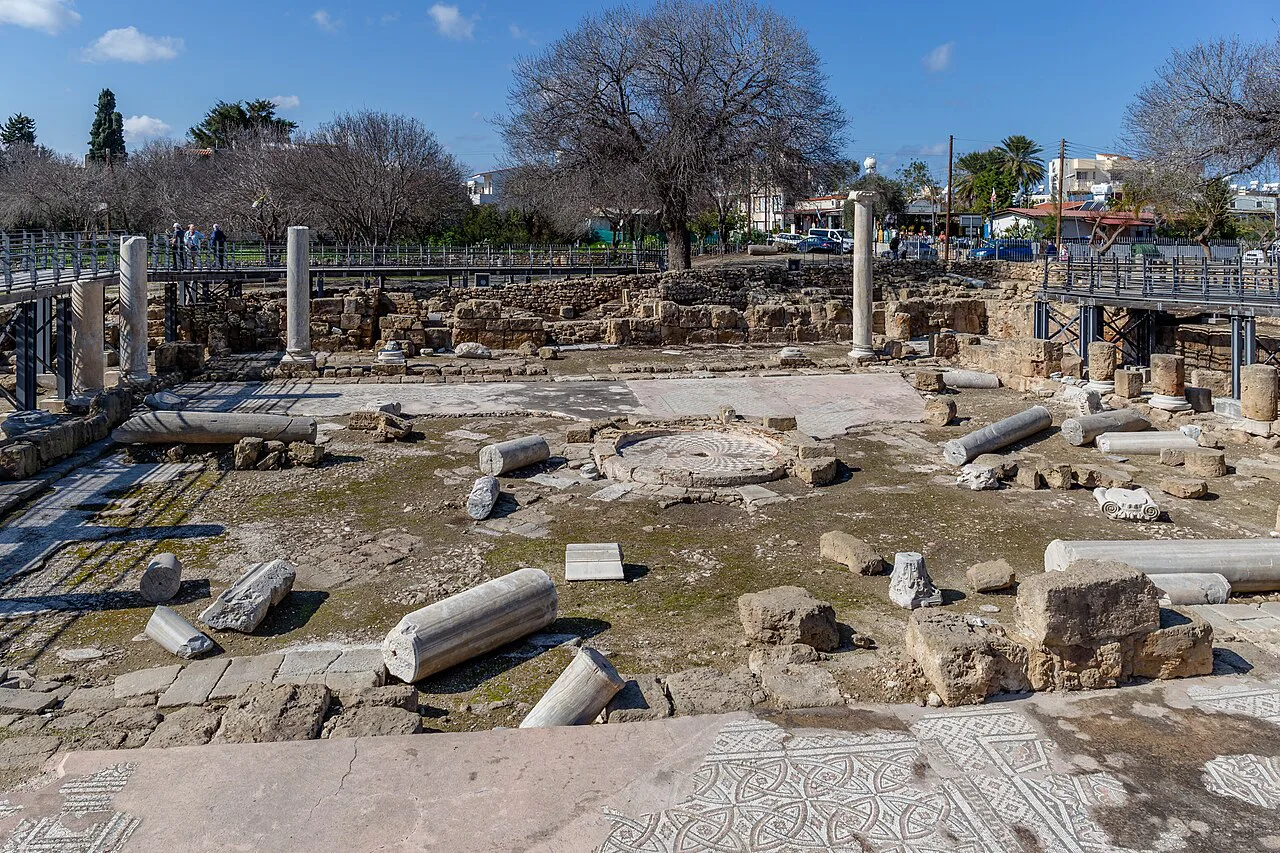
The park is the reason most people come to Paphos. Its Roman villas retain floor mosaics showing Greek mythology and everyday scenes, and the site also holds an agora and an Odeon, the small ancient theatre used for performances. Plan on two hours for the mosaics and villas and longer if you want the whole site.
Start with the House of Theseus and the House of the Four Seasons, then work back through the House of Orpheus. The mosaics are the stars; the villa walls are mostly low foundations and pillars, so adjust expectations for the buildings themselves.
Ticket prices and opening hours are set by the Department of Antiquities and change by season, so check the Department's own site for the day you plan to visit rather than relying on a blog. Carry water and sun protection: the site is exposed and the mosaic shelters fill quickly when a coach party arrives.
Paphos Fort and Paphos Harbour
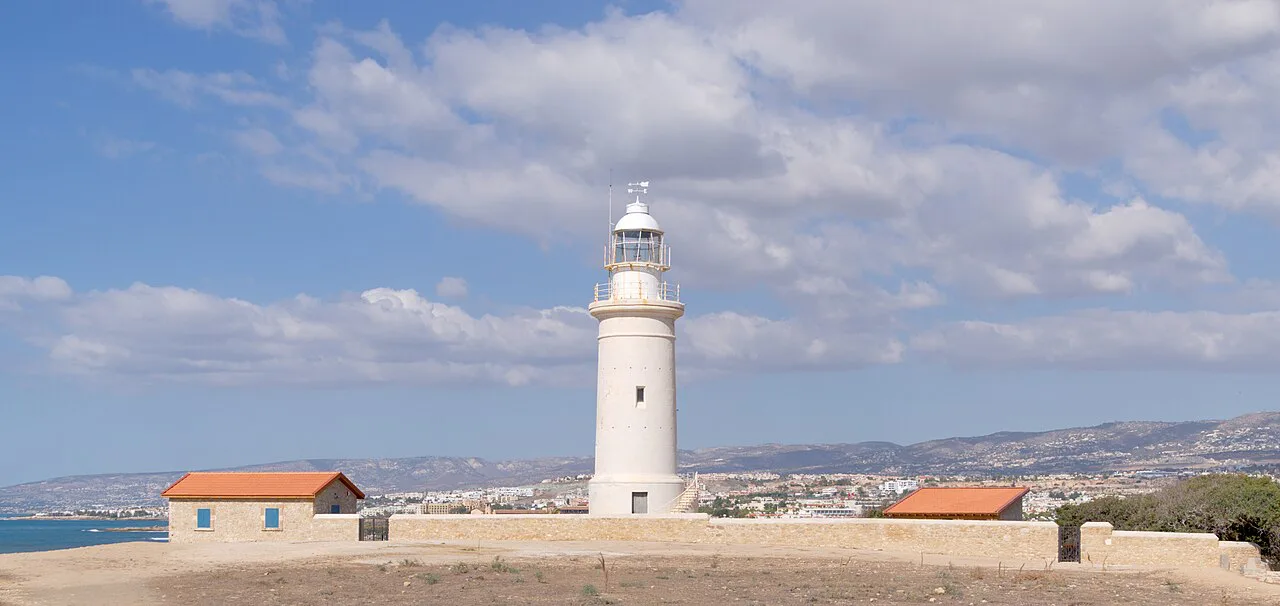
Paphos Fort guards the western end of the harbour and is a short walk from the archaeological park, making it the natural next stop. Climbing it gives you a look over the harbour and the coast, and it is a compact visit rather than a half-day. Pair it with a slow circuit of the harbour and a drink by the water.
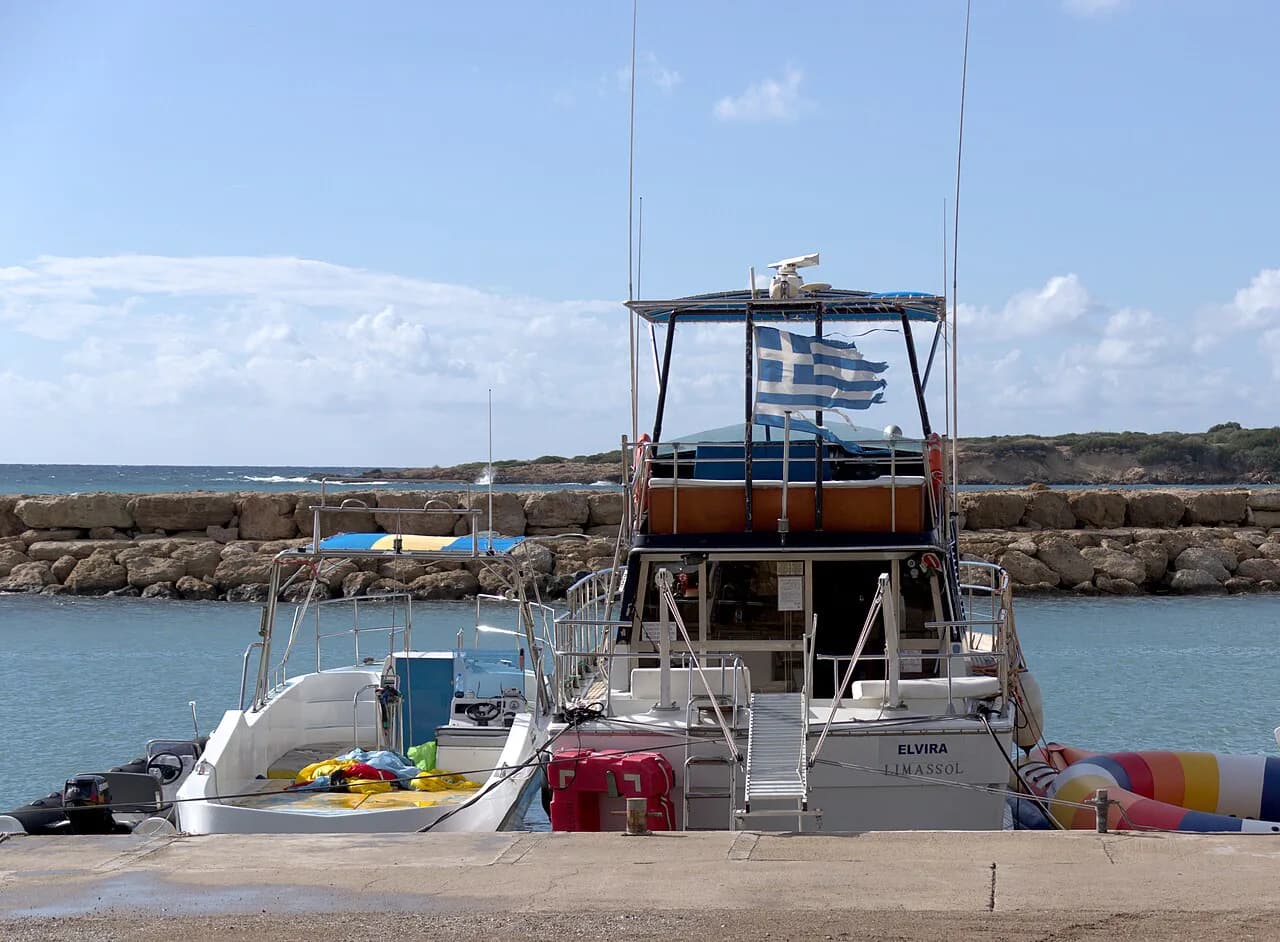
Paphos Harbour is the social centre of Kato Paphos, with the castle at one end and the coastal path running east. Boat trips leave from here, and small Saint Nicholas Church sits nearby. Expect the busiest hour around midday and early evening, when tour groups and sunset walkers overlap.
The harbour's convenience is also its drawback: it is the most crowded corner of Paphos and prices along the front reflect that. Walk five minutes inland for calmer streets, or come early in the morning when the fishing boats are still in.
Agia Kyriaki Chrysopolitissa
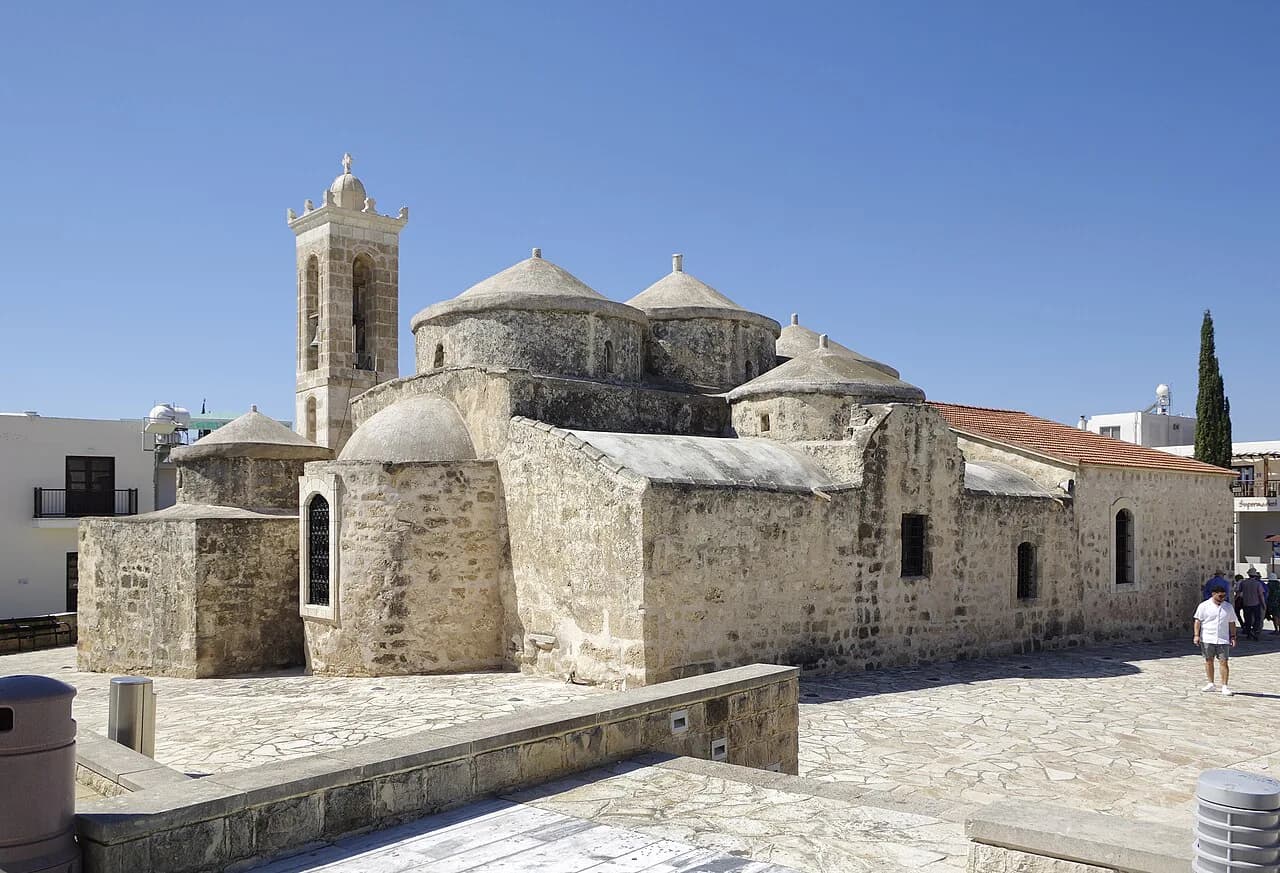
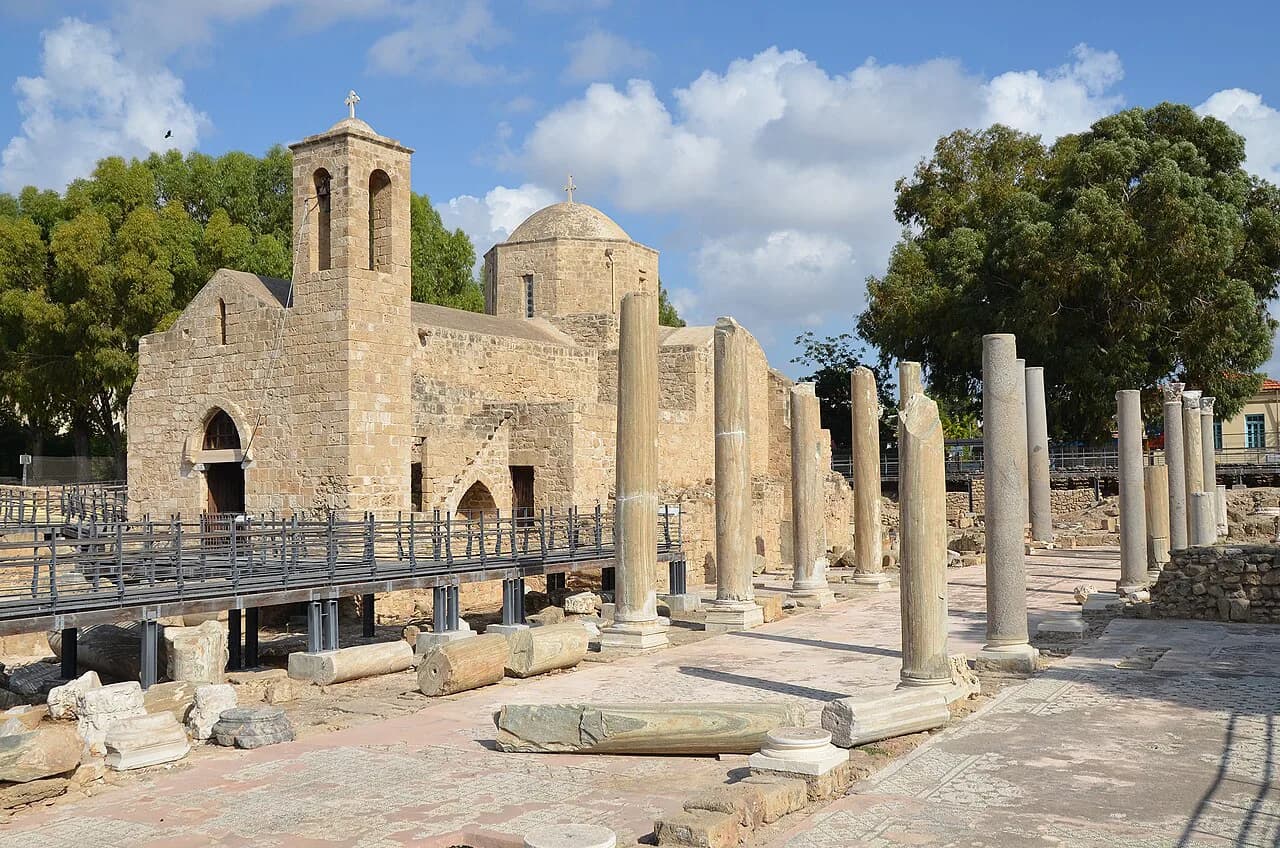
Agia Kyriaki Chrysopolitissa is a small church standing within the ruins of an early Christian basilica, a short walk from the harbour and the archaeological park. It is an active place of worship as well as a historic site, so visitors should dress and behave accordingly. The setting among the excavated columns makes it one of the more atmospheric stops in Kato Paphos.
It takes fifteen to twenty minutes to see properly and combines well with the archaeological park on the same morning. Check locally for service times if you want to attend rather than look around.
The Tombs of the Kings
The Tombs of the Kings is a separate archaeological site north-west of Kato Paphos, a Hellenistic and Roman necropolis of rock-cut tombs rather than a royal burial ground. Many tombs are cut down into the rock and reached by steps, so sturdy shoes and a head for heights help. Allow an hour to ninety minutes.
The site is exposed, with little shade between the tombs, so visit early or late in the day. Combined tickets with the archaeological park are sometimes offered, but confirm the current arrangement with the Department of Antiquities before you rely on it.
It is walkable from parts of Kato Paphos but easier by car or taxi, and it pairs naturally with the coastal path. Bring water; there are few facilities on site.
Paphos Old Town (Ktima)
Paphos Old Town (Ktima) is worth a morning if you want to see how Paphos actually lives, with its market, shops and cafés away from the resort strip. The old town has been tidied up in recent years, and the central streets reward a slow wander rather than a checklist. Go on a weekday morning when the market is in full swing.
Parking in the centre is limited, so a bus or short taxi from Kato Paphos is often the simpler choice. The old town is hilly, with steps between streets, which matters in summer heat.
Combine Ktima with a visit to the municipal gardens or a coffee in the shaded lanes. It is not a headline sight, but it gives a useful contrast to the ruins and the seafront.
The coastal walk east of the harbour
A paved coastal path runs east from the harbour along the hotel strip, passing beaches and viewpoints. It is flat, free and the best low-effort way to see the seafront, and you can walk as far as you like before turning back. Early morning and evening are the most comfortable times.
The path links several beaches along the strip, including Sodap Beach, known locally as Vrisoudia A, about a ten-minute walk from the harbour. It has sunbeds and parasols for hire and a sandy stretch with a rocky backdrop.
Beyond the hotel strip the path continues towards the marina area, which is useful if you are staying further east. Wear something you can walk in and carry water; the path has little shade at midday.
Boat trips from Paphos harbour
Boat trips leave from Paphos harbour, with options ranging from short coastal cruises to full-day sails towards the Blue Lagoon on the Akamas peninsula. The harbour is the place to compare operators and departure times in person, because schedules shift with the season and the weather. Book a day or two ahead in high summer.
The Blue Lagoon is the headline destination for most trips, and a boat is the easiest way to reach it. Choose a smaller boat if you want fewer people and more swimming time, and check what is included in the fare before you pay.
Trips are seasonal and sea conditions can cancel a sailing at short notice, so keep a backup plan for the same day. Confirm the meeting point and return time with the operator when you book.
Aphrodite's Rock (Petra tou Romiou)
Petra tou Romiou, Aphrodite's Rock, is a sea stack on the coast east of Paphos, reached by car or bus along the Limassol road. The beach beside it is pebbly and the water can be rough, so it is a viewpoint and a photo stop more than a swimming day. Allow an hour including the drive.
Come early or at sunset to avoid the coach traffic that builds through the middle of the day. There is a viewing area above the beach and a tunnel under the road linking the two sides.
It is a natural companion to a drive further east towards Limassol or a stop on the way back from the Troodos foothills. Bring shoes suitable for pebbles if you plan to go down to the water.
Coral Bay and the EDRO III shipwreck
Coral Bay is about six kilometres north of the city, a sheltered sandy bay with shallow water and a couple of restaurants. It gets busy because it is the most popular beach near Paphos. The drive takes around fifteen minutes from Kato Paphos.
Further along the same coast, the EDRO III is a cargo ship that ran aground near the sea caves at Peyia and now sits against the rocks as a photogenic wreck. It is a brief stop rather than a destination in itself, best combined with Coral Bay on the same drive.
Parking near the wreck is informal and the access path is rough, so wear proper shoes. Sunset is the best light and the coolest hour.
Into the hills: villages and Kykkos Monastery
Inland from Paphos, the road climbs towards the Troodos mountains through wine villages and foothill towns. Kykkos Monastery, the island's wealthiest and most famous monastery, is a mountain drive of well over an hour each way, so it works as a full day rather than an afternoon.
If you would rather not drive mountain roads, organised day tours run from Paphos into the Troodos and to Kykkos. They remove the navigation stress but add fixed stops and group timings.
Take a warm layer for the mountains even in summer; the villages sit at altitude and the evenings are noticeably cooler than the coast.
How many days Paphos needs
Three full days covers Paphos comfortably: one for the archaeological park, fort and harbour, one for Ktima and the Tombs of the Kings, and one for a coastal or mountain day out. Two days is enough for the highlights if you skip one of the outlying drives.
A week allows a slower pace, with boat trips, the coastal path and a couple of half-day excursions. The trade-off is that the town itself is small, so extra days are best spent exploring further afield.
If you are weighing up other bases on the island, our guide to things to do in Ayia Napa covers the east-coast equivalent, including Cape Greco.
Getting around: walking, buses and car hire
Most of Kato Paphos is walkable, with the archaeological park, fort, harbour and coastal path within a reasonable radius. For Ktima and the outlying sites, use the local buses, a taxi or a hire car.
Driving is on the left, as in the UK and Ireland, and the roads between Paphos and the coast are generally good. A car earns its keep for Aphrodite's Rock, Coral Bay and the Troodos villages, where buses are slow or infrequent.
Parking in Ktima and around the harbour is the main hassle; use the signed car parks rather than hunting for street spaces. Fuel stations are common on the main roads but sparse in the mountains.
When to go and when it is busiest
Paphos is busiest in July and August, when the heat is at its peak and the archaeological park fills by mid-morning. Spring and autumn give cooler walking weather and thinner crowds at the same sites.
Whatever the season, start outdoor sights early and keep the middle of the day for indoor stops, the old town or a long lunch. That rhythm suits Paphos better than a packed schedule.
Which Paphos day comes first?
Begin with the archaeological park and harbour, because they anchor the rest of the trip and tell you how much time you want for ruins elsewhere. Then decide whether your second day is Ktima and the Tombs of the Kings or a drive to Coral Bay and Aphrodite's Rock.
However you order the days, leave room for a slow coffee in Ktima and an evening on the coastal path; Paphos works best when the ruins and the harbour are balanced by unhurried time in between.
Check the Department of Antiquities for ticket prices and seasonal hours before you set out, and book boat trips a day or two ahead in summer. Everything else can be decided on the morning, which is the pleasure of a compact town like Paphos.
Explore more Paphos guides
Frequently Asked Questions
Is Paphos Old Town worth visiting?
Yes, if you want a morning away from the resort strip. Ktima has the market, everyday shops and a compact historic core, and it is a short bus or taxi ride from Kato Paphos. It is hilly and best visited on a weekday morning.
What should you not miss in Paphos?
The Roman mosaics at Kato Paphos Archaeological Park come first, followed by the fort and harbour. If you have time, add the Tombs of the Kings and a drive to Aphrodite's Rock or Coral Bay.
Is it expensive to eat out in Paphos?
The harbour front is the priciest area because it serves the heaviest footfall. Walk a few streets inland or eat in Ktima for more everyday prices, and check menus before you sit down.
Sources
Notes for your Cyprus trip
Optional updates to our Cyprus guides.
You might also like
Continue reading
More guides you'll find useful