
Paphos Archaeological Park: What to See and How Long It Takes

Allow two to three hours for Paphos Archaeological Park if the Roman mosaics are your priority, and longer if you want to work through the Odeon, the Agora and the villa foundations as well. The park is the main reason many travellers come to Kato Paphos, and the mosaics are the reason to slow down rather than stride through. This guide covers where the site sits, how to walk to it from the harbour, which houses to see first, how to pace a summer visit and what sits within a few minutes of the gates.
What the park is and where it sits in Kato Paphos
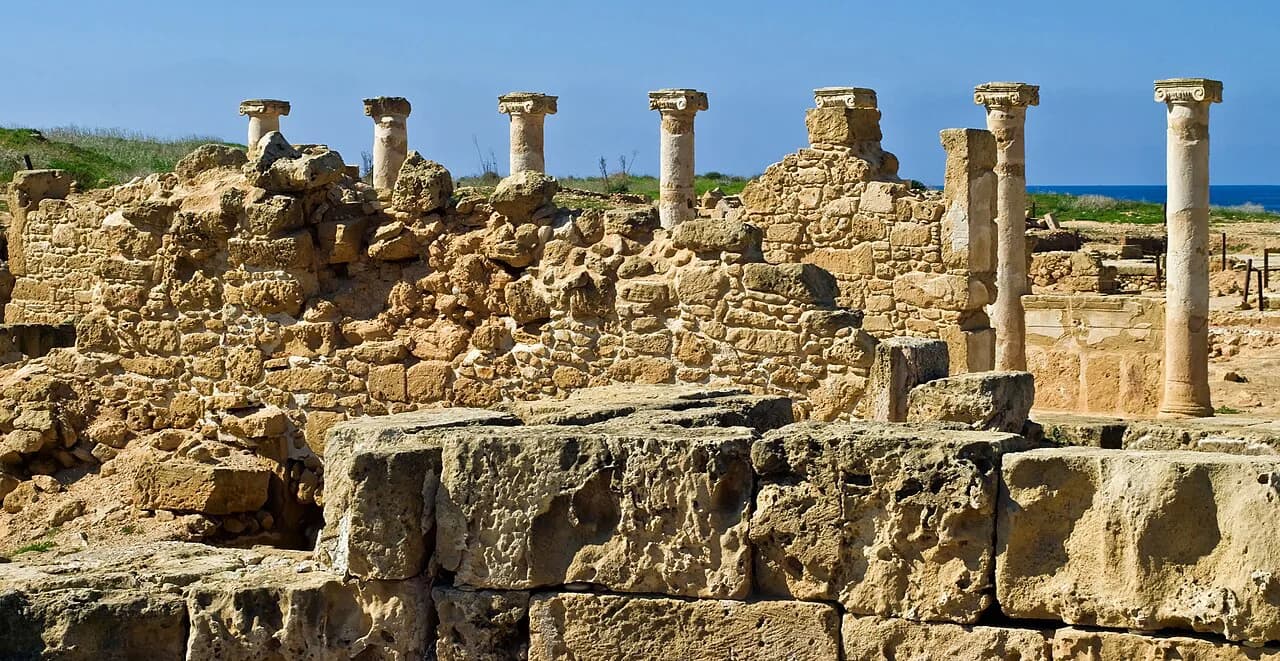
Paphos Archaeological Park, formally the Archaeological Site of Nea Paphos, preserves the remains of the ancient city of Nea Pafos beside the modern resort strip of Kato Paphos. It sits close to Paphos Harbour, which puts it within walking distance of much of the seafront and the harbour restaurants. The site is on the UNESCO World Heritage list, which is the reason the Roman floors here draw visitors from across the island rather than just the beach crowd.
Think of the park as a walled archaeological zone rather than a single building: you pay once, walk in, and move between excavated areas on paths. The Nea Pafos ruins spread across open ground with low walls, pillars and foundations, so the visit is mostly outdoors. The mosaics are the exception, sheltered under cover, and they are what lift the site above a field of old stone.
This is one stop within a wider set of things to do in Kato Paphos, so treat it as half a day rather than the whole trip. If you are building an itinerary around the town, the Paphos Attractions: 6 Visitor Guides page sets the park alongside the coast and the hills behind.

Getting there from Kato Paphos and the harbour
The park entrance is in Kato Paphos, a short walk from the harbour along the seafront, and many visitors reach it on foot from hotels on the coastal strip. Walking is the sensible choice: the approach roads are busy, parking around the harbour is limited, and the distances are short. Allow ten to fifteen minutes from the harbour area, more if you are coming from further east along the hotel strip.
If you are staying in Ktima, the inland centre of Paphos, you will need a bus, taxi or car to cover the few kilometres down to the coast. A car is useful for the wider region, including trips out to Petra tou Romiou and the hill villages, but it is not needed for the park itself.
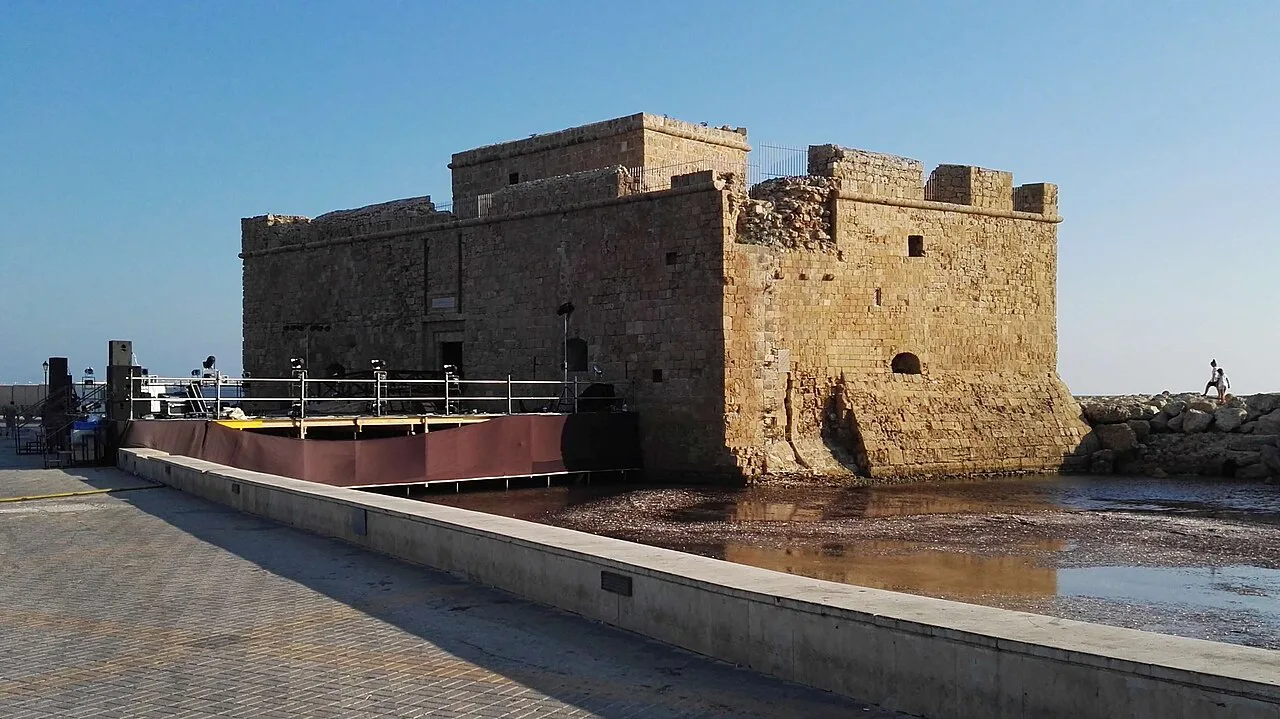
Anyone driving should plan to park near the harbour and walk in rather than hunt for a space at the gate. Paphos castle and Paphos Harbour are a few minutes away on foot, so a single parking spot can serve the park, the fort and the waterfront in one outing.
The Roman mosaics: the reason to come
The mosaics are the star of the park and the reason to give the site real time rather than a quick lap. They were discovered by accident when a farmer was ploughing his fields in 1962, which explains why they sit among ordinary-looking plots rather than in a purpose-built museum. The remains of five Roman villas are on the site, though most of the walls are gone and the floors carry the story.
Plot your route around four named houses. The House of Theseus is worth seeking out for its columns and a south wing mosaic showing Theseus fighting the Minotaur. The House of the Four Seasons takes its name from a mosaic personifying the four seasons and lies north of the House of Orpheus, so the two are easy to pair. The House of Dionysos is the other name to look for on the park signage.
What you are looking at are scenes from Greek mythology and everyday Roman life, preserved in colour across large floor panels. Expect to spend the bulk of your time here: the details reward close looking, and the covered walkways make this the most comfortable part of the site in hot weather. Reading the panels before you move on is what turns a walk into a visit.
Other remains inside the park: Agora, Odeon and villa foundations
Beyond the mosaics, the park holds the Agora and the Odeon, the civic heart of the ancient city, along with low walls, pillars and foundations where the villas once stood. These are less immediately striking than the floors, but they explain the layout: this was a working Roman town, not a single rich house. Walk the open ground between them to get a sense of scale.
Set your expectations for the ruins honestly. Much of what survives is foundations and stubs of wall, and without the mosaics the site would feel sparse. That is the trade-off: the archaeology is genuine and extensive, but it needs imagination in places, and the shaded mosaic shelters are where the visit earns its ticket.
How long to allow, and how to pace a summer visit
A realistic budget is two to three hours for the mosaics and the main monuments, with more time if you read every information panel. Travellers who explored the mosaics in detail report spending a couple of hours on that section alone, which is a useful signal that the full site repays a half day. If you are short of time, go straight to the houses and treat the Agora and Odeon as a loop on the way out.
In summer, start early or come late. The site is largely open ground with limited shade, and midday heat on the coast is punishing between roughly late morning and mid afternoon. The mosaic shelters offer relief, so a sensible pattern is to see the open ruins first while it is cooler, then slow down among the covered floors as the day heats up.
Carry water and wear shoes with grip, because the paths and excavated ground are uneven. There is little to sit on outside the covered areas, so plan a break rather than expecting benches throughout. The park suits a steady, unhurried pace better than a rushed circuit.
Tickets and opening hours: confirm with the Department of Antiquities
Paphos Archaeological Park is a state-run site, and the Department of Antiquities is the authority that sets and publishes its opening hours and ticket prices. Hours shift with the season, and ticket prices are not fixed forever, so check the Department's site or the notice at the gate before you build a day around it. It is worth confirming opening times on the day, especially outside the main summer months.
Do not rely on a price you saw in an old blog post or a memory of a previous trip. The entry fee is paid at the gate, and any tour that bundles the park with other stops will quote its own price separately. If a fixed figure matters to your budget, ask at the ticket office or check the official listing the day before.
Guided options exist and can add context to the mosaics, with entry handled as part of the booking. Inclusions vary by operator, so check what is covered before paying.
What is nearby: the fort, the harbour and the coastal path
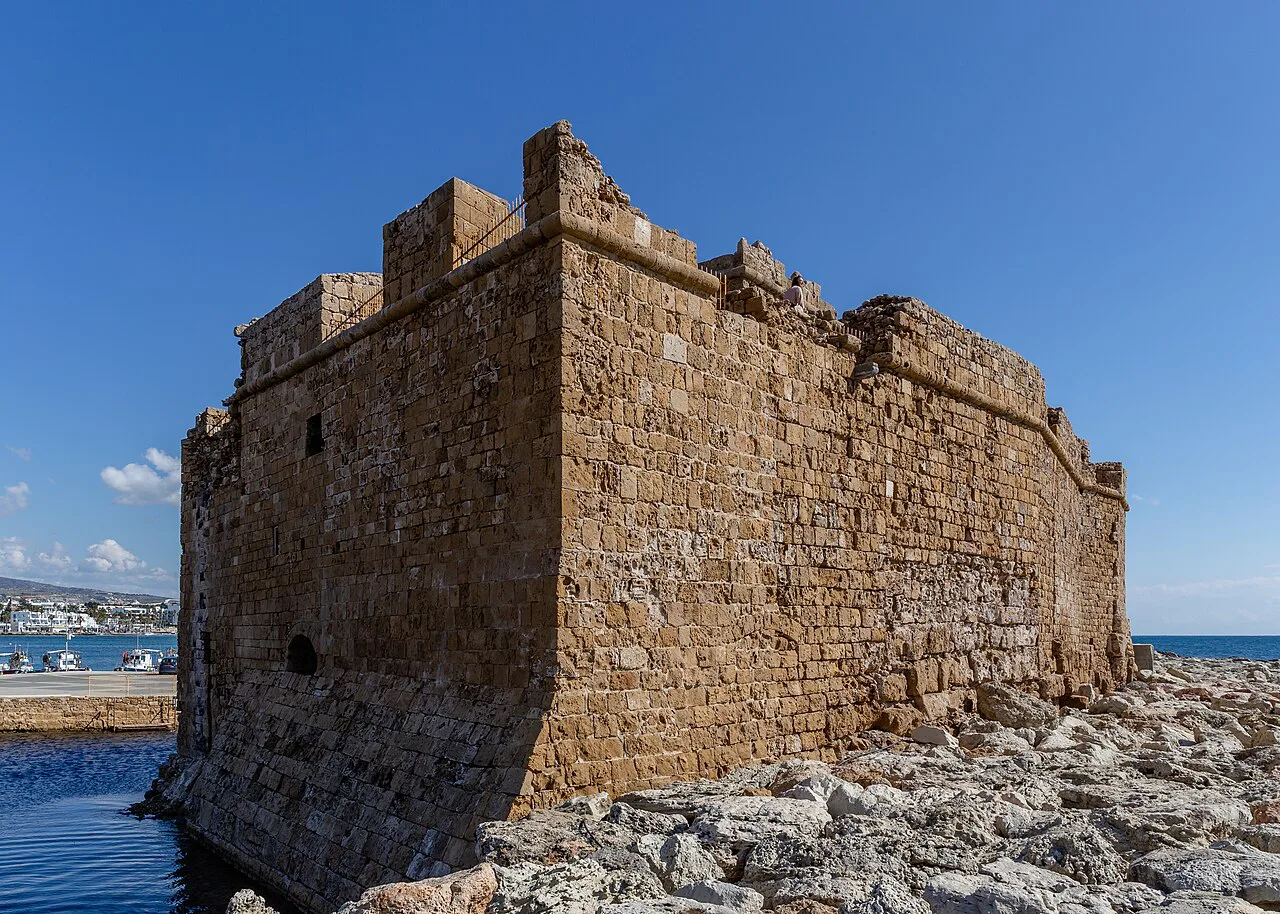
Paphos Fort, also called Paphos castle, stands by the harbour a few minutes from the park gates and is the natural second stop on a Kato Paphos morning. The harbour itself is the place to sit afterwards, with the coastal path running along the water for an easy walk. Together they fill a comfortable half day without a car.
Agia Kyriaki Chrysopolitissa, an early Christian basilica site in Kato Paphos, is another short walk and pairs well with the Roman remains if you want to see how the town's history layers up. Further afield, Tombs of the Kings is a separate necropolis site north of Kato Paphos with its own ticket and hours, so budget it as a distinct visit rather than an add-on.
If you have a car, the coast west of Paphos leads to Aphrodite's Rock (Petra tou Romiou), the sea stack tied to the legend of Aphrodite's birth. It is a scenic drive and a good half-day extension, but keep it separate from your park time.

Practical points: shade, surfaces, parking and timing
Shade is scarce outside the mosaic shelters, so a hat and water matter more here than at a landscaped attraction. Surfaces are uneven, with loose stone and low walls, so sandals are a poor choice. The site is not large, but the walking adds up across a couple of hours.
Morning is the best window in summer, both for heat and for crowds, since tour groups tend to arrive through the middle of the day. Late afternoon is the other workable slot, though you will have less time before closing. If you are visiting in a cooler month, the middle of the day is perfectly comfortable.
Plan the park as the anchor of a Kato Paphos day and let the harbour, the fort and the coastal path fill the rest. That way you avoid double-counting travel time and see the mosaics when you are freshest. The wider Paphos Attractions: 6 Visitor Guides page covers the rest of the town's sights if you want to build a longer stay.
Is the park worth half a day?
Yes, if you care about Roman mosaics: the floors in the House of Theseus, the House of Orpheus, the House of the Four Seasons and the House of Dionysos are the best reason to give Kato Paphos a proper morning. Go early, take your time in the covered areas and treat the Agora and Odeon as a loop rather than the main event.
If ancient stone alone leaves you cold, shorten the visit and put the saved hours into the harbour, the fort or a drive out to Petra tou Romiou. Either way, confirm opening hours and the ticket price with the Department of Antiquities before you set out.