
Tombs of the Kings, Paphos: What to See and How Long It Takes

The Tombs of the Kings is an ancient necropolis of Pafian aristocracy, cut into solid rock in the 4th century BC, and it forms part of the UNESCO-listed Archaeological Park of Kato Pafos. Allow roughly an hour to ninety minutes to walk the main tombs, more if you photograph every chamber or visit in high summer. This guide covers where the site sits, how to reach it, what you actually see underground and how the ground underfoot behaves.
It is a separate stop from the mosaic sites of Kato Paphos, so plan it as its own outing rather than an add-on to a harbour morning. Walkers coming from the harbour should judge the roughly two-kilometre approach before setting off in July or August.
What the Tombs of the Kings actually is
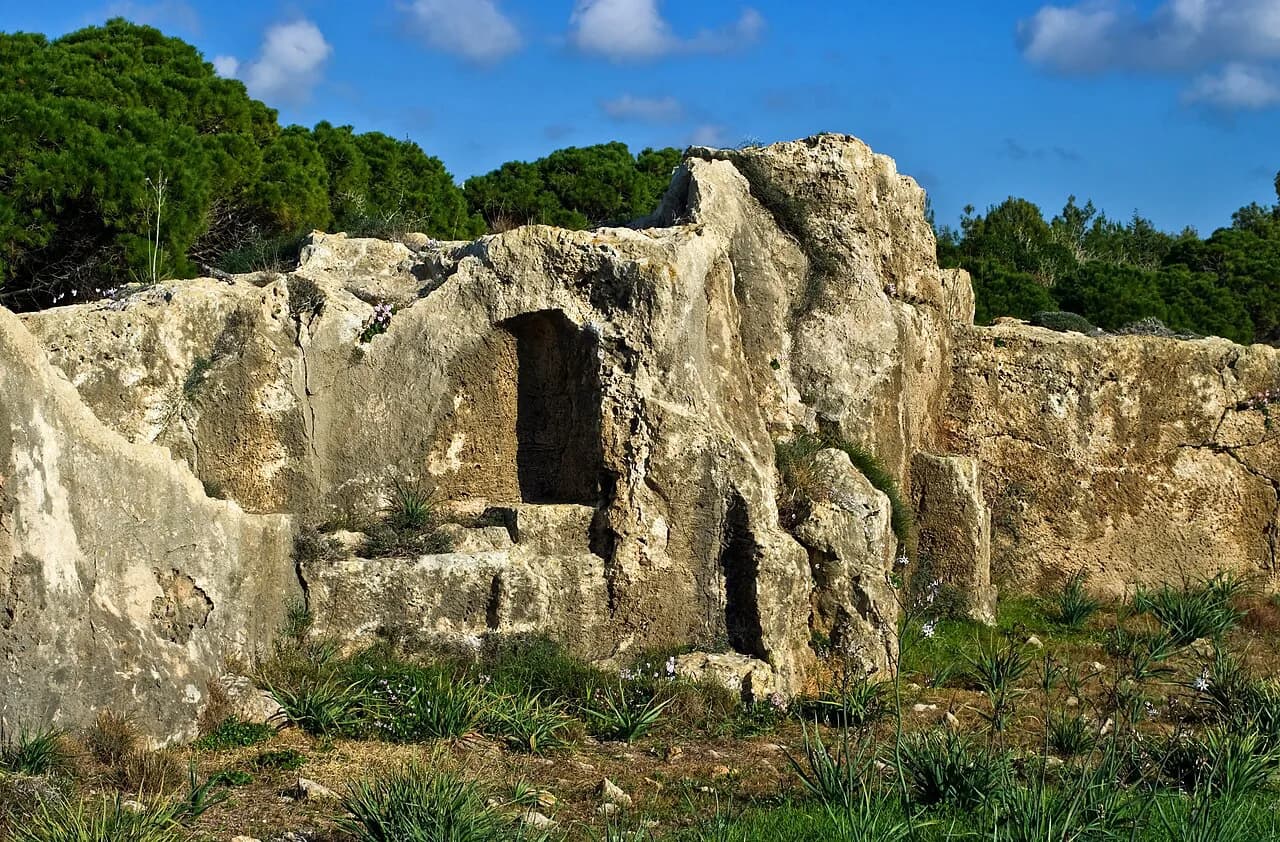
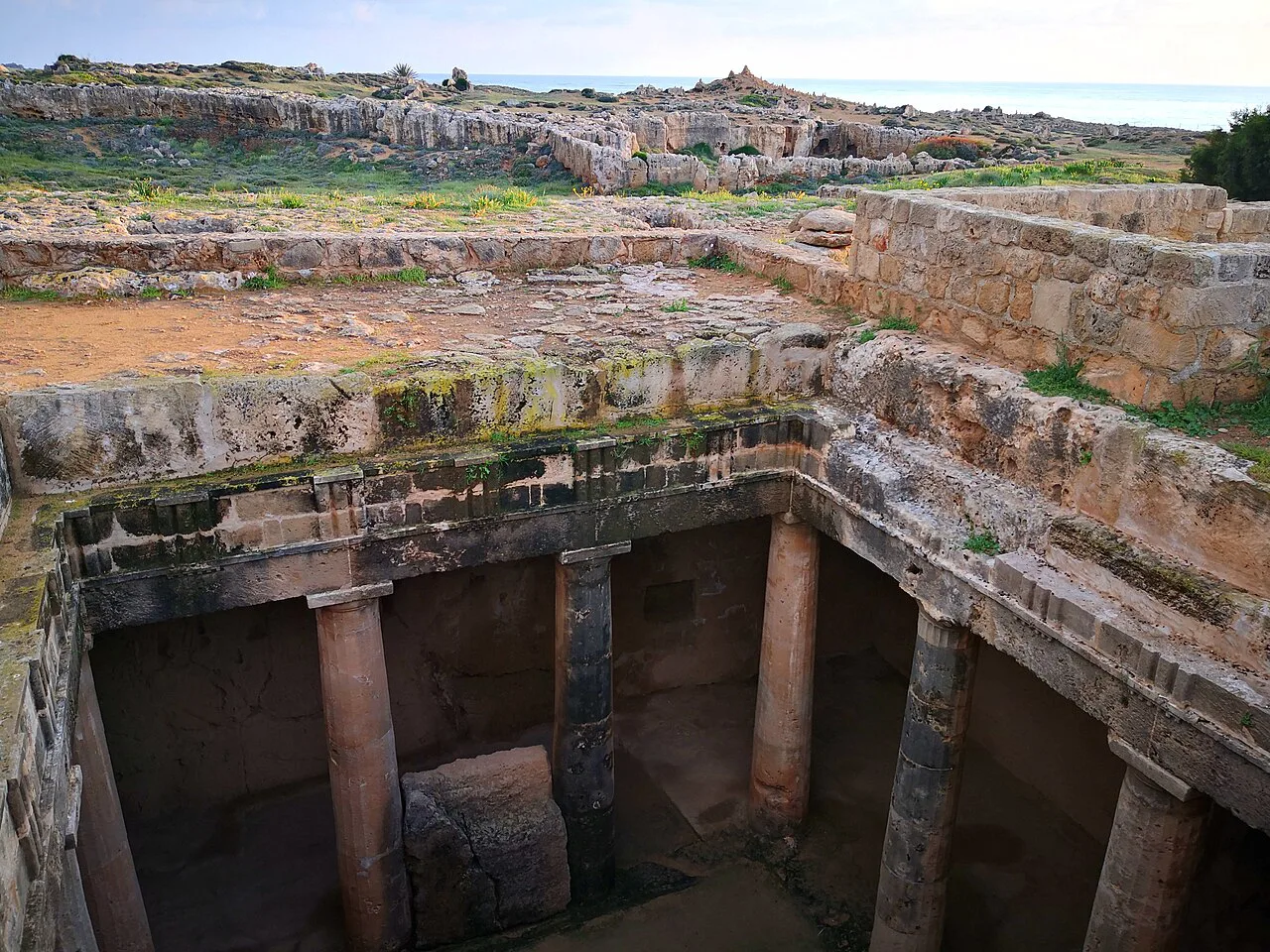
These are tombs, not a palace: the chambers were the last resting place of members of the Pafian aristocracy during the 4th century BC. They were carved out of solid rock and supported by rows of Doric pillars, which is why the site reads more like a sunken complex of courtyards than a cemetery.
The site belongs to the Archaeological Park of Kato Pafos, one of the most important archaeological sites in Cyprus and inscribed on the UNESCO World Heritage list since 1980. That listing is the reason the tombs appear on most first-time Paphos itineraries alongside the mosaics, even though the two are visited separately.

Why they are called royal when no Kings were buried here
No king was buried at the site. The 'Royal' title came from the stonemasons and the families who commissioned the tombs, who wanted a construction fit for a king for their own remains. Knowing this in advance stops the visit feeling like a let-down: you are looking at aristocratic ambition expressed in rock, not a royal cemetery.
That framing also explains the scale. These were statement tombs built by wealthy Pafian families competing in permanence, which is why the chambers run so deep and the courtyards so wide.
Where it is and how to get there
The necropolis lies in the north-western cemetery area of Paphos, close to the sea and about two kilometres north of Paphos harbour. The approach follows the coastal road north out of Kato Paphos, with the site set back from the sea on rising ground.
From the harbour and the Kato Paphos hotel strip, the site is a straightforward walk north along the coast road for anyone comfortable in the heat. Drivers reach it by the same road and park nearby, then finish the approach on foot. The harbour castle is a separate stop a little further south.
Buses run along the Tombs of the Kings road, so the site is reachable without a car, but check current routes and times with the operator on the day rather than relying on a printed timetable.

What you see inside
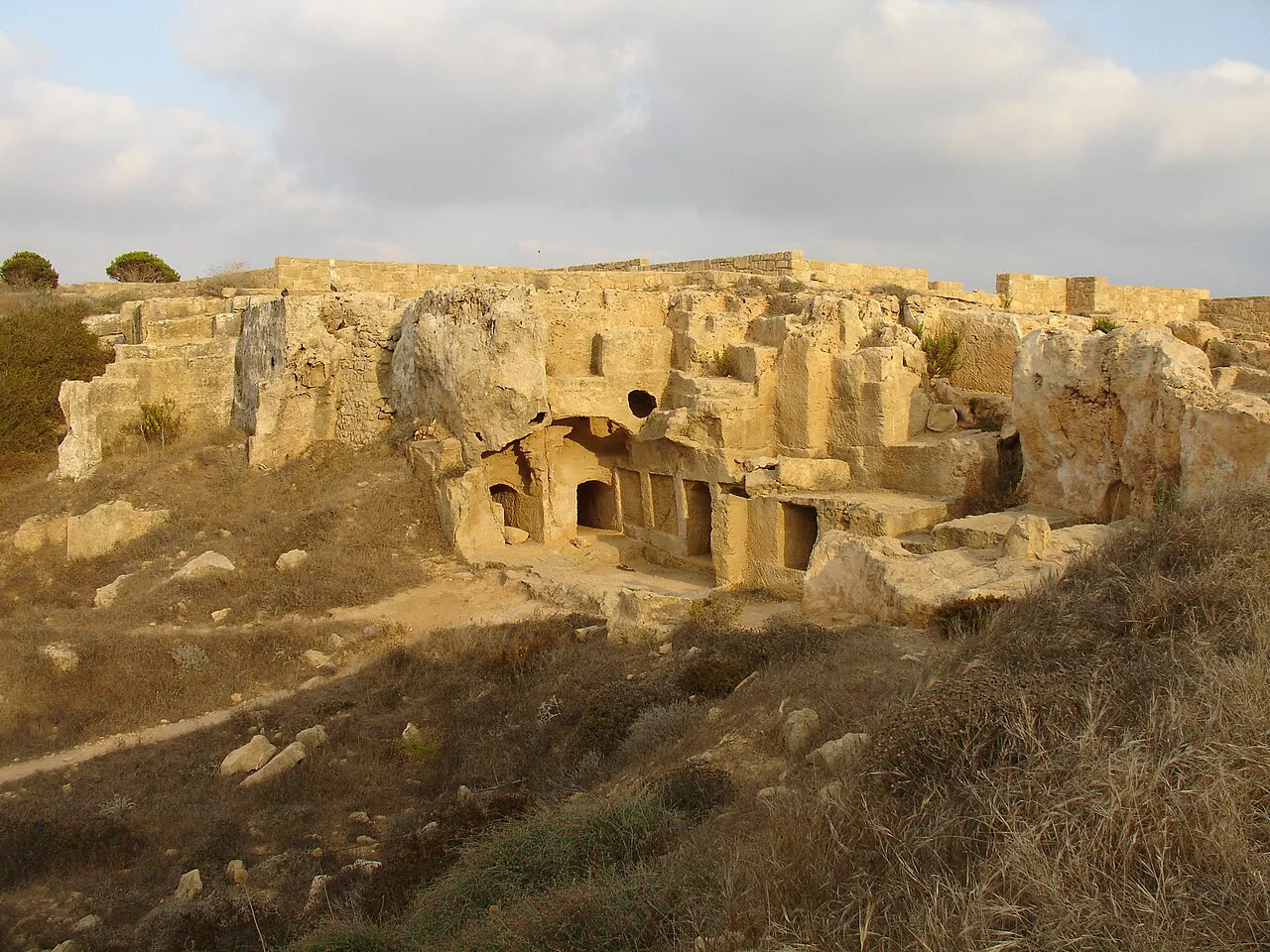
The core of the visit is a series of sunken peristyle courtyards cut down into the bedrock, ringed by Doric pillars and opening into deep burial chambers. Some chambers sit several metres below ground level, reached by rock-cut steps worn smooth by centuries of feet.
Much of the decoration has gone, so the appeal is architectural: the geometry of the cut stone, the shadows in the courtyards and the way the tombs open towards the sea. Bring a camera for the wide courtyard views rather than for surviving frescoes.
The ground is uneven throughout, with loose grit on the steps and unguarded drops at the edge of some chambers. Sturdy shoes matter more here than at a paved archaeological park.
How long to allow and how demanding it is
Most visitors see the principal tombs in about an hour; ninety minutes gives you time to descend into the deeper chambers and sit out the midday sun. There is little shelter among the rock, so early morning or late afternoon is far more comfortable between June and September.
The rock-cut steps are irregular and can be slippery after rain or when dusty, and there is little to hold on to. Anyone with knee or balance problems should stay on the upper levels and view the courtyards from above.
Tickets and opening times
The tombs form part of the Archaeological Park of Kato Pafos and are managed as an ancient monument, so tickets and seasonal hours are set by the Department of Antiquities rather than by the site itself. Buy on arrival or check the Department's current listing for prices, closing days and last entry before you travel, and see the main archaeological park guide for the mosaic sites.
Opening hours at Cypriot ancient monuments shift with the season, and reduced winter hours can catch out an afternoon visit. Confirm the day's schedule at the entrance or through the authority before building a day around it.
What else is nearby
The mosaic houses and Roman remains of the main archaeological park lie south of the tombs, closer to the harbour, and are the natural pairing for a half-day of ancient Paphos. Kato Paphos also holds the castle at the harbour mouth, a short drive or a steady walk away.
If you have a car, the coast road west leads to Petra tou Romiou, the sea stack known as Aphrodite's Rock, which works well as a late-afternoon stop after the tombs. Inland, the Agios Neophytos monastery above Paphos makes a cooler alternative for a hot day.
Families with children who need a break from ruins can head for Paphos zoo in the hills above the coast. Otherwise the harbour front is the easiest place to finish the day, with the castle and the sea within a few minutes of each other.
Anyone weighing up how the tombs fit with the mosaics, the castle and the coast should look at the wider set of things to do in Paphos before fixing a route. That way you can group the northern necropolis with the harbour sites and avoid backtracking in the heat.
Practical cautions
Summer heat is the main constraint: the rock radiates warmth and drinking water is not available inside. Carry more than you think you need and plan the visit for the first or last hours of the day.
Watch your footing on the cut steps and keep children away from the unrailed edges of the deeper chambers. Photography is best in low sun, when the pillars cast long shadows across the courtyards.
Is the Tombs of the Kings worth the walk from the harbour?
Yes, if you want the strangest and most atmospheric of Paphos's ancient sites and can go early or late. It is close enough to the harbour to reach on foot, distinct from the mosaic park and quick to see at around an hour.
Skip the walk in the middle of a summer afternoon, and check the Department of Antiquities for the day's hours and ticket price before you set out.
Explore more Paphos guides
Frequently Asked Questions
Is the Tombs of the Kings free to enter?
The tombs are administered as an ancient monument of the Archaeological Park of Kato Pafos, and entry is ticketed. Check the Department of Antiquities listing or the ticket office on the day for the current price and any reduced-rate days.
What are the opening times?
Hours follow the Department of Antiquities' seasonal schedule for ancient monuments, with shorter winter days. Confirm the current hours at the entrance or through the authority before planning your visit.
How far is it from Paphos harbour?
About two kilometres north of the harbour, in the north-western cemetery area of Paphos close to the sea. It is a walkable distance for most visitors outside the hottest part of the day.