
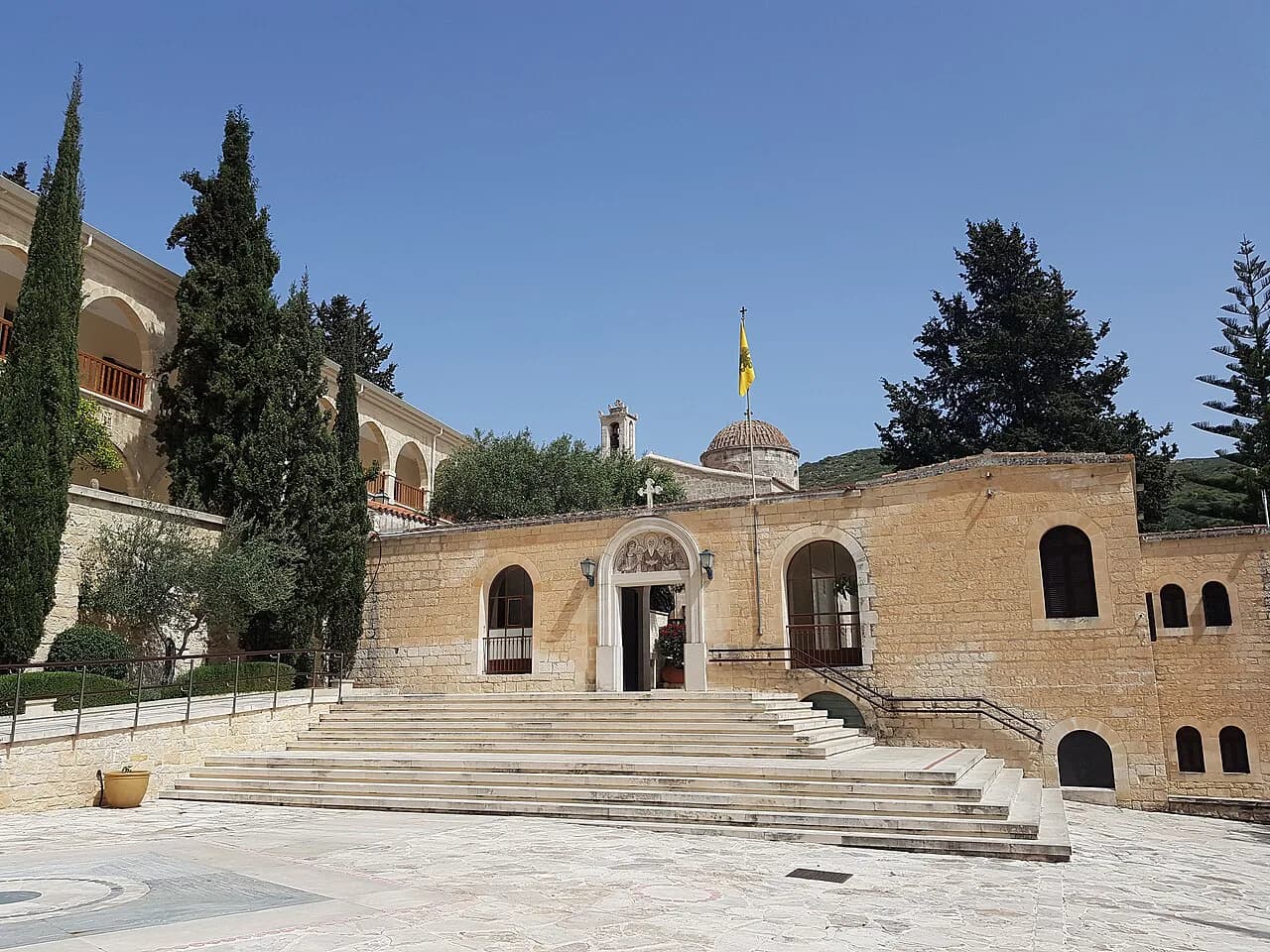
Agios Neophytos Monastery: What to See and How Long to Allow

Agios Neophytos Monastery is worth a half-day from Paphos: three compact things sit on one hillside, the cave hermitage called the Enkleistra with frescoes from the 12th to 15th centuries, a later church with 16th-century Post-Byzantine icons, and an ecclesiastical museum, with the museum and Enkleistra published as €2 to enter. It is not a sprawling archaeological site, so the visit is short and intimate rather than a full day out. This page covers what each part is, how to reach it, when it opens and how to pace it around the heat.
What Agios Neophytos Monastery is and why it is worth the trip from Paphos
The monastery was founded in the second half of the 12th century by Neophytos, a Cypriot recluse and writer, in what was then a secluded spot at the head of a valley. He carved his own cave out of the rock, the Enkleistra, and that cave is the reason to come: its walls carry some of the finest Byzantine frescoes in Cyprus, painted between the 12th and 15th centuries. The later church and the ecclesiastical museum complete a visit that is about close-up painting and quiet courtyards rather than size.
The trade-off is scale. The complex is small enough to see properly in well under two hours, so it works best as a half-day outing partnered with something else in the Paphos district rather than as the whole point of a day. If you want frescoes and a working monastery atmosphere without a long mountain drive to Kykkos, this is the near-town option.
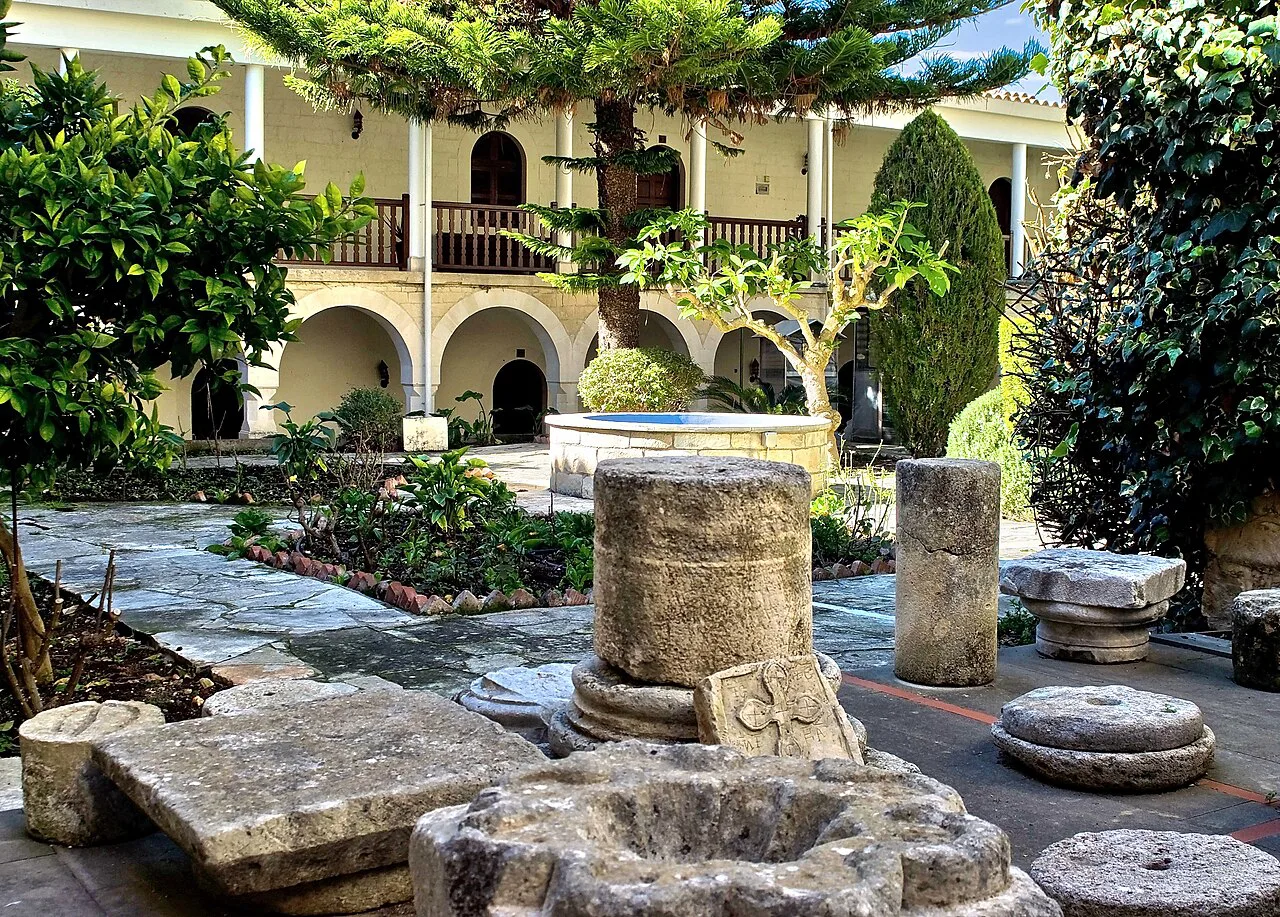

Where the monastery is: near Tala, about 9km north of Paphos
The monastery sits near Tala village, about 9km north of Paphos, on a hillside above the valley. That puts it roughly 20 minutes by car from Ktima and closer to half an hour from the Kato Paphos tourist zone once you account for town traffic and the climbing road. Approach from the Paphos side through Tala, where the lane narrows and signposts to the monastery take over. For more Paphos sightseeing, see Paphos Attractions: 6 Visitor Guides.
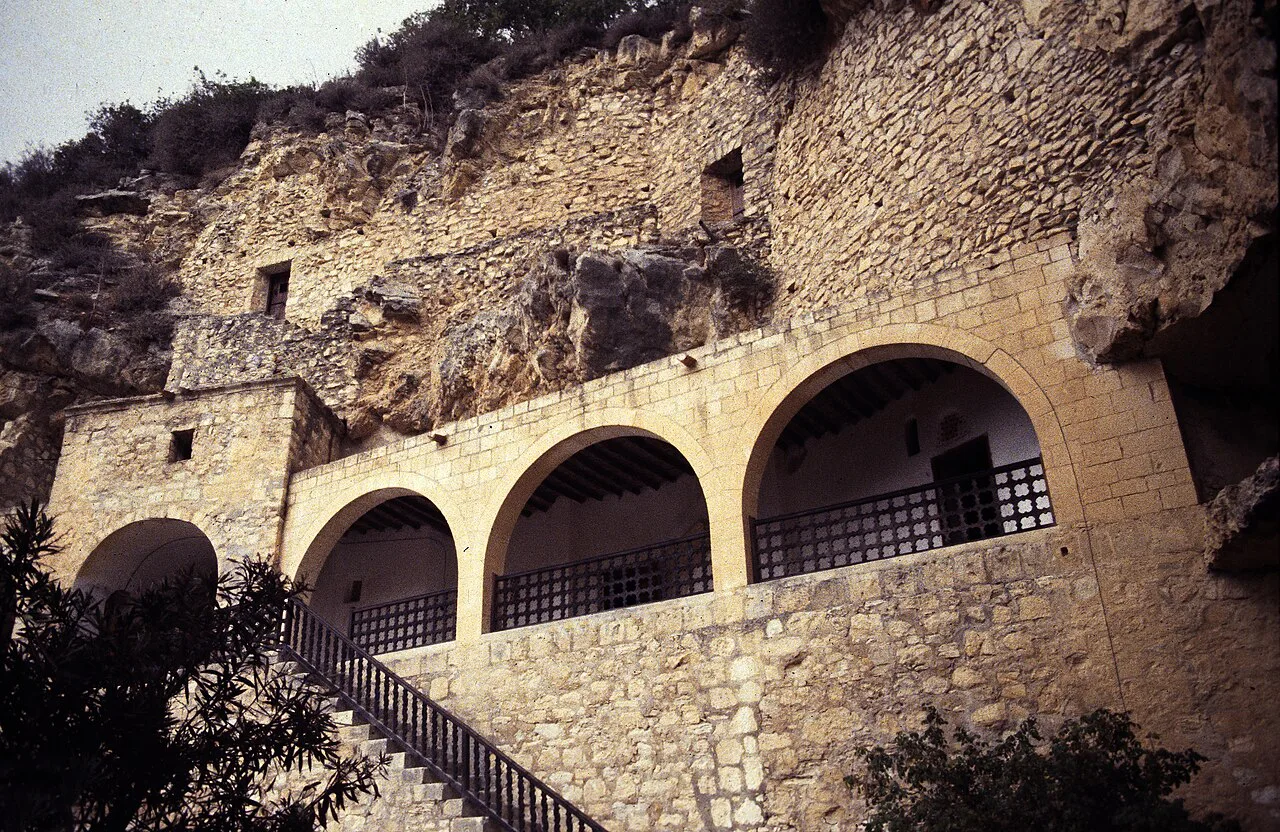

How to get there: driving from Kato Paphos and Ktima
Driving is the straightforward way to reach the monastery: head north from Paphos towards Tala, follow the monastery signs as the road climbs, and plan on parking before the gate and walking the last stretch. The road is tarmac throughout, but it twists, so allow more time than the distance suggests and avoid rushing the bends. Cyprus drives on the left, which matters most when you leave a car park onto a quiet rural road.
Public transport is not a reliable plan here, so check locally and be ready to take a taxi or hire car from Paphos or Ktima. Groups of three or more usually find a taxi competitive with the hassle of a service that may leave you off the hill. Aim to arrive in the morning, when the light is on the frescoes and the courtyard is cooler.
The Enkleistra: the cave carved by Neophytos and its 12th- to 15th-century frescoes
The Enkleistra is the monk's own cave, cut into the rock and painted over centuries, with surviving frescoes spanning roughly the 12th to the 15th centuries. Its small scale is the point: you stand close to the painting, and the colours and figures read clearly without museum glass between you and the wall. Give it the largest share of your time and read the panels slowly, because the space is tiny and a quick glance sells it short.
The later church and its 16th-century Post-Byzantine icons
The later church, used by the community, holds some of the finest Post-Byzantine icons in Cyprus, dating to the 16th century. These are icons in the Orthodox sense, painted panels made for veneration rather than display, so keep your voice low and step aside from anyone praying. The contrast with the cave is the interesting part: you move from rough rock and early fresco to a finished, gilded interior in a few steps.
The ecclesiastical museum: what is inside and how it fits the visit
The monastery's ecclesiastical museum is worth a look after the cave and church, showing the kind of objects a working monastery accumulates over centuries, from vestments to liturgical items. Treat it as the calm third stop rather than the main event, and plan your ticket spend around it.
Opening hours and entrance fee for the museum and Enkleistra, by season
Visit Cyprus publishes the museum and Enkleistra as opening daily from April to October in two blocks, 09:00 to 13:00 and 14:00 to 18:00, and daily from 09:00 to 16:00 from November to March. The midday break in summer is the planning detail that matters: arrive before 13:00 or after 14:00. Entry to the museum and Enkleistra is published at €2. Check current details before setting out, since times can change without notice.
Closed days: Christmas Day, New Year's Day, Green Monday, Orthodox Easter Sunday and 15 August
The museum and Enkleistra are published as closing on Christmas Day, New Year's Day, Green Monday, Greek Orthodox Easter Sunday and 15 August. Green Monday marks the start of Orthodox Lent and Easter Sunday is movable, so if your trip falls in spring, check the church calendar rather than assuming a fixed date. The 15 August feast of the Dormition is a major religious day in Cyprus and the busiest for churches, so plan around it rather than expecting normal access.
How long to allow and how to pace the visit around the heat
Allow 60 to 90 minutes in total: 30 to 40 minutes for the cave and church, 20 to 30 for the museum, and the rest for the courtyard and the drive. The site is small, so more than two hours here means you are waiting rather than looking. On a summer afternoon the courtyard and the climb from the gate push the temperature up, so the morning slot beats the late one.
In July and August, arrive soon after the 09:00 opening, which leaves a comfortable window before the 13:00 break; over the winter months a single 09:00 to 16:00 day gives you far more flexibility. Carry water and a hat for the outdoor stretch between car and entrance. The cave interior is dark and cramped, so a torch is unnecessary but patience for a small group is wise.
Dress and behaviour at a working monastery
This is a working monastery, not only a museum: some parts of the life continue, so dress modestly, cover shoulders and knees, and keep voices low in the church. Photography inside painted interiors can be restricted, so follow what is signposted and ask before using a flash. The tone to aim for is a short, respectful visit; it is not a place for a group photoshoot in the main chapel.
Nearby: Tala village and other Paphos district stops to pair with the monastery
Tala village sits below the monastery and is a sensible first stop or lunch halt on the way back down, with views over the Paphos coast. From there, the district opens up: Aphrodite's Rock (Petra tou Romiou) lies west along the coast for a swim and a look at the sea stack, while the Tombs of the Kings Paphos gives you a very different Paphos sight, a rock-cut necropolis you can walk through on foot.
If you are travelling with children, a stop at Paphos zoo in the same direction can break up the day, while history-minded travellers can add the Paphos archaeological park at Kato Paphos for the Roman mosaics. Plan one or two extras, not five: the monastery is short, but the district roads are slow and the summer heat punishes an over-packed afternoon.
Is Agios Neophytos worth the half-day?
Yes, if you value painted churches and a genuine working monastery over size and spectacle. The €2 entry, a cave of Byzantine frescoes and a short drive from Paphos make it one of the easiest half-day additions to a Paphos holiday, with Tala and the coast within reach on the same trip. Go in the morning, allow 90 minutes, and check times before you set off.
Explore more Paphos guides
Frequently Asked Questions
Is there a bus from Paphos to Agios Neophytos Monastery?
Public transport to the monastery is limited, and no reliable regular service is documented, so check locally at the time of travel rather than relying on a bus from the Paphos tourist area. A hired car or taxi from Paphos or Ktima is the dependable option.