Things to Do in Nicosia: Old Town, Museums and the Green Line
Plan a day in Nicosia with the walled old town, the Cyprus Museum, Shacolas Tower views, the mosques and inns of the north, and the Green Line crossing.
On this page
Nicosia is worth a full day, and it is the one Cypriot city where you can walk between two capitals in an afternoon. The old walled town holds the museums, the Venetian walls and Ledra Street, while a passport check mid-street puts you in North Nicosia (Lefkoşa) with its mosque and caravanserai a few minutes further on. This guide orders the sights into a walkable day, flags which museums are free and which charge, and explains the Green Line crossing in practical terms.
How Nicosia is laid out: walls, Ledra Street and the Green Line
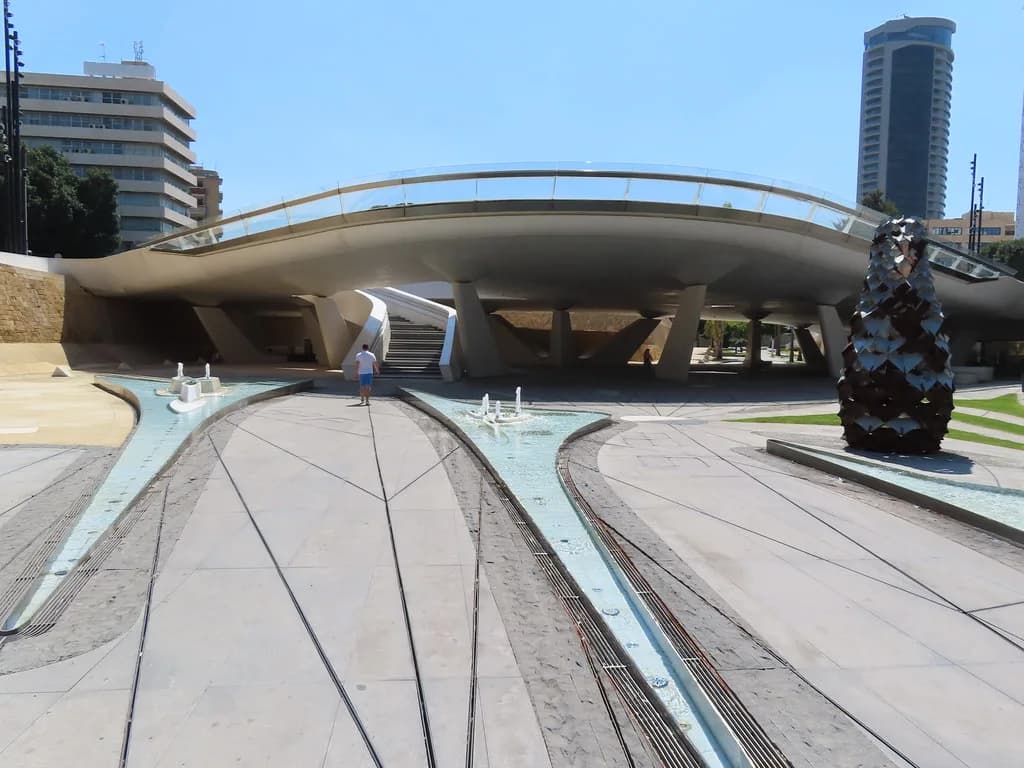
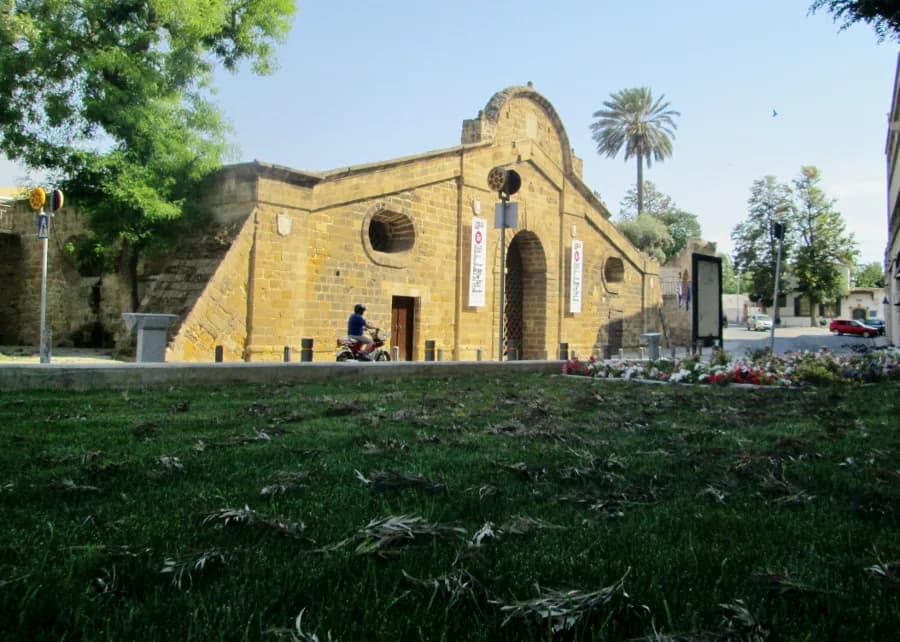
The historic core sits inside a perfectly circular ring of Venetian walls built in the 16th century, studded with bastions so that the city reads as a star from above. The old moat outside the walls now holds a running track, gardens and a sculpture park, which makes a pleasant loop if you want to see the defences from ground level. Everything a visitor wants is inside or just outside that ring, so you can leave the car or bus behind.
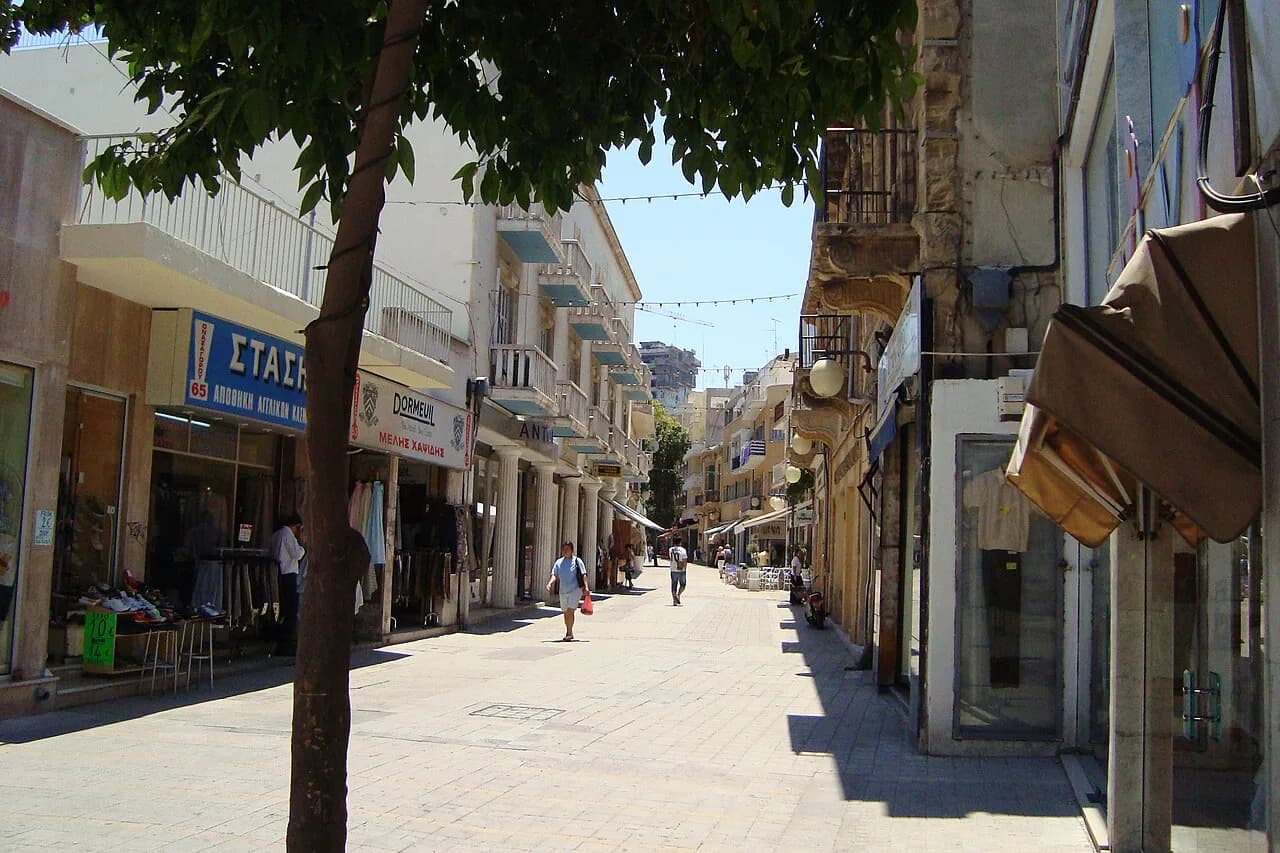
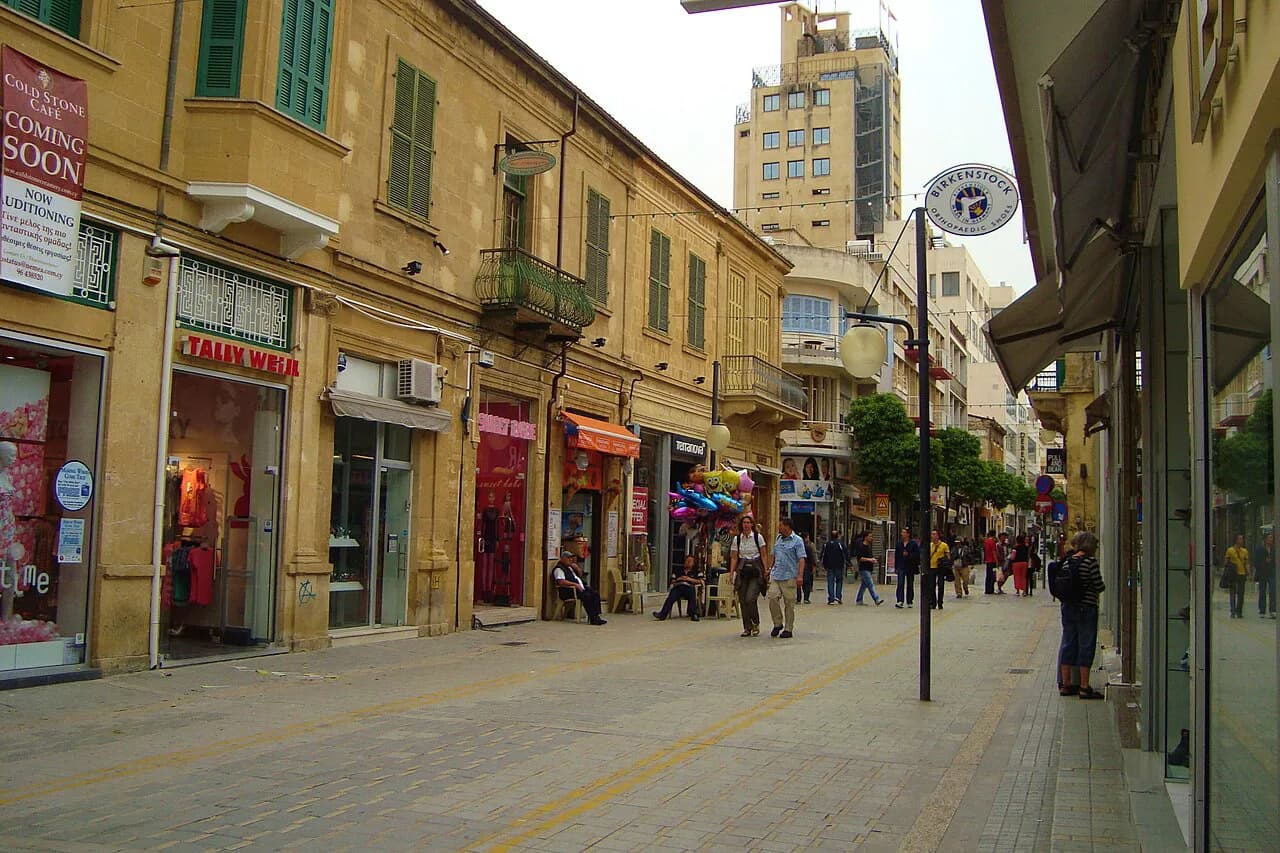
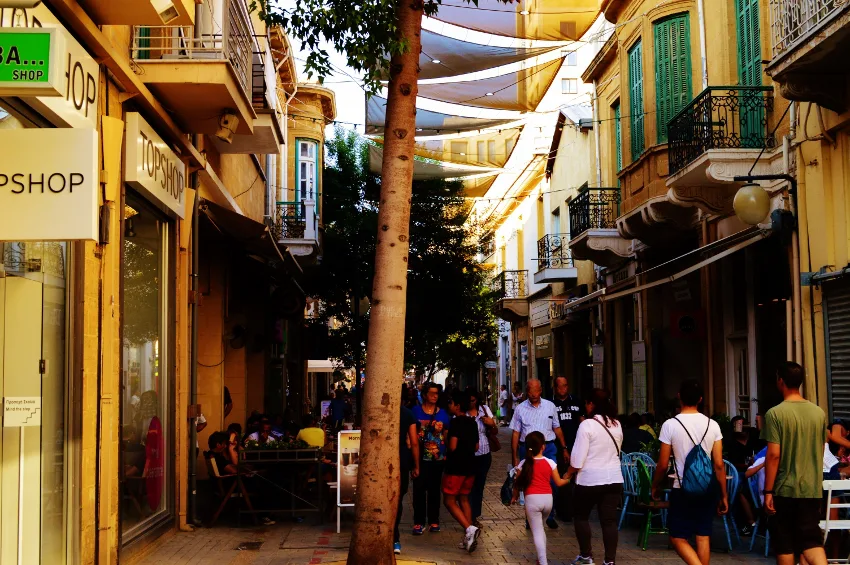
Ledra Street is the spine of the modern city and the hinge of any visit: a shopping street that is historic rather than picturesque. It was sealed at the border after the 1974 invasion and only reopened in April 2008, which is why the crossing point now sits at the end of a pedestrian shopping run. Approach from Eleftheria Square and you have the moat, the walls and the museums in one line of walk.
The Green Line itself is a United Nations-patrolled buffer dividing the Republic of Cyprus from the north, and it cuts straight through the old town rather than running around it. Treat the two halves as one continuous walk: sights in the south before lunch, a crossing at Ledra Street, then the northern bazaar streets and back.
Start at the Cyprus Museum for the island's archaeology
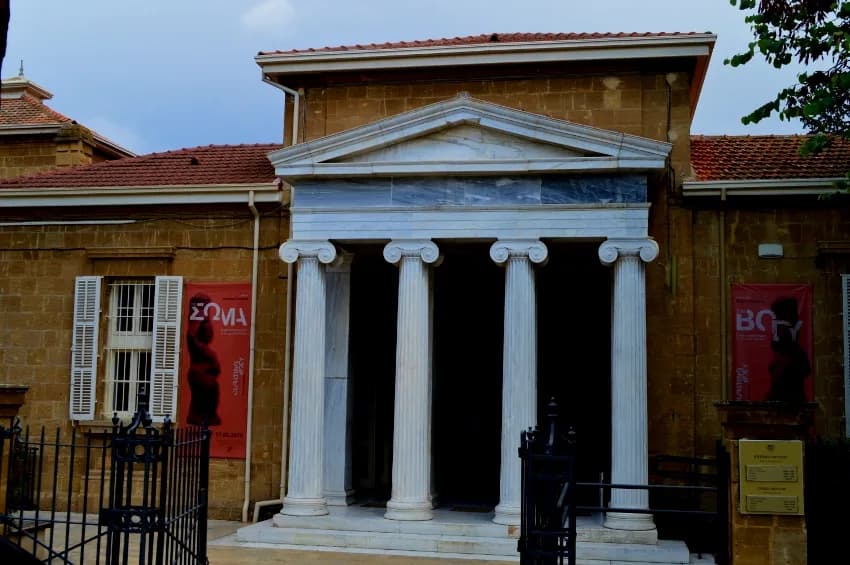
Begin at the Cyprus Museum, which holds the country's oldest and most comprehensive collection of archaeological finds and traces the island from the Neolithic period onwards. Seeing it first makes sense of everything you visit later, from the mosaics at Kourion and Paphos to the Neolithic settlement at Choirokoitia, because the sequence of periods is laid out room by room. It is a five-minute walk from the AG Leventis Gallery, so the two pair neatly.
The museum is closed on Mondays and is listed as opening Tuesday to Friday from 8:00 to 18:00, Saturday from 9:00 to 17:00 and Sunday from 10:00 to 13:00, with free admission. Those hours carry no season attached, so confirm them with the museum before a Monday or late-afternoon visit. Allow at least an hour and a half if you read the labels; the pottery rooms alone reward a slow pass.
Nicosia's other museums, most of them free
The Leventis Municipal Museum is free and one of the most rewarding stops in the old town, with a long-running exhibition on Nicosia as the last divided capital in Europe that sets out the city's modern history and the creation of the Green Line. Hamam Omerye, a hammam dating from the 1570s, is a working bath rather than a museum, and treatments are booked and paid for through its own website; check current prices and slots there rather than relying on older figures.
NiMAC, the modern art museum in a former power station, is free and small enough to see in well under an hour, with around six rooms and plenty of space. The House of Hadjigeorgakis Kornesios, an ethnological museum in an 18th-century Ottoman mansion, is also free and shows the courtyard, bathhouse and period rooms of a wealthy Cypriot household. The AG Leventis Gallery, opened in 2014, focuses on Cypriot painters born between 1884 and 1930 and holds Adamantios Diamantis's 17-metre The World of Cyprus.
That cluster of free museums is the strongest argument for giving Nicosia a night rather than a rushed half-day. If your budget is tight, build the day around them and spend the saved money on the one paid viewpoint in town.
Views over both halves from Shacolas Tower
Shacolas Tower, just off Ledra Street, is the one viewpoint worth paying for: entry is €2.50 and the top floor gives 360-degree views across the whole city. Look north and you can pick out the buffer zone threading between the rooftops and the flag painted on the slope of Mount Pentadaktylos beyond. Fifteen minutes is enough for photographs.
Check the actual hours on the door before you commit to a slot, then walk down to Ledra Street for the crossing and the lanes of Nicosia Old Town beyond it.
Walking the old town, the walls and the gates
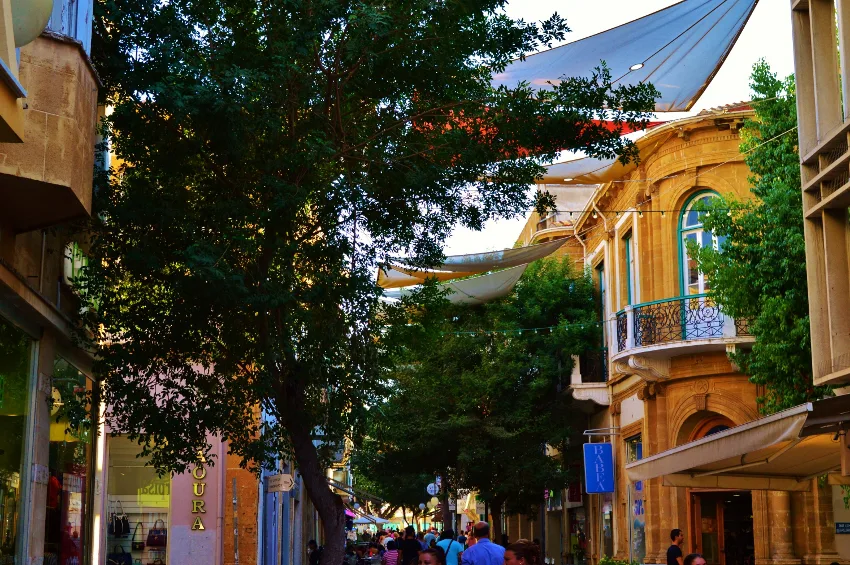
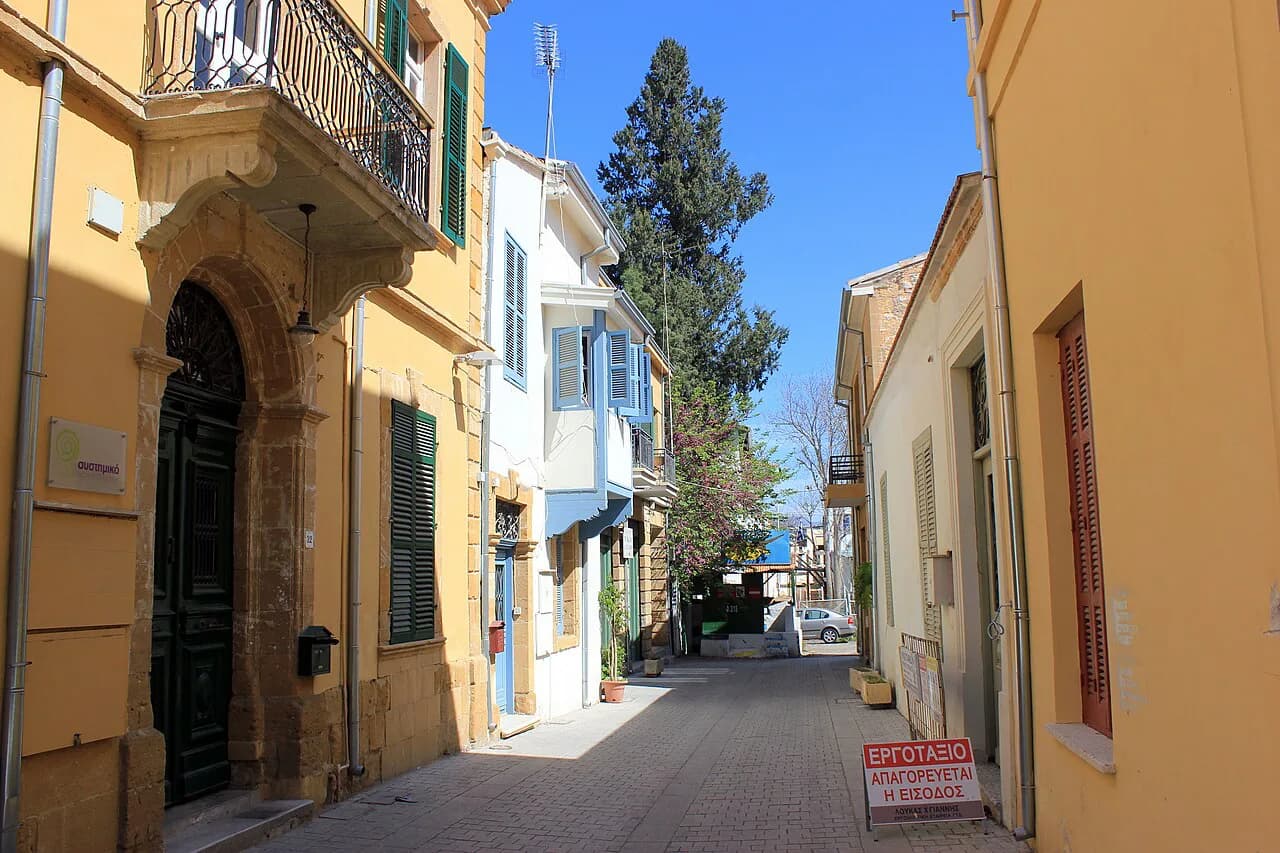
The old town is compact enough to cover on foot in a couple of hours if you do not stop, and a full morning if you do. Loop from Eleftheria Square along the moat to see the bastions from outside, then cut in through the lanes towards Ledra Street for the shops, the tower and the museums. A self-guided Nicosia Walking Tour is the tidy way to follow that line without back-tracking.
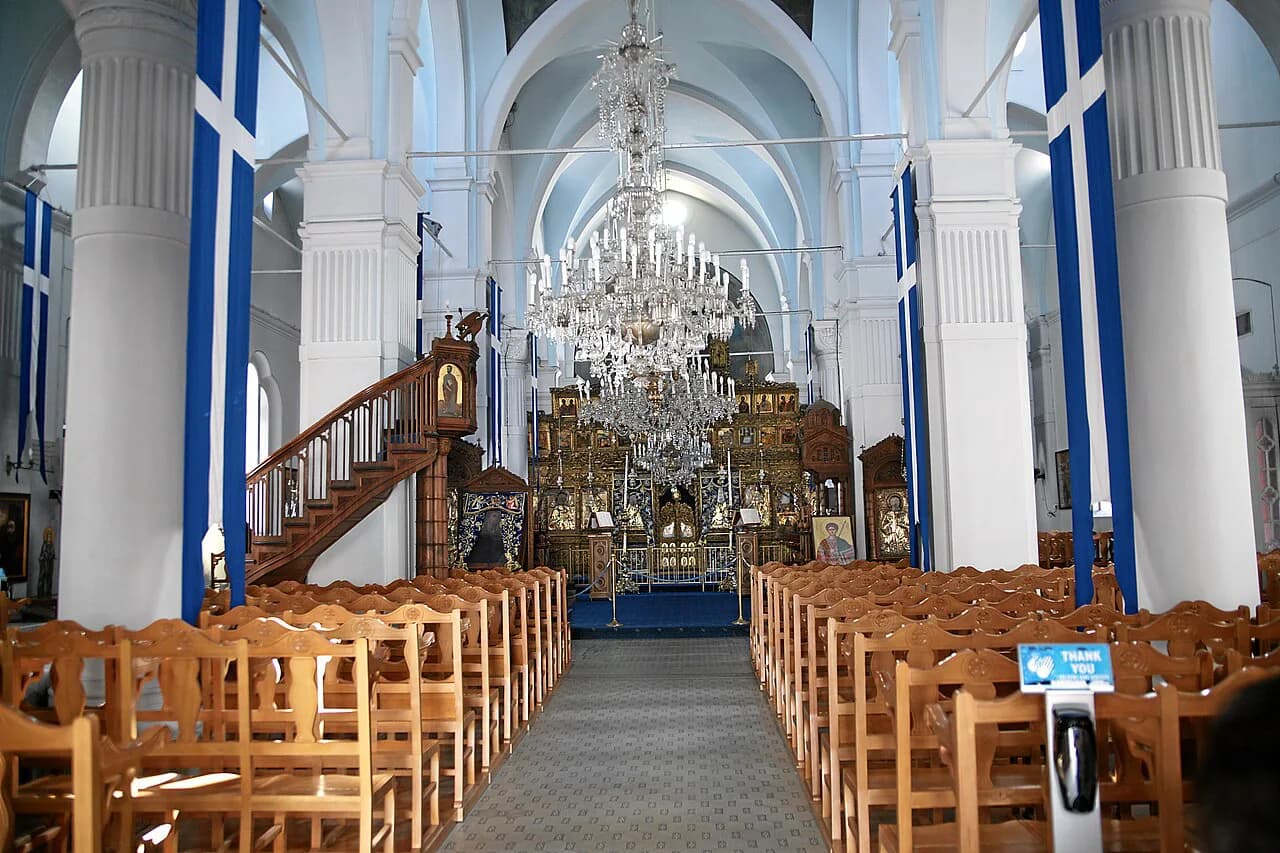
Beyond the mosques and museums, the south side has a dense set of churches worth an hour of wandering, from the Byzantine and Gothic buildings inside the walls to the smaller parish churches in the lanes. Pick two or three rather than trying to tick off every one.
Wear shoes you can walk in: the old town is flat and shaded in parts, but the pavements are uneven and the lanes between the walls and Ledra Street are longer than they look on a map.
Crossing the Green Line on foot
The crossing at the end of Ledra Street is a straightforward pedestrian border: you walk through, show your passport, and continue into North Nicosia. Bring the passport you travelled on, expect a short queue at busy times, and keep your hire-car paperwork in mind if you plan to drive across rather than walk, because insurance terms differ across the line.
The buffer zone is guarded by UN peacekeepers, and the crossing is routine for visitors rather than dramatic. Cross on foot if you only have an afternoon; driving north adds paperwork and rental restrictions that are easier to avoid on a day trip.
North Nicosia: Selimiye Mosque and Büyük Han
Once across, the Selimiye Mosque, a former Gothic cathedral turned mosque, is a short walk from the crossing and one of the most striking buildings on the island. Nearby, Büyük Han, the Great Inn, is a 16th-century caravanserai built under Ottoman rule and now a courtyard of small shops and cafes; it is one of the most important buildings in Cyprus and the obvious place to sit down after the border.
The northern bazaar streets around the mosque and the han are the most atmospheric part of the city for a slow wander. The currency changes to the Turkish lira north of the line, but euros and sterling are widely accepted in practice; carry small notes for small purchases.
Guided walks that make sense of a divided city
Visit Nicosia runs free walking tours that meet at Eleftheria Square, typically last about two hours, and cover the walled city's landmarks. They are genuinely free and a good first move if you arrive without a plan, because the guide lays out the geography and history before you branch off alone. Book a slot ahead in high season.
The Home for Cooperation, a civil-society centre in the buffer zone, is worth knowing about if you want context on the division before you cross. It sits between the two sides and is a calm stop on the way to the north.
How much time Nicosia needs
One full day covers the Cyprus Museum, two or three other museums, Shacolas Tower, the old town walk and a crossing into North Nicosia. Two days lets you slow down, take a walking tour, sit in Büyük Han and still see the AG Leventis Gallery without rushing.
From a coastal base, Nicosia works as a long day trip by bus rather than an overnight requirement, but the bus station sits just outside the walls, so you walk straight into the old town on arrival. If you are based in Ayia Napa or Protaras, treat Nicosia as a separate inland day and keep your coastal plans for another day; if you would rather not split the trip, save the things to do in Ayia Napa for a day when you stay put.
Getting to Nicosia and getting around
Intercity buses from Larnaca, Limassol and Paphos run into Nicosia and stop outside the walls, which puts you within a few minutes' walk of Eleftheria Square. Once inside, everything on this route is on foot; you do not need a car, and parking in the old town is more trouble than it is worth.
The city sits on the Mesaoria Plain, which is why it is hotter in summer and colder in winter than the coast. Plan the walking for the morning and the museums for the afternoon in high summer; the heat inland is more punishing than the sea breeze suggests.
Department of Antiquities sites and museums change hours by season, and the Cyprus Museum's published hours carry no season, so check the week's opening times with the museum before a Monday or Sunday visit. That is the one detail worth confirming before you set out.
Should you cross into North Nicosia?
Yes: the crossing is short, routine with a passport, and the Selimiye Mosque and Büyük Han are among the most memorable buildings on the whole island. Walk it rather than drive it, keep the museum morning on the south side, and finish with the view from Shacolas Tower before the light goes.
Explore more Nicosia guides
- Churches in Nicosia
- Free Things to Do in Nicosia
- Green Line Nicosia
- How Many Days in Nicosia? What One, Two and Three Days Cover
- Museums in Nicosia
- Nicosia History
- Nicosia Map
- Nicosia Old Town
- Nicosia Walking Tour
- Nicosia Weather in August
- Nicosia Weather in July
- Nicosia Weather in October
- Nicosia Weather in September
- North Nicosia (Lefkoşa)
- One Day in Nicosia
- Shopping in Nicosia
- Things to Do in Kyrenia
Sources
Notes for your Cyprus trip
Optional updates to our Cyprus guides.
You might also like
Continue reading
More guides you'll find useful