Paphos Churches: Which Ones to Visit and What to Look For
A practical guide to the churches of Paphos, from the Agia Kyriaki site around St Paul's Pillar to English-language Sunday worship at Paphos Christian Fellowship.
On this page
Start with the Agia Kyriaki and Panagia Chrysopolitissa site in Kato Paphos: it is the one church visit that fits naturally into a harbour-and-mosaics day on foot, and it combines excavated floors, a working church and St Paul's Pillar in a single walled plot. Elsewhere in the district, churches and monasteries are scattered enough that you need a car or a deliberate bus ride. This guide covers what you are looking at on the Chrysopolitissa site, how to behave inside an active church, and where to find an English-language Sunday morning service in Paphos.
What churches can you visit in Paphos?
Paphos splits into two centres for church visiting. Kato Paphos, the coastal resort side, holds the Agia Kyriaki and Panagia Chrysopolitissa site with St Paul's Pillar, a short walk from the harbour and the archaeological park. Ktima, the inland commercial centre, is the everyday town, and the wider district adds village churches and monasteries reached by road. Plan Kato Paphos on foot and treat anything beyond it as a half-day with transport.
The practical upshot is that a church visit costs you almost nothing in time if you are already in Kato Paphos, and quite a lot if you are not. Build the Chrysopolitissa site into a morning that also takes in the mosaics and the harbour, and use the rest of your trip for the outlying monasteries rather than trying to chain four village churches in one afternoon.
Opening hours, closed days and any entry charges for individual churches vary, and the excavated ground and the standing church are separate concerns. Check the current position with the site or your accommodation before you set out.
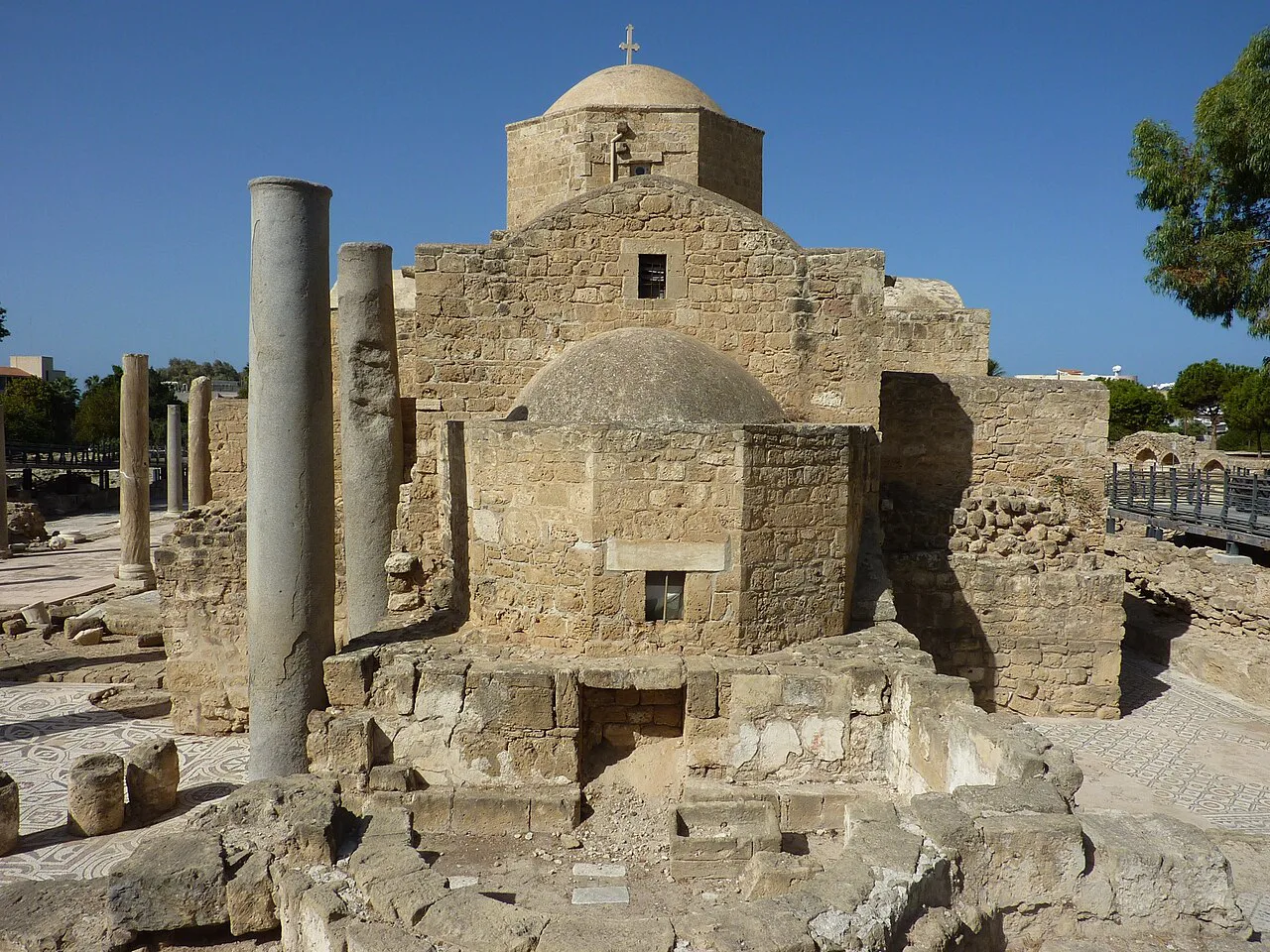
Panagia Chrysopolitissa and Agia Kyriaki: the site around St Paul's Pillar
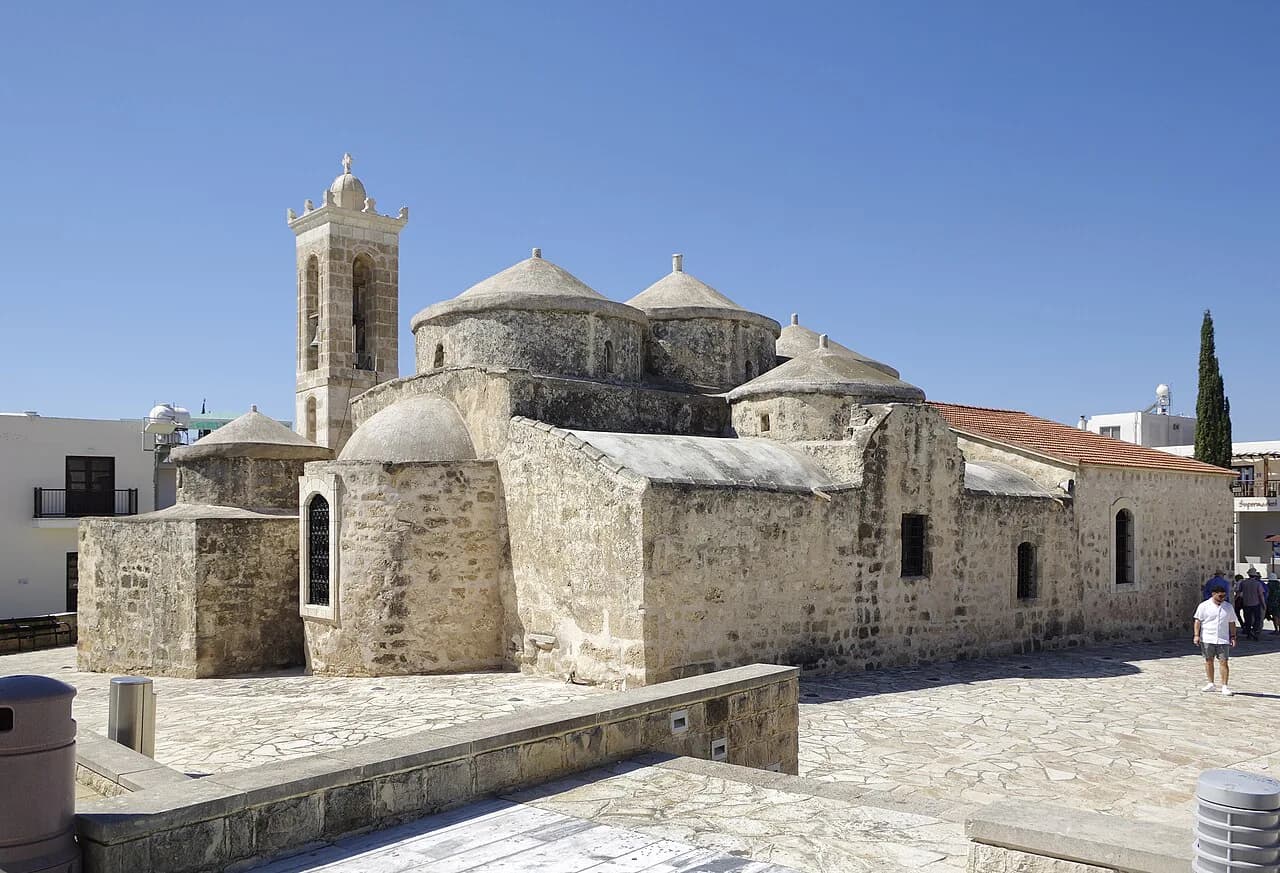
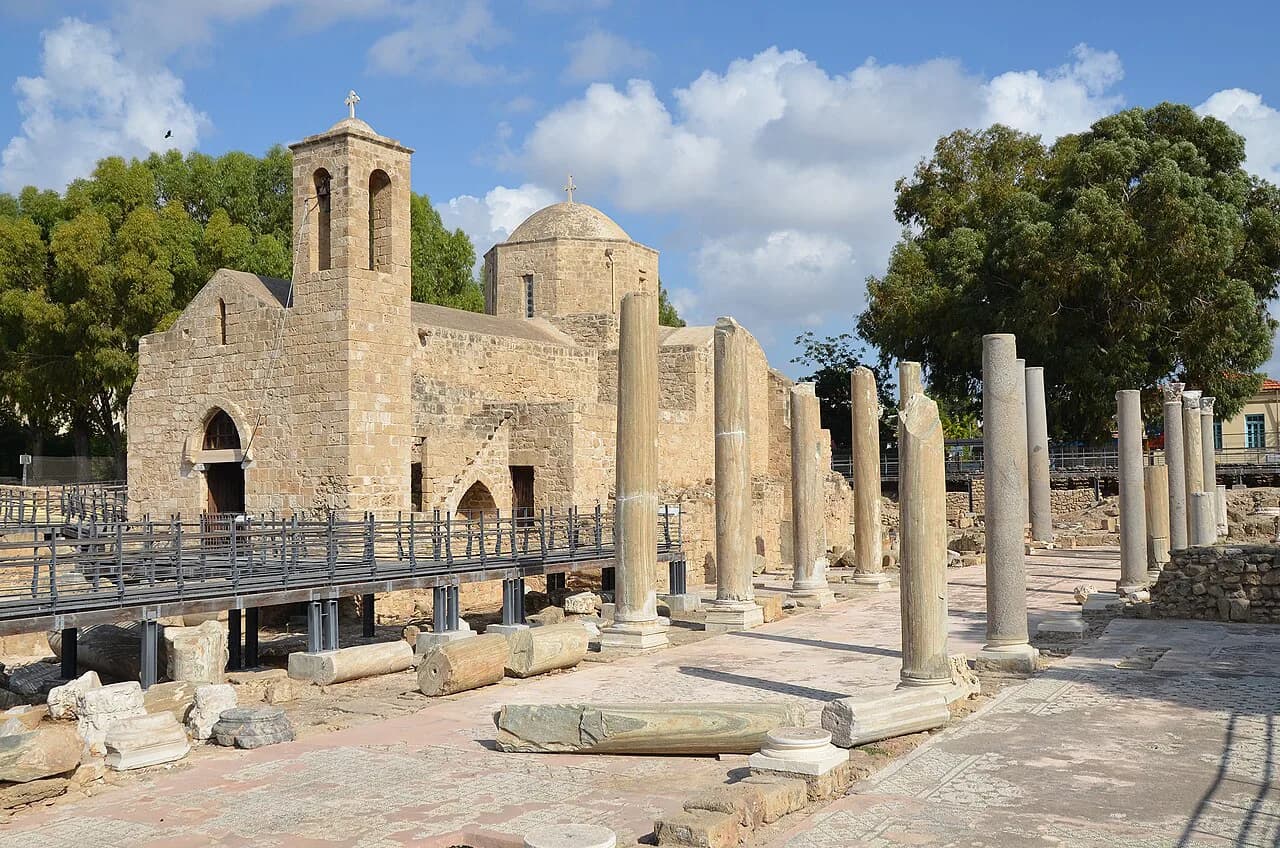
The confusion many visitors have is thinking there is one church here. The named church is the Church of Agia Kyriaki, and St Paul is associated with the same site. Treat the ground as a historic religious site with a standing church rather than a single monument, and read the panels on site for the sequence.
St Paul's Pillar stands in the same enclosure and is traditionally linked to the Apostle Paul at Paphos. Treat it as a marked point within the site rather than a separate attraction, and read the site as a sequence: the open ground first, the pillar, then the standing church.
The site sits within easy walking distance of the harbour, so the sensible route is to arrive early, see the ruins before the day heats up, and finish at the water. From there the Paphos harbour front and the fort are a few minutes further on, which makes this the most efficient church stop of the trip.
This is an active worship space as well as a monument, and the two uses share the same gate. If a service or a baptism is under way in Agia Kyriaki, stay in the excavated area outside and keep voices down rather than walking through the congregation. Visitors are welcome at the ruins; the church interior is not a thoroughfare.
Linking the site to the old town gives you a fuller day: ruins and harbour in the morning, then uphill to Paphos old town for the market and a later lunch. You do not need a car for either half, and the two are close enough that the walk is the point rather than a chore.
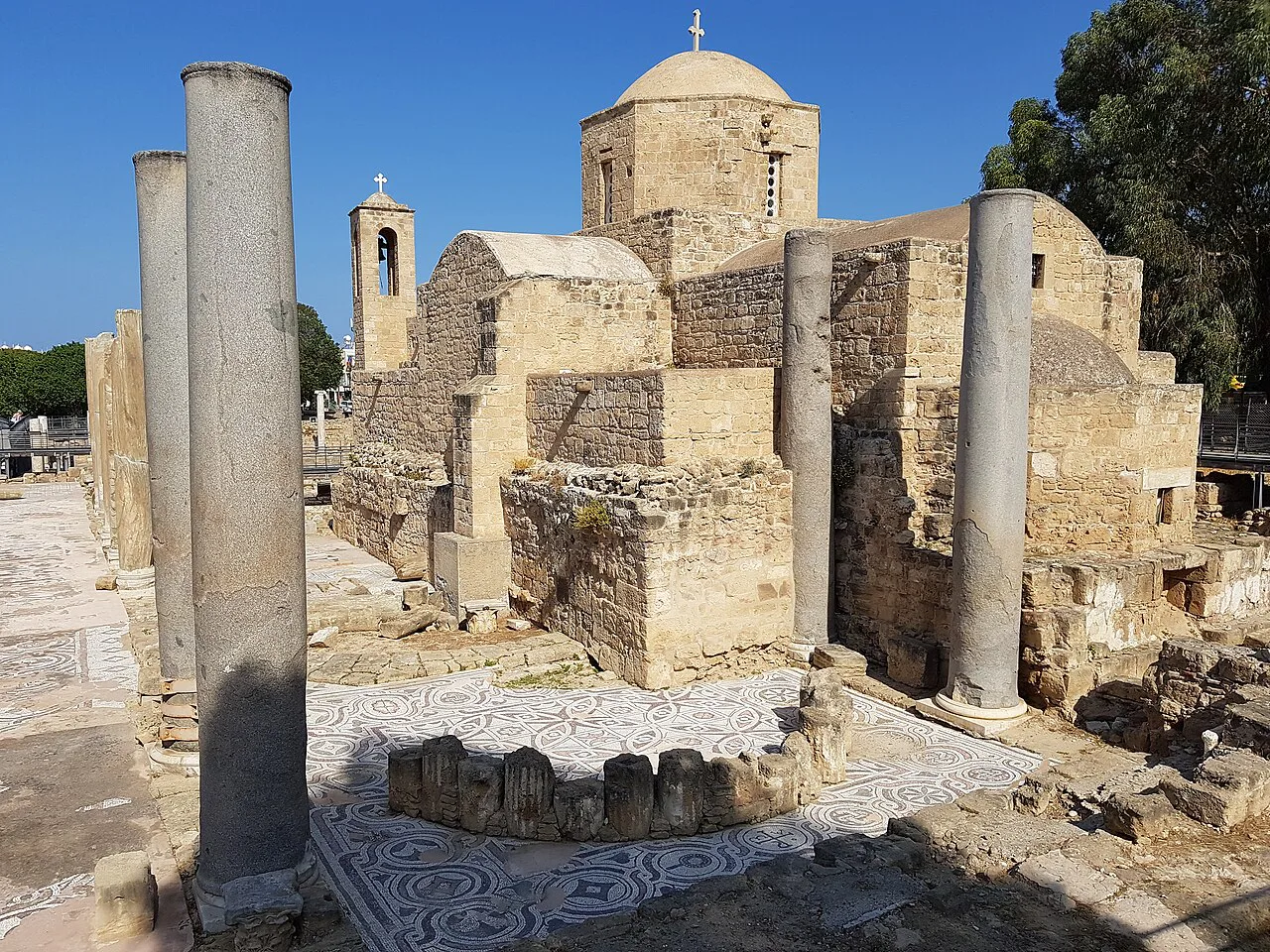
What to look for inside a Paphos church: mosaics, icons and later additions
Look for what survives of the older structures at ground level rather than lifted into a museum case, and notice how the later church sits among the earlier remains rather than replacing them cleanly. The standing church of Agia Kyriaki is the working place of worship; the surrounding ground is the historic fabric.
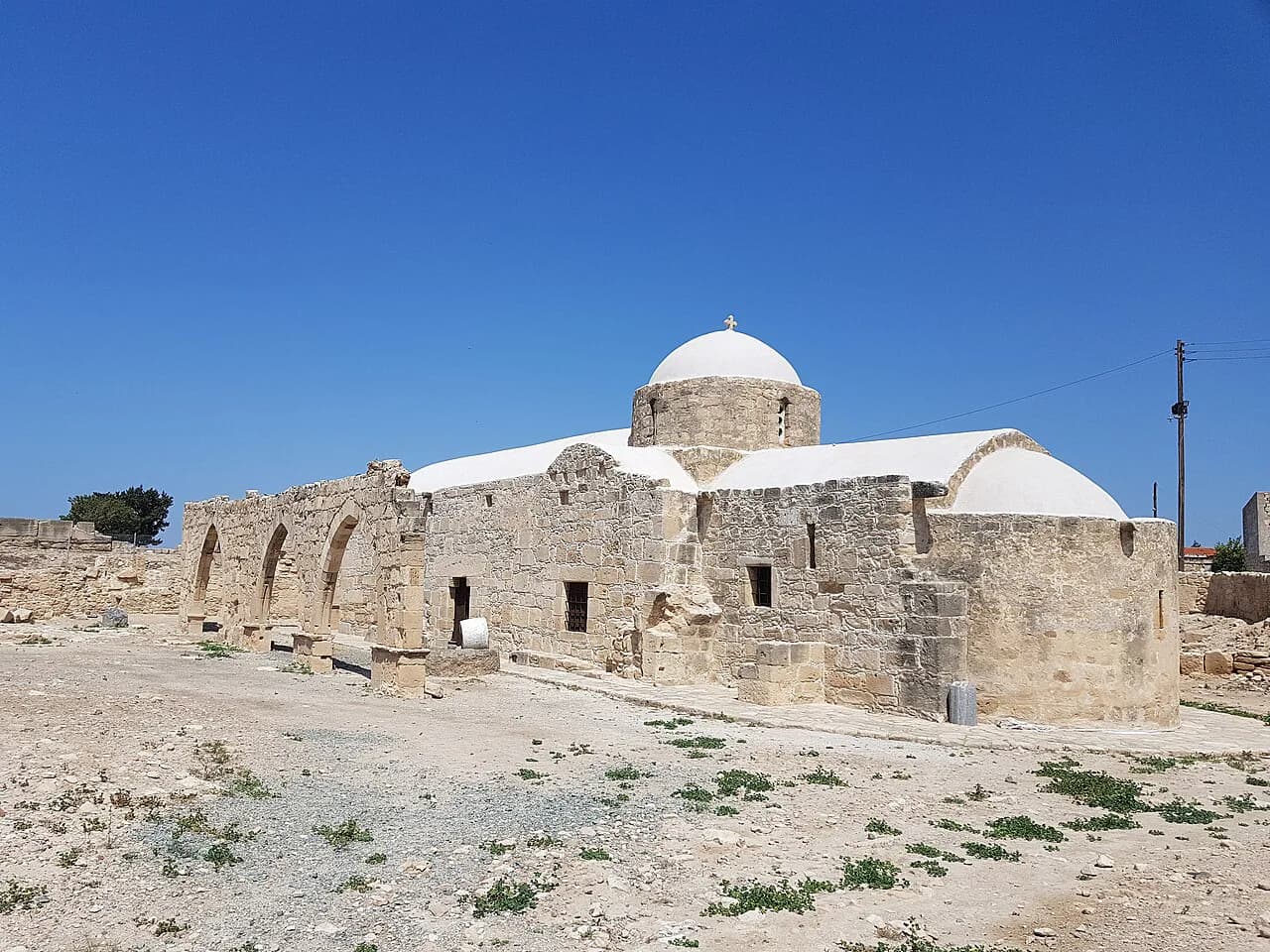
In the standing churches of the district, the things worth your attention are the icon screen, the icons themselves and the layers of repair visible in the walls, where a doorway or a blocked window often shows an earlier phase. Village churches reward a slow look at the masonry outside as much as the painted interior. Photography inside is a judgement call: no flash, and never during worship.
If you want to compare with the protected mosaics of the Kato Paphos Archaeological Park, which are presented indoors, see the park too and then return to the open ground here: the same craft, two very different conservation decisions, one roofed and one open to the weather.
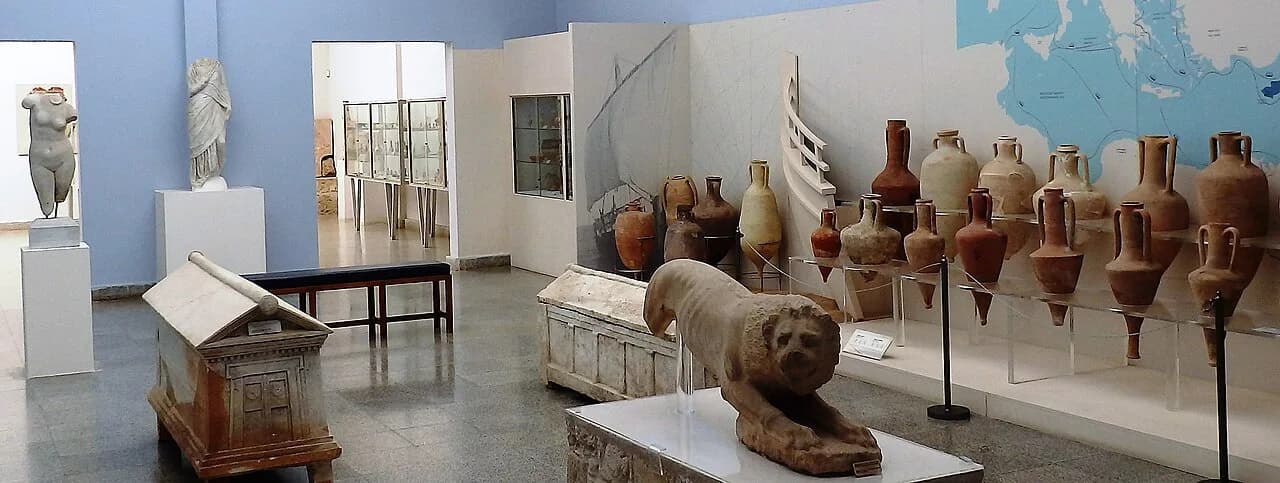
If you want more indoor viewing of icons and church plate, the town's museums fill the gap on a hot or wet afternoon and are usually quieter than the archaeological sites. Check opening days before committing, as museum hours vary through the year.
Attending an English-language service: Paphos Christian Fellowship International
Travellers who want an English-language Sunday service rather than sightseeing have a named option: Paphos Christian Fellowship International, a non-denominational, evangelical congregation that uses English as its common language and describes itself as welcoming to visitors and holidaymakers. Its main meeting is every Sunday at 10.30am at the PCFI Church, Adamantiou Korai 12, Kato Paphos 8046.
Treat this as a congregation's regular worship, not an attraction to slot into a sightseeing circuit. Arrive a few minutes early, and stay for the whole meeting rather than slipping out mid-service. The address is on Adamantiou Korai Street in the Kato Paphos 8046 postcode area.
If you are based in Ktima rather than the coast, allow extra time to get down to Kato Paphos for a 10.30am start, and plan the rest of the day around the coast afterwards rather than doubling back inland. Pairing the service with a harbour walk or a late breakfast works better than a tight schedule.
For other denominations and for Catholic Mass times, no schedule is published in the sources here, so ask your accommodation or the parish directly rather than relying on a web listing. Service patterns in resort parishes change with the season and with visiting clergy.
Practicalities: dress, quiet, and visiting around worship times
Dress modestly in any active church: shoulders and knees covered is a sensible default, with a scarf handy for women, and hats off for men inside. In the excavated open-air parts of the site you can dress for the weather, but cover up before stepping into the standing church itself.
Time your visit around worship rather than during it. Sunday mornings and major feast days are busy with congregations, and a church that is open to tourists on a Tuesday may be closed to visitors during a morning liturgy. If the door is open and people are praying, wait outside.
Heat shapes the day more than anything else. Mid-summer afternoons make open, shadeless archaeological ground uncomfortable, so see the ruins early or late and use the middle of the day for indoor viewing or shade. Check the seasonal picture before you build a walking plan.
October and September are the kinder months for a site with no shade, with lower temperatures and fewer people at the gate. July is workable if you start at opening time and carry water. Whichever month you pick, the layout is the same, so the visit is about timing rather than season.
Entry charges for the excavated site, if any, are not fixed here; confirm the current ticket position at the gate before you go. Carry small change in euros in case a donation box or a custodian is present.
Churches and monasteries elsewhere in the Paphos district
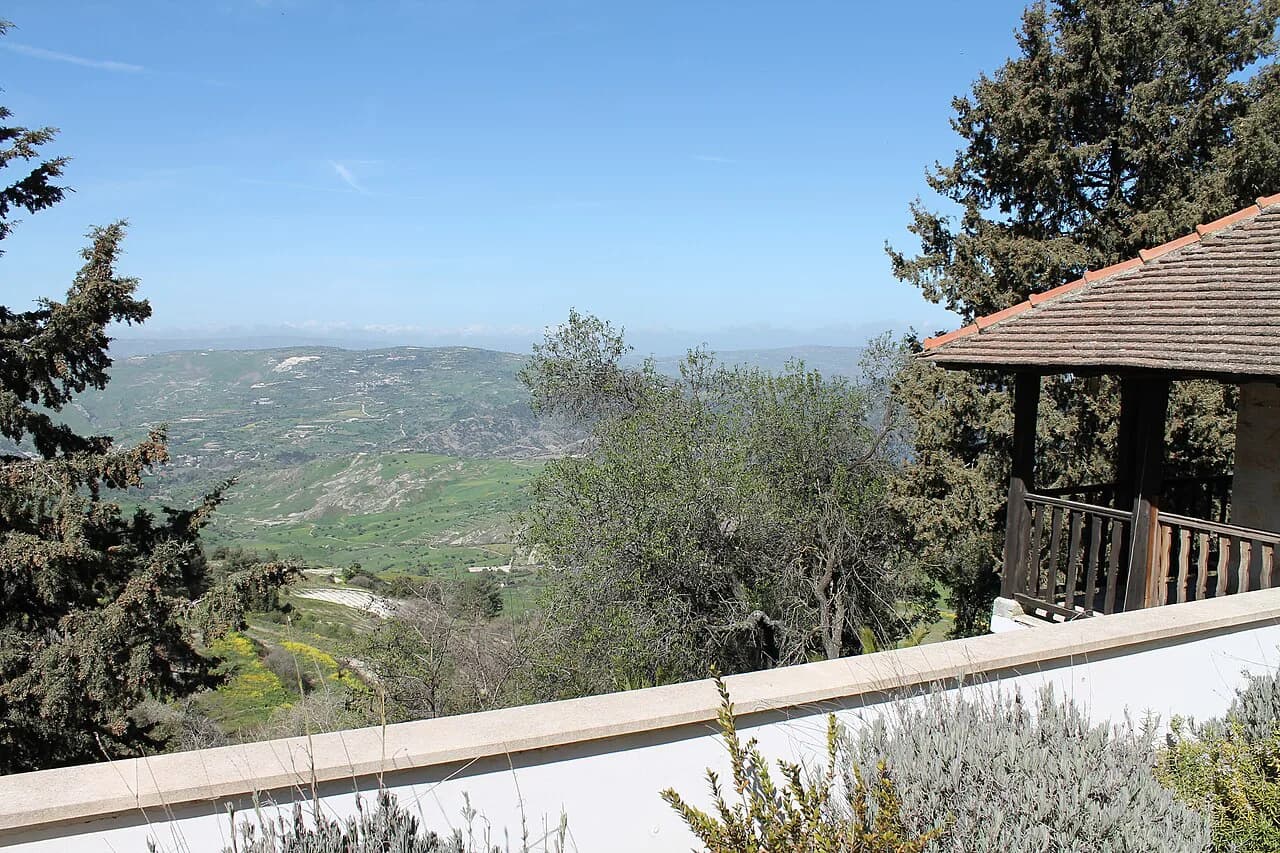
Beyond Kato Paphos, the district's churches and monasteries are spread across the coastal strip and the hills behind it, and most visitors see them as part of a drive rather than a dedicated church day. The pattern is rural: small churches in village centres, larger monastic complexes further out, and opening arrangements that depend on the community that keeps them.
A car makes the difference here, because bus routes link the main towns but not the village churches between them. Driving in Cyprus is on the left, roads into the hills are slow and winding, and a realistic plan is one or two stops rather than a circuit of five. Build in time for a wrong turn.
Round off a church-and-ruins day on the coast, where the marina and the seafront give you somewhere to sit afterwards. Sunset over the water is the natural end to a day that started with mosaics and stone.
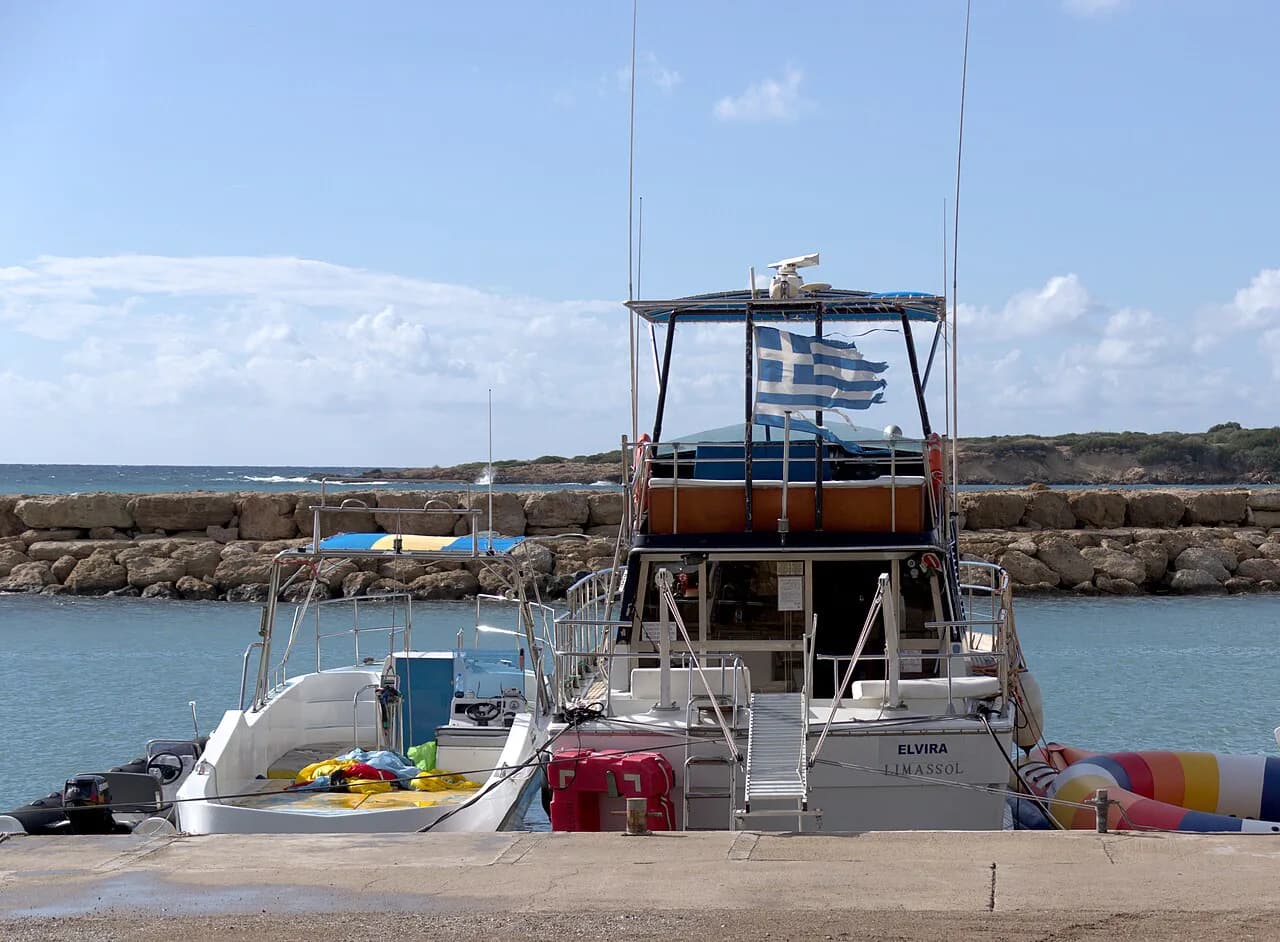
If you would rather be on the water than in a nave by the afternoon, boat trips leave from the Kato Paphos coast and are seasonal, so check what is running during your dates. It is a different kind of day out, and a good way to see the coastline you have been driving along.
Before you set off for any outlying church, confirm it is open: ringing ahead through your accommodation, or checking with the relevant parish, saves a wasted drive. Hours and access vary by season and by community.
Which Paphos church should you actually visit?
For most travellers the answer is the Agia Kyriaki and St Paul's Pillar site in Kato Paphos: it is central and combines a historic ground, a pillar and a working church in one stop. Add an English-language Sunday service at Paphos Christian Fellowship International only if worship is the point of your morning, not as a sightseeing extra.
Save the outlying monasteries for a day when you have a car and no fixed schedule, and treat them as a drive with one or two stops rather than a checklist. Either way, check opening days and service times locally before you go, then build the rest of the day around the harbour and the old town.
Explore more Paphos guides
Sources
Notes for your Cyprus trip
Optional updates to our Cyprus guides.
You might also like
Continue reading
More guides you'll find useful