
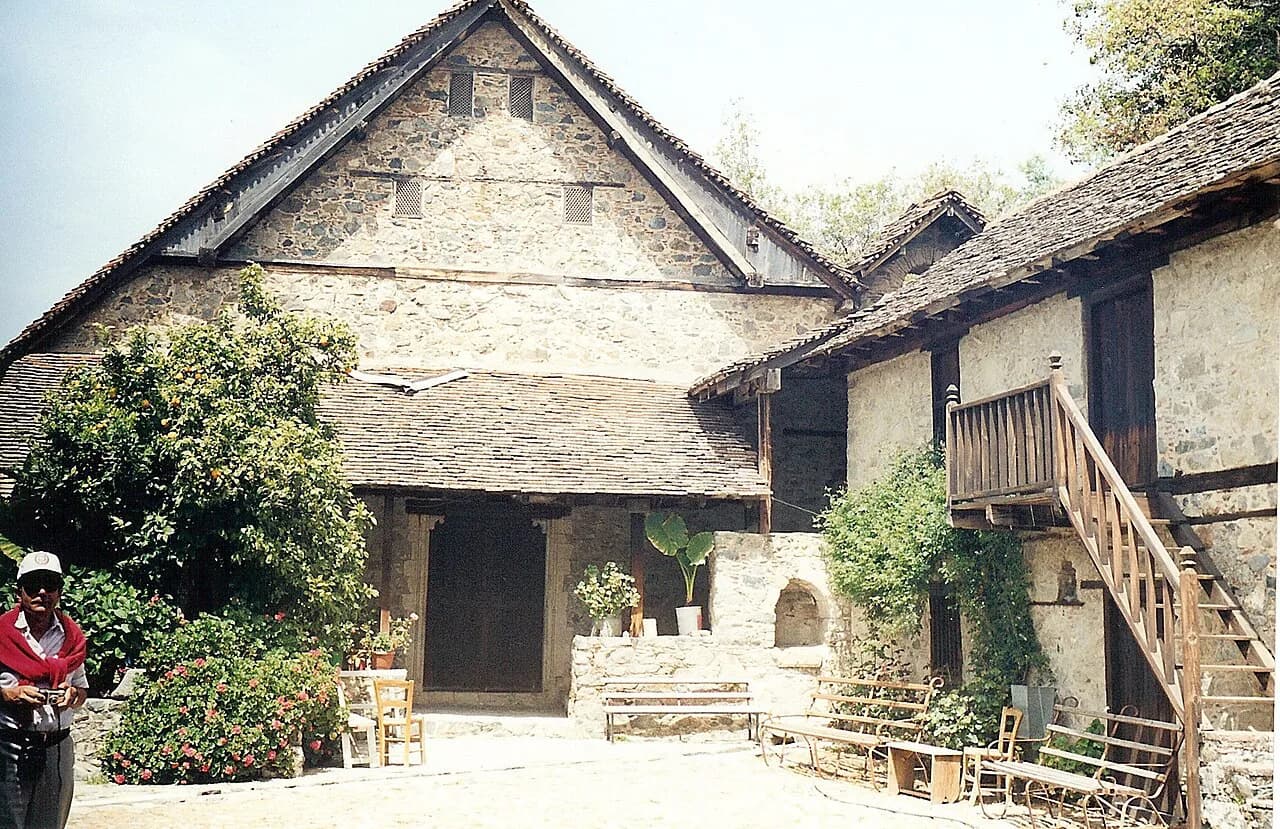
Agios Ioannis Lampadistis in Kalopanayiotis: What to See and How Long to Allow

Agios Ioannis Lampadistis is a complex of three connected churches in the village of Kalopanayiotis, in the Troodos mountains, and the core visit is free. Allow roughly 45 to 90 minutes for the churches themselves, then add time if you want the village, the surrounding valley or a second painted church on the same drive. This page covers what the complex contains, where it sits in the village, how to reach it, what to see inside and what to plan around it.
What Agios Ioannis Lampadistis is
The site began as a monastery and is now a UNESCO World Heritage Site made up of three churches joined under one roof: Agios Ioannis Lampadistis, Agios Irakleidios and a Latin chapel. Travellers often arrive expecting a single church and find a small complex of connected sanctuaries, each with its own character and fresco layers. The name is spelled Lampadistis on some signs and Lambadistis on others, so search for both when you check directions or timings.
It sits among the painted churches of the Troodos region, the group inscribed for its Byzantine and post-Byzantine wall paintings. That wider listing is why the village appears on church-focused itineraries rather than only on village-and-valley drives. If your interest is frescoes, plan this as a short, focused stop rather than a half-day monument.
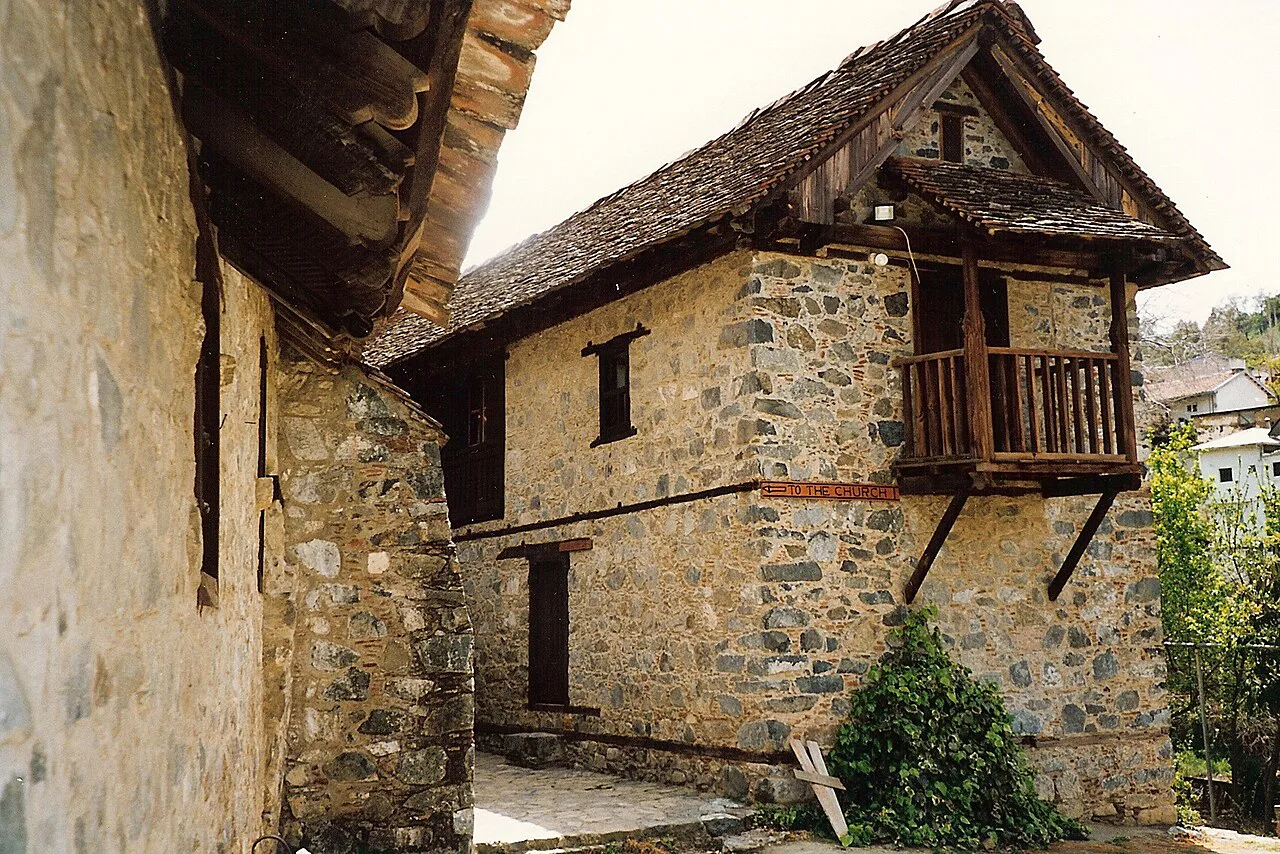

Where it is in Kalopanayiotis and how to get there
Kalopanayiotis lies in the Troodos mountains in the Nicosia district, on the slopes above the Setrachos valley, and the church complex is the village's central heritage stop. The approach is by mountain road, with bends and steep sections, so allow more driving time than the distance suggests and arrive in daylight if you are unfamiliar with the roads. Cyprus drives on the left throughout the island, the Republic uses the euro, and a small hire car copes better with village lanes than a large one.
Parking, transport and refreshments are separate from the church visit, and village parking fills quickly on weekends and in high season. The map reference published for the complex is 34.992320, 32.830193, which is the most reliable way to set a navigation app rather than relying on a village name alone. Take the coordinates with you, because mobile signal in the Troodos valleys can be patchy.
Most visitors reach Kalopanayiotis by car from the Nicosia or Limassol side of the mountains, linking it with other Troodos stops on the same loop. Bus coverage of mountain villages is thin, so check any service before you build a day around it rather than assuming a frequent timetable. The Troodos Attractions: 13 Visitor Guides covers the other sites worth slotting into the same drive.

Entry and what it costs
Admission to the church complex is free, so the core visit costs nothing beyond getting there. The visitor listing also mentions an optional separate Byzantine Museum with a €1 charge that is not included in the free church visit, so budget for it only if you want the museum as well. Donations are a separate choice and are not required for entry.
Optional guided activities, transport and refreshments are separate costs, which is worth knowing if you are working to a daily budget in euros. There is no evidence that booking is required for the church visit, so treat it as a turn-up site and confirm anything time-sensitive before you set out.
What to see inside the three churches
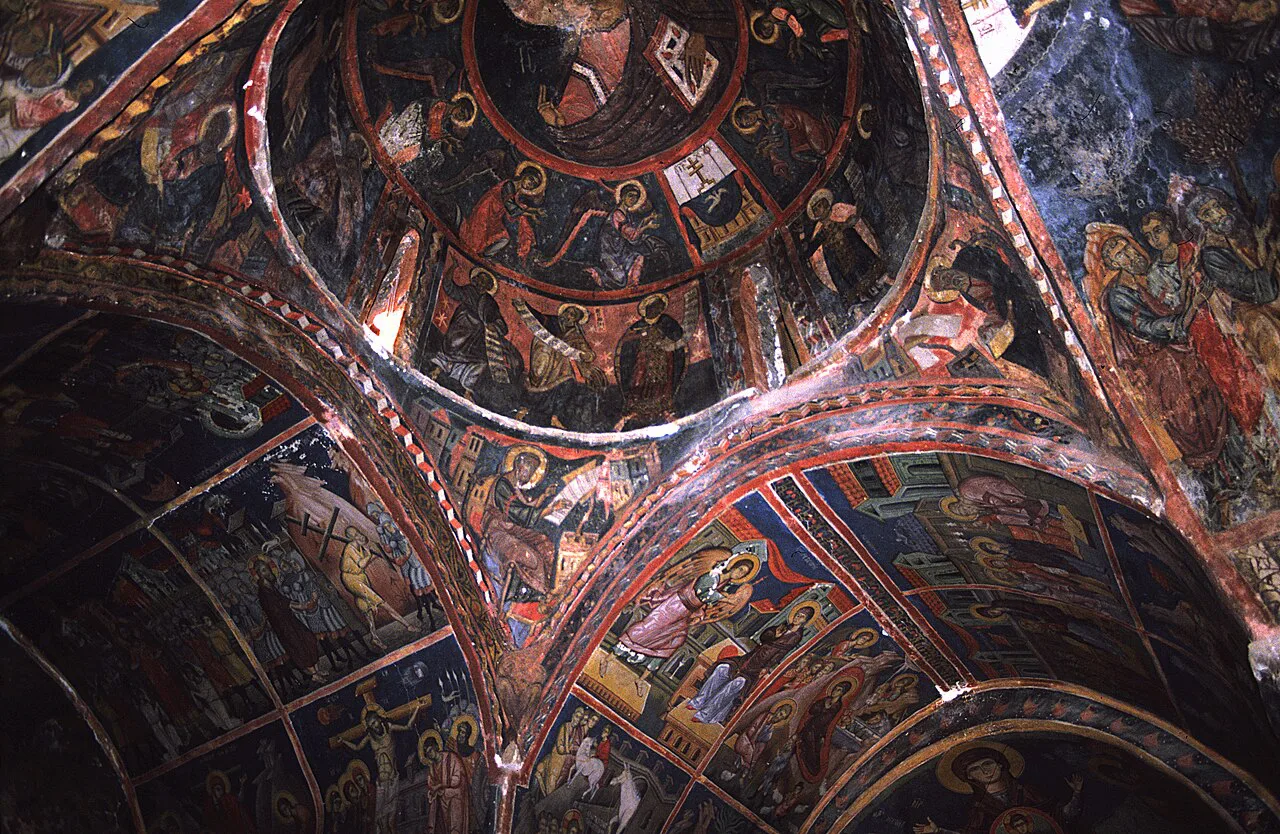
The draw is the frescoes, which survive from several artistic periods across the three linked sanctuaries, so the interior rewards slow looking rather than a quick walk-through. Because the churches are connected, you move from one to the next without going outside, and each space shows a different phase of painting and later repair. Look for the Latin chapel in particular: a Western-rite space inside an Orthodox monastic complex tells you how layered the site's history is.
Lighting inside is dim and flash photography is not allowed, so give your eyes a few minutes to adjust and keep a steady hand if you photograph. The carved woodwork and the church furnishings are as much part of the visit as the wall paintings. If you have come for art and history, 45 to 90 minutes is a sensible suggested window for the complex itself, not an official timing.
How long to allow
Set aside 45 to 90 minutes for the core visit, which is a suggested window rather than official guidance or a measured walking time. Add 20 to 30 minutes if you also take in the optional Byzantine Museum, and more if you linger in the village. The complex is small, so a rushed stop of 20 minutes is possible but misses the point of coming up into the mountains.
A realistic half day pairs the churches with one more stop nearby, and a full day covers two or three painted churches with a village lunch between them. Build slack into the plan for mountain driving and for services or conservation work that can temporarily limit access to parts of the complex. If the church is the only reason for the drive, a morning start leaves the afternoon free for the rest of the Troodos.
Visiting respectfully
This is an active sacred site, so dress modestly, keep voices low and skip flash photography inside. These are the house rules published for visitors rather than the preferences of any one guide, and following them keeps the churches open to tourists. A wrap or long trousers in the car solves the dress question without a detour.
Services and conservation work can close or restrict parts of the complex at short notice, so a last check before you drive up is worthwhile. The published visitor area is wheelchair-accessible, which is unusual among mountain churches and makes this a practical choice if step-free access matters. Facilities such as parking and refreshments are separate from the church and not guaranteed at the door.
Opening times: checking before you drive up
Opening follows seasonal church hours that vary through the year, and public-holiday access can differ from normal days. Rather than planning around a fixed timetable, check shortly before travelling and aim to arrive well before closing. Because the visit is free and short, a wasted drive is the main risk here, not a lost ticket.
Nearby in the Troodos: a second painted church
Agios Nikolaos tis Stegis, a UNESCO-listed painted church near Kakopetria, pairs naturally with Kalopanayiotis for a church-focused day in the Troodos. The two are close enough to link by road, and seeing both shows how differently the region's churches were built and decorated. Kakopetria itself is a handy halfway point for a break between them.
Further afield, Kykkos monastery is the best-known religious site in the Troodos mountains and draws coach groups, so it works better as an early or late stop. Asinou church and Panagia Podithou, Galata are other painted interiors within reach if you are building a loop rather than a single visit. Keep the number of stops realistic given mountain road speeds and the heat at midday in summer.
If you want landscape rather than more churches, Cedar Valley in the Troodos offers a high-altitude change of scene, and the waterfalls above Pano Platres and at Foini suit a warm afternoon. All of these are short stops that fit around Kalopanayiotis rather than replacing it.
Is Agios Ioannis Lampadistis worth the mountain drive?
Yes, if you want frescoes and a village setting rather than a grand monument: entry is free, the visit is compact, and three connected churches give you more to look at than the size of the site suggests. The trade-offs are mountain driving, variable seasonal hours and limited facilities around the church. Come in the morning, carry the coordinates, and pair it with Agios Nikolaos tis Stegis for a proper painted-church day.
Explore more Troodos guides
Frequently Asked Questions
Is Agios Ioannis Lampadistis a monastery or a church?
It was originally a monastery and is now a complex of three connected churches: Agios Ioannis Lampadistis, Agios Irakleidios and a Latin chapel. Visitors see the church interiors, not a working monastic community.
Do you need to book to visit Agios Ioannis Lampadistis?
No booking is published for the church visit, which is free to enter. Confirm opening times before travelling, since the hours are seasonal and access can be limited by services or conservation work.
Is Agios Ioannis Lampadistis suitable for wheelchairs?
The visitor area is published as wheelchair-accessible, which makes it one of the more practical mountain churches in the Troodos for step-free access. Parking and transport arrangements are separate and best checked with the village or your car hire company.