
Panagia tou Araka: A Visitor's Guide to the Painted Church at Lagoudera

Panagia tou Araka is a 12th-century domed church in the Pitsilia hills, tucked between the villages of Lagoudera and Saranti in the Troodos and listed as a UNESCO World Heritage site. It is small, free to enter and takes about half an hour, but its frescoes by Theodoros Apsevdis make it one of the most important Byzantine interiors on the island. This guide covers where it sits, how the drive works, the split daily opening hours, what to look for inside and which nearby churches and monasteries fit the same day.
A 12th-century domed church in the Pitsilia hills
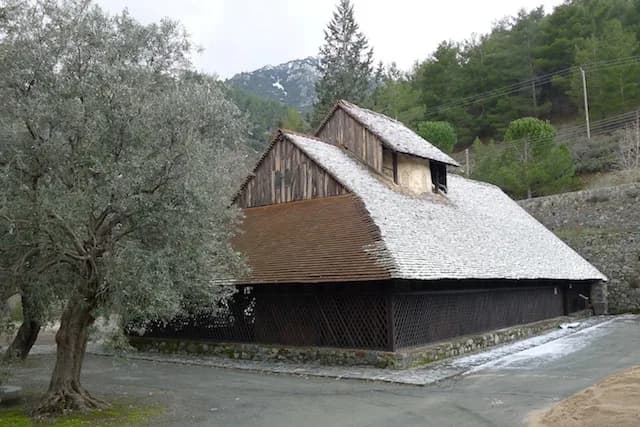
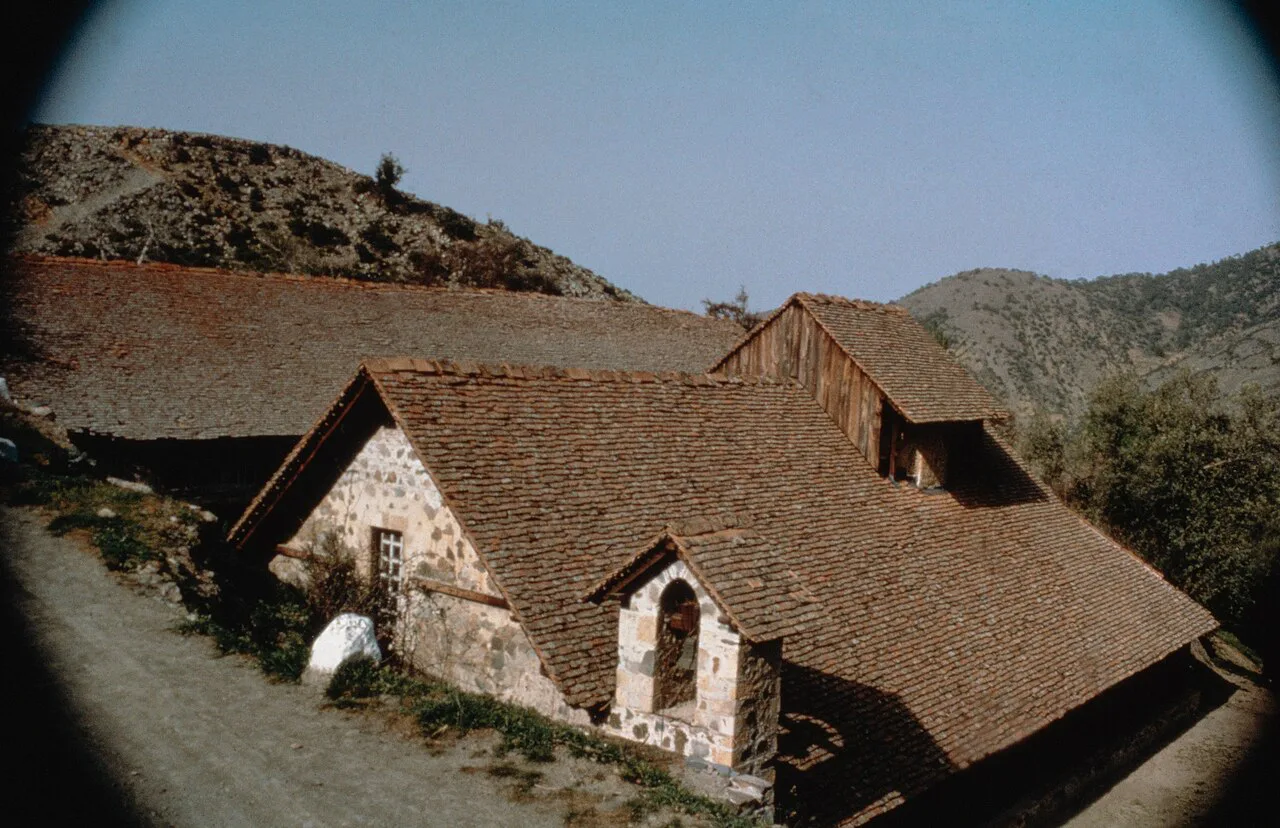
The church stands in the mountainous Pitsilia area of the Troodos, in Nicosia district, on the road between Lagoudera and Saranti. It was built in the second half of the 12th century as the church of a monastery, at a time when monastic life was flourishing on the island, and it is regarded as one of the most significant Byzantine churches in Cyprus. It is a single-aisled domed building with a steep-pitched cross-shaped roof and a latticed-woodwork portico; in the 18th century the west wall was demolished and the church extended.
The monastery survived until the first decades of the 19th century, and what remains beside the church is a two-storey monastery building to the north. That surviving block is the history you can actually see on site, so look at it before or after the interior rather than treating the church as an isolated monument.
Where Panagia tou Araka sits and how to reach it
Lagoudera is the practical reference point: the church is linked to the village and to neighbouring Saranti, and it sits high enough in the Troodos that the last stretch is mountain road rather than motorway. Come by car, take the bends steadily and allow for the fact that the final approach is slow going. The Visit Cyprus listing gives GPS coordinates of 34.965394, 33.011166 and the address as Lagoudera village, which is the simplest thing to enter into a navigation app.
The setting is rural and quiet, with the church sitting among trees and the village houses of Lagoudera a short drive away. If you are touring the Troodos Attractions by car, plan the church as one stop on a loop rather than a destination in itself.

Opening hours and free entry
The Department of Antiquities listing published by Visit Cyprus gives Monday to Saturday hours of 9:00–13:00 and 15:00–17:30 in winter, and 9:00–13:00 and 15:00–18:00 in summer. On Sunday the hours are 10:00–13:00 and 15:00–17:30, the church is open all year and it is closed on public holidays. Entry is free.
The timetable is genuinely split, which catches people out: a midday arrival between the morning and afternoon sessions finds the door shut. Structure a Troodos day so the church falls into one of those windows, and build in a margin because mountain driving takes longer than the map suggests. The listing warns that hours and fees can change without notice, so check the Department of Antiquities before you set out.
What to see inside
The interior is compact, so the architecture reads quickly once you know the plan. You are standing in a single aisle under a dome, with the steep cross-shaped roof visible from outside and carried overhead inside, and the 18th-century extension at the west end explains why the western portion feels added on.
The latticed-woodwork portico outside is worth a moment before you go in, since it is one of the features that gives the exterior its character. With these pointers the small space makes sense in a few minutes, which is why the visit is short rather than skimped.
The frescoes of Theodoros Apsevdis
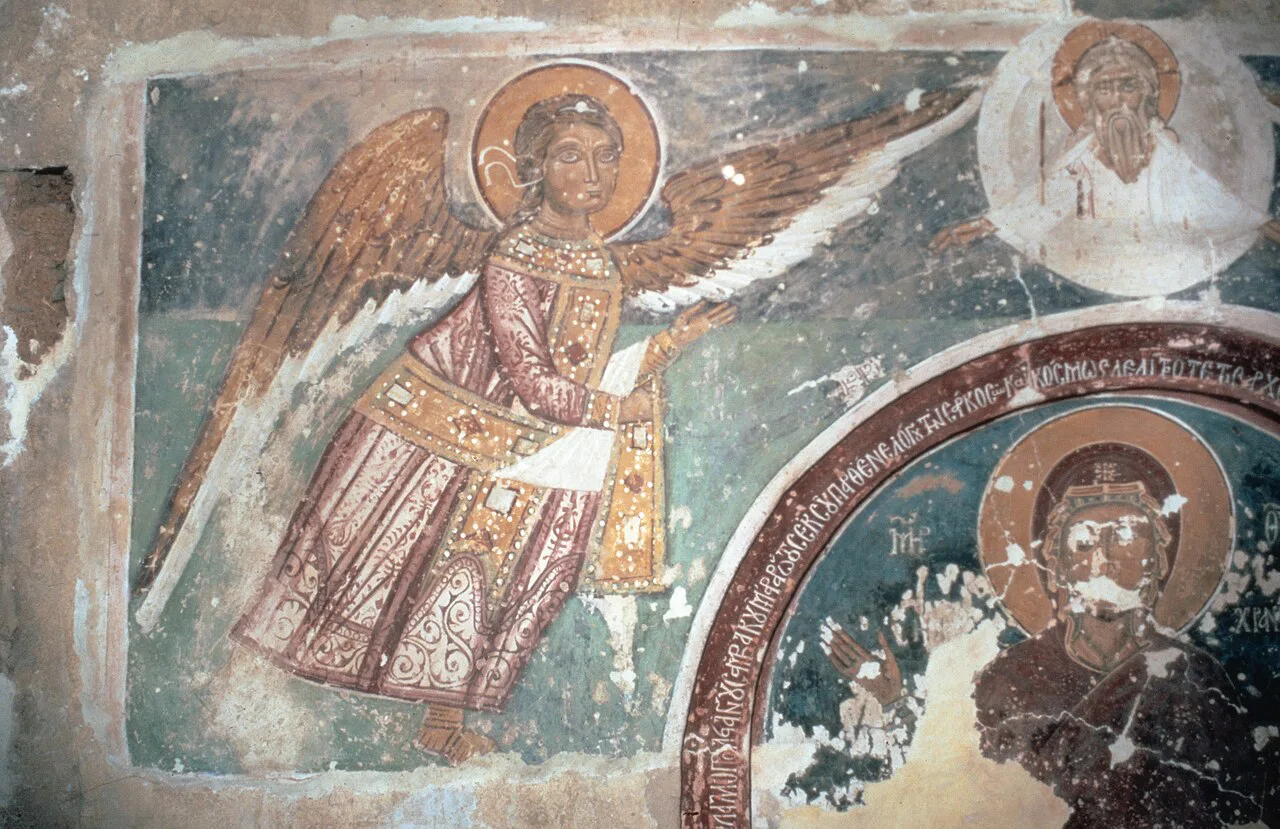
The wall paintings are the reason to come. They were painted by Theodoros Apsevdis in 1192 in the late Comnenian style, and they sit within the tradition seen across Greece, the Balkans and Russia. Compare the figures and the modelling with what you know of other Byzantine work and the date of 1192 becomes the anchor for the whole interior.
The paintings in the apse of the bema are in a different style from the rest of the church and are thought to have been made by another artist before 1192. Look at the apse separately: it is an earlier layer under a later scheme, and knowing that stops the difference reading as damage or restoration.
How long to allow and when to go
Budget around 30 to 45 minutes at the church once you are parked, enough for the portico, the monastery remains and a careful look at the frescoes. The bulk of your day will be driving, because the church sits between Lagoudera and Saranti on winding mountain roads rather than beside a main route.
Summer middays are the least comfortable slot: the mountains are cooler than the coast but the interior is small and the light is at its flattest. The split hours actually push you towards a morning or late-afternoon visit, which suits both the heat and the light on the frescoes.
Nearby painted churches and monasteries
The Troodos holds a cluster of UNESCO-listed painted churches and working monasteries, and Panagia tou Araka works best as part of that circuit. Agios Nikolaos tis Stegis and the Kykkos monastery are the natural pairings for a day built around Byzantine interiors, and both reward the same slow approach. Kykkos monastery is the biggest draw in the region and takes far longer than a small village church.
If you want a break from interiors, the Cedar Valley is a short, easy stop on the higher ground above the villages, and it pairs well with a morning church visit before the afternoon session opens.

Practical points for a working church
This is still a church, not a museum, so dress and behave accordingly: cover shoulders and knees, keep voices low and step aside when someone is praying. Photography rules are not fixed by any official listing, so ask on site before you use a camera or flash near the frescoes.
A torch is useful for the darker corners, and a small pair of binoculars helps with the upper walls, where the figures are furthest away. Beyond that there is little to organise: no ticket desk, no café and no shop.
Is Panagia tou Araka worth the detour?
Yes, if you are already touring the Troodos by car and accept that the visit is short. The frescoes of 1192 justify the drive, the setting among the Lagoudera and Saranti hills is part of the appeal, and free entry keeps it simple.
Skip it if you want a full day out in one place or you are based on the coast with only a single mountain day: spend that day at Kykkos instead. Either way, check the Department of Antiquities hours the day before, since the split timetable and the public-holiday closure are the two things most likely to derail a plan.