
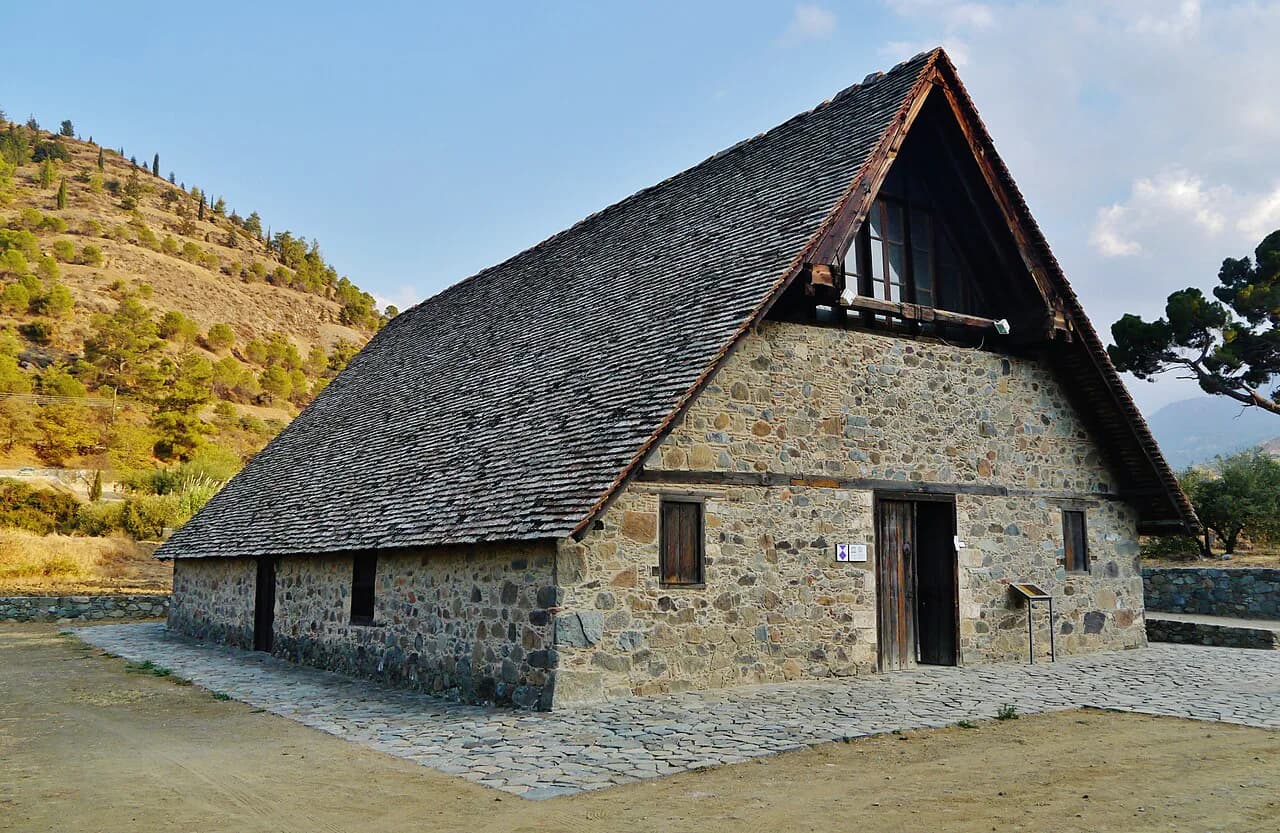
Panagia Podithou: The Painted Church at Galata in the Troodos

Panagia Podithou is a small painted church in Galata village in the Troodos mountains, listed by UNESCO in 1985 as part of the Painted Churches in the Troodos area. It is worth an hour of your day, mainly for frescoes in the Italo-Byzantine style that reached Cyprus in the late 15th century. This page covers where the church stands, how to approach it, the listed opening hours and free admission, what the building itself shows, and the second painted church a short walk away.
What Panagia Podithou is
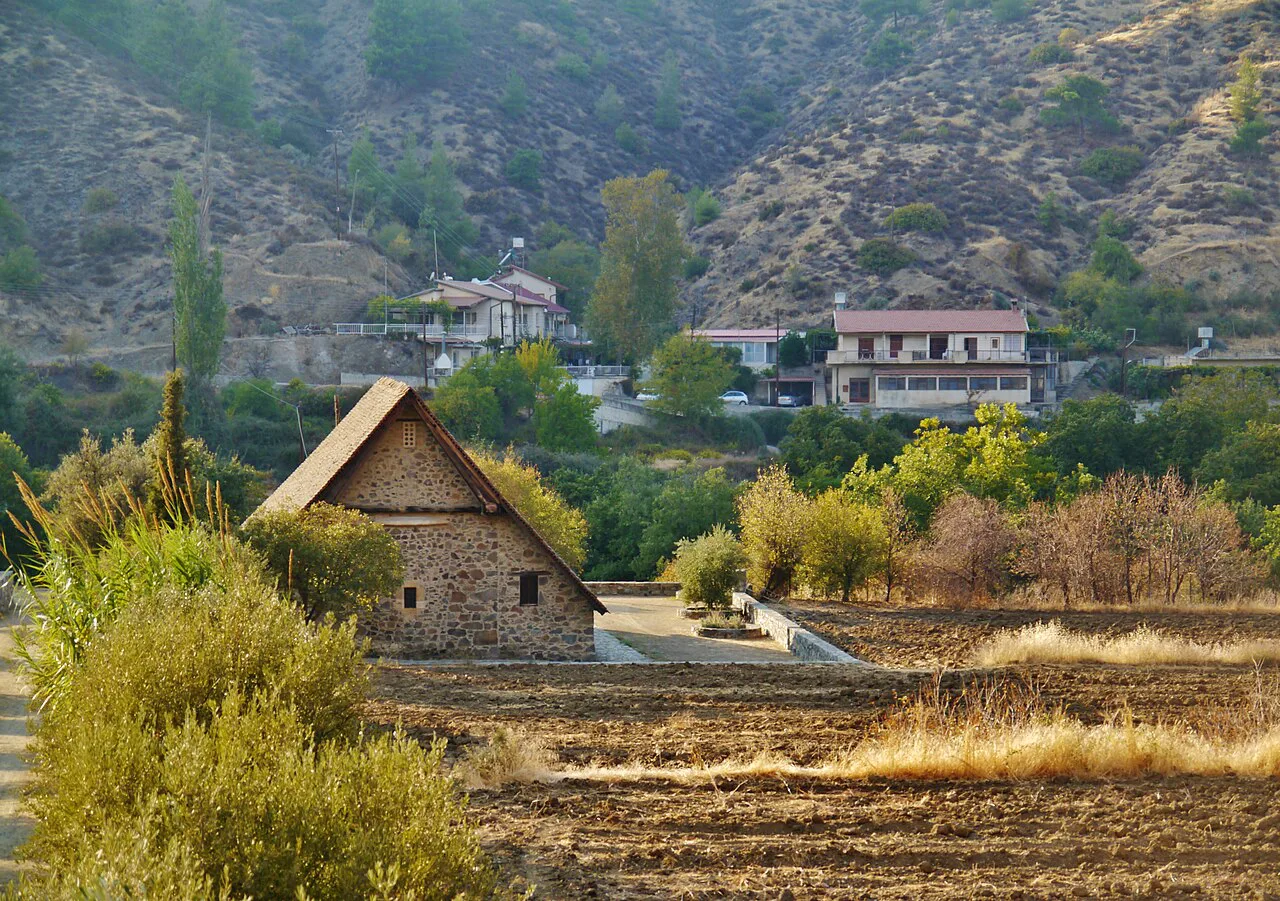
The church is also called Panagia Eleousa tis Podithou, the Merciful Mother of God of Podithou, and it sits at roughly 560 metres in the Troodos foothills. It joined the UNESCO World Heritage List in 1985 within the listing for the painted churches of the region, which is why it appears on so many Troodos itineraries. Treat it as a compact rural monument rather than a museum: one nave, one painted interior, and a setting among working village houses.
The village of Galata holds four painted churches, and Panagia Podithou is one of them, so the drive up buys you more than a single interior. Build the stop around the village rather than around one door, and leave room to walk between the churches on foot. For the wider set of mountain monuments around it, the Troodos Attractions: 13 Visitor Guides collection helps you judge what else fits the same day.

Where it is: Galata, Nicosia district
The church stands in Galata village in the Troodos region, within Nicosia district, and the official listing gives coordinates of 35.003662 north and 32.933848 east for satnav entry. Those figures matter on lanes that look alike, because village signage is modest and several churches cluster within a few minutes of each other. Enter the coordinates rather than the village name alone if you are driving yourself.
Galata is one of the Troodos villages reached by mountain road from the larger routes through the range, and the last stretch is village street rather than open highway. Plan your arrival in daylight and allow for slow going on bends; road distances and driving minutes vary with the route you choose and are best taken from a current map. Parking is not described in the village listing, so look for legal space on the approach rather than assuming a dedicated car park at the door.

Opening hours and admission
The Visit Cyprus listing gives opening hours of Tuesday to Saturday 9am to 4pm and Sunday 11am to 4pm, with the church closed on public holidays and stated to be open all year. Admission is listed as free, and the same listing notes that hours and rates can change without notice. Phone contact for the site is given as +357 99 671 776, which is useful on a holiday morning before you commit to the climb.
There is no Monday window in those hours, so a Monday in the Troodos is better spent on scenery than on church interiors. Public holidays are the other trap: a free entry does not mean an open door, and the listing states the closure plainly. Check the calendar the day before you drive up and you avoid finding a locked porch.
What the building shows
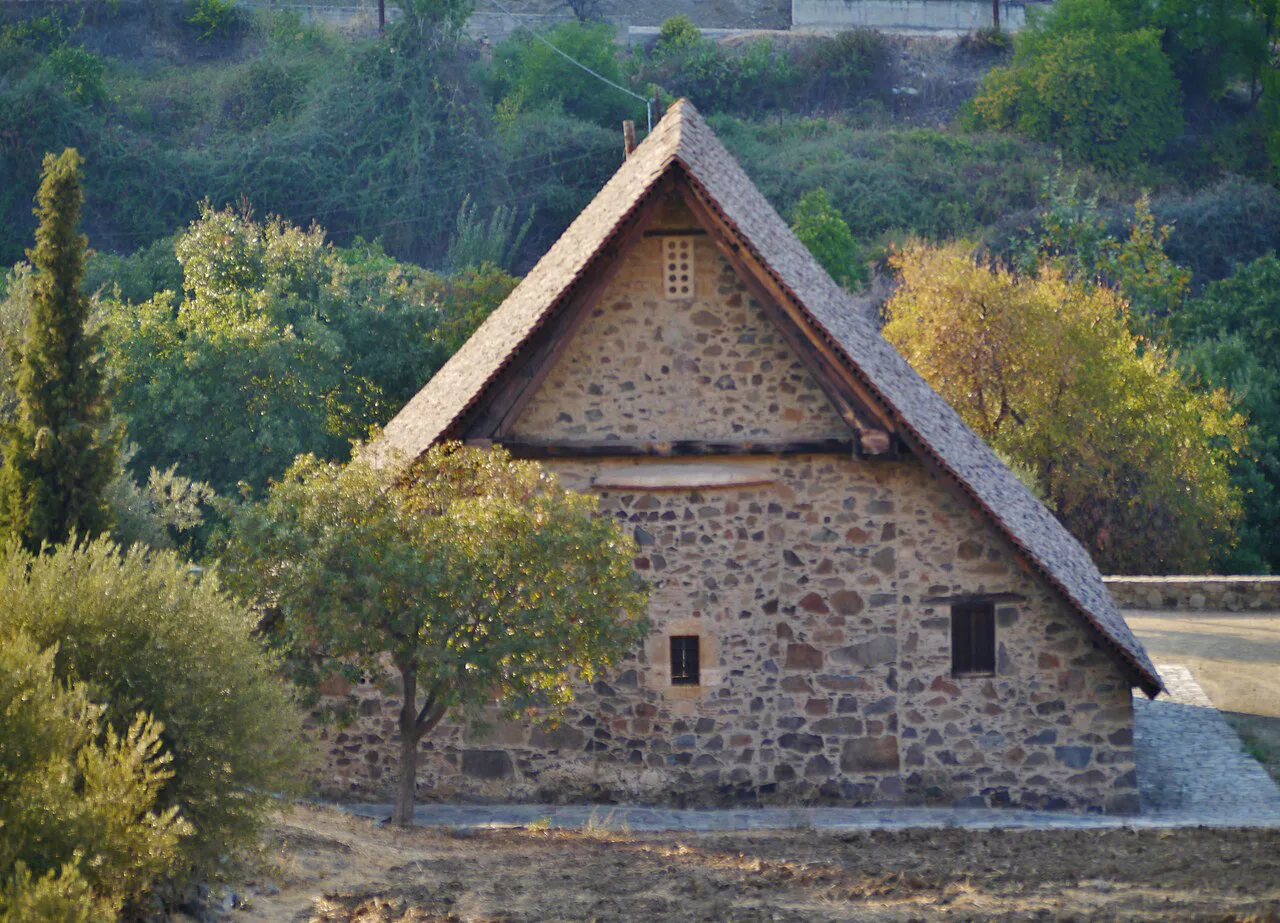
Panagia Podithou was built in 1502 with money from Dimitri de Coron and his wife Helene; Dimitri was a captain in the barony of Pentageia. It is a single-nave church, and a portico was added later on three sides, so the sheltered walkway around the walls is not part of the original 1502 scheme. A steep wooden roof covers both the church and that porch, which is what gives the building its heavy, barn-like outline from outside.
Knowing which parts came later changes how you read the exterior: look at the core nave first, then the added portico wrapped around it. The wooden roof is the feature most visitors photograph, and it explains why the interior is darker than the whitewashed village churches nearby. Photography rules inside are not set out in the listing, so ask on arrival rather than assuming.
The frescoes: Italo-Byzantine style
The wall paintings are in the Italo-Byzantine style, which appeared on Cyprus towards the end of the 15th century, so expect a mix of Byzantine composition and western European figure treatment rather than the flat Cypriot idiom alone. This is the reason to come: the style dates the decoration close to the 1502 foundation and places the church in a specific moment of the island's art. Read the panels slowly, because the interior is small and the sequence is short.
No source here names the painters or sets out the full programme of scenes, so arrive without a fixed checklist and let the panels lead. The dedication to Mary, the Mother of Jesus, sits behind the church's name and its role as a former monastic foundation. Lighting inside a small painted church is usually limited by the building itself, and nothing in the listing promises artificial illumination.
The monastery story
Panagia Podithou began as a monastic foundation and the monastery operated until the early 19th century. It declined and was abandoned after 1821, when the Greek revolution broke out and the Archbishop and other notables were executed. That end date belongs to this monastery, not to the painted churches of the Troodos as a group, so keep the story attached to Galata as you walk round.
How long to allow and when to go
Give Panagia Podithou itself twenty to thirty minutes and the Galata churches together a half day, including the walk between them. The 4pm close is the fixed point in the day, so visit the interiors first and leave the mountain views and village wandering for afterwards. Mornings are the cooler and quieter slot, particularly in high summer when the foothill heat builds through the afternoon.
Pair the church with a short mountain stop rather than a long one: the Cedar Valley in the Troodos is a natural add-on for the same drive, and Kykkos monastery suits a separate, longer outing. If you want a cool walk near Pano Platres instead, Millomeris waterfall fits an afternoon on the way down. Mixing too many interiors into one day blurs them, and the painted churches reward attention more than speed.
Nearby: the second church within 100 metres
Less than 100 metres to the east stands the smaller church of Panagia Theotokos, also called Archangelos Michail, and it falls within the same part of the UNESCO listing. That makes Galata efficient: two listed interiors within a couple of minutes on foot. Walk east from the Podithou porch and you reach it without moving the car.
If your taste runs to larger monastic ensembles, Agios Ioannis Lampadistis in Kalopanayiotis is the natural comparison in the same mountain range and another UNESCO-listed church. Keep it for a different day unless you start early, since the drive between villages eats the afternoon. The Kalopanayiotis visit also pairs well with a valley walk if you want to break up the church interiors.
Access and practical notes
The listing records an access ramp and accessible toilets at the church, which is unusual for a monument of this size in a village setting. Do not assume the village lanes themselves are step-free; the ramp covers the entrance, not the walk through Galata. If access matters to your visit, the phone number on the listing is the quickest way to confirm the current position.
Is Panagia Podithou worth the drive up?
Yes, if you are already in the Troodos and want one of the region's UNESCO-listed interiors without a long detour. Come Tuesday to Saturday between 9am and 4pm or Sunday after 11am, avoid public holidays, and walk the hundred metres east to Panagia Theotokos while you are there. The building is free to enter, small enough for half an hour, and strongest on the Italo-Byzantine frescoes rather than on scale.