
Troodos Botanical Garden: What to See and How Long It Takes

The Troodos Botanical Garden is a compact, low-effort garden walk at Amiantos, high in the Troodos mountains, and about an hour is enough to see it at a relaxed pace. It suits travellers driving through the mountains who want a short, cool stop rather than a headline sight, and this page covers where it sits, how to reach it, what grows there and what to pair it with nearby.
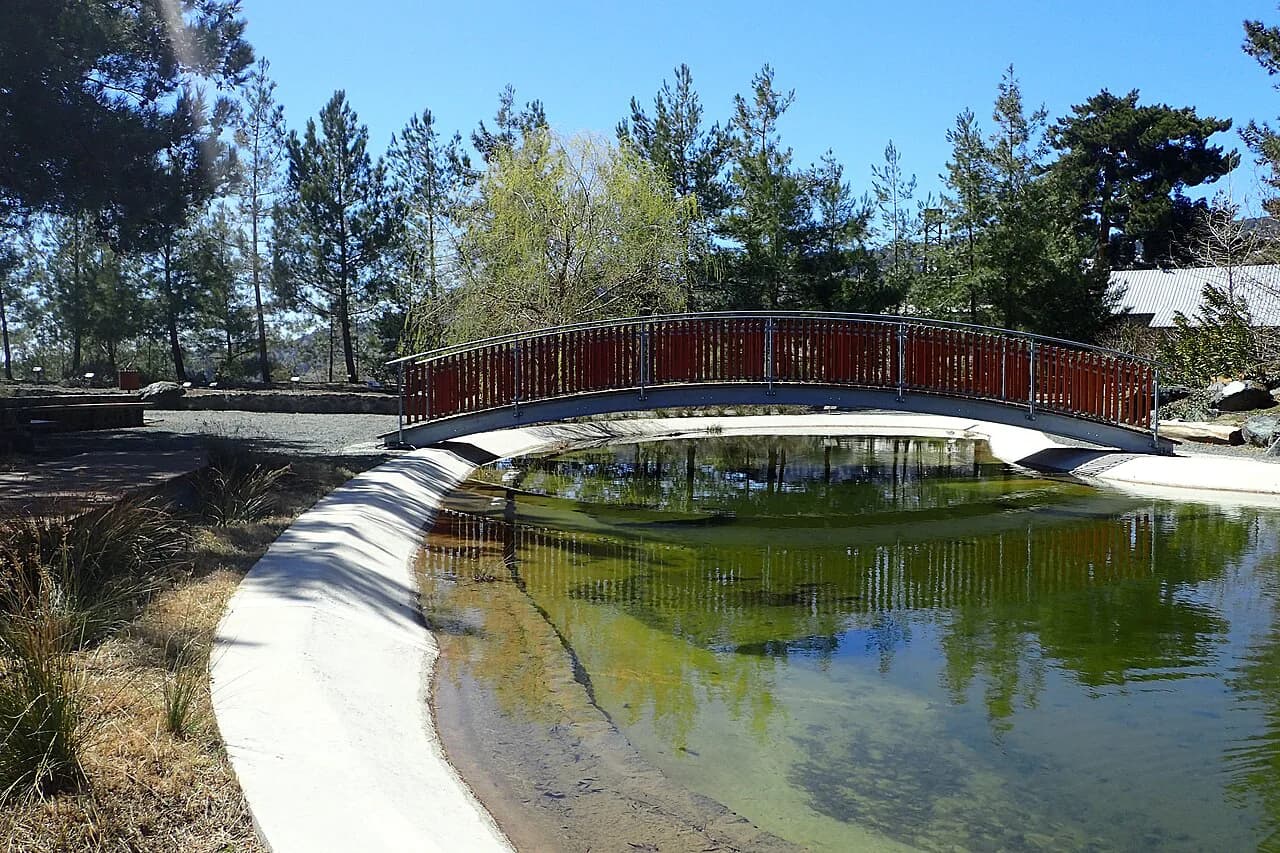
The garden exists because of the mine: the A.G. Leventis Troodos Botanical Garden was created on rocky, dug-up slopes where asbestos mining once operated, and now preserves and displays the distinctive flora of the Troodos range. Roughly 500 types of common, rare and endangered plants grow around an artificial stream, a waterfall and two lily ponds, which explains the setting far better than any viewpoint description could.
Where the garden sits
The garden lies at Amiantos, beside the old asbestos mine, within the Troodos National Park and the wider Troodos mountains. It is a mountain garden rather than a coastal one, so the drive there climbs through pine forest and the air changes noticeably as you gain height. Treat it as a stop on a Troodos circuit rather than a destination in its own right.
Because the site was reclaimed from mine workings, the surrounding slopes are steeper and barer than the forested postcards suggest, with the garden itself forming a green pocket against them. That history is the reason the layout feels engineered — paths, ponds and a stream were built to hold the collection in place.

How to get there and where to park
Most visitors arrive by car, driving up from the villages below or across from the Troodos Square area, and a car park serves the garden. The roads are mountain roads with bends, so allow more time than the distance suggests and avoid treating the drive as a quick detour from the coast.
A hire car gives you the flexibility to stop at the lake and picnic sites on the same outing, which buses along the mountain routes do not. If you are basing yourself in the Limassol district, the garden works as a half-day loop combined with the Amiantos area rather than a standalone trip.

What to see inside
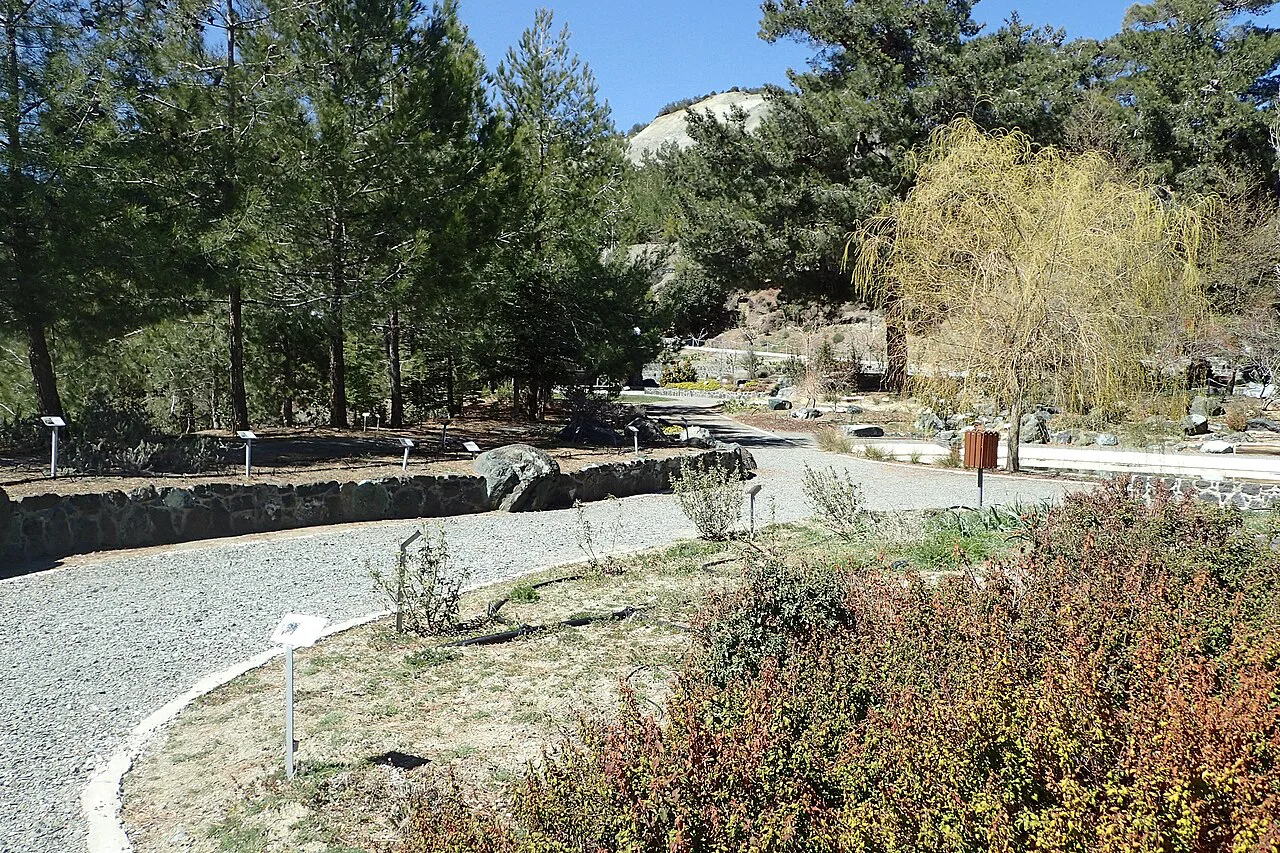
The core of the visit is the plant collection: labelled native and endemic species arranged along wide paths around the water features. Around 500 types of common, rare and endangered plants grow here, set out along spacious paths rather than in dense flowerbeds.
Water is the organising feature. An artificial stream feeds a waterfall and two ponds planted with water lilies, and the path loops past them rather than climbing anywhere steep. Shaded areas with tables and seats let you sit rather than push on, which is useful if you are travelling with older companions.
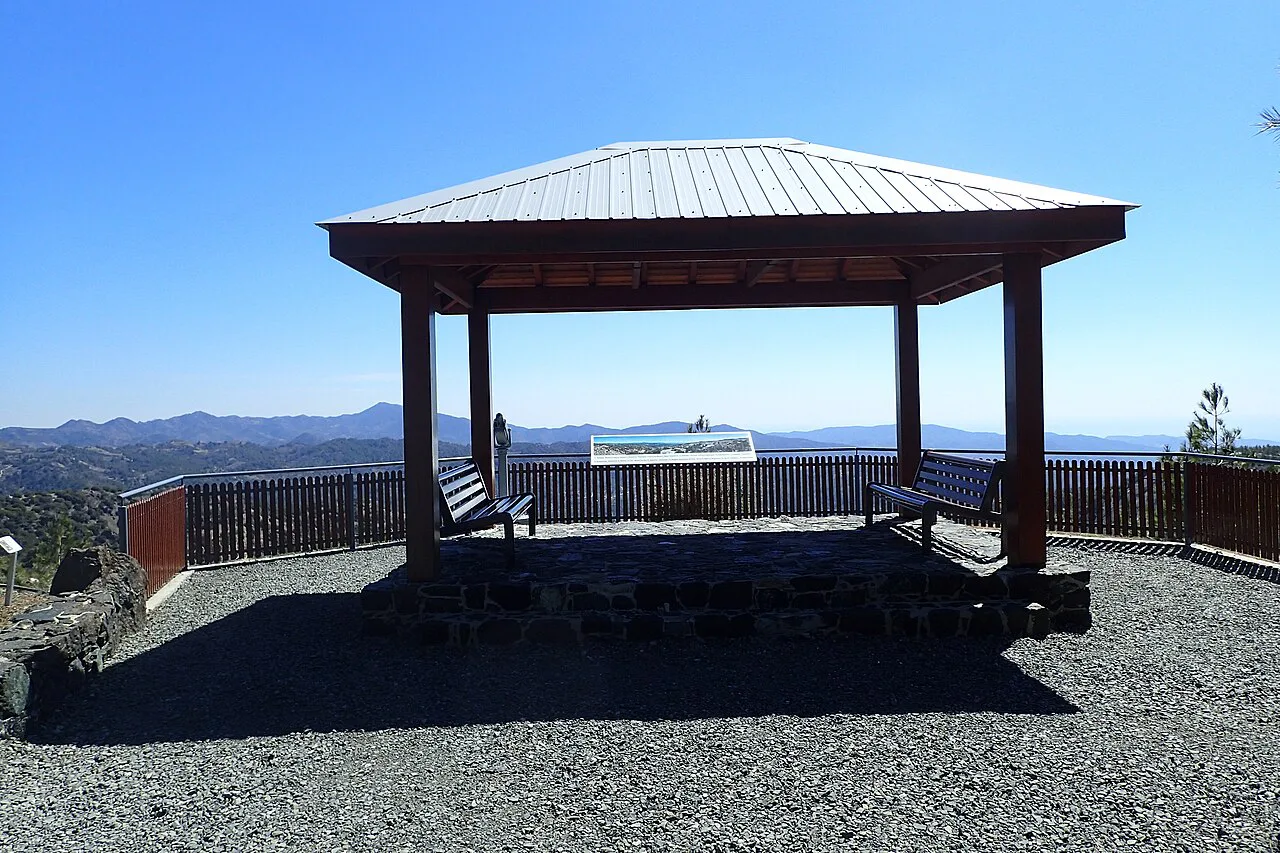
For a wider view, the eastern part of the garden has a kiosk fitted with a telescope that lets you pick out the mountain slopes running down towards the coasts of Amathus and Akrotiri. It is a viewing aid within the garden, not a summit panorama, so set expectations accordingly.
How long to allow and how hard the paths are
Plan on about 45 to 60 minutes to walk the whole garden at a relaxed pace, which is roughly right for young children or a leg-stretch mid-drive. The main circuits are wide and largely flat to gently sloping, so a pushchair works on them; the side loops are rougher, so keep to the main paths if you have a buggy.
There is a visitor centre alongside the outdoor sections, and a simple trail map at the entrance helps you follow the loops without backtracking. It is a garden walk, not a hike, so trainers are fine and you will not need walking boots or a full day.
When to go
Spring is the strongest season for colour, with the endemic plants and orchids in flower from April to June, while summer is quieter on the planting side but far more comfortable than the coast. At this height the mountain air is noticeably cooler than at sea level on a midsummer day, and the trees give real shade.
The garden changes with the seasons rather than closing off sections, so an autumn or early winter visit still gives you the ponds and the structure of the collection even without the flowering. Bring a light layer whatever the month, because mountain air at this altitude can feel cool when the coast is hot.
Admission and opening hours
There is no admission fee, so the garden costs nothing beyond fuel and your time. Opening is limited and tied to government-style hours, with weekday mornings the most reliable window; confirm the day you plan to visit before driving up, since mountain sites change timetables by season.
Because opening is limited, do not build a whole day around the garden without checking first — a locked gate at a mountain site leaves you with a long drive and little else on the same road.
What is nearby
The artificial lake of the Amiantos asbestos mine sits less than a kilometre away, and several picnic sites are within a few minutes' drive, including Almirolivado and Livadi tou Pasha. These make easy add-ons if you have packed a lunch and want to eat outdoors rather than in a village.
Walkers can pick up marked forest trails in the Troodos area, and the Mount Olympus observation point is a short drive further up. If you would rather see ancient trees than planted collections, the Cedar Valley in the Troodos is the natural comparison and a very different kind of outing.
For a fuller mountain day, the Kykkos monastery is one of the best-known stops in the range and pairs well with a drive through the Amiantos area. Villages such as Kyperounda and Pelendri sit within a short drive if you want a coffee or a look at a village square afterwards.
Practical trade-offs
The garden is a quiet botanical collection, not a dramatic viewpoint or a scenic attraction, so travellers expecting sweeping mountain vistas may find it underwhelming. Go for the plants, the shade and the easy walking, and get your views from the Mount Olympus area or a forest trail instead.
Altitude is the other thing to plan for: it is cooler than the coast even in midsummer, so a layer and a windproof top are sensible. Combine the visit with a waterfall walk if you want more exercise — the Caledonia waterfall and the Millomeris waterfall in Pano Platres are both in the same mountain area and need proper footwear.
Is the garden worth stopping for?
Yes, if you are already driving through the Troodos mountains and want an hour of shade, water and labelled plants without a climb. It is close to the Amiantos lake and picnic sites, which makes it an easy addition rather than a reason for the drive — just confirm opening before you set out.
Skip it if you are chasing big views or a long hike, and spend the time on the trails and peaks instead. Otherwise slot it in between the lake and the villages below, and treat it as the gentle half of a mountain day — checking current opening first is worth the phone call, because the hours are not generous.
Explore more Troodos guides
Frequently Asked Questions
How long do you need at the Troodos Botanical Garden?
About 45 to 60 minutes covers the main paths at a relaxed pace, including the stream, waterfall and lily ponds. The main circuits are wide and largely flat, so a pushchair works on them, but the side loops are rougher.
Is there an entrance fee?
No, admission is free. Opening is limited and tied to government-style hours, with weekday mornings the most reliable window, so confirm the day with the Cyprus Forestry Department before making the drive up.
What is the best time of year to visit?
Spring, from April to June, gives the best flowering, including endemic orchids. Summer is less colourful but much cooler than the coast, and the trees give good shade.
Can you visit without a car?
A hire car is the practical way to reach the garden and to combine it with the Amiantos lake and picnic sites on the same outing. Mountain bus routes do not serve the garden as a convenient stop.