
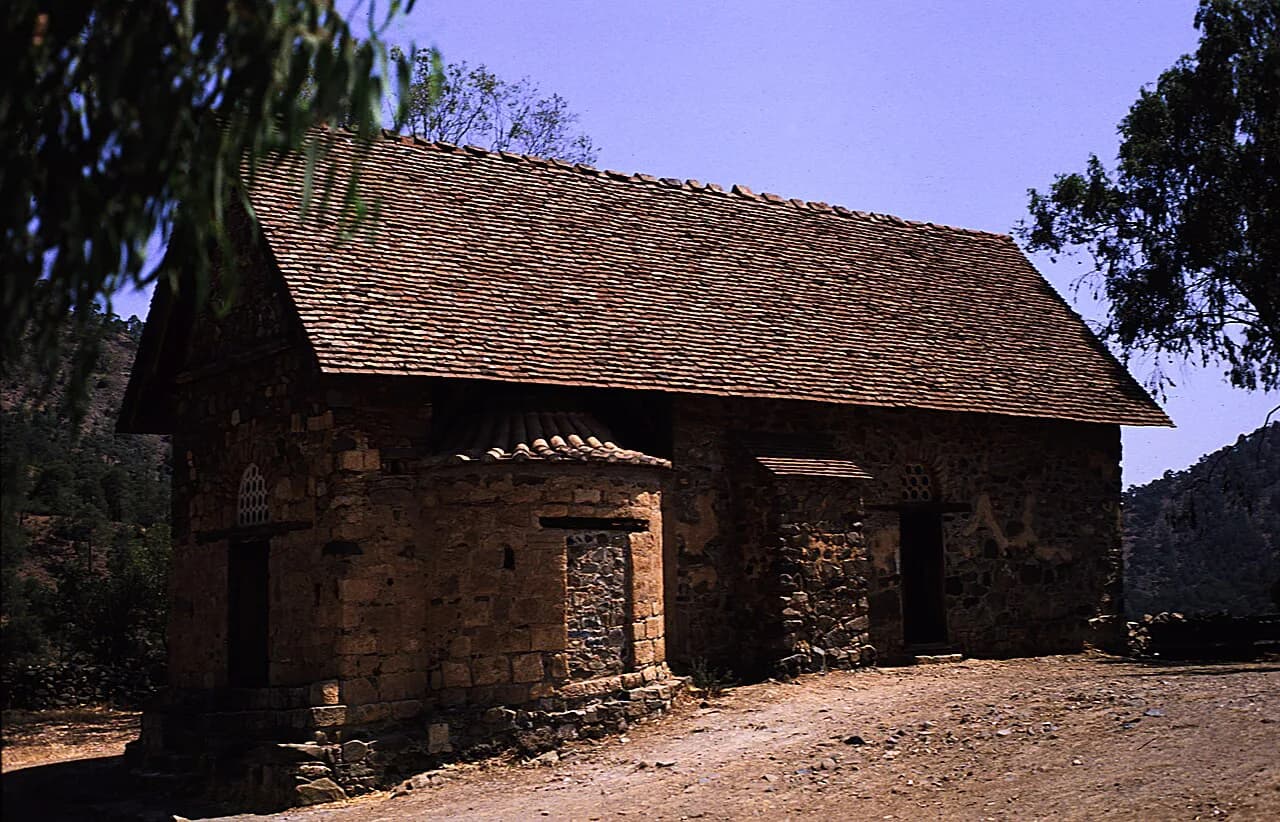
Asinou Church: A Visitor's Guide to Panagia Phorbiotissa

Asinou Church is worth the detour for one reason above all: a compact interior almost entirely covered in wall paintings, the earliest dated to 1099, in a forested valley a few kilometres from Nikitari village. It is one of the painted churches of the Troodos region inscribed on the UNESCO World Heritage list, and it takes well under an hour to see properly once you are there. This guide covers where the church stands, the drive from Nicosia and the Troodos villages, what the frescoes and building phases actually represent, and how to fit it into a day among the mountain churches.
What Asinou Church is and why it is worth the detour
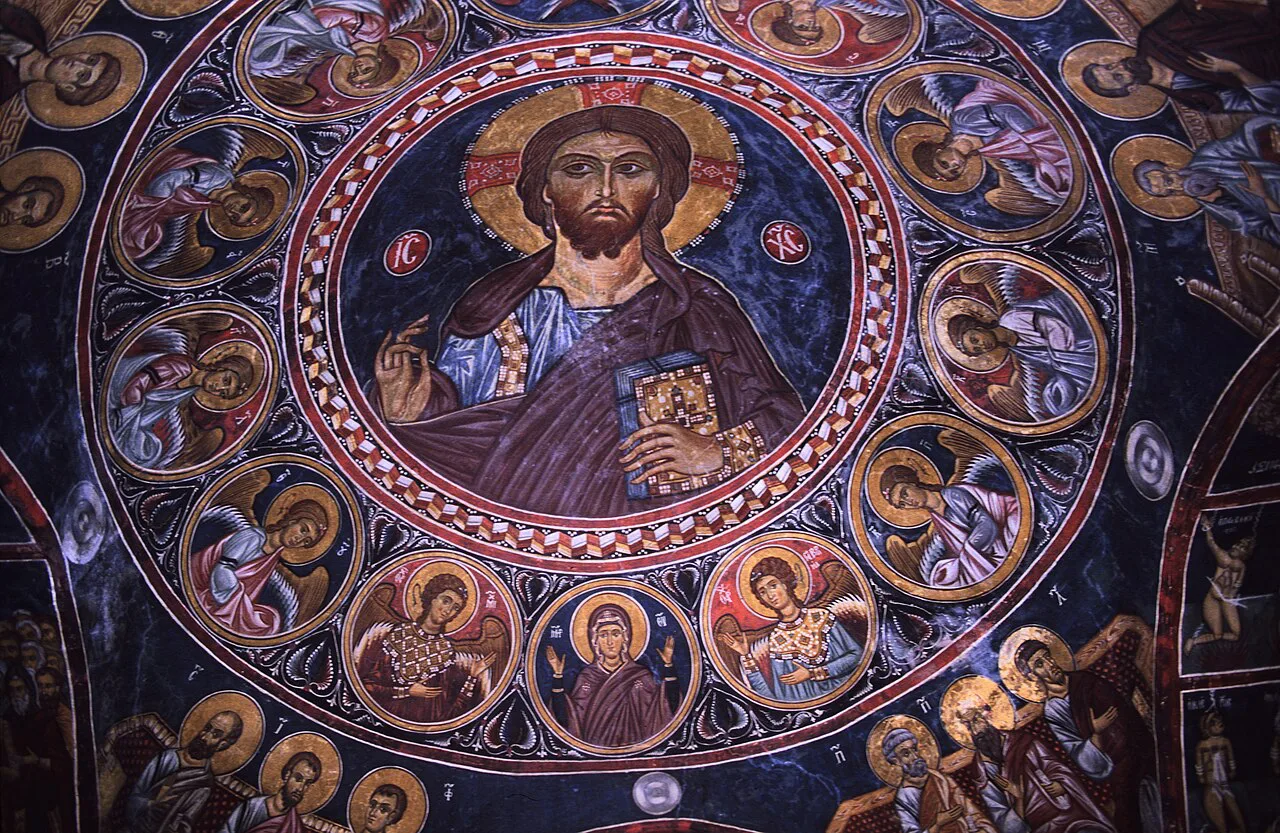
The church is formally the Panagia Phorbiotissa, a foundation of 1099 built as a monastery church; the name Asinou has attached itself to the site, which stands about 5 km from Nikitari in thick forest. Its value to a visitor is the density of painting: the interior carries wall paintings from 1099 and from the 14th and 16th centuries, so a single small room shows you several centuries of Byzantine and post-Byzantine work side by side. It belongs to the group of eleven painted churches of the Troodos region recognised by UNESCO, which makes it a natural companion to the other mountain churches rather than a stand-alone stop.
Come for the paintings rather than for scale or spectacle. The building is small, the setting is quiet forest, and the visit works best combined with the drive itself and one or two other churches nearby. If you have seen only whitewashed village chapels in Cyprus, this is the corrective: the interior is dark, close and intensely decorated.

Where Asinou Church stands: Nikitari village and the Troodos forest
Asinou sits in the foothills of the Troodos range, in Nicosia district, on forested ground above the plain rather than deep in the high mountains. The reference point for navigation is Nikitari, the village roughly 5 km away, and the church is reached by following local signs through the valley; the rural approach means you should not block farm or village access when you park. Treat the last stretch as narrow country road rather than main-road driving.
Because the church lies below the main ridge, it pairs easily with the Solea Valley and Kalopanayiotis side of the range. The surrounding forest is the point of the setting: the church was built in woodland and still reads that way. Allow for shade and cooler air than at Nicosia, but plan the visit rather than relying on the weather being mild.

How to get there by car from Nicosia and the Troodos villages
There is no realistic public-transport option for a rural church of this kind, so plan on a car. From Nicosia the drive runs west towards the foothills and then south through Nikitari; from the Troodos villages you approach from the Solea side and drop down towards the valley. Cyprus drives on the left, and the Republic uses the euro, so fuel and any village stop are priced in euros.
Navigation apps handle the general direction well, but the final turn off the through road is where you should slow down and read signs rather than trust a pin alone. A church in a forest clearing gives little margin for a wrong farm track, and turning a car around on a narrow lane costs more time than checking once. If you are building a church circuit, put Asinou first or last in the day so the mountain driving stays in daylight.
The wall paintings: 1099, the 14th-century repainting and the later layers
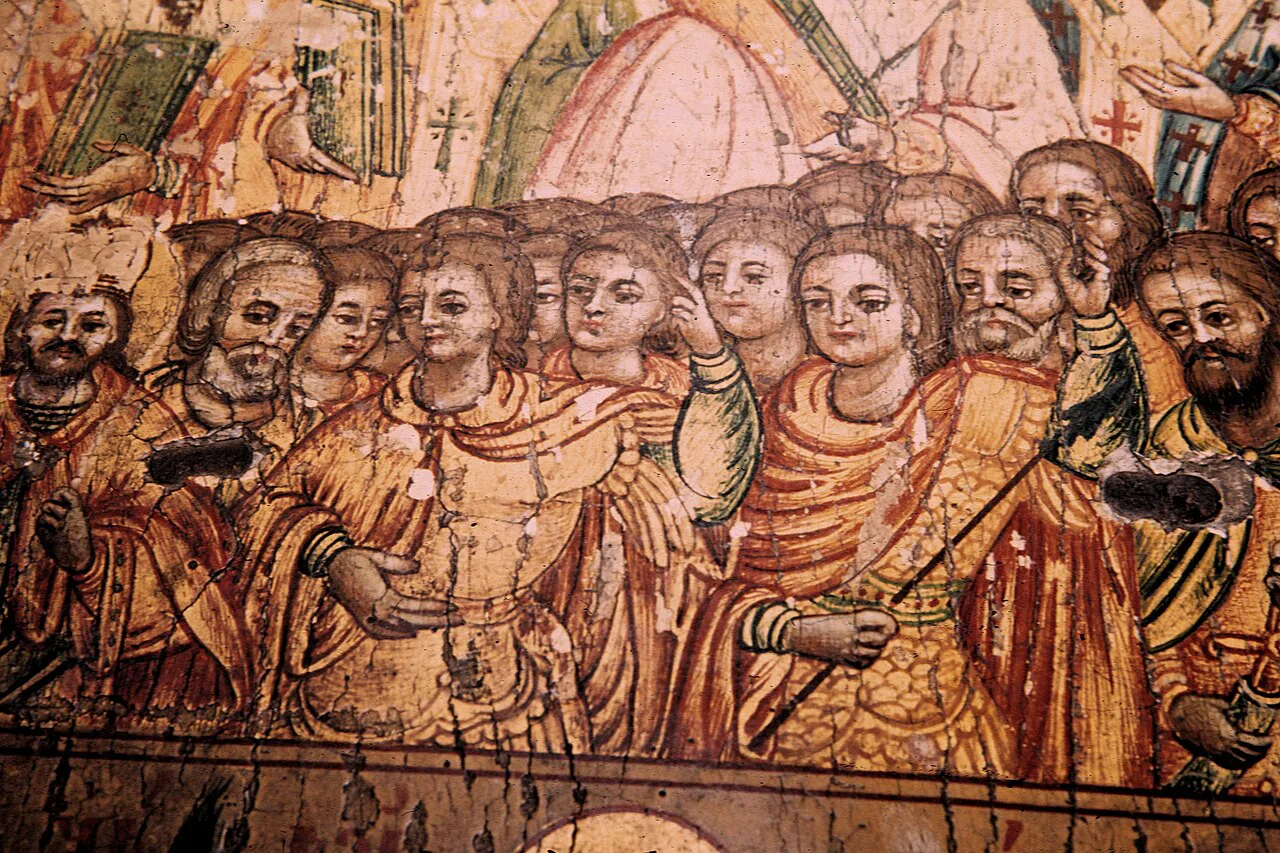
The painting campaigns are what separate Asinou from a generic Byzantine frescoes visit, and they are datable. A dedication painted on the wall records that the church was built under the emperor Alexios Komnenos in the year 6614, which is December 1099, and that is the date of the earliest paintings. A further inscription dates a phase of painting to 1332, and other work belongs to the 14th and 16th centuries, so you are reading distinct campaigns in one room rather than a single scheme.
Look for the half-arch above the entrance to the nave, where the Virgin Mary stands with both hands raised and the infant Christ between them. To the right, a black hound and a white hound are tied to a spear, with mountains and two moufflons in the background, a hunting image that belongs to the 1332 phase. Knowing that the hounds and moufflons are 14th-century work rather than 11th-century keeps you from reading the whole interior as one period.
The building itself: the 1105 church, the 1200 narthex and the steep timber roof
The fabric has its own sequence, which most short descriptions collapse into one date. The church was originally built in 1105 and the vault of the naos, the main body of the church, was rebuilt in 1300; a domed narthex was added in 1200. Separating these from the painting dates matters when you look up: the vault you see over the nave is 14th-century work, while the core of the building is earlier.
The steep protective roof is the other feature to notice, the kind of overhanging structure that shelters several painted churches in the Troodos and gives them their distinctive silhouette against the trees. It is the practical reason the interior paintings have survived: the roof keeps water off the walls. Compare it with the roofing at the other mountain churches and the family resemblance is obvious.
The dedication of Nikephoros Magistros and the portrait above the entrance
Asinou is a memorial as much as a parish church, and the founder is named. The dedication inscription describes the church as built by the contribution and devotion of Nicephoros Magistros, and a mural above the entrance shows him presenting the church to the Virgin Mary in memory of his young daughter, Gefyra. That single image turns an abstract building history into a family story you can read on the wall.
Stand at the entrance and look up before going further in. The donor portrait is the sort of detail most visitors photograph last and understand least, and once you have found the small figure of Gefyra in the composition the rest of the interior makes more sense. It also gives you a natural stopping point for talking to children about what the church was for.
The name Phorbiotissa and the horses of the area
Phorbiotissa, the epithet of the Virgin to whom the church is dedicated, is explained by the horses that lived in the area, from the Greek word for fodder or grazing. The name is the one piece of local landscape history embedded in the dedication itself. It is a useful reminder that these mountain churches were working parts of a farming world, not isolated artworks.
How long to allow and how to behave inside a painted church
Budget around 30 to 45 minutes inside the church and at the parking area, and add the drive, which is the largest part of any Asinou trip. The interior is compact and culturally sensitive, so dress respectfully, keep voices low and follow the custodian's current instructions on photography; flash and any touching of painted surfaces are out. Visitors with specific needs, such as wheelchair access, should confirm arrangements before making the mountain journey.
Summer heat and the dark interior are the two practical constraints. Visit earlier in the day for cooler driving, and expect the painted walls to be dim whatever the hour, so give your eyes a minute after coming in from bright sun. A small torch on a phone helps with details, provided photography rules allow it.
Entrance and current opening details for Asinou Church
Opening and access arrangements for the church vary around services and custodians, so confirm the day's opening before setting out. The listed position is 35.046300, 32.973400, and the church stands in a rural valley a few kilometres from Nikitari; follow current signs and avoid blocking local access.
Nearby in the Troodos: other painted churches of the same UNESCO listing
Asinou is one of eleven painted churches of the Troodos region on the UNESCO list, and the others are the reason to give the area a full day rather than an afternoon. In the Solea Valley, Agios Nikolaos tis Stegis sits above the Karkotis river near Kakopetria, and Kalopanayiotis holds the monastery church of Agios Ioannis Lampadistis. Both follow the same pattern of a steep protective roof over a painted interior.
Elsewhere in Nicosia district you can add Panagia tou Araka near Lagoudera, Panagia Podithou at Galata and Panagia tou Moutoulla, each with its own painting dates and its own opening arrangements, and Stavros tou Agiasmati further out. Further west, Kykkos monastery anchors a mountain day on its own. None of these should be treated as a tick-list: pick two or three within reach of your route.
If you would rather trade frescoes for landscape on the same drive, the range has waterfalls, forest viewpoints and Cedar Valley in the Troodos that suit a shorter stop. Millomeris waterfall above Pano Platres and Caledonia waterfall in the same area are the best known, and Chantara waterfall in Foini sits close to the Kalopanayiotis road. Pair one with Asinou only if you have a full day and an early start.
Is Asinou Church worth the drive?
Yes, if you treat it as the centre of a half-day mountain loop rather than a five-minute photo stop. The 1099 paintings, the 1332 hunting scene, the 1200 narthex and the founder's portrait give you a compact, legible lesson in how a Cypriot mountain church was built, painted and paid for. Going on a weekday morning gives you the best chance of a quiet interior and easy parking.
Build the day around one or two other painted churches within easy driving distance, keep the drive in daylight, and check the day's opening and any service times before you leave. Carry cash in euros for donations and village stops, and leave the steep forest lanes unhurried.