
Agios Nikolaos tis Stegis: The Roofed Church Near Kakopetria

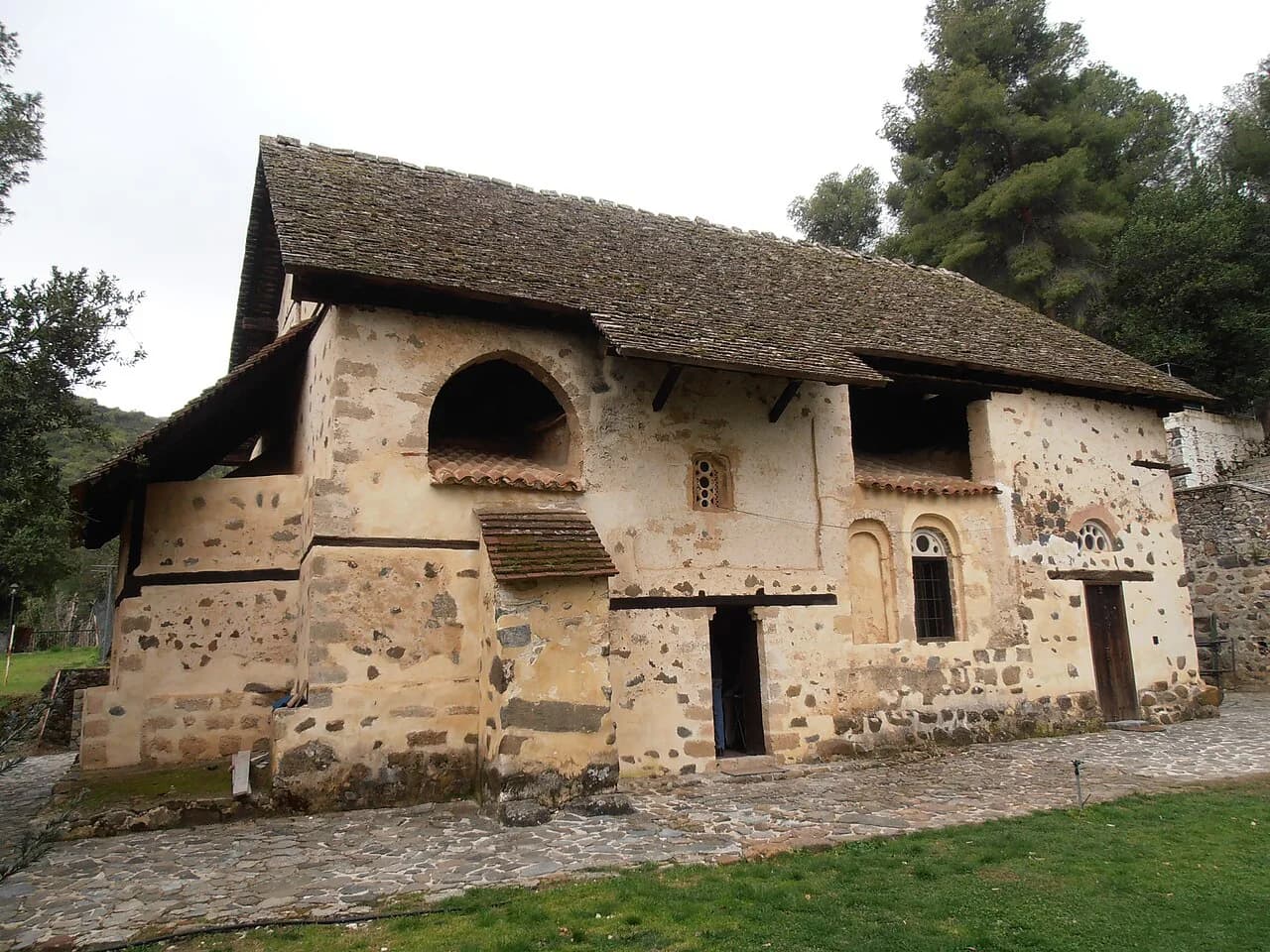
Agios Nikolaos tis Stegis is a small Byzantine church in the Solea Valley whose steep timber roof gives it the name Saint Nicholas of the Roof, and it is a UNESCO World Heritage Site. Allow 30 to 45 minutes for the church itself, then use Kakopetria as the base for the rest of the day. This guide covers where the church stands, how to drive there, what to look for inside and how it fits into a Troodos itinerary.
The building is a single stop rather than a village to wander: you park, walk up to the church, and spend your time looking up at the roof structure and the painted walls. Treat it as one anchor of a mountain day, with the old village of Kakopetria and the wider set of painted churches filling the hours around it.
What Agios Nikolaos tis Stegis is
The church is a Byzantine foundation set in a central part of the Troodos range, in the northern Solea Valley, and it survives as an unusually complete example of a roofed monastic church. Its importance lies in that combination: the protective timber roof and the painted interior have come down together, which is why the building is treated as a heritage site rather than a village chapel.
The name is descriptive, not decorative. Stegi means roof, and the pitched covering that shelters the whole church is the feature that defines it; you will see the same idea repeated in the troglodytic and roofed churches scattered through the Troodos. The listing as a UNESCO World Heritage Site reflects the survival of the paintings and the building that protects them.

Where the church sits in the Solea Valley
The church is built on the west bank of the Karkotis river, about 2 km southwest of Kakopetria, which places it just off the road up the valley rather than in the village centre. Some descriptions round the distance to roughly 5 km, so if you are navigating by odometer, look for the signed turn and the parking area rather than a precise number.
Kakopetria is the practical anchor: it has the shops, the old quarter along the river and the road connections, while the church sits in the wooded, river-cut landscape just outside it. The Karkotis valley road is the one that carries you up towards the higher Troodos villages, so the church works naturally as a first or last stop of the day.

Getting there from Kakopetria, Nicosia and Limassol
Driving is the realistic way to reach the church. From Kakopetria it is a short run up the Solea valley road, and because the church lies southwest of the village you approach it on the valley side rather than through the old quarter. A car also lets you continue to the higher villages without waiting on connections.
From Nicosia the natural route climbs through the Solea valley, and from Limassol you come up from the south through the Troodos passes; both put Kakopetria on your line of approach. Cyprus drives on the left, the Republic uses the euro, and mountain roads are narrow and winding, so plan your arrival in daylight. Distances are short in kilometres but slow in time, which is why a single valley base beats trying to see the whole range in one day.
Public buses reach Kakopetria, but the final 2 km to the church is not a village-centre walk you want to add in summer heat, so a car or a licensed taxi from Kakopetria is the straightforward solution. There is no station or rail option in the Troodos. Pack water and a layer: the valley is cooler and shadier than the coast, and the church interior is dark even at midday.
What to see inside: the roof and the paintings
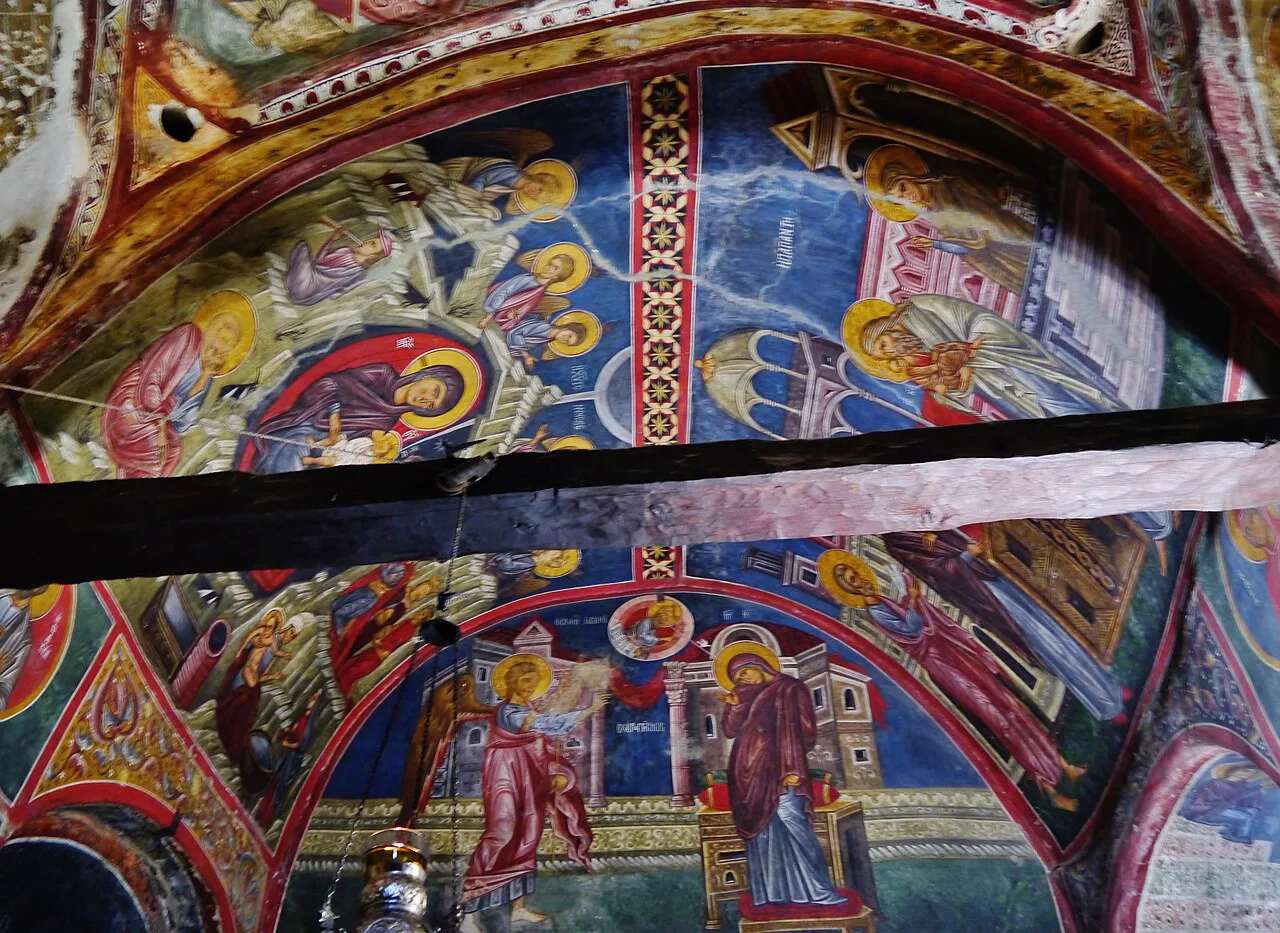
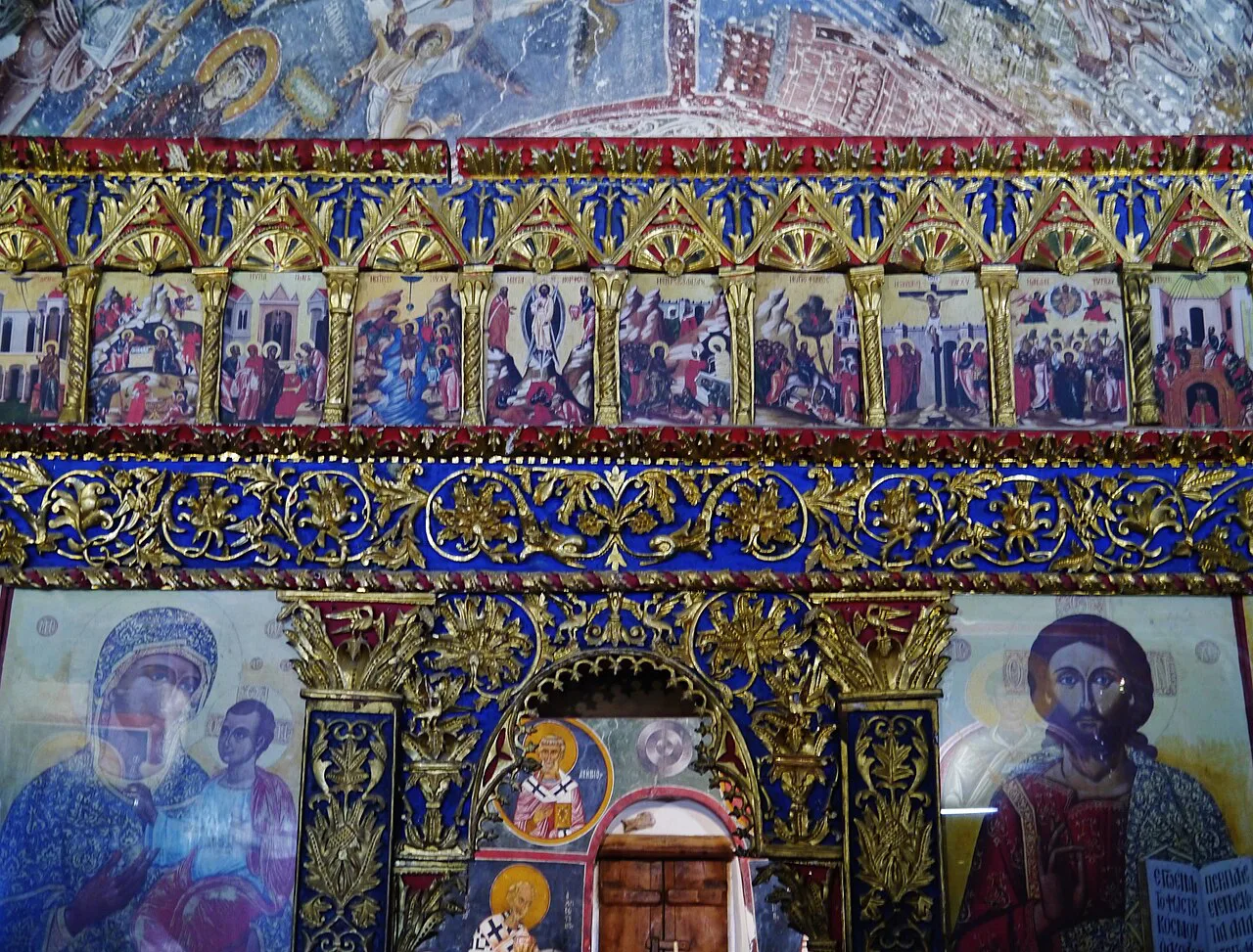
Start with the roof. The steep pitched timber structure covers the church like a shell and is the reason the building has survived; the same over-roofing appears at Agios Ioannis Lampadistis in Kalopanayiotis, which is a useful comparison if you visit both. Underneath, the interior is painted across the walls and vaults, and the frescoes are the reason to slow down rather than photograph and leave.
Light is limited inside, so give your eyes a minute after coming in from the sun and look at the lower walls as well as the domed upper surfaces. The paintings reward close reading: figures, inscriptions and worn patches tell you how the building has been used and repaired. Keep voices low and avoid flash, as you would in any consecrated church.
How long a visit takes and how it fits a Solea Valley day
Budget 30 to 45 minutes for the church and its immediate setting. That is enough to see the roof structure, read the interior and walk the short approach; add time if you are photographing or sketching. The visit is short, so the church should be one component of a half-day or full-day loop rather than the only reason for the drive.
A sensible shape is Kakopetria old quarter in the morning, the church before or after lunch, then one more painted church or a monastery on the way home. If you are heading west, Kykkos monastery makes a substantial second stop, and the Cedar Valley gives you open mountain scenery after the enclosed interiors. The valley roads are slow, so two or three stops is a realistic day, not five.
In summer, start early: the church is at altitude and cooler than the coast, but the drive and the village streets are exposed. Winter visits bring rain and occasional snow on the higher roads, so check conditions before committing to a high loop. Spring and autumn give the most comfortable walking between stops.
Nearby: Kakopetria and the other painted churches
Kakopetria itself is worth an hour: the old quarter climbs the bank above the Karkotis, with narrow lanes and timber-balconied houses. It is the obvious place to eat and to buy supplies before or after the church. The village also gives you the clearest sense of how the Solea valley settlements sit against the river.
The Troodos holds a cluster of painted churches that share the UNESCO listing, and pairing two of them in one day shows how differently each building handles its paintings. Asinou church, with its Panagia Phorbiotissa, is a strong counterpart, and Panagia tou Araka near Lagoudera is another that rewards the detour. Each has its own access arrangements, so plan the sequence around the driving rather than the map.
Further options include Panagia Podithou at Galata and Panagia tou Moutoulla, both small and easily missed if you are rushing. Stavros tou Agiasmati sits in the Nicosia district countryside and suits a longer loop. If you prefer landscape to interiors, the waterfalls around Pano Platres and Foini give you a different kind of stop on the same mountain roads.
Opening hours, tickets and guided tours
The church is a heritage monument with restricted access rather than a parish church you can walk into at will, and the timings change with the season. There is no reliable published schedule to plan around here, so confirm the current opening arrangements locally in Kakopetria before you drive up. The same applies to any entry charge.
Organised excursions and tickets are sold through tour platforms, which is a convenient way to secure entry if you are visiting without a car. Availability varies by season, and a booked slot is worth having on a short trip. Check the details on the operator's own page when you book rather than relying on a brochure from last year.
A practical sequence is to ring or ask at the Kakopetria end first, then build the rest of the day around the confirmed time. If the church is shut when you arrive, the village and the valley scenery still justify the drive, and one of the other painted churches may be open instead. That flexibility matters more in the mountains than a fixed timetable.
Is Agios Nikolaos tis Stegis worth the detour?
Yes, if you are already driving the Solea Valley and want one building that explains why the Troodos painted churches are protected. It is a short stop, so do not build a whole day around it; combine it with Kakopetria and one other church or monastery. The journey, not the church alone, is the point.
Confirm access before you set out, take a car, and start early enough to keep the driving in daylight. If your interests run to scenery rather than frescoes, the waterfalls and the Cedar Valley are better uses of the same day. Either way, the valley rewards slower travel.
Explore more Troodos guides
Frequently Asked Questions
How far is Agios Nikolaos tis Stegis from Kakopetria?
It sits about 2 km southwest of Kakopetria, on the west bank of the Karkotis river, with some descriptions rounding the distance to roughly 5 km. Drive rather than walk the final stretch, especially in summer.
Do I need a car to visit the church?
A car is the practical option. Buses serve Kakopetria, but the last leg to the church is a short drive, and a licensed taxi from the village covers it if you are without a vehicle.
What should I see inside?
Look first at the steep timber roof that gives the church its name, then at the painted walls and vaults it protects. Allow your eyes to adjust to the low light before reading the frescoes.