Trooditissa Monastery: A Visitor's Guide to the Troodos Mountain Monastery
Trooditissa Monastery sits in pine forest between Platres and Prodromos at about 1,370 metres. Here is what to expect from a visit to this Troodos monastery.
On this page
Trooditissa Monastery is worth an hour of a Troodos mountain day: a working Orthodox monastery built on a forested peak between Platres and Prodromos at roughly 1,370 metres, with a three-aisled church and a collection of religious art. It suits travellers driving through the Troodos mountains who want one contemplative stop rather than a full sightseeing programme. This guide covers where it sits, what you see inside, the tradition behind its icon and how to slot it into a wider loop of the range.
What Trooditissa Monastery is and where it sits
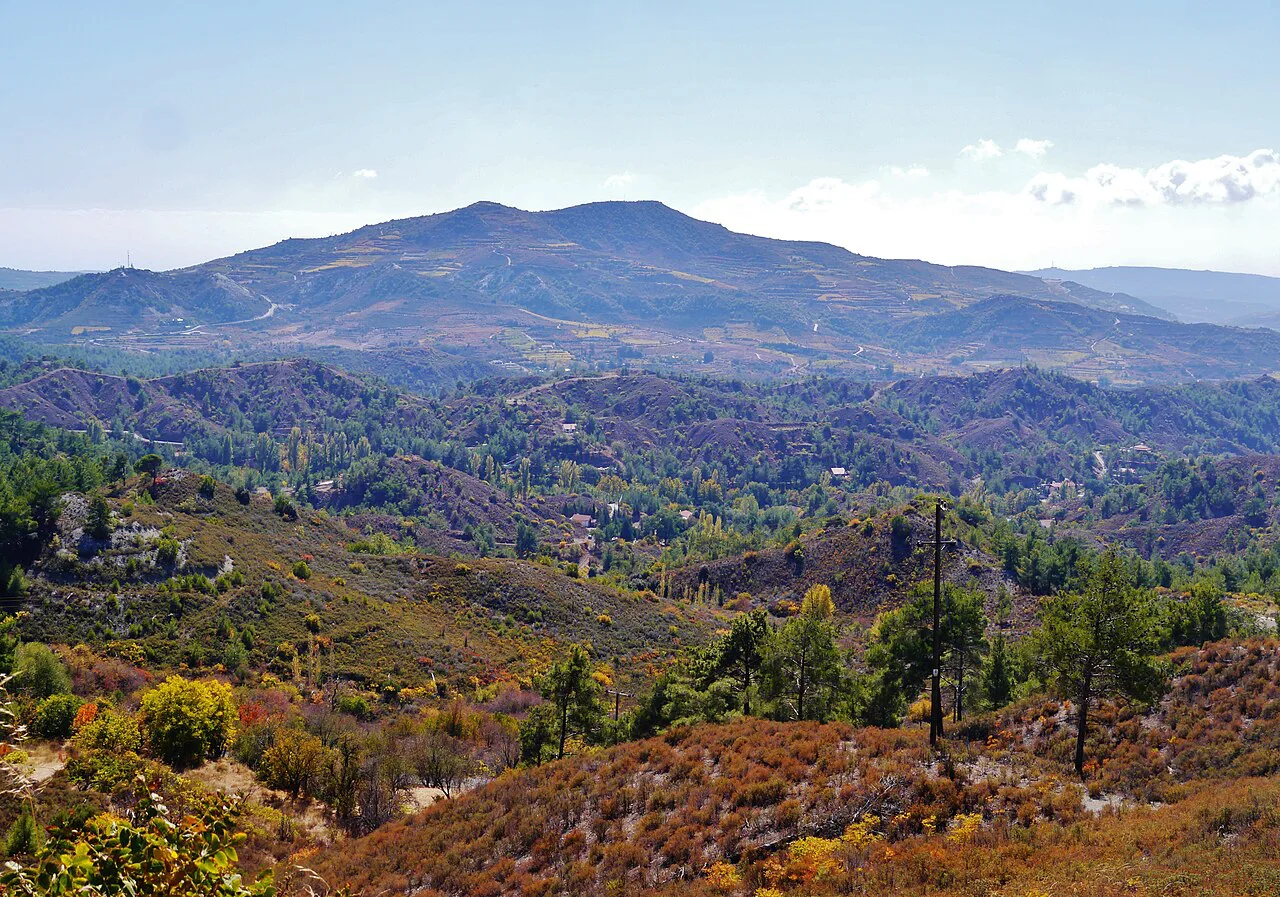
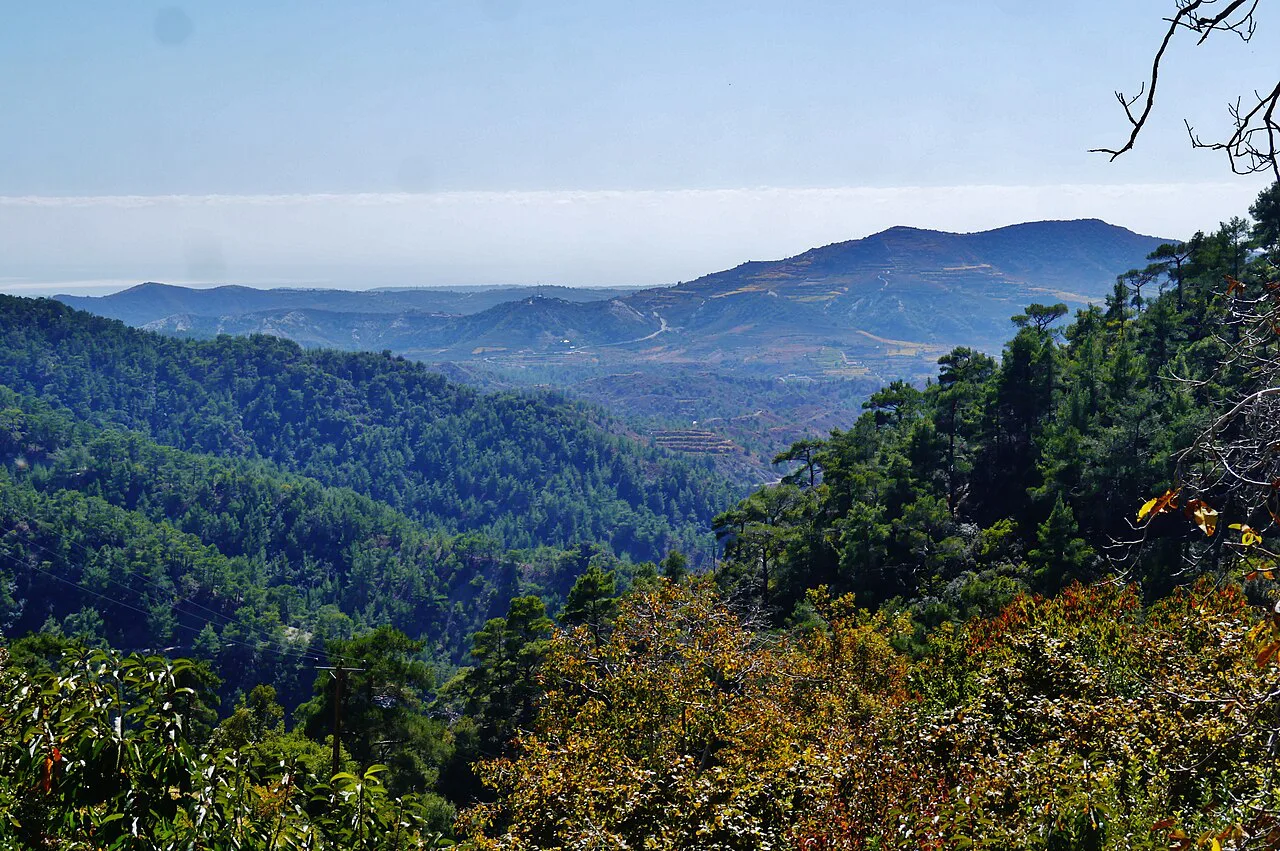
The monastery is dedicated to the Virgin Mary and stands in the pine forest of the Troodos range, from which its name comes. It occupies a mountain peak between Platres and Prodromos at approximately 1,370 metres above sea level, with views over the wooded slopes. That position makes it a natural stop on any drive that links the southern Troodos villages rather than a site you would visit on its own from the coast.
It is one of a small group of active monasteries in Cyprus, alongside better-known houses such as Kykkos and Stavrovouni. Kykkos draws the coach traffic; Trooditissa is quieter, smaller in scale and easier to fold into a morning between Platres and Prodromos. If your day is built around one big monastery, choose which matters more: the spectacle of Kykkos or the intimacy here.
Treat it as a place of worship first and a sight second. The buildings are in active religious use, so a visit is a short, respectful look around rather than a museum tour with labels and a route. Build the rest of your day around the drive and the villages, and let the monastery be the calm pause in the middle.
How to get there from Platres, Prodromos and Limassol
Trooditissa sits on the road network that threads the southern Troodos between Platres and Prodromos, so the natural approach is by car from either village. The surrounding lanes climb through forest, which makes a hire car the practical choice for a day that also takes in the villages. Drive on the left as you would in the UK, and allow extra time for the winding mountain road.
From the Limassol side, the climb runs up through the Troodos foothills towards Platres and Prodromos, so the monastery fits neatly at the end of a morning ascent. If you are coming from the north or east of the range, plan the loop so that Trooditissa is one point on a circuit rather than an out-and-back detour.
Arrive with your own transport; the final stretch is narrow enough that a small car is easier than a large one. Check road conditions in winter, when the higher Troodos roads can be affected by snow and ice.
What to see: the church, the cave and the art collection
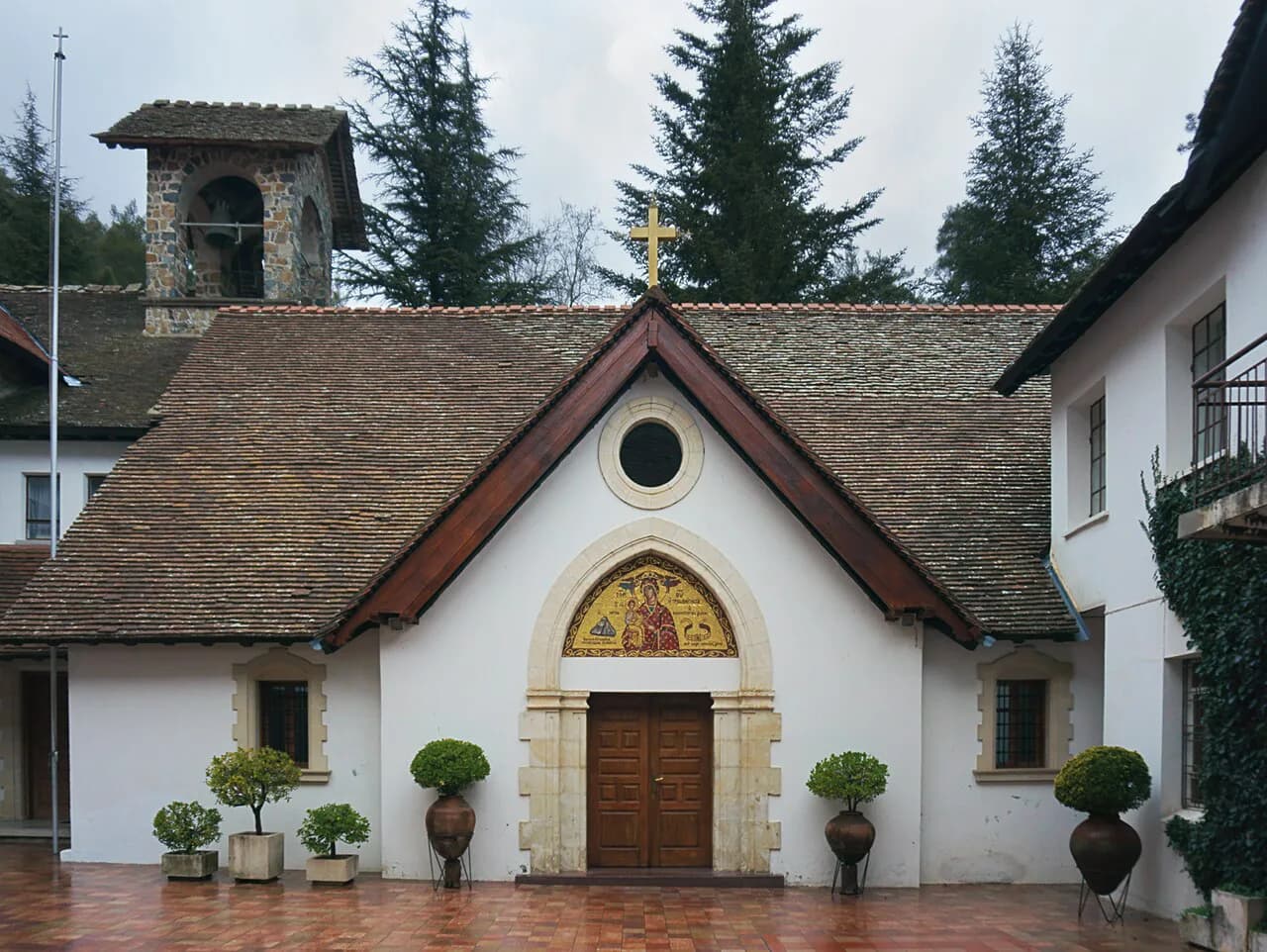
The church you see today is a three-aisled building erected after a fire in 1842 destroyed the earlier monastery. An earlier blaze in 1585 had also damaged the site, and the monastery was rebuilt from scratch after that first disaster. Knowing this helps you read the building: it is a nineteenth-century reconstruction on a site with a much longer memory, not a single intact medieval fabric.
At the heart of the site is the cave where the monastery began. According to tradition, a monk fleeing the iconoclast period sheltered in the cave with an icon of the Virgin, and a shepherd later saw a flame burning at its entrance. The monastery was founded beside that cave, and it remains the reason the site exists rather than a picturesque extra.
Inside, look for the monastery's collection of religious art and icons, which is the reason many visitors come. The interior is a place of prayer, so keep voices low and dress modestly. Cover shoulders and knees.
The icon of the Virgin Mary and the founding tradition
Trooditissa's identity is bound up with its icon of the Virgin Mary, the object around which the whole foundation story turns. The tradition places the icon in the cave with the refugee monk, and the monastery grew up around its keeping. Whether you come for the faith or the history, the icon and its setting are the core of the visit.
The founding story is tradition rather than documented history, so treat the dates and miracles attached to it as part of the monastery's living account of itself. The year often quoted for the shepherd's discovery belongs to that tradition, not to a verified record. What is solid is the site's continuity: a cave, an icon, a community and a rebuilt church in the same forest clearing.
Visitors often ask how Trooditissa compares with Kykkos, the most famous monastery on the island. Kykkos holds one of the icons attributed to Saint Luke and draws the largest crowds; Trooditissa is smaller, quieter and more easily combined with Platres and Prodromos. If you have time for only one, Kykkos is the bigger occasion and Trooditissa the calmer one.
Dress and behaviour at a working monastery
Trooditissa is an active Orthodox monastery, not a heritage attraction with a ticket desk, so dress and behaviour matter more than at a ruin. Cover shoulders, chest and knees. Shorts and vests are best kept for the villages and picnic sites rather than the monastery itself.
Keep photography outside the church and ask before photographing anyone, whether monk or visitor. The monastery is a place of prayer, so a quiet, unhurried manner is welcome in the courtyards even when coach groups arrive. Remember that this is a lived-in religious house, and the people you pass are going about their devotions, not performing for tourists.
Because it is a working community, the monastery may be closed to visitors at short notice for services or feast days. Treat any plan as flexible: if the gate is shut, the forest and picnic sites around it still make the drive worthwhile. Check before you set out if the visit is the whole point of your day.
How long to allow and how it fits a mountain day
Allow around an hour for the monastery itself: enough time to see the church, the cave and the art collection without hurrying. Add the drive from Platres or Prodromos, and the stop becomes a half-day outing rather than a quick pause. In summer, go early, because the mountain air is cooler and the light softer before the afternoon cloud builds.
A sensible loop pairs Trooditissa with Platres and Prodromos, then continues to Troodos Square for a coffee and a look at the trails. If you want a longer mountain day, add a stop at Mount Olympus (Chionistra) for the summit views, or one of the painted churches on the circuit. The monastery works best as one element of a full day, not as a single destination.
Weather shapes the plan. Snow can close the higher roads in midwinter, and summer thunderstorms build over the peaks in the afternoon. A morning start gives you the best chance of clear views and open roads, and it leaves the afternoon free for the villages and the picnic site below the monastery.
Nearby: Prodromos, Platres, Foini and the picnic site
Just below the monastery is the Trooditissa picnic site, a natural companion stop for a packed lunch in the pines. A short way further on, the Hantara waterfalls near Fini make another easy addition to the same drive. Together with the monastery, these give you a gentle half-day in the forest without needing a long hike.
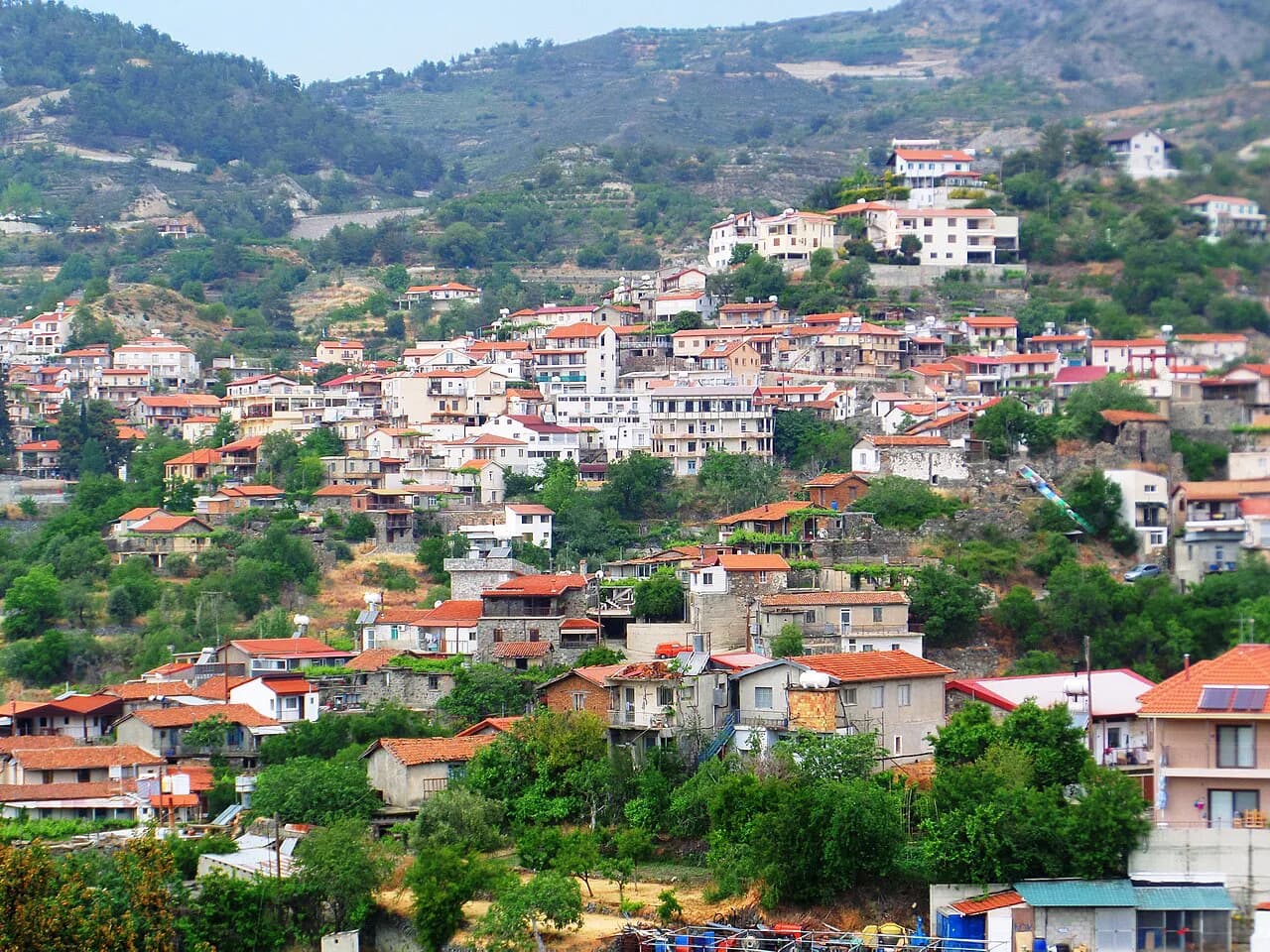
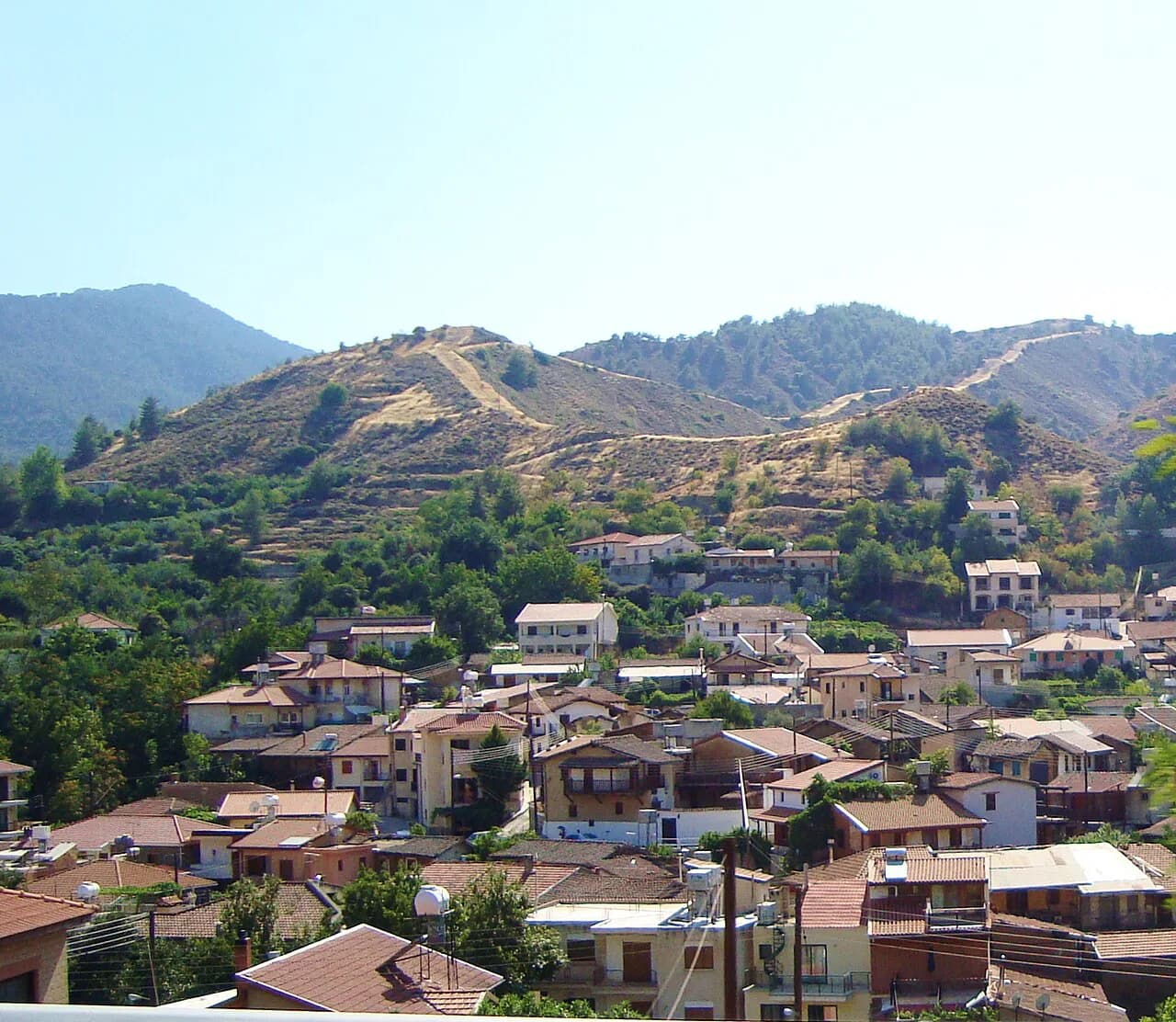
Prodromos and Platres are the nearest villages, each with cafés and a slower pace than the coast. Foini, a short drive away, is a traditional village in a pine-forest setting. Choose one village to linger in rather than trying to see all three, because the pleasure here is in the unhurried pace.
If you are building a broader itinerary, the geopark and the painted churches are the natural next stops after the monastery loop. The Troodos Geopark explains the range's geology, and the painted churches add a UNESCO-listed layer to the mountain drive. Both fit neatly into a second day in the mountains rather than the same afternoon.
Should Trooditissa be on your Troodos itinerary?
Yes, if you are already driving between Platres and Prodromos: Trooditissa adds a quiet, art-filled hour to a mountain day with almost no detour. No, if the monastery is your only reason for climbing into the range.
Build the day around the drive, pair the monastery with a village lunch and the picnic site, and keep the visit short and respectful. Check current opening arrangements and mountain road conditions locally before you set out, since the monastery is an active community and the weather can change plans.
Explore more Troodos guides
Sources
Notes for your Cyprus trip
Optional updates to our Cyprus guides.
You might also like
Continue reading
More guides you'll find useful