Cyprus Turtles: Where to See Loggerhead and Green Turtles
Cyprus has nesting loggerhead and green turtles. See where they nest around Cape Greco and Paphos, when the season runs and how to watch without disturbing them.
On this page
The two turtles that nest in Cyprus are the loggerhead and the green turtle, and the nesting season runs from June to mid-August. The main sites named for visitors are the beaches of Cape Greco National Forest Park in the south-east and the Paphos area in the west, including the Lara Bay reserve. This guide sets out where each site is, who runs the protection work, and how to watch responsibly.
What turtle species nest in Cyprus
Loggerheads (Caretta caretta) and green turtles (Chelonia mydas) both lay on Cyprus beaches, and both are treated as endangered on the island. The pressures named for them are habitat loss, pollution and human interference on the nesting beaches. That matters for visitors because the busiest nesting beaches are also the ones easiest to reach.
Nesting is not annual in the way many people assume: the females come ashore to lay roughly every two years, which makes each good season more important to the population. If you are planning a trip around turtles, treat the chance of seeing a nesting female as a bonus rather than a guarantee. Marked nests and hatchlings are the more realistic sight on a summer visit.
When the nesting season runs
The laying season is given as June to mid-August, so that window is the one to aim for if nesting activity is your reason for visiting. It also coincides with the hottest weeks of the Cypriot summer, when midday beach time is uncomfortable and the beaches at Cape Greco and around Paphos are at their busiest. Early mornings and evenings are the sensible slots for walking a nesting beach.
Turtles, dolphins and seals have been protected under Cypriot fisheries law since 1971, and systematic sea turtle protection began in 1978. Those dates explain why the beaches carry formal protection rather than informal local customs. It also means the rules you meet on a nesting beach are legal protections, not suggestions from a tour operator.
Where turtles nest: Cape Greco and the Paphos area
Cape Greco National Forest Park, on the south-eastern tip of the island between Ayia Napa and Protaras, holds protected turtle beaches within a landscape of cliffs and clear water. Nests are also found in the north of the Paphos district, which makes the west coast the second main area to know about.
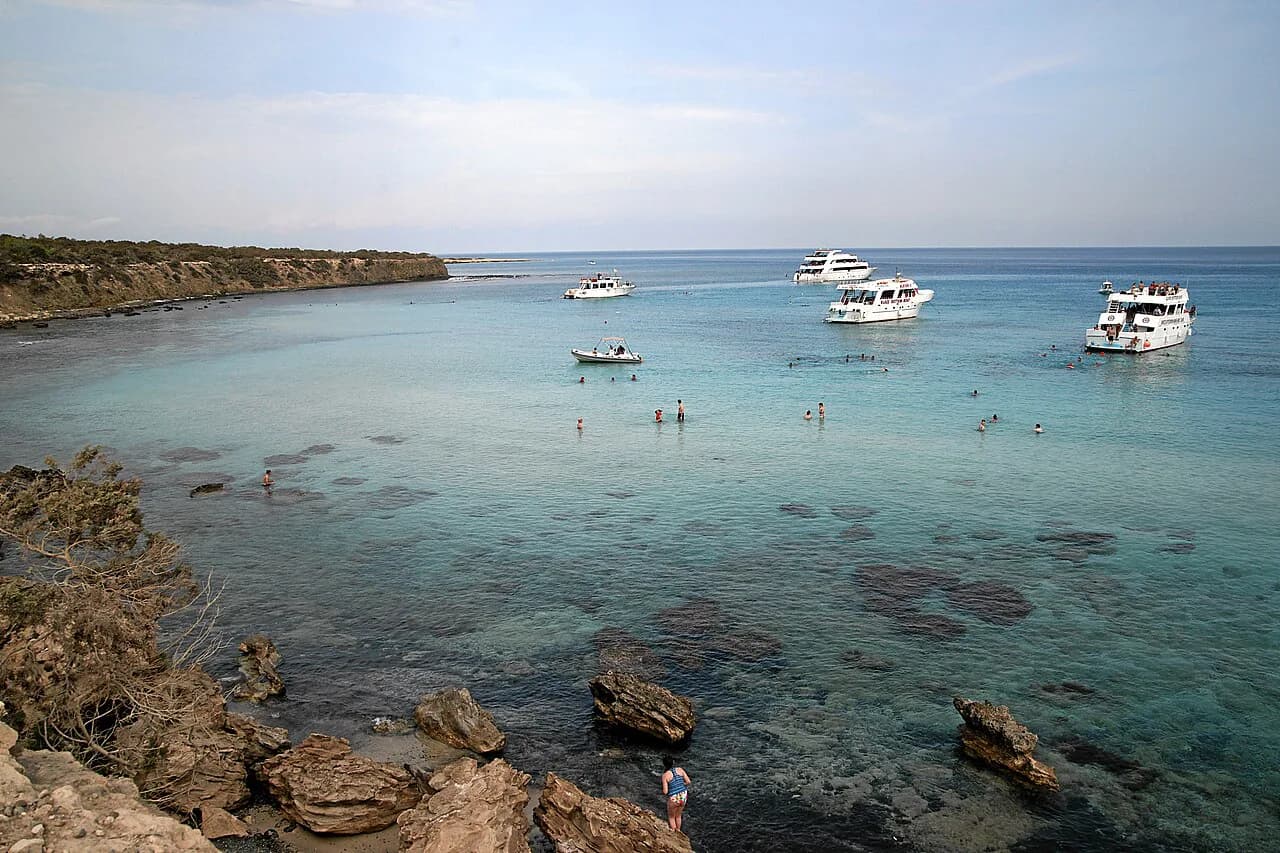
The two areas suit different trips. Cape Greco fits a day based around Ayia Napa or Protaras, with the nesting beaches reached on foot or by car; the Paphos sites fit a stay in Paphos or Polis and pair naturally with the Akamas peninsula, where the Blue Lagoon Cyprus boat trips run from Latchi harbour. Neither area is a zoo-style attraction, so plan around the landscape rather than around a single viewpoint.
Lara Bay and the Lara Bay Turtle Conservation Plan
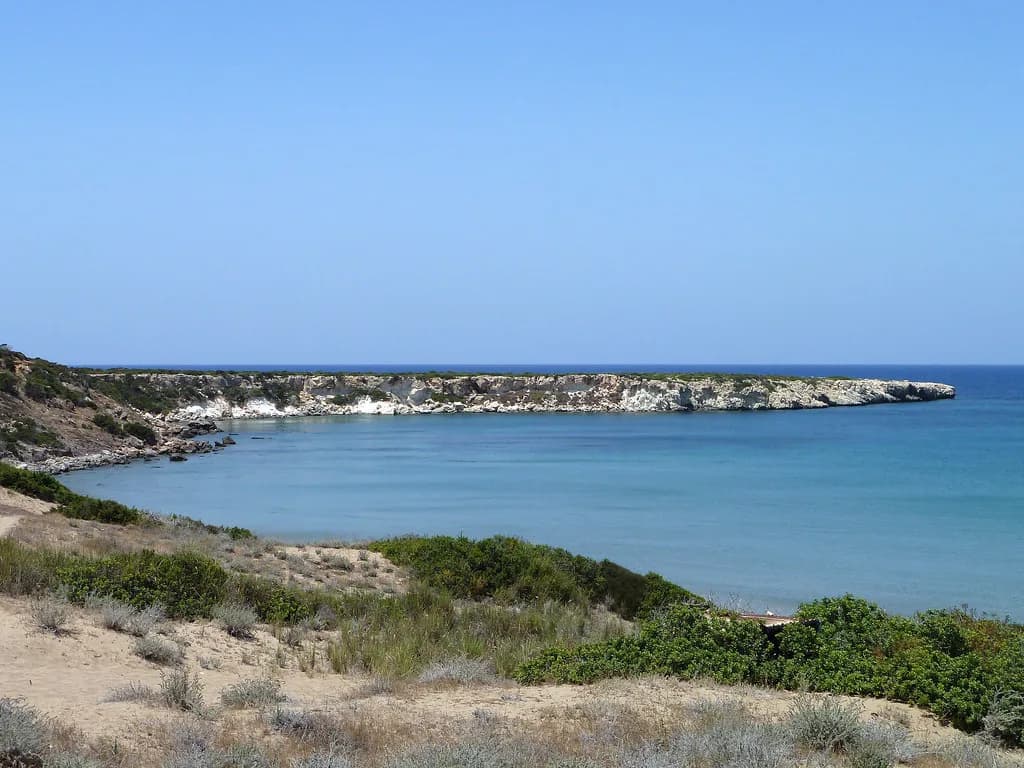
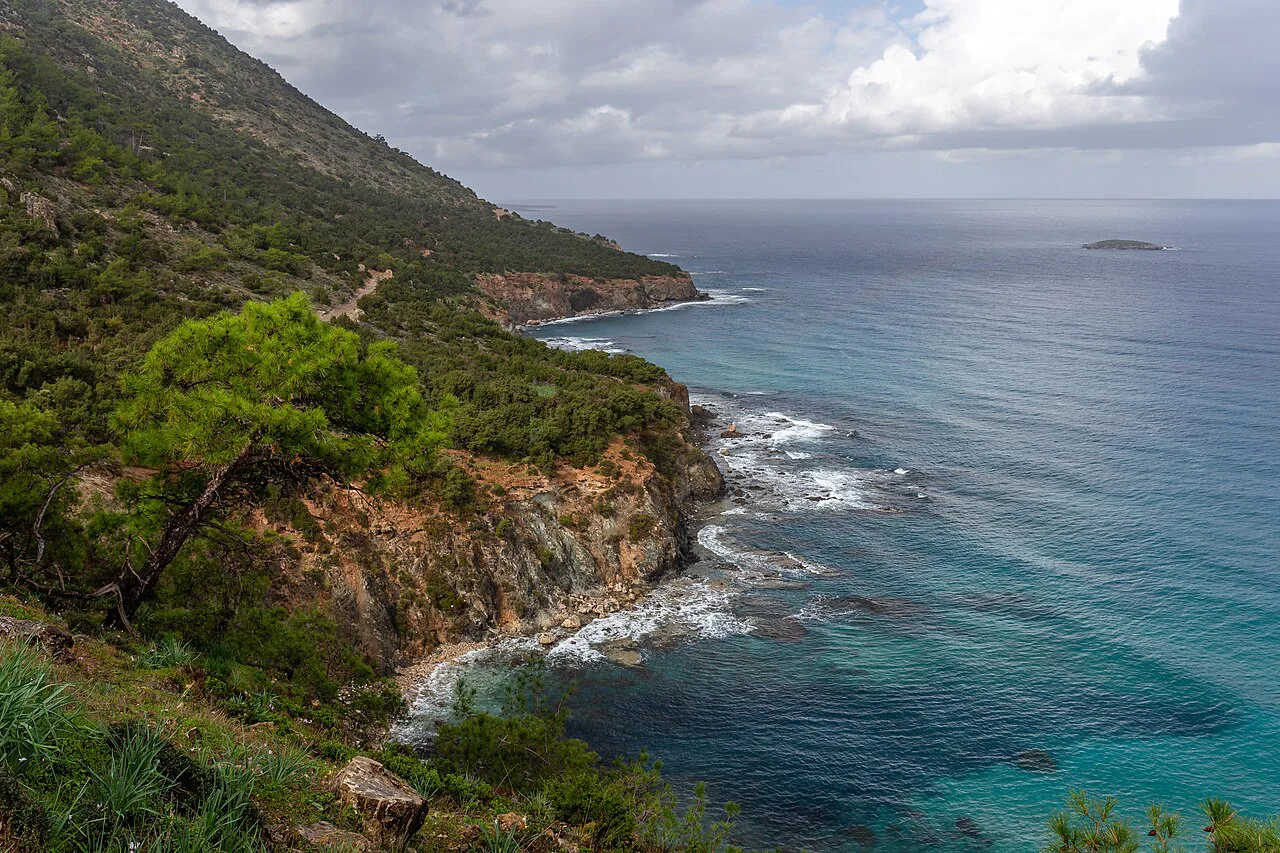
Lara Bay, on the Akamas peninsula west of Polis, is the site of the Lara Bay Turtle Conservation Plan, which the source describes as among the best regarded in the European Union and a former Natura Award finalist. The plan's stated aims are protecting turtles and eggs from natural predators and human activity, safeguarding breeding habitat, monitoring populations and breeding, and running advocacy campaigns. It is a working conservation area rather than a visitor attraction with facilities.
Lara Bay is a working conservation site within the wider Akamas area, so treat the beach and the surrounding landscape as the main draw rather than a scheduled station tour. An Akamas jeep safari is one way to see this part of the coast.
The villages inland from the coast make the drive worthwhile in their own right. Neo Chorio sits close to the Akamas, and Kathikas is a handy stop on the northern approach. Both are small enough to break the journey without eating into beach time.
The Nesting Turtle Protection Programme
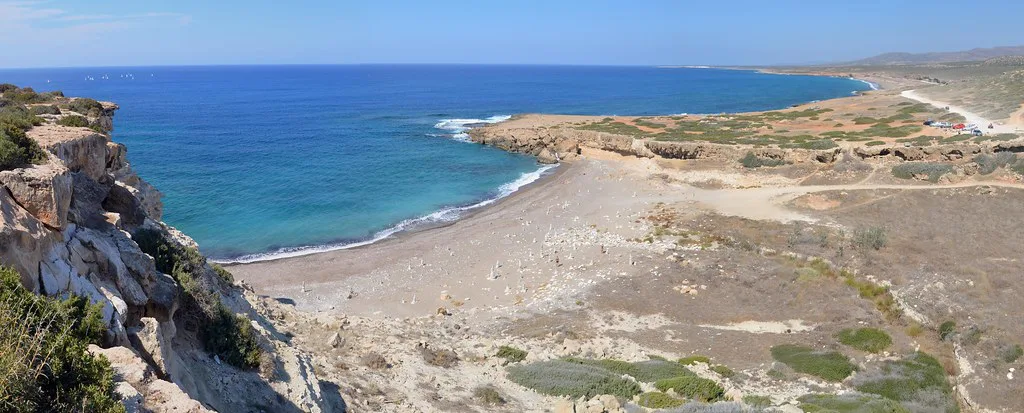
The Department of Fisheries and Marine Research runs the Nesting Turtle Protection Programme. Its work covers monitoring nests, relocating eggs that are at risk, and releasing hatchlings into the sea. Knowing this helps visitors interpret what they see: a marked, fenced or relocated nest is programme work, not damage, and should be left alone.
Because the Department is a government body rather than a tour company, its rules apply across the nesting beaches rather than to one concession. If you want to get involved in conservation work, approach the Department directly rather than assuming a beach vendor is affiliated.
Turtle Beach at Protaras: what protection means for visitors
Turtle Beach near Protaras is described as a protected nesting ground for green and loggerhead turtles, a quiet cove with clear water and nests marked out in summer. The marking is the key practical detail: nest areas should be left alone, and the value of the site depends on people staying out of them. Expect a wild, unbuilt shoreline.
Treat it as a place to swim and look, not a place to interact. Keep to the sand outside the marked zones and avoid driving or parking on the beach. If a nest is hatching, watch from a distance and let the programme staff handle it.
Watching from a boat: the Atlantis Turtle Watching Cruise
The Atlantis Turtle Watching Cruise runs a two-hour trip from Paphos Harbour, leaving from the second pier, out to a turtle reef where turtles are watched from the boat's submarine viewing window. That format keeps people out of the water and away from the animals, which is the main reason to choose it over a swim stop.
Departure times, seasonal operating dates and fares come from the operator, so check them at Paphos Harbour before you build a day around the trip. Two hours is short enough to fit around a morning or afternoon in Kato Paphos.
How to watch turtles without harming nests or hatchlings
Tourist activity on nesting beaches is best confined to conservation centres, and direct contact with turtles or nests is likely to cause harm. In practice that means keeping off the sand above the tide line, leaving marked nests untouched, and watching from a boat or from a respectful distance on land.
The wider point is that turtle protection is also marine ecosystem protection, and by extension it protects the livelihoods that depend on a healthy sea. A cove that stays unbuilt is worth more to the island than another beach bar. Choose operators who keep people out of the water around turtles and who do not promise close encounters.
Why the tourism and conservation balance matters here
Long-term survival of Cyprus's turtles is uncertain: the island's population is part of a wider Mediterranean one that has dropped sharply elsewhere because breeding grounds were destroyed or exploited. That makes the Cypriot beaches disproportionately important, and it means the pressure from visitors is not a small, local issue.
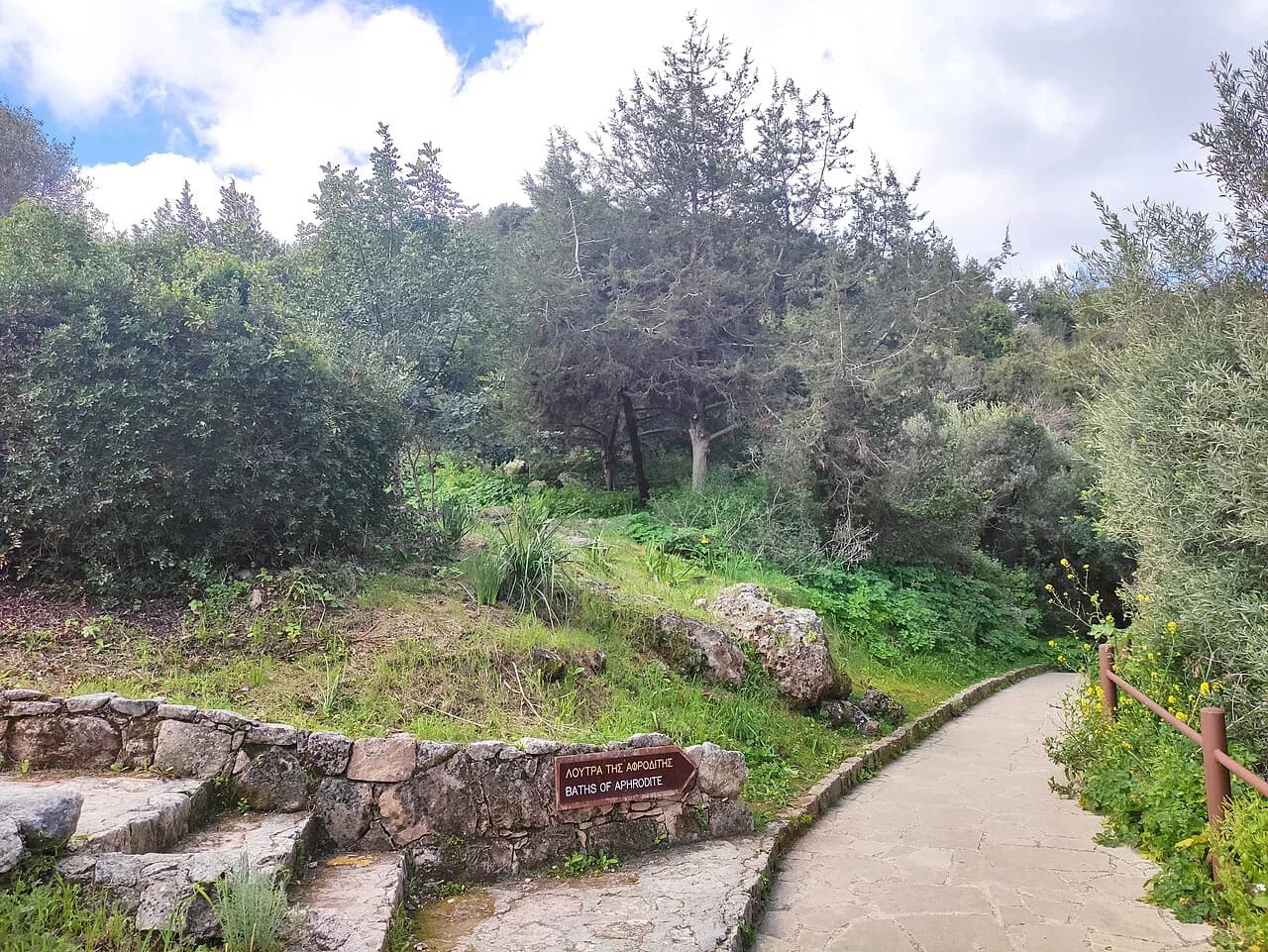
For a traveller the practical conclusion is simple. Go in the June to mid-August window, head to Cape Greco or the Paphos and Akamas coast, use marked paths and boat-based viewing, and give the nests a wide berth. The rest of the Akamas, including the Baths of Aphrodite and the villages above the coast, fills out a day without adding pressure on the beaches.
Which turtle site should you choose?
Choose Cape Greco if you are based in Ayia Napa or Protaras and want cliffs, clear water and marked nests in a national forest park. Choose the Paphos and Akamas coast if you want the Lara Bay reserve, the option of a short boat trip from Paphos Harbour, and villages such as Drouseia and Neo Chorio on the same loop.
Whichever you pick, the rules are the same: no contact, no lights on the beach at night, and no driving onto nesting sand. Check the Department of Fisheries and Marine Research's current guidance and the cruise operator's timetable before you set out, since both can change with the season.
Frequently Asked Questions
What is the best time of day to see turtles in Cyprus?
Nesting takes place during the June to mid-August season, and the most reliable way to see turtles without disturbing them is a daytime boat trip, such as the two-hour cruise from Paphos Harbour. On land, look at marked nests from outside the protected area rather than approaching them.
Is Turtle Beach in Protaras the same as Lara Bay?
No. Turtle Beach is a protected cove near Protaras on the south-east coast, within reach of Cape Greco National Forest Park. Lara Bay is on the Akamas peninsula west of Polis, where the Lara Bay Turtle Conservation Plan operates. They are on opposite sides of the island and suit different itineraries.
Sources
Notes for your Cyprus trip
Optional updates to our Cyprus guides.
You might also like
Continue reading
More guides you'll find useful