
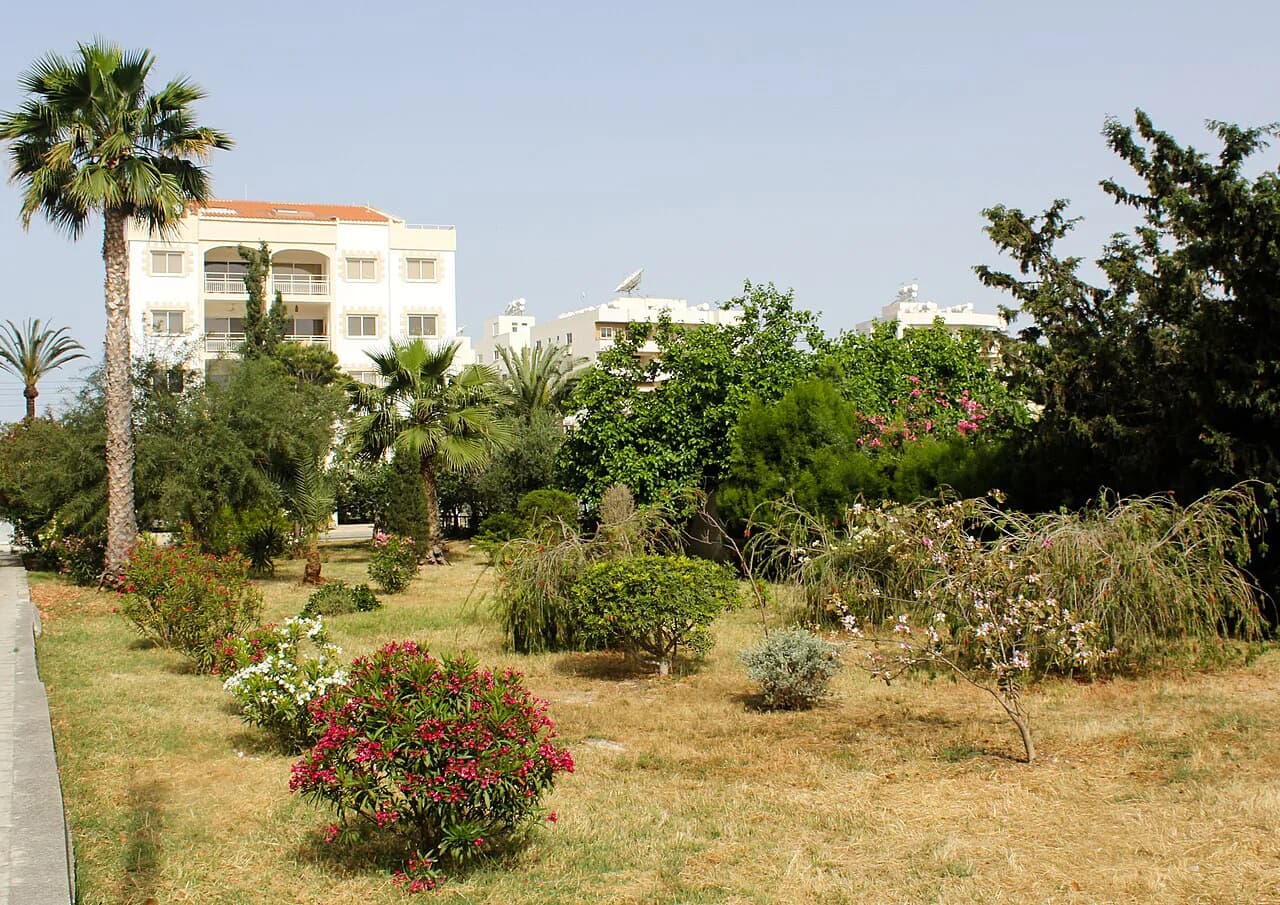
Skala, Larnaca: what to see in Larnaca's lake-edge district

Skala is the Larnaca quarter inland of the seafront, on the city side of the salt lake, and it is best treated as a half-day of walking rather than a checklist of sights. From here you can reach the Aliki nature trail, the Kamares Aqueduct and the free district museum at Plateia Kalograion. This page covers what is around Skala, what to see, how long it needs and who it suits.
Come between November and around March and the salt lake may hold greater flamingos; come in high summer and the same walk is about early starts and the museum in the heat of the day. Either way, the practical anchor points are the same: the Kamares Aqueduct, the salt collection plateau off Artemis Avenue and Plateia Kalograion.
What and where Skala is
Skala sits inland of the seafront, set back from the waterfront rather than on the beach strip itself. The lake complex reaches out towards Pervolia, Meneou and Dromolaxia, which is why the ground beyond the district feels open and reedy rather than built up.
The old airport and the Hala Sultan Tekke mosque sit near the lake, and the nature path runs from the Kamares Aqueduct to a second trailhead on Artemis Avenue. That geography is the point of this edge of Larnaca: you are minutes from the centre but looking out over one of Cyprus's most important wetlands.
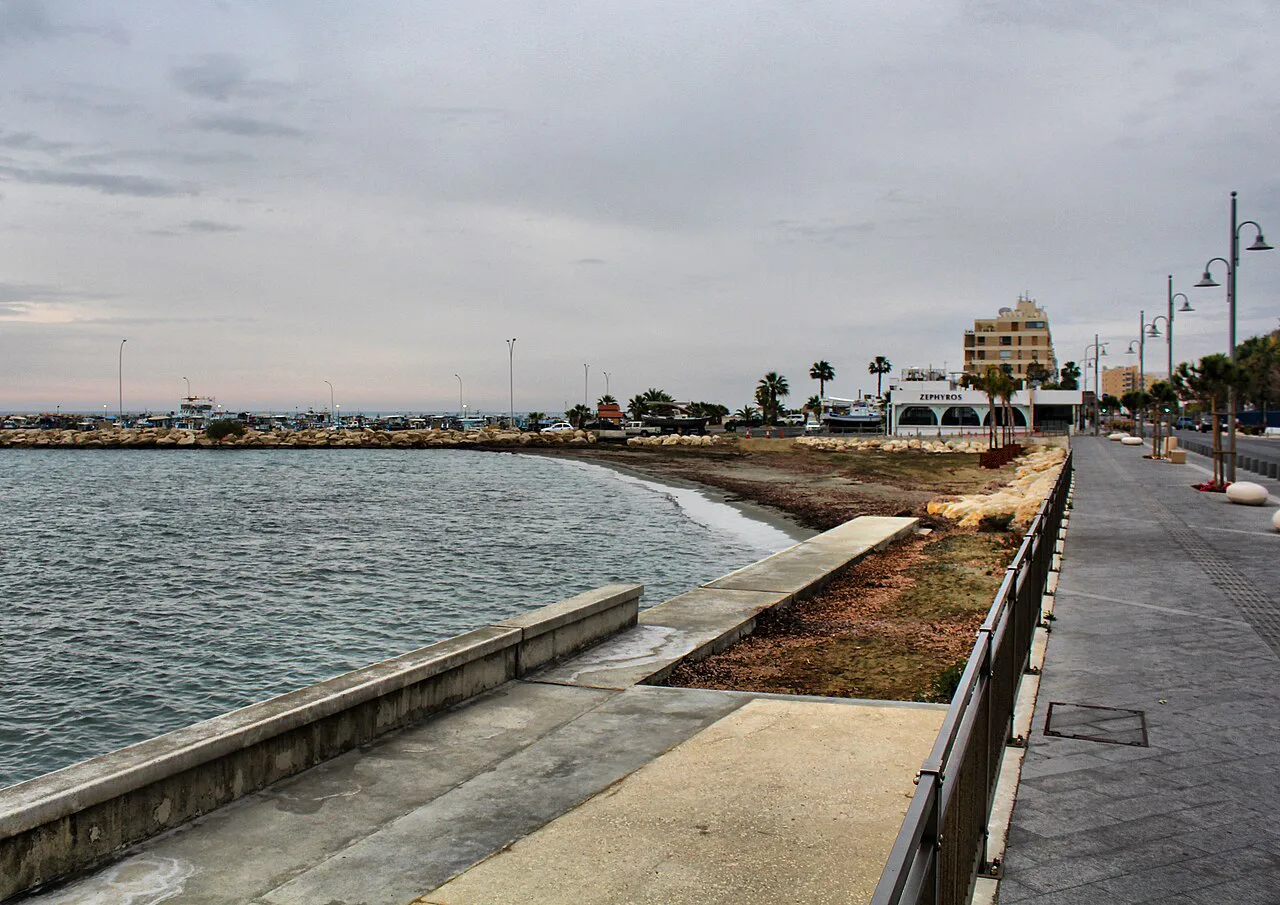

How Skala relates to the lake, the museum and the rest of Larnaca
Skala's practical draw is the lake edge rather than the promenade: the two trailheads are the Kamares Aqueduct and the salt collection plateau on Artemis Avenue, and Plateia Kalograion, home of the district museum, is the other fixed point on this side of the city. The seafront at Finikoudes is a separate base, best treated as the starting point for a promenade walk rather than for Skala itself.
Because the two trailheads and the museum are close together, Skala works well as an add-on to a seafront stay rather than a separate trip. The Mackenzie strip is a different edge of town if you want to finish the day along the coast.

Larnaca Salt Lake and the Aliki nature trail
The salt lake is not one lake but four, covering 2.2 square kilometres, and the main one with the winding nature path and bird watch tower is called Aliki. The 4km trail has two starting points: one at the Kamares Aqueduct and one at the salt collection plateau on Artemis Avenue, 150 metres past the District Judicial Court.
The path is part of the European Walking Route E4, so you can walk it as an out-and-back from either trailhead or link it to the wider route. The lake also carries Ramsar, Natura 2000, Barcelona Convention special protection and BirdLife International Important Bird Area status, which is why the margins are protected.
More than 85 migratory bird species use the wetland, feeding on the shrimp that grow on the lake's dark red algae. The trail's other layer is religious: a sanctuary of Artemis-Diana and Aphrodite-Astarte once stood here, and a copy of the Artemis-Diana sculpture found on the site now sits on the roundabout on Artemis Avenue.
Greater flamingos on the salt lake in winter
Greater flamingos arrive with the first rainy weather, typically in November, and stay until around March. In years with higher water levels their numbers can reach tens of thousands, and their honking carries along the Aliki path.
The birds shy away from people who come too close, and wading out into the salt lake to get nearer is prohibited because it damages a sensitive habitat. Stay on the path and use the watch tower instead; that is also the better place to photograph them.
The Kamares Aqueduct as a Skala landmark
The Kamares Aqueduct is the most recognisable man-made marker in this part of Larnaca and one of the two formal starts of the Aliki trail. Beginning at the aqueduct puts you straight onto the lake path, with the birds and the old arches within reach from the start.
Hala Sultan Tekke and the protected wetland
Hala Sultan Tekke and the old airport sit near the lake, which is what makes this corner of Larnaca feel apart from the busy seafront. The lake's Ramsar and Natura 2000 designations explain the protected margins and the restrictions on disturbance.
The Zenobia wreck lies 3.7km offshore in Larnaka Bay, and the water around it has been a Marine Protected Area for years, with no fishing allowed within three miles of the wreck. That protection is why large groupers, barracuda and turtles turn up in the bay, though the wreck itself is a boat dive, not a shoreline swim.
Archaeological Museum of the Larnaka District on Plateia Kalograion
The district museum on Plateia Kalograion is free and open Tuesday to Sunday, 9:00 to 16:30, closing on public holidays. Its collection covers finds from the whole district, including the ancient city-kingdom of Kition and the Neolithic settlements at Choirokoitia and Tenta-Kalavasos.
The displays run from Neolithic through the Copper Era to Archaic, Classical, Hellenistic and Roman material, with faience, ivory and alabaster pieces showing the island's overseas trade. There are also Egyptian, Mycenaean, Phoenician, Assyrian and Persian objects found in the Larnaca area, and the building is fully accessible.
If you are weighing up a trip to the Neolithic settlement itself, Choirokoitia is a UNESCO World Heritage Site, 32km from Larnaca, with reconstructed cylindrical dwellings and entry at €2.50. The museum here makes a useful taster before you decide whether the drive is worth it.
Getting to Skala's lake edge
Skala is a walking district: treat the Kamares Aqueduct and the salt collection plateau on Artemis Avenue as your two target points, both of which are the formal trailheads for the Aliki trail. From either one you are straight onto the lake path without needing a bus or car.
If you are based outside Larnaca, Oroklini to the north is the nearest alternative base for this side of town, with its own village feel and a short drive down to the lake.
How long Skala needs and when to go
Allow half a day as a minimum: time on the Aliki path, the same again at the archaeological museum, plus the walk between them. Add the Kamares Aqueduct and you have filled a comfortable morning.
Winter is the season to come for the flamingos, since the birds typically arrive in November and stay until around March. Summer visitors should walk early and save the museum for the hottest part of the day.
Who Skala suits and who it does not
Skala suits walkers, birdwatchers and travellers who want the salt lake and a genuinely wild wetland within a short stroll of the city, plus a small museum nearby. It rewards the kind of visitor happy to spend a morning on a path with binoculars, then a couple of hours indoors.
It does not suit anyone who wants the beach, the bars and the evening buzz on the doorstep, since Skala's appeal is the quieter lake edge of the city rather than the promenade itself. If that is what you are after, the Finikoudes and Mackenzie fronts are the better base.
Should Skala be on your Larnaca shortlist?
Yes, if you have half a day and the weather is on your side: the salt lake trail, the Kamares Aqueduct and the free archaeological museum together make a proper district to explore on foot. Go in winter for flamingos, and in summer for early walks and the museum.
Skip it if your priority is the seafront, nightlife or beaches, since the district is inland of the promenade and its draws are the lake and the museum. Museum hours and entry rules are set by the Department of Antiquities, so confirm them the day before you go.
Explore more Larnaca guides
Frequently Asked Questions
Can you walk from Larnaca to the Salt Lake?
Yes. The 4km Aliki trail has two formal starting points — the Kamares Aqueduct and the salt collection plateau on Artemis Avenue, 150 metres after the District Judicial Court — so you can begin the walk from the city side without a car.
Do you need a car for Skala and the salt lake?
No. The Aliki trail starts from two points in the city, the Kamares Aqueduct and the Artemis Avenue plateau, and the district museum is at Plateia Kalograion. A car is only useful if you are combining the visit with a wider drive, for example to Choirokoitia, 32km from Larnaca.