
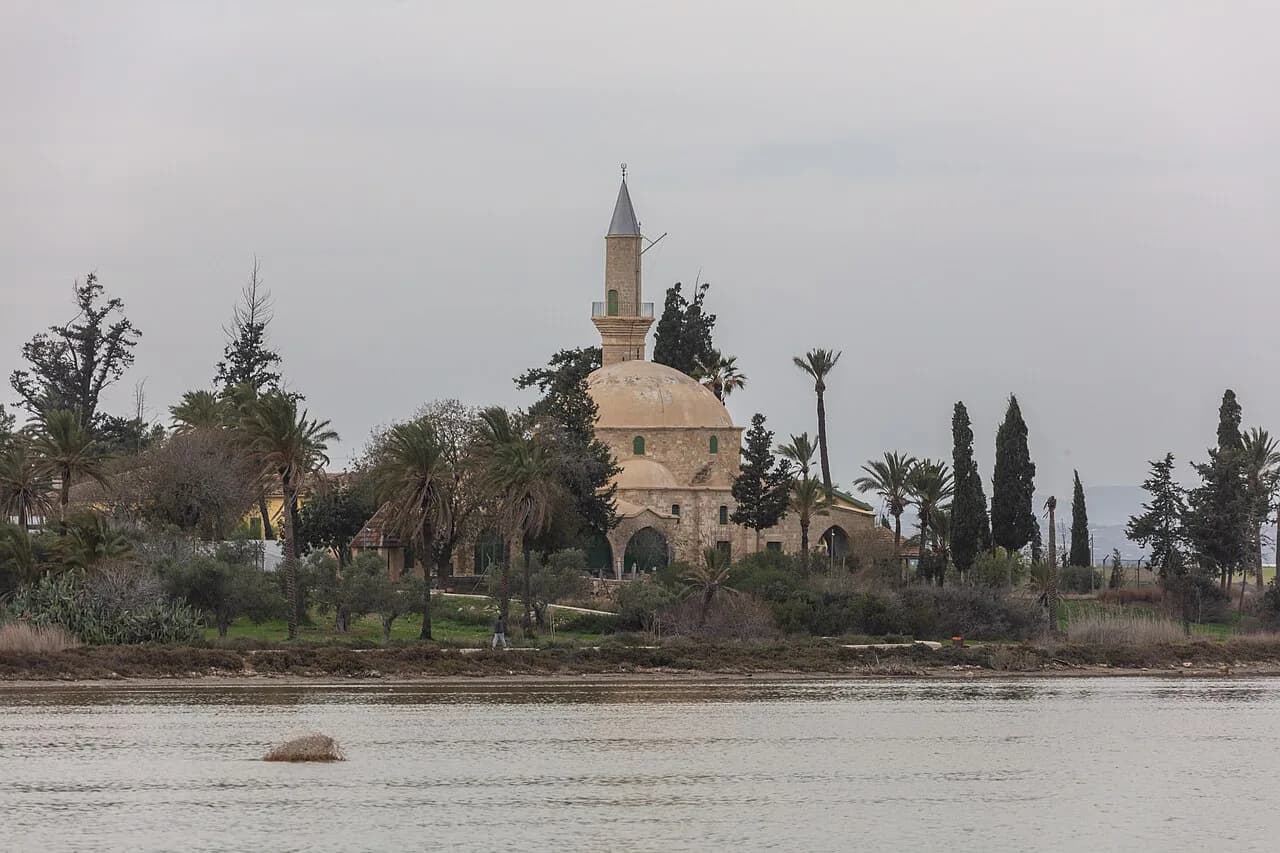
Hala Sultan Tekke: Visiting the Mosque and Shrine at Larnaca Salt Lake

Hala Sultan Tekke is a Muslim sanctuary and mosque on the west bank of Larnaca Salt Lake, and it works best as a short, deliberate stop of under an hour rather than a half-day outing. The visit is about the shrine and the setting, not a museum collection, so the time you spend depends on how long you linger by the water. This guide covers where the site sits, how to reach it from Larnaca, what you see on arrival, and how to fold it into a Salt Lake walk.
What Hala Sultan Tekke is
The site is a mosque and shrine rather than a heritage attraction with galleries and interpretation boards. Treat it first as a working Muslim sanctuary and second as a viewpoint over the lake, because that order shapes how you dress, how loudly you talk and where you stand for photographs. It sits beside Larnaca Salt Lake, a complex of four linked salt lakes covering 2.2 sq km and stretching towards Pervolia, Meneou and Dromolaxia. See also our guide to Larnaca Attractions: 11 Visitor Guides for the rest of the town.
The lakes have serious ecological standing: the complex is a Ramsar wetland of international importance, a Natura 2000 site and a BirdLife International Important Bird Area. That status is why the shoreline around the mosque is managed as habitat, and why the water level changes shape through the year. It also means the ground you walk on is protected, so keep to the marked paths near the water.

Where it sits
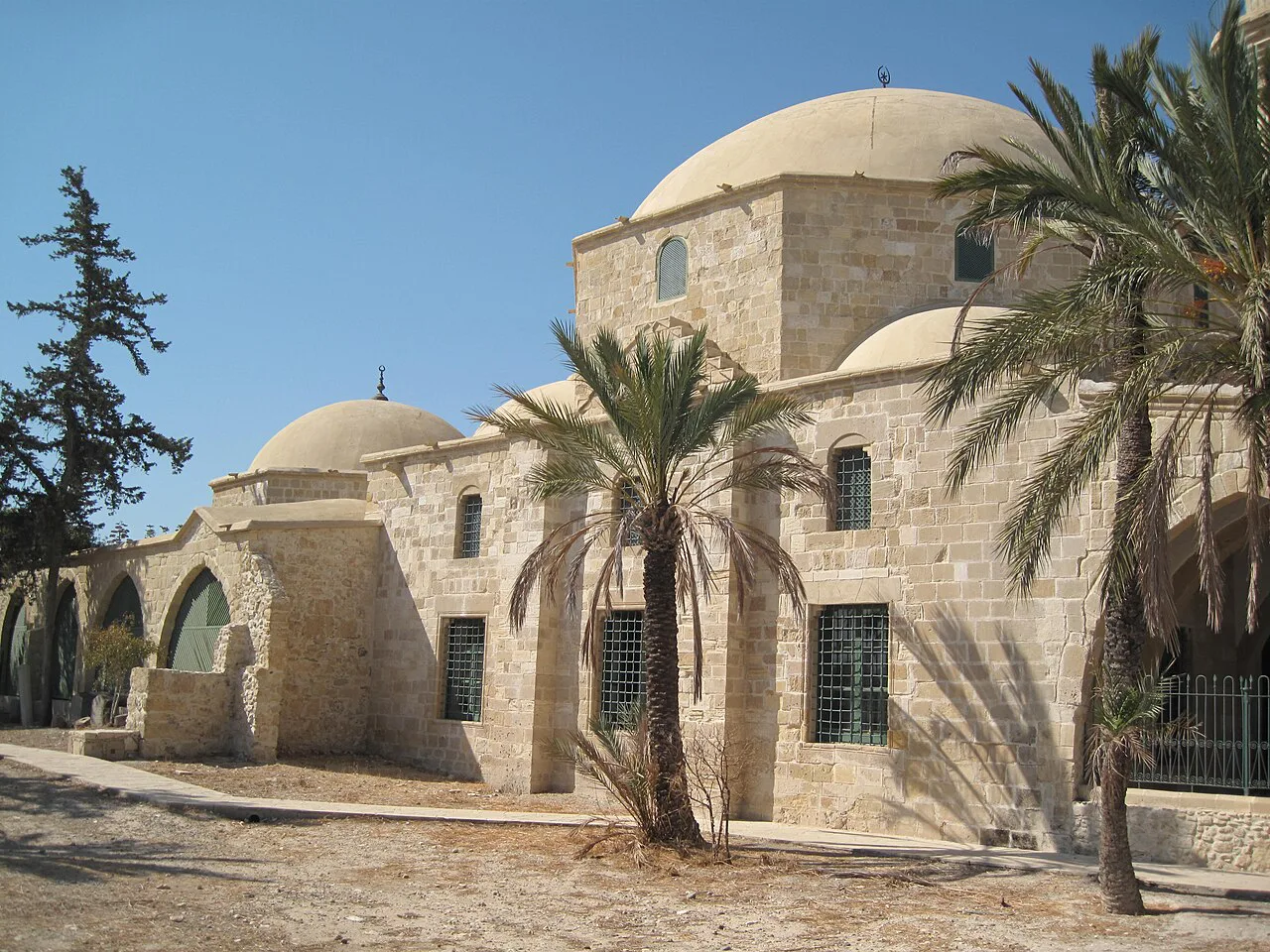
The mosque stands on the western side of the main salt lake, close to the old Larnaca airport area and within sight of the water. The main lake, known as Aliki, is the one with the winding nature path and the bird watch tower, and the mosque faces it across the flats. Arriving by car or taxi from Larnaca town is the straightforward option, since the approach road runs past the lake rather than through a town centre.
Coming from Larnaca Airport, the site is minutes off the main road into town, which makes it an easy first or last stop on a trip. The lake road has little shade and no town facilities along its length, so carry water before you leave the centre. The western shore also means low sun across the water in the late afternoon, the best light for the building.
Who is buried there
The shrine is associated with Umm Haram, the figure whose memory gives the site its alternative name, the Mosque of Umm Haram. That association is why the building is a place of pilgrimage as well as a local mosque, and it explains why visitors may find people praying rather than sightseeing. Keep the story brief in your own mind: the tomb and the naming are the point, and the building and lakeside setting do the rest.
Getting there from Larnaca
For most travellers the practical choice is a car or a taxi from Larnaca town, because the mosque sits on the far side of the lake from the seafront and the road walk is exposed. If you are already planning to walk the lake trail, combine the two: the 4km Aliki route has two starting points, one at the Kamares Aqueduct and one at the salt collection plateau on Artemis Avenue towards the old airport, 150 metres after the District Judicial Court. Starting at the Artemis Avenue end puts you on the mosque side of the water.
The trail is also part of the European Walking Route E4, so you will see long-distance markers alongside the birdwatching ones. Walking from the Kamares end instead gives you the aqueduct first and the mosque as a later reward, but it lengthens the outing considerably in summer heat. Plan the return leg before you set off, since the shoreline path has no shortcuts back into town.
What to see when you arrive
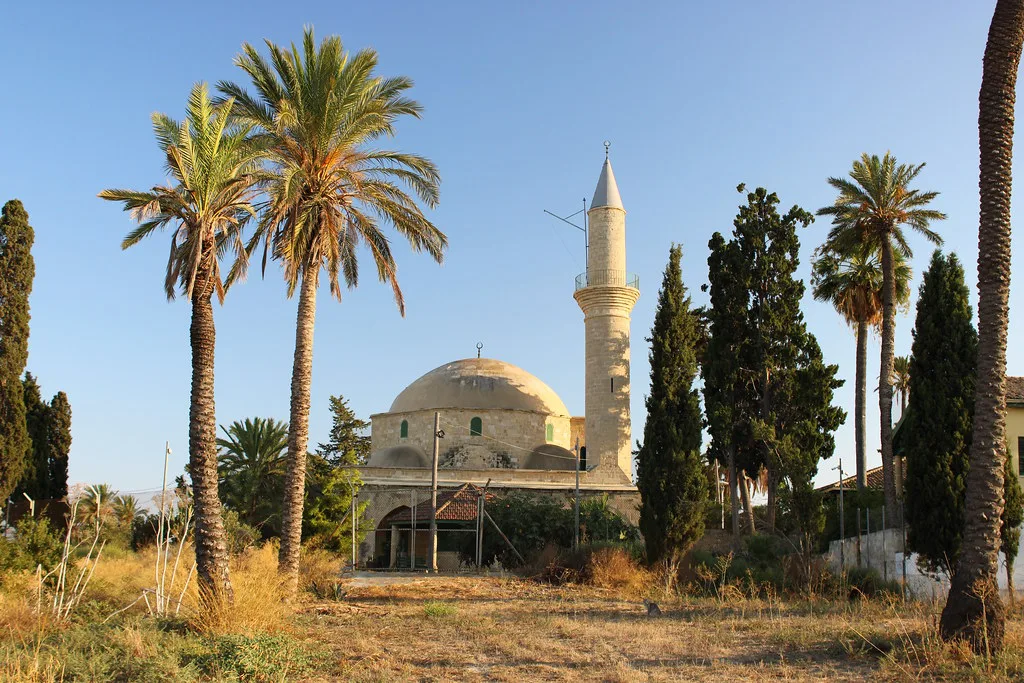
The visit centres on the mosque building, the shrine and the open lakeside ground around them, so expect a compact site rather than a spread-out complex. The pleasure is in the contrast: white walls, water and the low ridge of the lake beyond. Give yourself time to stand back from the building and look across the flats, because the setting is what most visitors remember.
Because this is an active sanctuary, dress and behaviour matter more here than at a ruin. Cover shoulders and knees, remove shoes where the building requires it, keep voices low and avoid photographing people at prayer. The same courtesy applies outside: the shoreline is a protected wetland, and wading out onto the salt flats to get closer to birds is prohibited because it damages the habitat.
How long to allow, and when to go
Budget 30 to 45 minutes for the mosque and its immediate surroundings, or up to two hours if you walk part of the Aliki trail as well. Mornings and late afternoons are kinder than midday, when the lakeside ground offers almost no shade and the reflection off the water is fierce.
Winter is the season for the greater flamingos, which typically arrive with the first rainy weather in November and stay until around March, sometimes in numbers reaching tens of thousands when water levels are high. Treat the birds as a bonus rather than the reason for the trip. Summer visits are about the building and the light, not wildlife.
Nearby: the salt lake, the Aliki trail and Kamares
The obvious pairing is the lake itself, which you are already standing beside. The Aliki path and its bird watch tower let you extend the visit on foot, and the Kamares Aqueduct at the other end of the trail gives the walk a second landmark. Both work best in the cooler hours, so a single morning covers the whole group comfortably.
If you want a contrast later in the day, the church of Saint Lazarus in the town centre is the natural next stop after the lakeside calm, and it puts you back among streets and cafés. Divers tend to head the other way, out into Larnaca Bay for the Zenobia wreck, which lies 3.7 km offshore with the deepest point at 42 metres and the shallowest at 18 metres, suiting advanced open water certification and above.
Practical points for a respectful visit
Confirm opening times and any entry arrangements for Hala Sultan Tekke before you set out, either through the Larnaca municipal tourist information service or by asking at your accommodation. The mosque is a place of worship first, so hours can shift around prayer times and religious observances. Build flexibility into your day rather than treating a printed time as fixed.
Expect a quiet, low-key visit with modest facilities rather than a large visitor centre. Carry water, wear shoes you can remove easily and keep a light layer for the wind off the lake. Zenobia Wreck, Larnaca is the headline dive in the bay, and Mazotos Camel Park lies further along the airport road if you are travelling with children.
One more pairing worth knowing if you have a car: Choirokoitia, the UNESCO-listed Neolithic settlement, lies about 32km from Larnaca on the Nicosia to Limassol motorway, with reconstructed dwellings that make the prehistoric story tangible. It is a separate trip rather than a walk from the lake.
Is the mosque worth the detour?
Yes, if you frame it as a short, respectful stop on a Salt Lake outing rather than a destination in its own right. The combination of shrine, water and birdlife gives you something no town-centre sight in Larnaca offers, and it costs you little time. Skip it only if you have no transport and no appetite for an exposed walk.
The best plan is a morning or late afternoon with a car: mosque first, then the Aliki path or the Kamares end of the trail depending on where you parked. Treat the setting as both a place of worship and a protected wetland, and the visit looks after itself.
Explore more Larnaca guides
Frequently Asked Questions
Does Cyprus have mosques?
Yes. Hala Sultan Tekke beside Larnaca Salt Lake is one, and it functions as both a mosque and a shrine. It is an active place of worship, so visitors should dress modestly and keep quiet during prayer.
Who is buried at Hala Sultan Tekke?
The shrine is associated with Umm Haram, which is why the building is also called the Mosque of Umm Haram. That association is what makes the site a place of pilgrimage.
Can I combine the mosque with a walk around the salt lake?
Yes. The 4km Aliki nature trail has starting points at the Kamares Aqueduct and at the salt collection plateau on Artemis Avenue, and the second puts you on the mosque side of the water. Allow extra time for the walk and carry water, as there is little shade.