
Larnaca Salt Lake: What to See and When to Go

Larnaca Salt Lake is worth an hour of your day, not a whole one: a flat, open wetland of four linked salt lakes on the edge of town, at its best in spring, when migrating flamingos drop in, or in the few hot weeks when the shallows turn pink. This guide covers what the site actually is, where the Kamares trail and the birdwatching tower sit, when to time a visit and how the lake fits into the rest of a day in Larnaca.
Four salt lakes, one protected wetland
The site is not a single sheet of water but a complex of four interconnected salt lakes: Aliki, Orphani, Soros and Spiro. Together they form one of the island's most important wetlands, protected both as a Ramsar site and as part of the Natura 2000 network.
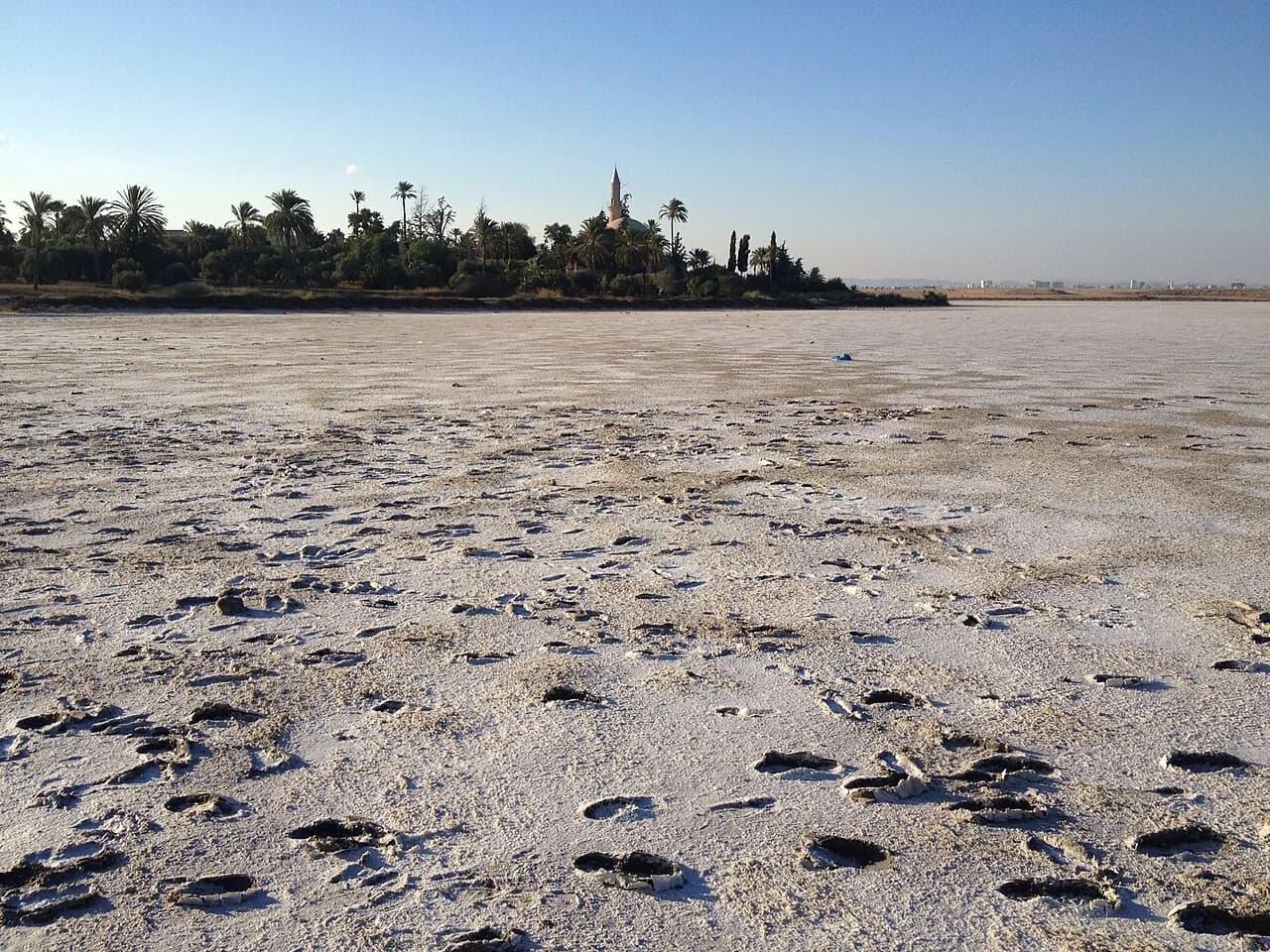
That protection matters for how you visit. This is a habitat first and a photo stop second, so keep to the trails and viewpoints rather than cutting across the flats, and expect a working landscape of mud, salt crust and scrub rather than a manicured park.
In practical terms the lake is a natural site rather than a gated ticketed attraction. Arrive when there is daylight and you can walk it; if you want to combine it with ticketed sights, plan those separately through the wider set of Larnaca Attractions: 11 Visitor Guides.

Where the lake sits and how to reach it
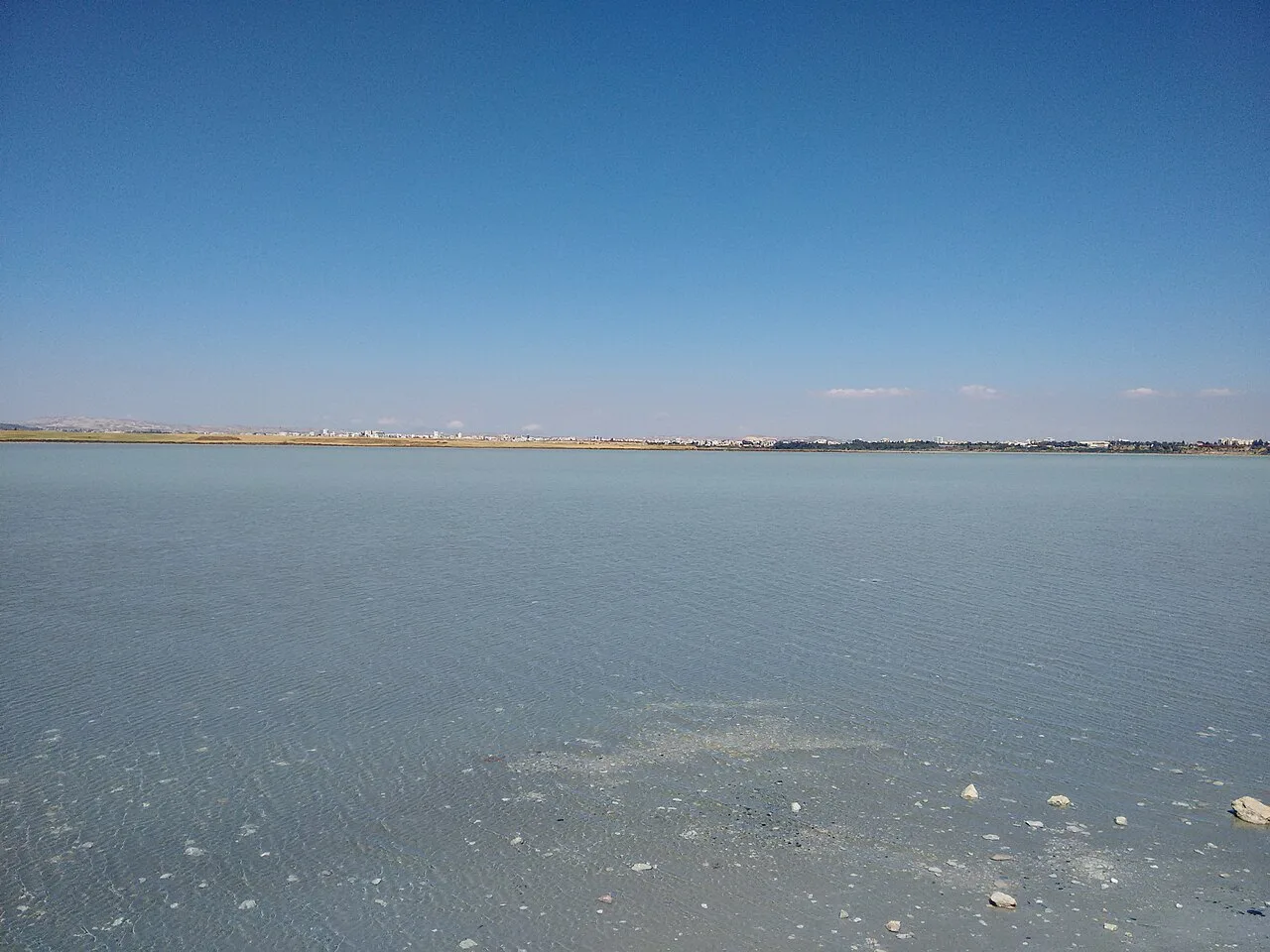
The salt lake lies on the landward side of Larnaca, between the town and the airport road, close enough to reach on foot from the centre if you do not mind a walk in the heat. Drivers pass it on the approach to the airport, which is why so many people see it from a car window and never stop.
For anyone collecting a hire car on arrival, the lake is a sensible first or last stop before the run to Larnaca Airport, and the same road puts you within easy reach of the Mazotos camel park further along the coast.
Public transport is the weak point. If you are relying on buses, ask at the Larnaca municipal information point or a local taxi rank which stop serves the Kamares side before you set out. Cycling is a realistic alternative, and one salt lake in the area features on organised bike tours.

When to go: two different pink events
Spring and high summer give you two completely different spectacles, and it is worth knowing which one you are chasing. In spring the lake hosts migrating flamingos, which take their colour from the same organisms that tint the water.
Later, as temperatures climb, salinity rises with them and the shallows become an ideal breeding ground for algae and brine shrimp, turning the water a distinctive pink. The effect lasts only a few weeks, so it is a stroke of luck rather than something to plan a fixed date around.
Neither event is guaranteed, and no calendar can promise birds on a given morning or colour on a given afternoon. Treat the lake as a strong seasonal bet and keep your expectations loose; the flat light and open sky are reward enough on a quiet day.
The Kamares trail and the observation tower
Two concrete anchors organise a visit. The first is the Kamares Linear Trail start and information point, the marked beginning of the trail, where boards explain the salt lake and the flamingos. Start there and the site makes sense immediately.
The second is the small wooden observation tower, a simple birdwatching platform on the lake shore. It is a modest structure, but it lifts your eye line over the reeds and gives a far better view of the water than standing at ground level.
The Kamares aqueduct, which gives the area its name, is a separate sight; it can be visited alongside the lake rather than as part of the wetland itself.
Viewpoints on the shore
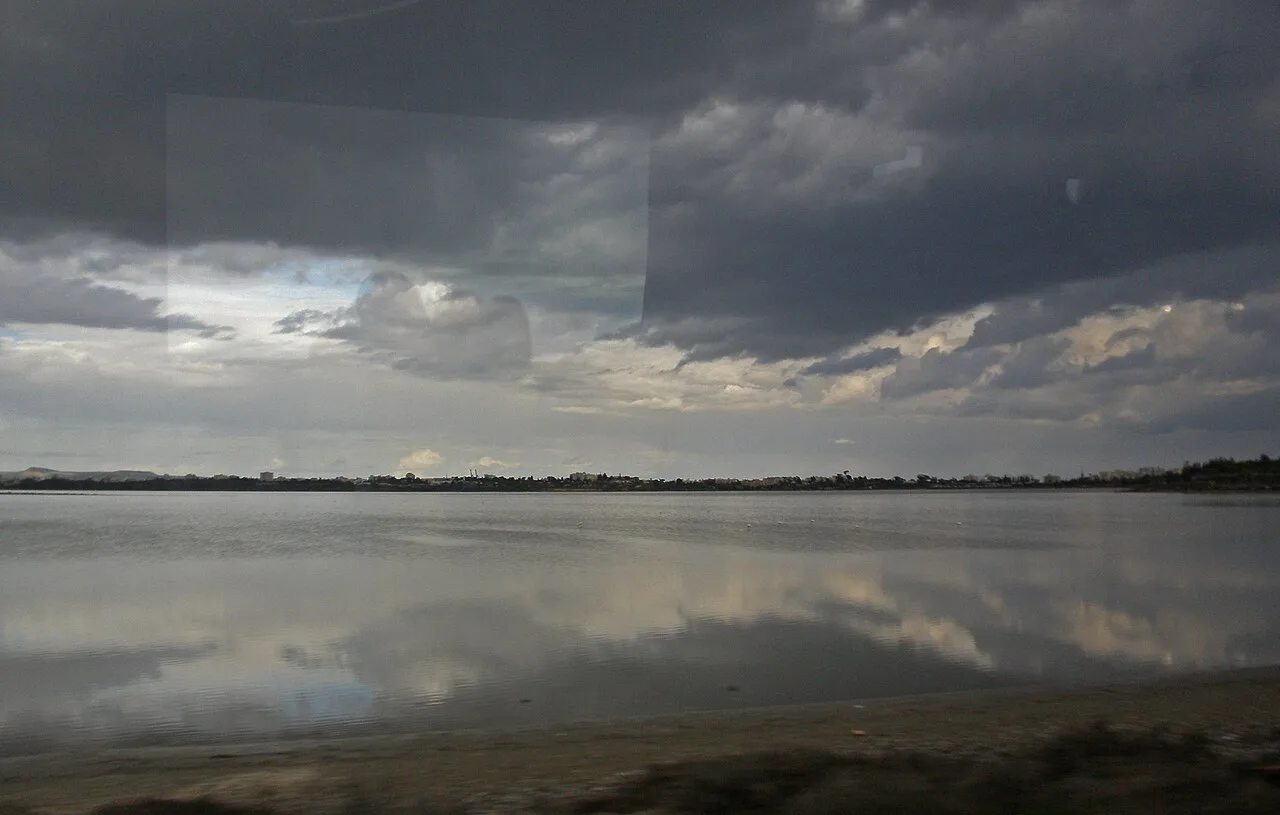
Beyond the tower, the shore has natural viewpoints where the whole lake opens up in front of you, with the water stretching away and the town skyline behind. These are the places to stop for photographs, particularly in low morning or evening light.
Bring binoculars if you have them. The tower and the shoreline are set up for watching rather than for getting close, and the birds stay at a distance; a phone camera will record the scene but not the detail.
Litter has been noted at the tower, a shame at an otherwise excellent birdwatching spot. Take your own waste away and the site stays pleasanter for the next person.
How long you need
A roadside photo stop takes five minutes and gives you a single flat view; a proper visit on foot takes about an hour, following the trail from the information point and walking out to the tower and back. The difference in what you see is considerable for very little extra effort.
Add time if you are birdwatching seriously, and add more if you are visiting in the middle of a summer day, when shade is scarce and the walking is slower than the map suggests. Early morning is the most comfortable window for both light and temperature.
Fitting the lake into a Larnaca day
The lake pairs naturally with the town's historic centre. The church of Saint Lazarus, the castle and the waterfront are all within a short drive, so a morning at the wetland followed by an afternoon in town works well without any rushing.
On the same side of town, the Hala Sultan Tekke mosque sits beside the salt lake itself, making it the most obvious second stop on a visit. Allow it a respectful half-hour rather than treating it as a photo backdrop.
If you would rather spend your water time submerged, the Zenobia wreck in Larnaca Bay is the town's other headline attraction, though it is a diving site rather than a walk.
For the wider picture, including the Foinikoudes Promenade and the town museums, the main things to do in Larnaca guide fills in the rest of a short break.
Practical notes on heat and timing
There is no shade to speak of out on the flats, and summer afternoons on the salt lake are punishing. Go early, carry water and wear a hat; the walk is flat but entirely exposed.
The wind off the open water can make a warm day feel cooler than it is, so do not strip down to beach clothes on the strength of the car thermometer. Sturdy shoes are more useful than sandals, since the ground is rough and salty underfoot.
Is the salt lake worth the stop?
Yes, if you give it an hour on foot rather than five minutes from the car park. The information point at the Kamares trail and the wooden tower turn a flat expanse into a readable landscape, and spring birds or a pink summer bloom make it memorable.
Build it into a morning: lake first, then the mosque beside it and the town centre after lunch, when you will be glad of shade and a cold drink.
Explore more Larnaca guides
Frequently Asked Questions
Can you swim in Larnaca Salt Lake?
No, and you would not want to. The salt lake is a protected wetland and bird habitat, and the descriptions of it cover walking, birdwatching from the tower and the seasonal pink water rather than swimming. The nearest swimming is on the coast at Larnaca's beaches, not in the salt flats.
When can you see flamingos at Larnaca Salt Lake?
In spring, when migrating flamingos visit the lake and take their pink colour from the organisms they feed on. Exact arrival and departure shifts with the season, and the birds are wild, so treat spring as the likeliest window rather than a fixed date.
Where is Larnaca Salt Lake?
It sits on the edge of Larnaca in Cyprus, between the town and the airport road, with the mosque of Hala Sultan Tekke beside the water. You can walk to it from the centre or stop on the drive to or from the airport.
Is the salt lake better than Paphos?
They are not comparable: the salt lake is an hour-long natural stop within a Larnaca day, while Paphos is a separate town with its own archaeological sites and harbour. Choose by which town you are basing yourself in, and visit the lake as part of a Larnaca stay.
How do you get to Larnaca Salt Lake without a car?
On foot from Larnaca centre or by taxi to the Kamares side. Bus routes into the wetland are not set out in the guides for the area, so ask locally for the nearest stop if you want to try public transport, and consider a guided bike tour if you would rather have the logistics handled.