
Zenobia Wreck, Larnaca: What Divers See and How the Dive Works

The Zenobia is a 172-metre ferry lying on its port side in Larnaca Bay, 3.7 kilometres offshore, with the shallowest point at 18 metres and the maximum depth at 42 metres. It is the dive most travellers associate with Larnaca, and the one that decides whether they build a trip around diving. This page covers the depth profile, the outside route, the marine life, water temperatures and boat access.
She capsized and sank on 7 June 1980 and came to rest on her port side, leaving the props, cargo and superstructure in place. Whether the wreck suits you depends on your certification level rather than your enthusiasm.
What the Zenobia wreck is and why divers know it
The Zenobia was a Swedish-built Challenger-class ferry launched in 1979 that went down with more than 100 vehicles and lorries still aboard, much of it visible today. The scale is what sets the dive apart: this is a full ferry, not a small coaster, and working through her compartments takes more than one visit.
The Larnaca region calls the wreck the best dive site in Cyprus and one of the top ten wreck dives worldwide, and PADI describes it as a top-ten wreck dive voted by divers each year and a natural site for an Advanced Open Water course. Those are the dive industry's judgments rather than a Cyprus Lanes ranking; the practical point is that the wreck is large, intact and worth a dedicated trip.

Where the wreck lies in Larnaca Bay and how far offshore
The Zenobia lies in Larnaca Bay 3.7 kilometres from shore, with boat access rather than entry from the beach. That distance suits a standard morning or afternoon trip but is far enough that you should plan around a boat slot rather than turn up at a jetty expecting to swim out.
Because the wreck sits in open water, sea conditions on the day matter more than they would for a shore dive. The current at the site stays relatively low all year, which the Larnaca region gives as one reason the wreck suits almost all qualified divers. If you are prone to seasickness, ask about the crossing and surface conditions before you commit.

How deep the Zenobia is and what that means for qualification level
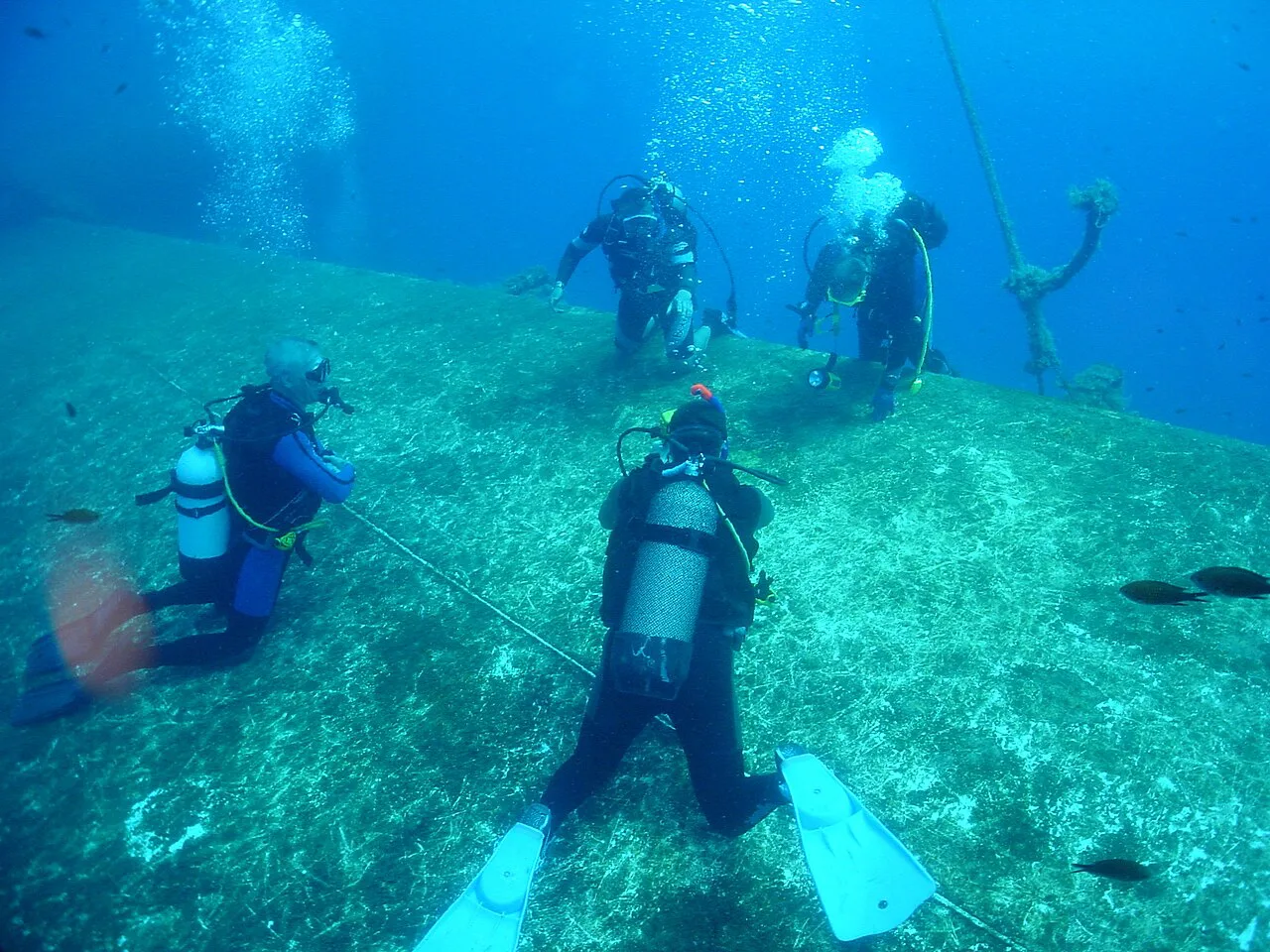
Two depth figures matter. The shallowest point of the wreck is at 18 metres and the maximum depth is 42 metres, per the Larnaca region; PADI gives 19 to 42 metres. That range is what separates a straightforward recreational dive from a deeper, more demanding one, so plan the profile you will actually dive rather than the deepest point you could reach.
The Larnaca region rates the site as medium to advanced, suitable for Advanced Open Water divers or experienced technical divers conducting wreck-penetration dives. A newly certified Open Water diver should not treat the Zenobia as a first boat dive at depth. If your certification is entry level, ask a dive centre whether a supervised deeper course dive on the outside of the wreck is possible; the answer depends on your training record.
What happened to the ship in June 1980
The Zenobia sank on 7 June 1980, and the Larnaca region records that she capsized during her maiden voyage. PADI reports that engineers found the ship's computerised pumping system was sending excess water into the side ballast tanks because of a software error, and she capsized onto her port side. The ballast failure, not a collision or fire, explains the ship's attitude on the seabed.
The ship was Swedish-built and relatively new when she went down, which is part of why the wreck remains so complete. If the human story matters to you, read the incident history before you dive rather than relying on dive-briefing hearsay.
What you see outside the wreck: props, doors, lorries, bridge and bow
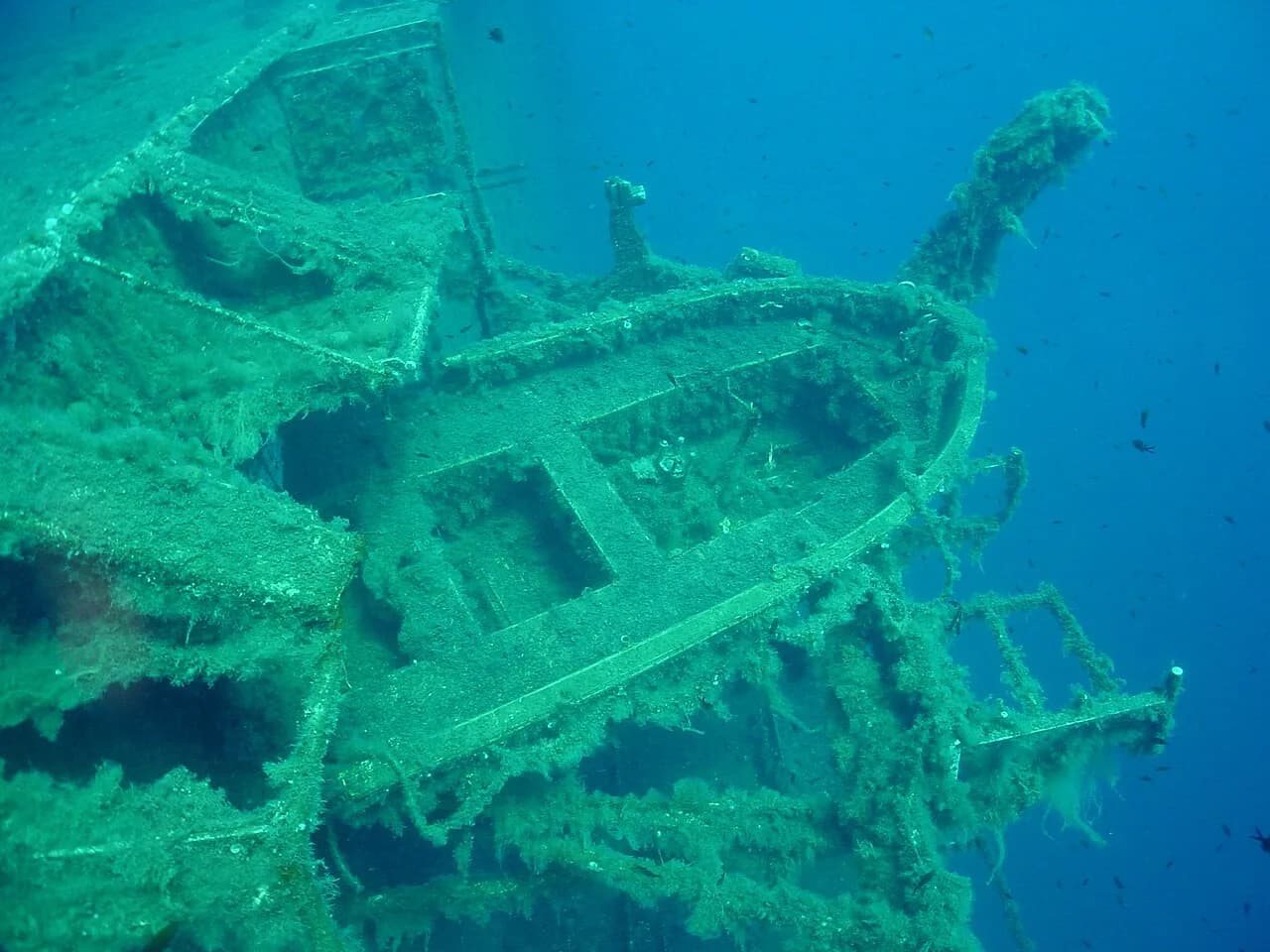
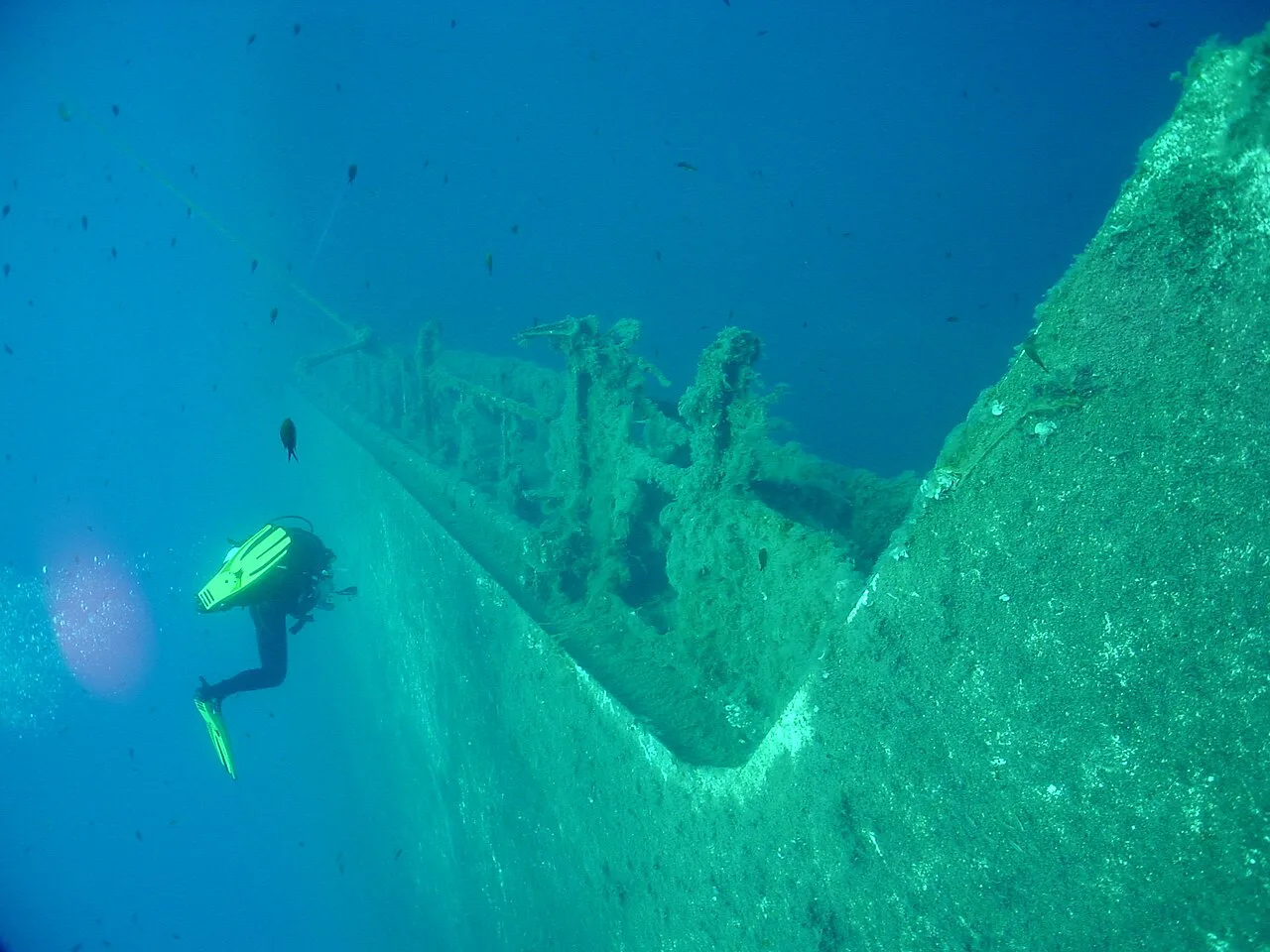
The outside of the hull carries enough for a full recreational dive. PADI lists the two massive propellers, the roll-on/roll-off doors, the lorries visible on the outside, the funnels, the bridge, the cafeteria, the bow area and the accommodation as the main features. The lorries are the signature sight: cargo that went down with the ferry and is still there to see without entering the ship.
Depth shapes the order of the dive. The shallowest structure at 18 metres is where an outside tour can spend most of its time, while the deeper sections toward 42 metres reward divers with the right certification and gas plan. Decide before you descend which features you are diving for, because chasing the props, the bridge and the bow on one dive at this scale leaves you rushing past all three.
When to go to Larnaca and what water temperature to expect
The Larnaca region publishes monthly average sea surface temperatures for the area: 17°C in January, 16°C in February, 18°C in March, 19°C in April, 21°C in May, 24°C in June, 26°C in July, 28°C in August and September, 25°C in October, 22°C in November and 19°C in December. These are climate averages, not a forecast, and they tell you what exposure protection to pack. The warmest water falls in late summer, the same months that bring the hottest air temperatures on land.
The trade-off is straightforward. Late summer gives the mildest water but the most demanding surface conditions and the busiest season in Larnaca, while spring and autumn give cooler water with easier days on land. Divers comfortable in a thicker wetsuit or drysuit will find the shoulder months pleasant and the boat less crowded.
Visibility, currents and the marine protected area
In good weather the visibility on the Zenobia can reach 30 metres, and the current is relatively low throughout the year. Those two conditions are why the wreck suits divers across a range of experience levels, not only technical divers. Visibility is weather-dependent, so a blown-out day is possible even in a good season, and the operator's judgment on whether to run the trip matters.
The area around the wreck has been a Marine Protected Area for many years, with no fishing allowed within 3 miles. That protection is why the fish life is as dense as it is, and it is a rule divers are expected to respect. Follow the operator's briefing on where not to anchor or touch.
Coral, sponges and the fish life reported on the wreck
The wreck is home to a large number of Coral species as well as sponges, bivalves, bryozoans and crustaceans, according to the Larnaca region. Among the fish, divers may see dusky groupers, schools of greater barracudas, moray eels, cardinalfish, rainbow wrasses, lionfish, nudibranchs, sea stars and schooling species such as damselfish and sparids, depending on the season. Large turtles patrol the wreck and dolphins are occasionally seen.
PADI lists sea urchins, nudibranchs, sharks, whales, dolphins and turtles among common sightings, though the larger animals are chance encounters rather than a promise. Treat the species list as what the site can offer, not what every dive delivers. A torch and a camera are worth carrying for the encrusted sections.
Wreck-penetration diving and technical routes
Penetration and technical diving on the Zenobia are separate from the outside-hull dive. The Larnaca region identifies the wreck as an ideal site for advanced divers or experienced technical divers able to conduct penetration dives, and PADI lists technical routes for divers honing those skills. The cafeteria, accommodation and interior compartments are what make those dives worthwhile, and they require the right training, equipment and gas planning.
PADI recommends Advanced Open Water, Enriched Air, Deep Diver, Wreck Diver and the Discover Tec and Tec 40/45/50 courses as training relevant to the site. That list is a useful checklist to discuss with a dive centre before booking: if you cannot tick the relevant courses, the outside of the wreck is your dive. Do not let a boat operator talk you into a penetration you are not certified for.
Other things to do in Larnaca after a dive
Larnaca works as a dive base as well as a diving destination, and non-diving days are easy to fill. The Larnaca salt lake is a short drive from the waterfront and pairs naturally with the town-centre church of Saint Lazarus and the Hala Sultan Tekke near the salt lake. All three are close enough to combine with a morning dive.
Inland, Stavrovouni Monastery sits on its hill above the plain and is associated with Saint Helena, mother of Constantine the Great. If you are travelling with children or want a gentler afternoon, Mazotos Camel Park is south of Larnaca toward Larnaca Airport and makes a straightforward half-day. For a wider list, see things to do in Larnaca, including the Finikoudes Promenade waterfront.
Who should skip it
Skip the Zenobia if you are not certified, if your only qualification is Open Water with no supervised deeper dive planned, or if you dislike boat diving in open water. The shallowest point at 18 metres is within entry-level limits, but the site is graded medium to advanced and the interesting structures run deeper.
Skip it too if you want a short swim from the beach or if your trip cannot absorb a weather cancellation. The wreck is 3.7 kilometres offshore and access is by boat, so the day depends on sea conditions and the operator's schedule.
Is the Zenobia worth building a Larnaca trip around?
Yes, if you hold Advanced Open Water or higher and want a wreck large enough to justify repeat dives. Two propellers, roll-on/roll-off doors, lorries on the hull, a bridge and a bow inside a single 172-metre site is unusual, and the 18 to 42-metre profile gives recreational and technical divers different dives on the same wreck.
No, if you are newly certified, short on time or unwilling to risk a weather cancellation. Book through a Larnaca dive centre, confirm what certification the planned profile requires, and keep a land day around the salt lake or the church of Saint Lazarus in case the boat does not run. For the rest of the town, start with Larnaca Attractions: 11 Visitor Guides.
Explore more Larnaca guides
Frequently Asked Questions
Can you dive the Zenobia without a wreck-penetration certification?
Yes. The outside of the hull, including the propellers, roll-on/roll-off doors, lorries and superstructure, is dived recreationally, while penetration and technical routes require the relevant training and equipment.
How deep is the Zenobia wreck?
The shallowest point is at 18 metres and the maximum depth is 42 metres, per the Larnaca region, with PADI giving 19 to 42 metres. The depth you actually dive depends on the profile you plan with your operator.
How do you get to the Zenobia wreck?
By boat. The wreck lies in Larnaca Bay about 3.7 kilometres offshore, and local dive operators run trips to the site.