
Larnaca Archaeological Museum: A Visitor's Guide to the District Collection

The Larnaca District Archaeological Museum is a free, fully accessible museum on Plateia Kalograion in central Larnaca, run by the Department of Antiquities and open Tuesday to Sunday, 09:00 to 16:30. Allow about an hour to ninety minutes. This guide covers what is inside the two wings, how to reach it on foot or by bus, and which nearby sights fit into the same half-day.
What the Larnaca District Archaeological Museum is
This is the district museum, not a single-site display: its collection covers finds from the whole of Larnaca district. The headline sources are the ancient city-kingdom of Kition and the Neolithic settlements of Choirokoitia and Tenta-Kalavasos. If you have already seen the Choirokoitia huts, the museum supplies the portable finds that go with them.
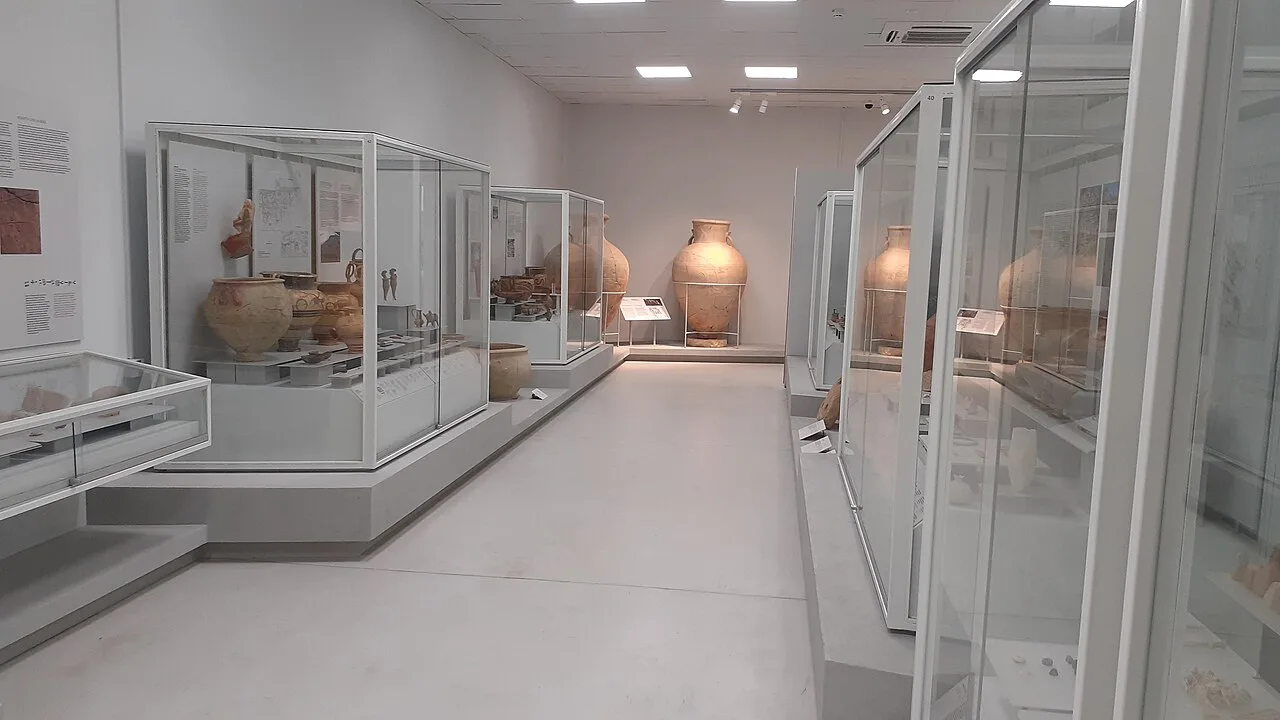
The museum was renovated in 2022 and reorganised into two new wings, grouped thematically rather than by site. That structure is the key to visiting efficiently: Wing I is a chronological run from 8000 BC to the 12th century BC, while Wing II concentrates on the Iron Age and Kition. Read the galleries in that order and the chronology makes sense without a guidebook.

Where it is and how to get there
The museum sits on Plateia Kalograion, a square in central Larnaca within walking distance of the main waterfront. The address given for it is simply Plateia Kalograion, so navigate to the square rather than to a street number. From the seafront the approach is flat and short, which makes it an easy add-on to a morning in town.
Walking is the simplest option if you are staying anywhere in the centre. For the wider district, local buses serve central Larnaca and taxis cover the last stretch to the square; timetables and fares are best confirmed locally on the day. Drivers should plan on town-centre parking and a short walk, since the museum is a town-centre building.

Opening hours and admission
Opening hours are Tuesday to Sunday, 09:00 to 16:30, and admission is free. The museum is closed on public holidays. Those are the published hours and they can be altered without notice, so confirm them against the Department of Antiquities information or the Visit Cyprus listing if you are travelling on or near a holiday.
Free entry changes how you budget the day: the museum costs nothing, so the spend goes on transport and whatever else you do in Larnaca. It also makes the museum a low-risk stop, easy to drop into briefly and leave if a gallery does not hold your attention. The museum is open Tuesday to Sunday, so build your itinerary around that.
Inside Wing I: 8000 BC to the 12th century BC
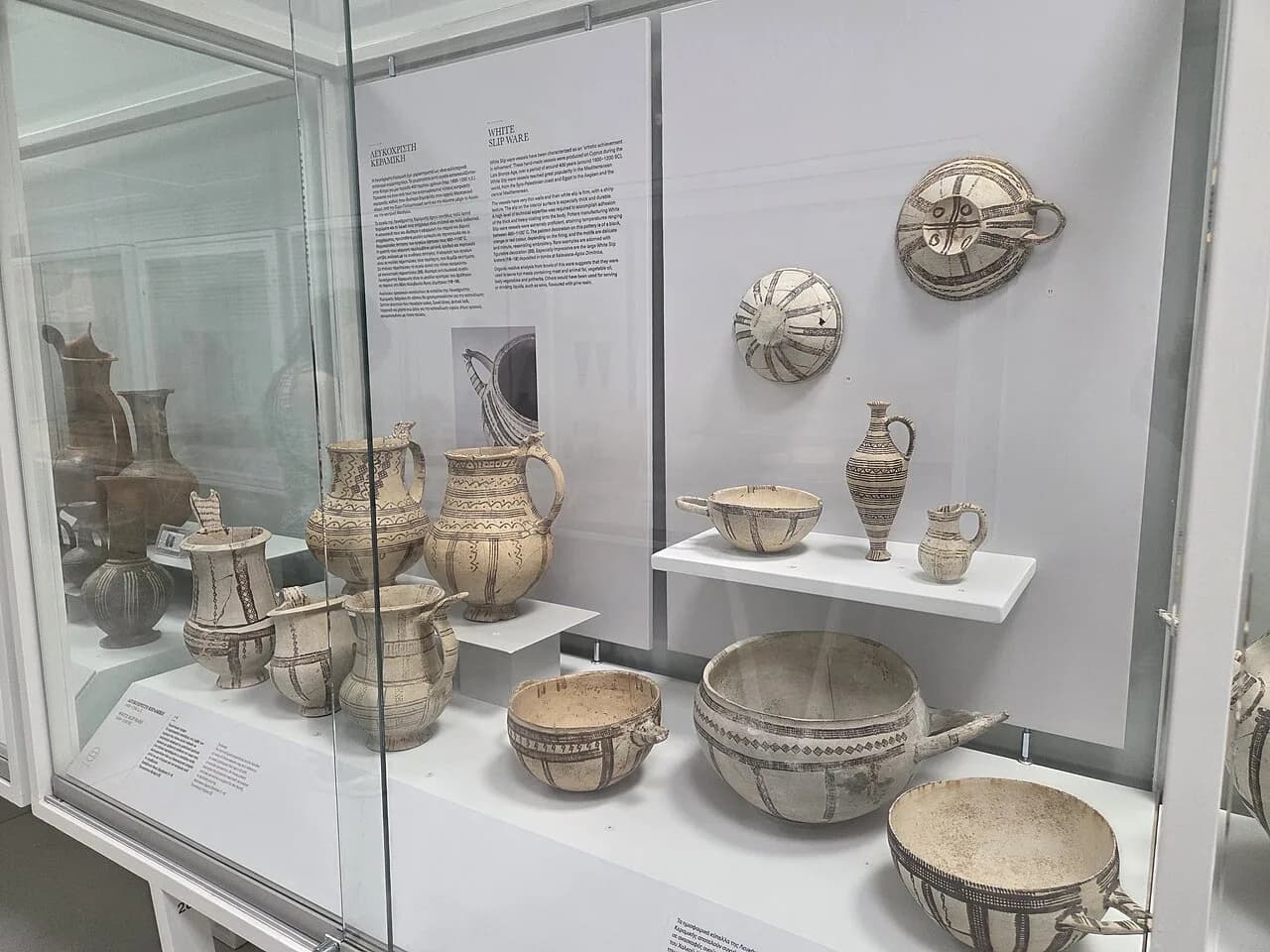
Wing I traces a chronological course from 8000 BC to the 12th century BC, and the displays have been enriched with finds from recent excavations. Expect Neolithic material, Copper Age pieces, and Archaic, Classical, Hellenistic and Roman artefacts, so the gallery spans an unusually long stretch of Cypriot history in one run of rooms.
Look out for the faience, ivory and alabaster pieces, which are used to show Cyprus's commercial and international ties in antiquity. They are small objects with a large story: the materials were not local, and the gallery uses them to make the point about trade rather than simply displaying pretty things.
Inside Wing II: Kition, Mesaoria and the sarcophagi
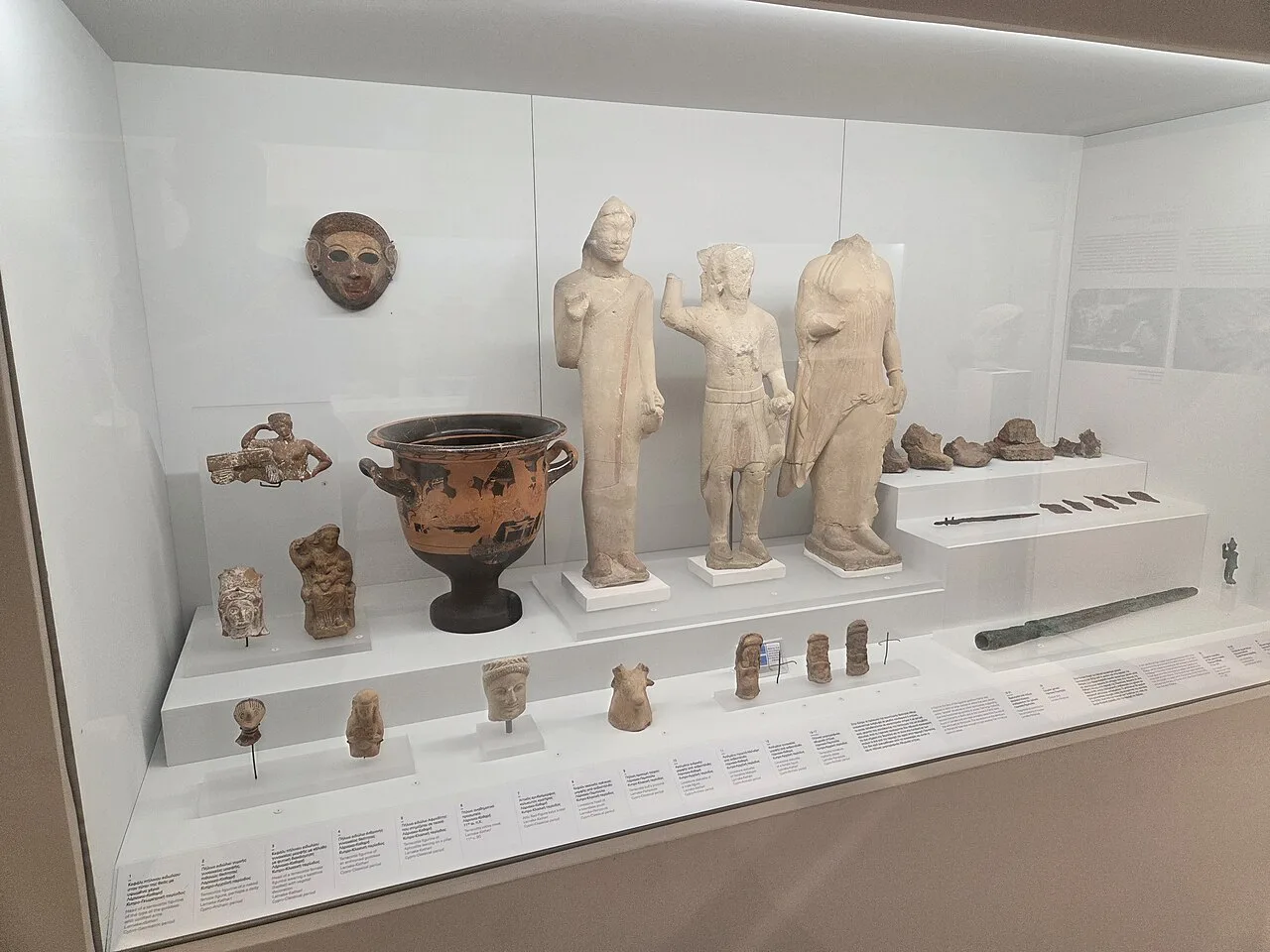
Wing II covers the Iron Age across four rooms. The first narrates the dynamism of ancient Kition, the second is dedicated to the sanctuaries of Mesaoria and displays life-size statues, the third presents material from the tombs of Kition, and the fourth holds the famous sarcophagi. Because each room has a single theme, the wing is easy to tour quickly without losing the thread.
The sarcophagi room is the natural finish, and the life-size statues from the Mesaoria sanctuaries are the other highlight most visitors remember. If you are short of time, head here first: Wing II delivers the museum's strongest single objects, and you can loop back into Wing I afterwards.
Imported pieces to look for
Beyond the local finds, the museum holds Egyptian, Mycenaean, Phoenician, Assyrian and Persian objects found in the Larnaca region but probably imported from other civilisations of antiquity. These are the pieces that make the district collection more than a local archaeology display, and they reward a slower second pass through the cases after you have taken in the Cypriot material.
How long to allow, and the best time to go in summer
Budget an hour for a focused visit and ninety minutes if you read the labels and work through both wings properly. The museum is indoor and compact, which makes it a sensible stop in the middle of a hot summer day when walking the seafront loses its appeal.
The museum is linked to the Aphrodite Cultural Route and features in the Larnaka Virtual Museums project, which offers an online tour with extra material you can use as a preview or after the visit. That is useful on a wet day or if you want to study particular objects before travelling.
Accessibility and practical points
The museum is fully accessible, and access is not something you need to arrange in advance. There is no admission charge, so no ticket queue for a counter; the constraint on your plan is the opening schedule rather than cost or booking. Keep the public-holiday closure in mind.
Nearby: pairing the museum with other Larnaca sights
The museum sits within a half-day of the church of Saint Lazarus, one of central Larnaca's defining landmarks and an easy walk through the old town. Pair the two for a morning that balances archaeological objects with a working church.
South of town, the Hala Sultan Tekke and the Larnaca salt lake make a natural pair, with the Kamares Linear Trail and Larnaca Salt Lake Observation Tower giving viewpoints over the water. Take a car or taxi for this cluster, since it sits away from the centre.
If you have a car, the Kamares Aqueduct is a quick photo stop, and the Mazotos camel park suits families heading towards the coast beyond Larnaca Airport. Divers should note that the Zenobia wreck lies offshore in Larnaca Bay, though it is a boat dive rather than a shore visit.
Is the museum worth an hour of your Larnaca day?
Yes, provided you go on a day it is open: free entry, a central square location and a compact two-wing layout make it one of the easiest cultural stops in Larnaca. The sarcophagi room and the Mesaoria statues justify the visit on their own, and the air-conditioned galleries earn their place in high summer.
Build it into a half-day with the church of Saint Lazarus, then use the rest of the day for the salt lake or the coast. Use the virtual tour if you want a preview first.