
Kamares Aqueduct, Larnaca: What to See and How Long to Allow

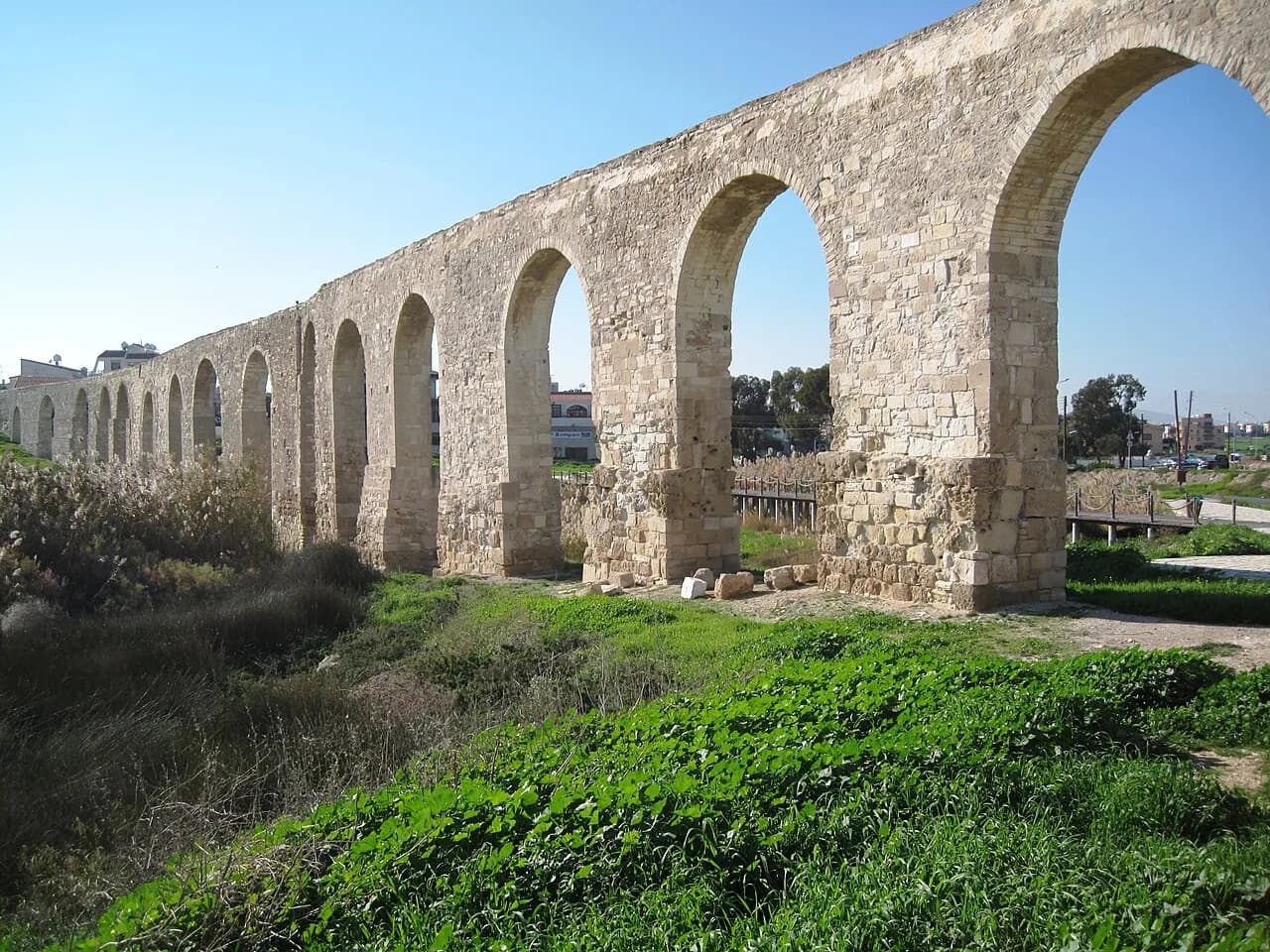
Kamares Aqueduct is a short open-air stop rather than a museum: an 18th-century aqueduct on the road heading towards Limassol, in the Larnaca area that takes its name from the Greek word for arches. It has more than 20 arches still intact, and the site is lit at night. This guide covers where it stands, how to reach it, what you actually see, how long to give it and what to pair it with nearby.
What the Kamares Aqueduct is
The aqueduct was built in the Roman style in 1746 by Bekir Pasha, the Turkish governor of Larnaca, who paid for it himself to carry water into the town from a source about 10 km away, according to the official Cyprus tourism portal. It stayed in use until it was abandoned in 1939, when modern pipes took over its job. The name Kamares comes from the Greek word for arches, and it is the arches that give the site its character.

Where it is
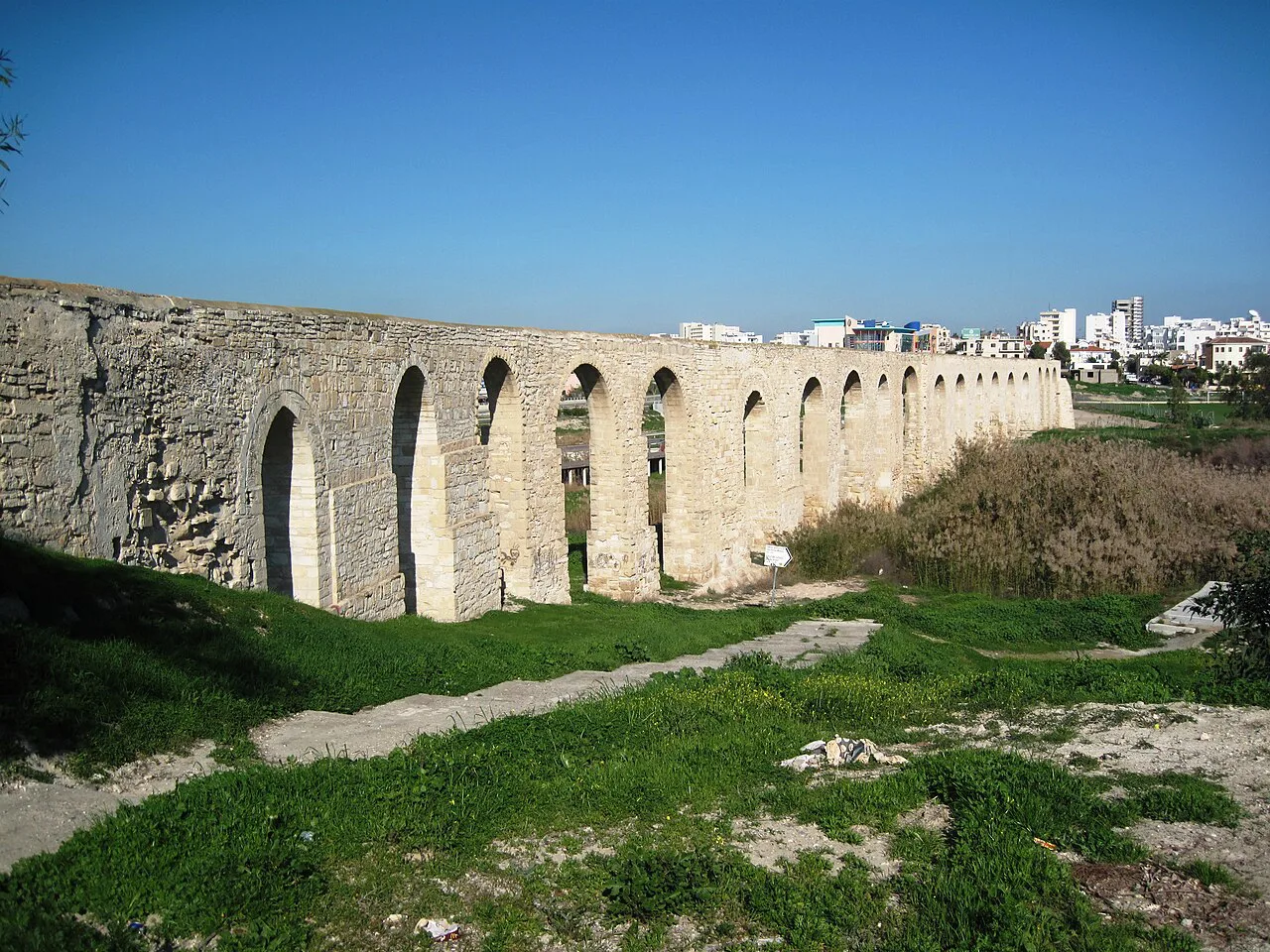
The aqueduct stands just outside Larnaca on the road towards Limassol, in the Kamares area. The official tourism portal gives coordinates of 34.912388, 33.598903 if you are navigating by phone. It is an open-air monument rather than a walled attraction, so you arrive at the structure itself rather than at a visitor centre. For the wider set of Larnaca sights, the Larnaca Attractions: 11 Visitor Guides page sets this stop alongside the town's other sites.

How to get there
By car, head out of Larnaca on the road towards Limassol and look for the arches in the Kamares area. The site sits beside a cobbled area with benches and a footpath, which is where you leave the car and walk the last stretch. If you are building a loop on the coastal side of the district, the Mazotos Camel Park lies further along and can be paired with the aqueduct as a separate stop.
By bus, it is worth checking the current route map from the operator before relying on public transport for a quick stop. For most travellers with a car, the aqueduct is a brief detour off the Limassol road. The cobbled area with benches is the practical arrival point; there is no visitor centre, just the open-air monument itself.
How long to allow
Give the aqueduct 20 to 30 minutes. It is a single structure viewed from the cobbled area and footpath, with no interior to walk through and no exhibition, so the visit is about looking at the stonework from a few angles, reading the setting and taking photographs. Add time if you continue along the path, which links up with Larnaca Salt Lake: that turns a brief stop into a half-day outing rather than a ten-minute photo pause.
What you see: the arches and the stonework
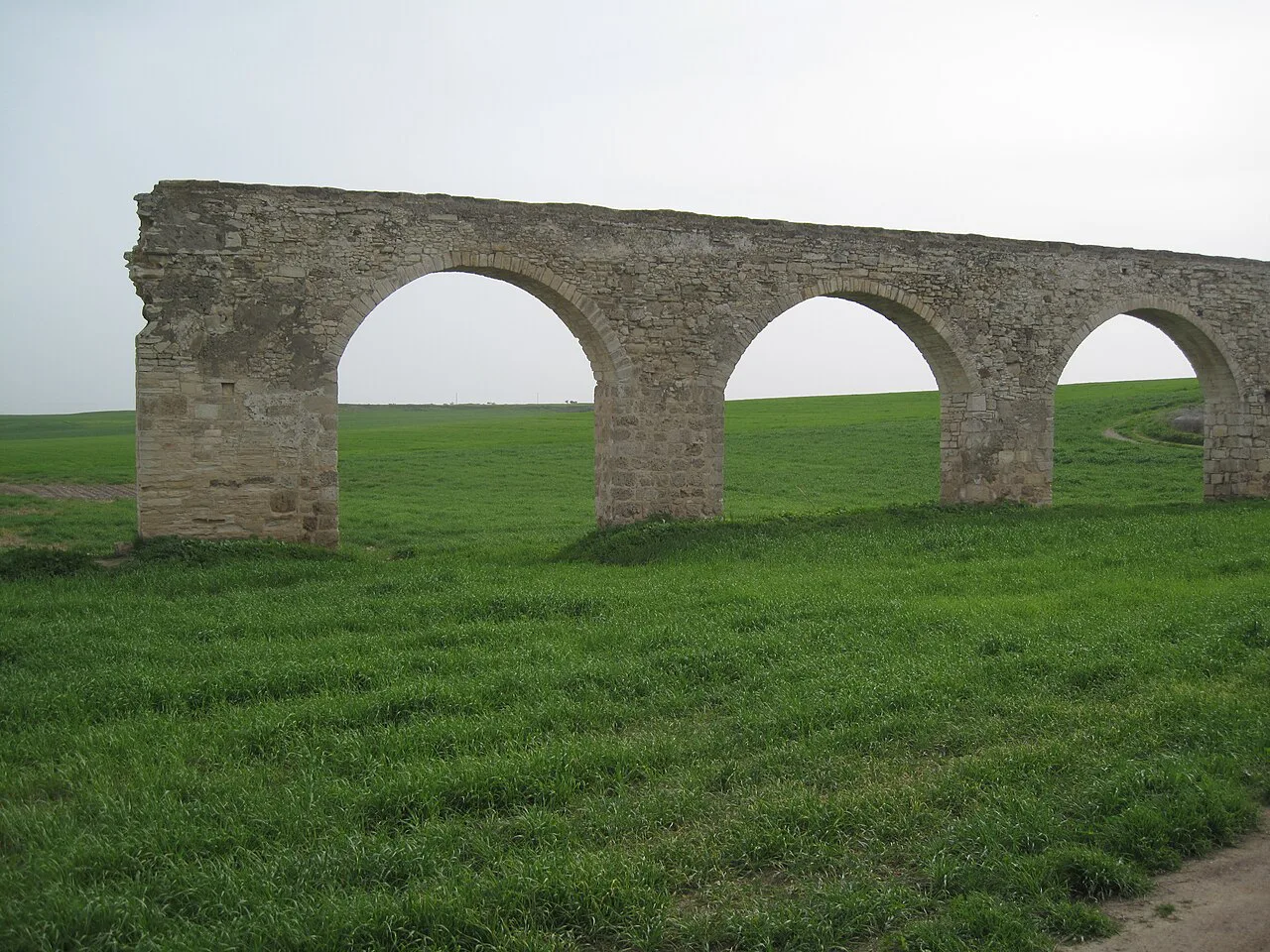
More than 20 arches survive, built in the Roman style and running in a line across the site. The appeal is the rhythm of the arcade, the weathering of the stone and the way the structure sits in open ground rather than in a townscape. Walk the length of the visible arcade from both ends, because the arches read differently in profile and from underneath. There is no roof, no glass and no barrier between you and the monument, which is what makes it feel like a piece of landscape rather than an exhibit.
The night illumination
The official tourism portal notes that the arches are strikingly illuminated at night, which is the strongest reason to time your visit late rather than at midday. It does not publish lighting hours, so plan around darkness rather than a set time. A late visit also avoids the summer heat and gives you the arches against a dark sky.
Bekir Pasha and the water supply
Bekir Pasha's project was a working piece of infrastructure, not a monument: it moved water about 10 km from its source into Larnaca. The official tourism portal dates the aqueduct to 1746 and says it was abandoned in 1939, when modern pipes replaced it. Wikipedia gives a wider construction range of 1747 to 1750 instead. Look for the channel line along the top of the arcade, which shows how the water ran.
Nearby: Larnaca Salt Lake on the same path
The footpath from the aqueduct links up with Larnaca Salt Lake, which makes the obvious second stop on the same outing. The walk between the two is short enough to combine on foot. If you are visiting in the cooler months, the lake is the more rewarding half of the pairing; in high summer, treat it as a viewpoint rather than a walk.
In town, the church of Saint Lazarus and Larnaca castle are the two sights most easily added after the aqueduct, both within the central streets and both giving you a contrast with the open ground of the arches. Hala Sultan Tekke sits on the salt lake side of Larnaca, so it fits naturally into the same loop as the aqueduct and the lake. Add the Pierides museum if you want the archaeological context behind the Ottoman-era waterworks.
Practical points
The official portal describes the aqueduct as an open-air sight viewed from the public cobbled area and footpath; it publishes no opening or lighting hours and no ticket information. Bring water and wear shoes you can walk on uneven cobbles in. Photography is best in low light: the arches show their depth in raking sun or under the night illumination.
Is the Kamares Aqueduct worth the stop?
Yes, if you are already driving the Limassol road or planning a walk to Larnaca Salt Lake, and no, if you are counting on a full attraction. For 20 to 30 minutes, it gives you a genuine 18th-century monument, more than 20 arches and a good late-in-the-day view. The portal lists no ticket information, so do not treat it as a ticketed site with timed entry. Pair it with the lake, or with the lanes around the church of Saint Lazarus and Larnaca castle in town.
Divers with a booked boat slot may look for a separate slot for the Zenobia Wreck, Larnaca, which sits on the other side of the Larnaca Bay area; the aqueduct is not a dive-site add-on and is best paired with the lake or the central town sights.
Explore more Larnaca guides
Frequently Asked Questions
Is there an admission charge to see Kamares Aqueduct?
The official tourism portal describes Kamares Aqueduct as an open-air sight you view from the public cobbled area and footpath, and publishes no ticket information or admission charge. Treat it as a monument seen from public ground rather than a ticketed attraction.