Pernera, Cyprus: Protaras's Quieter Seafront Neighbourhood
Pernera is the quieter seafront end of Protaras, with a small harbour and coastal path. See how it is laid out, how to get around and how long to allow.
On this page
Pernera is the northern seafront edge of Protaras, in the Famagusta district of southeast Cyprus, a low-rise strip of holiday accommodation, a small harbour and a coastal path that runs south towards the main resort. It suits travellers who want the sea and the walks without the density of central Protaras, and it works well as a base for a few days rather than a full week of sightseeing. This guide covers where Pernera sits, how to walk it, how to get there and what to expect from the boats that work this stretch of coast.
What Pernera is and where it sits in Protaras
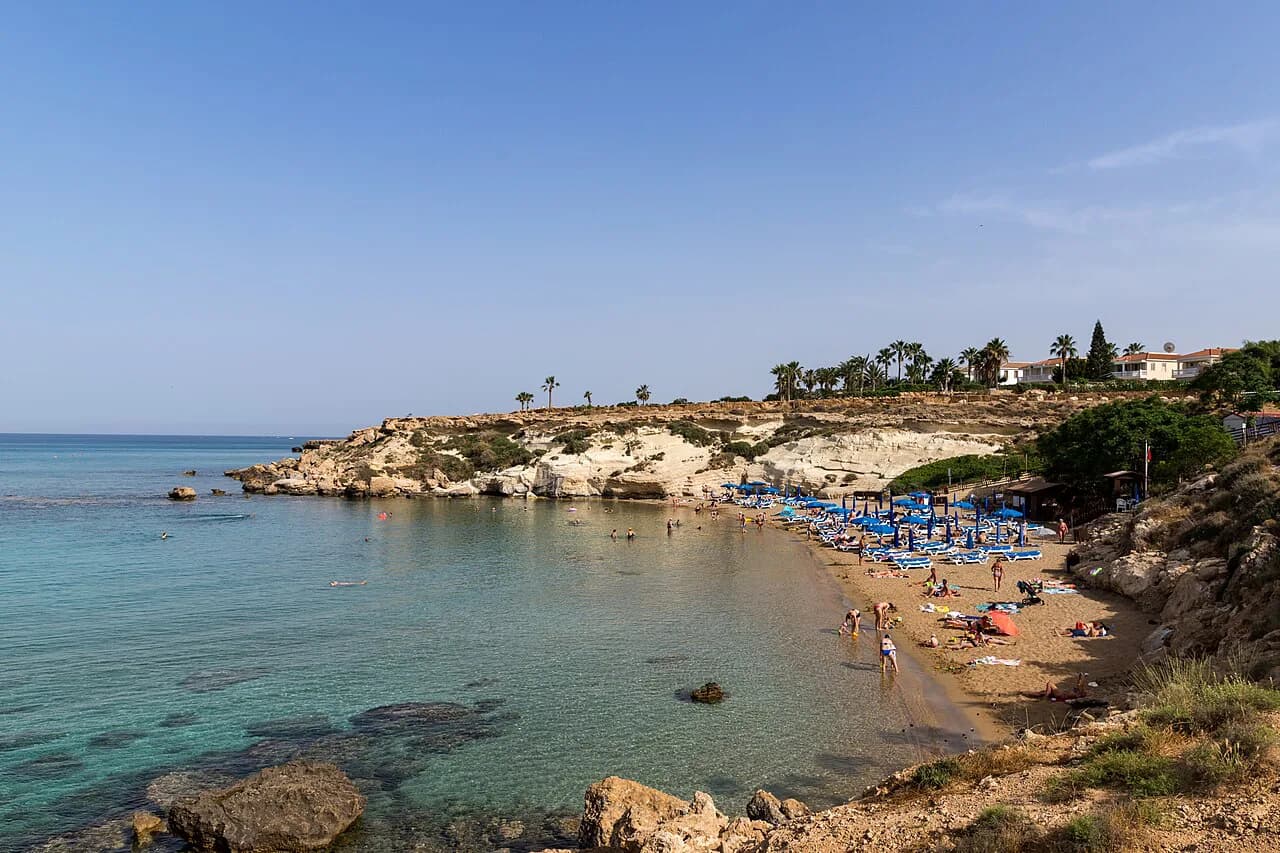
Pernera sits at the northern end of Protaras, in the Paralimni municipality, between the Kapparis area to the north and the main Protaras resort to the south. It reads as a suburb of the resort rather than a separate town: the buildings are mostly low-rise and the shoreline is a mix of rocky frontage and small sandy coves. Because it merges into Protaras, the practical question is not where Pernera ends but how far you are willing to walk.
The wider area around Pernera is well known for its beaches, and Fig Tree Bay and Nissi Beach are the names most travellers recognise from this stretch of coast. Those beaches sit south of Pernera, so if beach time is the priority, the walk or drive south matters more than the walk into the centre. For the layout of the resort and the beaches, the Protaras guide is the place to start.
Pernera is also within easy reach of Paralimni, the inland town that gives the municipality its name and supplies the everyday shops, banks and services you may want if you are staying for longer than a few days. Treat Pernera as a coastal base and Paralimni as the practical town behind it. That combination is what makes the northern end of Protaras work well for a quieter stay.
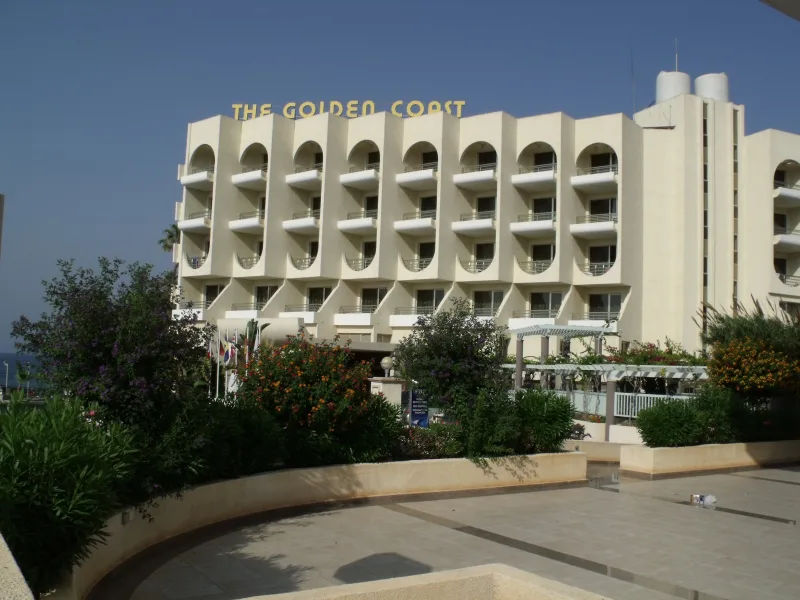
How Pernera is laid out: the coastal road, the seafront path and the small harbour
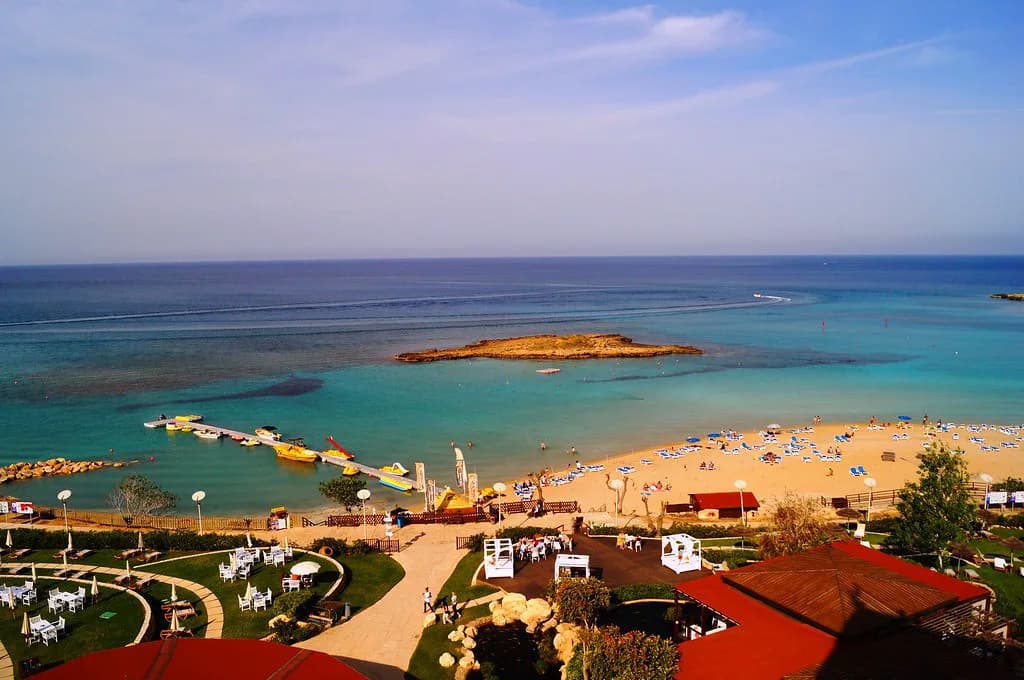
The spine of Pernera is the seafront path, which runs along the coast and links the small harbour with the beaches and hotels to the south. Walking it gives you the shape of the place quickly: rocky frontage in the north, more open shoreline as you head towards Protaras, and a steady string of low-rise accommodation and cafes set back from the water. A short stroll north and south from the harbour covers most of what Pernera itself offers.
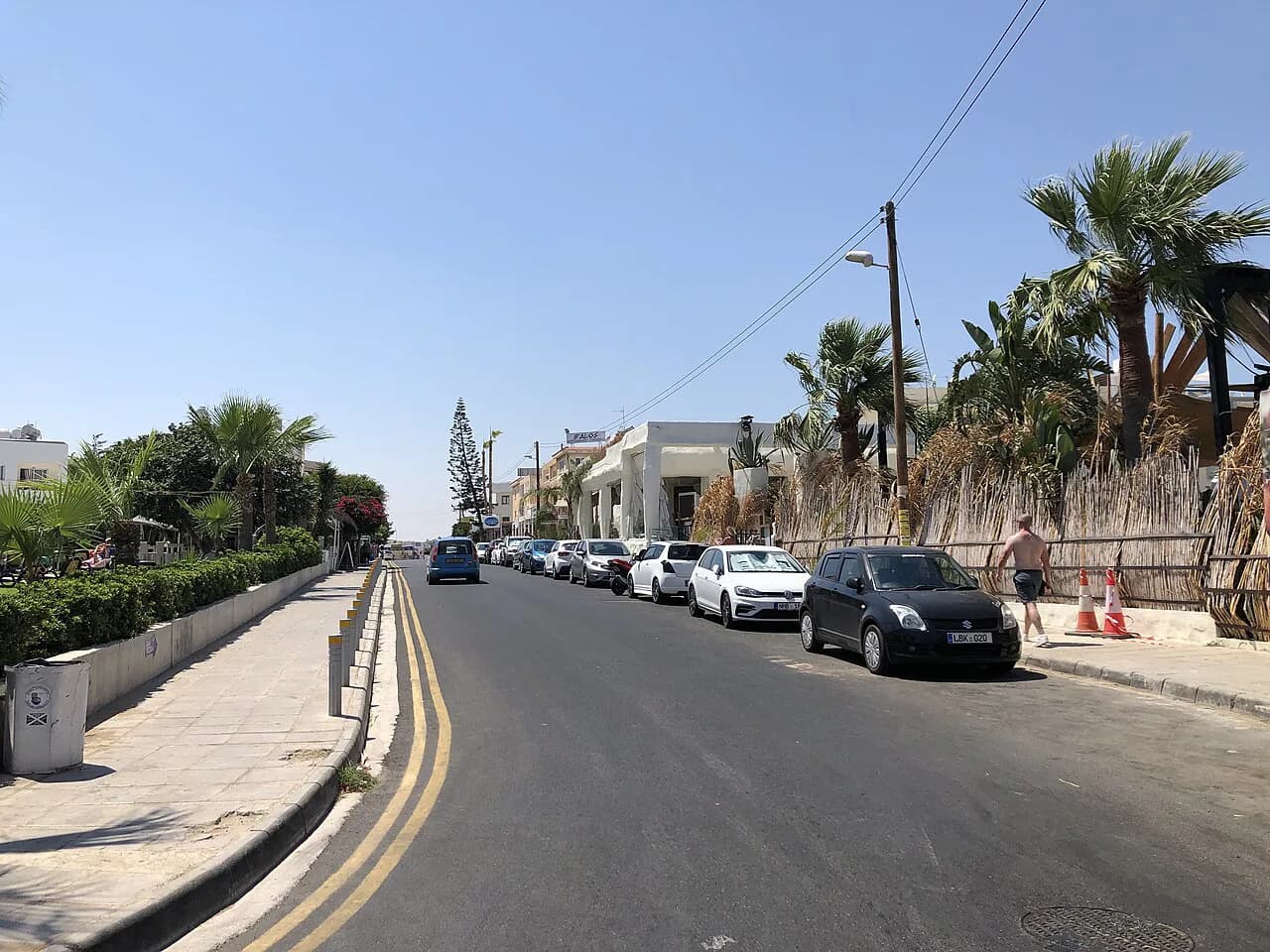
Pernera Avenue is the other main line through the neighbourhood, running roughly parallel to the coast and carrying the shops, bars and apartments that make up the centre. Windmills Hotel Apartments is listed at 75 Pernera Avenue and the Louis Althea Beach Hotel at Ellinon 34, which gives you a sense of how compact the built-up area is. You can walk between the seafront and the avenue in a few minutes rather than planning a route.
Beyond the centre, the coast curves north towards Kapparis and the border area around Deryneia, while the road south leads into Protaras proper. That geography matters when you choose where to stay: a Pernera address near the harbour is a genuine walk to the seafront path, whereas one on the inland side of the avenue involves crossing a busy road. The Protaras map is useful for seeing how the paths and roads connect before you book.
Getting to Pernera from Larnaca airport and around the area
Pernera is reached by road from Larnaca airport, the main international arrival point for this part of Cyprus, via the motorway network that runs east towards Ayia Napa and Paralimni. A hire car is the most flexible option, especially if you plan to combine Pernera with Protaras, Paralimni and the coast towards Cape Greco. Remember that Cyprus drives on the left, which is familiar for UK and Irish visitors, and that the Republic uses the euro.
If you are not driving, local buses connect Paralimni, Protaras and the surrounding coastal areas, and the resort is small enough that a combination of bus and walking covers most of it. For anything beyond the immediate resort, though, a car saves time. Compare car hire quotes for your own dates rather than relying on a figure in a guide.
Driving within Pernera and Protaras is straightforward but parking near the beaches and the harbour fills up in high summer. The practical approach is to park once and walk the seafront path rather than moving the car between spots a few hundred metres apart. Fuel is sold in euros in the Republic, and cards are widely accepted at larger filling stations.
Pernera Avenue and the centre: what you pass on foot and how long the walk takes
A walk along Pernera Avenue and the adjoining seafront is a half-day at most, and an hour or two if you are simply orientating yourself. You pass the small harbour, a string of cafes and low-rise apartment blocks, and the coastal path with its views north towards Kapparis and south towards Protaras. It is a gentle, flat route rather than a hike.
The centre is not a sightseeing destination in its own right. The appeal is the combination of coast, path and easy access to the rest of the resort. Plan your sightseeing for Protaras, Paralimni and the wider Famagusta district, and keep Pernera for the walking and the swimming.
If you want a longer walk, the seafront path continues south into Protaras and takes you towards Fig Tree Bay, which is one of the resort's best-known beaches. That walk is the single most useful thing to do from a Pernera base, and it gives you a sense of how the resort fits together. Beaches, cafes and nightlife are all in passing along the way rather than destinations to plan around.
Boat trips leaving from the Pernera and Protaras coast
Boat trips are sold along this coast, and the products listed for the Protaras area include a Yellow Submarine shipwreck and turtle cruise, a Medusa Cruises turtle cruise, a Protaras Blue Lagoon and caves trip and a trip combining Famagusta, the Blue Lagoon and Turtle Cove. These are booking-platform listings rather than a published timetable, so treat the names as options to compare rather than a fixed schedule. Check prices and departure times with the operator for your dates.
The classic route from this coast heads north towards the Blue Lagoon and the caves, with turtle spotting and swimming stops on the way. Some trips combine the coast with a visit to Famagusta, which crosses into the north and requires your passport, so check what a trip involves before booking. For a wider comparison of what leaves from the resort, the Protaras boat trips page sets out the options.
Book with the operator or through the platform you found the trip on, and confirm the meeting point, as some boats may leave from Protaras rather than Pernera itself. Weather can affect sailings, and the shoulder seasons are quieter on the water. Bring your passport on any trip that crosses to the north.
When to go: summer heat, crowds and the shoulder seasons
July and August bring the hottest weather of the year and the biggest crowds, and Pernera fills up too even though it is quieter than central Protaras. The seafront path is exposed, so walking is best done early in the morning or late in the afternoon. Midday is for the water or the shade.
May, June, September and October are the most comfortable months for combining walking with swimming, with lower temperatures and thinner crowds than high summer. April and November are quieter still, though some seasonal businesses reduce their hours. If you want the boat trips and the resort at its liveliest, aim for the summer; if you want the walking and the coast to yourself, aim for the shoulder months.
How long to give Pernera and how it fits a wider Cyprus trip
Two or three nights is enough to see Pernera itself and use it as a base for Protaras and the immediate coast. A week works if you add Paralimni, the beaches around Fig Tree Bay and a day towards Cape Greco. Pernera is a base, not a destination that needs days of its own.
For a wider Cyprus trip, Pernera slots in neatly as the eastern end of a route that could take in Larnaca, Limassol and Paphos, or as a standalone short break. The resort is close to the Green Line crossing points near Deryneia, which makes a day in the north feasible if you carry your passport and check your hire-car insurance covers crossing. The Deryneia page explains the practicalities of the crossing.
If you are building an itinerary around Protaras, start with the Protaras guide for the resort's layout and the main beaches, then use Pernera for a quieter base and Paralimni for everyday services. That structure keeps the driving down and the walking realistic.
Pernera versus central Protaras and Paralimni: which suits which kind of traveller
Central Protaras has the denser concentration of beaches, restaurants and boat departures, and it is the better choice if you want everything within a short walk. Pernera is quieter, more residential and slightly further from the main beach strip, which suits travellers who prefer a calmer base and do not mind walking or driving a few minutes to the busier end. Paralimni is inland and practical rather than coastal, useful if you want shops and services on the doorstep but less suited to a beach-focused stay.
For a short break built around swimming and boat trips, central Protaras is the simpler base. For a longer stay with a car, Pernera gives you the coast without the density, and Paralimni covers the everyday needs. Families often prefer the northern end for the calmer seafront, while travellers who want the resort atmosphere will find central Protaras more convenient.
Should you base yourself in Pernera?
Pernera works best as a calm coastal base for two or three nights, with the seafront path and the small harbour as the everyday routine and Protaras, Paralimni and the boat trips a short drive or walk away. Choose it if you want the sea without the density of the main resort, and choose central Protaras if you want everything on foot.
Check boat trip details with the operator before you book, and confirm any hire-car insurance cover for crossing to the north if that is part of your plan. Beyond that, the rest of the trip is a straightforward combination of walking the coast, swimming and driving to the wider sights.
Explore more Protaras guides
Frequently Asked Questions
Is Pernera nice?
Pernera is the quieter northern seafront of Protaras, with a small harbour, a coastal path and low-rise accommodation. It suits travellers who want the sea and the walks without the density of the main resort, and it is a short drive or walk from the busier Protaras beaches and boat departures.
How far is Pernera from Protaras?
Pernera merges into Protaras, so the two are continuous along the coast. The seafront path links the Pernera harbour with the beaches and main resort to the south, and the walk takes you towards Fig Tree Bay. A car makes the wider resort and Paralimni easier to reach.
Do you need a car in Pernera?
A car is useful for reaching Paralimni, the wider Protaras beaches and Cape Greco, but it is not essential for Pernera itself. The neighbourhood is compact and the seafront path covers most of it on foot, with local buses connecting the resort and nearby towns.
Sources
Notes for your Cyprus trip
Optional updates to our Cyprus guides.
You might also like
Continue reading
More guides you'll find useful