Protaras Guide: Fig Tree Bay, Cape Greco and the Resort
A practical Protaras guide covering Fig Tree Bay, Cape Greco, the Profitis Elias church, Paralimni, boat trips and how long to stay on Cyprus's south-east coast.
On this page
Protaras is a modern holiday resort on Cyprus's south-east coast rather than an old walled town, so come for the swimming coastline, the seafront promenade and the rugged country of Cape Greco rather than for medieval lanes. Much of the built environment dates from the late twentieth-century expansion of tourism, which is worth knowing before you book. This guide covers how the resort is laid out, the hill church above it, the national forest park next door, Paralimni and the villages behind the coast, boat trips, transport and typical weather, and it points you to confirm local prices and timetables directly.
What Protaras is and where it sits on the south-east coast
Protaras occupies a sunny stretch of the south-eastern coast where pale sand, shallow water and low limestone headlands shape the landscape. It belongs to the wider Paralimni area, a landscape historically shaped by farming and Orthodox village life rather than by a historic port. The resort itself is a resort in the modern sense: hotels, apartments, restaurants and cafés spread along a main avenue and a seafront.
Protaras is in southern Cyprus, in the Republic of Cyprus, on the south-eastern coast east of Larnaca. Most international visitors arrive through Larnaca International Airport, the principal airport serving south-eastern Cyprus, then continue by taxi, pre-arranged transfer, hire car or bus. Cyprus has no passenger railway, and vehicles drive on the left, which matters most if you collect a car at the airport and drive yourself.
Treat Protaras as a beach base and a gateway to the coast between Paralimni and Ayia Napa rather than as a town with a sightseeing checklist. That framing decides how you spend your days: mornings on the water or the promenade, afternoons out at the cape or in the villages, evenings along the main avenue.
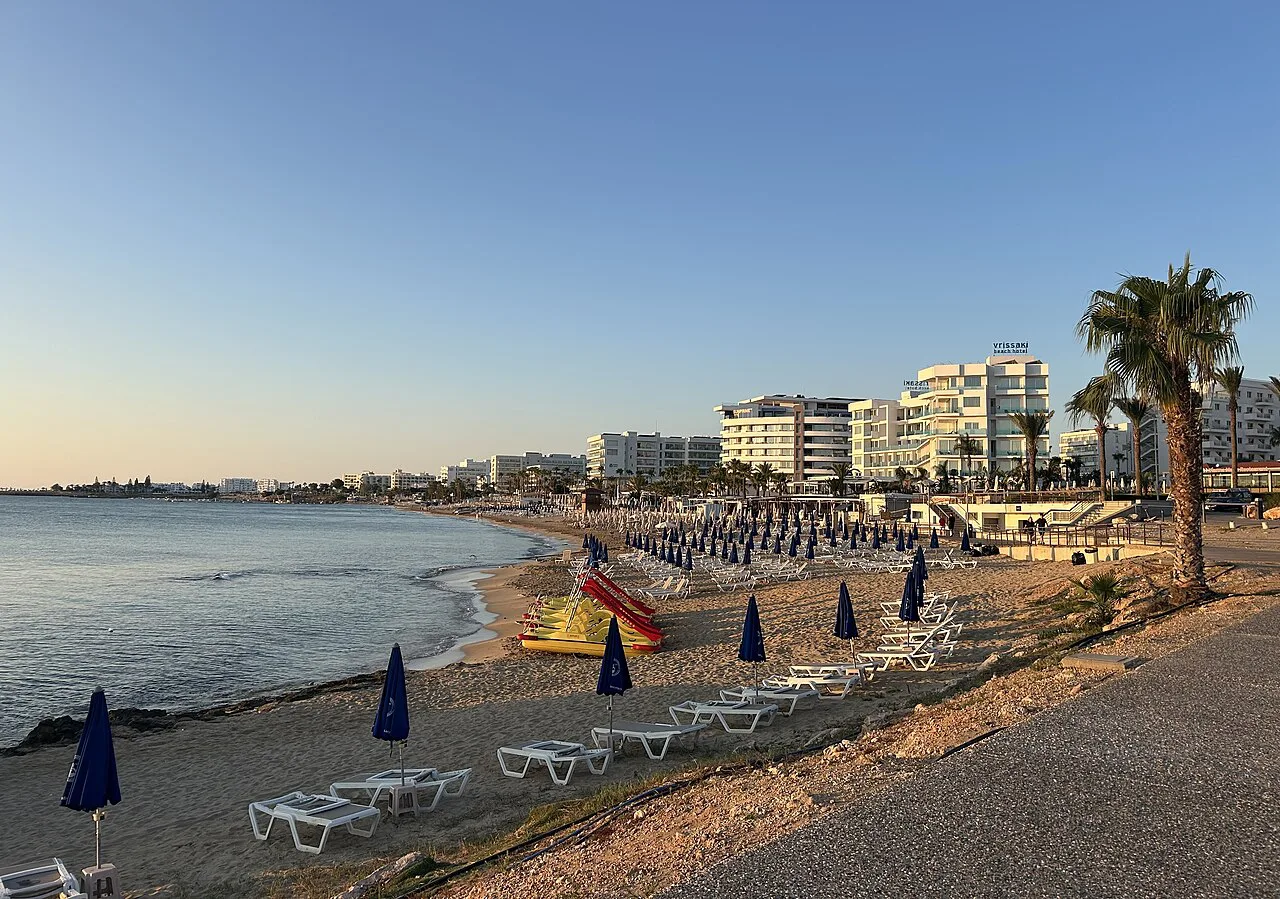
How Protaras is laid out: the main avenue, the seafront and Pernera
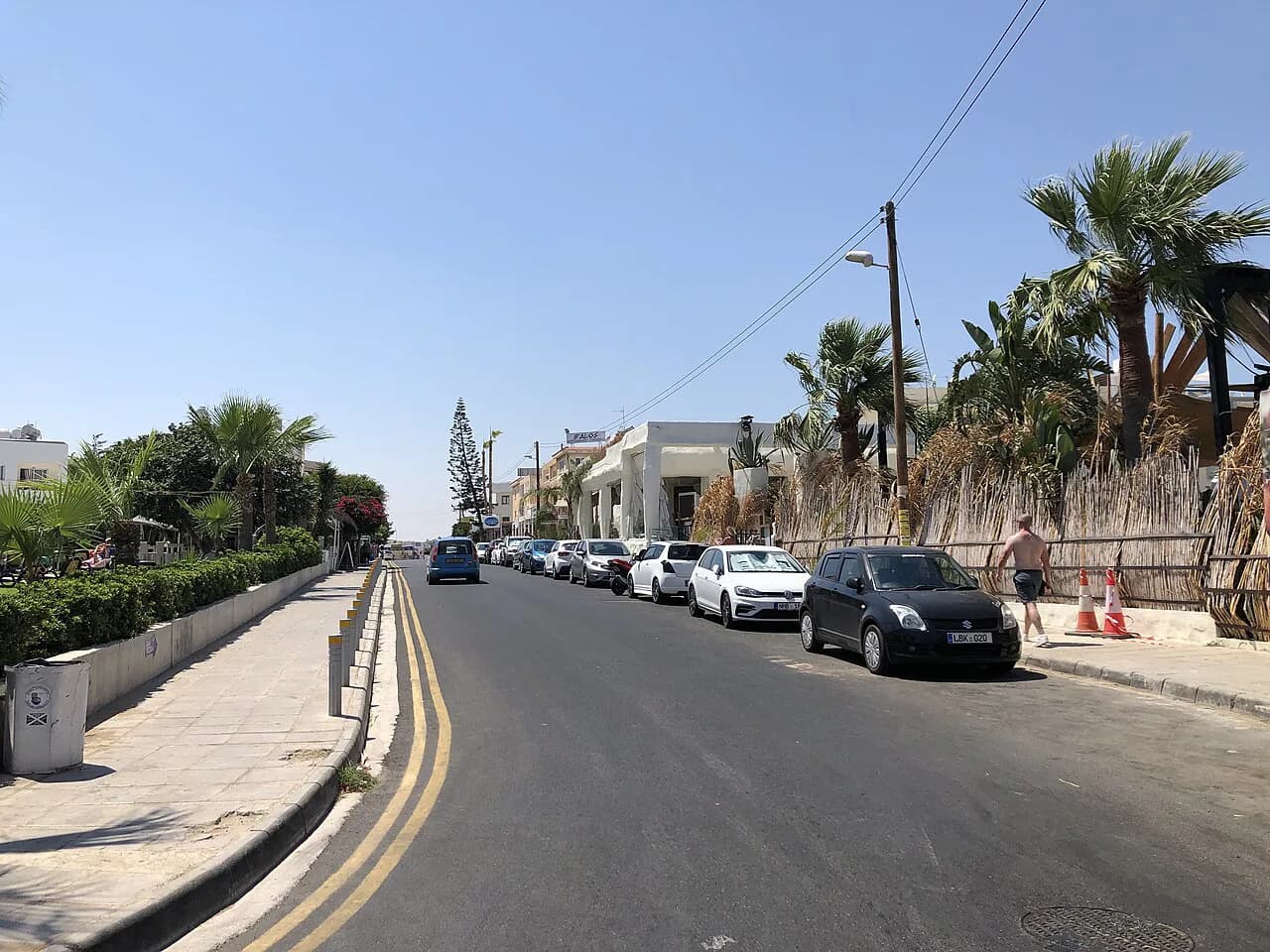
The resort is easy to read once you are there. A main avenue carries the shops, cafés and family restaurants, while the seafront and promenade trace the shore and connect the swimming coves. Walking is the sensible way to cover the centre, and the seafront is the part most visitors use as their daily anchor.
Pernera sits at the northern end of the same coastal strip and has a quieter seafront atmosphere than the middle of Protaras. If you want evening walks without the busiest stretch of the avenue, Pernera is the alternative base to weigh against staying near Fig Tree Bay. For a comparison of how base and atmosphere change along the same coast, weigh this against picking a base in Ayia Napa.
Use a Protaras map before you commit to accommodation, because distances along the strip are short on paper but add up when you are walking back in the heat. Pin the seafront, the avenue and your nearest supermarket first, then check how far Pernera or the cape road is from your shortlist.
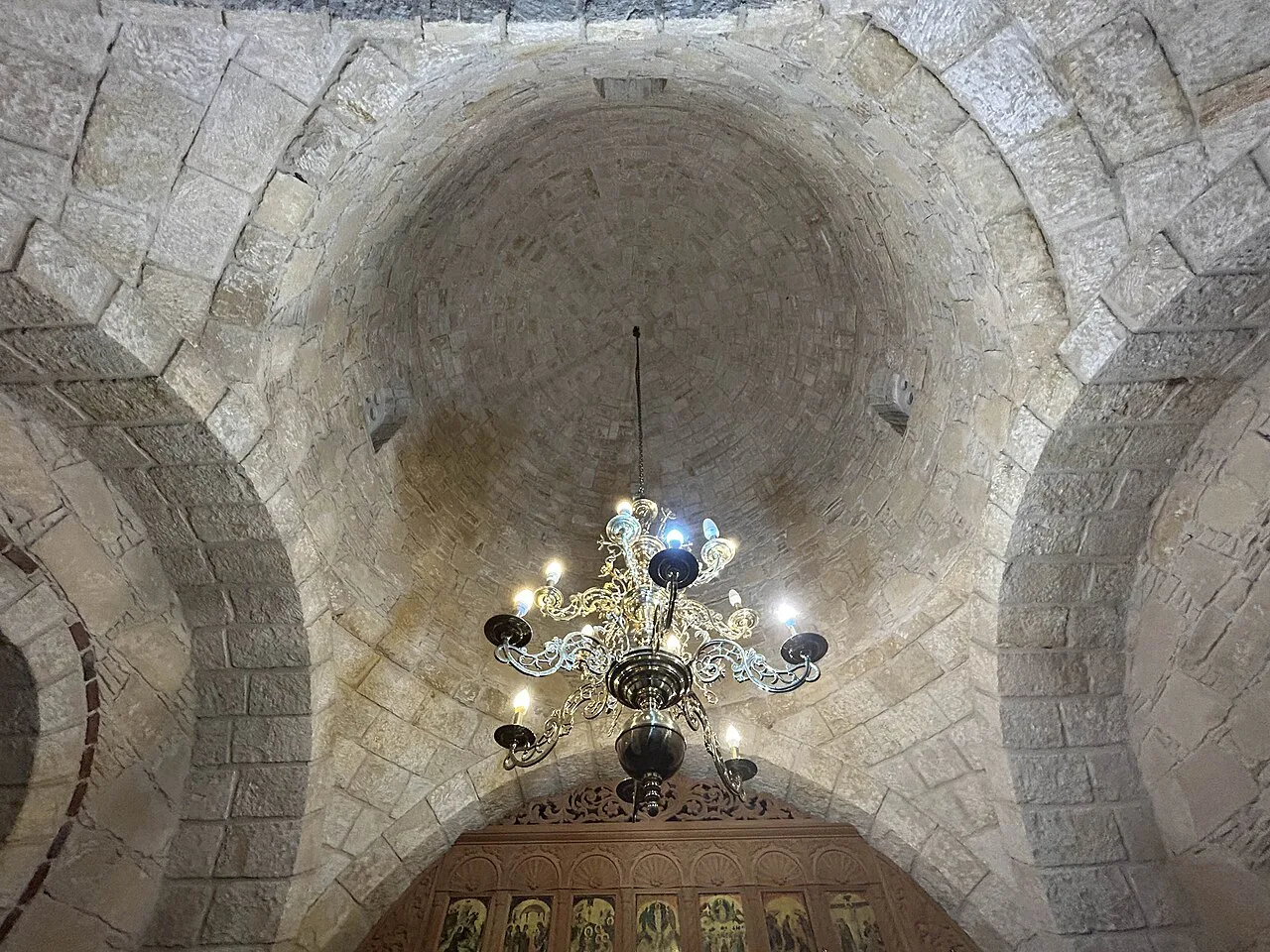
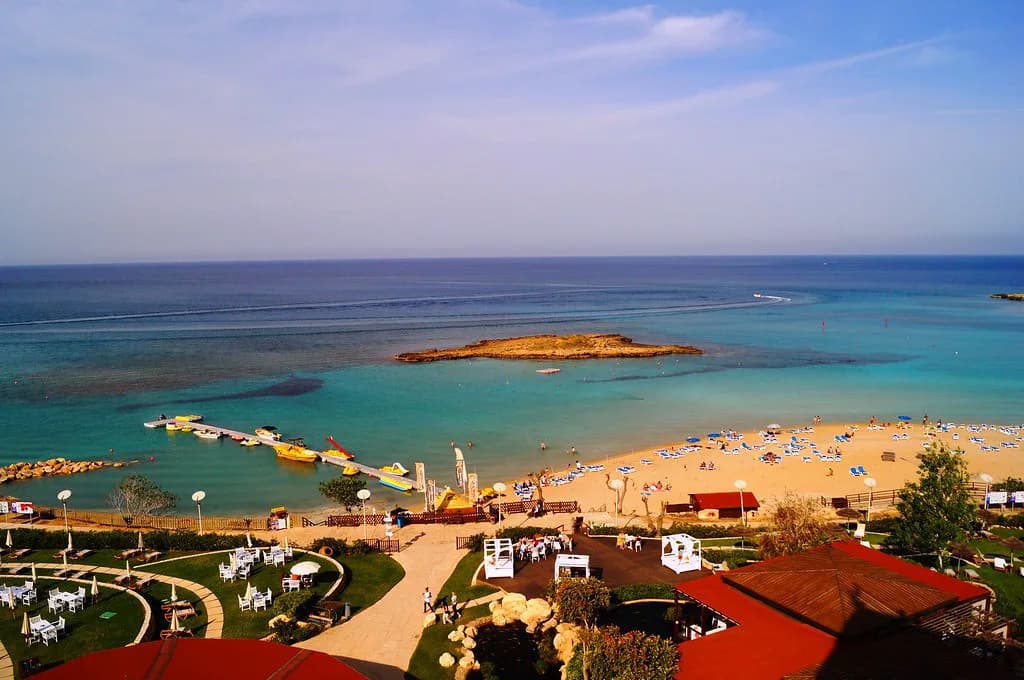
Fig Tree Bay and the swimming coastline in brief
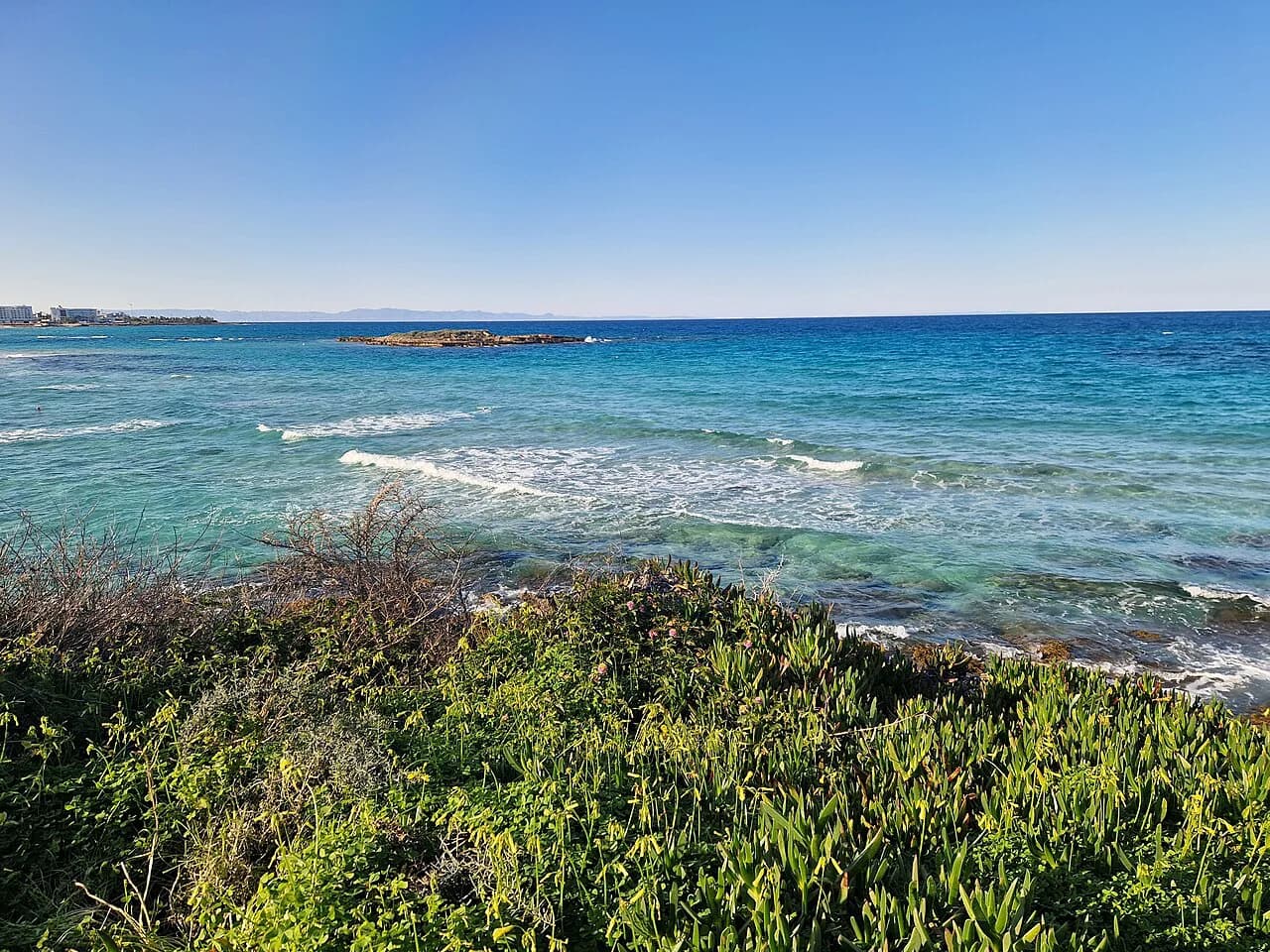
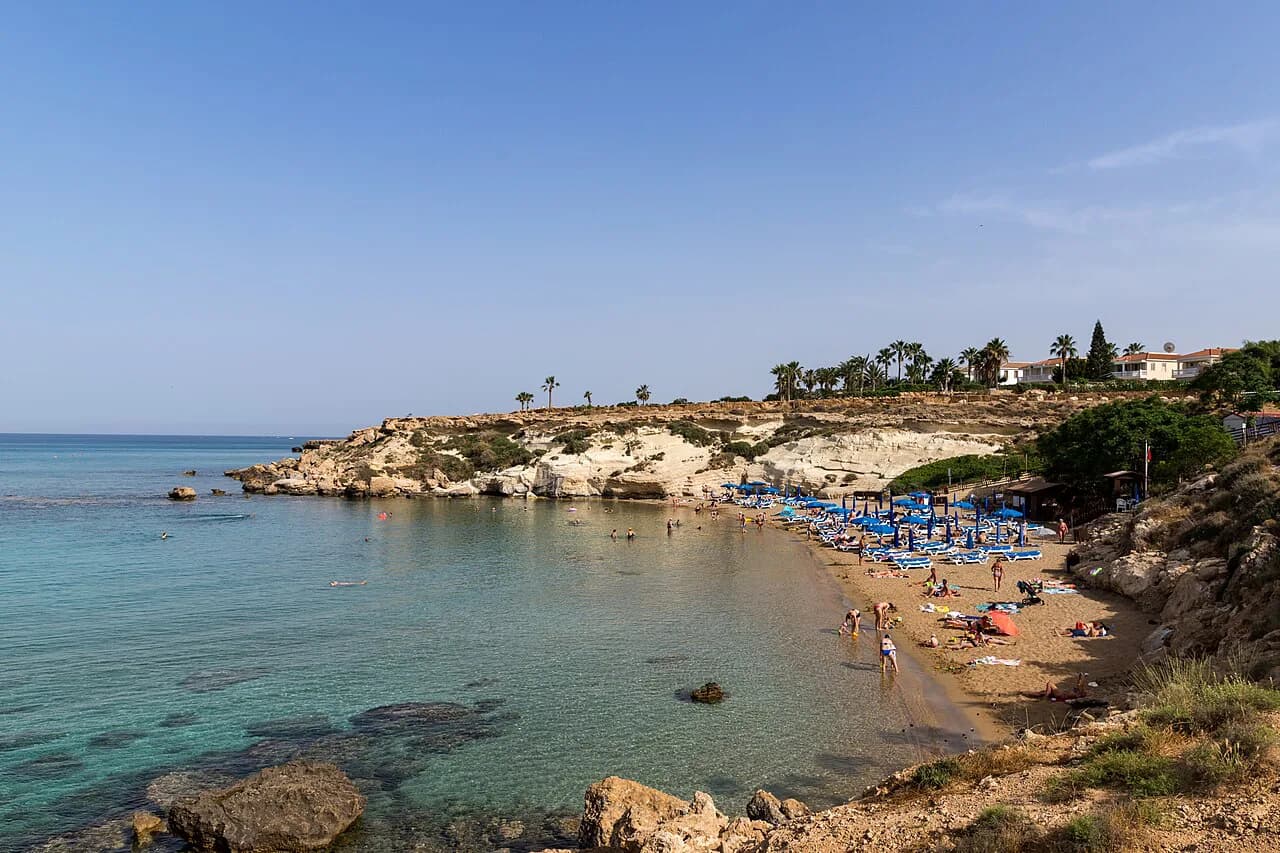
Fig Tree Bay is the resort's emblem, recognisable by its offshore islet and sheltered swimming area, and the coastline continues through smaller coves towards Pernera and Cape Greco. Mornings bring swimmers and paddleboarders, and walking paths and a seafront promenade trace the shore. Carry swimming shoes for the rocky coves and sea caves, where uneven limestone and marine conditions need care.
July and August are the hottest months, with average daytime highs around 36°C and 37°C and effectively no rain, and the sheltered bay fills early with swimmers. If you are travelling in that window, plan swimming for the morning and keep the middle of the day for shaded streets, a long lunch or a drive.
Profitis Elias church above the resort
The small Church of Profitis Elias stands on a rocky hill above the resort and gives the short cultural stop that fits a half-day. It is a striking counterpoint to the hotels and apartments below, and the hill position means broad views across the coast. Visit early or late in the day for cooler temperatures and better light.
Pair the church with the seafront rather than treating it as a separate excursion: the climb is short, the stop is short, and the rest of the day stays free. Wear shoes with grip, since the approach is rough underfoot.
Cape Greco National Forest Park: sea caves, cliffs and trails
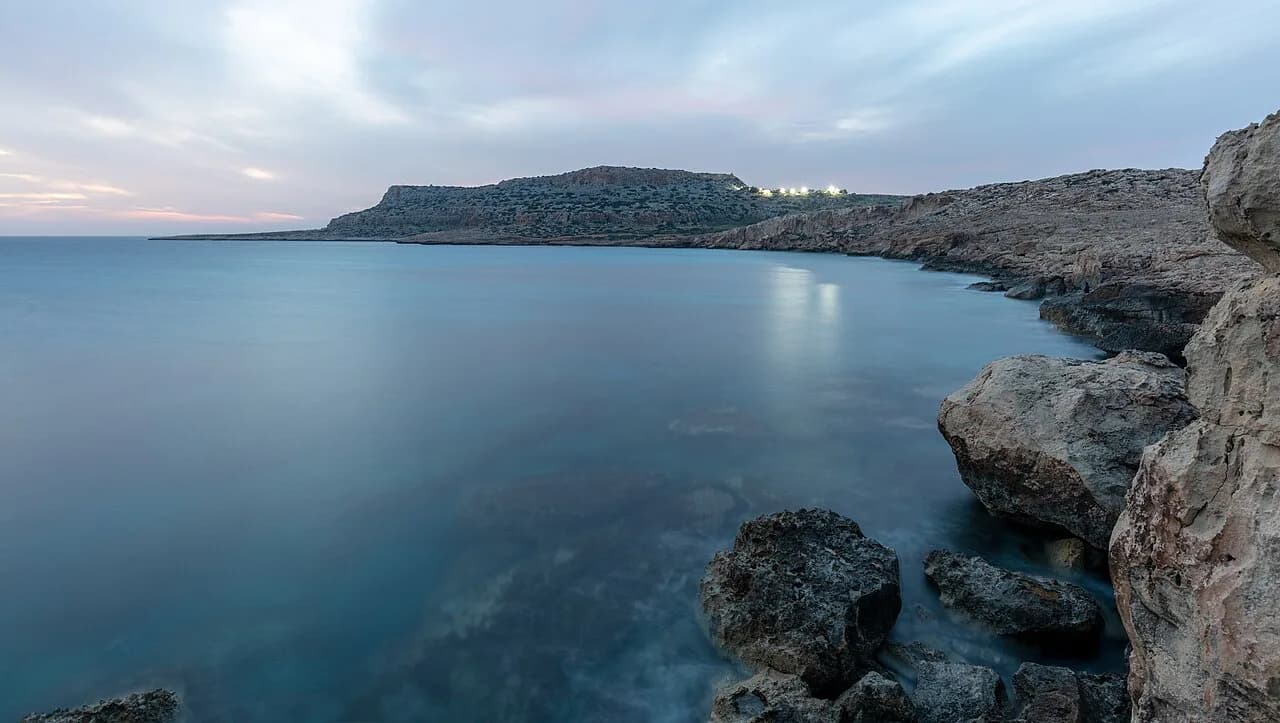
Beyond the resort, Cape Greco National Forest Park brings sea caves, juniper-covered cliffs and walking trails into the day's possibilities. This is the counterweight to the built-up strip: a headland of limestone and scrub where the swimming and the landscape are more elemental. There is no railway or metro on Cyprus, so reach the park by car, bus or taxi.
The cape is exposed, so wind, glare and heat are the practical constraints rather than crowds alone. Take water, a hat and footwear that copes with sharp rock, and do not expect shade along the cliff paths.
Paralimni and the villages behind the resort
Paralimni is the town behind the resort, and it gives you a working Cypriot town rather than a holiday strip. Protaras belongs to the wider Paralimni area, whose landscape was historically shaped by farming and Orthodox village life, so a half-day here shows the everyday side of the district: the square, the shops and the streets that locals use.
Kapparis, on the coast towards the border, is a low-key alternative for a quieter afternoon, and Deryneia sits close to the Green Line that divides the island. These villages make sense as a loop by car rather than as separate outings, and they show how quickly the resort gives way to ordinary Cypriot suburb and farmland.
Boat trips and time on the water
Boats run from the local coastline for swimming stops and views back towards the cape, and a boat trip is the easiest way to see the cliffs from the water. Operators publish their own timetables and departure points, and seasonal demand shapes what runs, so confirm the day's sailing with the operator you book with rather than assuming a fixed schedule; see our guide to Protaras boat trips for the options.
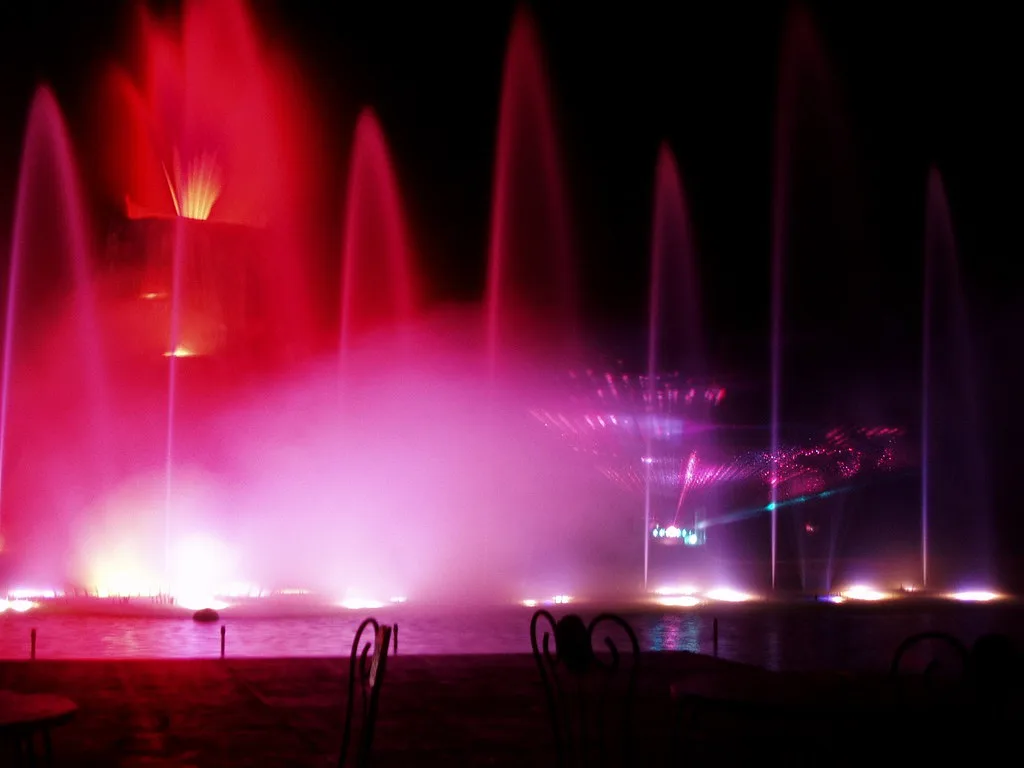
Two indoor attractions give you options when the sea is rough or the afternoon heat is too much: the Ocean Aquarium and the evening show at Magic Dancing Waters. Both are bookable locally, and both suit families looking for a change from the beach.
How long Protaras needs and how it fits with Ayia Napa and Larnaca
How long you stay depends on how much time you want away from the water: the resort, the hill church, a cape afternoon and a boat trip fit comfortably into a few unhurried days, and a week leaves room for Paralimni, the villages and slow mornings. Shorter stops work only if you treat Protaras as a beach break between Larnaca and Ayia Napa, and our Protaras in July guide explains what the peak month adds to the picture.
Ayia Napa is the neighbouring resort along the same coast, busier and noisier, and it is the obvious half-day or evening change of scene; our Ayia Napa Attractions guide covers what fills a day there. Larnaca, with its airport and seafront, is the natural arrival and departure point, and it deserves its own night or two rather than a rushed transfer.
Getting to Protaras and getting around without a car
Larnaca International Airport is the principal airport for south-eastern Cyprus, and the onward journey is normally made by taxi, pre-arranged transfer, hire car or bus connections through the wider Paralimni area. Long-distance intercity buses link the major Cypriot cities, and local services connect Larnaca, Paralimni, Protaras and the neighbouring resorts, though routes and frequencies vary by season.
Without a car you can still cover the resort on foot, take local buses for the cape and Ayia Napa, and use taxis for evenings. The trade-off is time: buses are infrequent enough in low season that you should check the current timetable at the bus stop or the local operator's office before building a day around one.
When to go: temperatures, rainfall and summer heat
Typical climate averages show why late spring and autumn are the gentler months for sightseeing. May averages around 27°C by day with very little rain, October around 29°C and November around 24°C, while July and August average 36°C and 37°C with effectively no rainfall. A Protaras travel guide rates May, October and November as the best months, which matches those numbers.
High summer is hot rather than merely warm, and the resort's exposed headlands make it feel hotter. Shift outdoor plans to the morning and evening, and keep the middle of the day for the sea, shade or an indoor attraction.
Costs in euros and what to budget for
Cyprus uses the euro, and Protaras prices are set by the operator or venue rather than by any single published tariff. Check ticket prices and boat fares directly with the attraction or boat operator when you book, since seasonal demand changes what is on offer and at what price.
Budget for the extras that add up on a beach holiday: sunbeds and umbrellas on the busier stretches of coast, taxis after the last bus, and a hire car if you want the cape and the villages on your own schedule. None of these costs is fixed across the season, so ask before you commit.
Honest trade-offs: summer crowds, exposed headlands and a modern built environment
Protaras gives you a swimming coastline and easy family infrastructure, but it is not an old town. If you want medieval lanes, Venetian walls and car-free historic centres, base yourself elsewhere and visit; if you want the sea, the cape and a relaxed evening promenade, the resort delivers.
In peak summer the main avenue and Fig Tree Bay are busy, the headlands are hot and shadeless, and the built environment is modern rather than picturesque. Weigh those against the short transfer from Larnaca, the range of swimming and the fact that Cape Greco is on the doorstep.
Should you base yourself in Protaras or Ayia Napa?
Choose Protaras for a seafront promenade, family restaurants and quick access to Cape Greco, and choose Ayia Napa if you want the busier resort atmosphere next door. If you lean towards Ayia Napa, our Ayia Napa Attractions guide covers what fills a day or evening there. The two sit on the same coast, so you can stay in one and spend an evening in the other without rearranging your trip.
Whichever you pick, build the days around the water and the cape rather than around the town, and keep one afternoon free for Paralimni and the villages behind the coast. Confirm boat departures and any ticketed attraction directly with the operator, and check local bus times before relying on them in low season.
Explore more Protaras guides
Frequently Asked Questions
Is there a bus from Ayia Napa to Protaras?
Local bus services connect Protaras with Ayia Napa and the neighbouring resorts, but routes and frequencies vary by season. Check the current timetable at the bus stop or with the local operator before planning a day around a connection.
Is Paralimni worth visiting?
Yes, if you want the working town behind the resort rather than another stretch of holiday strip. Protaras belongs to the wider Paralimni area, whose landscape was historically shaped by farming and Orthodox village life, so a half-day here shows the everyday side of the district alongside the nearby villages.
Is Protaras in southern Cyprus?
Protaras is on the south-east coast of the Republic of Cyprus, east of Larnaca, in the wider Paralimni area. Most visitors arrive through Larnaca International Airport and continue by transfer, taxi, hire car or bus.
Sources
Notes for your Cyprus trip
Optional updates to our Cyprus guides.
You might also like
Continue reading
More guides you'll find useful