
Makronissos Tombs: Ayia Napa's Rock-Cut Burial Ground and Sanctuary

Makronissos Tombs is a short open-air stop on the headland west of Ayia Napa, where nineteen chamber tombs are cut straight into the coastal bedrock beside a small open sanctuary and an old quarry. There is no museum building and no set route: you walk the rock, look down into the chambers and read the site from the ground. This guide covers what the tombs are, where the site sits, what you actually see and how much time to give it.
What the Makronissos Tombs are
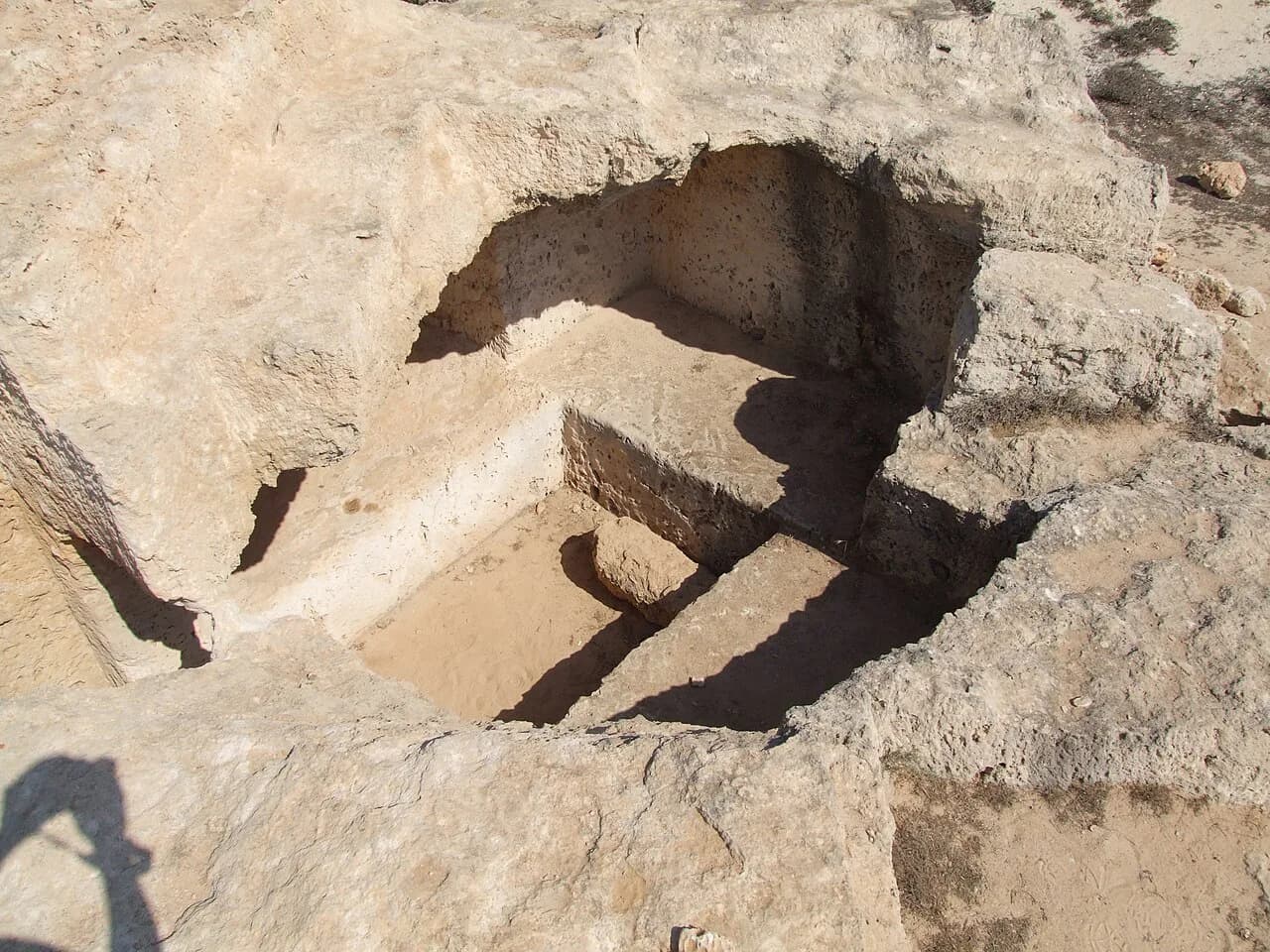
The site is a cemetery of nineteen rock-cut chamber tombs on the Makronissos promontory, with a small open-air sanctuary and part of an ancient quarry lying beside the burials. The sanctuary is the oldest element, with offerings of the Cypro-Classical period, while the tombs were cut in the Hellenistic period and used most heavily in the later 1st century BC. The quarry matters because it explains the site: the same bedrock was cut for tombs and for building stone.
Treat Makronissos as an archaeological site you read from the ground rather than a display with labels and finds. Every tomb had already been looted and disturbed before the Department of Antiquities excavated the cemetery, so the story here is architecture and setting, not grave goods in cases. If you want objects and reconstructed context afterwards, the Thalassa Municipal Museum, Ayia Napa covers the area's maritime and archaeological past in town.

Where the site sits
The tombs are cut into the bedrock of the Makronissos peninsula at the edge of the sea, within the municipality of Ayia Napa in Famagusta District. The headland is sometimes called an island, but it is a peninsula on the coast, and the cemetery sits on it facing east or south-east. The published position is roughly 34.981° N, 33.954° E, which is the clearest way to pin the site on a map before you set off.
Because the site belongs to the coast west of the resort rather than to the town centre, plan it with the beach end of Ayia Napa rather than with the monastery and square. Ayia Napa Attractions: 9 Visitor Guides sets out how the resort's sights divide between the centre, the western coast and the Cape Greco end.

How to get there
Aim for the Makronissos beach area at the western edge of Ayia Napa and use the headland itself as your landmark: the tombs are cut into the rock of the promontory at the water's edge. Visitors describe the site as a short walk from the beach, which makes the beach area the practical starting point if you are driving. Cyprus drives on the left, and the roads around the resort's western edge are straightforward outside peak traffic.
There is no published bus timetable or walking time for the tombs themselves, so check local bus routes to Makronissos beach with the operator on the day rather than relying on a plan built elsewhere. If you are working through the coast on foot or by car, this fits naturally with the sea caves and the cliffs towards Cape Greco, which continue the same rocky shoreline.
What you see: dromos, doorway and chamber
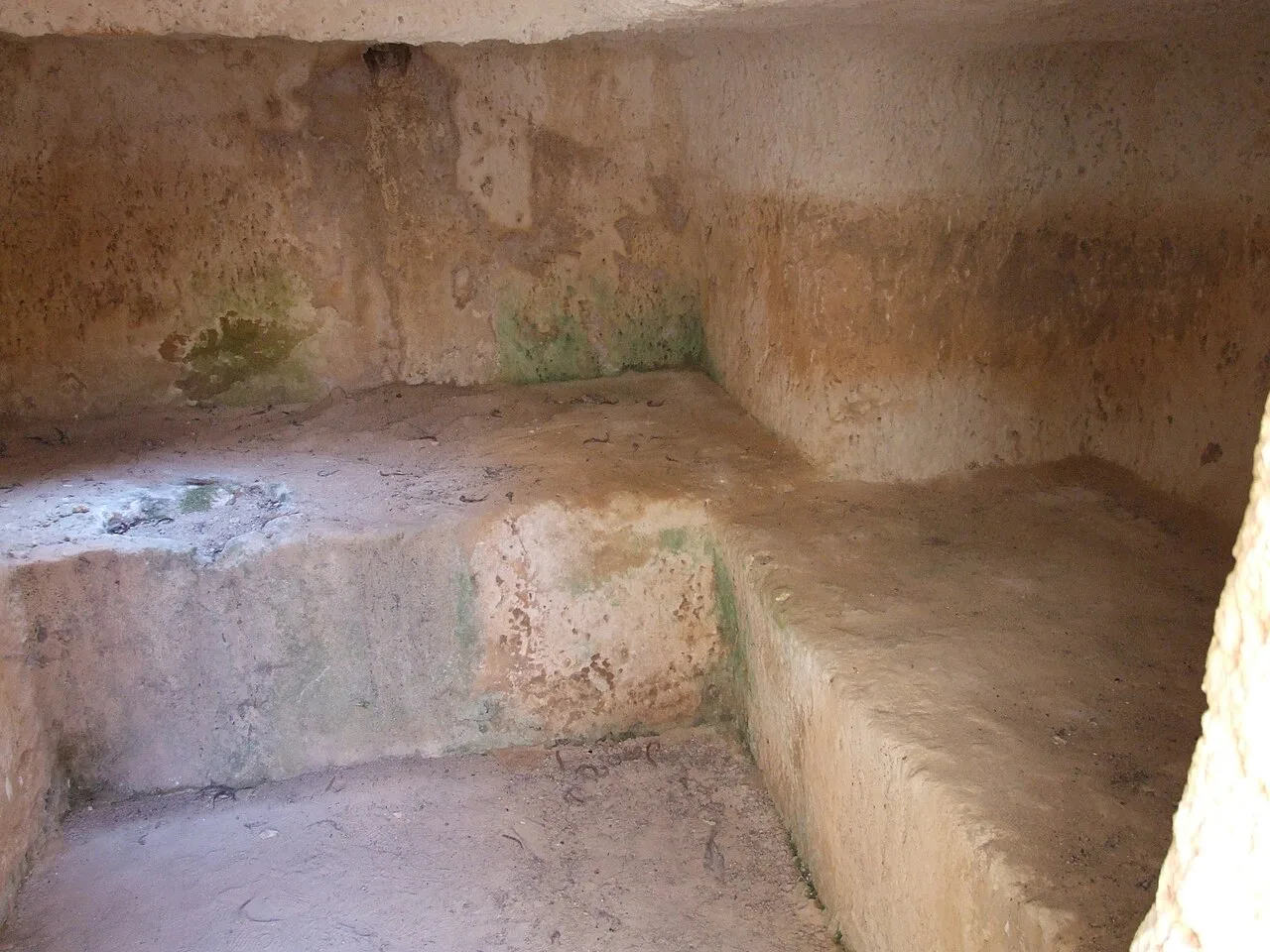
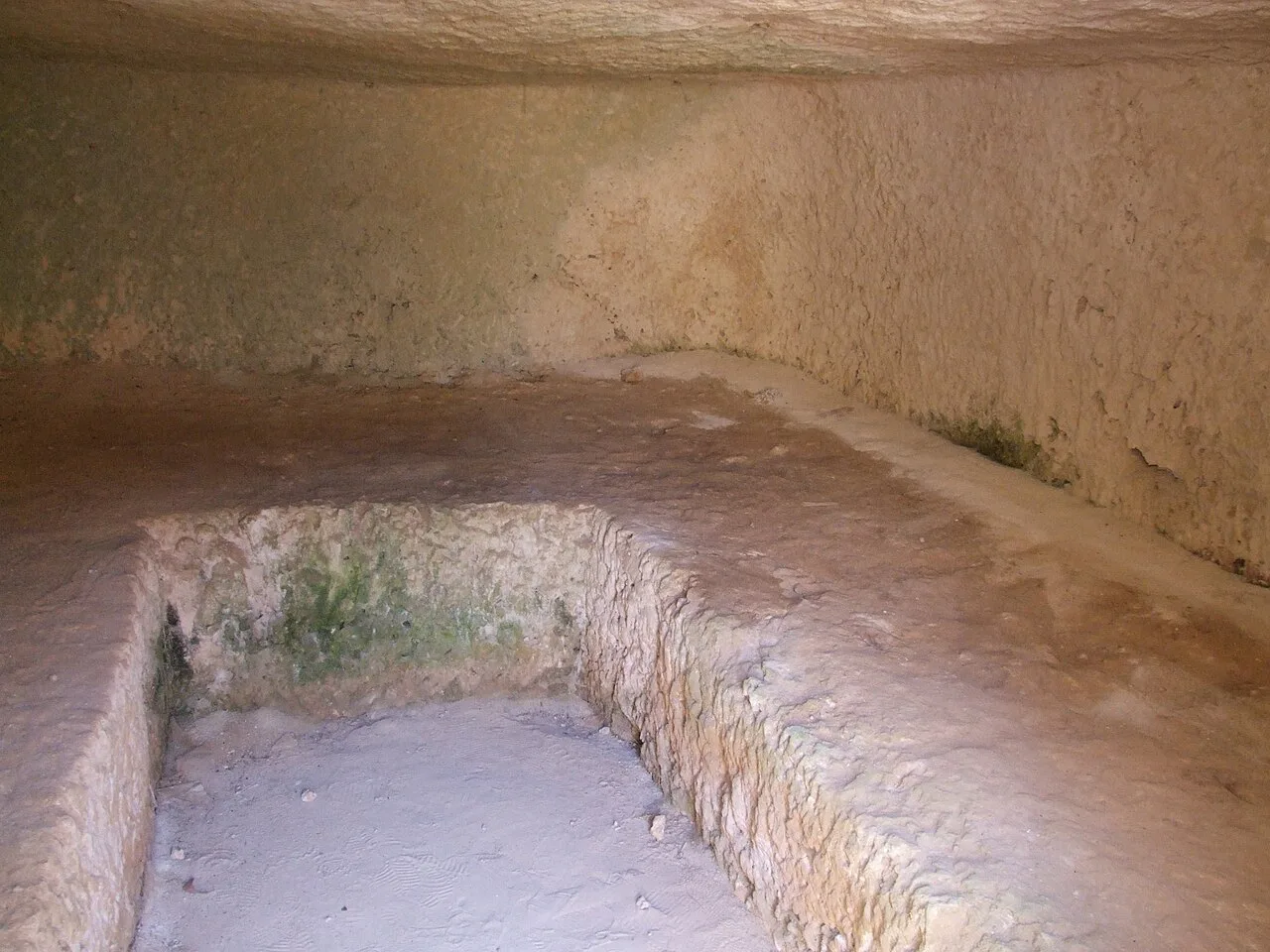
Each tomb follows the same plan with small variations. A rectangular entrance passage, the dromos, is cut as a flight of steps leading down to a doorway that was closed with one large stone slab or two smaller ones. Beyond the doorway lies the burial chamber, where a rectangular trench runs down the middle and a bench was cut for the burial.
Knowing that sequence changes the visit: you are not looking at holes in the ground but at a designed approach, threshold and interior. Look for the steps first, then the slab-closing doorway, then the chamber bench, and the layout becomes legible across the whole cemetery. Visitors report information at the entrance to the burial ground that sets out its layout and history, which is worth reading before you walk the rock.
The sanctuary and the quarry
The sanctuary is a small open enclosure east of the burial ground and predates the tombs, with Cypro-Classical offerings collected during survey work. The quarry beside the cemetery was cut for the same stone used for the tombs, so the three elements read together as one worked headland rather than three separate monuments. Most quick descriptions lump the tombs and sanctuary together; separating them makes the chronology clearer.
Dates and use
Occupation runs from roughly 475 BC to AD 400: the sanctuary first, the tombs cut in the Hellenistic period, heaviest burial in the later 1st century BC, and some chambers reopened for burials as late as the 4th or 5th century AD. The site is listed as Cypro-Classical, Hellenistic and Roman in period. That long second life is the detail most visitors miss when they assume the cemetery was sealed after the Hellenistic era.
Looting and the 1989–90 excavation
The tombs were known and dug into long before archaeologists reached them: the Municipality of Agia Napa records illegal digging at the site since 1872, and every tomb had been disturbed by the time it was properly examined. The first scientific record came from the 1974 archaeological survey of the Ayia Napa region, when a few offerings from the sanctuary were collected. Between November 1989 and early January 1990 the Department of Antiquities, funded by the municipality, excavated all nineteen tombs, the sanctuary and part of the quarry under Sophocles Hadjisavvas, publishing in 1997.
How long to allow
Give the tombs a short stop rather than an outing of its own: the cemetery, sanctuary and quarry sit close together on exposed rock, and there is no building to shelter in. The practical constraint is sun and footing, so go early or late in the day in summer, wear shoes with grip for the cut steps, and keep an eye on children around the open chambers. Pair it with the beach below rather than treating it as a standalone morning.
The description here is of open ground rather than a staffed attraction with facilities, so carry water and do not count on toilets or shade on the headland. Ticket prices, opening hours and any seasonal closures for Cyprus archaeological sites are set by the Department of Antiquities; confirm current arrangements before you build a day around it.
Nearby: beach, chapel and the western coast
The obvious pairing is Makronissos beach itself, which puts you back on the sand within a few minutes of the rock. Further along the same stretch of coast, Ayia Thekla Chapel sits by the water near Nissi Beach and makes a natural second stop if you have a car. Both keep the day on Ayia Napa's western side instead of trailing back into the centre.
For a different kind of coastal walk, the Ayia Napa sea caves and the cliffs toward Cape Greco are about 6 km away in a straight line from the tombs; treat that as a distance, not a drive time. In town, the Ayia Napa monastery and the harbour give you the resort's older centre in an hour or so. If you are weighing up the rest of the resort, our round-up of things to do in Ayia Napa sorts the coast from the centre.
Is the tombs detour worth it?
Yes, if you are already on Ayia Napa's western coast: the tombs are open ground you walk into, close to the beach, and give you a clear lesson in how a Hellenistic cemetery was cut, used and reused. No, if you want displays, labels and a ticket desk, in which case the Thalassa Municipal Museum, Ayia Napa is the better indoor stop. Go early or late, wear proper shoes and read the entrance information first.
Explore more Ayia Napa guides
Frequently Asked Questions
Are the Makronissos Tombs free to visit?
No ticket price is published for the tombs, and the site is described as open ground on the headland rather than a staffed attraction with a ticket desk. Confirm the current position with the Department of Antiquities before you go.
Can you go inside the tombs at Makronissos?
You can look down the stepped entrance passages and into the chambers, which are cut into the bedrock and open to the sky. There is no artificial lighting or handrail, so watch your footing on the cut steps and keep clear of the chamber edges.
How long do the Makronissos Tombs take to see?
Allow a short stop of well under an hour: the nineteen tombs, the sanctuary and the quarry sit close together on the promontory. Most visitors combine it with the beach below rather than making a separate trip.