
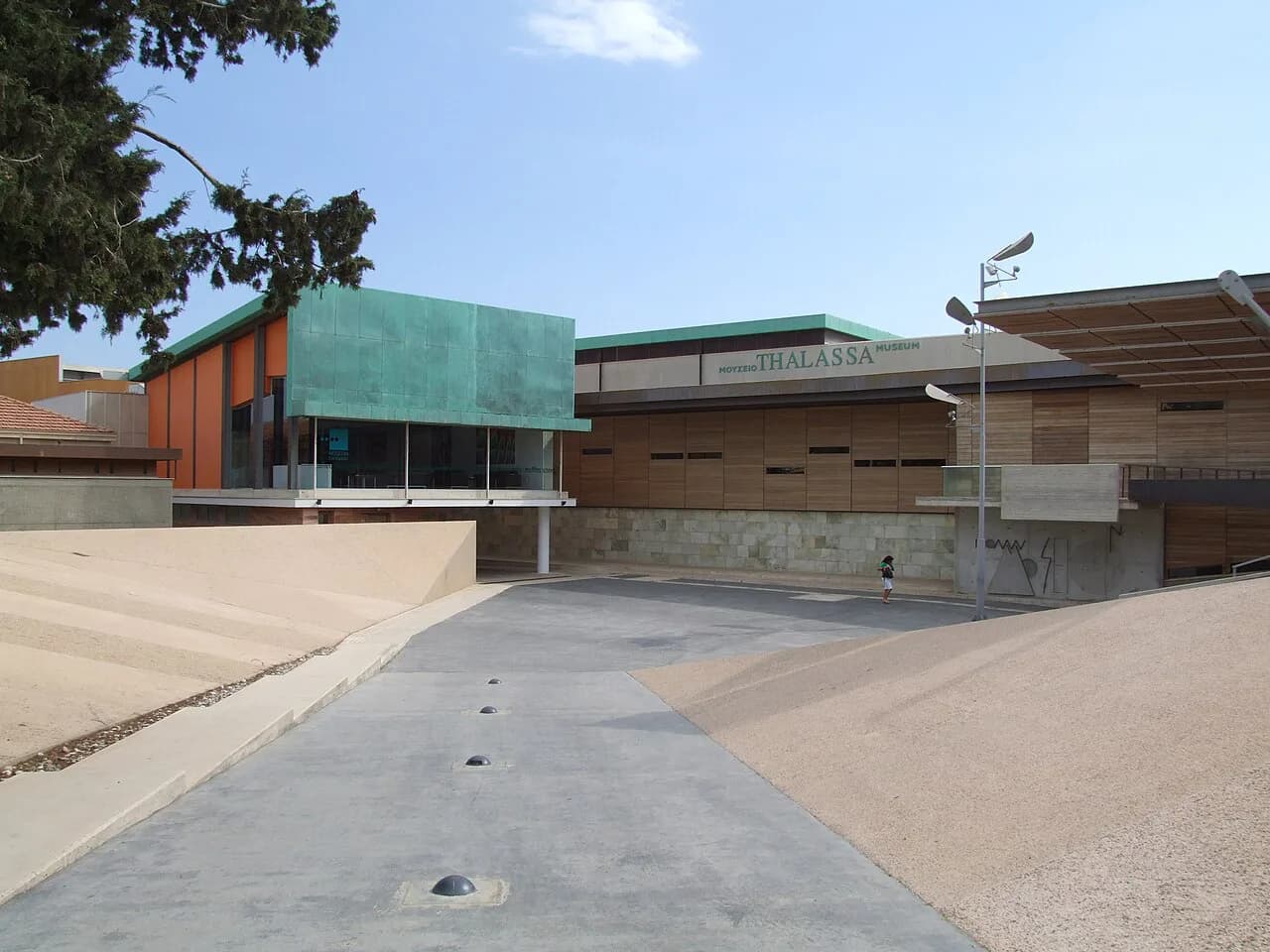
Thalassa Municipal Museum, Ayia Napa

Allow about an hour to 90 minutes at the Thalassa Municipal Museum, a compact maritime museum in the centre of Ayia Napa whose main draw is a life-size replica of the Kyrenia II, a 4th-century BC Greek trading ship. It suits a hot midday slot or a cloudy morning, and pairs neatly with the sculpture and cactus parks on the edge of town.
The name comes from the Greek word for sea, and the museum traces how the sea shaped Cyprus from prehistoric times to the present, with pottery, sarcophagi and a natural-history basement under the same roof. This guide covers where it is, what to see on each level, published hours and prices, and the nearby stops worth adding to the same trip.
What the Thalassa Museum is
Thalassa is Ayia Napa's municipal museum, created to promote awareness of the island's marine heritage and housed in a modern, interactive cultural centre rather than a converted old building. Exhibits are arranged across several levels around a central void, so you look down on the ship from above as well as studying it at deck level.
That layout makes it a good fit for mixed groups: the ship and antiquities galleries reward adults who want context, while the basement marine-life section gives children something concrete to look at. It is a municipal museum rather than a national one, so expect a focused collection rather than galleries that take a whole afternoon.

Where it is in Ayia Napa
The museum stands at Leoforos Kryou Nerou 14 in central Ayia Napa, the avenue that runs inland from the harbour area towards the town centre. Its published coordinates are 34.987634 latitude and 34.002424 longitude, which makes it easy to pin on a map before you set out.
If you are staying in central Ayia Napa, this is a walk rather than a drive, and the monastery, square and harbour sit within the same compact area. Drivers coming from Protaras or Paralimni should plan on a short run along the coast road, since Ayia Napa sits at the eastern end of the Famagusta district.

Opening hours and ticket prices
Visit Cyprus publishes the museum's schedule: October to May, Monday 09:00 to 13:00 and Tuesday to Saturday 09:00 to 17:00, with Sunday closed; June to September follows the same weekday pattern, with Sunday opening 15:00 to 19:00 instead. The museum is listed as open all year and closed on public holidays.
Published entry is €4.00 for adults and €1.50 for children, with special rates for students and groups. Those figures carry Visit Cyprus's own warning that hours and fees can be altered without notice, so confirm before a special trip, especially around public holidays.
Note the seasonal Sunday gap: between October and May the museum is shut on Sundays, so a weekend break in the cooler months needs a weekday visit. In high summer the late Sunday afternoon slot is the one that works around the heat.
The Kyrenia II and the main galleries
Pride of place goes to a life-size replica of the Kyrenia II, the 4th-century BC Greek trading ship that sank off Kyrenia around 300 BC, displayed so you can see it from deck level and from a bird's-eye view on the floor above. Because the building wraps around the vessel, the ship is the one exhibit you experience as architecture as much as object.
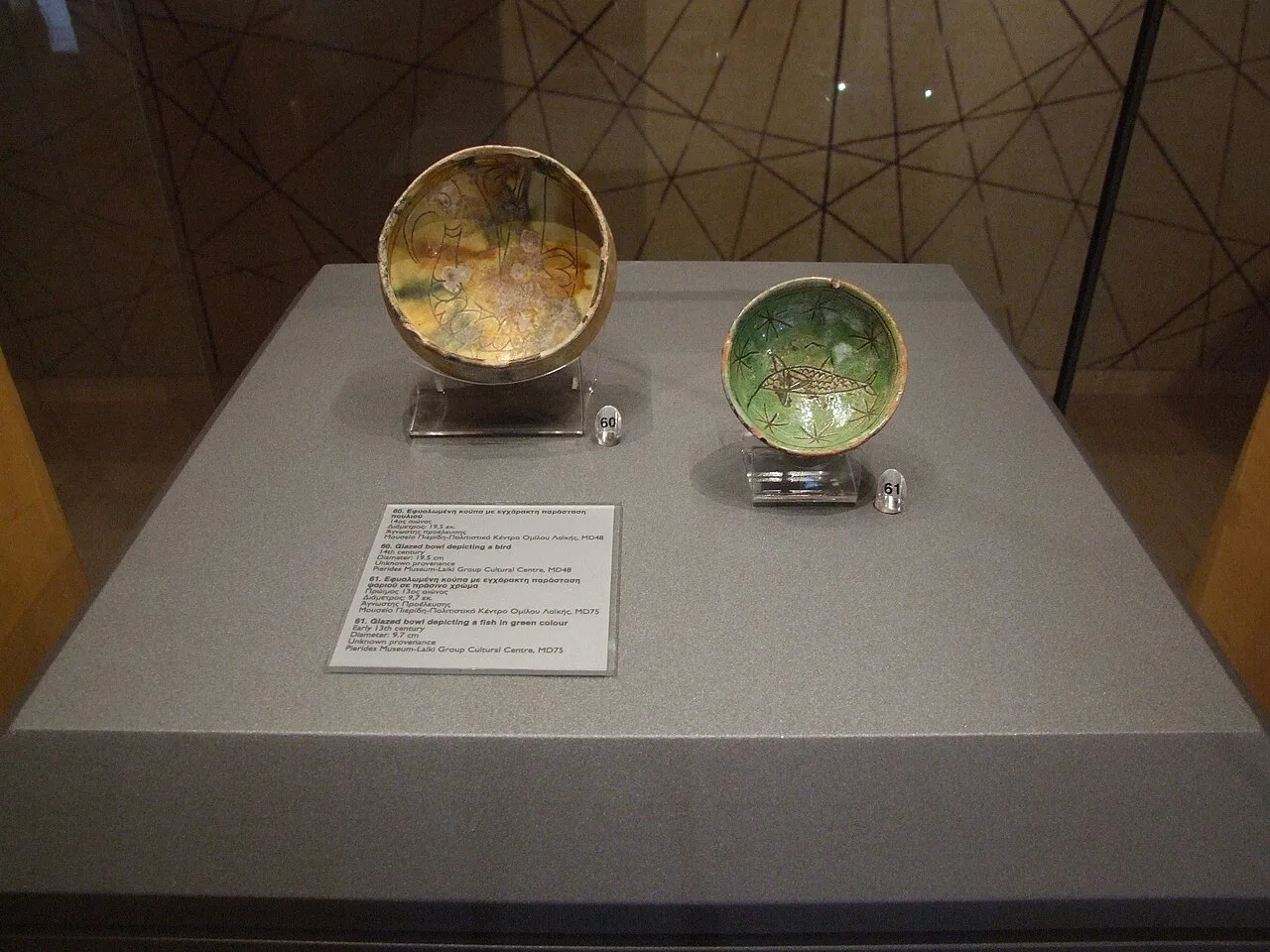
Beyond the ship, the permanent galleries hold Early Bronze Age composite vessels and sarcophagi from the Classical and Hellenistic periods, alongside pottery and other antiquities. Another vessel, the Papyrella, reproduces a Mesolithic craft of the sort used to carry obsidian across the Aegean, which gives the collection a wider Mediterranean frame.
The building also functions as an arts exhibition centre and multipurpose hall for events and conferences, so temporary shows can share the space. If a particular exhibition is the reason for your visit, ring ahead rather than assuming it is running.
The basement marine life section
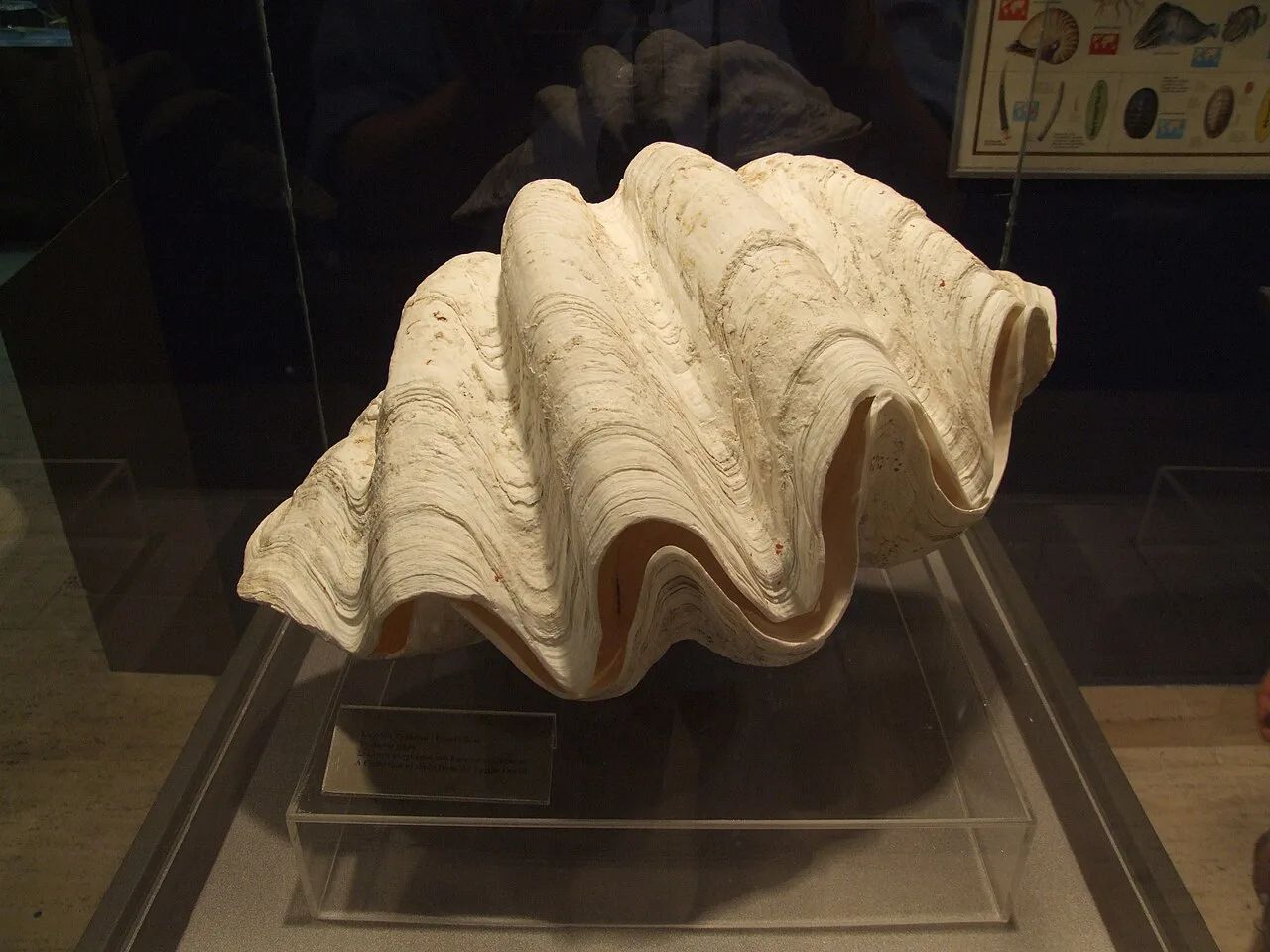
Below the maritime galleries, a natural-history section covers fish and sea mammals, crustaceans, corals, shells and fossils, some of which are described as dating back 130 million years. The displays are built around habitat-style settings, which is why this floor works better for children than rows of vitrines.
The hotel-run guide to the museum adds fossilised fish, shells, corals and trilobites from the late Cretaceous, plus taxidermy set in displays that mimic animals' natural habitats. It is the floor where younger visitors slow down, so budget your time accordingly.
How long to allow and how to pace it
Plan on about an hour for the ship and antiquities, and add 20 to 30 minutes if you have children who will linger in the basement. That keeps the museum as a morning or early-afternoon stop rather than the centrepiece of a day.
Arrive close to opening if you want the upper viewing levels to yourself. The weekday 09:00-to-13:00 Monday window is short, so do not leave it for a late start.
Getting there and getting around
Central Ayia Napa is walkable, and the museum is close to the monastery, square and harbour, so a single morning on foot covers all of it. If you are based in Protaras, a car gives you the flexibility to combine the museum with the sculpture park before the heat builds, and Cyprus drives on the left.
For a wider look at what else fills a day in this corner of the island, the sea caves and the clifftop paths around Cape Greco sit a short drive east of town. Our guide to the Ayia Napa sea caves covers the approach roads and what you see from the water's edge.
Accessibility, facilities and events
Visit Cyprus lists the museum as wheelchair accessible, with a contact line on +357 23 816 366 and the website thalassamuseum.org.cy for current details. That makes it one of the easier Ayia Napa sights to visit with a pushchair or wheelchair, unlike the rocky coastal paths.
There is a small souvenir shop with marine-themed objects, books and cards, and the building doubles as an arts exhibition centre and conference venue, so temporary shows can share the space. If a particular exhibition is the reason for your visit, ring ahead rather than assuming it is running.
Nearby sights for the same trip
The Ayia Napa sculpture park displays works made at the town's international sculpture symposia between 2014 and 2017. The cactus park, formally the Ayia Napa Park of Mediterranean Plants, Cactus and Succulents, sits next door, so both fill the rest of a morning.
If you are heading west afterwards, Ayia Thekla Chapel and Nissi Beach are the obvious next stops on the coast road towards Larnaca. Both are outdoor landmarks that balance a museum morning with sea air.
Is the Thalassa Museum worth an hour?
Yes, if you want a compact, air-conditioned look at how the sea shaped Cyprus and you are already in central Ayia Napa; the ship alone justifies the small published ticket. Skip it if you only have a beach day and no interest in archaeology or marine life, because an hour here means an hour away from the coast.
Build it into a morning with the sculpture and cactus parks, go on a weekday if you are travelling between October and May, and confirm the current schedule and fee before setting out.