
Kourion Archaeological Site: A Visitor's Guide
Kourion is the archaeological site to choose if you want one substantial ancient stop within easy reach of Limassol. It sits on a hill above the coast just 17 kilometres west of the city, with a rebuilt Roman theatre near the entrance and mosaic floors and early Christian ruins strung along the cliff top above the sea. This guide covers where the site sits, how to get there by bus or car, what you see in the order you walk it, and how much time to allow.
Allow two to three hours if you walk the whole circuit at an unhurried pace, and rather more in high summer, when the exposed upper paths get hot. The site rewards a little preparation: bring shoes with grip for the unpaved stretches on the hill, and plan the visit for early morning if you are here in July or August.
Where Kourion is
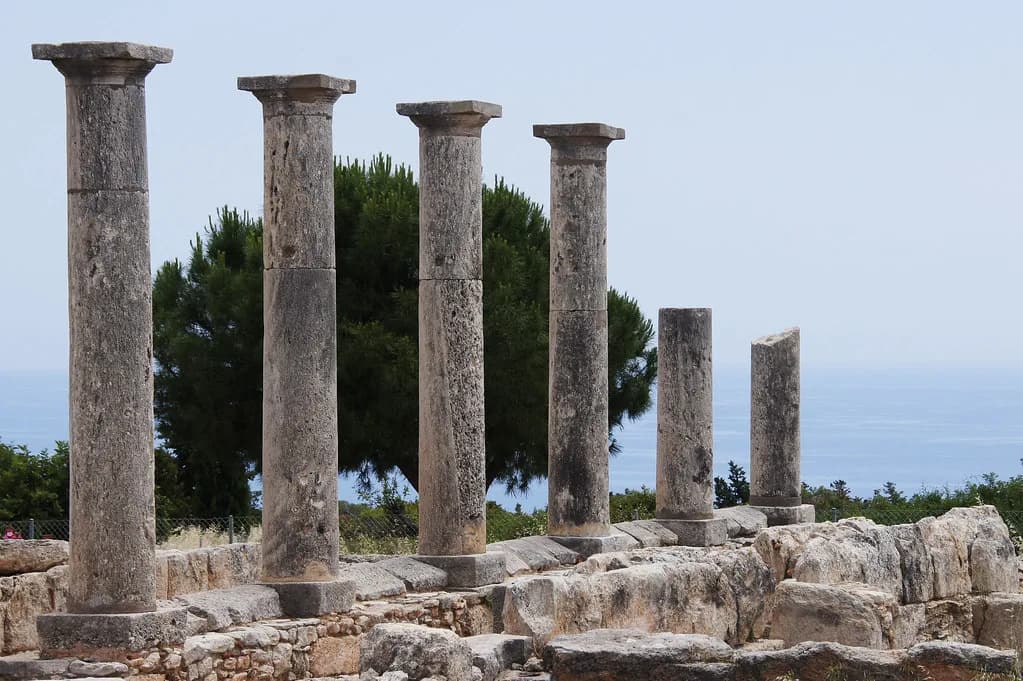
Kourion stands on a coastal plateau west of Limassol, above cliffs that drop to the Mediterranean. The ancient city was one of the great city kingdoms of Cyprus, and its ruins span the Hellenistic, Roman and early Christian periods, which is why the site reads as layers rather than a single monument. The location is part of the appeal: the theatre and the upper ruins both open onto sea views.
The ticket booth sits along the approach road on the way up to the car park, and the visitor centre marks the start of the monument circuit. From there the Theatre of Kourion and the House of Eustolius come first, and the rest of the monuments are reached by paths climbing the hill above. That layout matters when you plan your time: the headline monuments are close to the start, and the mosaics come later, so you can cut the visit short without missing the theatre.
How to get there: bus 16, the car park and the drive from Limassol
Bus 16 from Limassol runs to the Kourion site, so it can be visited without a car. Bus 17 covers Kolossi Castle instead, and the two connect in Kolossi village along Leoforos Apostolou Louka, so you can pair the two monuments in a single outing by changing there. Check the current timetables with the operator before you set out, since they change by season.
By car the drive from Limassol takes about 20 minutes, and there is a free car park beside the visitor centre. Drivers should remember that Cyprus drives on the left. Kolossi lies a few kilometres away, and the walk from Kolossi village up to Kourion is about 6.5 kilometres if you fancy linking them on foot.

Tickets and opening times
Tickets are bought from a booth on the way up to the car park, and entry was 4.50 euros for adults in January 2019. The site was open from 8:30 to 17:00 in winter and until 19:00 in summer at that time. Confirm current prices and seasonal hours before travelling.
Kolossi Castle carries its own separate ticket, priced at 2.50 euros for the interior in January 2019, so budget for two entries if you visit both. Do not assume the Kourion ticket covers it.
The theatre and the House of Eustolius
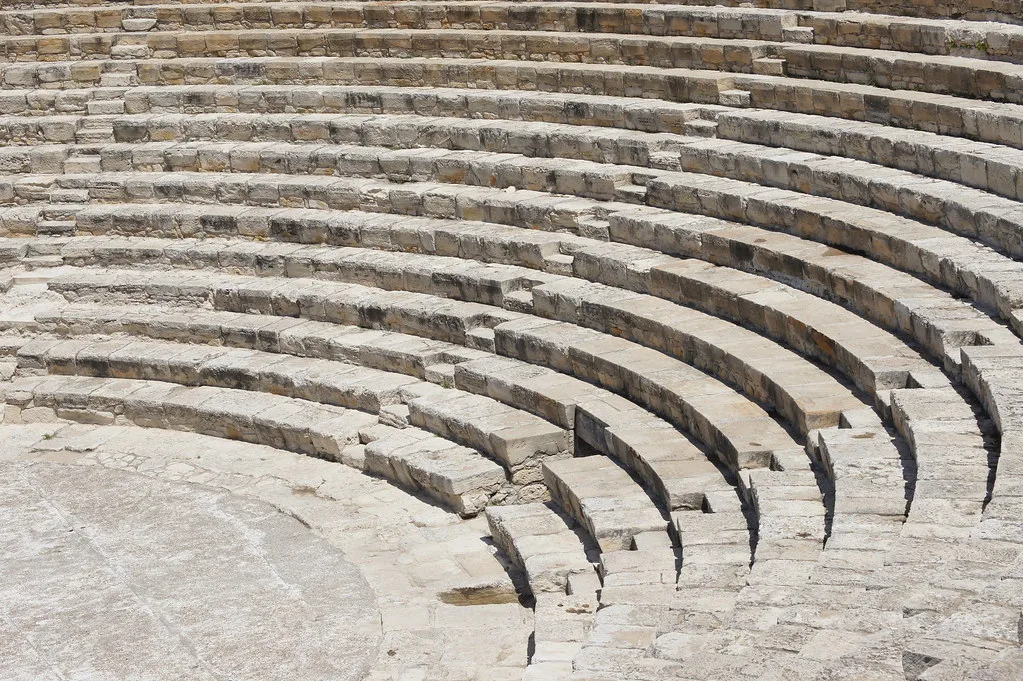
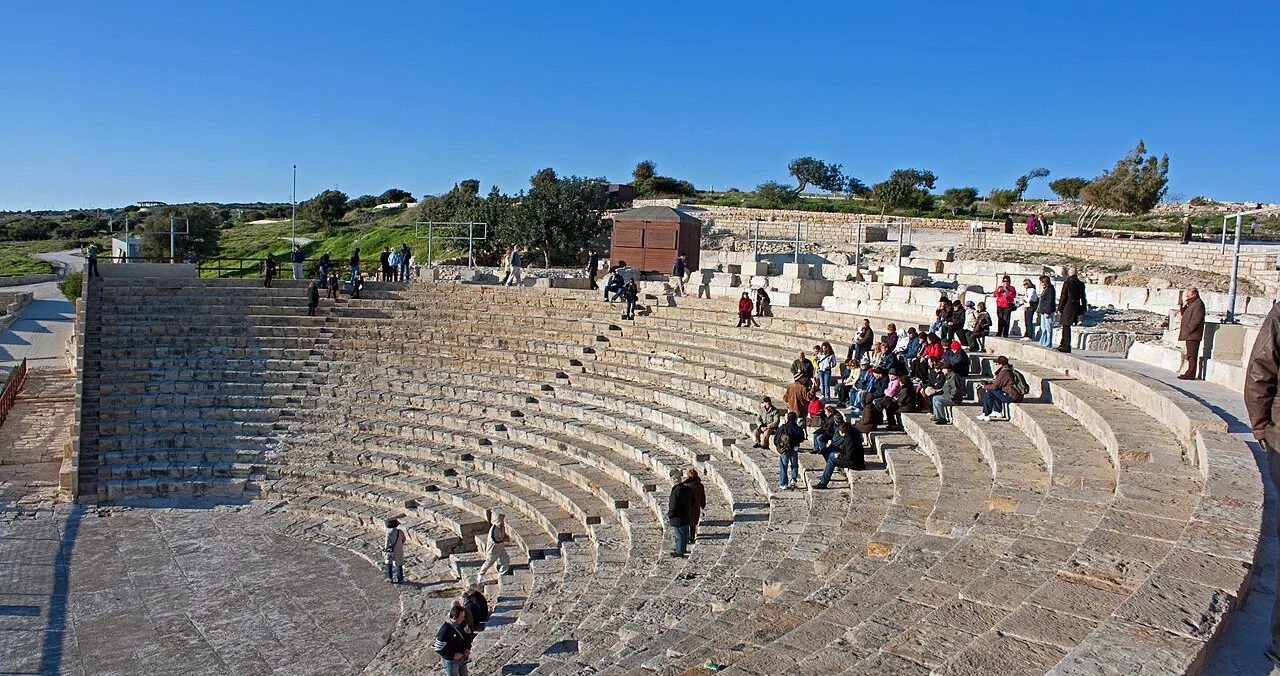
Start at the visitor centre, where leaflets describe the monuments, then take in the Theatre of Kourion. The original dates to roughly the 2nd century BC and held up to 3,000 people; it was abandoned after earthquakes in the 4th century AD, and most of what you see now is reconstruction. It is the easiest structure on the site to read at a glance.
Beside the theatre stands the House of Eustolius, a Roman villa whose floors carry mosaic remains. The building follows the plan of a wealthy Roman residence, and the mosaics here set the pattern for what comes higher up the hill.
The climb up the hill: Earthquake House, basilica, agora and Nymphaeum
Paths lead from the theatre up to the top of the hill above the coastal cliffs. The first building on the route is the Earthquake House, a residence from the 1st or 2nd century, followed by the substantial ruins of the Early Christian Basilica from the early 5th century. Beside the basilica are the remains of the Roman Agora, the Stoa and a Hellenistic public building.
The largest single ruin is the 1st-century Roman Nymphaeum, a sanctuary for the nymphs, wrapped in a complex of Roman baths and public buildings. Give this stretch time: it is spread out, and the walking is the point as much as any single monument.
The mosaics at the House of the Gladiators and the House of Achilles
Further along the path, the House of the Gladiators preserves mosaic floors depicting gladiators, and the 4th-century House of Achilles holds mosaics on pagan themes. The House of Achilles is thought to have served as a reception house for important visitors. These floors are a highlight for many visitors, so leave energy for them rather than rushing the lower site.
How long to allow, walking surfaces and summer heat
Seeing the whole site involves real walking, and some of the hilltop paths are not paved, so stout shoes make a difference. In summer, carry water, a hat and sunscreen, and start early rather than arriving at midday. The site is exposed, with little shade along the upper circuit.
Two hours covers the theatre, the House of Eustolius and a steady walk to the mosaics; three hours lets you read the placards and linger at the basilica and Nymphaeum. If you are combining Kourion with Kolossi Castle, treat Kourion as the main event and give the castle an hour.
Accessibility and facilities at the visitor centre
Part of the site is accessible with a wheelchair, and the visitor centre is the place to ask which routes work best. The centre also stocks information leaflets about the monuments, useful for identifying the ruins as you go rather than guessing.
Nearby: Kolossi Castle and the Sanctuary of Apollo Hylates
The medieval Kolossi Castle in the village of the same name makes the obvious add-on, a short drive or bus ride away. The present structure is 15th-century, with an earlier building probably dating to the 13th century, and it once anchored a sugar-producing estate. It is a compact visit, quite different in character from the archaeological site.
The Sanctuary of Apollo Hylates, where Apollo was worshipped as god of the woodlands, lies close to Kourion and is worth knowing about if you have a car. The site dates back to the 8th century BC, and its terracotta figurines, temple foundations and a stone platform can still be seen. It is a separate stop.
Kourion entry: booking on arrival and separate tickets
Entry to Kourion is charged per adult at the booth below the car park; the adult rate was 4.50 euros in January 2019. If you want to see Kolossi Castle on the same day, note that its interior carries a separate charge, 2.50 euros in January 2019.
Prices and hours at Cypriot archaeological sites change between seasons, so treat these figures as a guide to the order of magnitude rather than a quote. Confirm the current adult rate and opening times before you travel.
Is Kourion worth the trip from Limassol?
Yes, if you want one site that combines a theatre, cliff-top ruins and mosaic floors without a long drive. It is a strong half-day monument trip from Limassol, and bus 16 makes it workable without a car. Pair it with Kolossi Castle for a fuller day, but keep the two tickets and the two timetables separate in your planning.