
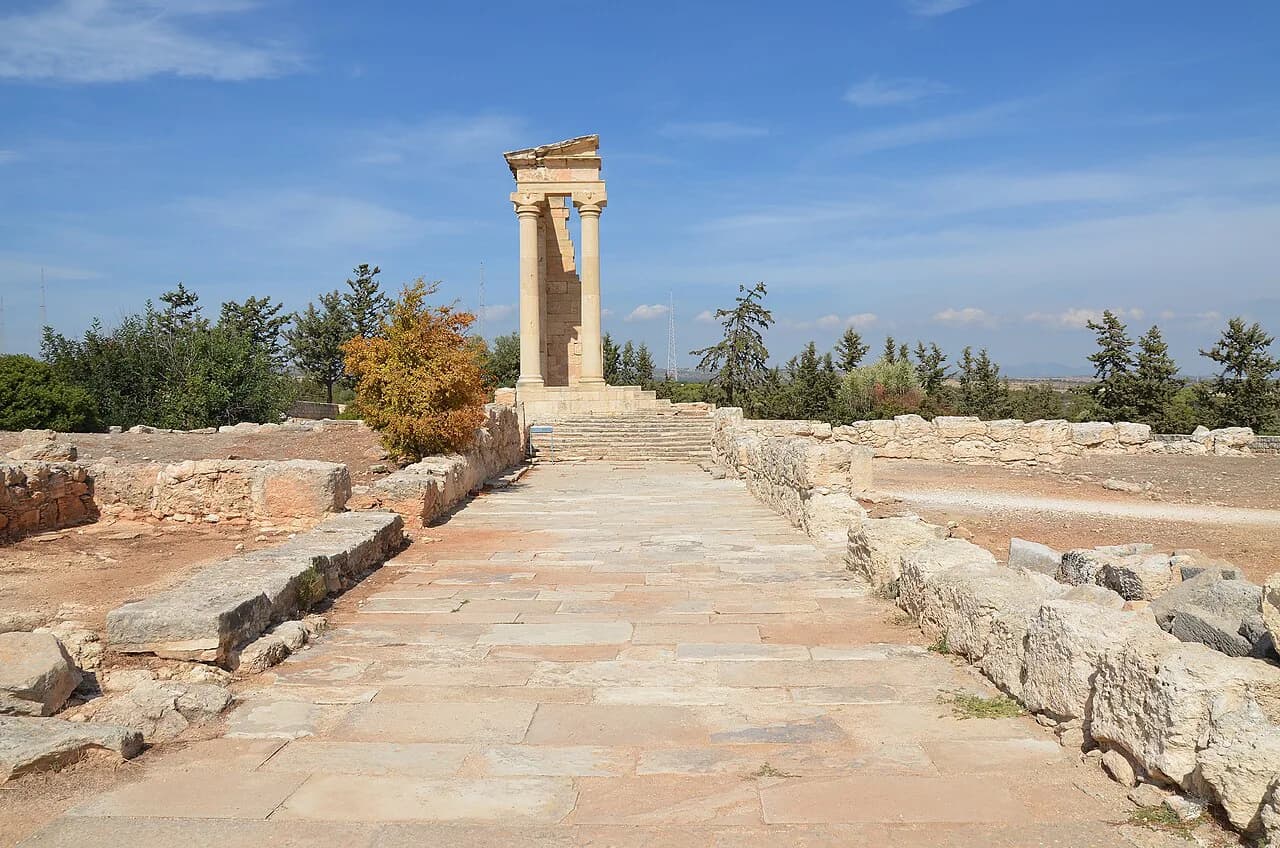
Sanctuary of Apollo Hylates: A Visitor's Guide to Kourion's Apollo Sanctuary

The Sanctuary of Apollo Hylates is worth 45 minutes to an hour as its own stop, not a footnote to Kourion. It sits about three kilometres west of the Kourion Archaeological Site, roughly 22 kilometres west of Limassol on the road towards Paphos, and Apollo Hylates was the god who protected Kourion. This guide covers where the site lies, what actually stands on the ground, how long it takes and which nearby sights pair with it.
Most visitors arrive by car, because the sanctuary stands apart from the Kourion ticket gate and the main coastal road. Treat it as the first or last stop of a half-day loop that also takes in the Kourion mosaics, Kolossi and the coast towards Paphos.
What the Sanctuary of Apollo Hylates actually is
Apollo Hylates, the god of the woodland, was worshipped at this spot from the 8th century BC to the 4th century AD, and his sanctuary grew into one of the island's important religious centres. The site has been through several building phases, with extensions and alterations added by different generations. Knowing that helps: what you see is a palimpsest rather than a single monument.
The sanctuary lay close to the ancient town of Kourion, along the road leading towards Paphos, and served as the city's main cult place. The site belongs to the Department of Antiquities, which looks after Cyprus's ancient monuments and issues the entry cards sold at its sites.

Where it is and how to get there
The sanctuary sits three kilometres west of the Kourion Archaeological Site, about 22 kilometres west of Limassol on the Paphos road. Coming from Kato Paphos you drive east along the same road, so the site works in either direction. If you are based in Limassol, this is one of the most straightforward ancient sites to reach by car, with no old-town traffic at the end of the drive.
Public transport along this stretch is thin, so a hire car or taxi is the practical choice. Cyprus drives on the left, and the turning off the Paphos road comes up quickly, so set a map pin before you leave. If you are weighing up what else is in reach, our Limassol Attractions: 10 Visitor Guides sets out the archaeology around the city.

What you see on site
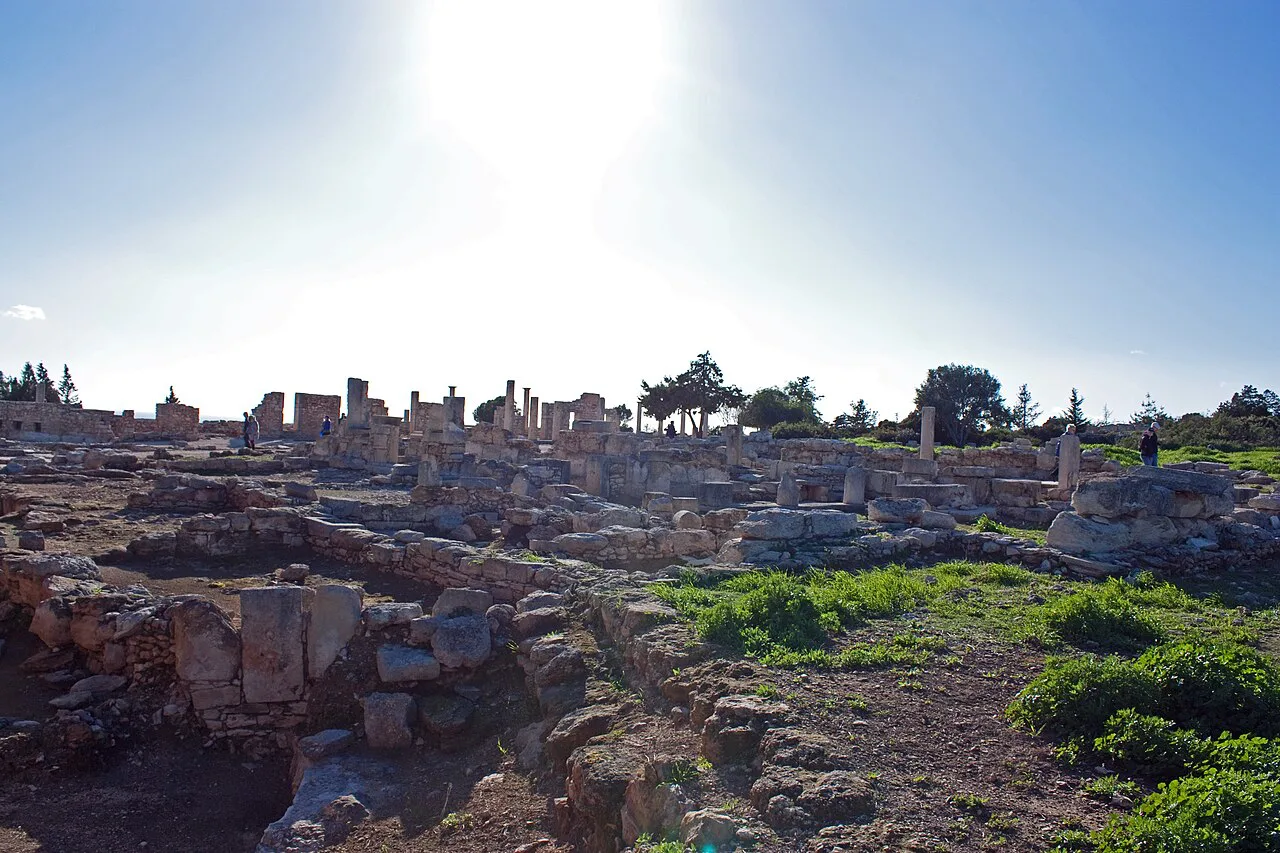
Most of the standing monuments belong to the site's first-century AD restoration. They include Apollo's temple, partly restored, pilgrim halls, a palaistra where athletes trained and played games, a bath complex and a holy precinct. The temple's foundations are the visual anchor, and the layout reads clearly because the buildings are low and spread out rather than crowded together.
Walking the site takes you through the temple area, the palaistra and the bath complex in sequence, with the holy precinct as the quiet end of the circuit. The ground is exposed and largely unshaded, so a hat and water matter more here than at a museum. Signs are modest, and a short read of the site's history before you arrive makes the ruins legible.
The earlier layers: altar, monument and votive pit
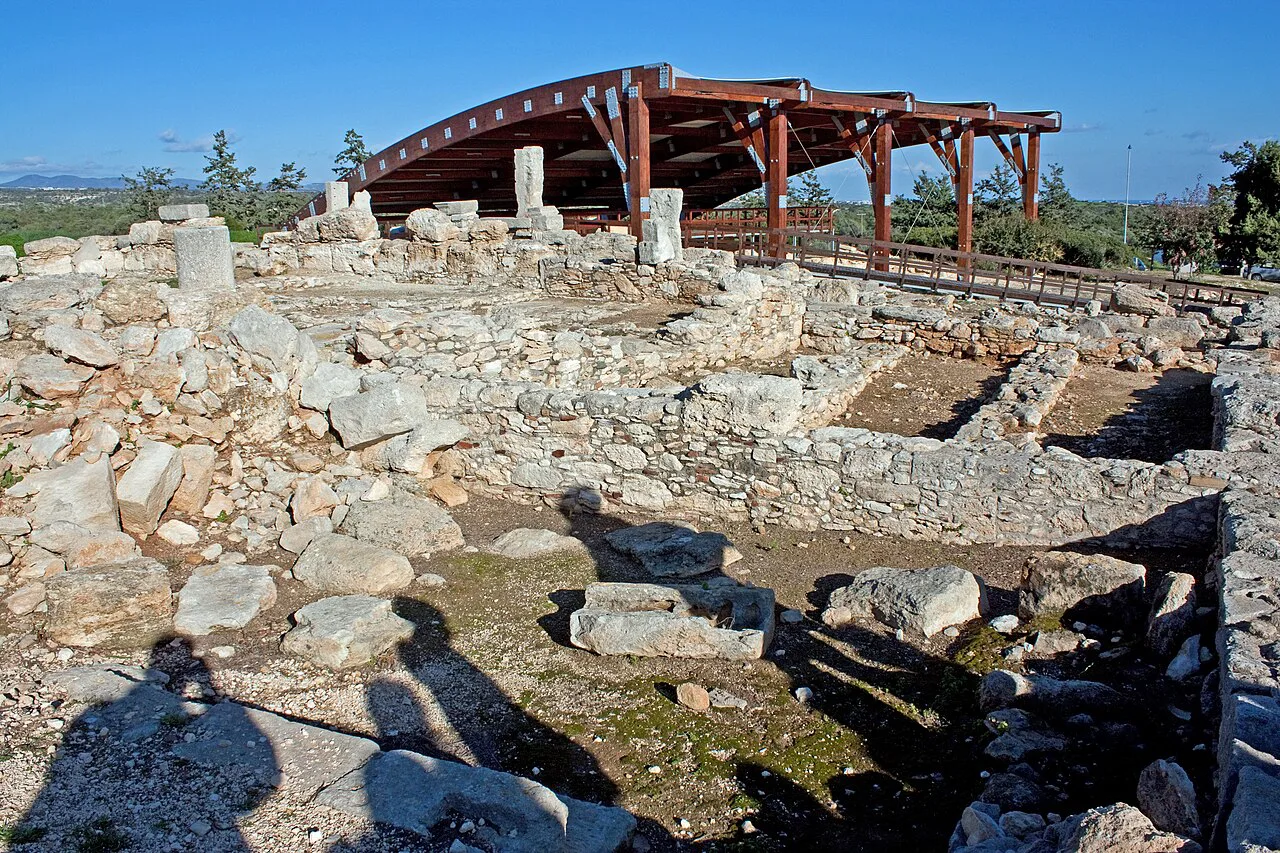
Beneath and around the Roman rebuild lie the sanctuary's earlier phases: a temple whose traces survive in the foundations of the present one, a circular monument, and a formalised Archaic Altar and Precinct. During the Roman period the site gained south and north buildings, probably used to display votive offerings or accommodate visitors.
Terracotta figurines and pottery accumulated in the temple from the 5th century BC into the Roman period and were buried in the votive pit. Look for it as you move between the temple and the precinct; it is the detail that turns a scatter of stones into a story about offerings. Read the layers in date order and the site makes sense as a sequence rather than rubble.
How long to allow and when to come
Budget 45 minutes to an hour for the sanctuary itself, or around 90 minutes if you read every sign and photograph the temple from several angles. It is a short visit by design: the ruins are exposed and there is little shade to linger in. Combined with the Kourion Archaeological Site, the two stops make a comfortable half-day by car.
The site is open all year round, and summer heat is the main planning factor rather than crowds. Come early in the morning or late in the afternoon in July and August, when the exposed temple platform bakes, and save the middle of the day for a museum or a long lunch. Spring and autumn give cooler walking conditions and better light for photographs.
Opening hours, tickets and multi-day cards
Published hours run daily from 08:30 to 17:00 between 16 September and 15 April, and from 08:30 to 19:30 between 16 April and 15 September. The entrance fee is €2,50, with a 20% reduction for organised groups of more than ten people. The site closes on Christmas Day, New Year's Day and Greek Orthodox Easter Sunday.
If you plan a ruins-heavy trip, the Department of Antiquities issues entry cards covering its museums and ancient monuments: one day for €8,50, three days for €17,00 and seven days for €25,00. Work out how many paid sites you will actually visit before buying; two or three single tickets can be cheaper than a card. The card is worth it only when the itinerary is dense, and it pairs naturally with a stop at Kolossi Castle.
Nearby: Kourion, Kolossi and the coast road
The obvious pairing is the Kourion archaeological site three kilometres east, where the mosaics and the cliff-top theatre justify a longer stop. From there, head inland to Kolossi village for the medieval castle, or continue west to Petra tou Romiou (Aphrodite's Rock) if you are pushing towards Paphos. All three fit a single half-day loop by car without rushing.
If you are staying in Limassol and want a day that mixes ruins with something easier, Limassol zoo on Vyronos Avenue gives children a break from ancient stones, and the Cyprus mouflon enclosure is the reason many visitors go. Keep the sanctuary for the cooler end of the day and the zoo for the middle.
Practical points before you drive out
Expect rough, stony ground underfoot and very little shade; sturdy shoes and water are more useful than a guidebook. Plan a stop in Kourion or Kolossi village for food and toilets rather than counting on anything on site. The turning off the Paphos road is easy to miss on a first drive, so approach slowly once you pass the Kourion turn.
The opening times and fees published by Visit Cyprus are subject to alteration without notice, so confirm the day's hours with the Department of Antiquities before a long drive. Carry euros in cash for the ticket window, and check your hire-car arrangements before leaving the main road.
Is the sanctuary worth the detour?
Yes, if you are already driving to Kourion: the sanctuary adds an hour, costs little and explains the cult that stood behind the city below. Skip it only on a tight itinerary where Kourion's mosaics and theatre are the whole point. For a wider menu of stops around the city, see our things to do in Limassol guide.
Go early or late, carry cash for the ticket, and pair the visit with Kourion and Kolossi castle rather than making a special trip from Limassol for the sanctuary alone.
Explore more Limassol guides
Frequently Asked Questions
Is the Temple of Apollo in Cyprus free?
No. The sanctuary charges an entrance fee, and discounts apply only to organised groups of more than ten people. Check the current fee with the Department of Antiquities before you travel, since published rates can change.
Do you need a car to reach the Sanctuary of Apollo Hylates?
A car or taxi is the practical way to reach it. The site lies three kilometres west of Kourion on the Paphos road, away from the main coastal stops, and public transport along that stretch is limited.
Can you visit the sanctuary and Kourion on the same ticket?
Treat them as two separate paid sites. Each has its own entrance, and a Department of Antiquities multi-day card covering its museums and monuments is the option to weigh up if you plan several ancient sites.