Paphos Sea Caves at Peyia: What to See and How to Get There
The Paphos sea caves sit on the Peyia coast near Coral Bay. Here is what you will see, how to reach them, the 615 bus option and cliff-edge safety.
On this page
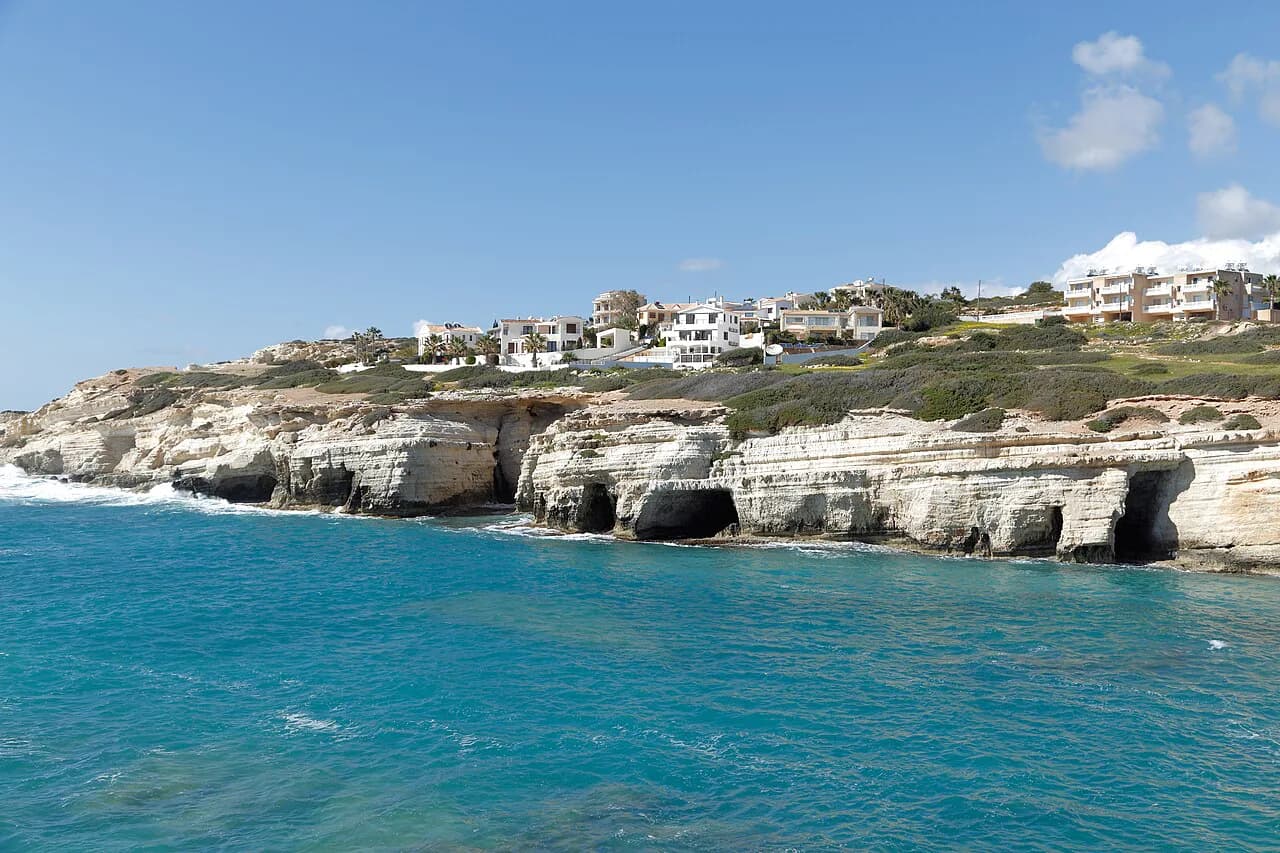
The Paphos sea caves are natural rock arches and caves cut into the seafront at Peyia, on the coast north-west of Kato Paphos and close to Coral Bay. They take perhaps half an hour of your time. This guide covers where the caves sit, how to reach them by car or on the 615 bus, the Edro III shipwreck nearby, and how to pair the coast with the monasteries and villages inland.
Plan it as a short coastal stop rather than a day out. The visit is about viewpoints and photographs, with anything else you add, whether a monastery or an inland village, turning the trip into a half day.
What the Paphos sea caves actually are
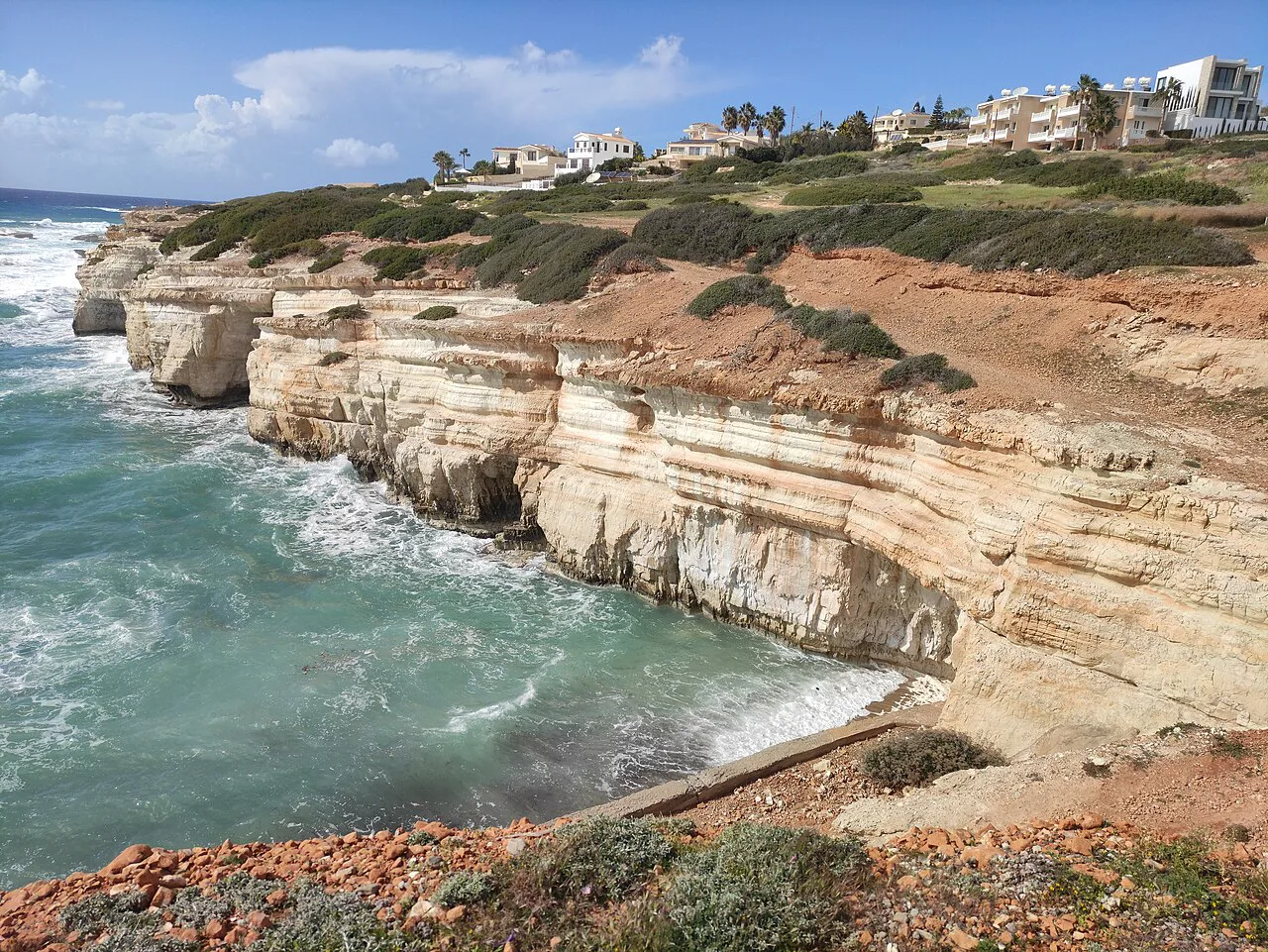
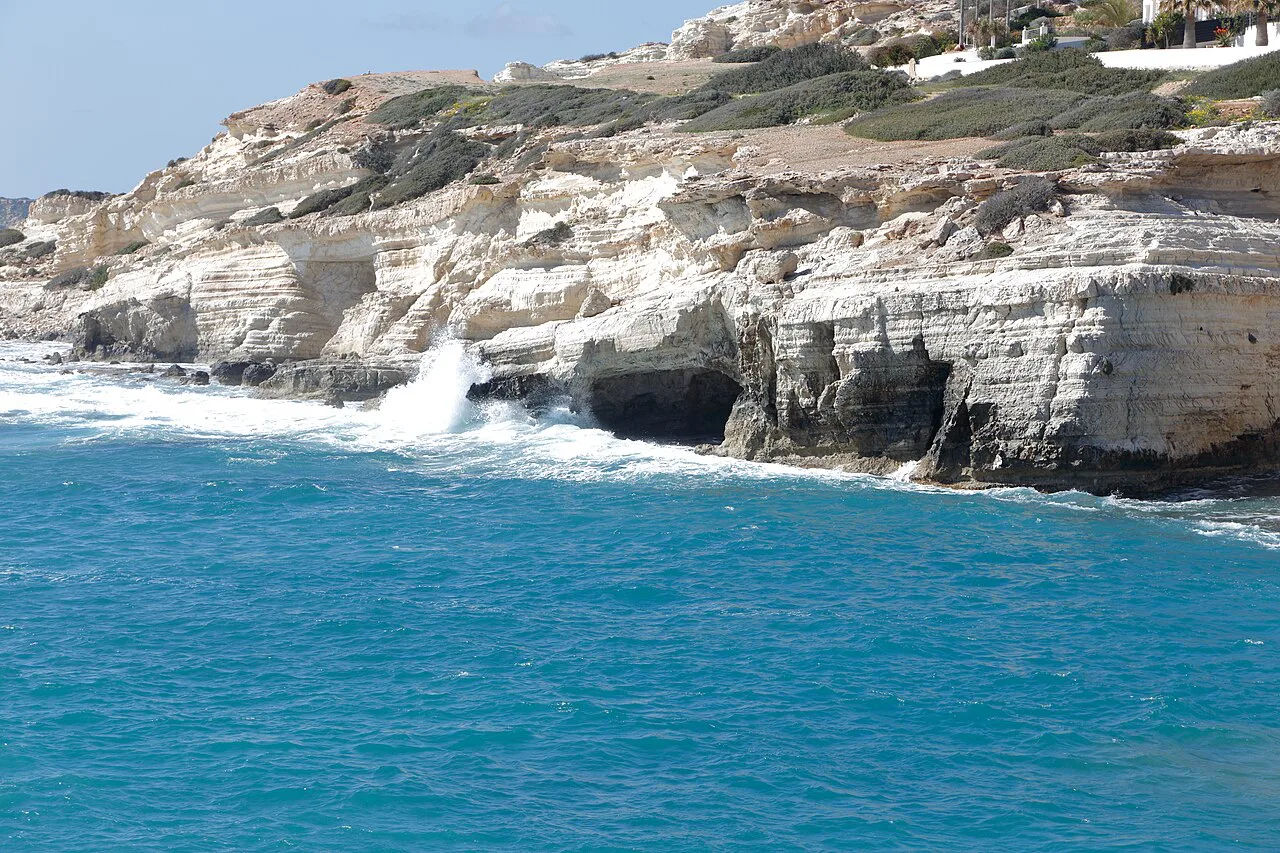
The name covers a stretch of rocky seafront at Peyia where the sea has worked arches and caves into the limestone. You are not visiting a cave system with paths, lights or a ticket desk: the formations are seen from above, from the cliff edge and the road that runs along it. The appeal is the shape of the rock and the colour of the water below it, not an underground tour.
Photographers get the best of it in low, angled light, when the arches read clearly against the sea. The rock is uneven and there is no formal viewing platform, so keep back from the edge and watch children and loose footwear. A wide-angle lens or a phone with a wide setting is more useful here than a long zoom.
Where the sea caves sit on the Peyia coast
The caves lie on the coast of Peyia, the hill village that sits above Coral Bay, and the shoreline stretch is known simply as Sea Caves. This puts them within easy reach of the Coral Bay resort strip and a straightforward drive from Kato Paphos. The village itself sits higher up and inland, so the coast and the village centre are two separate stops.
Distances are short in this corner of the island, which is why the caves work as a stop rather than a destination in their own right. If you are based in Paphos town, treat the caves as the first or last item on a loop that heads north up the coast. The Villages Near Paphos reward the same half day, so decide early whether you are doing coast only or coast plus inland.
The Edro III shipwreck and how it fits a visit
The Edro III is the landmark most people associate with this stretch of coast, a grounded ship close to the shore that has become part of the scenery. It sits in the same general area as the caves, so a single stop can take in both. Treat it as a view from land rather than an attraction with access, and do not expect to board it.
Because the wreck is visible from the roadside, it is the easiest thing to photograph on the drive and a useful orientation point. Give it ten minutes, take your pictures from a safe distance, and carry on to the caves or back towards Coral Bay.
Getting there by car from Paphos
Driving is the simplest way to see the caves properly, because you can stop at more than one viewpoint along the coastal road. From Kato Paphos, head north past Coral Bay and follow the coast road; the road runs close to the cliffs and the caves. Cyprus drives on the left, and the coastal road has bends and uneven edges, so take it steadily.
Parking along the coast is informal in character, and the surfaces near the cliffs are rough. Leave the car well back from the edge, keep to the wider sections of road, and do not attempt to drive onto tracks that look worn or narrow. If you are combining the caves with an inland stop, Peyia: The Hill Village Above Paphos' Coral Bay makes a natural turning point.
Getting there without a car: the 615 bus
A local bus, the 615, connects Paphos with the Sea Caves area, and route listings put the journey at roughly an hour and four minutes with a fare of about €4. That makes it a workable option for travellers without a hire car, though you are tied to the timetable and the stop may leave a walk to the viewpoints. Confirm the current timetable and fare with the operator before you set out, since these change by season.
If you take the bus, plan around one main stop rather than trying to see several viewpoints. Bring water and sun protection, since shade on the cliff tops is limited, and allow time to walk back to the stop. A taxi is the other option for a short visit, and splitting the fare makes it competitive for two or more people.
What to expect on the ground: rough rock and cliff edges
This is unguarded coastline, not a managed attraction. The ground is uneven limestone with loose stones, there are no marked paths along the edge, and the drop to the sea is real. Wear shoes with grip, keep children close, and stay behind any barrier or fence you find rather than stepping around it for a photograph.
Summer heat makes the rock uncomfortable by midday, so early morning or late afternoon is the better window for walking the cliff top. Carry water even for a short stop, and remember that phone signal and shade can both be patchy along the coast.
Swimming and seeing the caves from the water
The caves look their best from the sea, but access is by water and depends on calm conditions. There is no lifeguard cover implied by the setting, and the rocks make entry and exit awkward, so swimming here is a judgement call for confident swimmers on a flat day. Boat trips pass this coast, though operators, timings and fares vary and are best confirmed locally when you arrive rather than booked blind.
If the sea is choppy, stay on the cliff top and enjoy the view instead. The arches and the wreck still read well from above, and you avoid the riskiest part of the visit.
Pairing the caves with Agios Neophytos and Kouklia
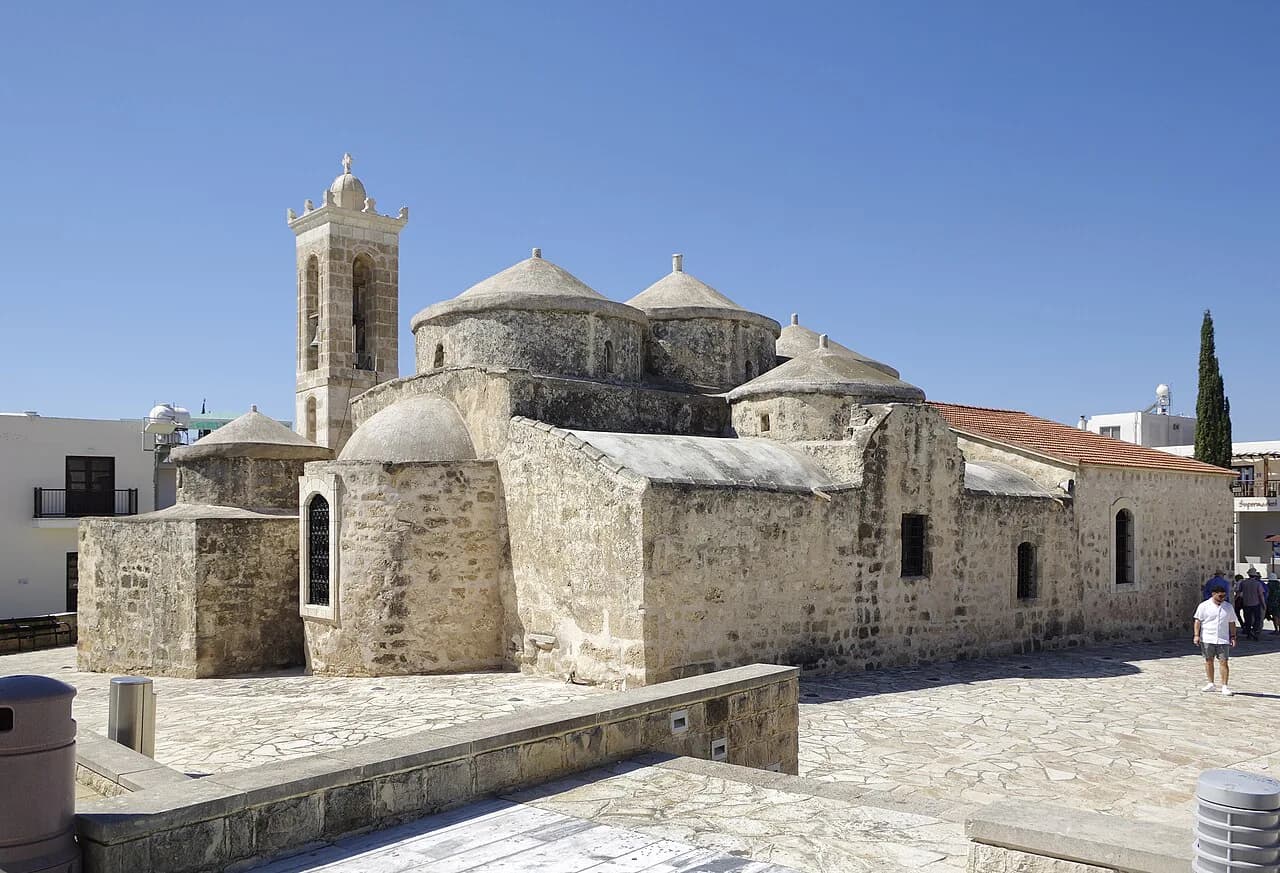
Agios Neophytos Monastery sits about 9km north of Paphos near Tala, founded in the second half of the 12th century by the recluse Neophytos, who carved a cave church known as the Enkleistra. It holds Byzantine frescoes from the 12th to 15th centuries and a museum, with published hours of 09:00 to 13:00 and 14:00 to 18:00 from April to October and 09:00 to 16:00 from November to March, entry €2, and closure on Christmas Day, New Year's Day, Green Monday, Easter Sunday and 15 August. Confirm before you go, as times and fees can change.
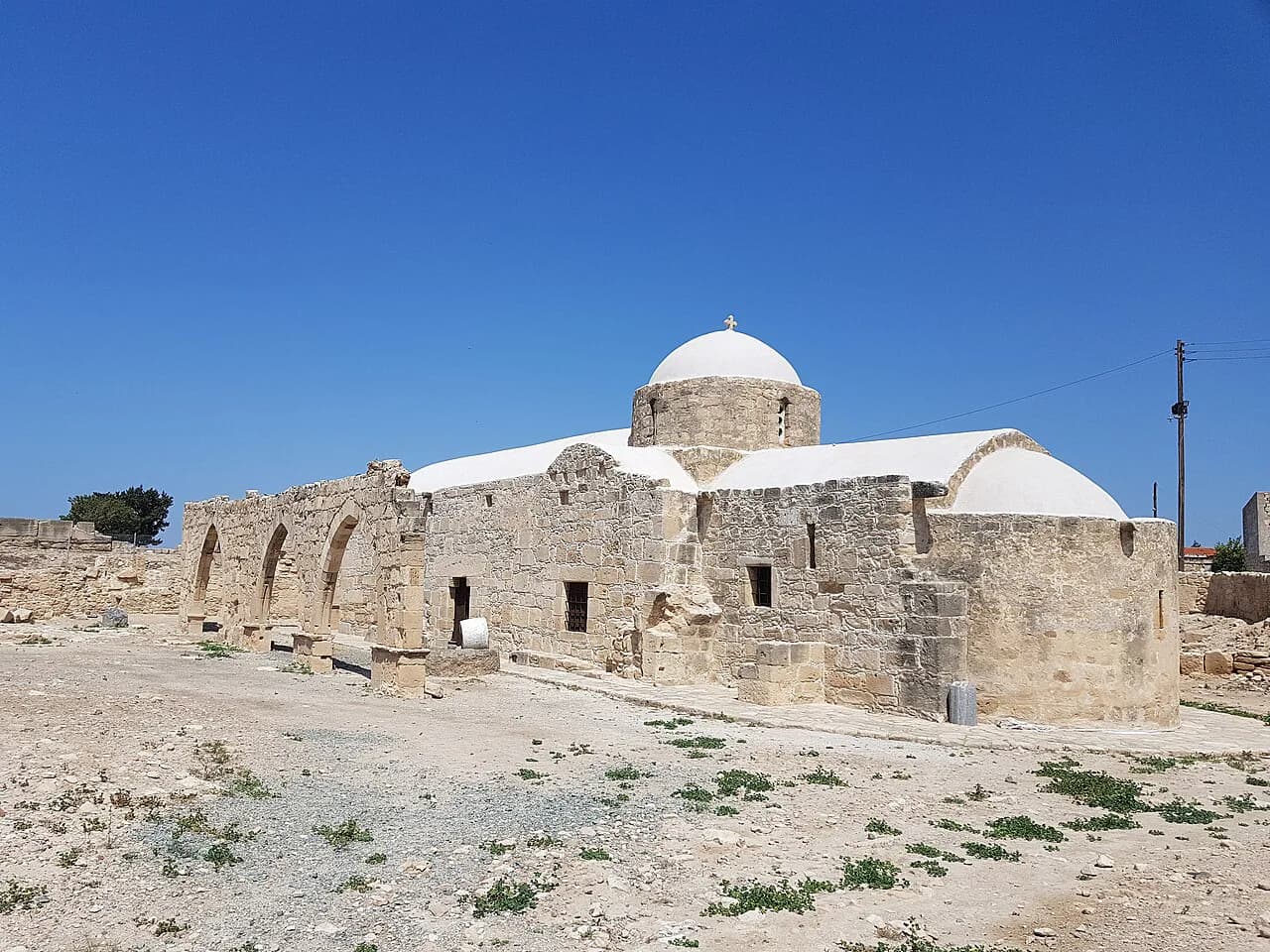
Kouklia village sits about 16km from Paphos, reached by turning onto the F616 from the B06 or A06, and stands on the site of ancient Palaipafos with its sanctuary of Pafia Aphrodite. The village also has a medieval sugar mill, the 13th-century Panagia Hodegetria church with 15th-century wall-paintings, and the church of the Apostle Luke. Petra tou Romiou, Aphrodite's Rock, is not far away and makes a natural final stop on the drive back. For the practical details, see the Kouklia.
Car or bus to the sea caves?
Take the car if you want the caves plus a monastery or village in one day, because the coastal and inland stops link easily and you control the timing. Take the 615 bus if you only want the clifftop views and the wreck, and accept the hour-long ride and the walk at the other end. Either way, the visit itself is short and best in the softer light of morning or late afternoon.
Build the day around one coastal stop and one inland one, keep back from the cliff edges, and treat swimming as a calm-day extra rather than the point of the trip.
Explore more Paphos guides
Sources
Notes for your Cyprus trip
Optional updates to our Cyprus guides.
You might also like
Continue reading
More guides you'll find useful