
Antiphonitis Church: A Painted Church in the Kyrenia Mountains

Antiphonitis Church, known locally as Antiphonitis Kilisesi, is a domed painted church in the Kyrenia mountains near Esentepe, north of Kyrenia. It is worth the drive if you want twelfth-century frescoes in a quiet hill setting, and it asks for a car and a little patience. This guide covers where the church sits, how to reach it, what to look for inside and how long to allow.
What Antiphonitis Church is
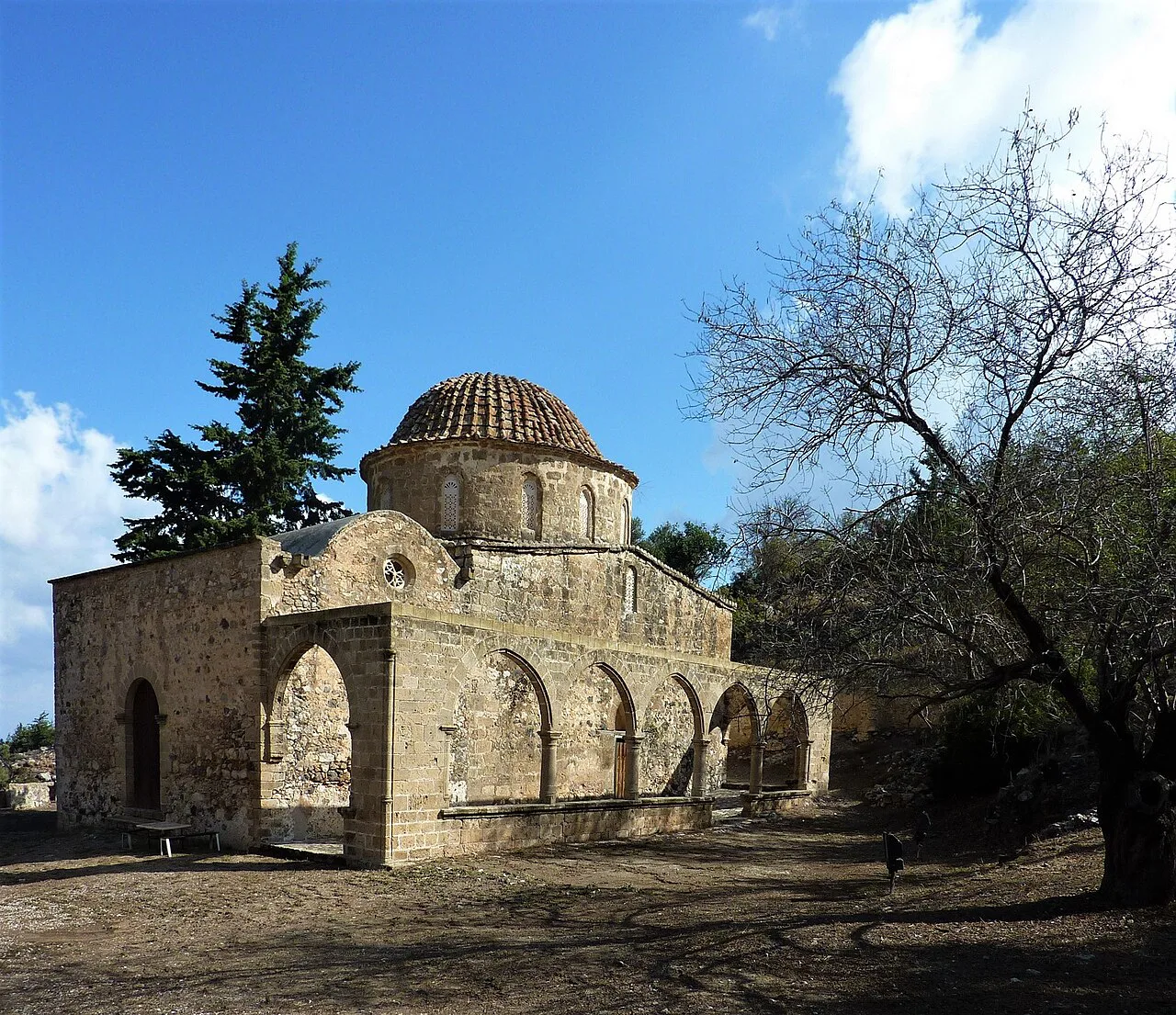
The name means "Christ who responds", an epithet used for several Greek churches and traced to a miraculous icon of some kind. The building began as a Greek Orthodox monastery church, and the western narthex and south arcade were probably added in the fifteenth century when it passed under the Latin church. The irregular shape of the dome may reflect damage from the 1222 Cyprus earthquake.
The CVAR research centre dates the church's construction to the twelfth century, while some visitor listings trace its origins as far back as the seventh century, so the dating is debated. What matters for a visit is that you are looking at a small domed church with two clear building phases, which explains why the narthex and arcade read differently from the core.

Where it is and how it is laid out
The church stands in the mountains near Esentepe, in the hills above the north coast road east of Kyrenia. The setting is part of the experience: old stone walls, a hillside outlook and no town around it. Plan the visit as a short stop on a mountain drive rather than a half-day indoors.
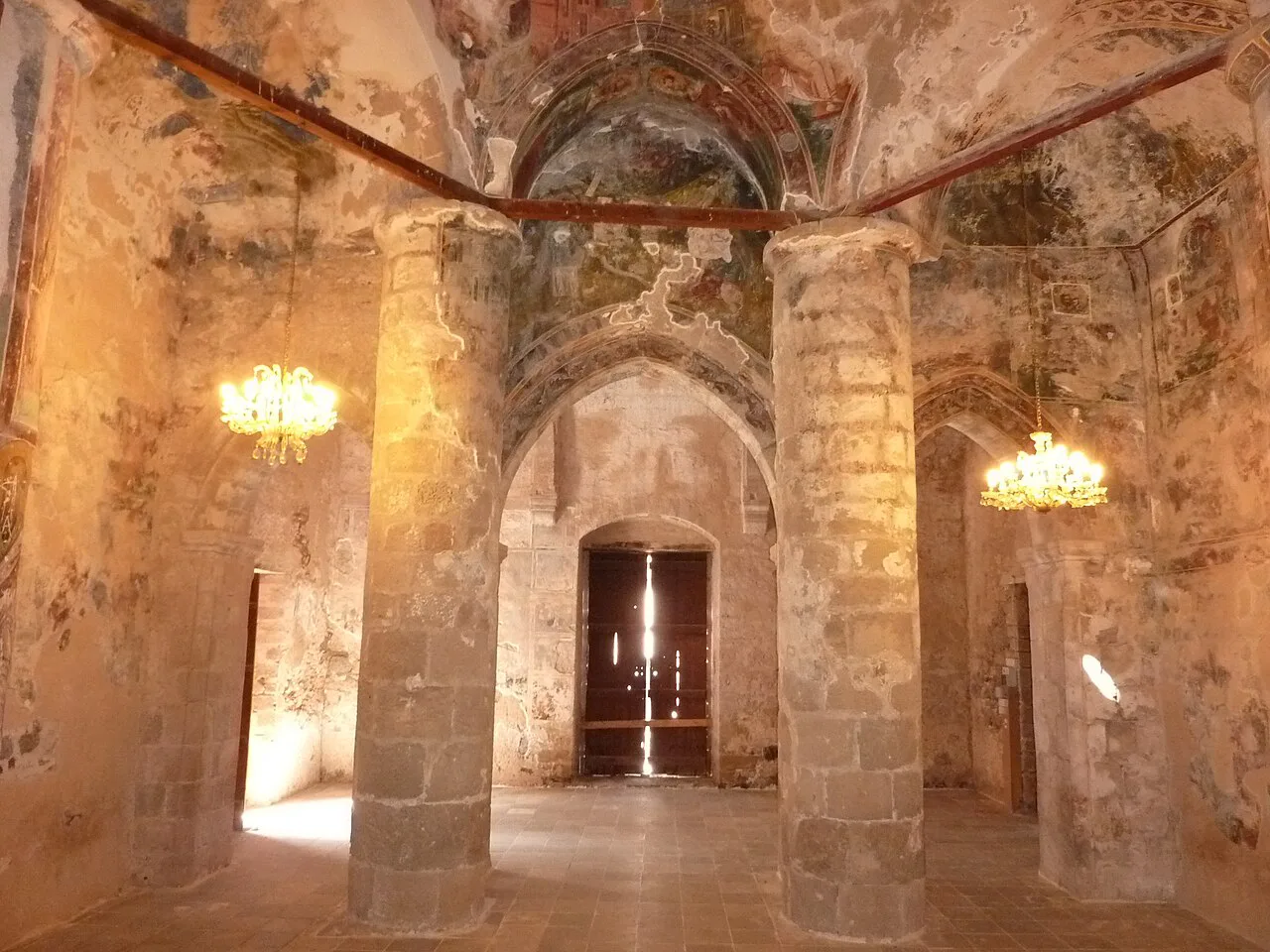
The layout is compact. The core is the domed church; the western narthex forms the entrance end, and the south arcade runs along the side. Knowing this helps you read the paintings: the dome carries the Pantocrator, the south wall once held a Tree of Jesse, and the north wall an elaborate Last Judgement.

Getting there from Kyrenia
You need a car. The church sits in the hills near Esentepe, reached by mountain roads off the coast road east from Kyrenia. Drive carefully and treat the journey as part of the day.
If you are basing yourself in Kyrenia, this fits naturally into a day that also takes in the better-known sites. Our Kyrenia Attractions: 7 Visitor Guides covers the castles and abbeys nearby so you can pair the church with a closer stop.
Hire-car insurance matters in the north. Check that your policy covers the roads you plan to use before you set off, and carry your passport and papers with you. The church is a straightforward drive but not a place to arrive unprepared.
Opening hours and entry
A visitor listing gives seasonal hours: April to October 08:30 to 17:00, and November to March 08:30 to 15:30. These are a listing's schedule rather than an official timetable, so check before a long detour.
Entry fees in north Cyprus are in Turkish lira. A visitor-reported entry fee of 7 TL appears in a photo caption for the church, which is a figure from a traveller rather than an official price, so have cash in lira ready rather than relying on euros or sterling being accepted.
What to see inside: the twelfth-century paintings
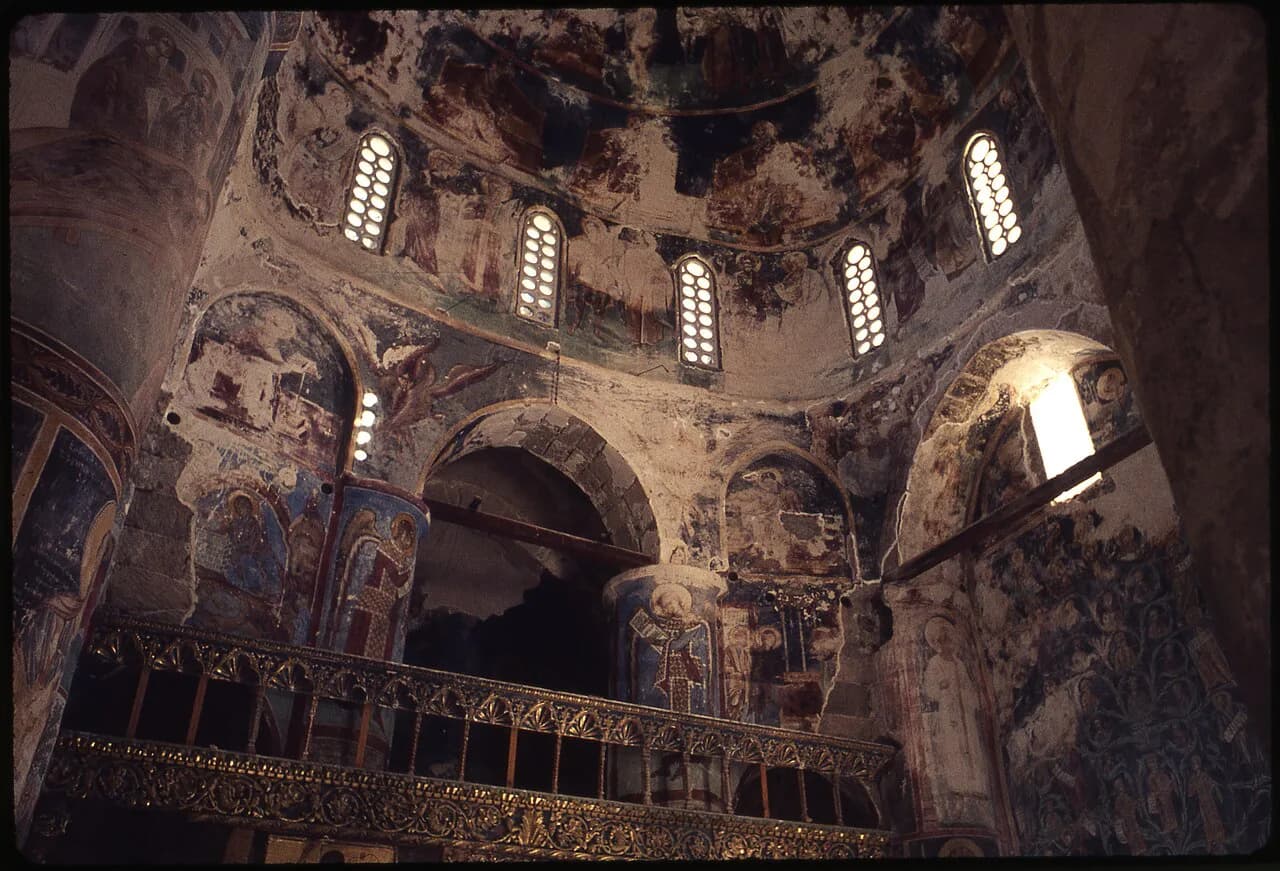
The oldest paintings belong to the end of the twelfth century, and they are the reason to come. In the dome, Christ Pantocrator is surrounded by angels; on the south wall was a Tree of Jesse, and on the north an elaborate Last Judgement. Look up first, then work round the walls, and give your eyes time to adjust to the dim interior.
The paintings are worn and fading, which is part of their character. They are not a polished museum display, and some areas are hard to read. Bring a torch if you want to pick out detail, and keep a respectful distance from the surfaces.
The later paintings and the post-Byzantine revival
The remaining paintings belong to the 1400s and were executed in a post-Byzantine local revival style. That is what gives the interior its two-layer feel: twelfth-century work in the dome and later work on the walls, painted centuries apart by different hands. Comparing the two is the most rewarding part of a visit.
If you enjoy painted churches, the Kyrenia district rewards a wider look. Bellapais Abbey, a monastery in the hills above Kyrenia, is the best-known stop in the area and pairs well with a mountain day.
Graffiti and pilgrim records
The lower frescoes are covered in graffiti and pilgrim records scratched into the plaster during the eighteenth, nineteenth and twentieth centuries. Most are in Greek, with a few in the Ottoman Turkish alphabet, and they are unique documents of popular history that tell us about the ordinary Cypriots who visited the building. They are a reason to linger rather than damage to hurry past.
The iconostasis and the icons in the Netherlands
The iconostasis was removed after 1975, and some individual icon panels from it were found with a private collector in the Netherlands. The Government of Cyprus took legal action to secure their restitution. Knowing this changes how you read the empty interior: the church is missing its screen, and the story of where those panels went is part of its recent history.
A sixteenth-century account by Stefano Lusignan recalls that Antifoniti was a fief belonging to his family, that his maternal grandmother founded the monastery and that his brother died there as a monk named Hilarion. That family connection places the church in the late medieval landscape of the Kyrenia hills.
How long to allow and the best time of day
Allow about an hour at the church itself, plus the drive each way. The interior is small, but the paintings reward slow looking and the pilgrim graffiti takes time to read. Build in slack for the mountain road rather than treating the church as a ten-minute stop.
Morning is the better choice: the roads are quieter and you have the day ahead if the drive takes longer than expected. Build the mountain drive into your timing rather than leaving it late.
What is nearby
The surrounding landscape and views are part of the draw. Pack water and something to eat if you plan to stay for a while, because the church is not a site with facilities.
Closer to Kyrenia, St Hilarion castle and Buffavento castle offer mountain views and a very different kind of visit, while Kyrenia castle and the Kyrenia shipwreck museum in the harbour cover the town's own history. Our Kyrenia Attractions page sets out those options side by side.
Who the church suits and who should skip it
This suits travellers with a car who care about frescoes and are happy with a quiet, unpolished site. It does not suit anyone wanting facilities, a cafe or a short walk from a town centre, and it is not a good first stop if you have limited time in Kyrenia. The trade-off is a mountain drive for a small, worn, beautiful interior.
If you are short of time, spend it at a site closer to Kyrenia. Things to do in Kyrenia covers the harbour, the castle and the icon museum, which give you more for a short day than a long detour into the hills.
Is the mountain detour worth it?
Antiphonitis Church rewards a specific kind of traveller: someone with a car, an interest in painted churches and the patience for a slow mountain road. It is a small site with no facilities, but the twelfth-century dome paintings, the later wall frescoes and the scratched pilgrim records make it a memorable stop. Go in the morning and keep lira with you.
Frequently Asked Questions
Is Antiphonitis Church worth visiting?
Yes, if you have a car and care about frescoes. The church holds twelfth-century paintings, including a dome Pantocrator, and later fifteenth-century wall frescoes, but it is small, unmanaged and has no facilities. Anyone wanting a quick stop close to Kyrenia will get more from the town's own sites.
Can you drive to Antiphonitis Church?
Yes. The church sits in the hills near Esentepe, north of Kyrenia, reached by mountain roads off the coast road. The final approach is a narrow climb, so allow extra time for the ascent and descent and check your hire-car insurance covers the roads you plan to use.
Who built Antiphonitis Church?
It began as a Greek Orthodox monastery church, with the western narthex and south arcade added later under the Latin church. The twelfth-century construction is the dating given by the CVAR research centre, though other listings place the origins earlier, so the dating is debated.
What happened to the iconostasis at Antiphonitis?
It was removed after 1975. Some individual icon panels were later found with a private collector in the Netherlands, and the Government of Cyprus took legal action to secure their restitution. The interior is therefore missing its screen.