
Buffavento Castle: Visiting the Defier of the Winds

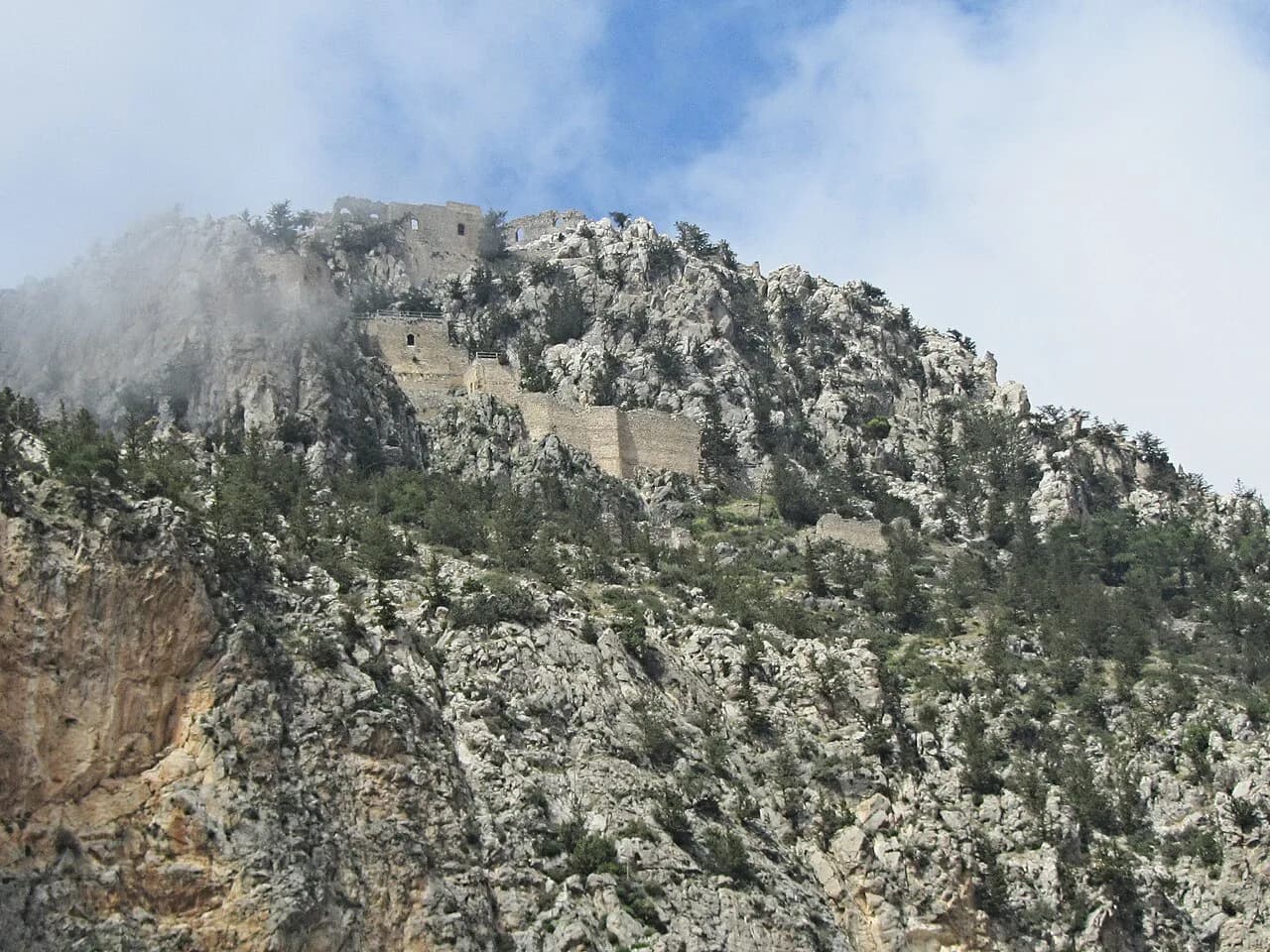
Buffavento Castle is a ruined medieval fortress at 940 metres in the Kyrenia mountain range, the highest and most inaccessible of the three castles strung along the ridge, and reaching it means a steep walk of about 20 minutes up some 600 steps. This guide covers where the castle stands between Kyrenia/Girne and the Mesarya Plains, the drive up from the Besparmak Pass, what survives inside its two enclosures and how to fit the climb into a day.
It suits travellers who want the landscape as much as the masonry: the castle was built to watch and signal across the range, and the ruined towers and forested slopes still read as a defensive chain. It suits less well anyone with limited time, weak knees or a fear of heights, since the steps are uneven and the ground at the top is rough.
Buffavento Castle and its place in the Kyrenia range
Buffavento stands between St Hilarion Castle to the west and Kantara Castle to the east, forming a protective axis across the Kyrenia mountain range, also called the Five Finger Mountains. The official tourism board explains that both other castles can be seen from Buffavento, which is why it worked as a signalling post between them.
The Italian name means 'Defier of the Winds', a fair description of a peak that takes the full force of weather off the Mesarya Plains below. Medieval accounts call it the Castle of the Lion; the tourism board records that Richard the Lionheart took it from the daughter of the Byzantine emperor Isaak Komninos in 1191, that the Lusignans later used it as a prison and beacon tower, and that it fell into disuse under Venetian rule in the 14th century.
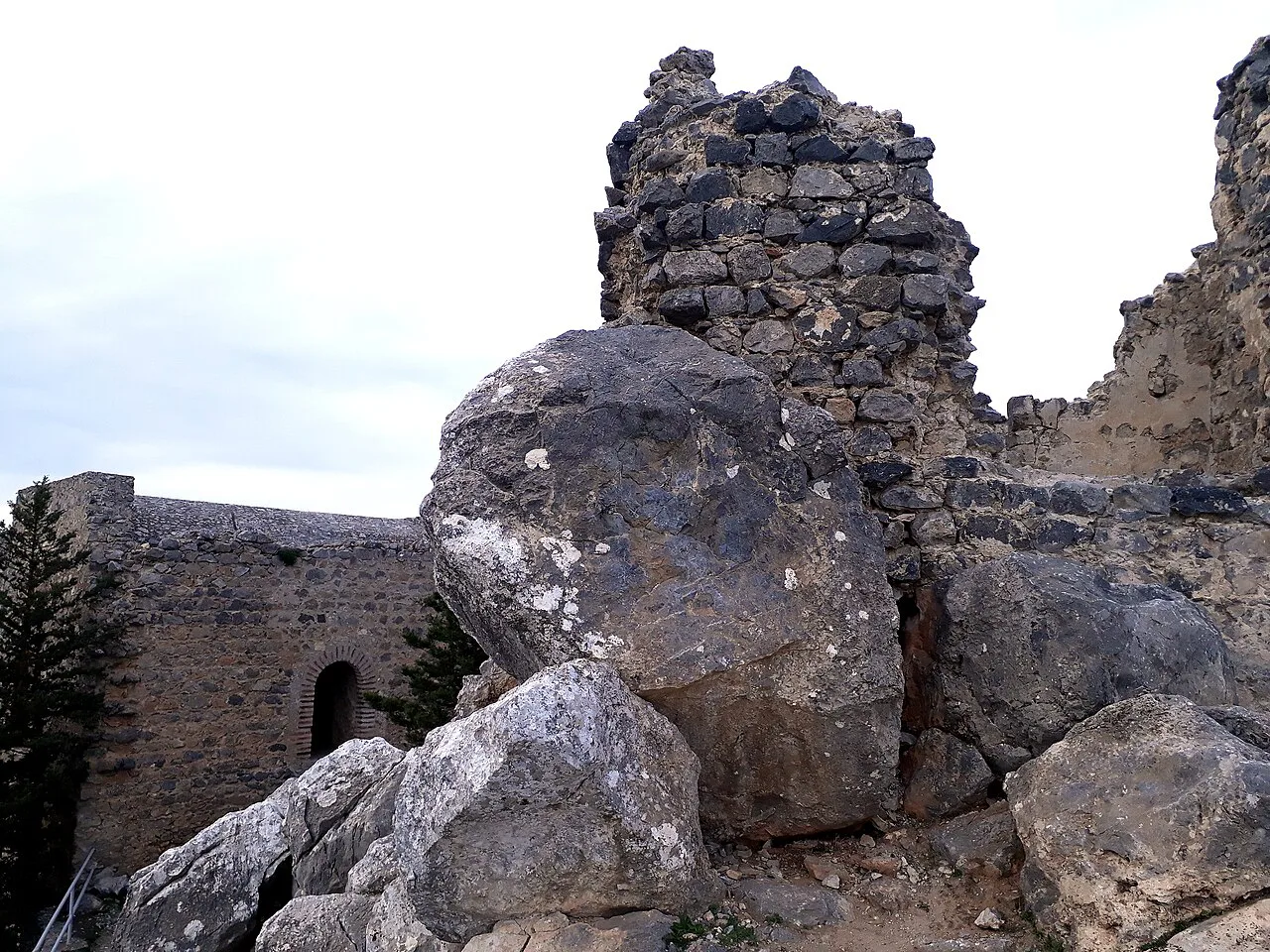
Architecturally the ruins combine Byzantine and Frankish elements, which is about as much as the surviving fabric can safely be asked to say. Treat the castle as a viewpoint with history attached rather than a furnished monument: there are no reconstructed rooms, and the appeal is the walls, the wind and the drop.

Getting there: the turning off the Besparmak Pass
Buffavento is signposted as 'Buffavento Kalesi' off the Besparmak Pass, the mountain road that runs along the ridge above Kyrenia/Girne. From that turning it is a 15-minute drive along an uphill road to the parking area below the castle, so the drive is short but steady and best done in daylight with a car that pulls cleanly uphill.
Driving yourself is the practical option, since the castle sits above the villages rather than in one, and the last stretch is a single purpose-built access road. Check your hire-car cover for mountain roads before you commit, and fill up before leaving the coast because services thin out quickly once you climb.
If you are basing yourself in Kyrenia/Girne, the castle works as a half-day outing combined with the coast road back down. Our Kyrenia Attractions: 7 Visitor Guides covers the harbour, castle and museums that fill the rest of the day.

The car park, the olive tree and the 1988 memorial
The parking area sits below the castle with a solitary olive tree and a memorial to the crew of an aircraft that perished in a mountaintop crash in 1988. It is a quiet, exposed place, and the memorial gives the mountain a second layer of history beyond the medieval walls above.
There are no facilities worth planning around here: no café, no shop and no shade to speak of at the car park. Bring water and something to eat from Kyrenia/Girne, and treat the car as your base for the walk rather than expecting a visitor centre.
The climb: 20 minutes, 600 steps and closed footwear
From the parking area the route is a steep but gradual walk that takes about 20 minutes, with 600 steps to the top. Closed footwear is advised, and that advice is worth taking literally: the steps are old, uneven and often loose, and trainers with grip make a real difference on the way down.
Budget more than 20 minutes if you stop for photographs or need to catch your breath, because the climb is continuous and the altitude makes itself felt. The walk is not technical, but it is not a stroll either, and the descent takes concentration when the steps are worn or damp.
Travellers with young children, dodgy knees or a fear of exposed edges should weigh the climb honestly against the alternative of St Hilarion Castle, Kyrenia, which has its own steep sections but more structure to explore.
Lower and upper enceinte: what survives inside
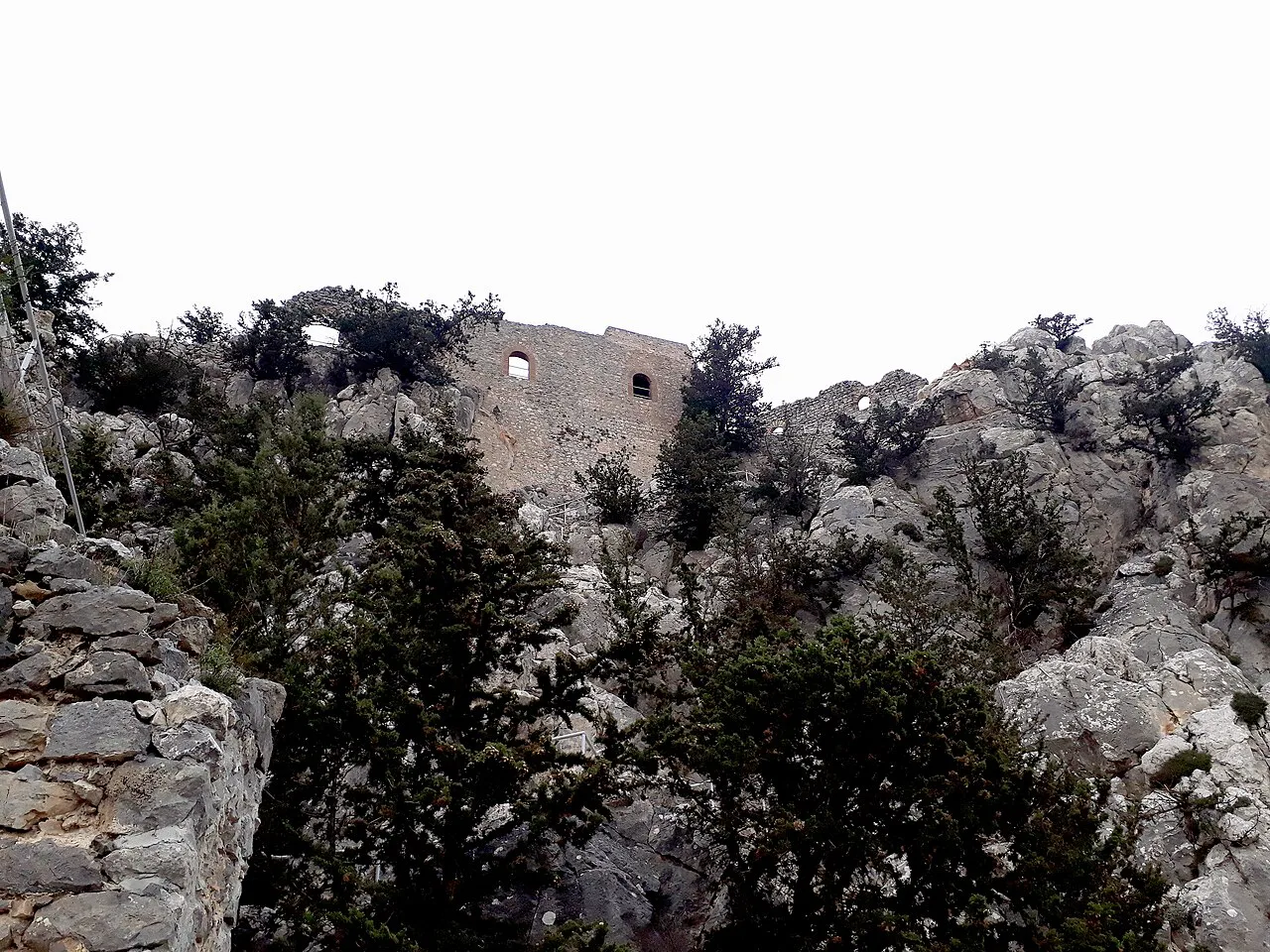
The castle divides into two sections: a lower enceinte, the fortified outer enclosure, and an upper enceinte occupying a smaller area on the rocky peak. The position was so naturally defended that little beyond the outer walls was needed, and there is only one approach to the entrance.
Buffavento has deteriorated more than the other two castles on the range, so what you see is surviving towers and walls rather than intact chambers. Walking between the two enclosures is the way to read the site: the lower level, a fortified defensive enclosure, and the upper level on the rocky peak.
The terrain inside the walls is rich in flora, and buzzards and ravens can be heard and seen circling the castle top. Keep to the path, since the ground off it is loose scree and the drops are real.
The views over the Mesarya Plains
The castle overlooks the Mesarya Plains, and the view down over the forested slopes is the reason many travellers rate the climb above the ruins themselves. On a clear day you can pick out St Hilarion to the west and Kantara to the east, which makes the signalling role of the castle immediately obvious.
Wind is the price of the view, so a light layer helps even in high summer, and hats need holding onto. Haze can soften the plains in the afternoon heat, so morning light usually gives the sharpest outlook.
How long to allow and when to go
Allow roughly an hour and a half to two hours on the mountain: 15 minutes driving up from the pass, about 20 minutes climbing, 30 to 45 minutes among the ruins and the same again coming down gently. Add the drive from Kyrenia/Girne and the outing takes half a day at a comfortable pace.
Go early in the day, when the light is cleaner, the car park is quiet and the heat is still bearable on the steps. The castle is exposed in every direction, so midday in high summer is the least comfortable slot for the climb.
Nearby: St Hilarion, Kantara and Bellapais Abbey
St Hilarion Castle is the natural pairing: closer to Kyrenia/Girne, more intact and with its own dramatic setting in the Kyrenia range. Kantara Castle lies furthest east of the three and works better on a separate day, since stringing all three together makes for a long drive and a lot of steps.
Bellapais Abbey sits on a terrace in the Five Finger Mountains south of Kyrenia/Girne, an Augustinian foundation whose Gothic refectory and cloister make an easy contrast to the bare stones of Buffavento. It pairs neatly with the castle on the drive back down.
Back in town, Kyrenia castle holds the Kyrenia shipwreck museum, one of the best-preserved ancient hulls in the world, and the Kyrenia Harbour itself is the obvious place to end the day. Our things to do in Kyrenia guide sets out the rest of the town.
Tickets and opening hours: where to check before setting out
No ticket desk or standard opening hours for Buffavento are published in the official tourism board account, which describes the approach, the climb and the ruins but gives no timings or entry charge. Check current details with the North Cyprus tourism authority before you drive up, particularly outside the main season.
Mountain weather can affect the access road, so check conditions in Kyrenia/Girne on the morning of your visit.
Is Buffavento worth the climb?
Yes, if you want the highest and quietest of the three Kyrenia range castles and are happy with 600 steps and uneven ground. The reward is the ridge view, the signal chain with St Hilarion and Kantara, and a ruin that feels genuinely remote rather than tidied for visitors.
No, if you have limited mobility, small children or only a short stop in Kyrenia/Girne: spend the time at St Hilarion or Bellapais instead, where the walking is shorter and the masonry more complete.
Explore more Kyrenia guides
Frequently Asked Questions
Is Buffavento Castle free to enter?
No entry charge or ticket desk is published, so plan to check with the North Cyprus tourism authority before you go rather than assuming it is free or ticketed. The approach, car park and walk are the practical hurdles, not a gate.
Can you drive to Buffavento Castle?
You can drive most of the way: the castle is signposted off the Besparmak Pass and the uphill road to the parking area takes about 15 minutes. The last stretch on foot is a steep walk of roughly 20 minutes and 600 steps.
How strenuous is the walk up to Buffavento Castle?
It is steep but gradual, with about 600 steps and a climb of some 20 minutes. Closed footwear is advised, and the descent is harder on the knees than the ascent, so allow extra time coming down.