Omodos, Cyprus: Troodos Village Guide for a Half-Day Visit
Plan a half-day in Omodos, Cyprus: the Monastery of the Holy Cross, cobbled lanes, crafts and how long to allow in this Troodos village at around 900 metres.
On this page
Omodos works best as a half-day stop: roughly two to three hours covers the Monastery of the Holy Cross, the central square and a slow loop of the cobbled lanes. The village sits at around 900 metres above sea level on the Troodos slopes, some forty kilometres from Limassol, which is why the air feels noticeably cooler than on the coast. This guide sets out the order to see things in, how the walking works, and how the village fits into a wider day in the mountains.
Where Omodos sits in the Troodos range
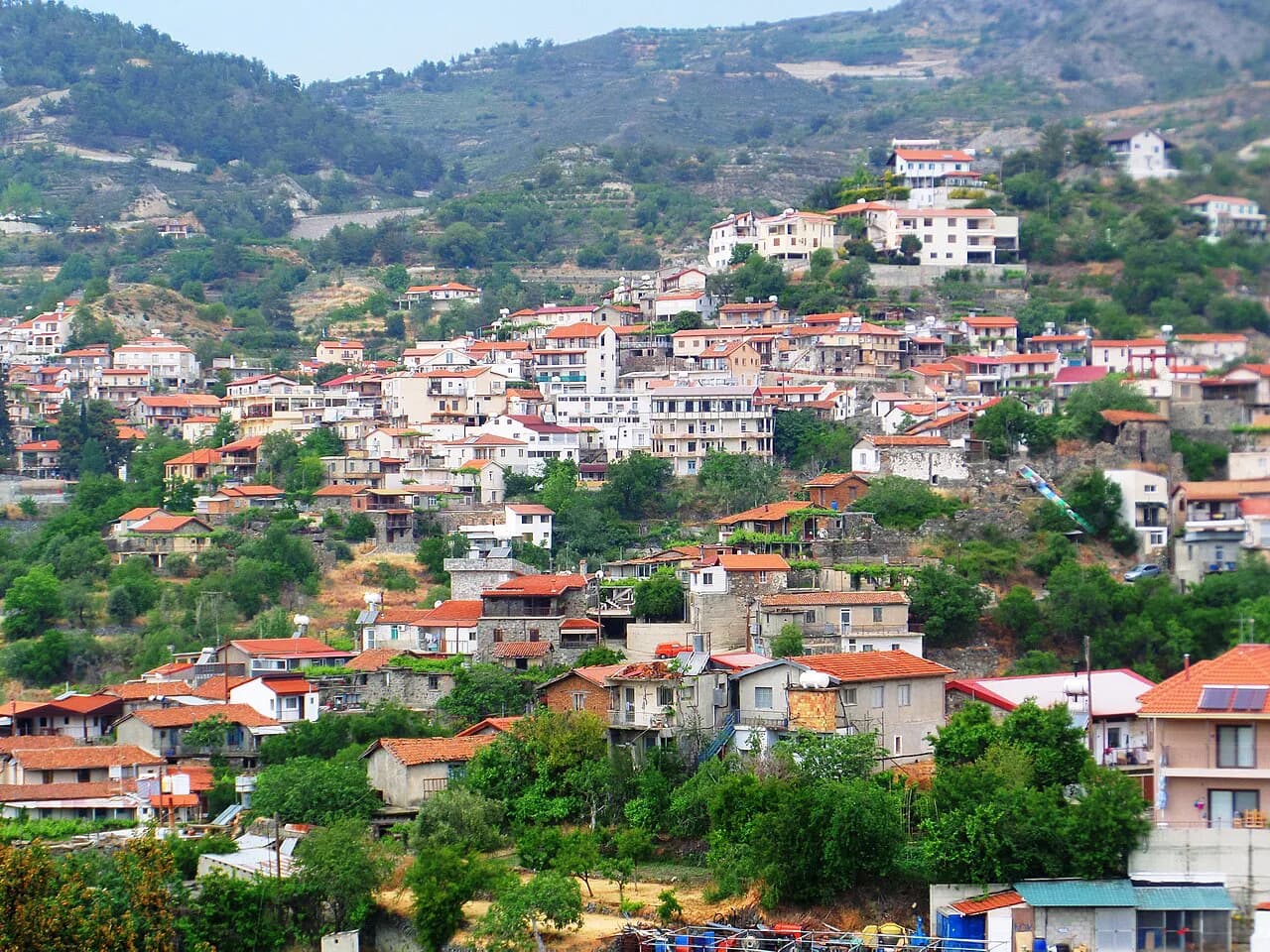
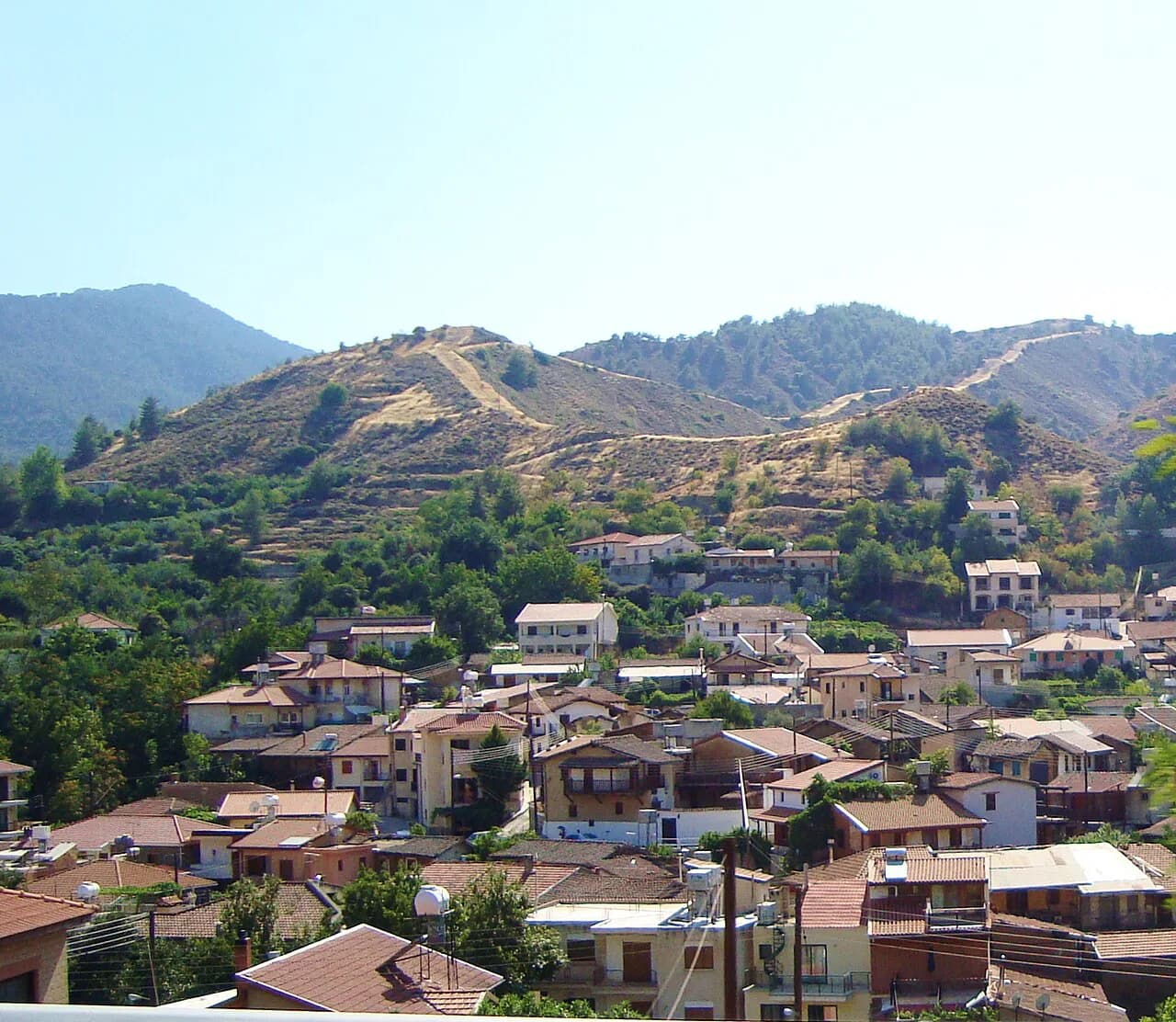
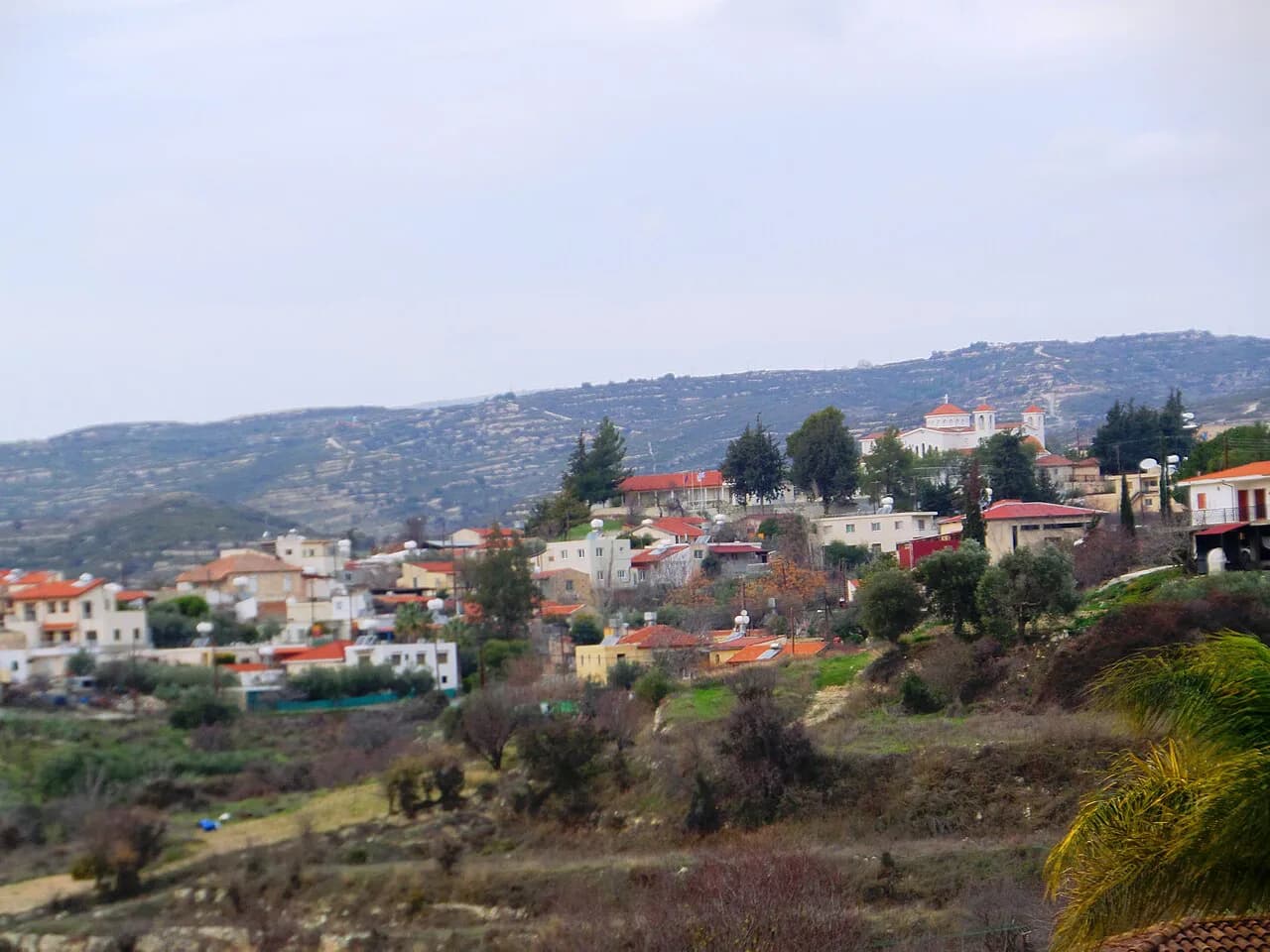
Omodos spreads across the slopes of the Troodos Mountains at roughly 900 metres, with vineyards running out from the village edge in every direction. That height is the single most useful fact for planning: it explains the cooler summer air and the calm, mountain atmosphere the village keeps outside the coach hours. Treat the altitude as a packing decision as much as a scenic one, because a jumper earns its place even in July.
The village is a wine village of the Limassol district and an anchor of the Troodos itinerary, which is why it appears on almost every mountain day out. If you want the wider circuit of hamlets rather than a single stop, start with our guide to the Troodos villages and build the day around two or three of them. Omodos is the busiest of the group, so it pays to see it first and let the quieter villages follow.
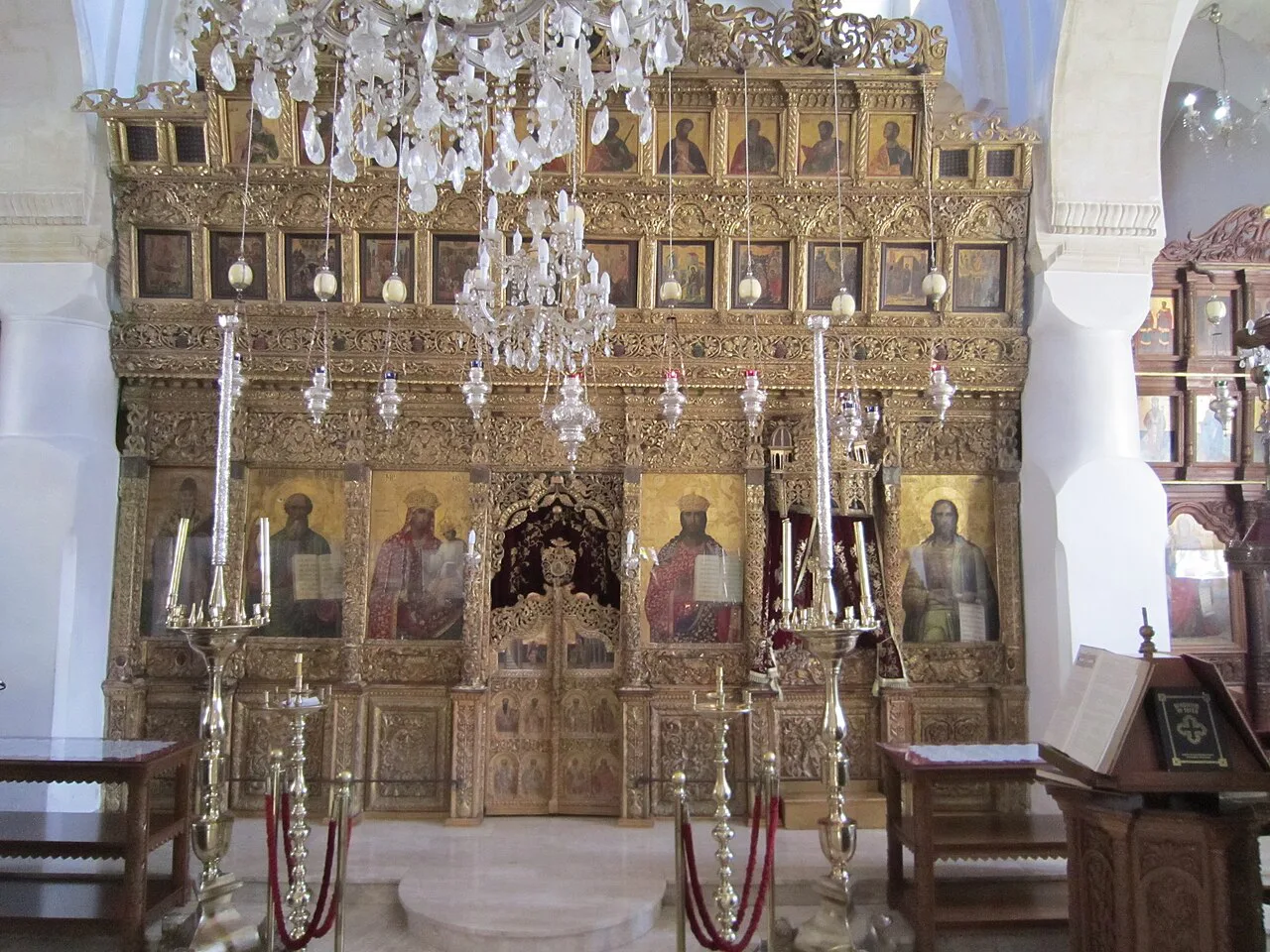
The Monastery of the Holy Cross first
Go to the Monastery of the Holy Cross before anything else. It is the village's defining building and one of the most important monasteries in Cyprus, Byzantine in foundation and traditionally linked to the reign of Emperor Constantine. Inside, the peaceful courtyard, the arcades and the old icons reward a slow look rather than a photo stop, and the setting draws worshippers and students of religious art in equal measure.
Orthodox tradition holds that the monastery keeps a piece of the rope used to bind Christ to the cross, which is the relic behind the Holy Cross name. Whether you come for the relic, the icons or the architecture, the visit is short in distance and long in interest: allow a good half hour, more if the courtyard is quiet and you want to sit.
The monastery is also known as Timios Stavros, and it anchors the village both physically and in its identity as a wine-village stop in the Limassol district. Set your arrival around it rather than the other way round, because the lanes and square make more sense once you have seen what the village was built around.
The village itself: lanes, stone houses and the square
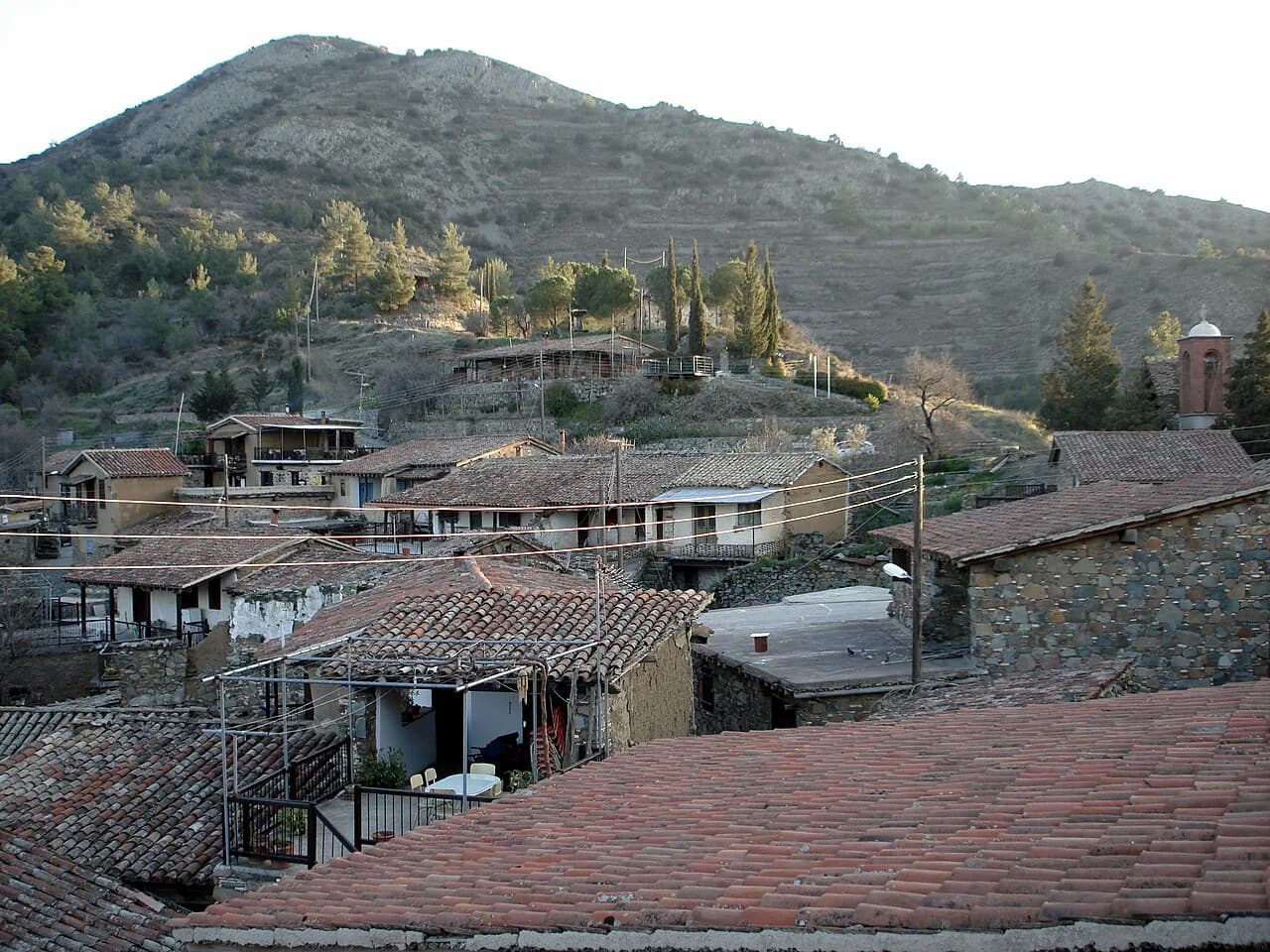
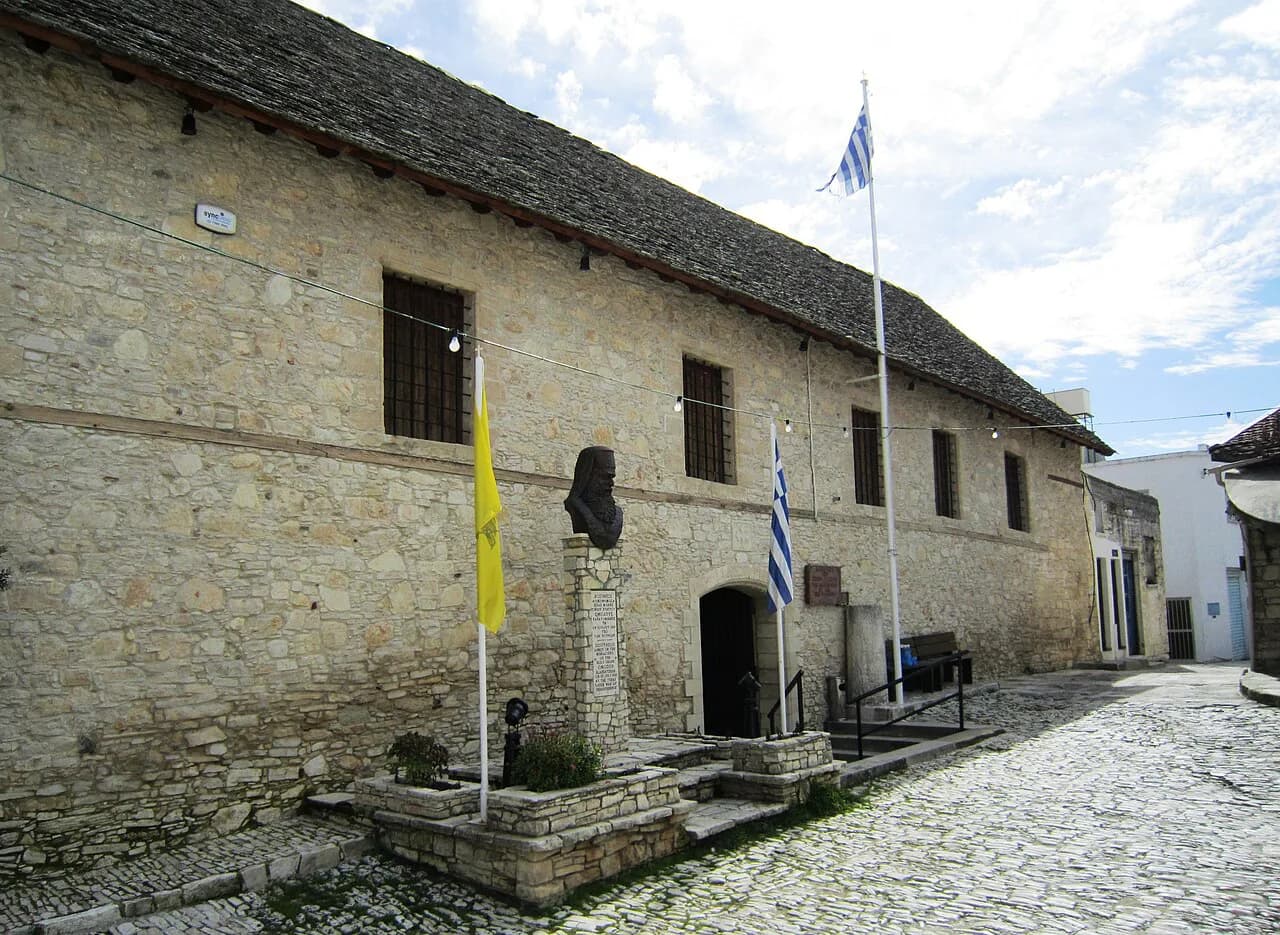
Step out of the monastery into a tight mesh of cobbled lanes lined with limestone houses, red-tiled roofs, carved wooden doors and flower-filled balconies. The effect is picture-postcard and genuinely old rather than reconstructed, with small churches, chapels and preserved nineteenth-century buildings turning up around corners. Walk without a fixed route for twenty minutes and you will have seen most of it.
The central square is the natural pause. Its terraces fill through the middle of the day, and the square is where the village's social life and its visitor trade meet. Sit for a coffee or a cold drink, then use the square as the hinge for a second loop through the quieter upper lanes.
Omodos is a working village rather than a museum piece: lace-making, winemaking and the distillation of zivania are still living crafts here, and the people who practise them are part of the visit. Watch for lace on tables outside doorways and for workshops where the craft is being done rather than only sold.
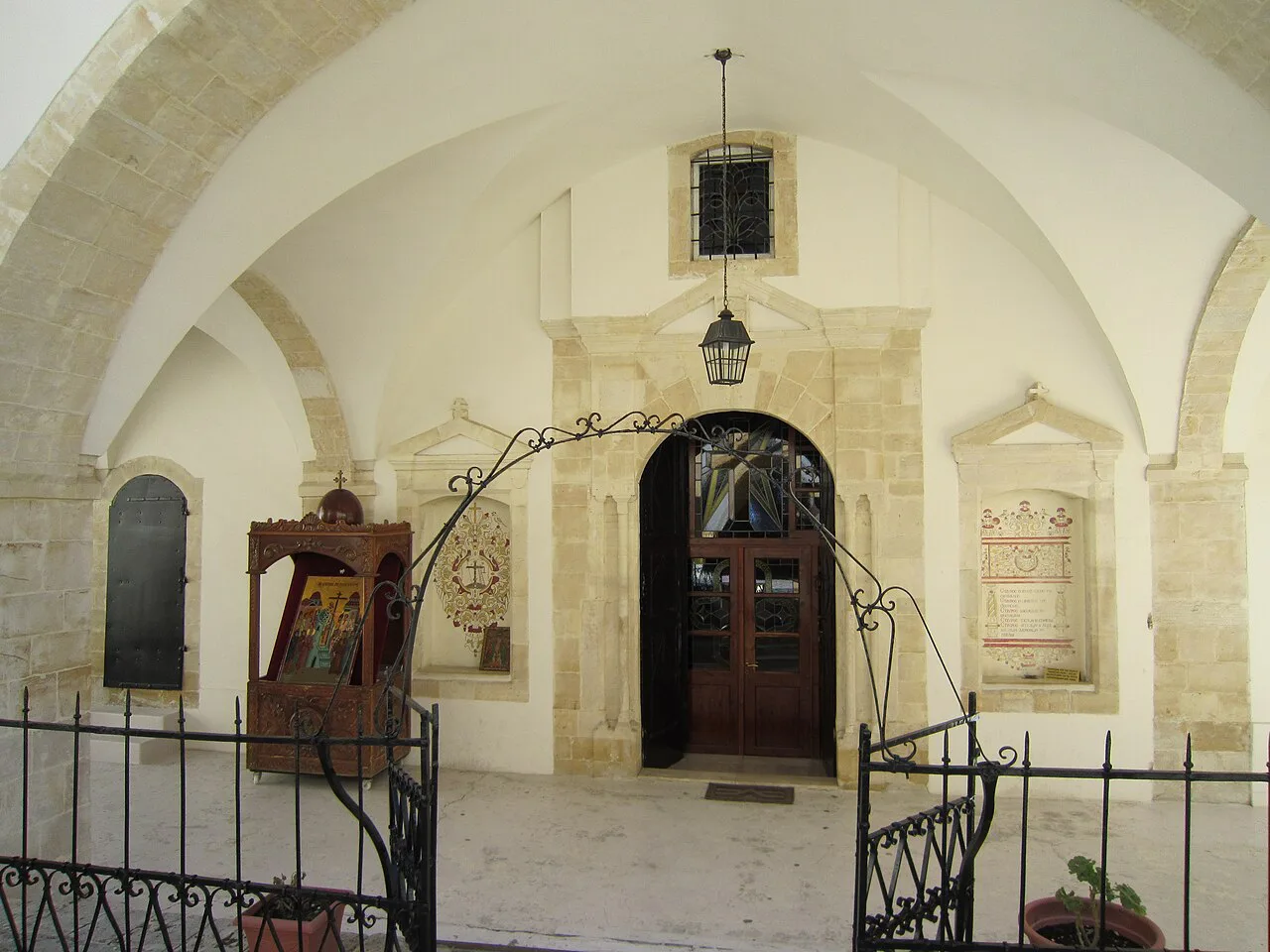
Craft and heritage stops
Beyond the monastery, the village holds an old wine press converted into a museum, a compact stop that explains how the surrounding vineyards turned into a livelihood. Pair it with the small churches and chapels scattered through the lanes, which are easy to miss if you only follow the main drag. Between them they fill an hour without any need to hurry.
Craft is the other thread. Lace and silverwork are the traditional specialities, and the shops and workshops around the square are the places to see them being made as well as sold. Set a modest budget in euros for a piece you actually want rather than buying under time pressure from a coach deadline.
How long Omodos needs
A half day is the right allowance: two hours for the monastery, the square and the main lanes, three if you add the wine press museum, a chapel or two and a proper sit-down in the square. A slower stop of four hours suits anyone combining the village with a meal or shopping for crafts. Anything longer starts to strain what a single compact village can offer.
Build the time budget in this order: monastery first, square second, lanes and craft stops third. That sequence means the most important building gets your freshest attention and the browsing happens when you are happy to wander. If you arrive with only an hour, cut the museum and keep the monastery and one loop of the lanes.
Getting there by car
Omodos is about forty kilometres from Limassol, reached by mountain road that climbs steadily into the Troodos foothills. The drive is the practical reason the village feels cooler and calmer than the coast, and it also means you should allow more time than the raw distance suggests. Cyprus drives on the left, so the mountain bends demand real attention rather than sightseeing from the driver's seat.
From other bases, treat Omodos as one leg of a loop rather than a there-and-back errand. Paphos and Larnaca both put a longer drive in front of you, so pair the village with a second mountain stop to make the journey worthwhile. Our guide to Troodos Attractions covers the wider set of sites you can chain together.
Hire cars are the simplest way to reach Omodos, and a small car is easier on the narrow final approach than a large one. Check the hire agreement for mountain driving and, if your route crosses the Green Line, for insurance cover in the north before you set off. Fuel up before the climb rather than relying on village pumps.
Parking and arriving on foot
You will park on the edge of the village and walk in, because the lanes themselves are too narrow and too cobbled for anything but on-foot exploration. Arrive early in the day and the approach is calm; arrive mid-morning in high season and you will be queuing behind coaches. The earlier you park, the less of the village you spend looking for a space.
Once inside, the walking is short but uneven. Cobbles, steps and sloping lanes are the norm rather than the exception, so shoes with grip matter more than distance covered. Anyone with mobility limits should plan on the square and the monastery as the core, with the upper lanes as an optional extra.
When to go
The mountain setting comes into its own in summer: at around 900 metres, Omodos offers cooler air than the coast when the lowlands are stifling. Late spring and early autumn give the best balance of comfortable walking and a village that is busy without being overwhelmed. Mornings are consistently better than afternoons for both light and crowds.
Timing your arrival around the coach waves is the single most useful crowd tactic. Coach groups tend to compress into the middle of the day, so an early start or a late-afternoon visit puts you in the lanes when they are quiet. The village's festivals are when traditional music and folk dancing fill the streets, but exact dates shift each year, so confirm them locally before you build a trip around one.
Honest trade-offs
Cobbles, steps and coach traffic are the three things that make Omodos harder work than it looks in photographs. In high summer the stone lanes trap heat despite the altitude, so carry water and plan the monastery for the hottest part of the day. The village is also genuinely popular, which means the square is rarely a quiet place to read.
The counter-argument is variety within a small footprint: a Byzantine monastery, craft workshops, old houses and a working village square all within a short walk of the car park. If you want solitude, go elsewhere in the Troodos range; if you want a compact, high-value stop, Omodos earns its place.
Pairing Omodos with other Troodos villages
Omodos works well as the first stop in a mountain day. Kakopetria, further into the Solea Valley, offers a very different village character and complements Omodos rather than repeating it. Together they show two faces of the Troodos range within a single drive.
Closer to Limassol, Lofou is a stone village with a similar hillside setting but a quieter atmosphere, and Lania sits in the same mountain belt. Vouni village is another small stop that fits neatly into a loop back down towards the coast. Pick two or three in total rather than trying to tick off the whole list.
Higher up, Platres makes a natural lunch stop or a cooler overnight base between Omodos and the summit road. Prodromos and Kalopanayiotis extend the options if you are heading deeper into the mountains for a full day.
Practical points: money, roads and altitude
Cyprus uses the euro in the Republic, so bring cash or a card for crafts, coffee and any small entry fees. The altitude change is real: even in high summer, evenings at 900 metres can feel cool once the sun drops. Driving is on the left, and the mountain roads are winding, so plan your return before dark if you are not used to them.
Check the monastery's current opening hours and any entry charge with the site or the village before you travel, since these change by season. The same applies to individual workshops and museums, which keep their own hours. A quick check the day before saves a wasted drive.
Is Omodos worth a half day?
Yes, if you treat it as a half day built around the Monastery of the Holy Cross. The village delivers a Byzantine monastery, cobbled lanes and living crafts within a short walk, and the altitude makes it a genuinely cooler stop in summer. Two to three hours is the right allowance.
Go early, park at the edge, and see the monastery before the coach crowds arrive. Pair it with one other Troodos village and you have a full and varied day without overstretching any single stop. Save the shopping for the square on your way out.
Explore more Troodos guides
Frequently Asked Questions
What is Omodos known for?
Omodos is known for the Monastery of the Holy Cross, also called Timios Stavros, for its cobbled lanes and limestone houses, and for its long association with wine production in the Limassol district. Lace-making and other traditional crafts are still practised in the village.
How far is Omodos from Limassol?
Omodos lies around forty kilometres from Limassol, up mountain roads into the Troodos range. The drive climbs steadily, so allow more time than the distance alone suggests, especially on a first visit.
How long should I spend in Omodos?
Allow two to three hours for the monastery, the central square and the main lanes. Add an hour if you want the wine press museum, a chapel or two and a proper sit-down in the square.
Sources
Notes for your Cyprus trip
Optional updates to our Cyprus guides.
You might also like
Continue reading
More guides you'll find useful