Vouni Village, Cyprus: Churches, Old Alleys and How Long to Stay
Plan a visit to Vouni in the Limassol district: cobbled alleys, traditional houses, hillside churches, the small village museums and how to get there.
On this page
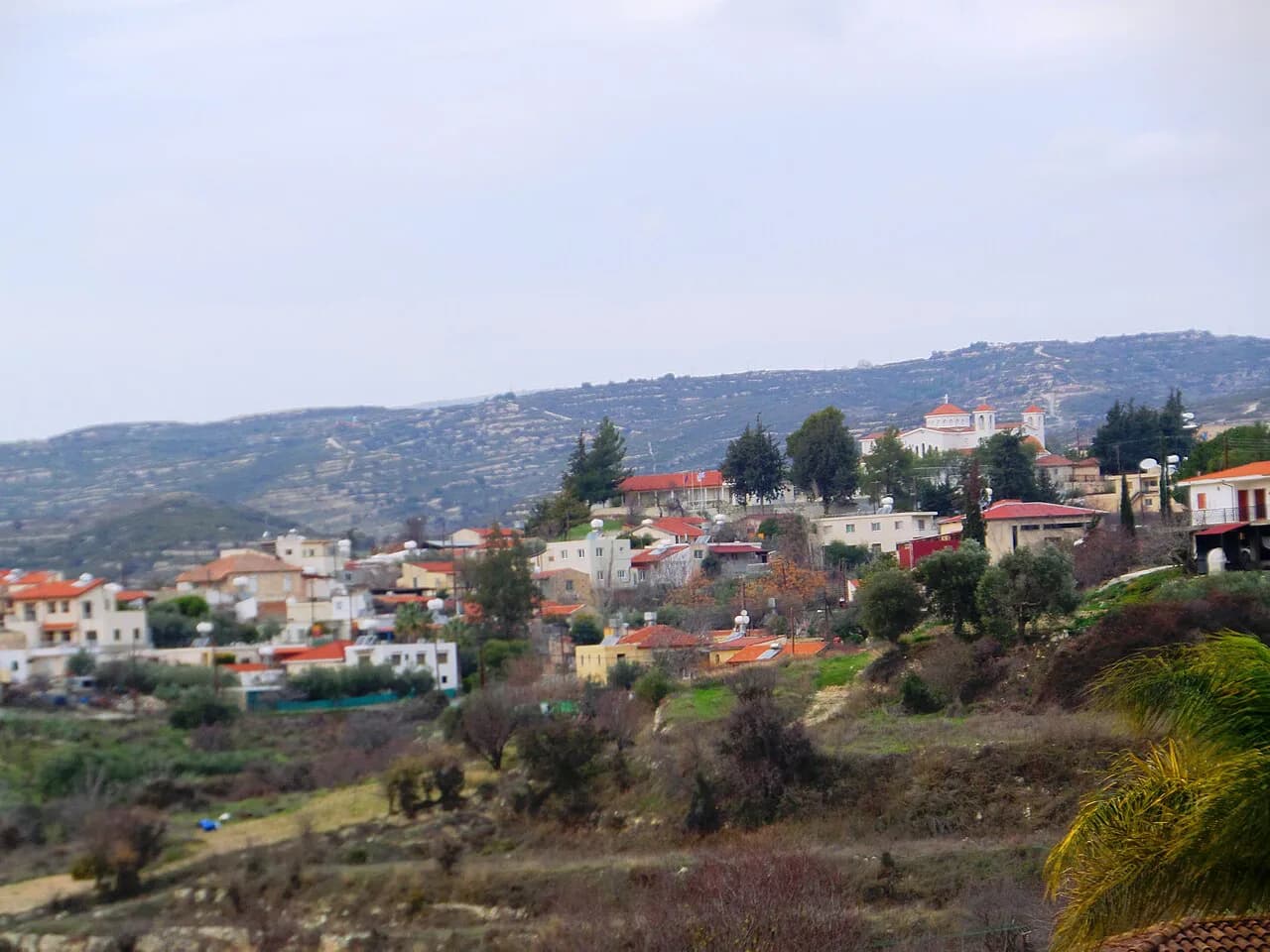
Vouni needs about two hours on foot: a compact core of cobbled lanes, traditional stone houses and a cluster of churches, plus a short detour south for the best view in the village. It is a small Krasochoria settlement in the Limassol district, built at roughly 800 metres on a slope that faces south, which is why the lanes climb and the valley opens up below you. This guide covers what to look for, how the village is laid out, how to reach it by car and where it fits among the wider Troodos villages.
Where Vouni sits in the Troodos foothills
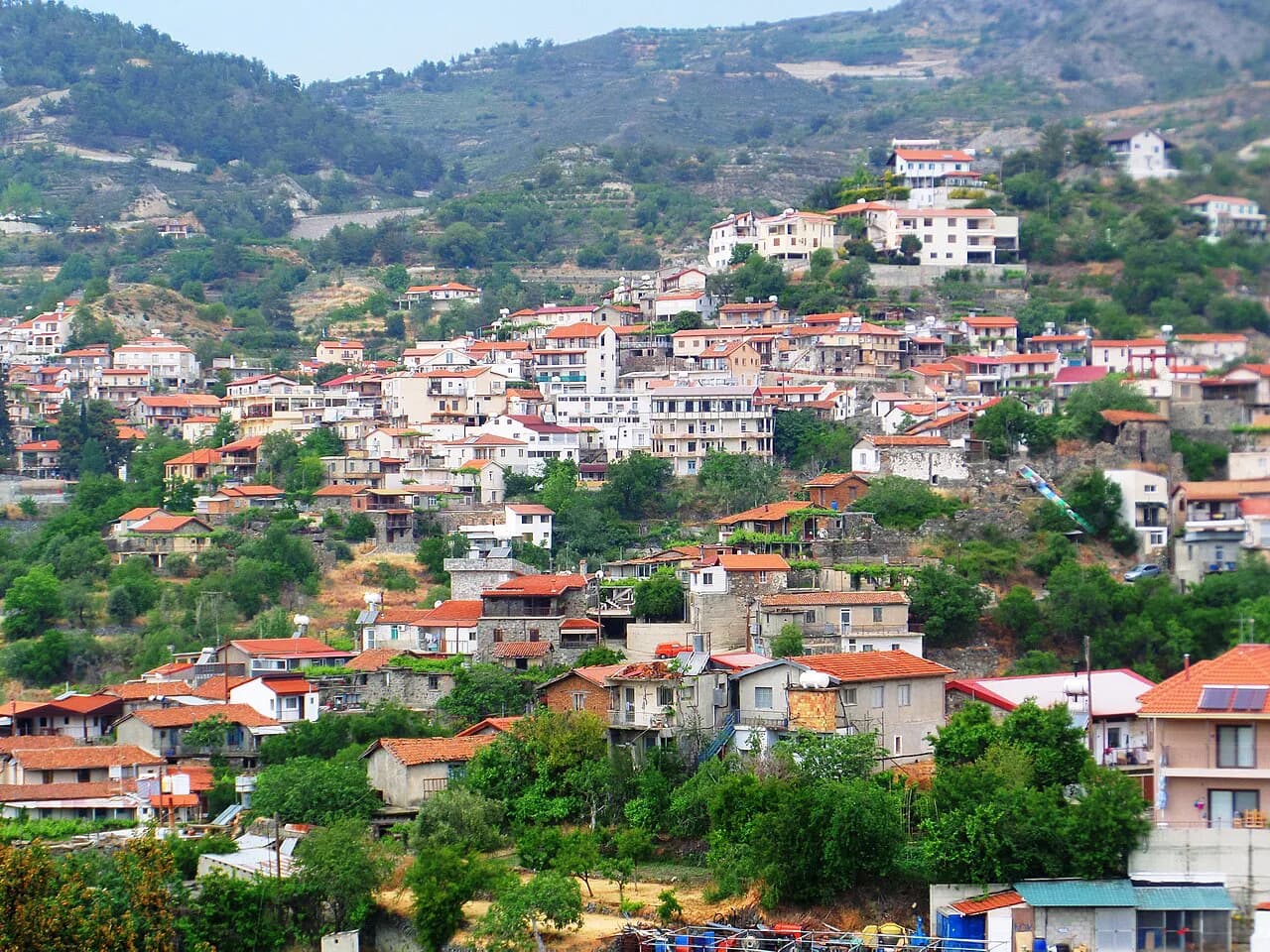
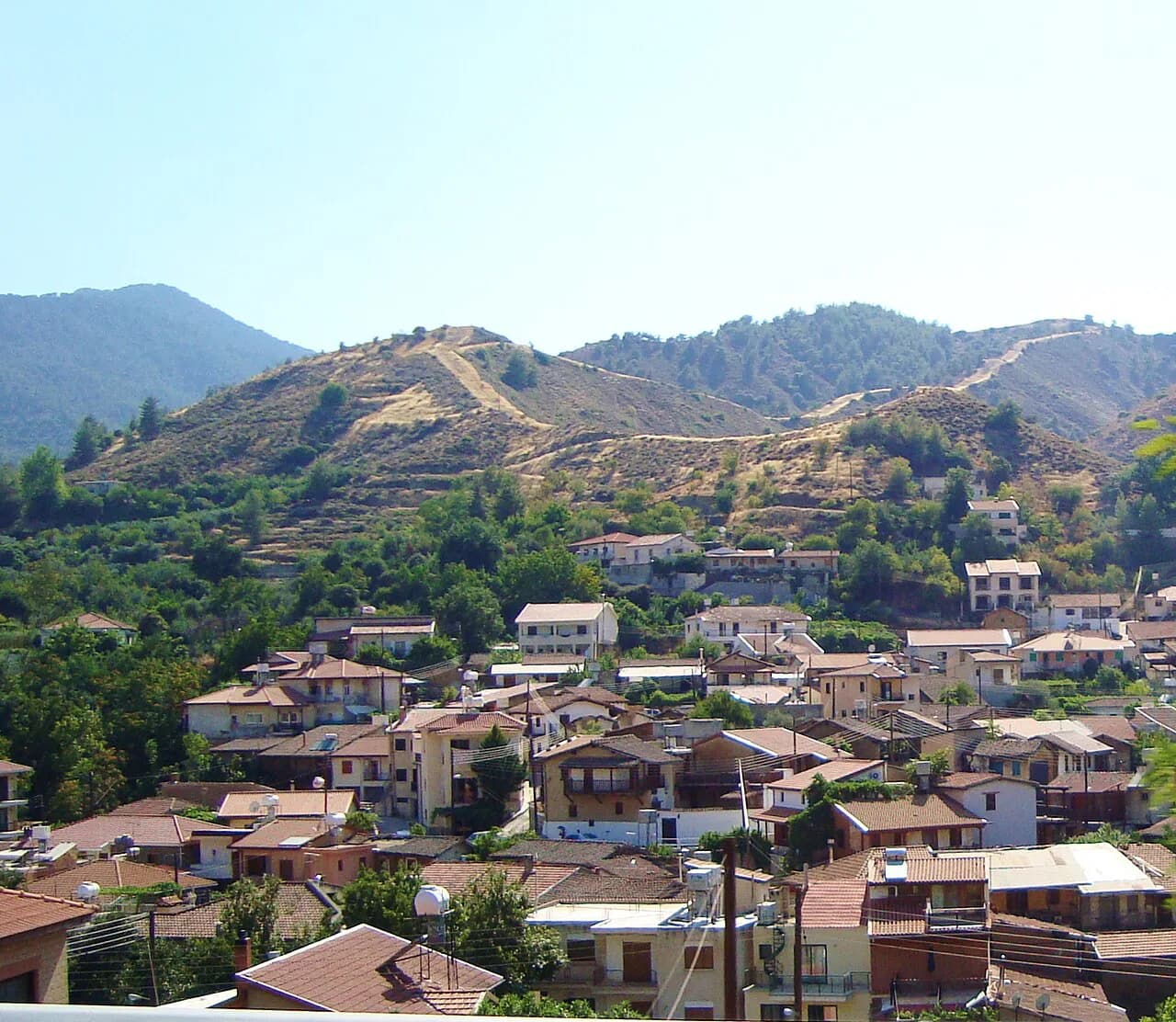
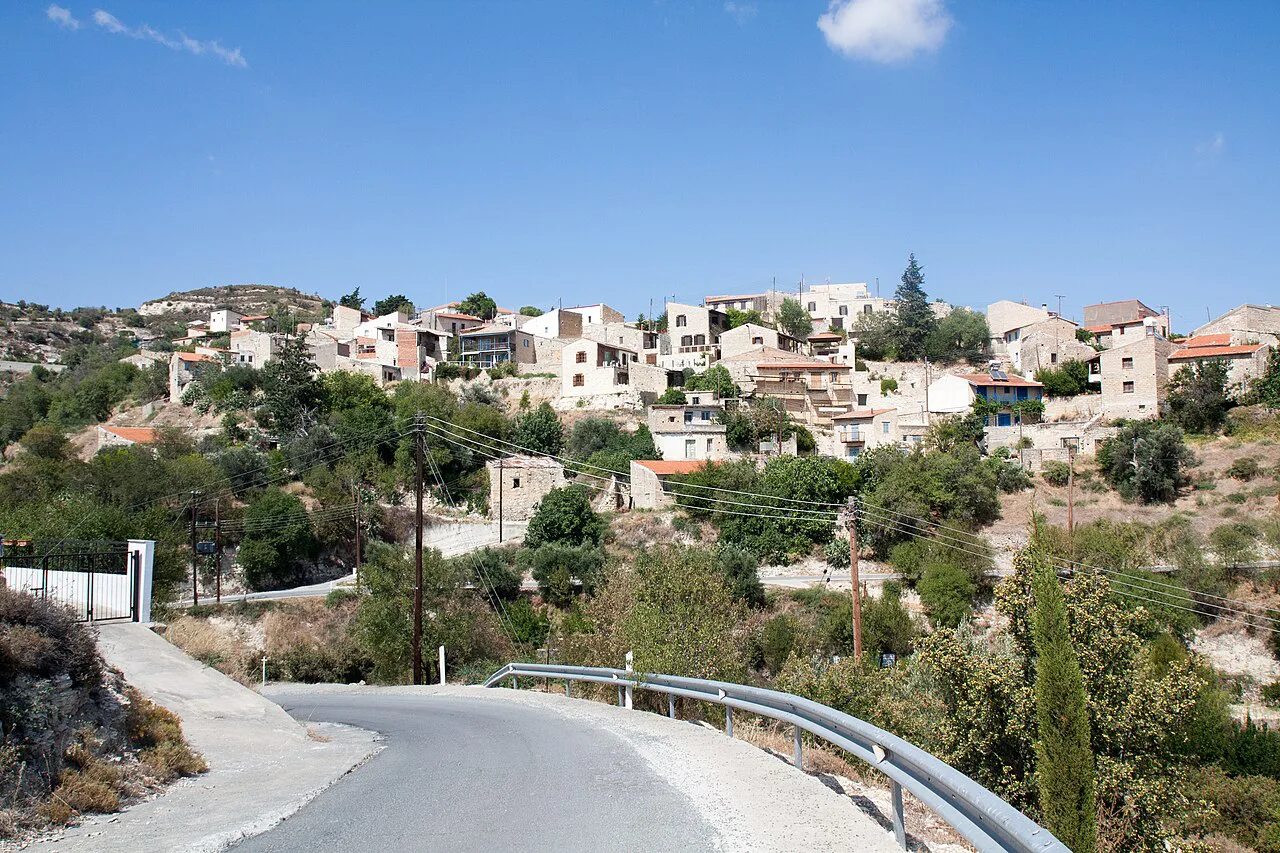
Vouni lies in the Krasochoria region of the Limassol district, at an altitude of about 800 metres, on a slope with a southern gradient. The landscape rises steeply to the north, where the peak of Moutti tou Afami reaches 1,153 metres, and the village is flanked by the beds of two rivers, Chapotami to the west and Kryos Potamos to the east. That combination of a sunny slope and two valleys explains the layout: lanes contour across the hillside rather than running straight, and the best views look south and east over the watercourses.
The name is usually explained as a reference to a low mountain, which fits a village that sits on a shoulder rather than a summit. Vouni was historically a vine village, and until the 1990s it ranked third after Pachna and Omodos for the extent of land under vineyards, with roughly 40 per cent of its territory planted. Viticulture has since shrunk considerably as people left the countryside, so expect a working agricultural landscape rather than a village built around tourism.
How the village is laid out and how long it needs
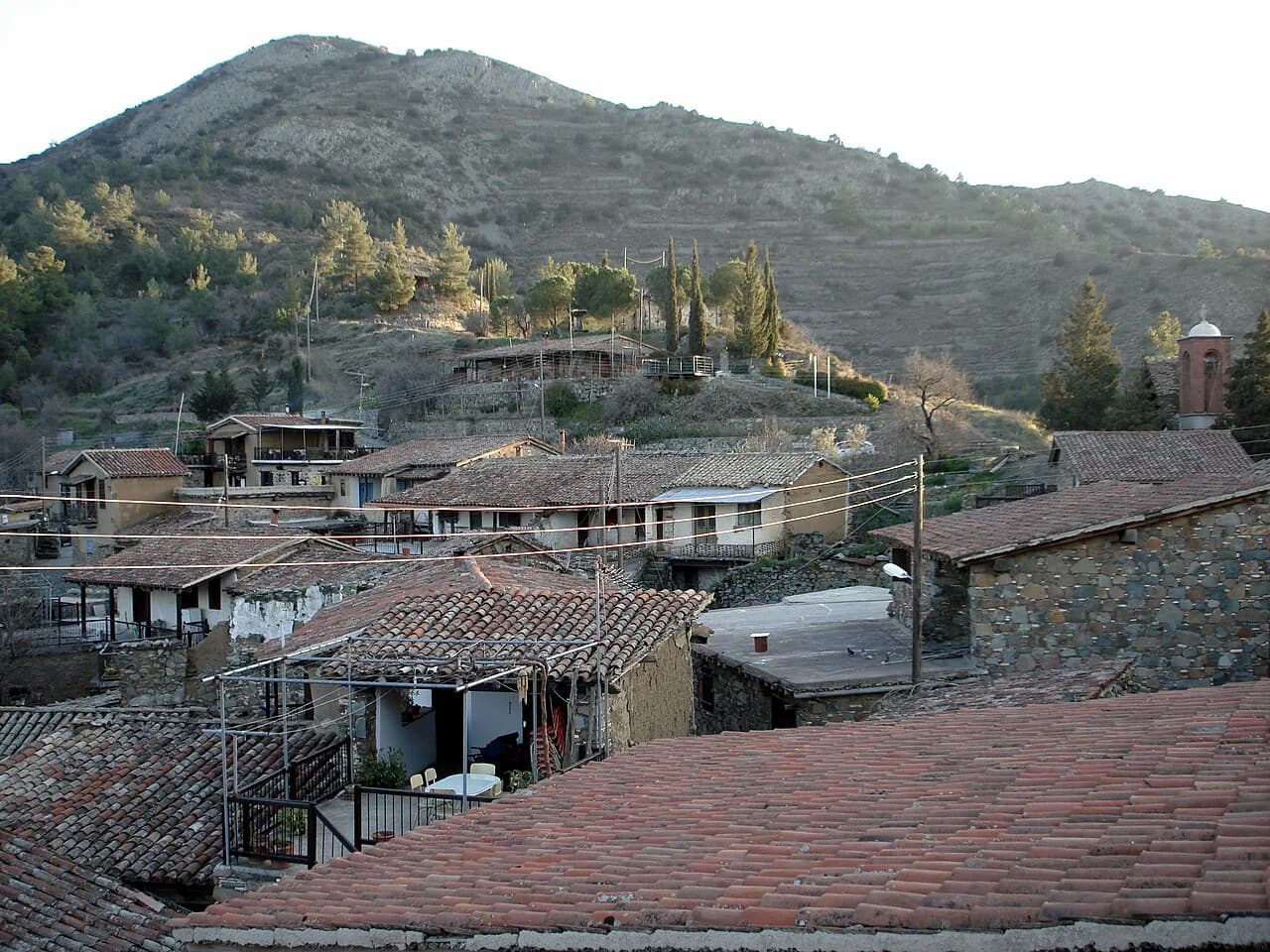
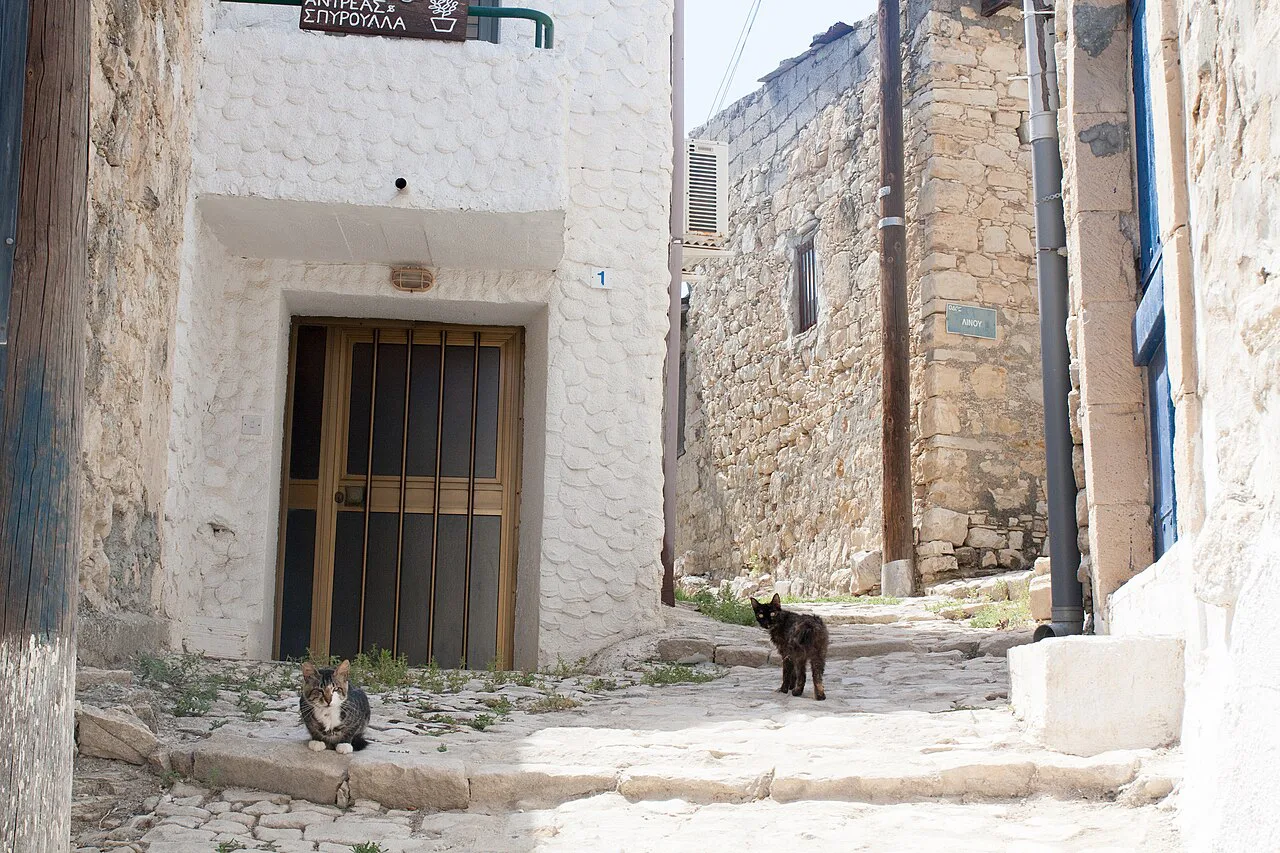
Treat Vouni as a walk rather than a checklist. The core is a knot of cobbled alleys lined with traditional houses that have wooden doors, large windows, narrow balconies and inner yards, which is why the village is described as an open-air museum of recent centuries of local life. Allow two hours to wander the lanes, look into the main church and find the two small museums; add half an hour if you walk south to Panagia Peravouniotissa.
Because the village spreads across a slope, the walking is short but never flat, and the lanes repay a slow pace. The lanes themselves are the attraction: stone fronts, carved door frames and courtyards sit right against the street, so there is little separation between private house and public alley. Keep to the through lanes and admire the yards from outside rather than stepping into them.
The churches to look for in Vouni
Timios Prodromos is the main church, set in the street of the same name in the centre of the village. It is a single-aisled Byzantine-style building with a sharp central arch and cross doors, stone-built outside, with three entrances framed in chiselled stone and a heavily decorated stone belfry. Inside are 19th-century wall paintings, and the building is protected by the Department of Antiquities.
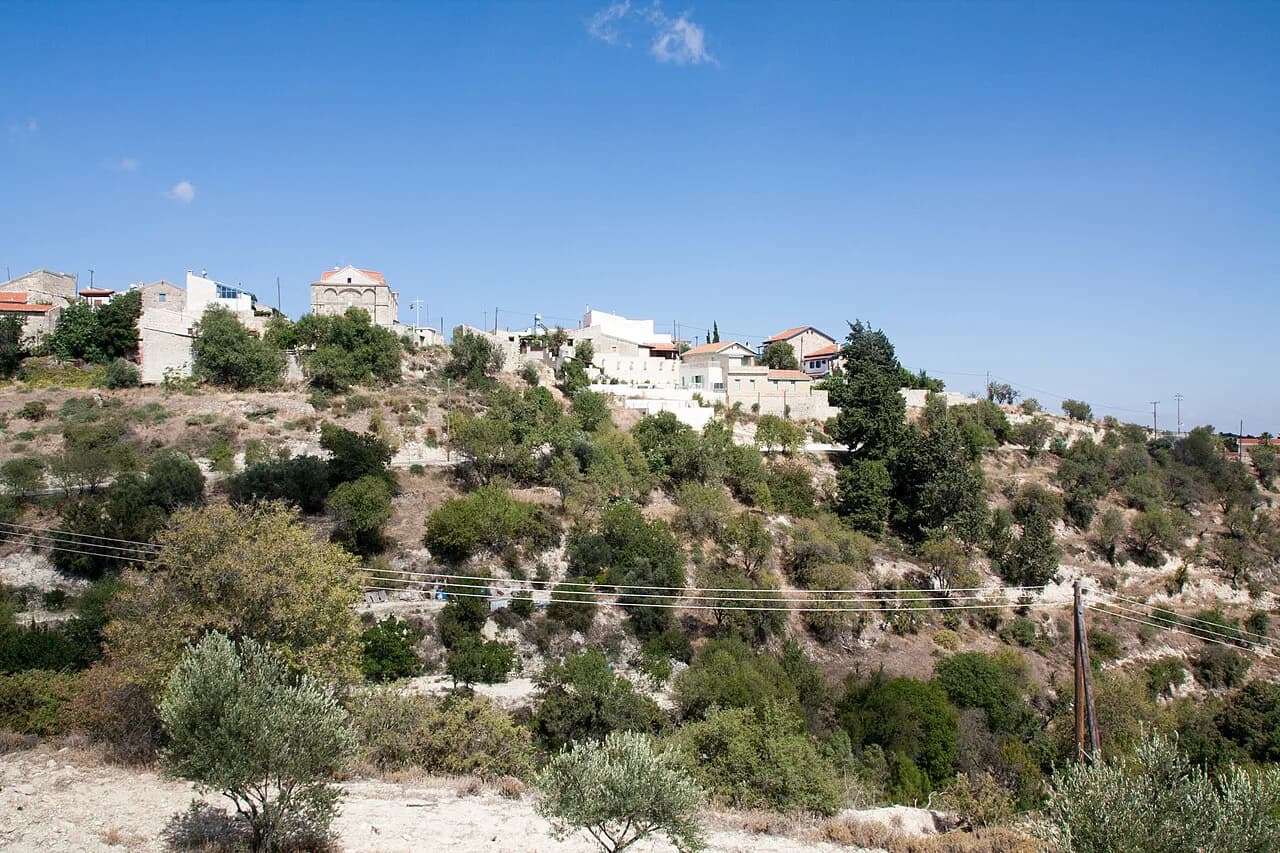
Panagia Peravouniotissa is a separate church about a kilometre south of the village on the road towards Limassol, at the top of the hill opposite the settlement, so do not confuse it with the main church. It is single-aisled, stone-built and royal shaped, with a belfry added well after construction, and its yard has a panoramic view over the Kryos river valley and back across to Vouni. The small chapel of Agios Ioannis Rossos stands a hundred metres past it on the ridge, on the same road out of the village.
The Chrysosotiros chapel sits on a small hill outside the village, a rectangular arched structure faced in stone with a panoramic view from its yard. Its name day, the Metamorphosis of the Saviour, is celebrated on 6 August with a large fair that draws visitors from across the island. The village church site counts six churches or chapels in all, so short detours from the main lanes turn up further small chapels if you have time.
The small museums and old village fabric
Vouni keeps two modest museums, a Museum of Folk Art and a Museum of Byzantine Art, listed alongside other village sights such as an olive mill, an Ottoman water basin and a Venetian water basin. They are village-scale collections rather than major institutions, and they add perhaps twenty minutes each to a walk through the core. Confirm locally before planning the day around them.
The old primary school is among the buildings the village itself flags for visitors, and the surrounding heritage is domestic rather than monumental: stone basins, mills and the carved fronts of houses. Pair the museums with a slow pass through the lanes around the main church and you will have seen the village's own heritage without needing a long stop.
Views and where to find them
The single best viewpoint is the yard of Panagia Peravouniotissa, one kilometre south of the village, where the ground drops away into the green Kryos valley and the rooftops of Vouni sit on the slope opposite. The walk out there and back takes about half an hour at an easy pace and is worth doing even if you skip the museums. The Chrysosotiros hill, just outside the village, gives a second, closer panorama for a much shorter climb.
Getting to Vouni by car
Vouni is reached by road in the Troodos foothills west of Limassol, and road distances given for the village are 71 km from Larnaca airport and 34 km from Paphos airport. Those are distances, not driving times, so judge the journey by the mountain roads rather than by motorway pace. Driving is on the left in the Republic of Cyprus, and the country uses the euro, so fill up and carry change before you leave the main road.
Public buses to Vouni are not the practical option for a village this small, and routes and timetables change, so a hire car gives you the flexibility to combine Vouni with neighbouring villages on the same loop. Park where the lanes allow and walk the core; the village is compact enough that you will not need the car again until you leave. Country lanes between the Krasochoria villages are narrow in places, so allow extra time for the drive.
When to go and how long to allow
High summer is hot on a south-facing slope at 800 metres, and shade in the lanes and church yards is limited, so plan the walk for the morning or late afternoon. Spring and autumn give cooler walking and greener valleys, while the 6 August celebration at Chrysosotiros brings crowds and a fair to the village. Allow a half-day: two hours in the village and half an hour more if you walk out to Panagia Peravouniotissa.
Time your visit around the walking and the views rather than a fixed schedule, and treat an open church door as a bonus. That approach also suits the villages around Vouni, where the pleasure is the lanes rather than a ticketed sight.
Where Vouni fits with the rest of the Krasochoria
Vouni works best as one stop on a loop through the Krasochoria rather than the whole day's destination. Omodos, the best-known wine village in the region, is the obvious anchor for such a loop, and the wider set of Troodos villages gives you options on either side of Vouni depending on whether you are coming from Limassol or Paphos. Pair two or three villages in a day, keeping Vouni as the quiet, walkable pause between them.
Is Vouni worth a stop on a Troodos day?
Yes, if you want a short, quiet walk with good valley views and stone churches rather than a ticketed attraction. Two hours covers the lanes, the main church and one museum, and half an hour more gets you to the Panagia Peravouniotissa viewpoint. Build it into a Krasochoria loop with Omodos as the anchor and you get a varied day without long drives between stops.
Explore more Troodos guides
Frequently Asked Questions
Do you need a car to visit Vouni?
A car is the practical way to reach Vouni and to combine it with neighbouring Krasochoria villages. The village is 71 km from Larnaca airport and 34 km from Paphos airport by road, and driving is on the left in the Republic. Country lanes between villages are narrow in places, so allow extra time.
How long does it take to see Vouni?
Allow about two hours to walk the cobbled core, see Timios Prodromos and look into one of the small museums. Add half an hour if you walk the kilometre south to Panagia Peravouniotissa for the valley view. It is a compact village on a slope, so the walking is short but rarely flat.
Can you visit Vouni as a day trip from Limassol or Paphos?
Vouni sits in the Limassol district in the Troodos foothills and is a reasonable half-day outing from either coast when combined with other Krasochoria villages. Treat it as one stop on a loop rather than a stand-alone destination, and allow for slower mountain roads on the way.
Sources
Notes for your Cyprus trip
Optional updates to our Cyprus guides.
You might also like
Continue reading
More guides you'll find useful