Tochni, Cyprus: A Guide to the Stone Village in Larnaca District
Plan a visit to Tochni in Larnaca district: its church and 1798 icon, mosque and Latin chapel remains, the drive in via Choirokoitia and how long to allow.
On this page
Tochni is worth a short visit rather than a whole day: the village packs a church, a mosque and the remains of a Latin chapel into two facing hillsides you can walk in a morning. It suits travellers driving between Larnaca and Limassol who want traditional stone architecture without committing to an overnight stay. This guide covers what you will see, how the village is laid out, how to approach it by car and how to pace the visit.
What Tochni is and why it is worth a stop
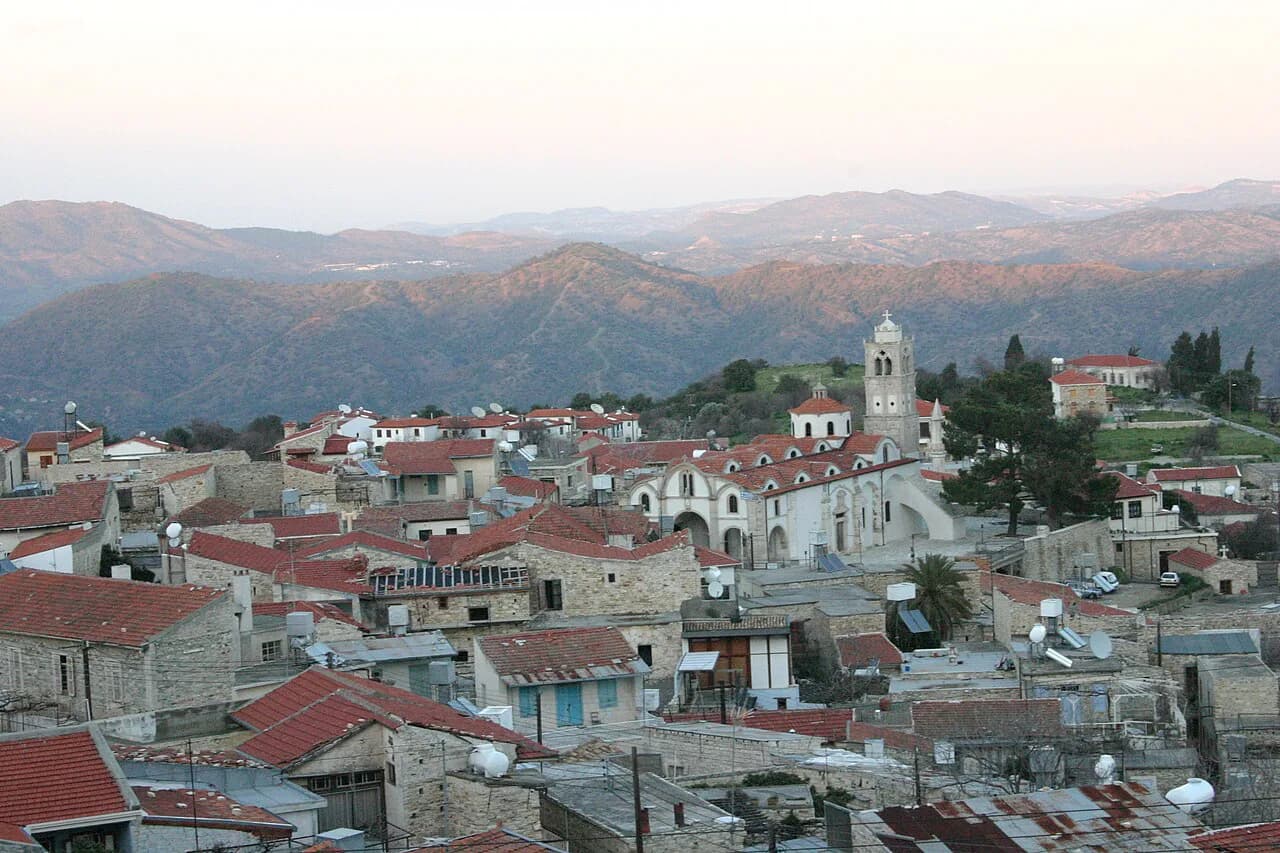
Tochni is a small inland village in Larnaca district whose character comes from the local stone used for its houses, alleyways and courtyards. The draw is the architecture and the setting rather than a single headline monument, so treat it as a place to wander slowly rather than tick off. The 2021 census recorded 439 residents, which tells you how quiet the streets are outside the middle of the day.
Where Tochni sits and how the village is laid out
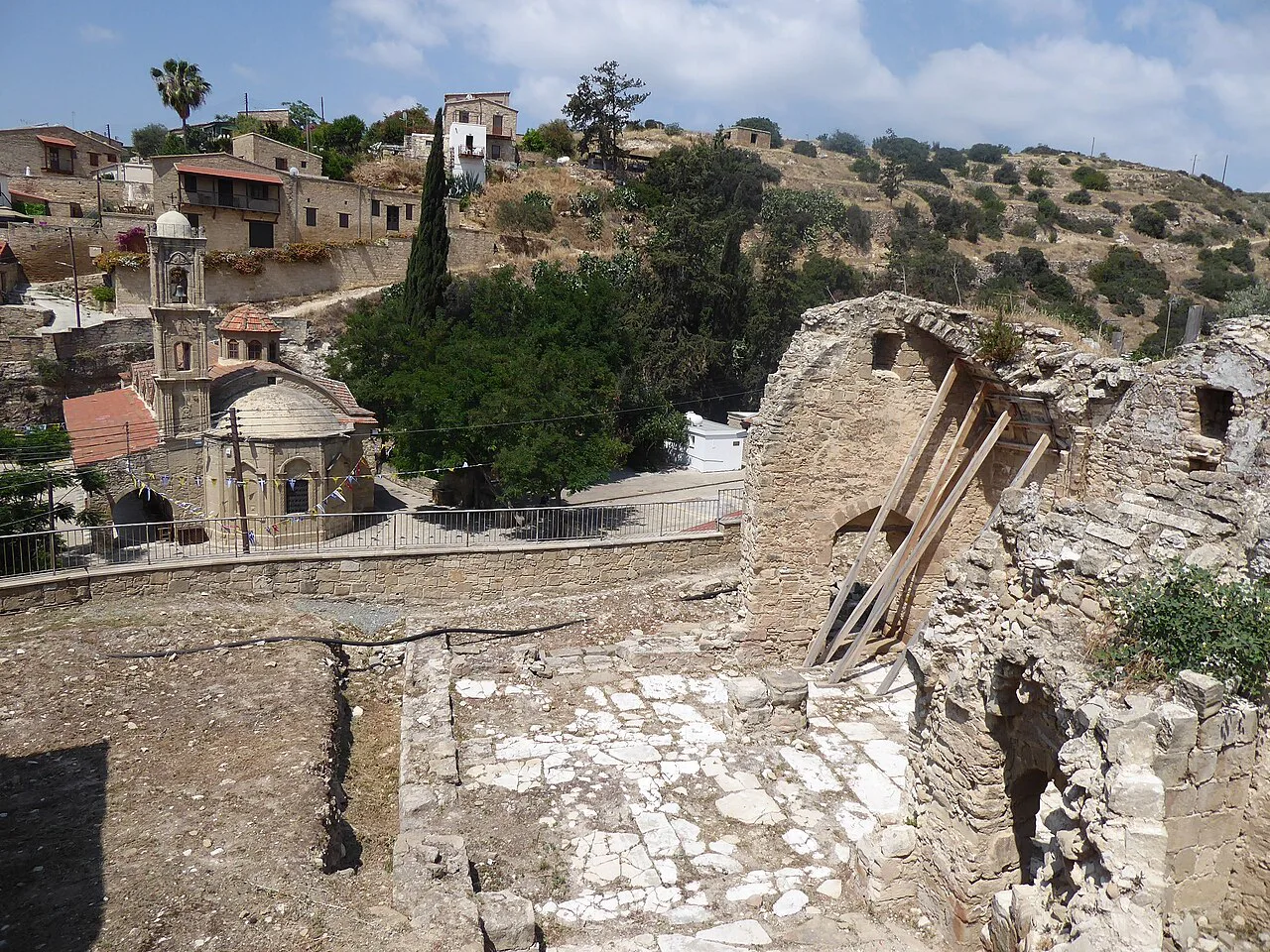
The village occupies two facing hillsides at elevations of roughly 120 to 320 metres, with a torrent running through the ground between them. That layout matters for planning: there is no flat central square to loop around, and any walk involves a descent and a climb back, with some slope streets linked by steps.
Because the two sides face each other, choose one hillside, walk it, then cross and walk the other rather than zigzagging between them. Pick a short loop with a clear return route instead of trying every side street; the nearest passage on a map is not always the easiest if you are carrying bags or pushing a buggy. Check the gradient of the specific street you plan to use rather than assuming the whole village is level.
Getting there by car via Choirokoitia
Three motorways from the main towns converge near Tochni, but the village signposting is not as straightforward as the road network suggests. Distances are about 43 km from Nicosia, 28 km from Larnaca and 31 km from Limassol. The reliable approach is to head for the Neolithic settlement at Choirokoitia and follow the sign for Tochni, about 5 km west of it, or to use a satnav.
The Choirokoitia approach makes a natural pairing: you can see the settlement and then drive on to Tochni in the same outing. Start from a designated parking space and plan your walking route from there, marking the landmarks you want to reach in the village centre. Driving in Cyprus is on the left, and the Republic uses the euro.
The Church of Saints Constantine and Helena
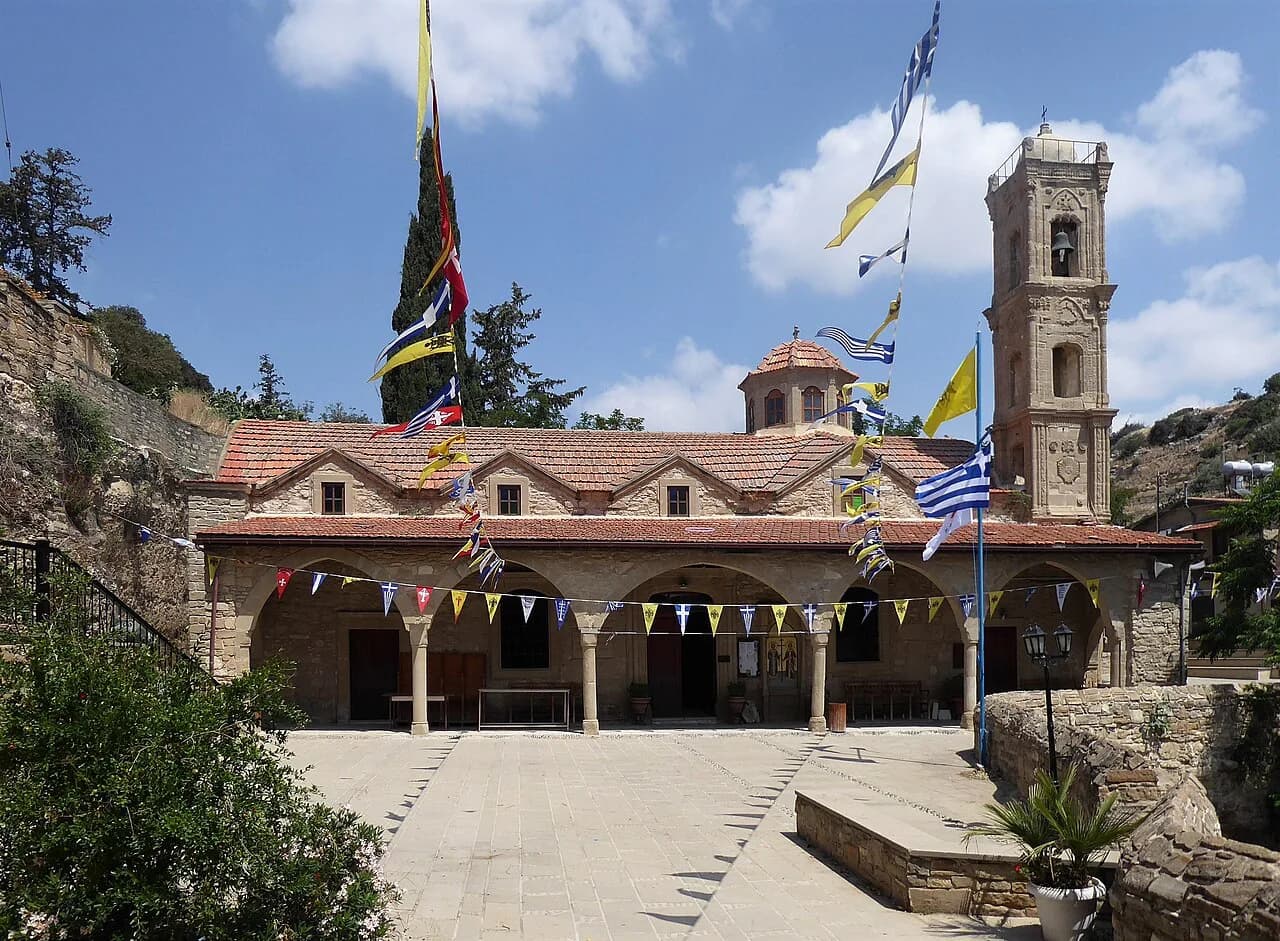
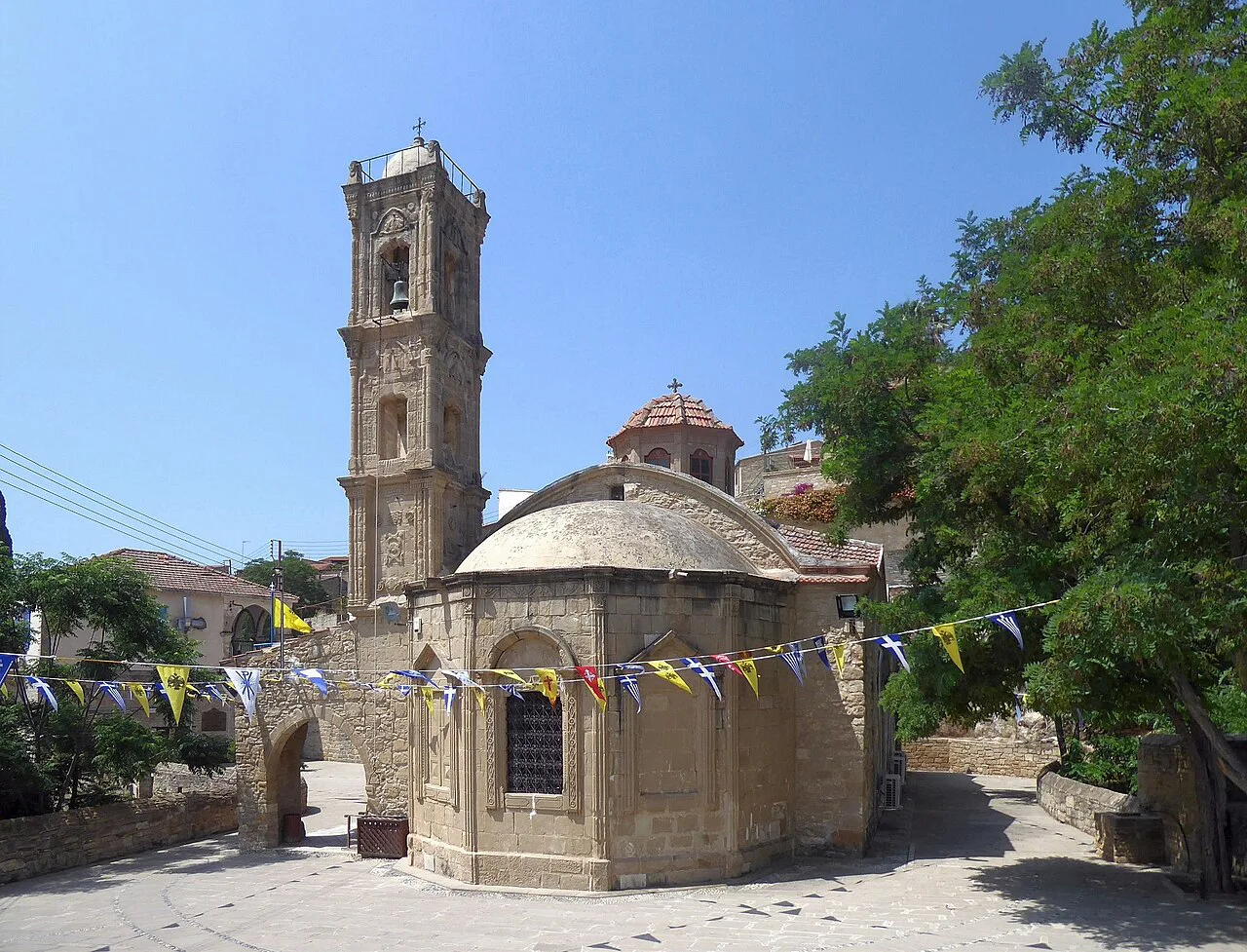
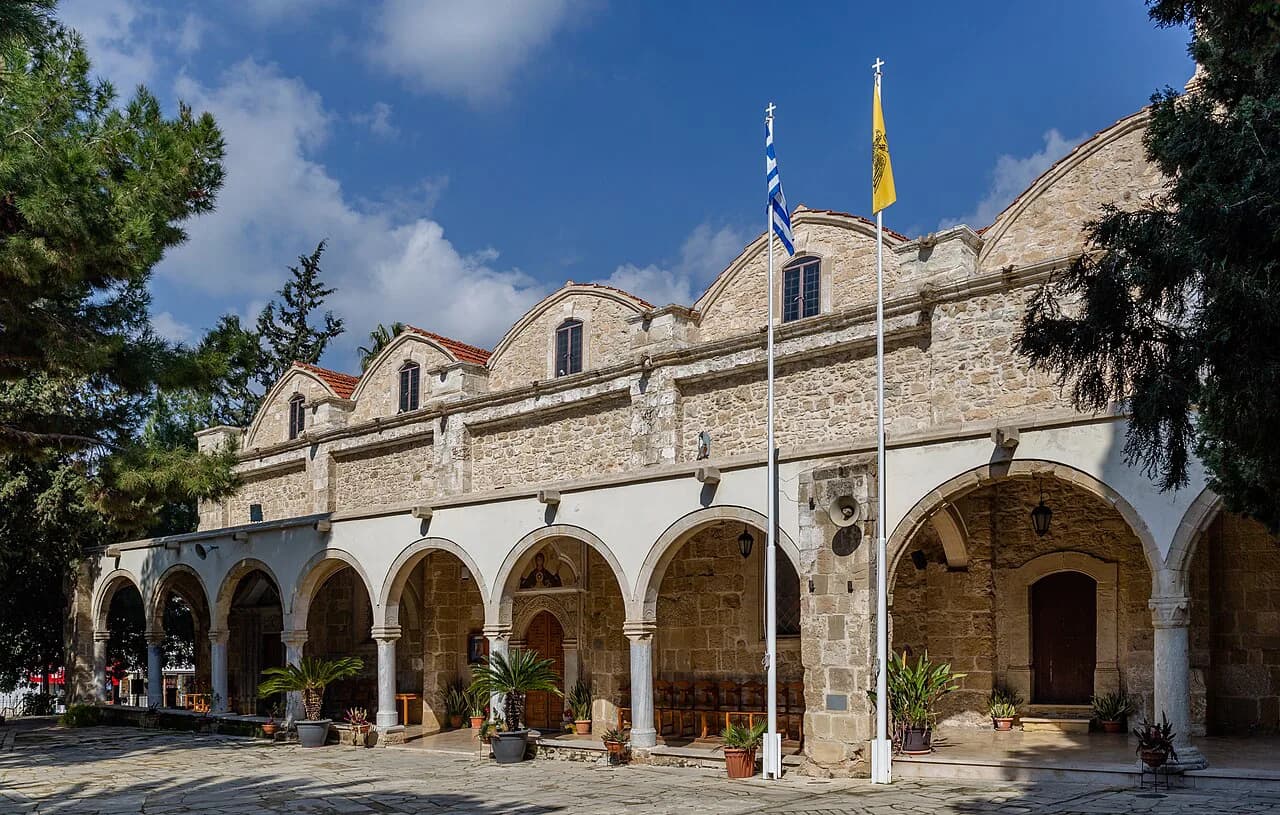
The village's main landmark is the Orthodox Church of Saints Constantine and Helena, which sits astride the torrent on a bridge. It began as the Church of the Holy Cross and was later renamed; the present building replaced an earlier one. Its treasures include an icon of the two saints with the Cross dating to 1798, and more icons and relics are shown in a small adjoining museum.
The church is the reason many visitors come, so build your walk around it rather than treating it as an afterthought at the end of a loop. Because the building straddles the water, the approach from either hillside involves a descent, which is worth remembering on the climb back in the heat. It is an active place of worship: check access arrangements and photography rules before entering, and respect any barriers or signage.
The Latin chapel remains and the Saint Helena tradition
Medieval remnants of a small Latin chapel stand in the vicinity of the main church, a reminder that the village's heritage has more than one layer. Read the two as separate monuments rather than one site, since they belong to different traditions and different periods of construction.
The story that Saint Helena founded a church here belongs to religious tradition, not to a documented construction date for the present building. According to the tradition, she landed on the coast and recovered lost relics, building churches wherever they were revealed to her; the village church grew out of that account. Read it as local religious memory and look at the surviving stonework separately for architectural history. Even the ruins are not open ground, so view restricted areas from public viewpoints.
The mosque on the eastern hillside
The Turkish Cypriot community lived mainly on the eastern hillside, where a well-preserved mosque stands; it is unusual in having no minaret. The village once had a slight Turkish Cypriot majority, and the population is now around half what it was before 1974, with former residents among those who cross over to visit properties. Present the history plainly and let the buildings speak.
For a visitor, the mosque is a reason to make the crossing to the eastern side rather than confining your walk to the church end of the village. The two hillsides are separated by the torrent, so budget the climb. Treat the building as a place of worship and check locally whether it is open when you visit.
The local stone and what has changed
The sepia tone of the local stone is what makes Tochni look as though it rises out of the earth, and it is the material behind the village's reputation. The quarries sit right beside the village, and further extraction would have brought noise and dust, so they were left idle; no more Tochni houses are being built from the stone that made it famous.
New houses use conventional materials while following traditional forms, which changes what you are looking at: the older lanes show the original stone, while newer buildings echo the shape without the material. Keep your eye on the older houses, entrances and wooden features for the authentic detail.
Walking the village: which side streets repay the detour
Tourist accommodation sits alongside ordinary homes, so entry rules vary from gate to gate. An open courtyard visible from a side street is not an invitation to walk in and take photographs. Keep to public lanes and view private spaces from the street.
Choose a short loop with a clear return route rather than trying to cover every alley. The most rewarding details are close at hand: the shape of entrances, the wooden features and the position of houses relative to the street. If anyone in your group finds walking difficult, check the specific route for steps and gradients before setting out.
The village also has a bicycle centre serving locals and visitors, and cycle routes through the region's traditional villages are published. The peaceful appearance does not make a ride easy for a beginner, so assess distance, climbing and road conditions on a route map first. If you hire a bike, check the bike type, condition, helmet provision and breakdown support.
How long to allow: half a day or an overnight stay
A day trip needs no overnight stay: explore the main streets and the sights that interest you, and you have seen the village. The church, the mosque and the Latin chapel remains fit comfortably into a morning or afternoon with time for a break. That is the right choice for most travellers passing through Larnaca district.
Staying overnight changes the pace usefully, because you get the village in the evening and early morning without rushing to the next stop. Traditional houses are let under the loose label of agritourism, but arrangements differ: one property may be a detached house, another part of a complex with shared areas. Ask about steps from the car park to the door, whether a courtyard is private, and what kitchen facilities exist before booking, and confirm key collection if you arrive after dark.
When to go and how to pace the heat
In hot weather, split the walk between the cooler parts of the day and take breaks indoors or in the shade. The two-hillside layout means every shortcut is a climb, so plan one hillside for the morning and the other later rather than trying to do both at midday. Carry water, and check whether you can top up supplies in the village before setting off.
Church interiors and shaded courtyards give natural pauses, and the museum adjoining the church is a good place to slow down. A morning start also means fewer people in the lanes and better light on the stone. If you are cycling, check the forecast first, since the exposed hillsides offer little shelter.
Where Tochni fits with nearby places
Choirokoitia is the obvious companion stop, about 5 km east, and the practical anchor for finding Tochni in the first place. Further afield, Lefkara makes a natural contrast with its own craft tradition.
Below the village, the administrative boundaries reach the coast at the Vasilopotamos, the river where the Saint Helena tradition says she landed. The shoreline is now also home to Cyprus's energy infrastructure, visible from the village, so do not expect an unspoilt beach at the end of the drive. Treat the coast as a point of historical interest rather than a swimming stop.
If you are building a day around traditional crafts and stone architecture, Lefkara: A Guide to the Lace and Silver Village of Cyprus makes a coherent second half to a Tochni morning, and the village's own Lefkara Lace tradition is within easy driving distance of the Larnaca district lanes.
Should Tochni be on your Larnaca district route?
Yes, if you want traditional stone architecture and a genuinely quiet village rather than a ticketed attraction. Allow a short visit, approach via Choirokoitia, and plan the walk around the two hillsides so the climbs fall at the cooler ends of the day.
Stay overnight only if you want the village to yourself in the evening and are prepared to check the practical details of a traditional house in advance. Otherwise, pair Tochni with another stop and move on; the village gives its best to those who walk it slowly rather than trying to see everything.
Explore more Larnaca guides
Frequently Asked Questions
Do I need a car to visit Tochni?
A car is the practical way in, since the village sits inland in Larnaca district and the reliable approach is via Choirokoitia, about 5 km to the west. Distances are roughly 28 km from Larnaca, 31 km from Limassol and 43 km from Nicosia. Driving is on the left and the Republic uses the euro.
Can I walk between the two hillsides of Tochni easily?
The village occupies two facing hillsides with a torrent between them, so any crossing involves a descent and a climb, and some lanes are linked by steps. Choose a short loop with a clear return route and check the specific streets you plan to use if anyone in your group finds gradients difficult.
Sources
Notes for your Cyprus trip
Optional updates to our Cyprus guides.
You might also like
Continue reading
More guides you'll find useful