Soli Ruins, North Cyprus: Ancient City Guide
Soli ruins near Güzelyurt in north Cyprus pair a Roman theatre with basilica mosaics and city remains. Here is how the site is laid out and what to expect.
On this page
Soli is worth half a day rather than a quick photo stop: the ruins spread across a coastal slope near Güzelyurt, with a Roman theatre, a church with floor mosaics and stretches of the ancient city itself. This guide covers the layout, the drive from Kyrenia/Girne or Lefke, the Green Line formalities for a day out from the south, and how to pair Soli with the hilltop palace at Vouni.
What the Soli ruins are and where they sit
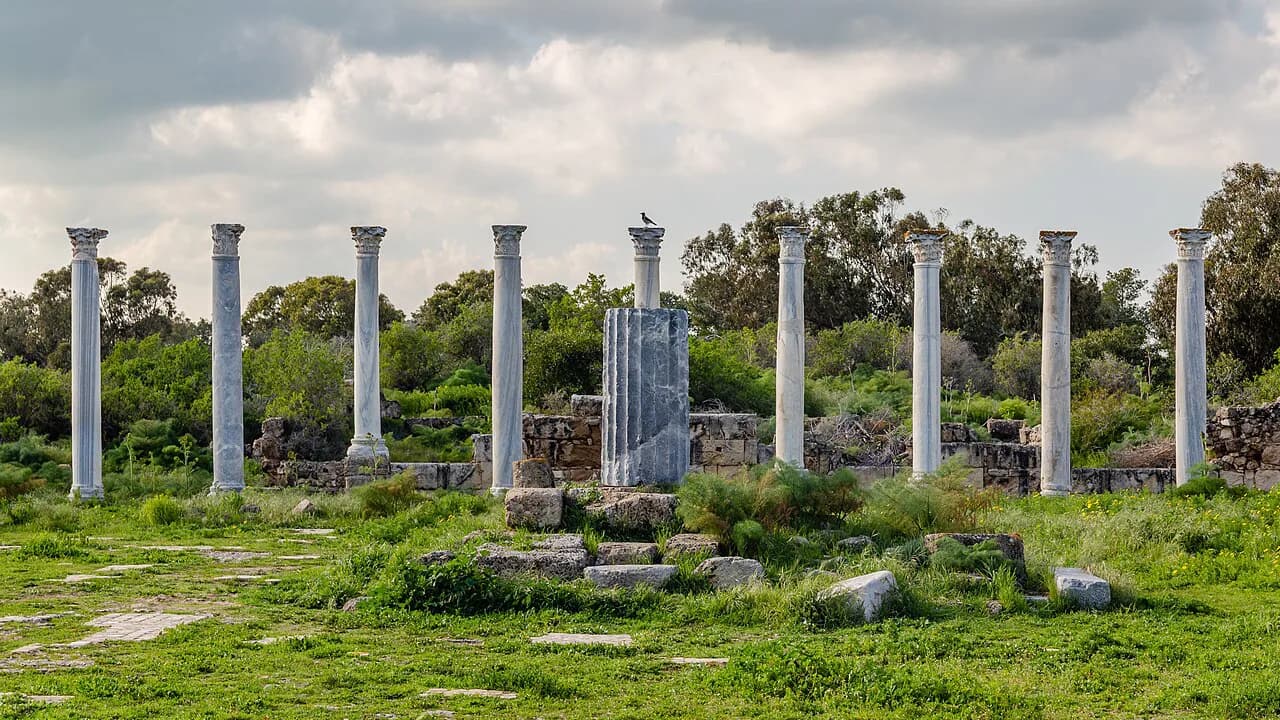
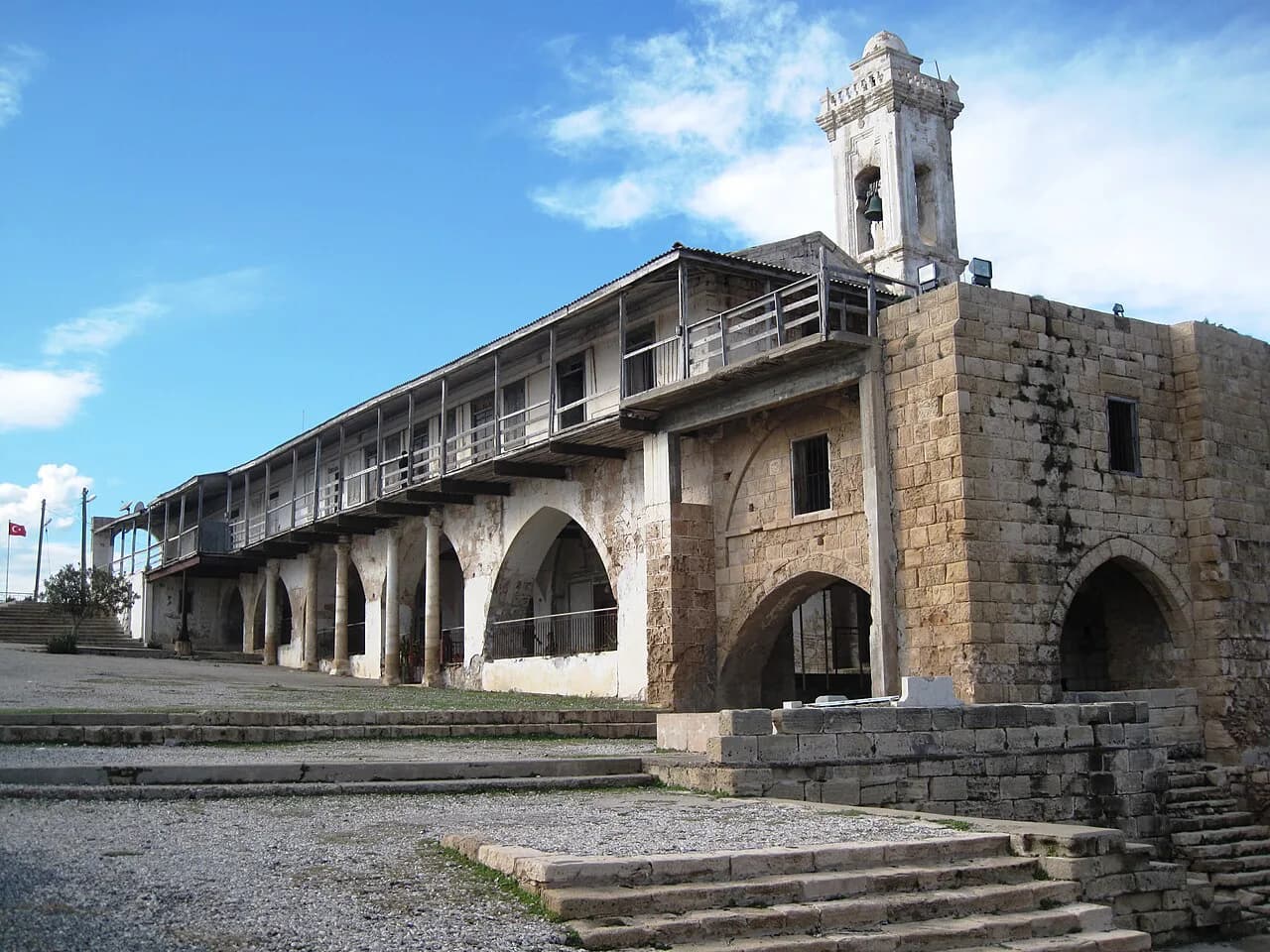
Soli was an ancient settlement on the coast west of Güzelyurt (Morphou), in the part of north Cyprus administered from Lefke and Nicosia District. Travellers photograph the site at Güzelyurt, where columns and masonry stand in open ground. The city is usually visited on the same loop as Vouni, the hilltop palace site a few kilometres away, because the two are close and tell very different stories.
See it as a compact archaeological site rather than a reconstructed attraction. What you get is masonry, columns, a theatre and mosaic floors in their original positions, with the inland plain and citrus groves around them. Bring water and shade, since most of the site is open to the sun.
How the site is laid out: theatre, basilica and city remains
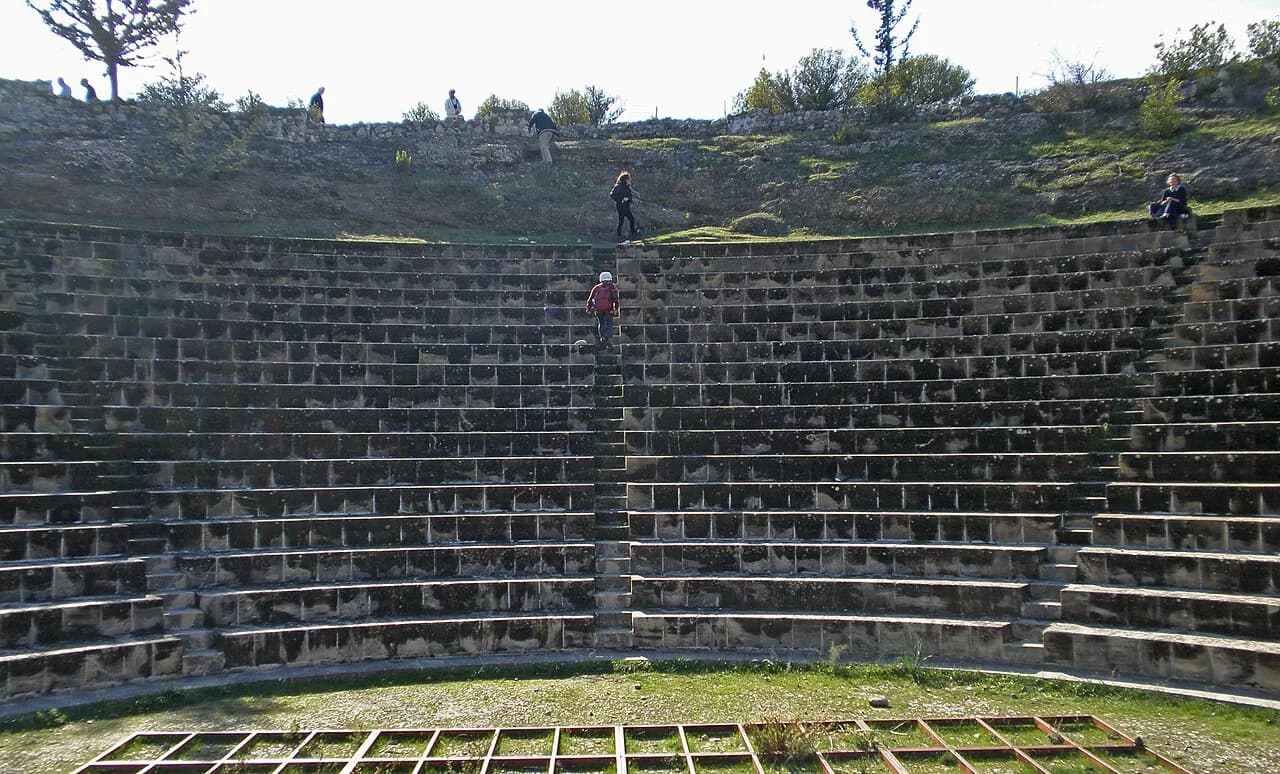
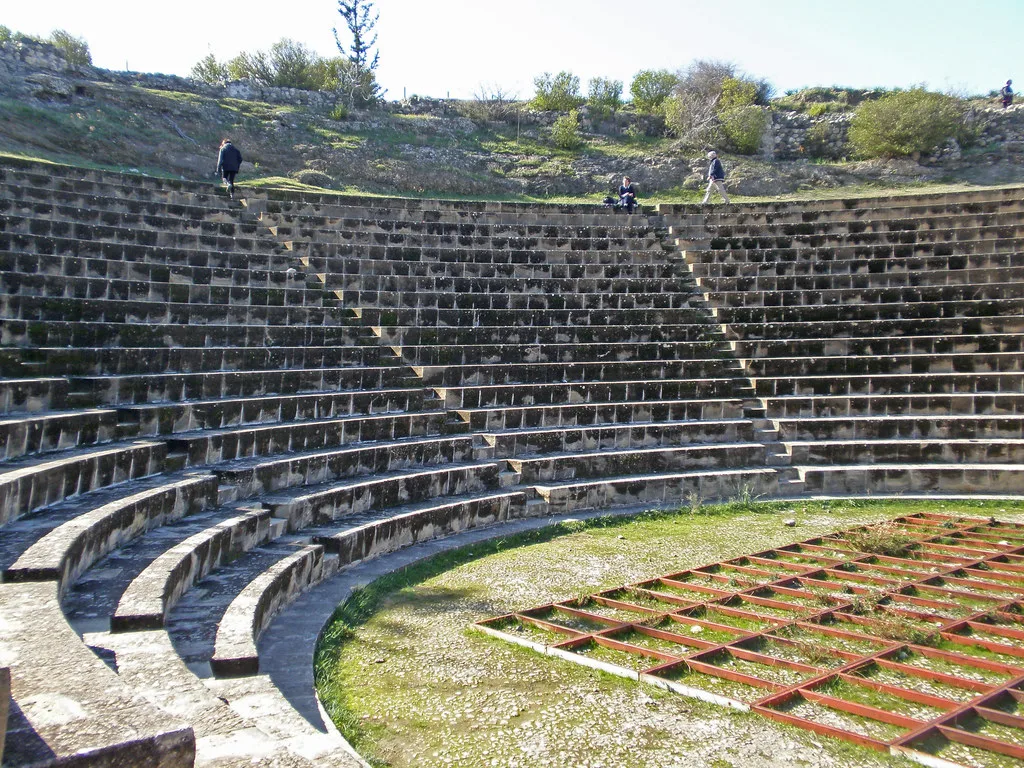
Plan the visit around three zones: the theatre, the basilica with its mosaics, and the wider city remains with walls, columns and civic buildings. The Roman theatre is the most photogenic element and the clearest piece of engineering on the site. The 2016 description of the Roman city records a theatre, several temples, palace ruins, a large agora, a church and other substantial buildings, which gives a fair sense of the spread.
Work uphill to the theatre first, while you are fresh, then drop down to the basilica and the mosaics, then wander the city remains. This saves the most legwork for the end and keeps the fragile mosaic floors as the finale rather than an afterthought. The whole circuit rarely takes more than a couple of hours.
The theatre and the Roman city: what survives
The theatre is cut into the slope and set in a curve of seating above the site, which gives the best view over the ancient city. What survives is the shape: the seating, the curve and the relationship between the stage area and the audience. A large Roman amphitheatre stands on the site of the original city, and the ancient city dates from the 6th century BC at the earliest according to one description, so read early dates cautiously.
In the lower city, look for the line of columns, stretches of wall and the fallen masonry that mark streets and public buildings. The agora, temples and palace ruins recorded on the site are the parts to hunt for between the theatre and the basilica. It is not a labelled museum and the remains are fragmentary, so a short written history is more useful on site than a long audio guide.
The basilica mosaics and why they matter
The basilica at Soli protects floor mosaics, and they are the reason to slow down on the lower part of the site. They sit inside a Christian building of the late Roman world, laid as patterns and figures on the ground rather than as wall art. Look for geometric borders, animal motifs and the worn patches where centuries of feet have passed.
Treat the mosaics carefully: they are open to the weather, and some panels are fenced or covered for their own protection. Photography without a flash is the sensible default, and there is no reason to step over the barriers for a better angle. If mosaics are the highlight of your trip, Paphos in the south has the bigger set at the House of Dionysos, and Soli is the quieter alternative in the north.
How long Soli takes and how to pace the day
Give Soli two hours on site if you read the panels and photograph the mosaics, and ninety minutes if you move briskly. Add thirty to forty-five minutes for Vouni on the same outing, plus driving time between the two and back to Güzelyurt. That puts a combined Soli and Vouni day at around half a day's driving and walking, leaving the rest for the coast.
There is little shelter, so plan the visit for the cooler ends of the day and bring your own water rather than expecting a café on site. The open layout also means the ruins are best photographed in low sun; midday summer light flattens the theatre and the mosaics.
Getting there from Kyrenia/Girne and the Lefke side
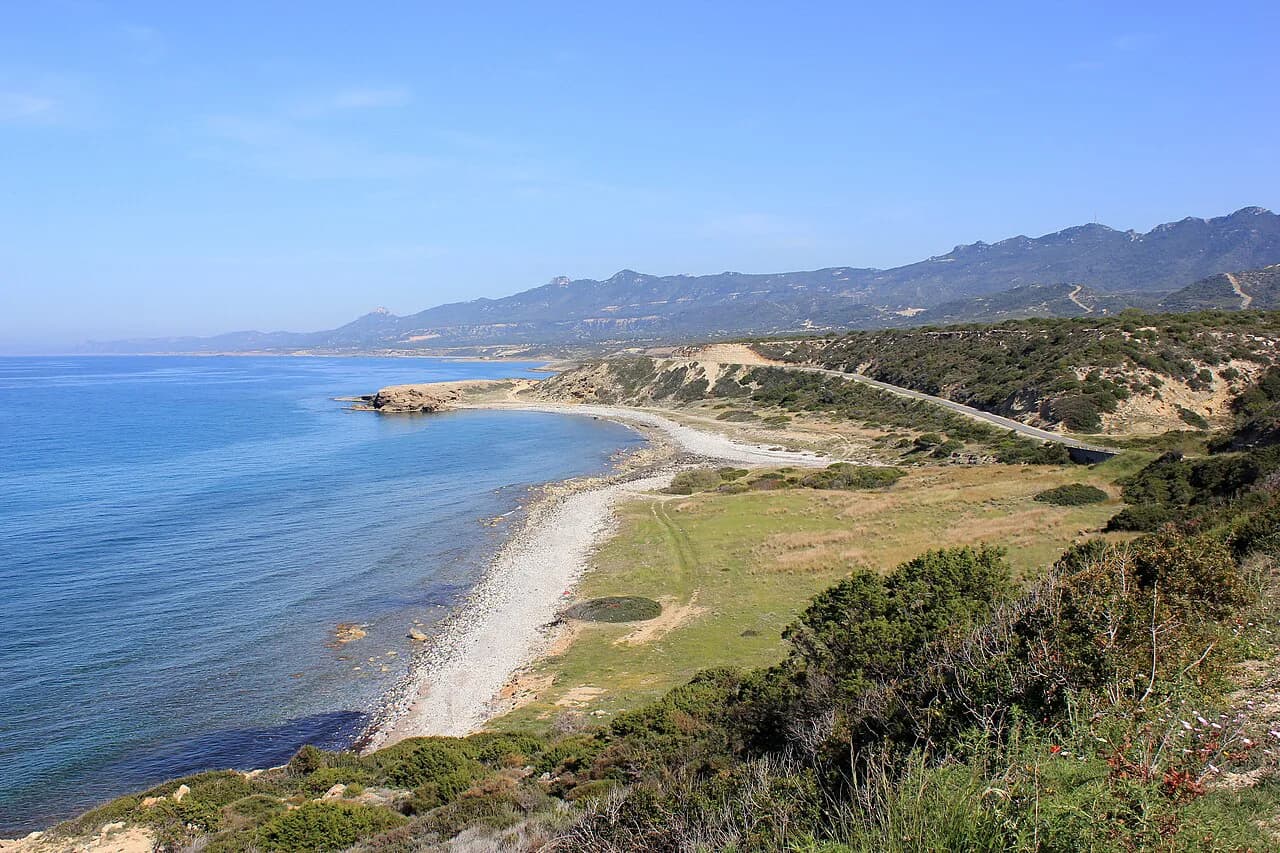
From Kyrenia/Girne, Soli is a drive west across the Güzelyurt plain, passing through towns that sell citrus and dairy products. From Lefke, the site is reached by the coast road towards Güzelyurt. The roads are generally good, though the last stretch to the ruins is rural and unsigned in places, so a download offline north Cyprus map is more reliable than a phone signal.
Public transport is minimal on this route, so a hire car is the practical choice and gives you the freedom to combine Soli with Vouni. Driving is on the left, as in the UK and Ireland. Fuel is sold in Turkish lira in the north, and euros and sterling are widely accepted, so carry a little cash and check the daily rate before you set off.
Most visitors reach Soli from Kyrenia/Girne rather than from the south, which makes it a full day even from the coast. Pair the ruins with Vouni on the same loop, then return via Güzelyurt rather than retracing the same road.
Crossing the Green Line and car insurance
If you are based in the Republic and want to visit Soli as a day trip, you cross the Green Line at a designated crossing point, with your passport in hand. Your hire-car insurance is the thing to sort out before you drive, not at the barrier: many policies exclude the north, and the rental company must confirm cover in writing. Ask before you collect the car whether north Cyprus is included, and get the answer in the rental agreement rather than by phone.
Cyprus drives on the left and hire cars are right-hand drive in the south, so the switch across the line is administrative rather than practical. Crossings are formal but straightforward, and the crossing staff decide what they need on the day. Soli is a long day from Paphos or Limassol; consider basing yourself in the north for a night rather than pushing the return drive into the dark.
Pairing Soli with Vouni: a palace on the hill
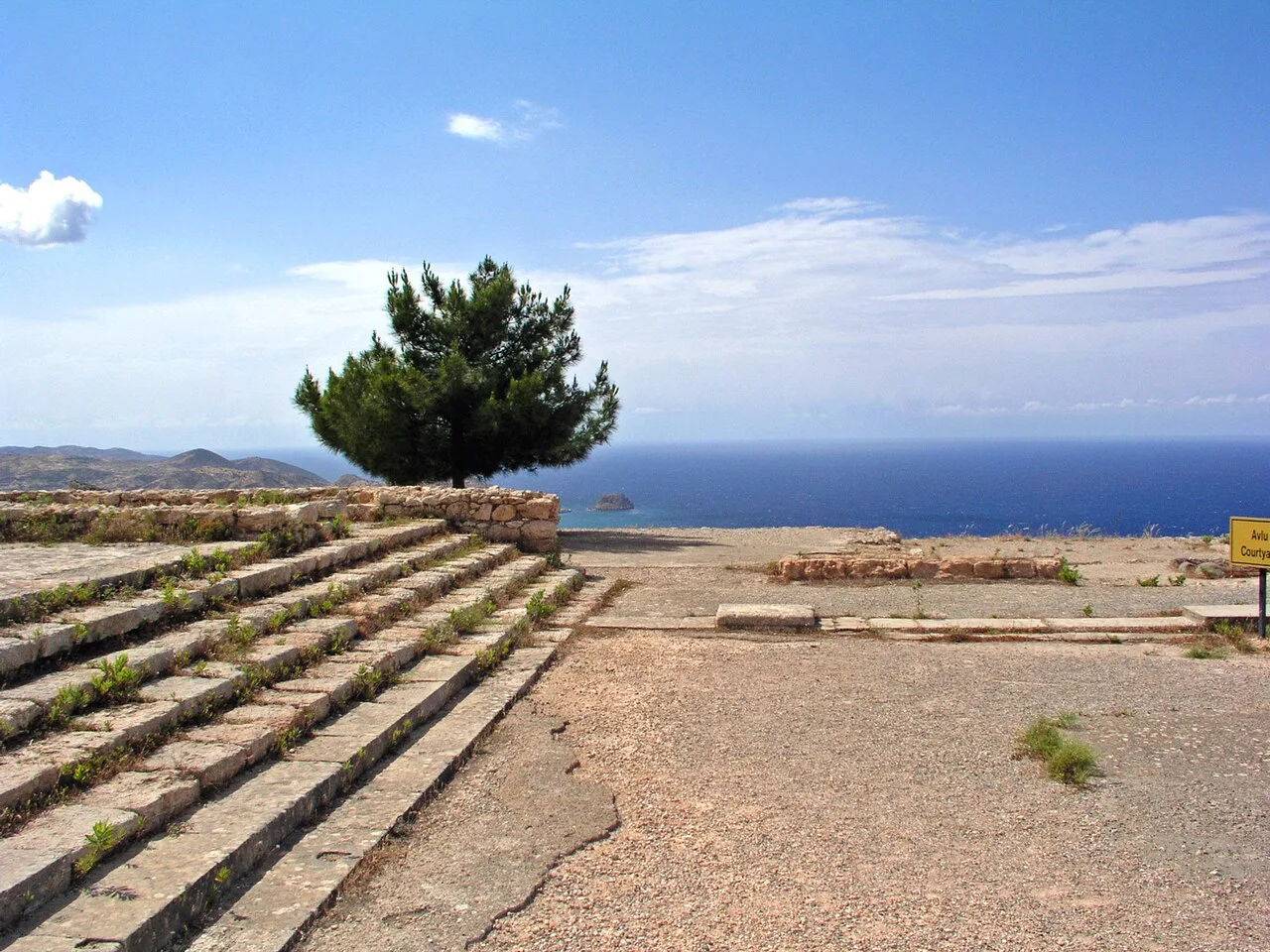
Vouni is the archaeological counterweight to Soli: a hilltop palace site with views over the coast and inland plain, reached by a narrow road above the citrus groves. The two sites together give you a Roman city by the sea and an earlier hilltop stronghold in the same afternoon. Allow the best part of a day for the pair, and take the Vouni road slowly because it climbs and narrows.
Soli and Vouni are usually combined on a loop from Kyrenia/Girne or Güzelyurt, so decide your start point before you set off. Coming from Kyrenia/Girne, take in the ruins first and finish at Vouni for the late view. From Lefke, reverse the order and drop down to the coast road afterwards.
Best time of year and time of day
North Cyprus summers are hot, and Soli has almost no shade, so the shoulder months are much more comfortable on this open ground. Spring brings green hills and wild flowers; autumn brings warm sea and softer light. Winter can be wet and chilly, and the site is exposed to wind off the sea.
Set out early in the morning in summer, when the light is low and the theatre is in shadow, and plan to be finished by late morning. Late afternoon works better in spring and autumn, when the mosaics catch the sun. Avoid a midday visit in July and August, when the stone reflects heat and there is no shelter.
Tickets, opening hours and closures
No official site page publishes Soli's current ticket price or opening hours, so check both with the archaeological museum or tourism office in north Cyprus before you drive out, and take cash in case there is no card machine. Staffing can change with the season: the safest plan is to check before you leave Kyrenia/Girne and build in a fallback.
The ruins are exposed and rural, so allow for a gate that may be shut when you arrive. Buying a guidebook in Güzelyurt or Lefke is useful because the site labels are limited.
Is Soli worth the drive?
Soli earns a place on a north Cyprus itinerary for travellers already heading west of Kyrenia/Girne, especially if the mosaics and the theatre view interest you more than a reconstructed site. Pair it with Vouni, start early, and check opening hours before you set out. Skip it if you want big, restored monuments; Soli is a quiet, fragmentary place best visited at your own pace.
Explore more North Cyprus guides
Sources
Notes for your Cyprus trip
Optional updates to our Cyprus guides.
You might also like
Continue reading
More guides you'll find useful