Apostolos Andreas Monastery: Visiting the Karpas Pilgrimage Site
Plan a visit to Apostolos Andreas Monastery on the Karpas Peninsula: the 18th-century church, the holy spring, the 2014 restoration and getting there.
On this page
Apostolos Andreas Monastery is a revered pilgrimage site of the Orthodox Church of Cyprus, set at the far north-eastern tip of the island in the Karpas Peninsula near Cape Apostolos Andreas. Entry is free and the complex is open daily, so the visit works as the natural endpoint of a day driving the peninsula. Build in time for the two levels: the small chapel and holy spring at the bottom, the 18th-century church above.
This guide sets out the layout before you arrive, separates the Saint Andrew legend from the documented building history, and explains the Green Line crossing and hire-car checks that come before the drive rather than after it. It is a plan for the visit itself, not a route to the beach.
Where the monastery sits
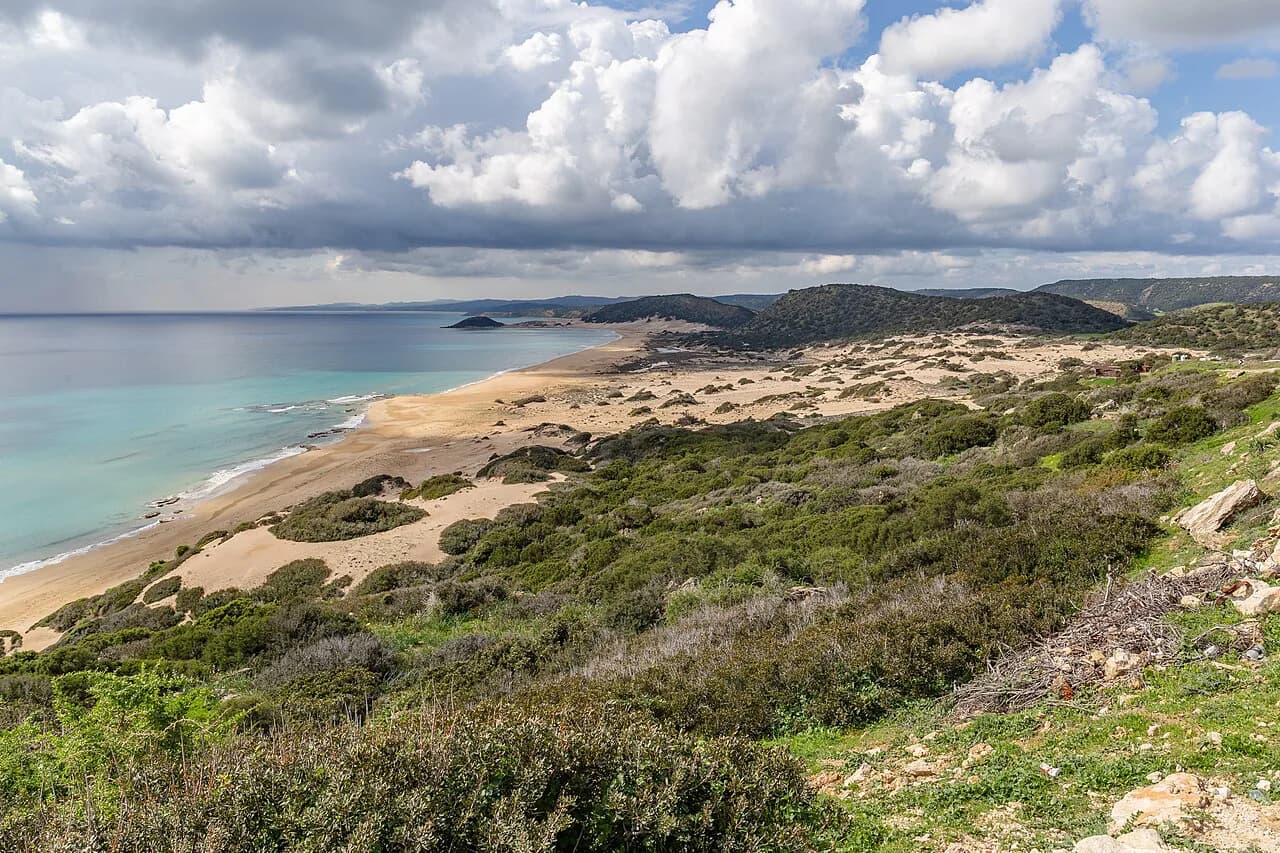
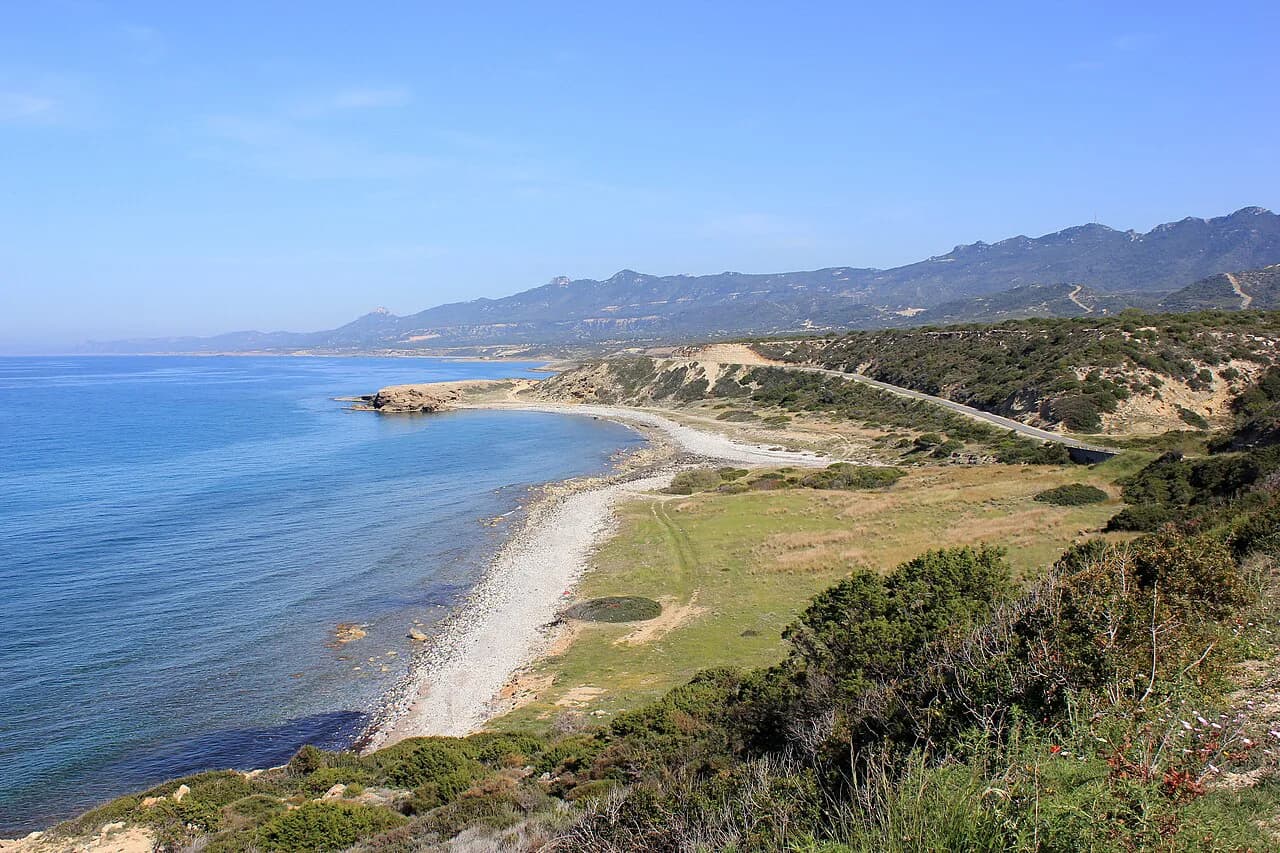
The monastery lies in the municipality of Rizokarpaso, a little south-west of Cape Apostolos Andreas at the extreme north-east of the island. Nearby sit the Karpaz National Park with its wild donkeys and long quiet beaches, Golden Beach (Altınkum) and the village of Dipkarpaz. Its position at the end of a long, thinly populated peninsula is the reason the trip takes a full day rather than an hour.
Treat the monastery as the last stop of the day, with the return drive made in daylight. The peninsula's roads thin out beyond Dipkarpaz, so fill the tank before leaving the main coastal settlements and carry water. Check the opening arrangement on the day rather than assuming the complex is unstaffed.
Why it matters to both communities
The monastery is revered by Greek Cypriots and Turkish Cypriots alike and draws worshippers making votive prayers. That shared standing is not simply inherited: the restoration looks like common heritage because two communities made it so, and it is the reason the site repays more than a photo stop.
Water from the spring carries particular meaning for Greek Cypriots, many of whom fetch it for older relatives. Pilgrims once visited in large numbers; after the events of 1974 the site grew quiet, and the flow of visitors recovered only after crossing points opened in the 2000s. The monastery also stands within the Karpaz National Park, so the setting is protected landscape as well as sacred ground.
The legend of Saint Andrew and the spring
Tradition holds that Saint Andrew's ship was blown off course and struck rocks near the promontory. Coming ashore, he struck the rock with his staff and a spring burst out, which restored the sight of the ship's captain, blind in one eye. That healing story is what made the site a place of pilgrimage, and the well still flows at a fine spot in front of the sea.
Mass pilgrimage is more recent than the legend implies, dating to the early 20th century. The story runs that in 1895 a woman's son was kidnapped, and seventeen years later the saint came to her in a dream and told her to pray at the monastery; she travelled from Anatolia and was reunited with him there. Keep the legend and the dated history separate as you walk round, and the site reads more clearly.
What you see on arrival
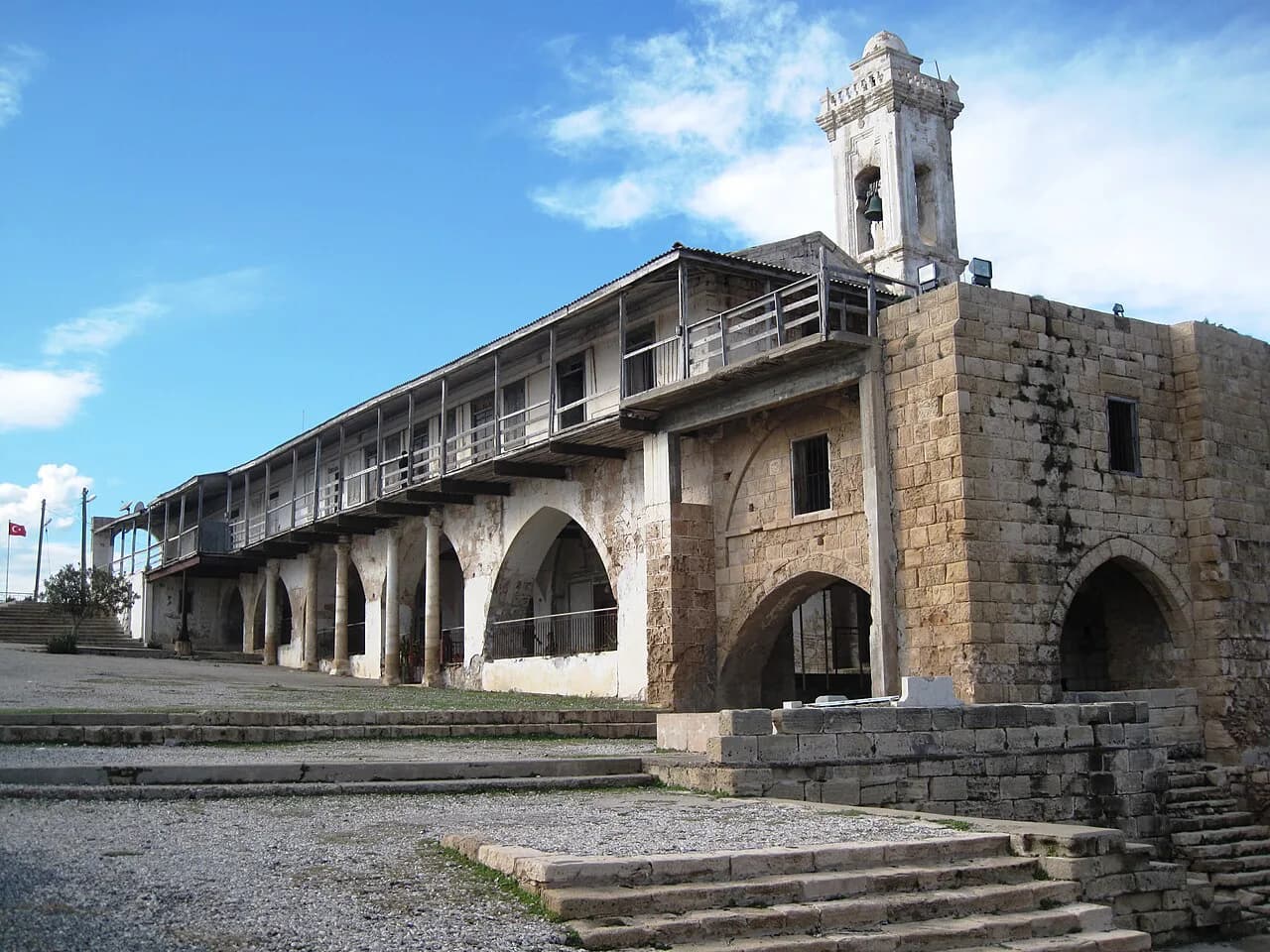
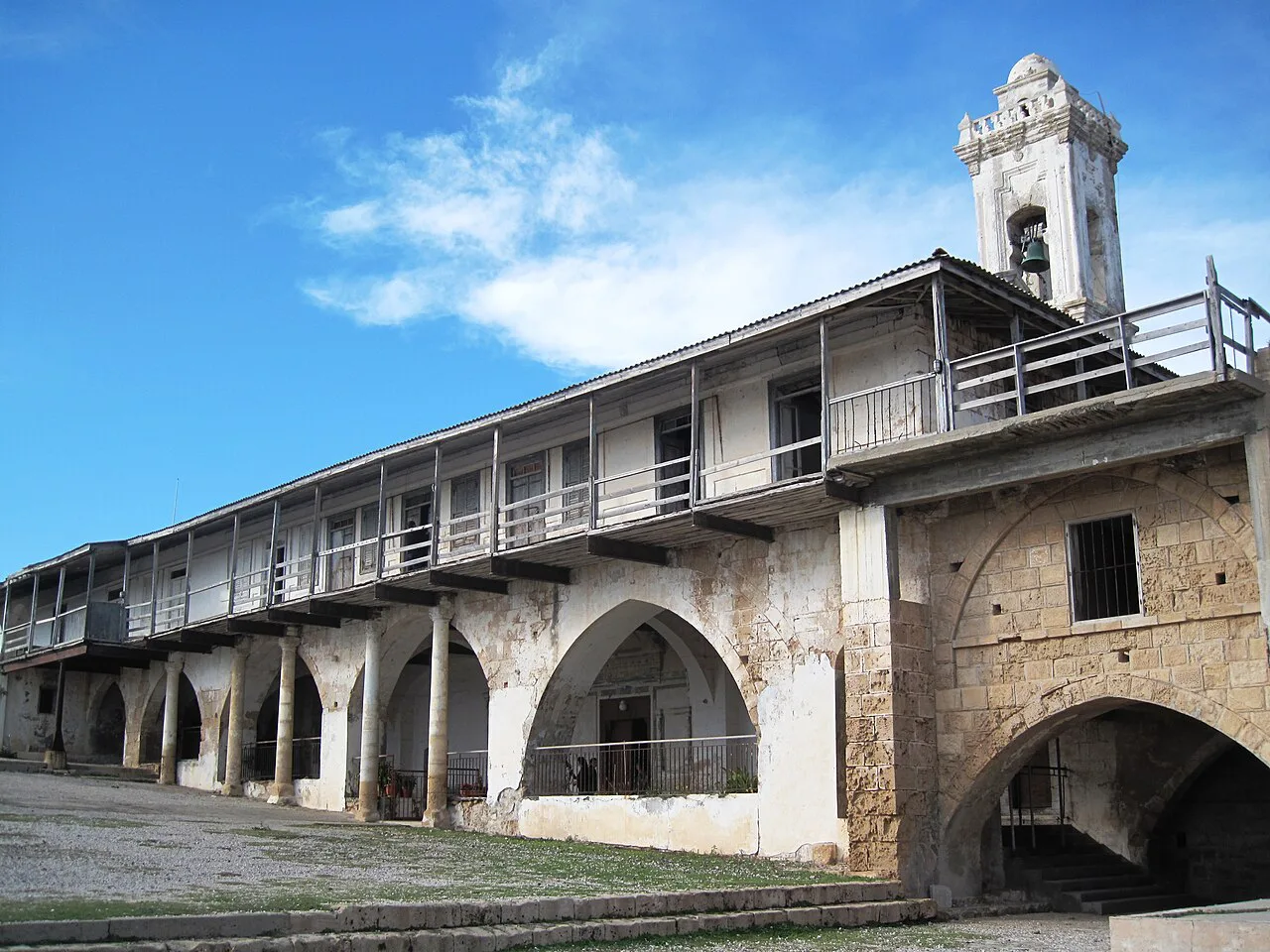
The layout is two-tiered. A small chapel was built in the 15th century on the rocks near the shore, and the healing water can still be collected there. The main church visible today was built above that chapel and dates to the 18th century, while the main monastery buildings are about a hundred years younger.
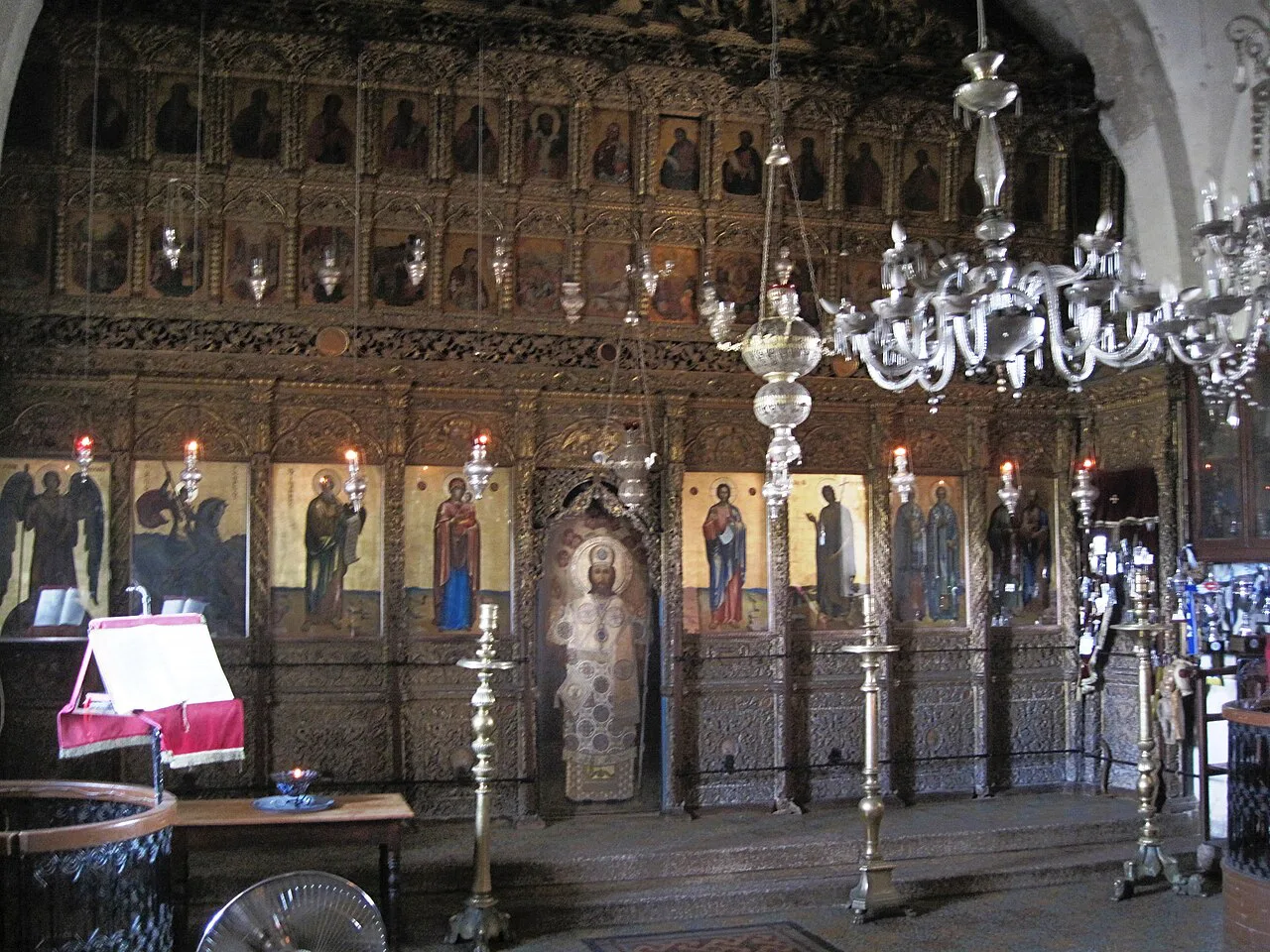
The sacred spring sits in the lower chapel beneath the main church, with icons of Saint Andrew surrounded by candles and offerings. The upper level houses the monks' quarters, and recent years have added facilities for prayer, reflection and rest. Whitewashed walls and stone arches make the complex feel like the quiet point of the peninsula.
The 2014 restoration and what it changed
After the division of the island the monastery fell into disrepair, and visitors who returned after 2004 found the damage. Renovation began in September 2014 after delays over disputes between the two sides, with two construction companies, one Greek Cypriot and one Turkish Cypriot, working under the Church of Cyprus and the Turkish Cypriot Evkaf administration. Inside, photographs of the work and a plaque describing the monastery as a symbol of tolerance between the two communities document the project.
Read the buildings with that history in mind: the whitewashed church and stone arches are traditional Cypriot work, but the state of the fabric is the result of a recent joint project rather than centuries of continuous care.
Crossing the Green Line before you drive
The monastery is in the north, so a visit from the Republic means crossing the Green Line with your passport. Work out which crossing point you will use before you set off, and confirm with your hire-car company in writing that the vehicle and its insurance cover northern Cyprus for the peninsula's roads. Ask about the Karpas drive specifically, because the remote end of the peninsula is a different proposition from a short trip through Nicosia.
Crossing points opened in the 2000s and pilgrim traffic to the monastery recovered afterwards. Budget for the border formalities in both directions, and keep passports to hand rather than packed in the boot. For the wider northern picture, see the North Cyprus hub.
The drive along the Karpas and how the day fits together
The monastery anchors a full day on the Karpas Peninsula, best built around Dipkarpaz (Rizokarpaso) as the last real settlement before the tip. From there the road runs on towards the monastery, Golden Beach and the national park. Plan the monastery for late morning or early afternoon so the return leg is not rushed.
Boğaz, at the start of the peninsula, makes a sensible pause on the way in or out. Between Boğaz and Dipkarpaz the driving is unhurried and the villages are few, so refuel and buy lunch before pushing east.
Opening hours, entrance fee and dress code
The monastery is open daily, though hours may vary with the season, and there is no entrance fee; donations are welcome. Modest clothing is recommended, with shoulders and knees covered. Because the seasonal variation is not fixed to published times, confirm the day's hours locally before you commit to a long drive.
Practical points for pilgrims
Bring a bottle if you want to take spring water home, a tradition among visitors and one that matters to families who cannot make the journey themselves. Dress for a working religious site rather than a beach: shoulders and knees covered, and quiet inside the church.
The monastery stands in open, exposed country at the tip of the peninsula. A hat and water for the walk between the lower chapel and the upper church are sensible in summer. For the surrounding landscape and other stops on the peninsula, see the Karpas Peninsula guide.
Is the monastery worth the drive to the tip?
Yes, if you treat it as the point of a Karpas day rather than a detour: the two-tiered church and spring, the shared restoration and the pilgrimage history all reward the drive. No, if you only have a half-day, because the peninsula's roads and the border crossing eat the time.
Before setting out, settle the Green Line crossing and confirm in writing that your hire car is insured for the north. Then plan the day around Dipkarpaz, carry a bottle and modest clothing, and check the day's opening hours before the long drive east.
Explore more North Cyprus guides
Frequently Asked Questions
Do I need a passport to visit Apostolos Andreas Monastery?
Yes if you are coming from the Republic of Cyprus, because the monastery lies north of the Green Line and the crossing requires your passport. Carry it with you rather than leaving it in your accommodation, and confirm with your hire-car company that the vehicle and its insurance are covered for northern Cyprus before you travel.
Can I take water from the spring home with me?
Visitors traditionally fill bottles at the spring, and the water is collected at the lower chapel beneath the main church. Bring your own bottle, dress modestly with shoulders and knees covered, and keep noise down inside the church out of respect for worshippers.
Is there an entrance fee for the monastery?
There is no entrance fee, and donations are welcome. Opening is daily with hours that vary by season, so ask locally on the day before committing to the drive to the peninsula's tip.
Sources
Notes for your Cyprus trip
Optional updates to our Cyprus guides.
You might also like
Continue reading
More guides you'll find useful