Free Things to Do in Larnaca: Sights, Walks and Free Entry
Free things to do in Larnaca, from the salt lake flamingos and Finikoudes to Saint Lazarus Church, plus the free district museum and its closed days.
On this page
Larnaca is one of the cheapest bases in Cyprus for sightseeing because its headline stops are free: the Finikoudes seafront, the Church of Saint Lazarus, the Archaeological Museum of the Larnaka District and the Salt Lake nature trail all cost nothing to visit. Only a handful of places ask for money, and just one of them, the Neolithic settlement at Choirokoitia, is worth building into a free day.
This guide sorts the genuinely free from the ticketed, gives the opening pattern for the free museum so you do not waste a stop, and explains why the Zenobia wreck is not a free shore dive. Costs are in euros, and where a fee is charged it comes from the site authority's own listing.
The short answer: what is free in Larnaca
Free in Larnaca means the seafront promenade, the old-town lanes, the church of Saint Lazarus, the district archaeological museum, the salt lake trail, the Kamares Aqueduct and the shoreline around Hala Sultan Tekke. Paid stops are the medieval castle, Choirokoitia and any boat dive out to the Zenobia.
The practical consequence is that a full day of sightseeing here can cost nothing beyond food and transport, provided you arrive on a day the museum is open and you treat the salt lake as a viewing site rather than a place to walk out into. Plan the free stops around the museum's Tuesday-to-Sunday pattern and the rest falls into place.
Finikoudes promenade and the old-town core
Finikoudes is the palm-lined seafront where the city shows itself off, and walking it costs nothing at any hour. From the promenade you can turn inland into the old-town core, where narrow lanes, small squares and the remains of ancient Kition sit among everyday shops and houses. Budget an hour for the seafront and another for the lanes, more if you stop for coffee.
The lanes repay slow walking rather than ticking off sights: the pleasure is in the scale, the shuttered balconies and the sudden views of dome or minaret. Morning is cooler and quieter, and the light on the seafront is softer before the afternoon glare builds.
Church of Saint Lazarus and the lanes around it
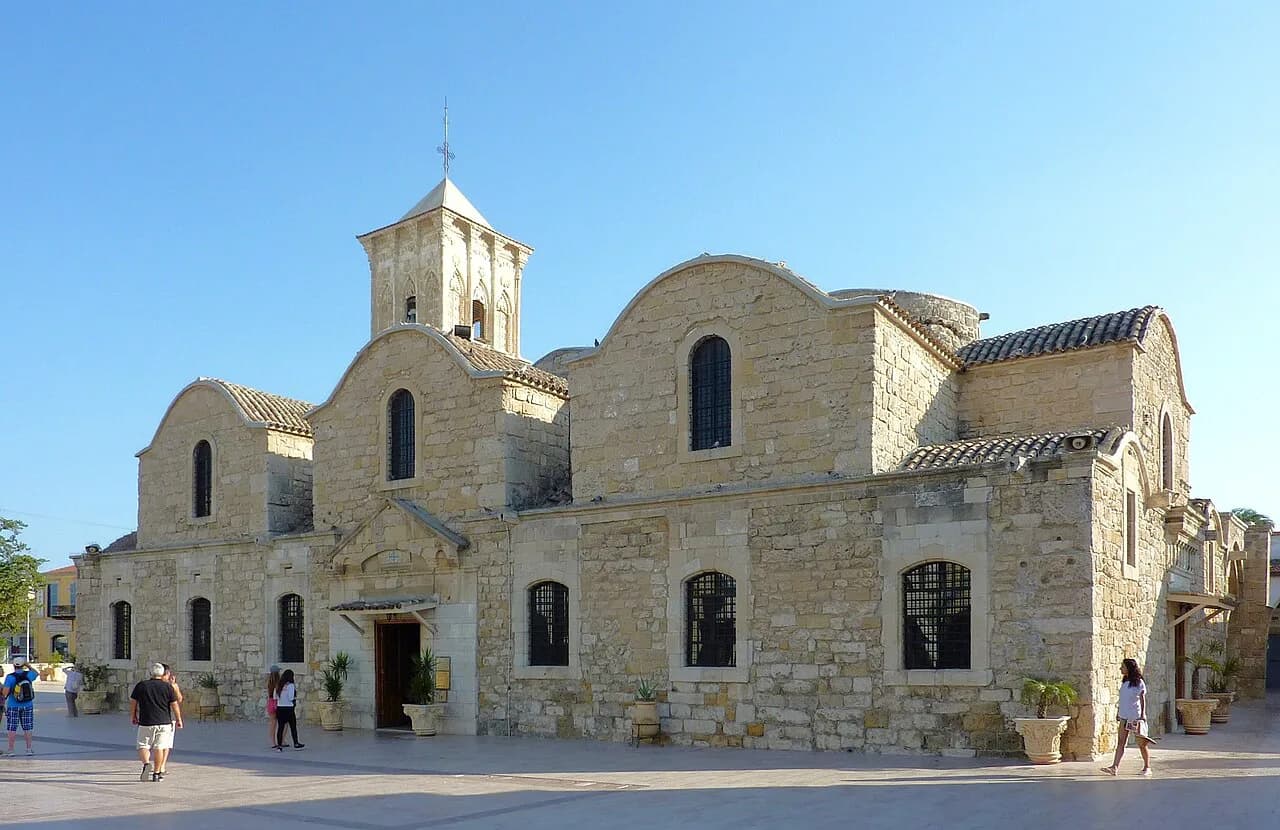
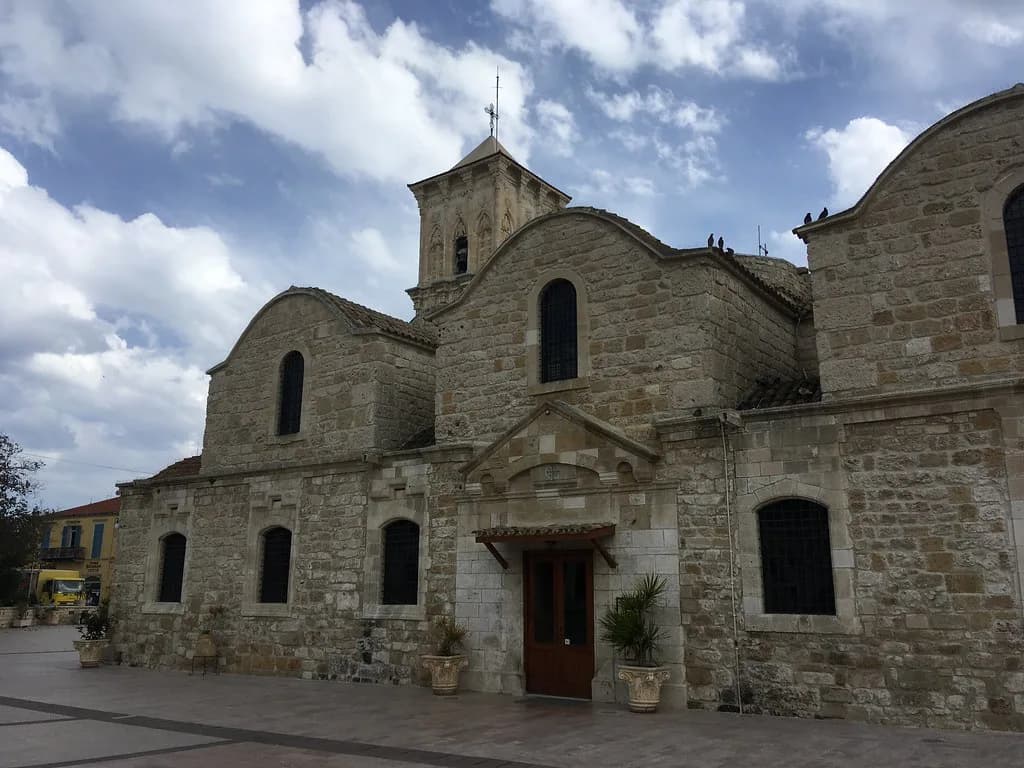
The Church of Saint Lazarus is the centrepiece of the old town and free to enter as a working church, so dress and behave as you would in any active place of worship. The stone-built exterior and the shaded courtyard are the draw as much as the interior, and the surrounding lanes are made for a slow loop back towards the seafront.
Treat this as a short stop of twenty to thirty minutes rather than a museum visit, and combine it with the market streets and the district museum, which sit within the same compact area. Avoid visiting during services.
Archaeological Museum of the Larnaka District: free entry, Tuesday to Sunday
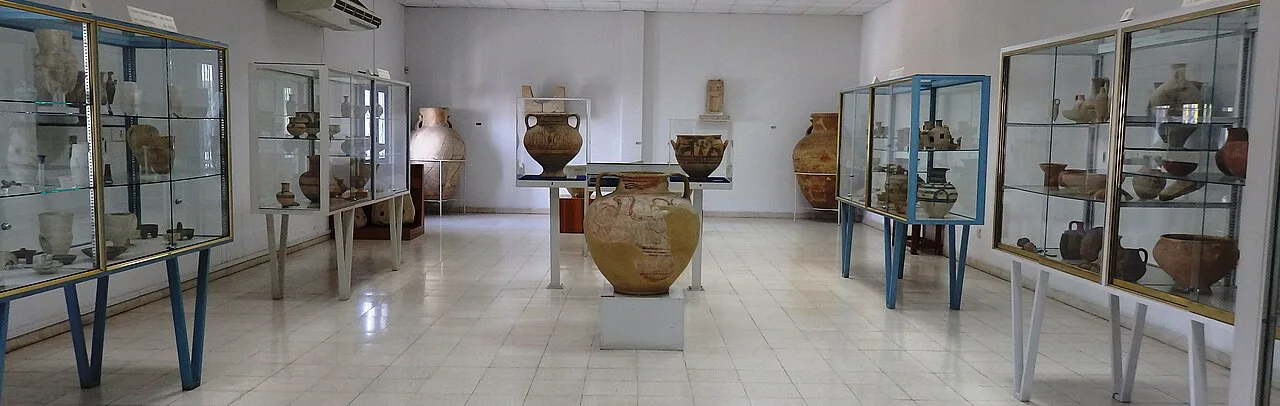
The district museum on Plateia Kalograion holds finds from the whole Larnaka region, including the ancient city-kingdom of Kition and the Neolithic settlements at Choirokoitia and Tenta-Kalavasos, with faience, ivory and alabaster pieces showing the island's old trade links. It opens Tuesdays to Sundays from 9:00 to 16:30, entry is free, and it closes on public holidays, so a Monday or a holiday will waste the trip.
Because entry costs nothing, this is the best-value indoor stop when the heat or a shower interrupts a walking day, and it is fully accessible. Give it an hour, then walk back down to the seafront.
Larnaca Salt Lake and the Aliki trail: flamingos in winter, no wading
The salt lake complex covers about 2.2 sq km across four lakes, with the main one, Aliki, ringed by a 4 km nature trail and a bird-watching tower. Greater flamingos typically arrive with the first rains in November and stay until around March, sometimes in tens of thousands when water levels are high, alongside more than 85 migratory species.
The rule that matters is that wading out into the lake to approach the birds is prohibited, because it damages a sensitive Ramsar and Natura 2000 wetland. Watch from the path and the tower with binoculars instead, and keep your distance and your noise down.
Kamares Aqueduct and the second trailhead
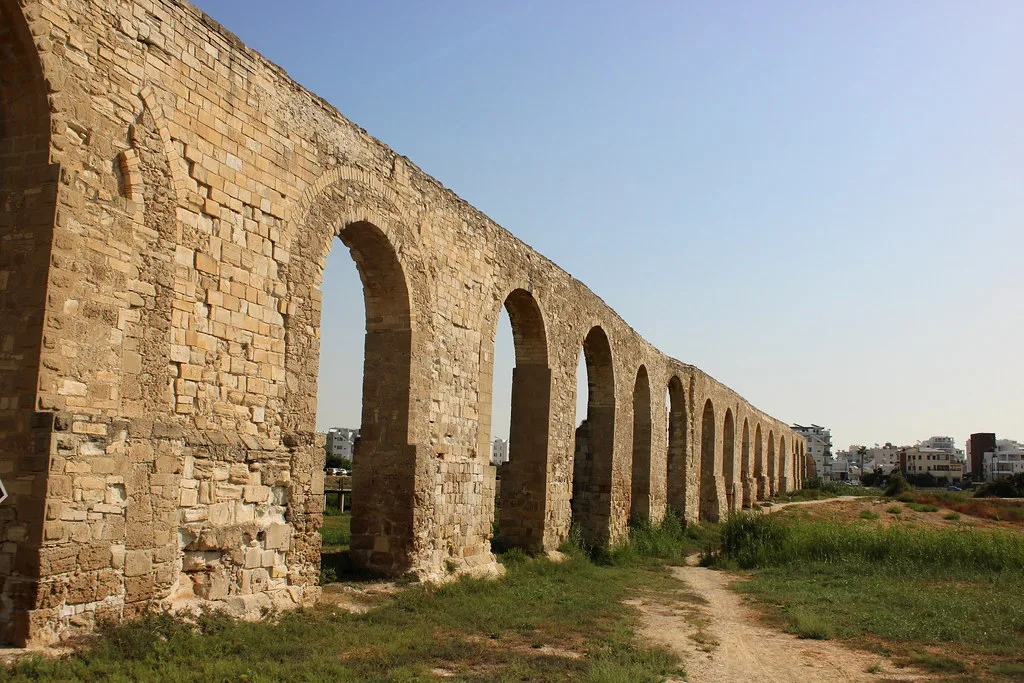
The Aliki trail has two starting points, one at the Kamares Aqueduct and the other at the salt collection plateau on Artemis Avenue, about 150 metres past the District Judicial Court on the road towards the old airport. The aqueduct itself is an outdoor monument, free to look at, and it makes the more atmospheric start if you are on foot or parking nearby.
The Artemis Avenue entrance suits anyone driving, since it puts you straight onto the lakeside path with the birds ahead of you. The trail also forms part of the European long-distance walking route E4.
Hala Sultan Tekke and the lake shoreline
Hala Sultan Tekke sits near the old airport and the salt lake, one of the landmarks that defines the wetland's edge, and the shoreline around it is open ground for a walk. The combination of mosque, water and low scrub is the most photogenic free landscape in the city, especially towards sunset when the light turns the lake red.
It pairs naturally with the Aliki trail, so plan them as one outing rather than two separate trips across town. Remember the no-wading rule applies along this shoreline too.
Larnaca Medieval Castle: what is free and what is ticketed
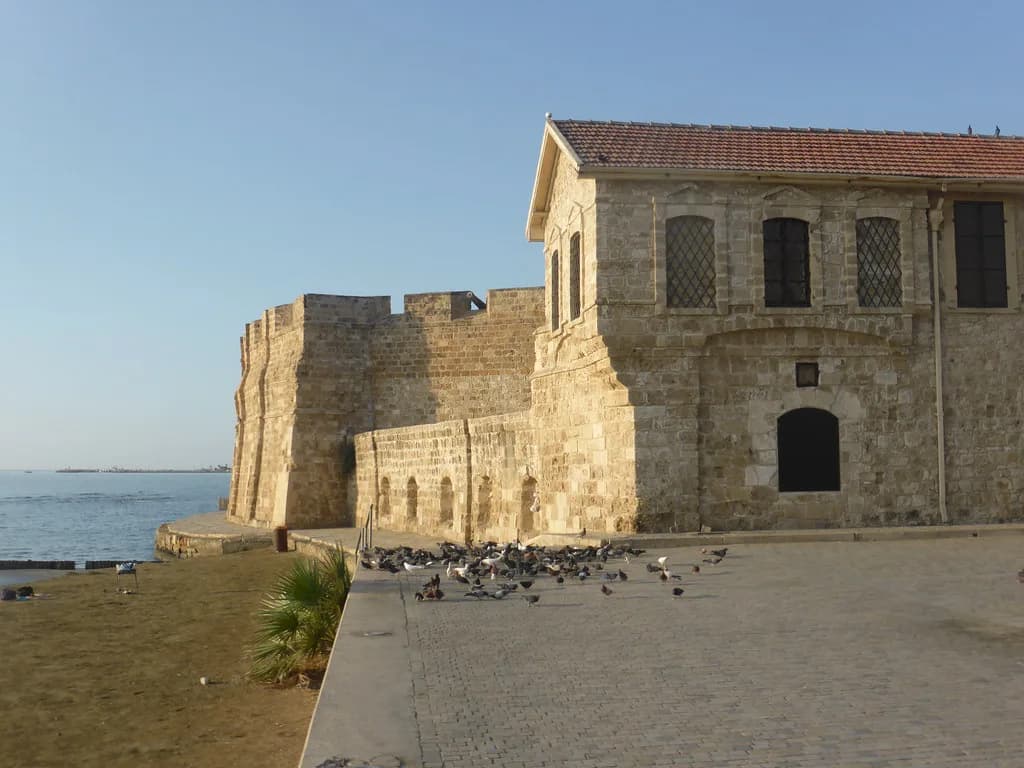
The medieval castle anchors the harbour end of the seafront, and the exterior, the surrounding ground and the views along the waterfront cost nothing. Going inside is a ticketed Department of Antiquities visit, so if you are keeping the day free, circle it and enjoy the approach rather than paying in.
The castle sits beside the harbour and marina area, which makes a natural end point for a seafront walk from Finikoudes. Check the current ticket price and hours at the entrance before deciding.
Choirokoitia: the one paid stop worth budgeting for
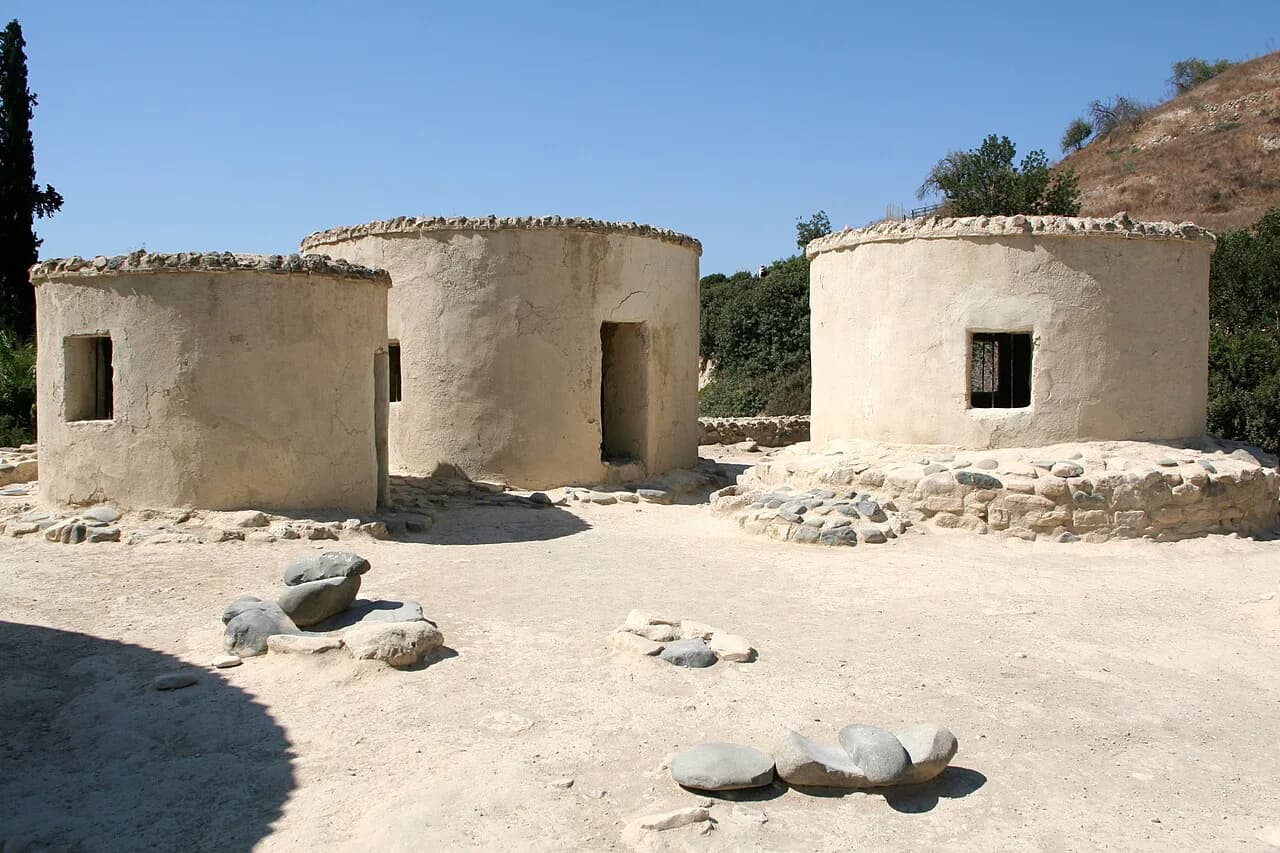
Choirokoitia is a UNESCO World Heritage Neolithic settlement with five reconstructed cylindrical dwellings built with the original methods and materials and fitted with replica household objects. Entry is €2,50, hours run 08:30 to 17:00 daily from 16 September to 15 April and 08:30 to 19:30 daily from 16 April to 15 September, and it closes on Christmas Day, New Year's Day and Greek Orthodox Easter Sunday.
Groups of more than ten get a 20% reduction, and the Department of Antiquities sells one-day entry cards at €8,50, three-day cards at €17,00 and seven-day cards at €25,00 for its museums and monuments. The maths is simple: if you plan to add two or three other antiquities sites, the day card quickly beats paying individually, while a single stop here stays cheapest at the standard fee. The site is 32 km from Larnaca and 48 km south of Nicosia on the motorway, so it needs a car or a deliberate bus trip, and the sloping hill means the reconstructed dwellings are the practical target for wheelchair users.
Zenobia: a paid boat dive, not a free shore snorkel
The Zenobia is a 172-metre Swedish ferry that capsized in 1980 and now lies in Larnaka Bay about 3.7 km offshore, so there is no free shore access to it. The shallowest point is 18 metres and the maximum depth 42 metres, the site is rated Advanced Open Water, and visibility can reach 30 metres in good conditions.
That makes it a paid boat dive for qualified divers, with the lorries and trucks still in the holds and the surrounding water a marine protected area where fishing is banned within three miles. If you do not dive, leave it out of a free itinerary rather than booking a trip you cannot use.
Getting between the free stops on foot, by bus and by car
The seafront, Saint Lazarus, the old-town lanes and the district museum form a walkable cluster, so one morning covers them without transport. The salt lake, Kamares Aqueduct and Hala Sultan Tekke sit further out and are best linked by car or a local bus, and Choirokoitia needs its own run along the motorway.
Driving in Cyprus is on the left and the Republic uses the euro, so fuel and any parking are paid in euros. Local buses are the cheapest way to reach the lake and the aqueduct; check the current route and timetable with the operator before you set out.
Best time of day and season for each free stop
Walk Finikoudes and the old town early, when the heat is bearable and the lanes are quiet, and save the museum for the middle of the day when its free entry and air-conditioned rooms are a relief. The salt lake belongs to late afternoon and sunset for the light, and to the period from November to around March for the flamingos.
Choirokoitia is exposed hillside, so go at opening time in summer and carry water; in winter its shorter 17:00 close limits the afternoon. Water temperatures at the Zenobia range from about 15 to 28 °C through the year, which matters more to divers than to walkers.
Should you pay for Choirokoitia or stay free in town?
Stay in town if you want a zero-cost day: the seafront, Saint Lazarus, the free museum and the salt lake fill a full itinerary without a ticket. Pay the €2,50 at Choirokoitia only if you have a car, an interest in the Neolithic, and a morning to spare, and consider the €8,50 day card if other Department of Antiquities sites are on your list.
Check opening days and the site's seasonal hours with the Department of Antiquities before you drive out, since the museum shuts on Mondays and public holidays. Everything else on this list can be done on foot, and none of it needs booking.
Explore more Larnaca guides
Frequently Asked Questions
Is Larnaca expensive for a short break?
The sightseeing side is cheap: the promenade, Saint Lazarus Church, the district archaeological museum and the salt lake trail are all free, and the one low-cost antiquity site charges a small flat fee. Your money goes on food, drinks and transport rather than tickets.
What should you not miss in Larnaca?
The Church of Saint Lazarus and the lanes around it, the district museum's Kition and Neolithic finds, and the salt lake with flamingos in winter. The Kamares Aqueduct end of the Aliki trail gives you the best of the lake on foot.
Which part of Cyprus is nicest for a short break?
Larnaca suits a short break because so much of it is walkable and free, with the seafront, church and museum in one compact area. Paphos has the mosaics and Limassol the bigger city feel, but neither gives you this much for nothing in a single day.
Sources
Notes for your Cyprus trip
Optional updates to our Cyprus guides.
You might also like
Continue reading
More guides you'll find useful