Larnaca Flamingos: When to See Them at the Salt Lake
Flamingos reach Larnaca Salt Lake with the first rains, usually in November, and stay until around March. Here is where to watch them and how to visit.
On this page
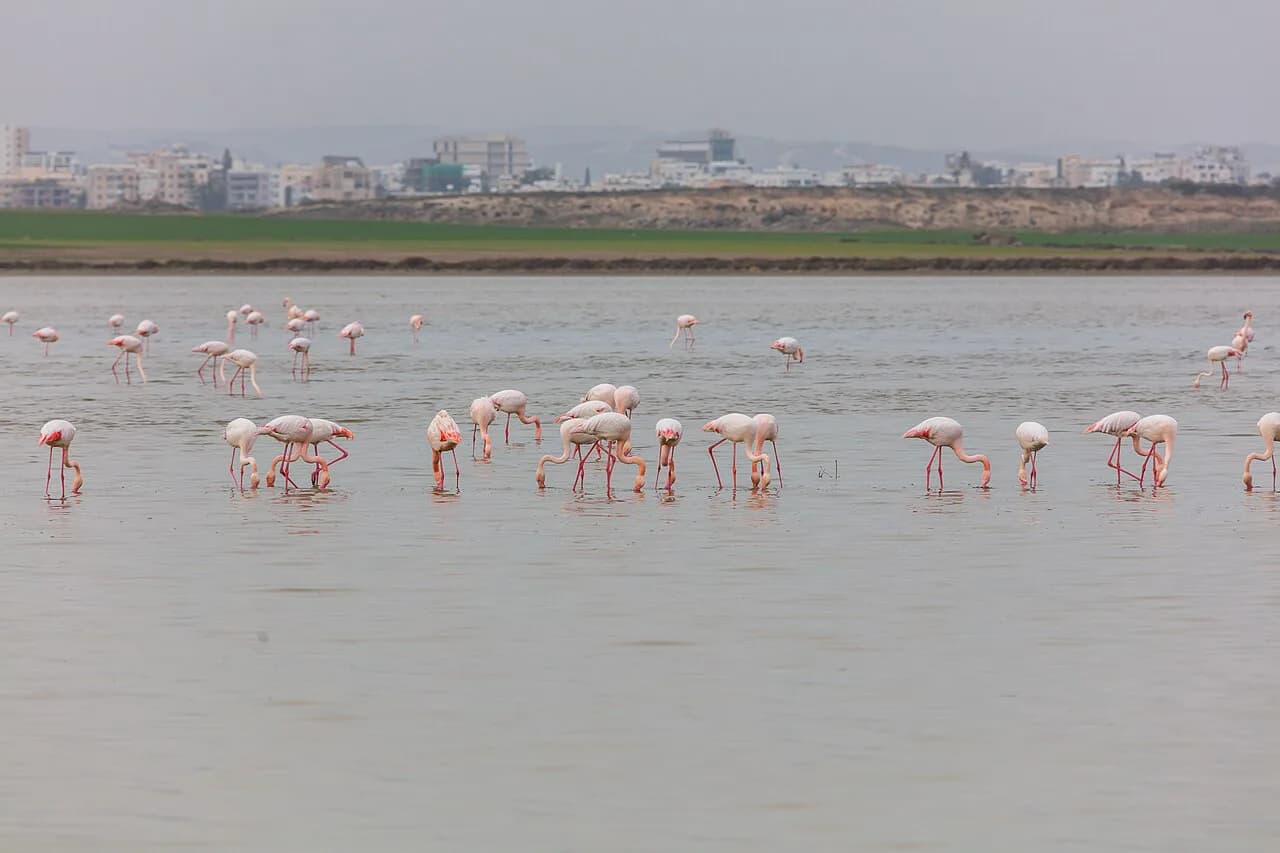
Flamingos arrive at Larnaca Salt Lake with the first rainy weather, typically in November, and stay until around March, so a winter or early spring break gives you the best chance of seeing them. The birds gather in their thousands when water levels are high, and the main lake, Aliki, has a nature path and bird watch tower for watching them without wading in. This guide covers the season, where to stand, the 4 km trail and how to combine it with Hala Sultan Tekke.
When flamingos are at Larnaca Salt Lake
The Larnaca Tourism Board puts the arrival at the first rainy weather, typically in November, with the birds staying until around March. BirdLife Cyprus gives a similar window for Akrotiri and Larnaka Salt Lakes, with arrivals usually in November and departures by the end of February. Either way, plan a winter visit rather than a summer one.
Numbers are not guaranteed. Higher water levels can bring the count into the tens of thousands, and the birds are sensitive to disturbance, so timing is a gamble rather than a booking certainty. Aim for the middle of the season, between December and February, and treat a quiet lake as a possibility.
What the Salt Lake actually is
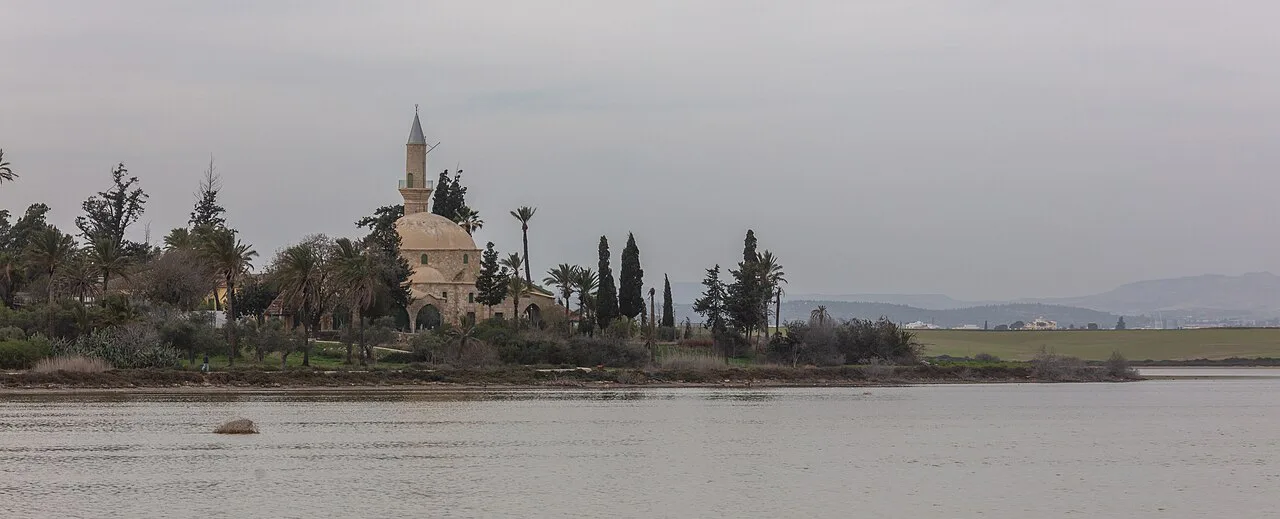
Larnaca Salt Lake is not one sheet of water but four salt lakes covering 2.2 sq km: Aliki, Orphani, Soros and the Airport lake, stretching towards Pervolia, Meneou and Dromolaxia. The main lake, Aliki, is the one with the winding nature path and bird watch tower, so head here if you want the classic view. For the wider context, see our Things to Do in Larnaca guide.
The wetland is a Ramsar site of international importance, a Natura 2000 site and a BirdLife International Important Bird Area. More than 85 migratory bird species use it alongside the flamingos, with dark red algae and small shrimp forming the food chain that draws them in. Bring binoculars and you get more than pink birds.
Where to watch: the Aliki path and bird watch tower
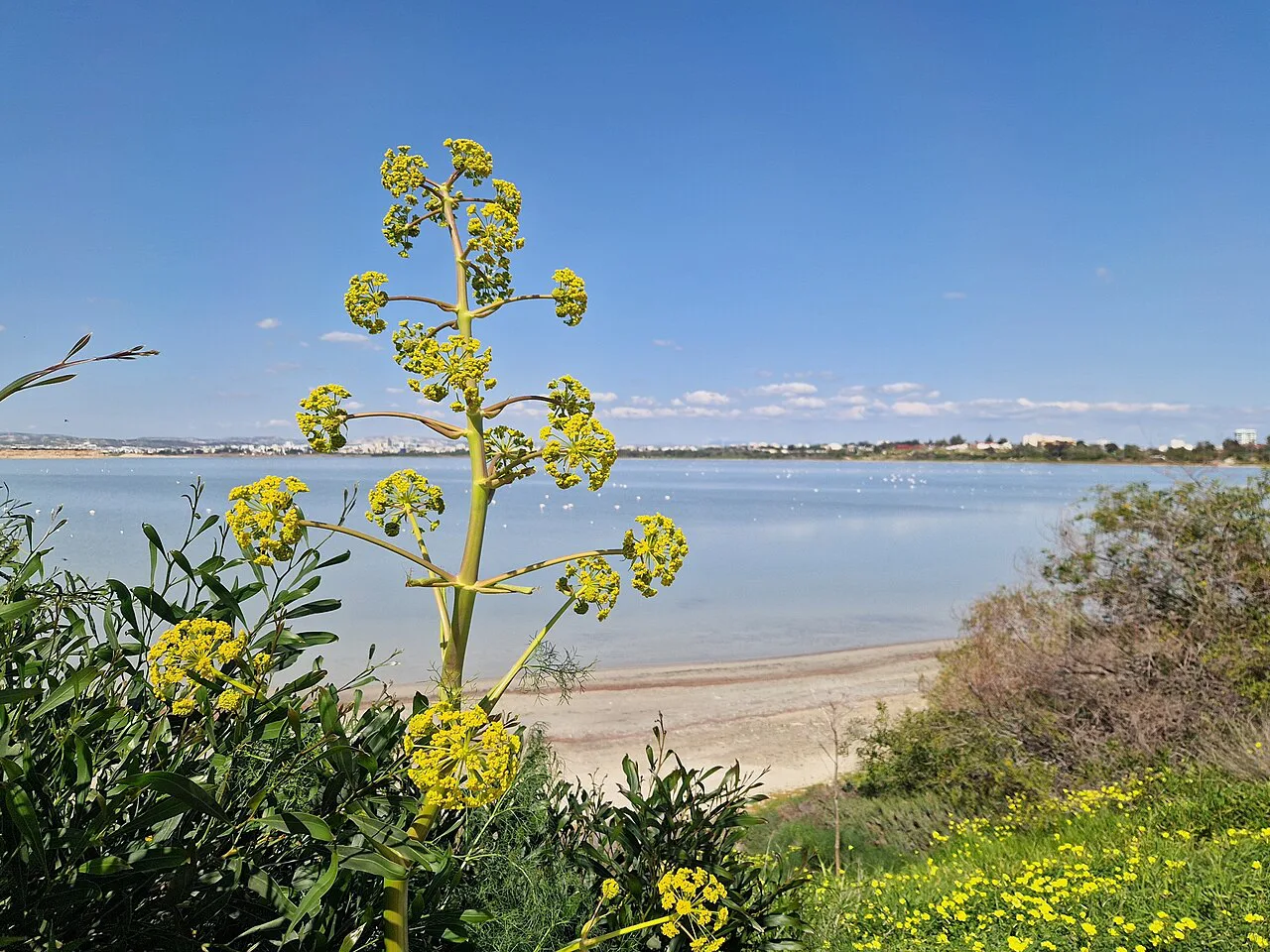
The Aliki nature path runs beside the main lake and includes a bird watch tower, which is the simplest way to see flamingos without getting close enough to disturb them. Visitors report birds feeding near the shore, close enough to watch from a reasonable distance with binoculars or a zoom lens.
The wider trail is 4 km long and has two starting points: the Kamares Aqueduct and the salt collection plateau on Artemis Avenue towards the old airport, 150 metres after the District Judicial Court. Starting at the aqueduct gives you a recognisable landmark, while the Artemis Avenue end puts you nearer the salt flats.
How to watch without disturbing the birds
Wading out into the salt lake to get closer to the flamingos is prohibited, because the shallow water and bird habitat are highly sensitive. The birds also shy away from people who come too close, so a long lens beats a short wade every time. Stay on the path, keep your distance and keep noise down.
The honking you hear is the flock communicating to stay together, not a performance for visitors. Watching from the tower and path lets the birds settle, which is better for them and gives you longer, calmer views.
How long to allow and what to pair with it
Give the 4 km trail around two hours at an easy pace with stops at the tower, or less if you only walk the section nearest your starting point. The trail forms part of the European Walking Route E4, so long-distance walkers can fold it into a longer day.
Hala Sultan Tekke mosque sits beside the lake near the old airport, making it the obvious pairing for a half-day outing. Combine the two with a stroll through Larnaca Old Town or a sunset walk along the seafront, and you have a full winter day in Larnaca.
Practical points for a winter visit
The lake complex lies near Larnaca's old airport and the villages of Pervolia, Meneou and Dromolaxia, so it is easy to reach by car and to combine with the coast road. The trail is an open-air path, so daylight and weather set your window rather than any set hours.
Winter rain is what fills the lake, so a wet December is good news for flamingo watchers but means waterproof shoes and a windproof layer. The trail is flat and exposed, with little shelter, so check the forecast before setting out.
Should the Salt Lake be on your Larnaca list?
Yes, if you are in Cyprus between November and March and want an outdoorsy half-day that pairs naturally with Hala Sultan Tekke. Skip it in summer, when the flamingos are gone, unless you simply want the flat walk and the salt-flat views.
Build the rest of your trip around the seafront and old town, and check the current forecast and bird news before you set off, since water levels and arrivals shift from week to week.
Explore more Larnaca guides
Frequently Asked Questions
Can you see flamingos in Cyprus outside Larnaca?
Yes. BirdLife Cyprus notes that thousands of flamingos congregate at Akrotiri as well as Larnaca Salt Lake in good years, usually arriving in November and leaving by the end of February. Akrotiri is near Limassol, so it suits a different day out.
What is Larnaca famous for?
Larnaca is known for its seafront and old town, its salt lake and winter flamingos, Hala Sultan Tekke mosque and the Kamares Aqueduct, which is one of the starting points for the 4 km salt lake trail.
Are there flamingos at Larnaca Salt Lake right now?
No source gives a week-by-week count, so it is worth checking BirdLife Cyprus or local birding groups before travelling. Arrivals depend on the first rains and water levels, which vary from year to year.
Sources
Notes for your Cyprus trip
Optional updates to our Cyprus guides.
You might also like
Continue reading
More guides you'll find useful