Cyprus Wildlife: Where and When to See It
Cyprus wildlife for travellers: mouflon in the Paphos forests, turtles nesting in late summer, endemic birds and butterflies, and where each one lives.
On this page
The wildlife you have a realistic chance of seeing in Cyprus falls into two groups: endemic animals found only on the island, such as the mouflon, the Cyprus warbler and the Cyprus wheatear, and seasonal visitors such as sea turtles, which come ashore to nest in late summer. Most of the endemics sit in the forests and rocky slopes of the Paphos and Troodos districts, while the turtles belong to the coast. This guide groups each species by the habitat and region you are already visiting, then sets out the months that matter and how to watch without disturbing anything.
Timing does most of the work. Bird song peaks in late spring, butterflies are on the wing through the warmer months, and the mountains offer shade and cooler air when the coast turns fierce at midday. Read the months below as the periods when each animal is most active, then build the day around an early start rather than a midday push.
What wildlife you can see in Cyprus
The island's headline species are the Cyprus mouflon, a large horned wild sheep and the national animal; the Cyprus warbler and Cyprus wheatear, two small birds that breed only here; and the Paphos Blue, Cyprus meadow brown and Cyprus grayling butterflies. Add the Cyprus whip snake and Troodos lizard on trails, the secretive Cyprus spiny mouse and Cyprus water frog near water, and the sea turtle offshore and on nesting beaches. Several of these are rare or endangered and protected, which shapes where and how you look for them.
What makes the list worth planning around is how much of it is exclusive to the island. The mouflon, the two breeding warblers and the meadow brown are described as endemic, so a sighting is not something you can repeat elsewhere in the Mediterranean. The turtles are the reverse: they range across the region and visit Cyprus seasonally, which makes them a bonus rather than a guarantee.
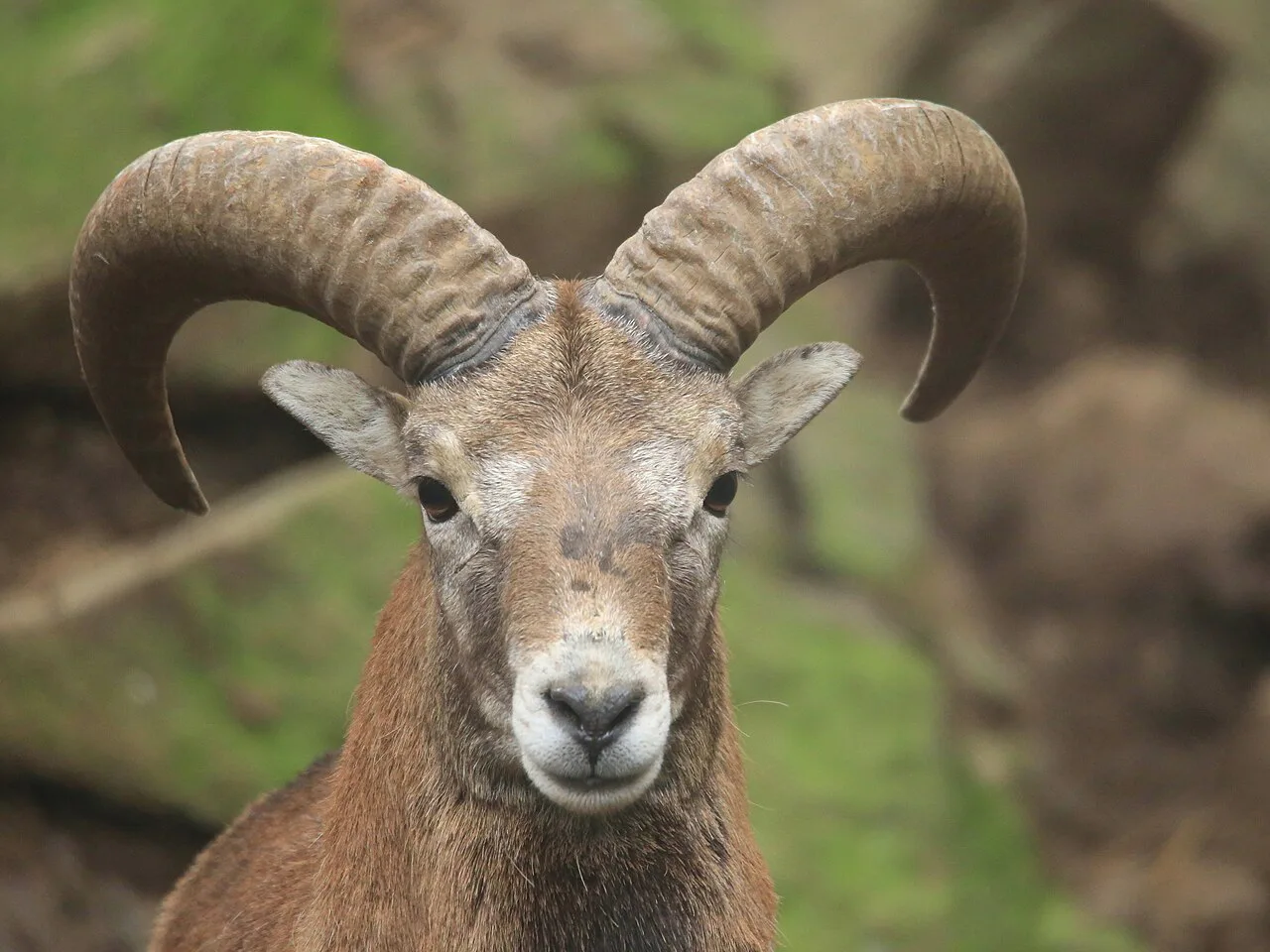
Cyprus mouflon: the island's national animal and where it lives
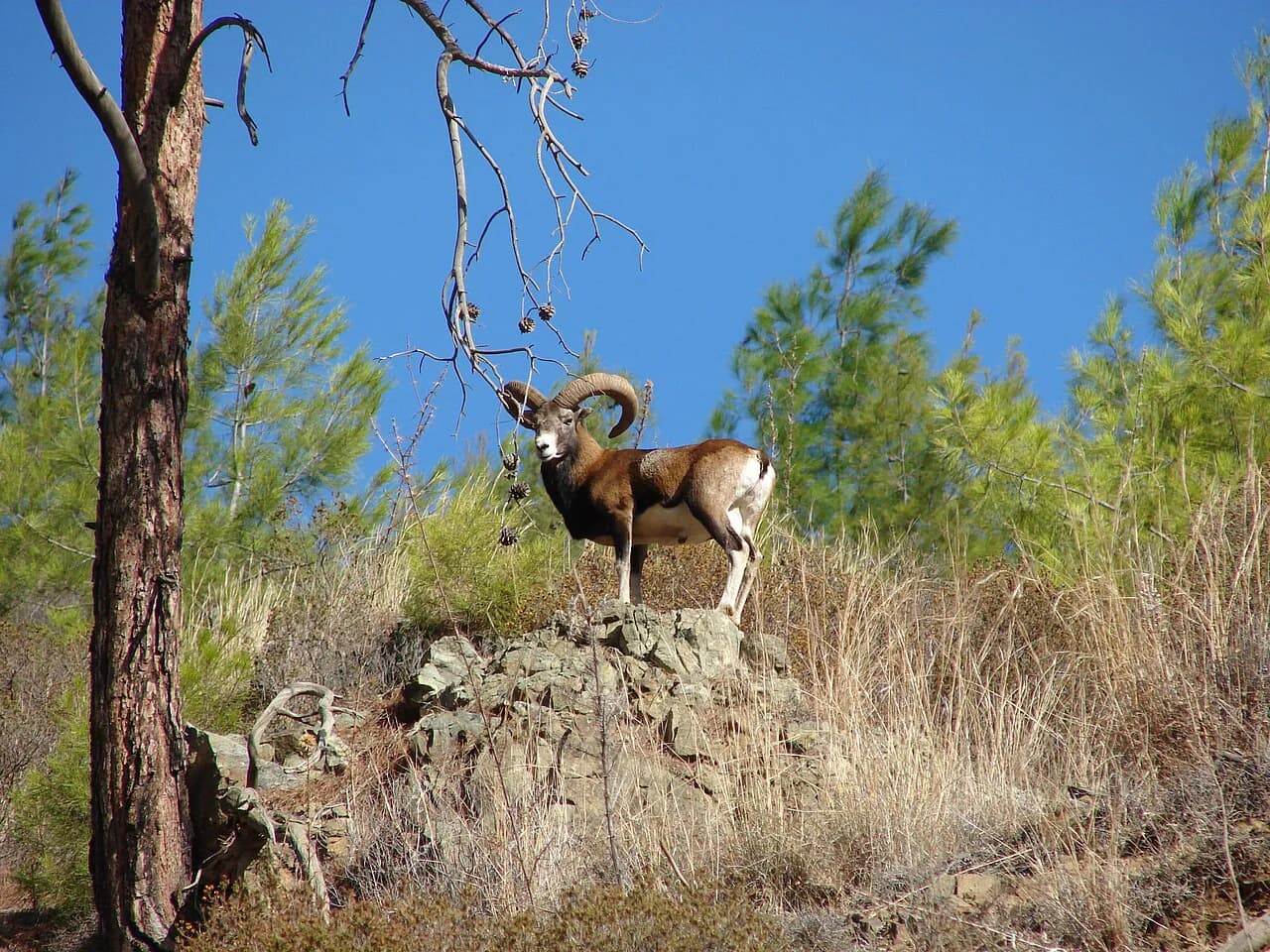
The mouflon is a big-horned mammal that lives on forest slopes in the Paphos region, and it is the animal most travellers most want to see. It is a protected species and serves as a national symbol, appearing on logos, stamps and coins. Because it keeps to forested, sloping ground rather than open coast, your chances depend on being in the right landscape at a quiet hour rather than on luck alone.
Are there squirrels in Cyprus? Do not count on seeing one. Cyprus has its own distinctive small mammals, including the endemic Cyprus spiny mouse, which is nocturnal and prefers dry ground, so daytime views are rare even where it lives.
What is the biggest predator in Cyprus? The large wild mammal most travellers associate with the island is the Cyprus mouflon, a protected wild sheep of the Paphos forests. It is a grazer rather than a hunter, so if you are hoping for a predatory thrill the more rewarding targets are the snakes and owls, all of which are modest in size.
Is Cyprus wildlife dangerous? For walkers, no. The Cyprus whip snake is harmless, feeding on lizards, frogs and insects, and the Cyprus water frog and Troodos lizard pose no risk at all.
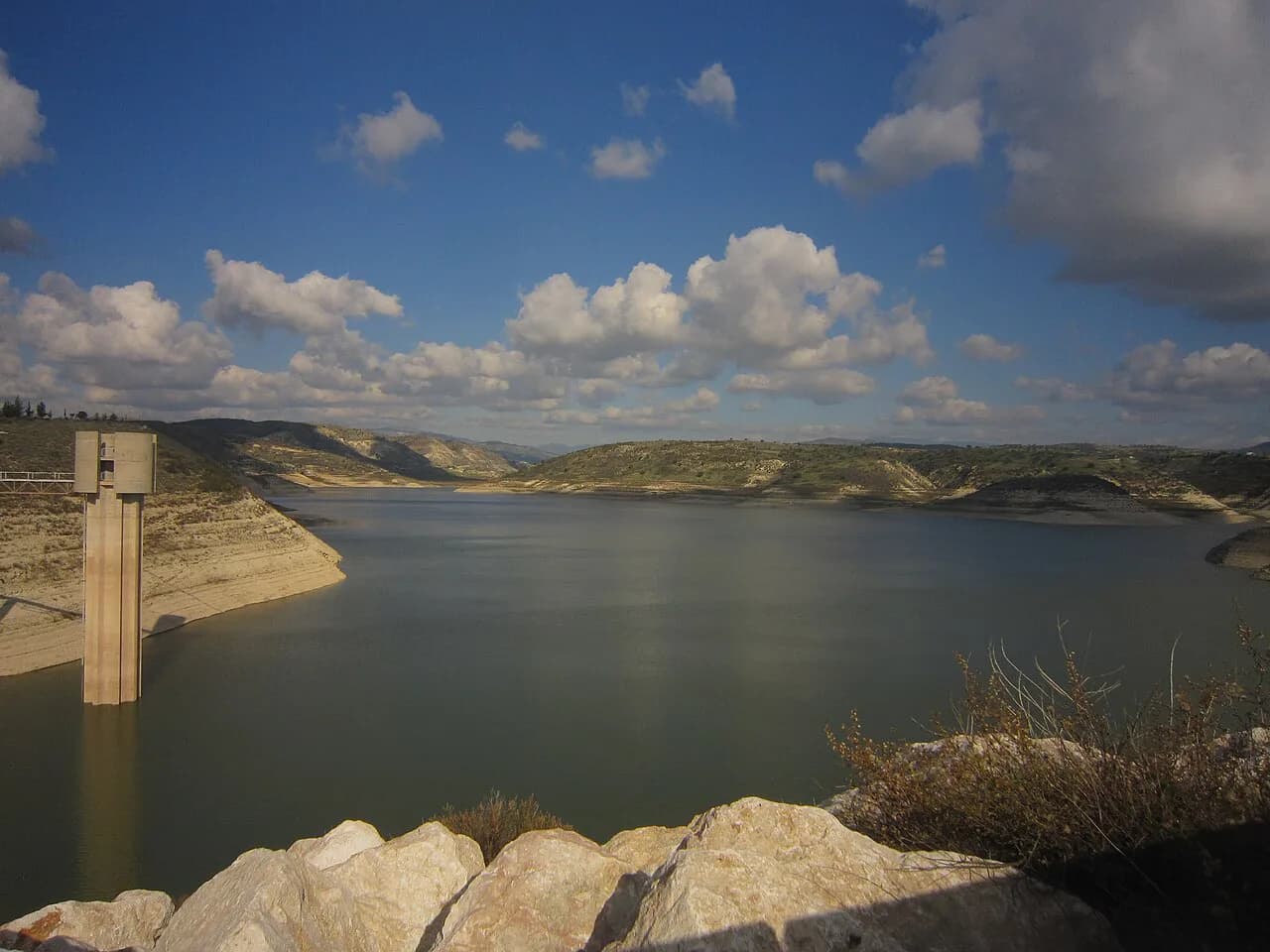
The wooded catchments above Paphos are the places to combine a wildlife stop with a wider look at the island's upland water. The Asprokremmos dam and Evretou dam sit in this western hill country, and the Evretou Reservoir is a landmark on the road towards Polis. Treat the reservoirs, including the wider network covered in the guide to Cyprus Dams, as a way to orient yourself in mouflon country rather than as a viewing platform.
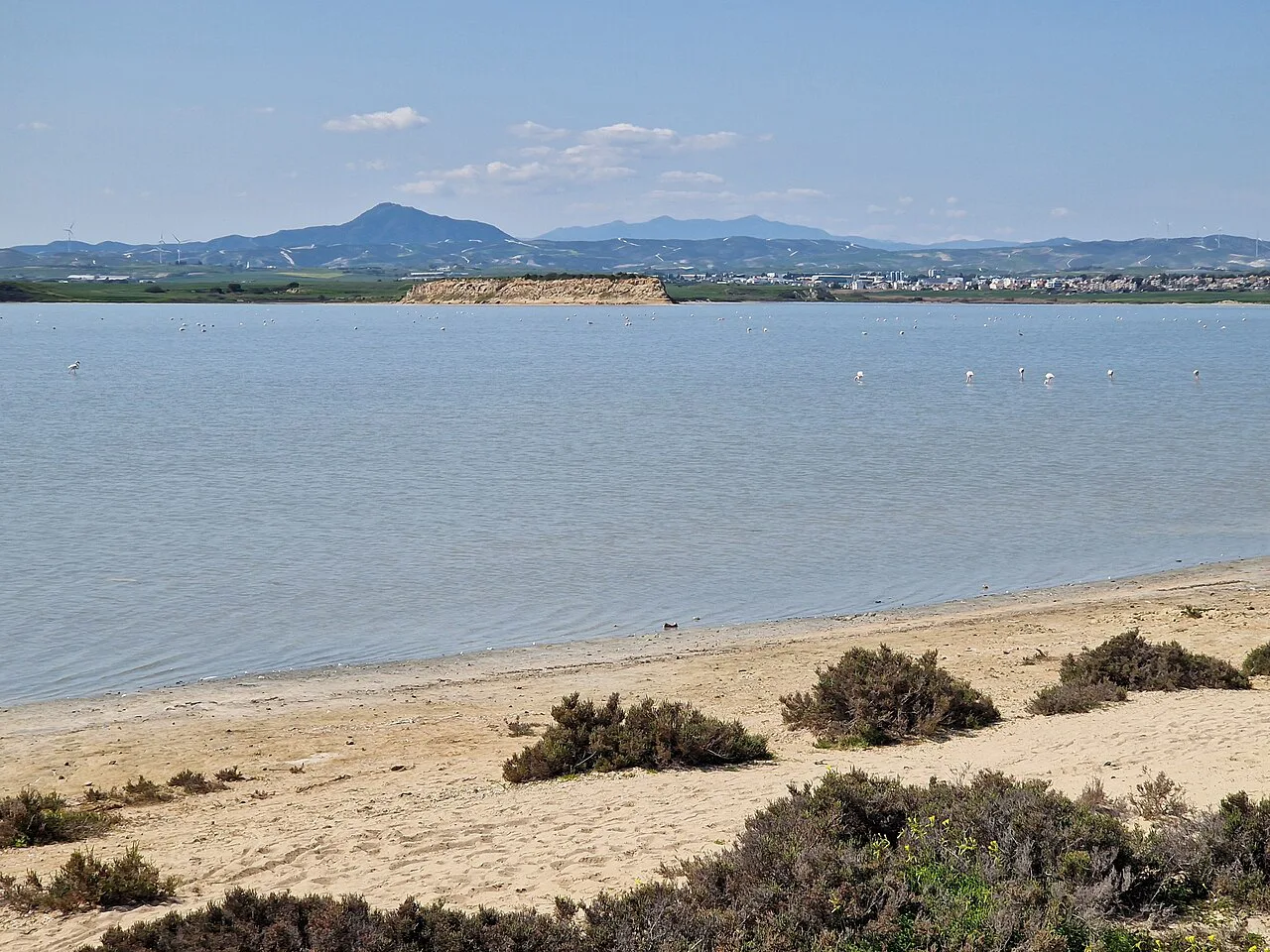
Sea turtles: nesting season, the Paphos region and watching responsibly
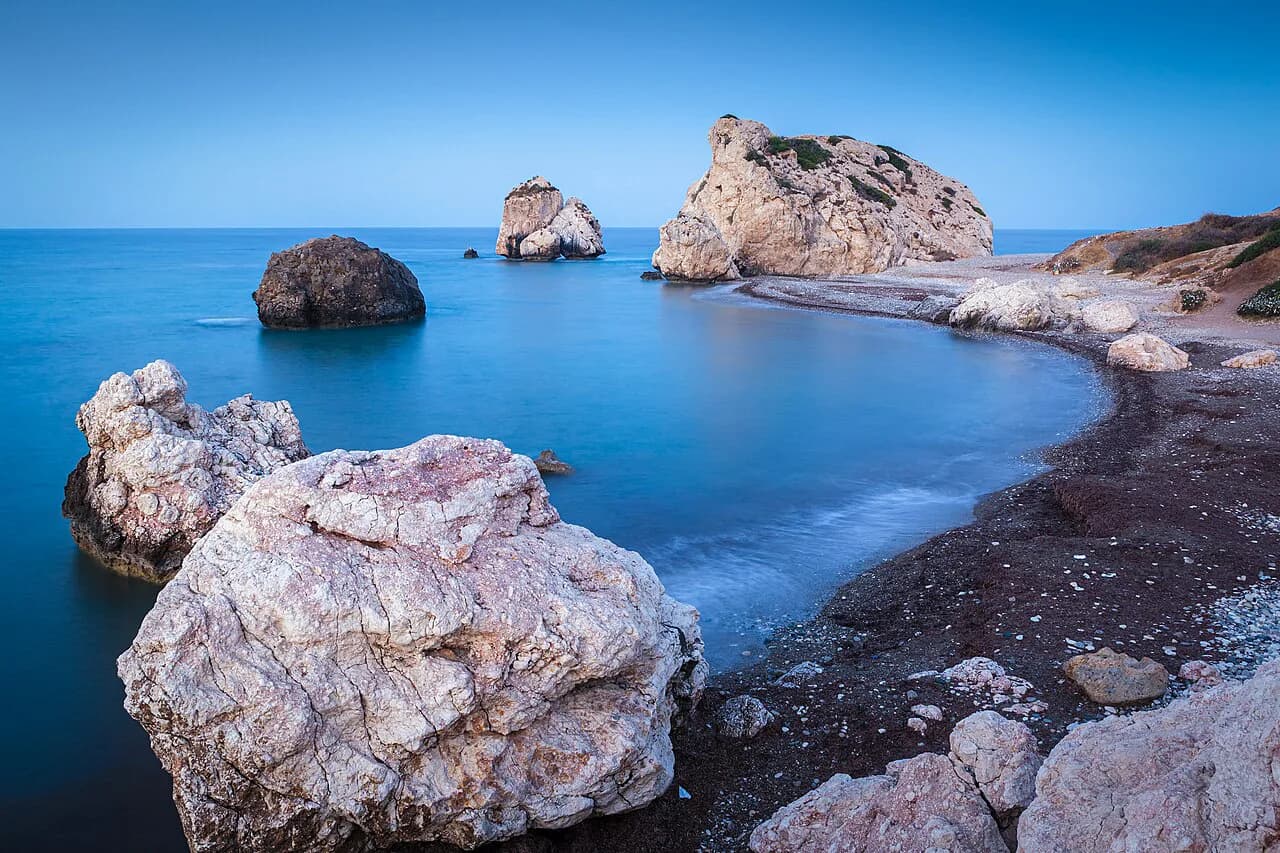
Sea turtles visit Cyprus in late May and August to lay eggs, when the sea is at its warmest, and a single female can lay up to 80 eggs. Hatchlings emerging and making for the water is the sight people hope for, and the Paphos region is where the source places that spectacle. The animals are protected and threatened, so nesting areas are managed and visitors are asked to keep well clear.
The practical rule is simple: watch from a distance, keep lights and noise down, and never block a hatchling's route to the sea. Organised turtle watches run by conservation bodies are the responsible way to see a nesting beach, and they set the distance and the rules for you. If you are on the coast in those months, ask locally which beaches are protected before you walk onto the sand after dark.
Endemic birds: Cyprus warbler, Cyprus wheatear and the Cyprus scops owl
The Cyprus warbler is a small bird that breeds only on the island and winters in Jordan, Israel and Egypt; look for it on rocky slopes among bushes, where its sharp song gives it away. The Cyprus wheatear also breeds solely in Cyprus and migrates for winter, with its song carrying for hours from a high perch between April and June. Its black and white markings make it the easier of the two to identify once you have heard it.
The Cyprus scops owl is one of four owl species recorded on the island and sits motionless in forests, gardens and farmland, camouflaged against the branches. You will almost certainly hear one before you see one, particularly at night and around a full moon. Plan any owl listening for after dark, and bring a torch you can dim rather than a bright beam.
Butterflies: Paphos Blue, Cyprus meadow brown and Cyprus grayling
The Paphos Blue is the easiest of the three to find, with a high population across the island; males show Blue wings and females greyish-brown. The Cyprus meadow brown is endemic, active from April to October, and prefers cool, shaded spots such as woods and orchards, with a yellow streak that separates it from similar browns. The Cyprus grayling does the opposite of most butterflies and moves into the mountains for summer, returning to the coast in autumn, and angles its wings so it casts no shadow.
For photographs, the grayling is the difficult one: its shadowless resting posture and solitary habits make it hard to frame, so treat a clear shot as a bonus. The meadow brown rewards anyone willing to stand in shade during the hottest hours, which fits neatly with a midday break in the Troodos pinewoods. Both are best approached slowly and without casting your own shadow across them.
Snakes and lizards: the harmless Cyprus whip snake and Troodos lizard
The Cyprus whip snake is grey or black with thin white lines and keeps to damp, shady ground near streams and bushes, mostly around Troodos and Paphos. It is harmless, feeding on lizards, frogs and insects, so there is no reason to panic if one crosses a path. The Troodos lizard is far more visible: light brown with white stripes, common on rocky, forested ground and in fields along nature trails.
April and May is egg-laying time for the Troodos lizard, so give any you find extra space and resist the urge to pick one up. On streams and reservoir edges in the same months you are also in the right place for frogs and dragonflies, which makes a waterside walk a productive way to spend a hot morning.
The Cyprus spiny mouse and Cyprus water frog
The Cyprus spiny mouse is a small endemic animal that is active at night and prefers drier ground, so daytime sightings are unlikely and you should not plan a walk around it. The Cyprus water frog is a better target: earth-coloured, harmless, and found by streams where it feeds on insects, mosquitoes and even lizards. It was only noted in records in 2012, which is a reminder of how recently some of the island's fauna has been pinned down.
Water is the thread that ties the island's less glamorous species together. Reservoir margins, irrigation channels and hill streams in the Paphos and Troodos districts concentrate frogs, dragonflies and the birds that hunt them, and give you a cool place to stop in the middle of the day. Treat the Cyprus Dams reservoirs as a general landscape feature rather than a promise of water: outside the wetter months, check whether a channel actually holds water before committing to the detour.
Which regions and habitats to head for
Three habitats cover most of what is on this list. Forest slopes in the Paphos district hold the mouflon; shady streams and rocky ground around Troodos hold the whip snake, water frog and Troodos lizard; and coastal scrub does the heavy lifting for warblers, wheatears and butterflies. The reservoirs and their wooded catchments sit between the first two, making them a sensible base for a wildlife-focused day in the west.
If you are staying around Limassol, the Germasogeia dam works as an accessible introduction to the island's upland water and the birds and insects that gather around it. The Germasogeia Reservoir sits on the Amathos River above the city, which means you can pair a morning there with an afternoon in town. The water authority responsible for these reservoirs is the Water Development Department, whose published information is the place to confirm access.
Kato Paphos makes the easiest base for combining coastal wildlife with the archaeological zone, since the nesting coast and the forested hills behind the town are both within reach. Staying in the west also cuts the drive to the upland reservoirs. In the east, the chalk and scrub around Ayia Napa and Protaras suits butterflies and wheatears rather than the forest species.
When to go: a month-by-month view of what is active
Late spring is the richest window. April to June brings wheatear song from high perches, lizard egg-laying in April and May, and warm but not yet punishing walking conditions in the hills. Butterflies are already flying, with the meadow brown active from April onwards, and the grayling still on the wing before its summer move into the mountains.
High summer shifts the emphasis to the sea. Loggerhead nesting falls in late May and August, and the meadow brown stays active through the hot months in shaded spots. Inland walking becomes a dawn or dusk affair, so pair an early hill walk with a siesta and go back out for owls after dark.
Autumn is underrated. The grayling comes back down to the coast, the meadow brown flies until October, and the summer crowds thin out at the same time. If you want butterflies without the peak-season heat, aim for the shoulder weeks and work around the best time to visit Cyprus for milder temperatures.
Wildlife and the heat: timing your day around it
Cyprus rewards splitting the day in two. Go out at first light for birds and for forest tracks, retreat during the hottest hours, then return in the late afternoon when lizards and butterflies become active again. The meadow brown's preference for cool, shaded woods and orchards is a useful pointer: if you are too hot, the wildlife probably is as well.
Water is your ally as well as theirs. Streams and reservoir margins hold frogs, insects and the birds that feed on them, and the shade along them is cooler than open scrub. Carry more water than you think you need and treat any waterside stop as a pause rather than a long sit.
How to watch wildlife without disturbing it
Several of the animals on this list are rare, protected or threatened, and the turtle beaches in particular are managed on that basis. Stay on paths, keep a respectful distance, silence phones and avoid flash photography, especially around nesting areas after dark. The source's own guidance for turtles is to be careful precisely so as to help protect them.
Respect the breeding calendar: give lizards space in April and May, leave the nest holes of wheatears and warblers alone, and never handle a bird to get a better view. Night-time excursions are the highest-risk activity for disturbance, so join an organised watch or listen from a distance instead of walking onto a beach or into a forest unguided.
Is a wildlife day worth building into your trip?
Yes, if you match the animal to the landscape rather than chasing a single species across the island. Pick one district: forest slopes above Paphos for mouflon, Troodos streams for frogs and lizards, or the coast in late May and August for turtles. Build the day around dawn and dusk and you will see more by doing less driving.
Before you go, confirm that the site or beach you have chosen is open and that any organised turtle watch is running in your week, using the conservation body's own information. For the wider history of the landscapes you are walking through, from the monastic estates of the Troodos to the coastal towns, the island's past explains why so much of its wildlife habitat sits on forested, sparsely populated ground.
Explore more Cyprus guides
Frequently Asked Questions
Are there squirrels in Cyprus?
Do not count on seeing one. Cyprus has its own distinctive small mammals, including the endemic Cyprus spiny mouse, which is nocturnal and prefers dry ground, so daytime views are rare even where it lives. Plan around the species that are documented as present rather than expecting familiar garden mammals.
What is the biggest predator in Cyprus?
The large wild mammal most travellers associate with the island is the Cyprus mouflon, a protected wild sheep of the Paphos forests. It is a grazer rather than a hunter, so if you are hoping for a predatory thrill the more rewarding targets are the snakes and owls, all of which are modest in size.
Is Cyprus wildlife dangerous?
For walkers, no. The Cyprus whip snake is harmless, feeding on lizards, frogs and insects, and the Cyprus water frog and Troodos lizard pose no risk at all. The genuine concern is disturbance rather than danger: nesting turtles and breeding birds need distance, particularly on beaches after dark and on rocky slopes in spring.
Where can I see sea turtles in Cyprus?
Turtles come to lay eggs in late May and August, and the Paphos region is where nesting and hatchling activity is best known. Watch from a distance or join an organised conservation watch, and never light or walk across a nesting beach at night without guidance.
Sources
Notes for your Cyprus trip
Optional updates to our Cyprus guides.
You might also like
Continue reading
More guides you'll find useful