Cyprus Itinerary: How to Plan a 7 or 10 Day Trip by Car
Build a Cyprus itinerary around four bases: Limassol, Paphos, Kyrenia and Nicosia. See where a week works and how the driving splits by day.
On this page
A good Cyprus itinerary uses four overnight bases, not one: Limassol for two nights, Paphos for two, Kyrenia/Girne for one and Nicosia for one. That loop covers ancient Kourion, the Kato Paphos mosaics, the Kyrenia coast and the divided capital without turning the trip into a driving marathon. This guide sets out that week day by day, then shows what a tenth day adds, how to choose between car hire, buses and tours, and which crossing and currency points to sort before you leave.
Do you need a car for a Cyprus itinerary?
Yes, if you want the whole loop rather than a pair of coastal bases. Distances on the island are short, but mountain villages, coastal viewpoints and smaller archaeological sites are awkward to reach by bus, so a car buys the most time back. Public buses are inexpensive and cover the main towns, yet routes and schedules thin out in rural areas, and taxis add up quickly over longer runs.
Hire a small car. Village streets are narrow and the mountain roads through the Troodos switchback constantly, so a compact model is easier to park and kinder on the brakes. Cypriots drive on the left, which most British and Irish drivers find familiar, and traffic outside the big cities is manageable; if this is your first time at the wheel on the island, our driving in Cyprus guide covers the rules and habits worth knowing.
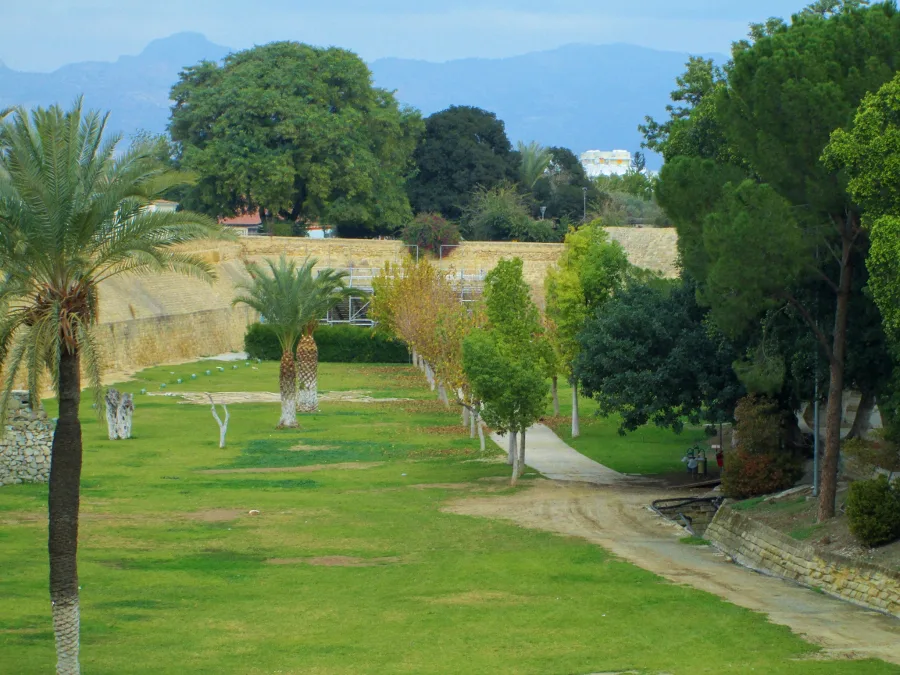
How many days you need: 7 versus 10
Seven days is enough for the four-base loop in the broad shape outlined below, with one full day each for Paphos, the Kyrenia area and Nicosia, and driving days stitched between them. Ten days lets you slow the same route down: an extra night in the Troodos, a fuller day at Kato Paphos, and time at the east end around Ayia Napa and Cape Greco instead of treating it as a fly-out stop.
Which part of Cyprus is best for a holiday? For a first trip that covers history, coast and mountains, base yourself in Paphos for the mosaics and harbour, Limassol for Kourion and Lefkara, and Nicosia for the old town. Travellers who mainly want beaches and a shorter transfer do better concentrating on the east around Ayia Napa and Protaras.
What should you not miss on a first trip to Cyprus? Prioritise the Kato Paphos mosaics and harbour castle, Ancient Kourion and the Sanctuary of Apollo Hylates, the Kyrenia/Girne harbour and castle, and the old town of Nicosia/Lefkoşa. Petra tou Romiou and Choirokoitia fit naturally into the driving between them.
Should you be cancelling a holiday to Cyprus? There is no travel advisory in this guide that would justify cancelling. Check your own government's travel advice and your airline or tour operator before departure, and confirm crossing requirements for the north separately, since that area is administered separately from the Republic.
A common ten-day shape adds Larnaca and Lefkara at the start, the Troodos mountains and Mount Olympus in the middle, and Kourion, Petra tou Romiou and the Paphos sites on the western leg, before swinging north to Kyrenia and finishing in Nicosia. If you would rather concentrate on one corner, an Ayia Napa itinerary suits a shorter stay based in the east.
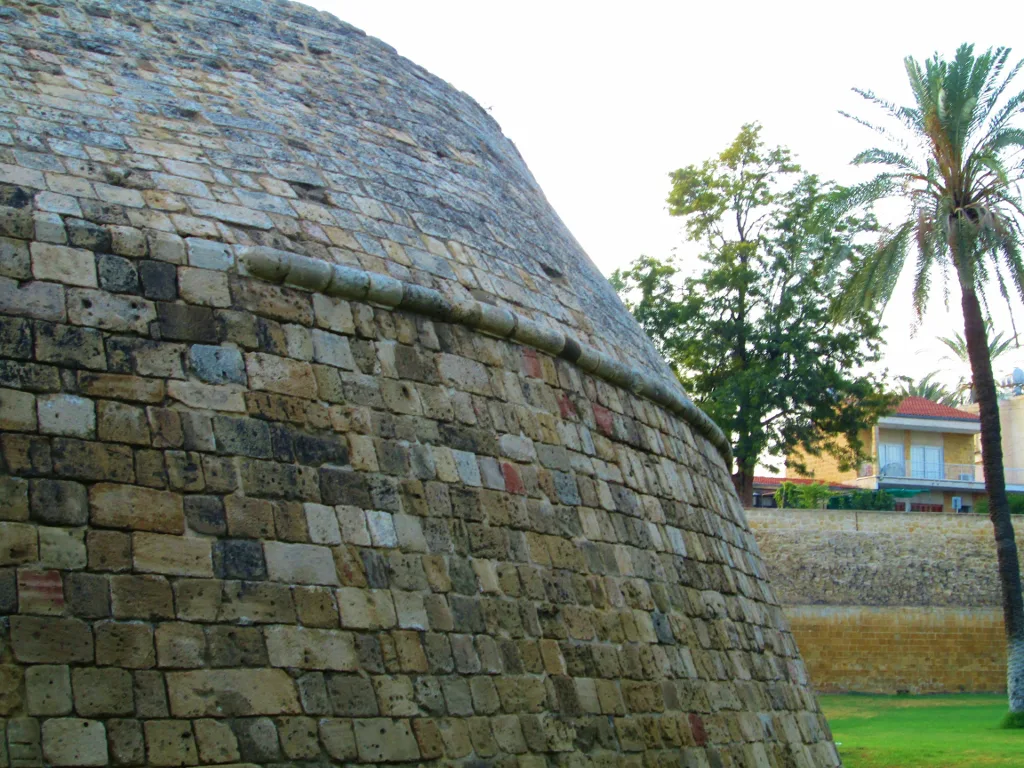
The classic loop: Larnaca, Limassol, Paphos, Ktima, Nicosia, Ayia Napa
The practical circuit runs anticlockwise from Larnaca: west along the coast to Limassol, on to Paphos and Ktima, north to the Kyrenia coast, east to Nicosia, then south-east to Ayia Napa and Cape Greco for the flight home. Treat the order as one sensible way round the island rather than a fixed rule, since the loop works in either direction.
Starting in Larnaca means beginning on the palm-lined Finikoudes promenade at Europe Square, then walking the older Piale Pasha seafront towards the small medieval castle and the Archaeological Museum, with the open-air ruins of ancient Kition nearby. That is a gentle first day after a flight, and it puts you on the right side of the island for the drive west. Plot the whole route on our Cyprus map before you book anything, so you can see where each night sits relative to the next.
Choosing bases: Limassol, Paphos, Girne (Kyrenia) and Nicosia
Four bases keep the driving manageable and avoid unpacking every night. Two nights in Limassol cover arrival, Lefkara and Kourion; two in Paphos cover Ktima, Kato Paphos and Petra tou Romiou; one in Kyrenia/Girne puts the north coast within reach; one in Nicosia finishes with the old town. Bear in mind that Paphos is two towns: Ktima on the upper level, clustered around the neoclassical town hall and Kennedy Square, and Kato Paphos below, where the harbour, castle and archaeological site sit.
If you prefer beaches and resort bustle, shift a night towards Paphos or Ayia Napa; if mountain villages appeal more, add a night in the Troodos instead. The choice is really about how much time you want in the car each morning rather than about missing sights.
Days 1–2: Larnaca and Lefkara before Limassol
Spend the first morning in Larnaca, then head inland to Lefkara, the cobbled village known for its lace-makers, before dropping south to Limassol. Limassol itself deserves an afternoon: the fourteenth-century castle, a coffee in the old town and a walk along the tree-lined promenade towards the marina.
Keep the first evening light. The days ahead are the longest driving stretches of the trip, so an early night in Limassol pays off when you head for the western coast.
Kourion and the Sanctuary of Apollo Hylates on the drive west
Leave Limassol early and climb to Ancient Kourion, the hillside site with views over cultivated fields to the sea and an open-air theatre that hosts summer performances. Carry on to the Sanctuary of Apollo Hylates, a short hop further along and one of the most photogenic stops on the route.
These are the kind of stops to slot into the day rather than rush, and they sit naturally alongside Kourion and the Sanctuary of Apollo Hylates in our guide to Cyprus archaeological sites. If history is a big part of the trip, that guide is the place to shortlist which sites earn a proper stop before you fix the day's schedule.
Days 3–4: Ktima, Kato Paphos, the mosaics and Petra tou Romiou
Give Paphos two full days and treat its two halves separately. Start in Ktima with a cool drink on Kennedy Square, then drop to Kato Paphos, where a two-kilometre seaside promenade runs past shops and cafes to the thirteenth-century medieval castle that once guarded the harbour. Beyond the castle the promenade continues as a quieter coastal path with benches over the water.
The Paphos Archaeological Site, a UNESCO World Heritage Site, holds a Roman Odeon, a Lusignan castle and the mosaics of four Roman villas illustrating Greek myths; these are among the best-preserved Roman mosaics anywhere. A short drive away, Ayia Kyriaki (Panayia Chrysopolitissa Basilica) stands among Roman agora ruins, with the marble pillar where, by tradition, St Paul was lashed.
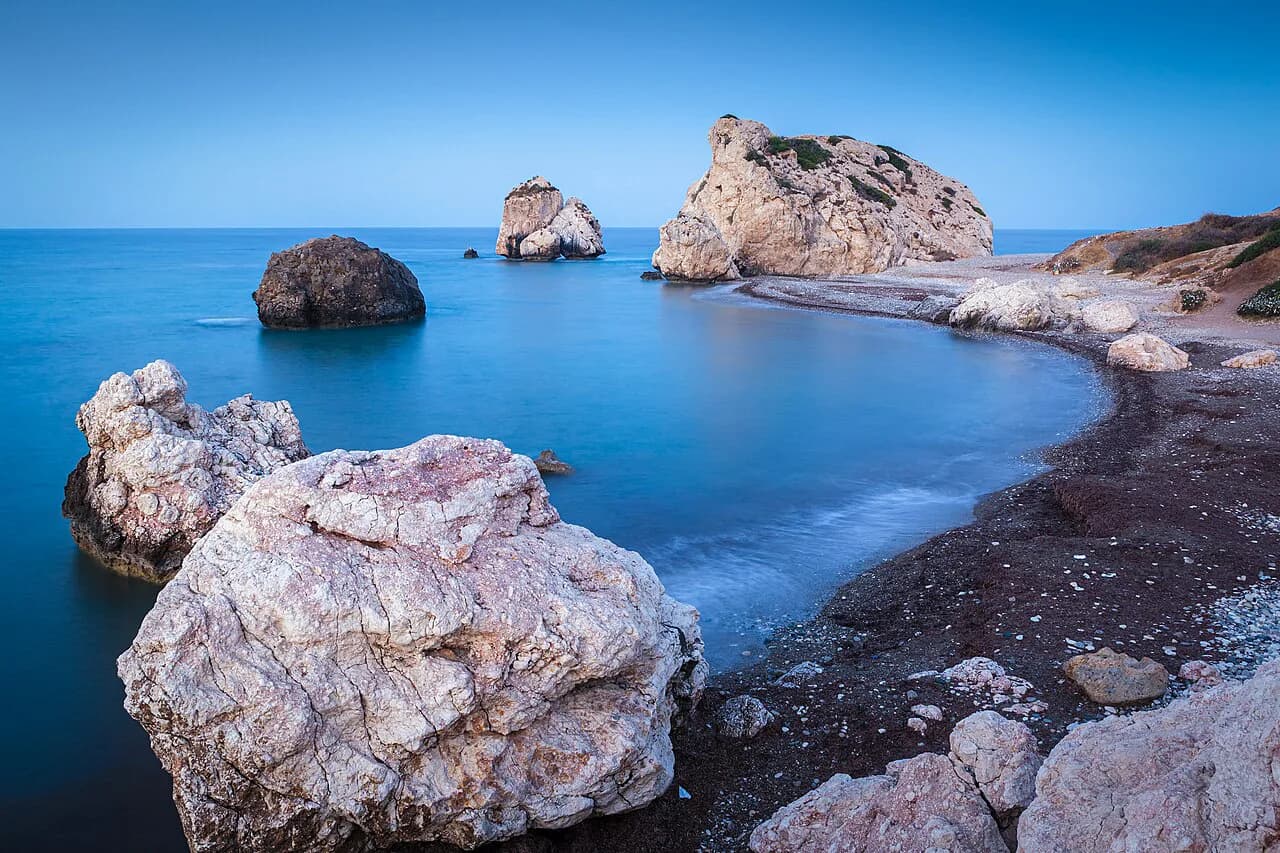
Fit Petra tou Romiou (Aphrodite's Rock) into the coastal drive rather than a separate outing. The giant rock juts out of the sea on the road towards Paphos and takes little more than a stop and a photograph, so pair it with the Kourion leg or an evening run along the coast.
Day 5: crossing to the north, the Baths of Aphrodite and Kyrenia/Girne
Plan the north as its own day with its own paperwork rather than an impulse detour. The Republic of Cyprus uses the euro and northern Cyprus is administered separately, so entry requirements and currency differ; carry your passport for the crossing and confirm with your hire company in advance that your insurance covers the north.
On the road, the Baths of Aphrodite make a natural stop before you reach Kyrenia/Girne, where the old harbour and Kyrenia Castle give the afternoon its shape. Overnight in Girne so the next morning's run to Nicosia is short.
Day 6: Nicosia/Lefkoşa, Ledra Street and the Green Line
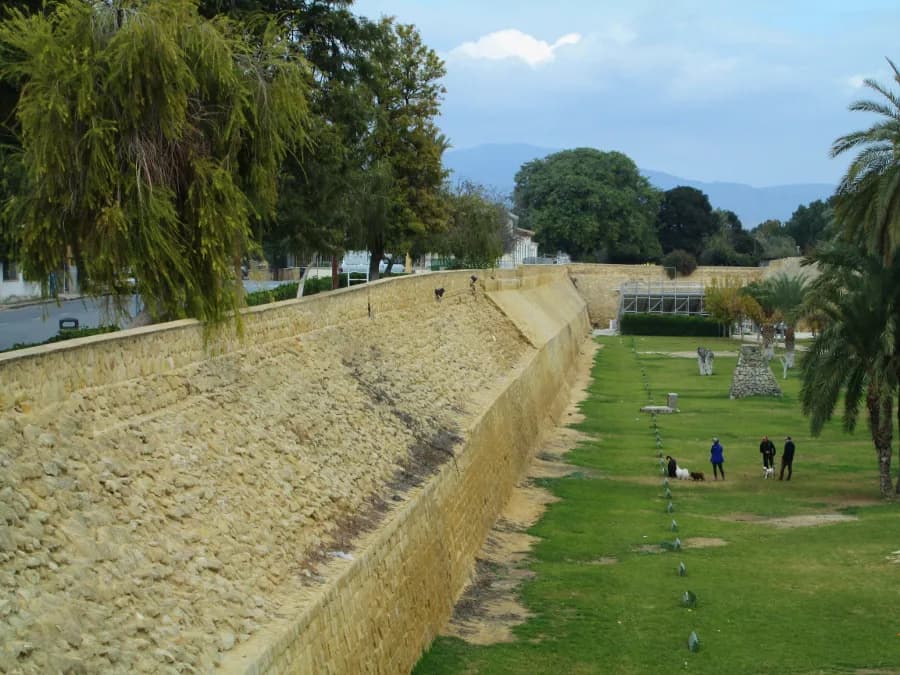
Nicosia/Lefkoşa is Europe's last divided capital, its old town still enclosed by Venetian walls, and it rewards a full day on foot. Walk Ledra Street and Onasagorou Street for shops and cafes, then give proper time to the Cyprus Archaeological Museum for the island's history from prehistory onwards.
Add Laiki Geitonia, the preserved quarter of small alleyways and traditional houses, and the Archbishop Palace square. The Green Line runs through the old town, so keep your passport with you and read the official crossing information for the checkpoint you intend to use before setting out.
Day 7: Choirokoitia and the east end at Ayia Napa or Cape Greco
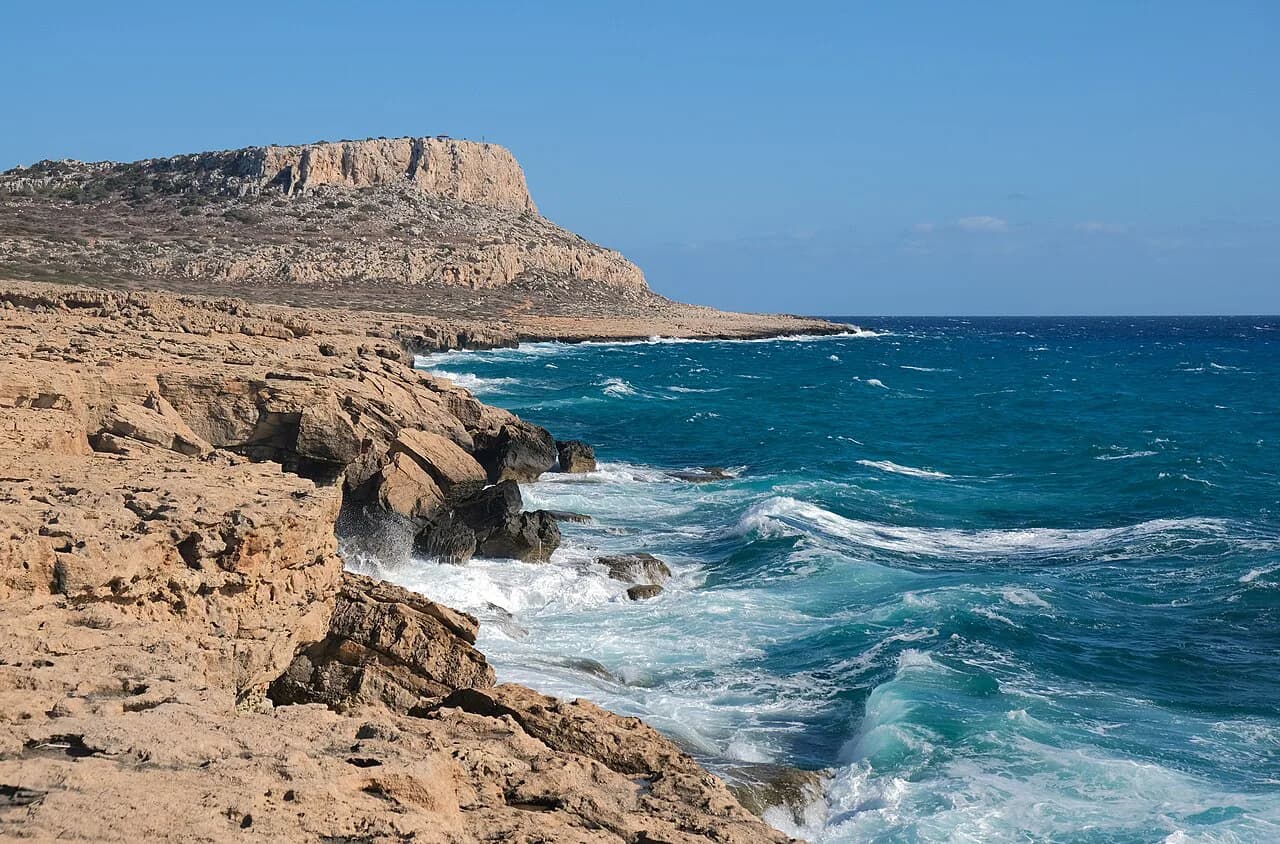
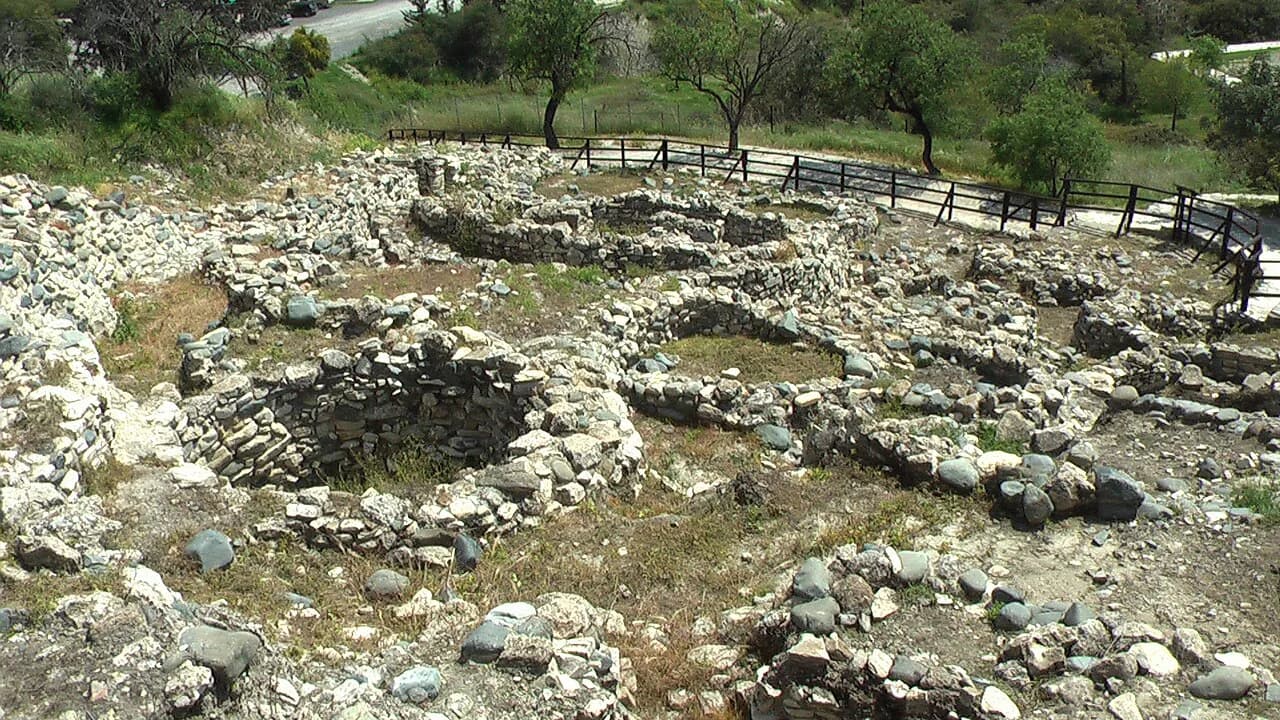
On the drive east, stop at Choirokoitia, the well-known prehistoric settlement site, before continuing to Ayia Napa and Protaras. At the end of the trip, Cape Greco National Forest Park gives you coastal views and a last swim without a long detour from the airport road.
Boat trips from the east coast are seasonal, so ask the operator directly about departures in your week rather than assuming a daily sailing.
Where a 10-day version adds time
A tenth day is best spent either in the Troodos or at the east end. The mountain option adds Mount Olympus and the Troodos villages to the middle of the loop; the eastern option gives Ayia Napa and Cape Greco a proper day instead of an arrival and a departure. The Troodos option also breaks up the longest transfer, which matters if you are travelling with children or in high summer.
A third possibility is a second night in Paphos, which lets you see the Kato Paphos mosaics in the morning and Ktima or the coast in the afternoon without rushing either. If you want to weigh the loop against a trip built around a single region, our round-up of the best places to visit in Cyprus sets out the competing corners of the island.
Mountain and coast driving: distances, roads and hiring a small car
Distances look short on paper, but mountain roads are slow: a route that appears to take 45 minutes can mean 45 minutes of curves and switchbacks, so build slack into any day that crosses the Troodos. Coastal roads are quicker, which makes the transfer along the southern coast the easiest long drive of the trip.
This is one more argument for a compact hire car and for starting early. Village parking is tight, and arriving before mid-morning at popular sites such as Kourion or the Paphos mosaics leaves you more room and less heat.
Cost and time trade-offs: buses, taxis and guided tours
Buses are the cheapest way between towns, but they cost you time and flexibility in exactly the places this itinerary is built around. Taxis work for airport transfers and short hops, yet the meter adds up over a multi-stop day. Guided tours remove the navigation and parking problem and often include historical context you would otherwise miss, which is worth the premium on a first visit to somewhere like Kourion.
A sensible split is a hire car for the loop plus one guided day where the driving is least rewarding. Compare quotes for your dates directly with rental companies rather than relying on a figure from an old blog post.
When to go: summer heat, crowds and seasonal restrictions
Beaches are busiest in high summer, so build sightseeing into the early morning and late afternoon and leave the middle of the day for shade or water. The open-air theatre at Kourion hosts summer performances, which is a reason to be there in the evening rather than at noon.
Build the plan around the season rather than the other way round: summer heat makes early starts and shady afternoons the sane pattern, while the quieter shoulder months suit mountain driving and long hours at archaeological sites. For the wider picture of months, heat and crowds, see our guide to the best time to visit Cyprus. If a day on the water is part of the plan, our Cyprus boat trips round-up covers the options.
Should you book the 7-day loop or add the extra days?
Book the seven-day loop if you want the island's headline sites in one pass and accept a driving day between each base. Add three days if you want the Troodos properly, a second Paphos night, or a full day at Cape Greco — those are the additions that change the trip rather than just lengthen it.
Explore more Cyprus guides
Frequently Asked Questions
Which part of Cyprus is best for a holiday?
For a first trip that covers history, coast and mountains, base yourself in Paphos for the mosaics and harbour, Limassol for Kourion and Lefkara, and Nicosia for the old town. Travellers who mainly want beaches and a shorter transfer do better concentrating on the east around Ayia Napa and Protaras.
What should you not miss on a first trip to Cyprus?
Prioritise the Kato Paphos mosaics and harbour castle, Ancient Kourion and the Sanctuary of Apollo Hylates, the Kyrenia/Girne harbour and castle, and the old town of Nicosia/Lefkoşa. Petra tou Romiou and Choirokoitia fit naturally into the driving between them.
Should you be cancelling a holiday to Cyprus?
There is no travel advisory in this guide that would justify cancelling. Check your own government's travel advice and your airline or tour operator before departure, and confirm crossing requirements for the north separately, since that area is administered separately from the Republic.
Sources
Notes for your Cyprus trip
Optional updates to our Cyprus guides.
You might also like
Continue reading
More guides you'll find useful