Cyprus Resorts Compared: Paphos, Limassol, Larnaca, Ayia Napa and Kyrenia
Compare Cyprus resorts by what each base offers beyond the beach: Paphos, Limassol, Larnaca, Ayia Napa, Protaras and Kyrenia, with driving notes.
On this page
The right Cyprus resort depends on what you want within walking distance, not on which beach photographs best. Paphos gives you Roman mosaics and a harbour castle, Limassol is a working city with a medieval castle, Larnaca puts a promenade and Kition ruins minutes from the airport, Ayia Napa and Protaras anchor the east coast, and Kyrenia/Girne sits in the north with its own harbour and castle. This comparison treats each area as a base for sights and day trips, and leaves hotel choice out of it; if you are still shaping the trip, our Cyprus Itinerary puts these bases into a route.
Distances are short by European standards but slower than a map suggests: mountain roads wind, and a road trip with a week in hand covers the island without a nightly repack. Most travellers fly into Larnaca International Airport or Paphos International Airport, and the resort you pick decides how much of that driving you do at the start and end of the trip.
What each Cyprus resort area is like in one line
Paphos is the ancient-mosaic capital, split between the harbour low town and the hilltop Ktima. Limassol is a long seafront city with an old town around a medieval castle. Larnaca is a compact seafront town with its medieval castle and the Kition ruins on the doorstep, and Ayia Napa and Protaras are the east-coast bases with Cape Greco National Forest Park between them.
Polis and the northwest are the quiet option, close to Aphrodite's Rock and the road towards the Akamas. Kyrenia/Girne is a north-coast harbour town with a castle, reached through a Green Line crossing point. Cyprus cities all differ in pace, from the resort strips to Nicosia's walled old town, and that pace is the real choice you are making.
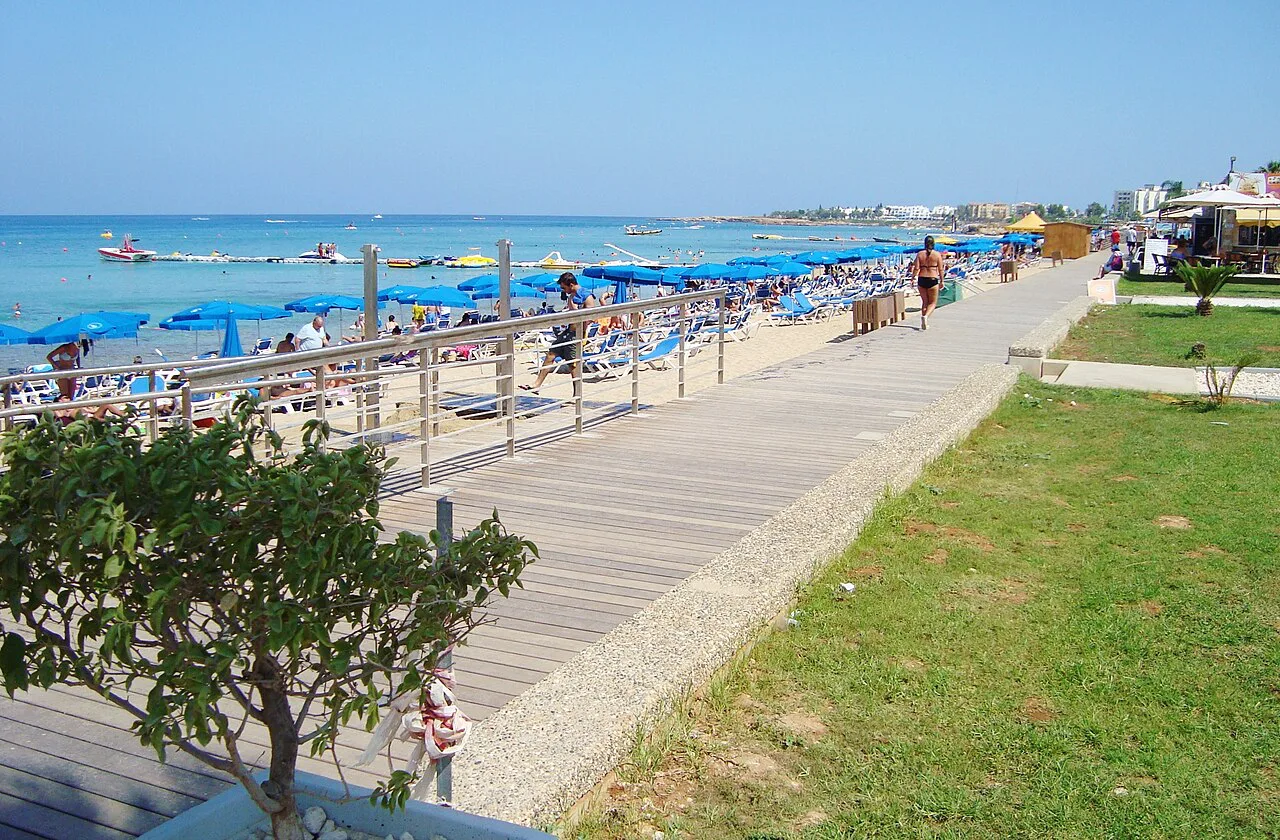
Paphos (Kato Paphos and Ktima): mosaics, harbour castle and the two-town layout
Paphos is two towns, and picking the right half matters. Ktima is the upper town, where the neoclassical town hall and the paved Kennedy Square gather the cafes, and it is the place to stop for a cool drink before dropping down to the coast. Kato Paphos is the lower town by the sea, where the promenade, the harbour and the main ancient sites sit.
Which resort in Cyprus is best for sightseeing? Paphos gives you the most within walking distance: the Paphos Archaeological Site with its Roman mosaics, the Medieval Castle and the harbour promenade all sit in Kato Paphos. Limassol and Larnaca add city sightseeing around a castle and old town, while Ayia Napa and Protaras are better placed for the east coast and Cape Greco.
Do I need a car to move between Cyprus resorts? A car is the practical choice if you want mountain villages and smaller archaeological sites, because bus routes and schedules thin out away from the main towns. Buses are inexpensive on the routes they serve, and taxis or guided tours can cover airport transfers and single days out without you driving.
Can I drive from the Republic into north Cyprus? Yes, routes cross the Green Line into the north, but northern Cyprus is administered separately and entry requirements may differ. Check the current Turkish e-visa requirements and confirm with your hire-car company that your insurance covers the crossing before you travel.
Kato Paphos's seafront promenade runs about two kilometres to the thirteenth-century Medieval Castle that guarded the harbour, and past the castle a quieter coastal path continues with benches for the view. Near the harbour is the entrance to the Paphos Archaeological Site, a UNESCO World Heritage Site where the star attraction is a set of lavish Roman mosaics in four villas, showing Greek myths and counted among the best preserved in the world. A short drive away, the twelfth-century church of Ayia Kyriaki, also known as the Panayia Chrysopolitissa Basilica, stands among the Roman Agora ruins. Use our Cyprus Map to see how these pieces sit together.
Use Kato Paphos for the sites and the sea, and Ktima for the everyday town; staying close to the promenade means you can walk to the mosaics and the castle instead of driving. The trade-off is summer crowds around the harbour and archaeological site, so visit the mosaics early in the day.
Coral Bay and the western coast: sandy beach base with Paphos sights a short drive away
Coral Bay sits roughly twenty minutes by car from Paphos, which makes it a beach base with the Paphos sights within easy reach for a day out. The sand at Coral Bay comes with loungers, umbrellas and snack shops nearby, so it works for a slower day once you have done the mosaics and the castle.
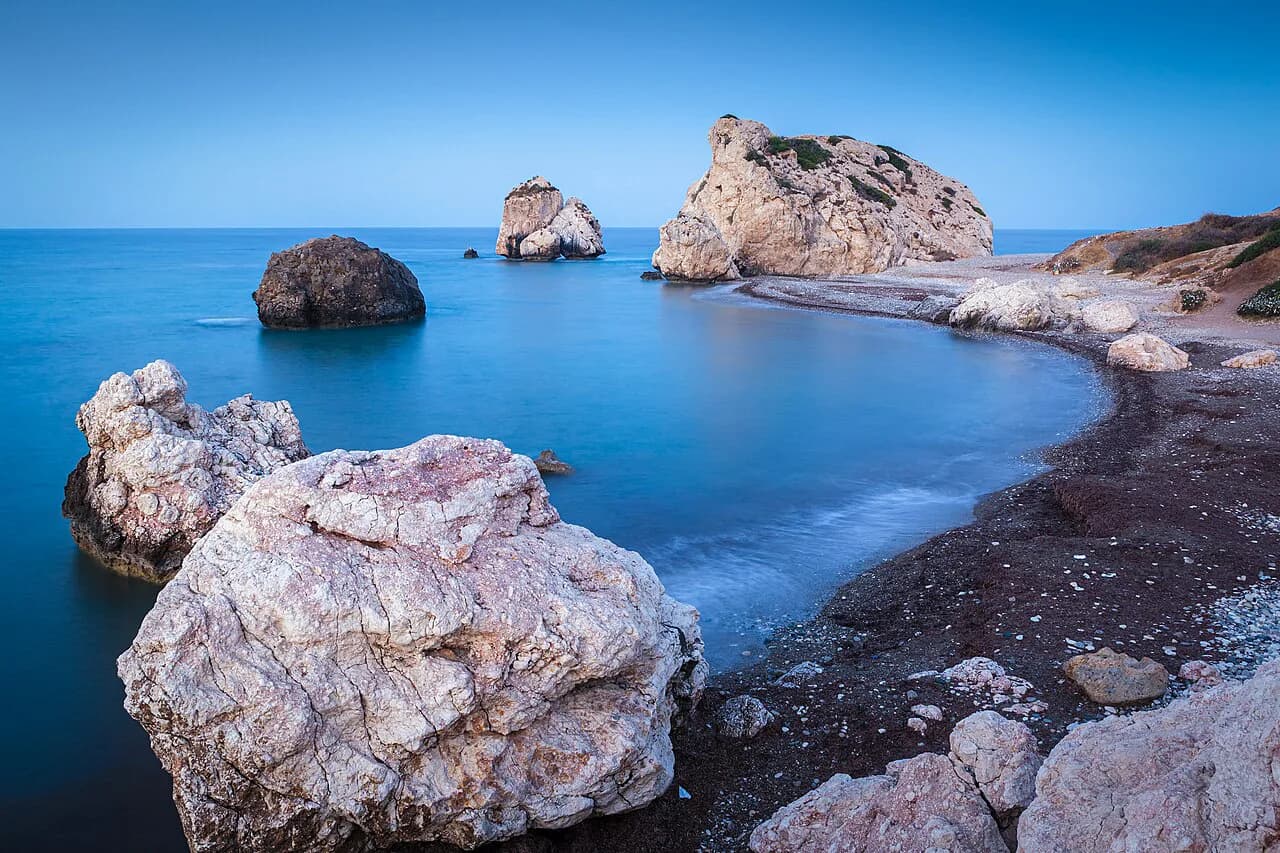
The western coast also puts Aphrodite's Rock, or Petra tou Romiou, on your route: a giant rock with smaller ones beside it, jutting out of the sea, which legend names as Aphrodite's birthplace. Treat it as a short coastal stop between drives rather than a half-day, and pair it with the sites around Paphos.
Limassol: castle, old town and long promenade for a city-and-sea mix
Limassol suits travellers who want a city with their sea. The fourteenth-century castle anchors the old town, where a coffee stop is part of the routine, and the tree-lined promenade leads to the marina for an evening stroll. Inland from Limassol, the village of Lefkara is known for its lace-makers and cobbled lanes, and it makes a natural half-day detour.
Limassol also works as a staging point for Ancient Kourion, the hillside archaeological site with an open-air theatre that hosts summer performances, and for the Sanctuary of Apollo Hylates nearby on the road towards Paphos. Both fit naturally into a wider Cyprus Itinerary built around Limassol.
Larnaca: Finikoudes promenade, medieval castle and Kition ruins near the airport
Larnaca is the handiest base if you land at Larnaca International Airport and want to start sightseeing without a long transfer. The palm-lined seafront promenade begins at Europe Square and is known as Finikoudes, and the old colonial buildings behind it, put up under the British administration in 1881, now house galleries and museums. Walking on brings you to Piale Pasha, the seafront street that keeps the old character of the town.
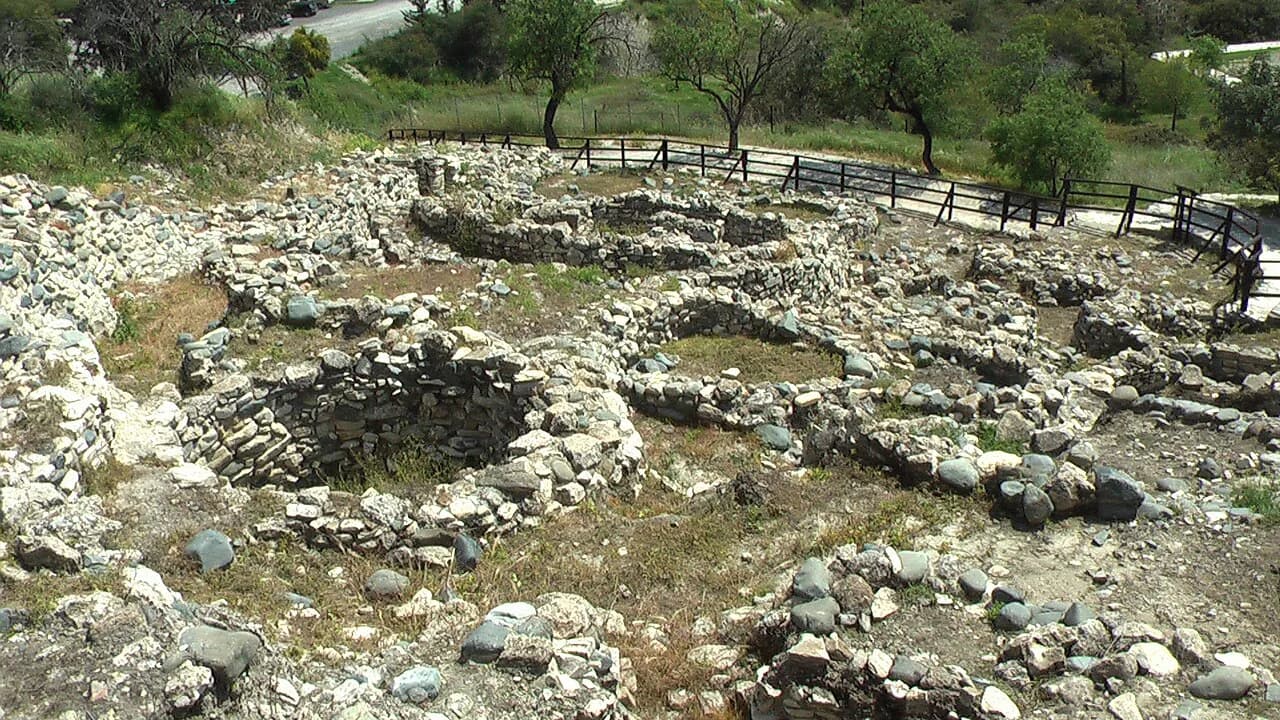
Within the centre are the small Medieval Castle and the Archaeological Museum, whose finds trace the development of the region, and the open-air ruins of ancient Kition, with remains of temples, walls and sanctuaries, are close by. Just outside Larnaca, Hala Sultan Tekke mosque sits on the bank of a salt lake where flamingos appear in season. That cluster of castle, museum and ruins is what makes Larnaca more than an airport stop.
Ayia Napa and Protaras: east-coast resort bases and Cape Greco's crowds in summer
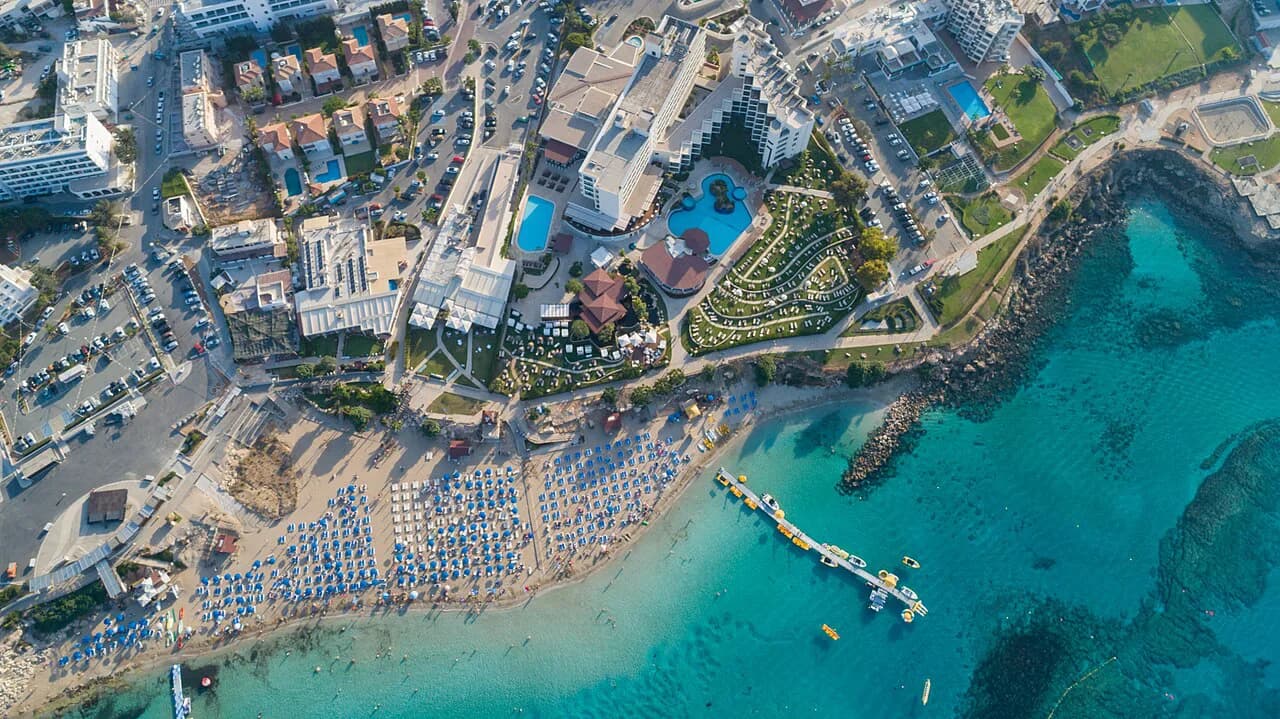
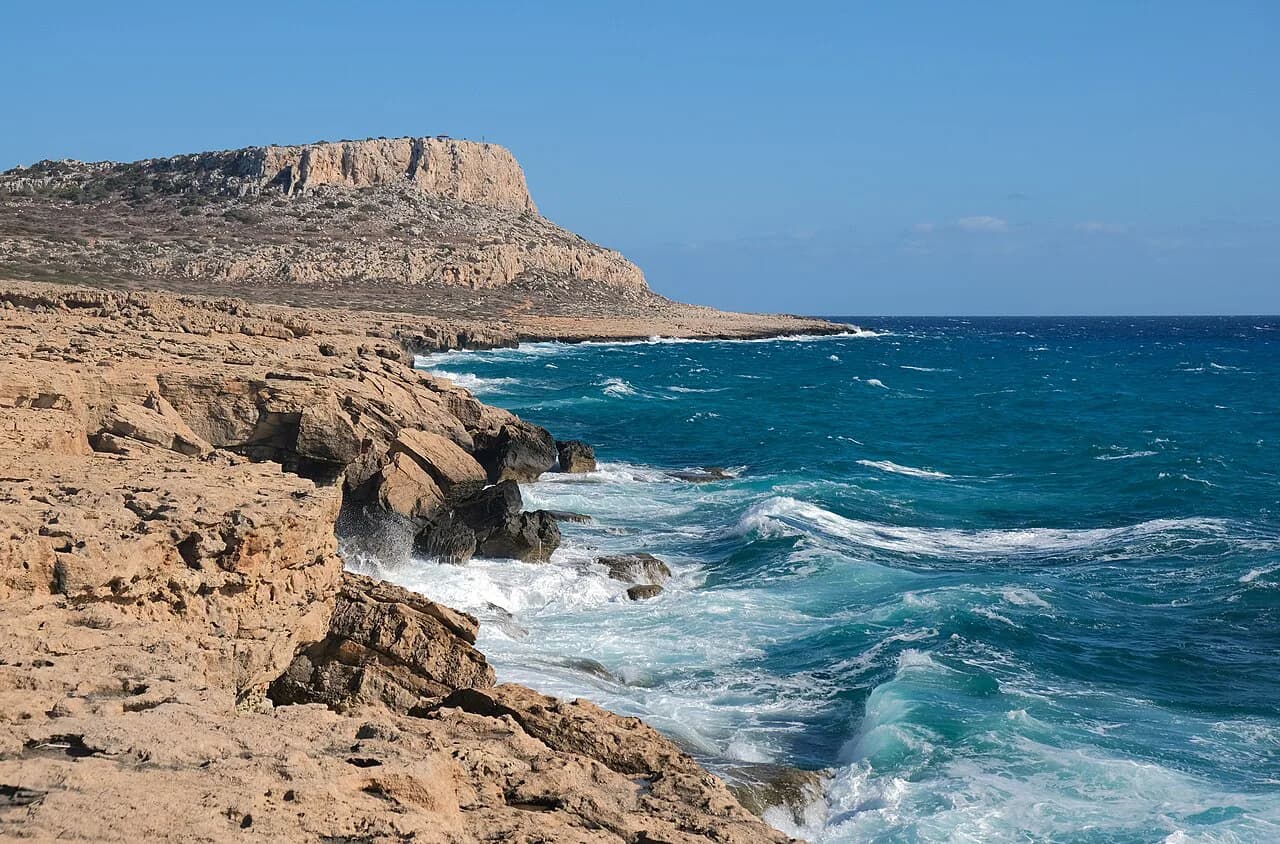
Ayia Napa and Protaras form the east-coast resort pair, and Cape Greco National Forest Park sits between them at the island's southeastern tip. Both towns are built for holiday routines, but the coast around Cape Greco is the sight worth planning around, with the national park as the walking and viewpoint stop. In summer this stretch draws crowds, so go early in the day if you want the paths and viewpoints to yourself.
The east coast is also the far end of the island from Paphos, which shapes your route: a loop that takes in Limassol, Paphos and the east coast needs a couple of overnight bases rather than one. Hire cars are the practical way to link them, and smaller cars cope better with the narrow village streets and mountain roads.
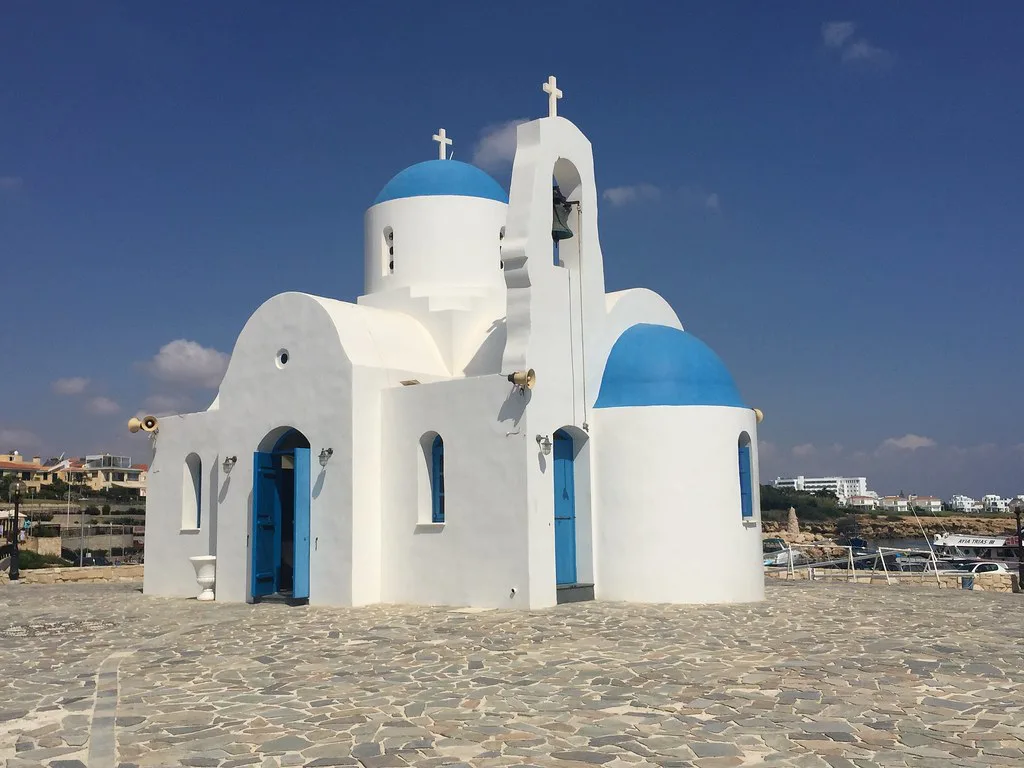
Polis and the northwest: quieter base for Aphrodite's Rock and the Akamas side
Polis is the low-key base for the northwest, closer to Aphrodite's Rock and the Akamas side of the island than Paphos is. It suits travellers who would rather drive out to sights than walk to them, and who value a quiet evening over a resort strip. Plan fuel and supplies around the longer western drives, since the northwest is where distances start to tell.
Kyrenia/Girne in north Cyprus: harbour, castle and how the Green Line crossing works
Kyrenia, or Girne, is the north coast's harbour town, with a castle on the harbour and an old quarter to walk. It appears on island-wide driving routes as a natural overnight stop after the western coast, which means crossing the Green Line. Northern Cyprus is administered separately from the Republic, so entry requirements may differ, and travellers whose route crosses into the north should check the current Turkish e-visa requirements before setting off.
Sort out hire-car insurance for the crossing before you book, because not every policy covers the north. The crossing points, passport checks and insurance rules for a hire car are the practical details worth confirming with your rental company.
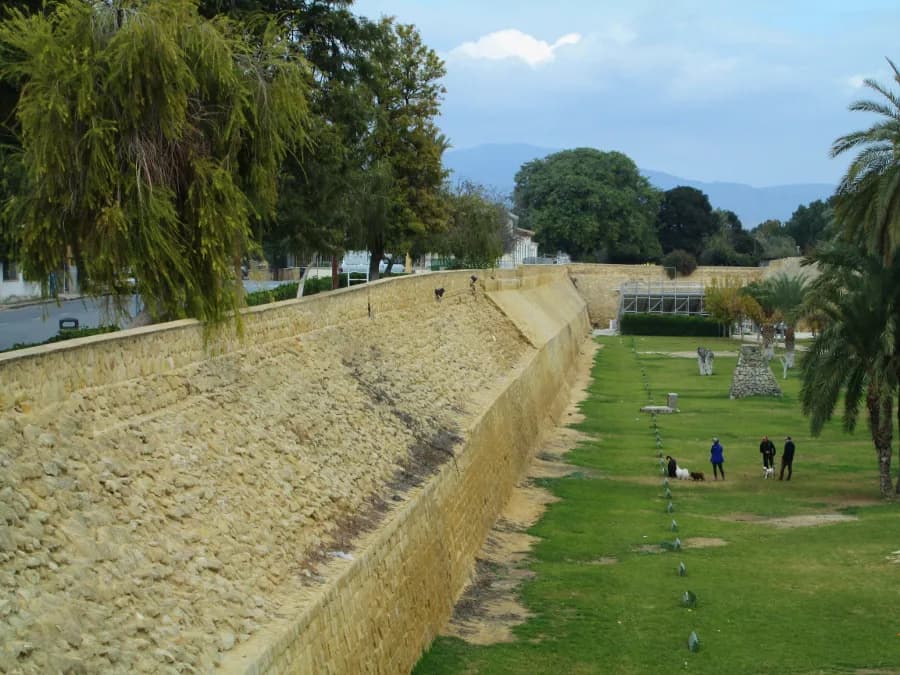
Nicosia/Lefkoşa is the other northern stop most routes include: Ledra Street in the old town, enclosed within Venetian walls, is lined with cafes and shops, and the city is often described as Europe's last divided capital. From there, Onasagorou Street adds more shops and restaurants, and the old town's live music venues fill the evening.
Getting between the resorts: driving on the left, buses and hire-car insurance for crossings
Cypriots drive on the left, so roundabouts and smaller intersections are the spots to concentrate on when you first get behind the wheel. Traffic outside the larger cities is generally manageable, and mountain drives take longer than the map suggests because of the curves and switchbacks, so build slack into any day that crosses the Troodos.
Buses cover the island and are inexpensive, but routes and schedules thin out in smaller towns and rural areas, so a car is the practical choice if you want the mountain villages and smaller archaeological sites. Taxis and rideshares work for airport transfers and short hops. Guided tours are an alternative if you would rather not navigate crossings or parking.
Euros, lira and what things cost: currency on each side
The Republic of Cyprus uses the euro, while north Cyprus uses the Turkish lira. That split matters most for cash and card habits: carry both currencies if your trip crosses the Green Line, and check whether your card is charged in euros or lira at the till. Prices for the sites and excursions vary by season and operator, so confirm them with the ticket office or operator rather than relying on a figure quoted elsewhere.
When to go and the summer heat trade-off
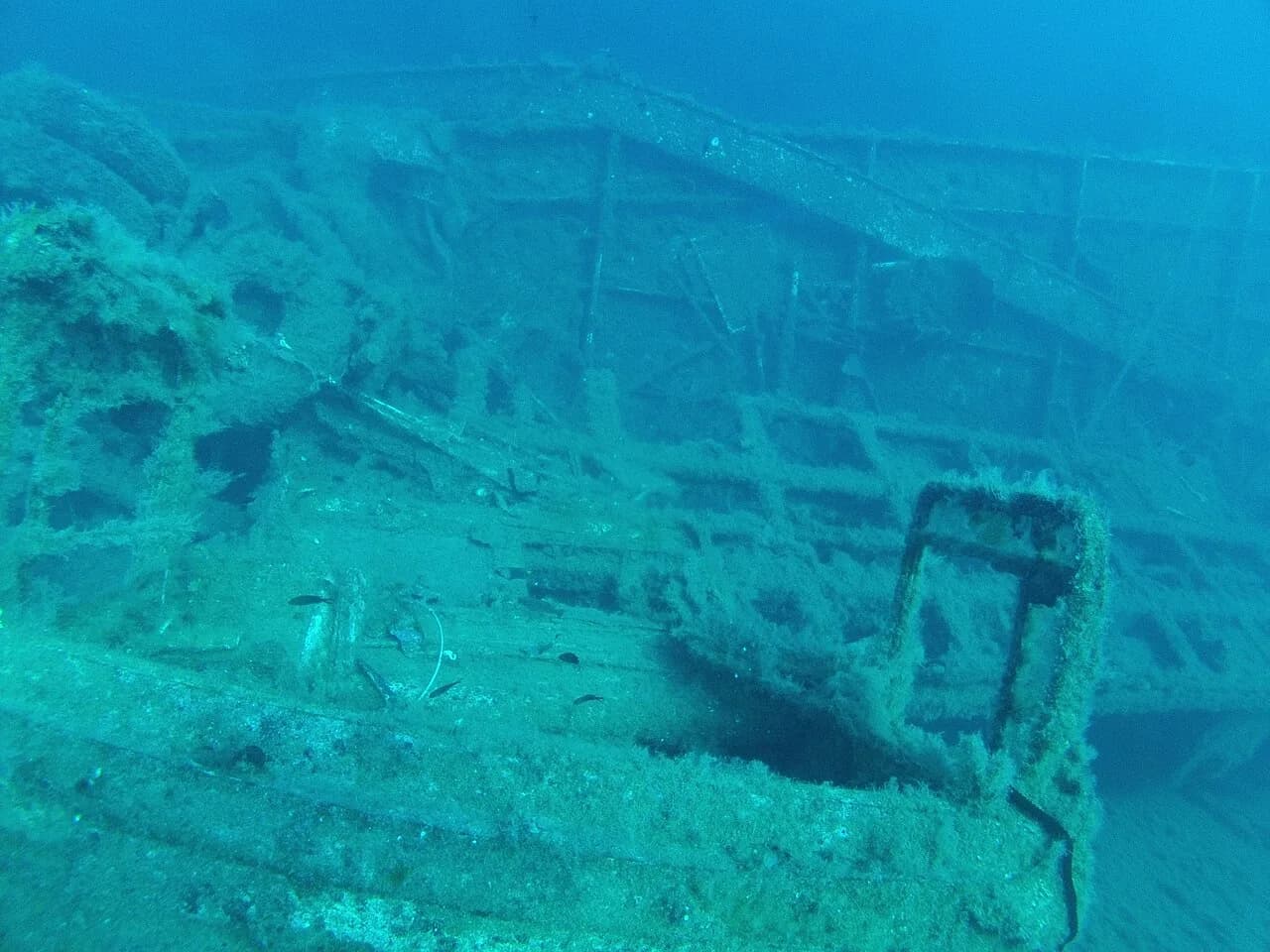
Cyprus has one of the longest diving seasons in the Mediterranean, with water temperatures of 16 to 27 degrees almost all year and visibility helped by an absence of plankton, which tells you something about how far the warm season stretches. The same warmth means summer heat inland and crowded coasts at Kato Paphos and Cape Greco.
The practical trade-off is simple: spring and autumn give comfortable walking temperatures for archaeological sites and old towns, while summer favours early starts, shade and water-based days. Whichever you choose, plan the ruins and castles for the morning and keep the afternoon for the sea.
Which resort should be your base?
Pick Paphos if you want Roman mosaics, a harbour castle and a seafront you can walk, and choose between Kato Paphos for the sights and Ktima for town life. Pick Limassol for a city-and-sea mix, Larnaca if the airport and a compact centre matter most, and Ayia Napa or Protaras for the east coast and Cape Greco. Polis covers the quiet northwest, and Kyrenia/Girne puts you on the north coast across the Green Line.
Build the route around two or three bases rather than one, keeping the long drives for the days you change hotels, and give the mountains more time than the map suggests. Before booking, confirm site opening hours and any boat trip with the operator or the Department of Antiquities, since they change by season.
Explore more Cyprus guides
Frequently Asked Questions
Which resort in Cyprus is best for sightseeing?
Paphos gives you the most within walking distance: the Paphos Archaeological Site with its Roman mosaics, the Medieval Castle and the harbour promenade all sit in Kato Paphos. Limassol and Larnaca add city sightseeing around a castle and old town, while Ayia Napa and Protaras are better placed for the east coast and Cape Greco.
Do I need a car to move between Cyprus resorts?
A car is the practical choice if you want mountain villages and smaller archaeological sites, because bus routes and schedules thin out away from the main towns. Buses are inexpensive on the routes they serve, and taxis or guided tours can cover airport transfers and single days out without you driving.
Can I drive from the Republic into north Cyprus?
Yes, routes cross the Green Line into the north, but northern Cyprus is administered separately and entry requirements may differ. Check the current Turkish e-visa requirements and confirm with your hire-car company that your insurance covers the crossing before you travel.
What currency is used in Cyprus resorts?
The Republic of Cyprus uses the euro, and north Cyprus uses the Turkish lira. If your trip includes Kyrenia/Girne or Nicosia/Lefkoşa, carry both currencies and check which one your card is charged in at payment.
Sources
Notes for your Cyprus trip
Optional updates to our Cyprus guides.
You might also like
Continue reading
More guides you'll find useful