Cyprus Road Trip: Driving Times, Routes and Border Rules
Plan a Cyprus road trip with realistic driving times, a loop from Larnaca through Nicosia, Limassol and Paphos, car hire rules and Green Line crossings.
On this page
A week is the realistic minimum for a Cyprus road trip that circles the island without spending every day behind the wheel, and ten days lets you add the Akamas coast or the Troodos villages. The island is compact, the motorway network links Larnaca, Nicosia, Limassol and Paphos, and English road signs make navigation straightforward. This guide sets out a loop by day, the driving and hire-car rules that catch UK renters out, and how to handle the Green Line.
Island layout and how many days you need
Cyprus drives on the left, uses English signage on its main roads, and its fast roads are in good condition; the tight, narrow stretches come in villages, which are worth the detour anyway. The distances are modest, so a loop linking Larnaca, Nicosia, Limassol and Paphos is comfortably done in a week if you keep two nights in the places that deserve them, Paphos above all.
Build the route anticlockwise or clockwise around the motorway spine rather than criss-crossing: Larnaca, then Nicosia inland, down to Limassol and its antiquities, west to Paphos and Kato Paphos, and back east along the south coast to Larnaca or Ayia Napa. That keeps each driving day short and puts the big archaeological stops at the start of a morning, before the heat builds. Our Cyprus itinerary sets out the same loop in more detail if you want to compare day counts.
A map helps more than a satnav here, because the interesting stops sit off the motorway: Kourion and Kolossi Castle above Limassol, the Troodos villages inland from Limassol, Petra tou Romiou on the Paphos road. Plot the loop on a Cyprus map before you book accommodation, so you are not doubling back on yourself.
Driving in Cyprus: licences, age limits and roads
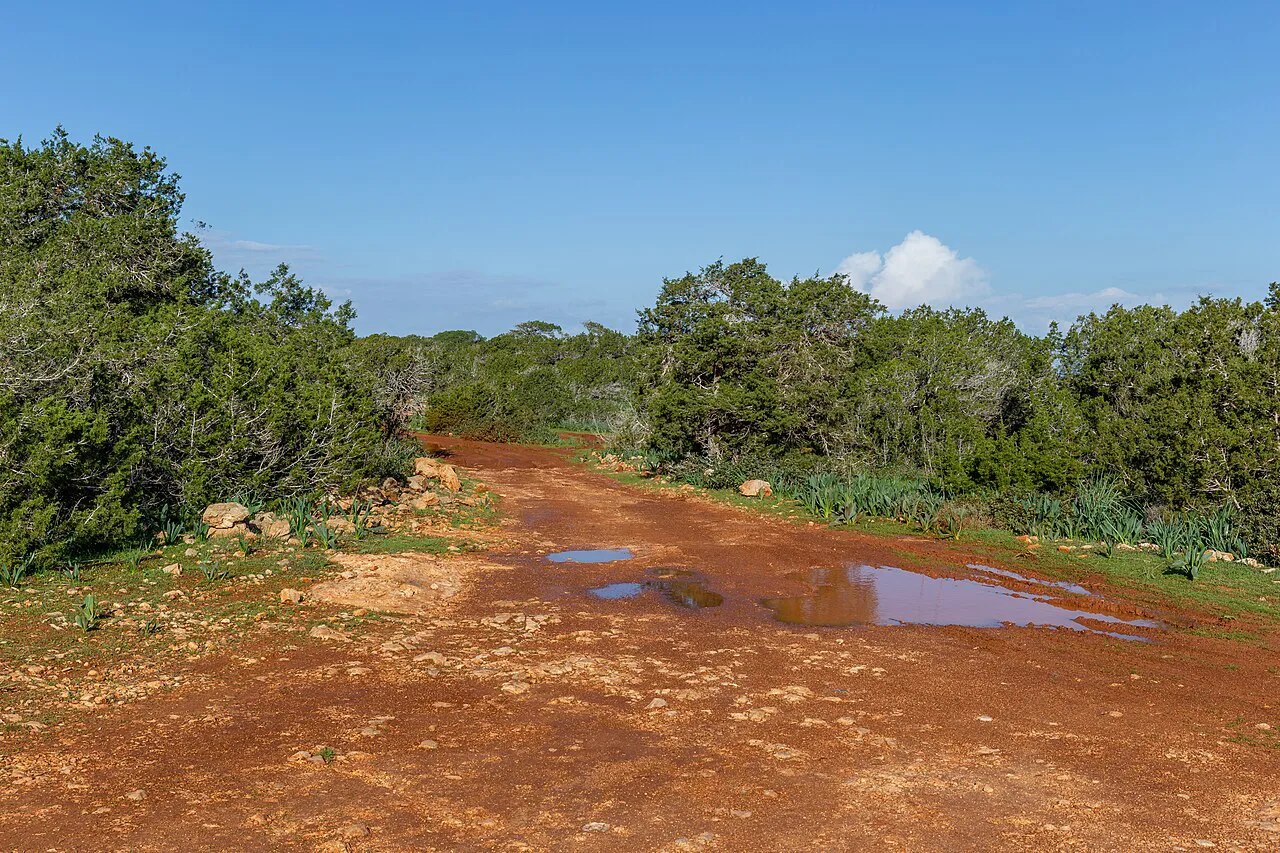
You drive on the left, as in the UK and Ireland, and a full valid UK licence is enough to drive and to rent. Car hire firms generally require drivers to be at least 21 and to have held a full licence for three years, and drivers under 25 usually pay a young-driver surcharge; check the age terms on your chosen booking before you commit.
Crossing north: The practical option is to park in Nicosia and walk across at the Ledra Street crossing, then pick up a bus on the far side for Kyrenia/Girne or continue on foot in the northern half of the capital.
Heat: Summer heat is the main constraint on a driving loop, not distance: sightseeing on foot at Kourion or the Nea Paphos mosaics is best done early, with the car providing shade and air conditioning between stops.
Fuel stations are plentiful on the main routes, and rural roads in the Troodos and Akamas reward a slower pace rather than a rushed schedule. If you are staying in one town and only making short hops, buses and airport shuttles remove the parking problem entirely; a car earns its keep on the multi-stop loop. Our driving in Cyprus guide covers the practical side in more depth.
Hiring a car: what to book and what it costs
Book a compact or mid-size car for the loop and an SUV only if the Akamas tracks are on your list. As a stated example, an SUV in high summer was quoted at around 50 euros per day before fuel, which adds up fast over a week; splitting a larger car between four people brings the per-head cost down sharply. Treat any figure as an example to beat rather than a rate to expect, and compare quotes for your own dates.
At Larnaca, off-airport rental firms run shuttles from the terminal, and the pickup point is not always obvious from arrivals signage, so allow extra time and confirm the meeting instructions with the firm. Inspect the car and photograph existing damage before you drive off, particularly on older budget vehicles. Our Cyprus car hire page compares the booking options in more detail.
Most hire companies do not allow their vehicles to be taken across the Green Line, so plan the north as a separate foot crossing rather than a driving extension of the loop. That is the single decision that most changes a Cyprus road trip: either keep the car south and cross on foot, or arrange transport on the far side.
Crossing the Green Line on foot
The practical option is to park in Nicosia and walk across at the Ledra Street crossing, then pick up a bus on the far side for Kyrenia/Girne or continue on foot in the northern half of the capital. Take your passport, expect a border check in each direction, and keep the crossing simple by travelling light.
The Republic of Cyprus uses the euro, while northern Cyprus uses the Turkish lira, so carry a little of each for the day you cross and check card acceptance before you rely on it. Guided tours that include the north run seasonally, so a foot crossing keeps your options open whatever month you travel.
Days one and two: Larnaca old town and the salt lake
Larnaca Airport sits about five miles south of the city, so the town is the natural first stop off a UK flight. Spend the morning walking the old town: the Church of Saint Lazarus with its gold-filled interior and small Byzantine museum in the courtyard, the narrow lanes of the Skala quarter, the Djami Kebir Mosque, Larnaca Castle and the Finikoudes seafront. That circuit is a couple of miles on foot and sets you up for an afternoon drive.
Use the afternoon for the Larnaca Salt Lake, Hala Sultan Tekke on its shore, Mackenzie Beach and the Kamares Aqueduct, all close enough to string together before dinner. Then drive inland to Nicosia for the night so the capital is fresh the next morning.
Nicosia: the divided capital on foot
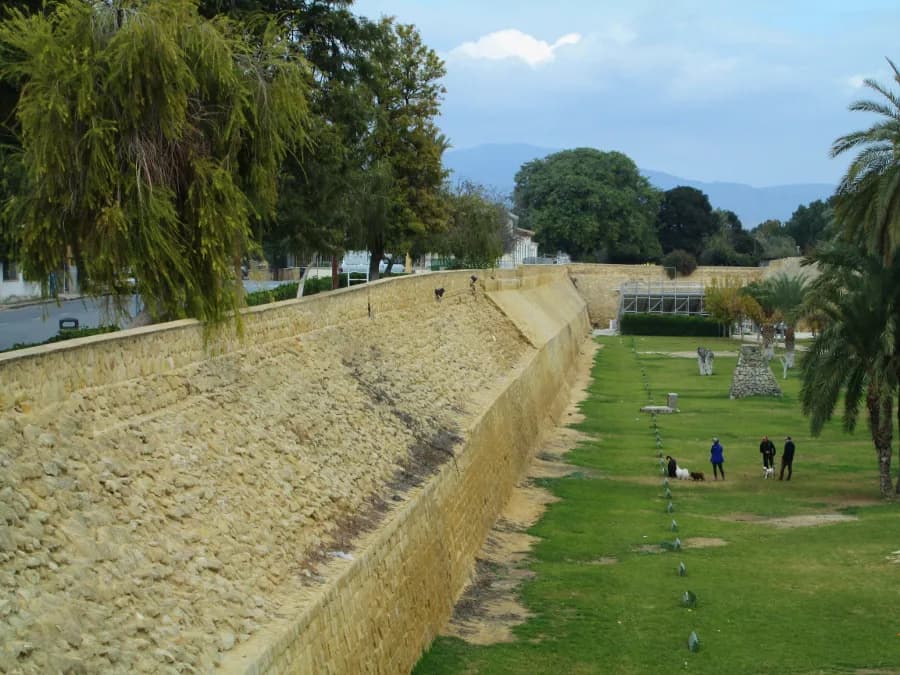
Nicosia is a walking city, and the old town inside the Venetian walls packs the sights into a compact grid. Work through Ledra Street, the Büyük Han caravanserai, the Bedesten, Selimiye Mosque and the municipal market, then take in Famagusta Gate, the Liberty Monument and Eleftheria Square. Allow a full day, and use the Shacolas Tower and the Leventis Municipal Museum if the heat or rain pushes you indoors.
Nicosia is also where the island's division is easiest to read on foot: the Green Line runs through the middle, and crossing at Ledra Street puts you in the northern half of the same city. Base yourself here for two nights if you want both the museums and a crossing day without repacking.
Limassol, Kourion and Kolossi Castle
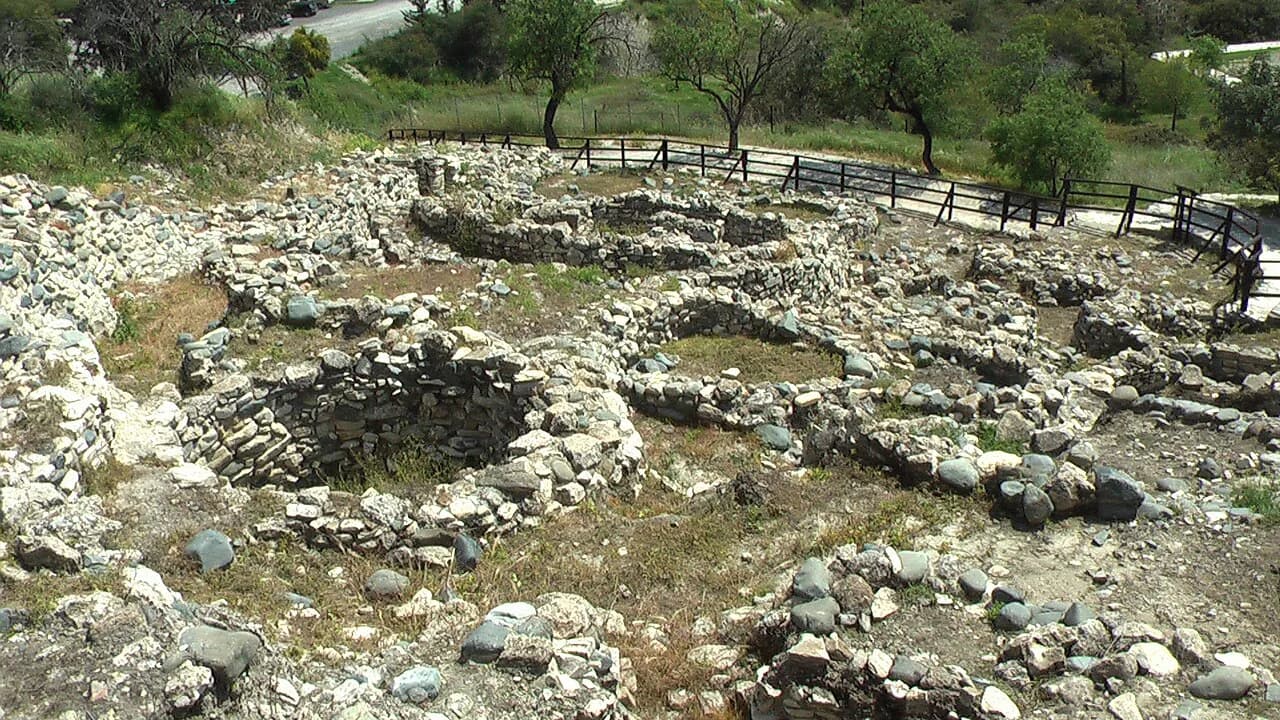
Drive south from Nicosia to Limassol and use the city as a base for the antiquities above it. Ancient Kourion, with its clifftop theatre and mosaics, and Kolossi Castle a short drive inland make a sensible half-day, and the Sanctuary of Apollo Hylates sits nearby on the same road. Department of Antiquities sites keep seasonal hours and close on some public holidays, so check the site's own page before a long drive.
Keep a day for Limassol itself: Molos seaside park for an evening walk, the old port, Limassol Castle, Ayia Napa Cathedral, the municipal art gallery and gardens. It is a working city rather than a resort, which makes it a good contrast to the coastal stops at either end of the loop.
Paphos: mosaics, tombs and the harbour
Paphos deserves two nights. In Kato Paphos, the Archaeological Site of Nea Paphos holds the Roman mosaics, with Paphos Castle and the coastal path to the harbour a short walk away; the Tombs of the Kings lie a little further along the same coast. Give the mosaics a morning, then use the afternoon for the harbour and the old town of Ktima up the hill.
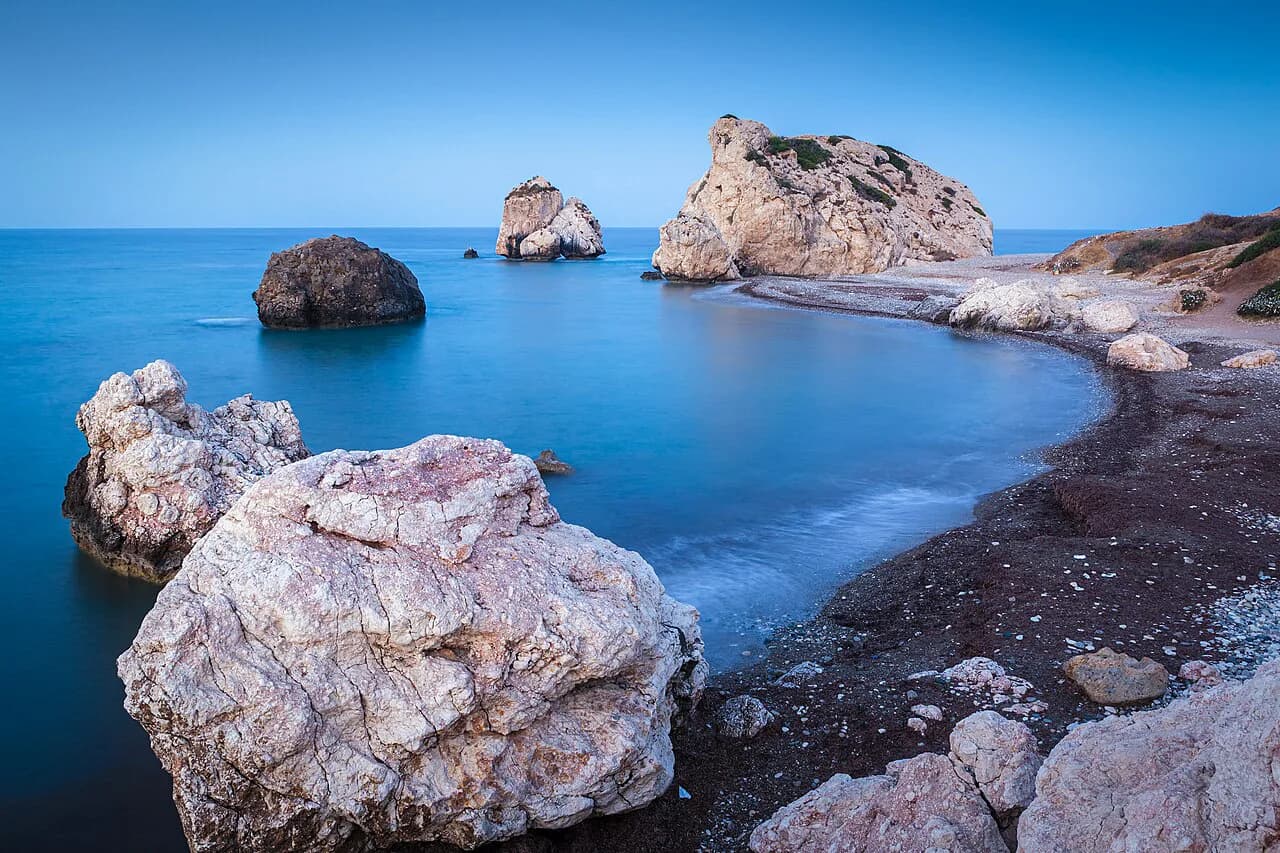
Petra tou Romiou, Aphrodite's Rock, is an easy stop on the coast road east of Paphos and works best early or late when the coach parties have gone. If the archaeological circuit is the point of your trip, our pick of the best places to visit in Cyprus helps you weigh Paphos against the other sites competing for your days.
The west coast and Akamas: Pomos, Latsi and the Blue Lagoon
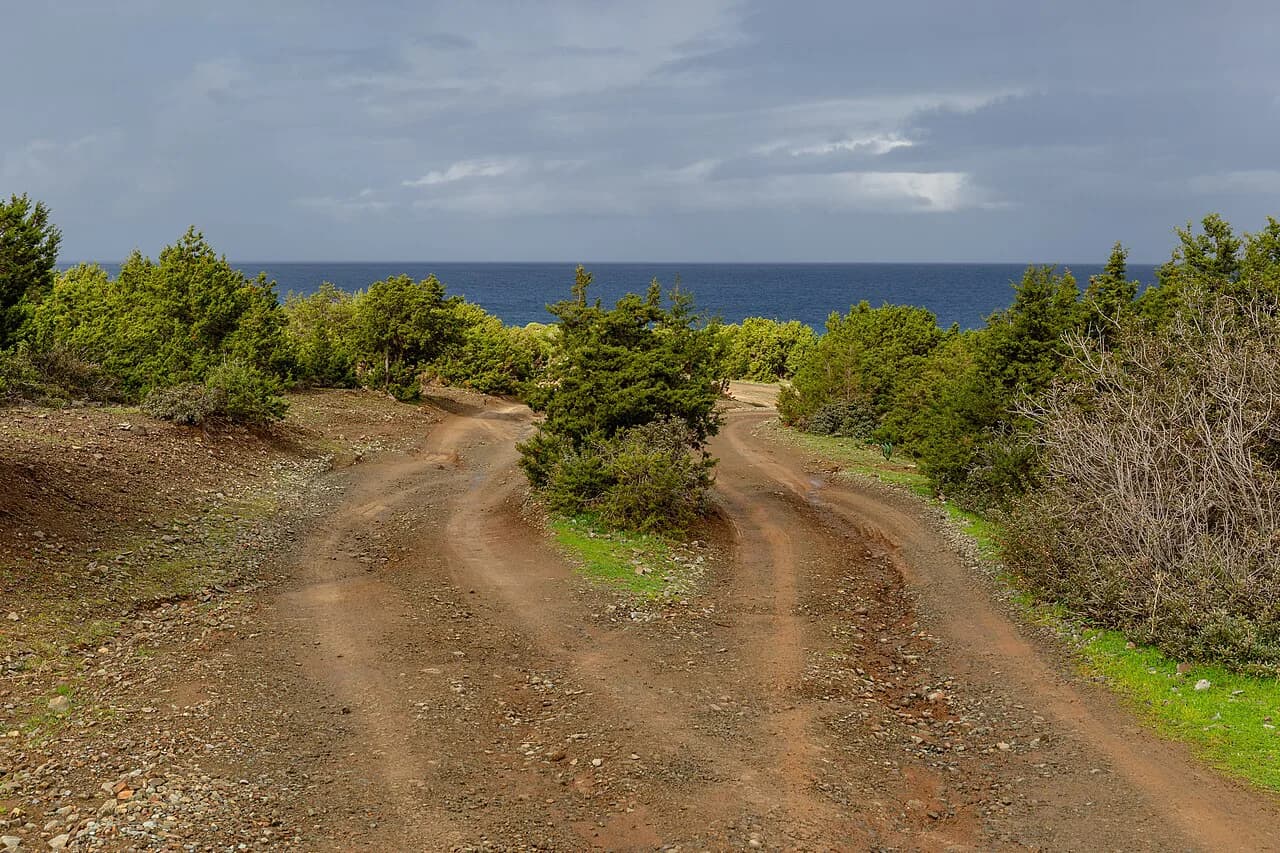
North of Paphos the coast road runs through Pomos, a laid-back village about 20 km from Poli Chrysochous, with a small fishing harbour and the rocky Dragon's Cave nearby. Continue to Latsi harbour and the Akamas peninsula, where the road surface and tracks argue for slowing down or switching to a smaller vehicle rather than rushing the loop.
Boat trips to the Blue Lagoon and along the Akamas coast run from Latsi harbour, and the Baths of Aphrodite and Fontana Amoroza are short stops on the same drive. Boat schedules shift with the season, so book with the operator once you know your dates. Our Cyprus boat trips page covers the options from the main harbours.
Troodos and the mountain villages
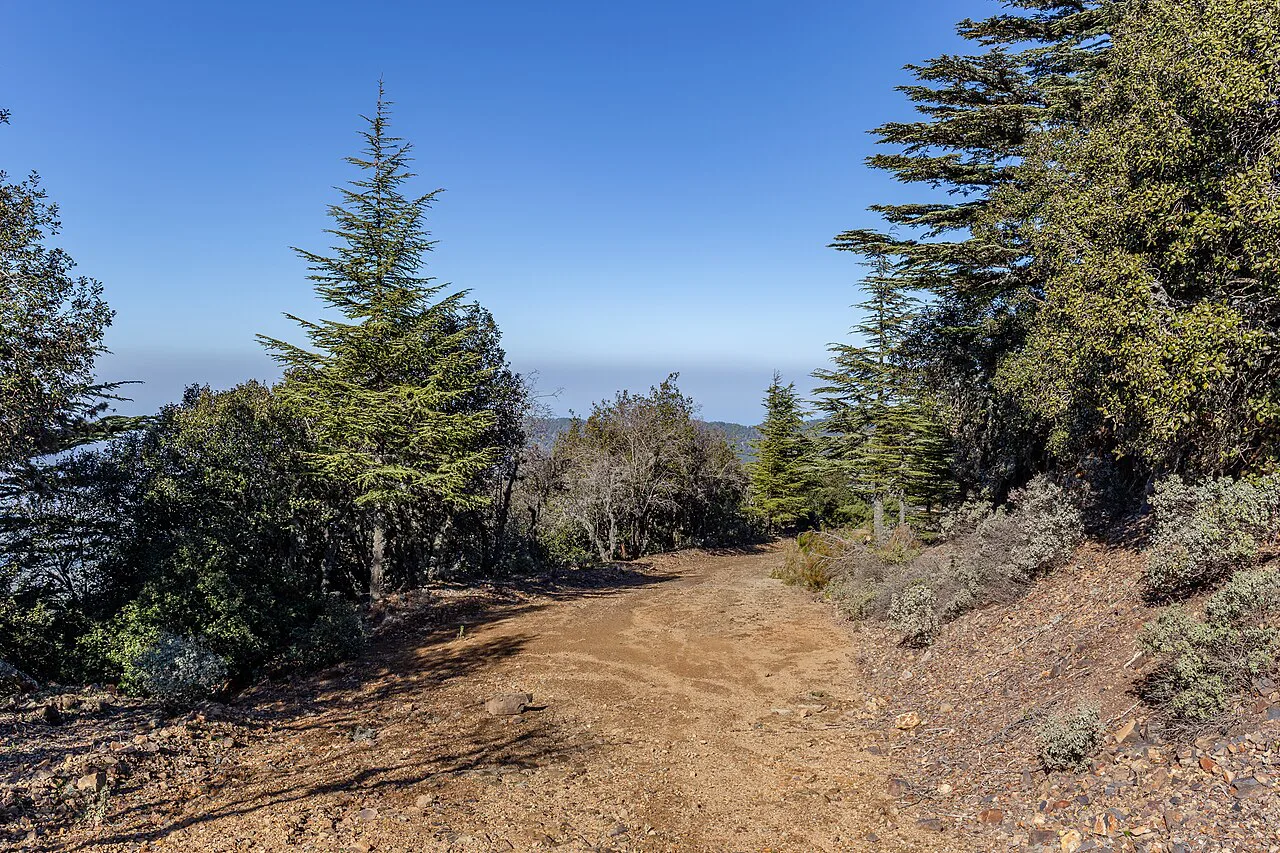
From Limassol, the road climbs into the Troodos, where Kakopetria's old quarter and the painted churches of the Solea valley make a cool counterpoint to the coast. This is a day for slow driving: mountain roads twist, villages sit close to the roadside, and the altitude drops the temperature by several degrees compared with Limassol. A night in the mountains breaks up the coastal stages nicely.
Waterfalls and forest walks sit along the Troodos roads if you want a shorter driving day, and they pair well with an afternoon back in the villages. Our guide to Cyprus waterfalls covers the stops that fit a mountain loop.
Ayia Napa, Protaras and Cape Greco
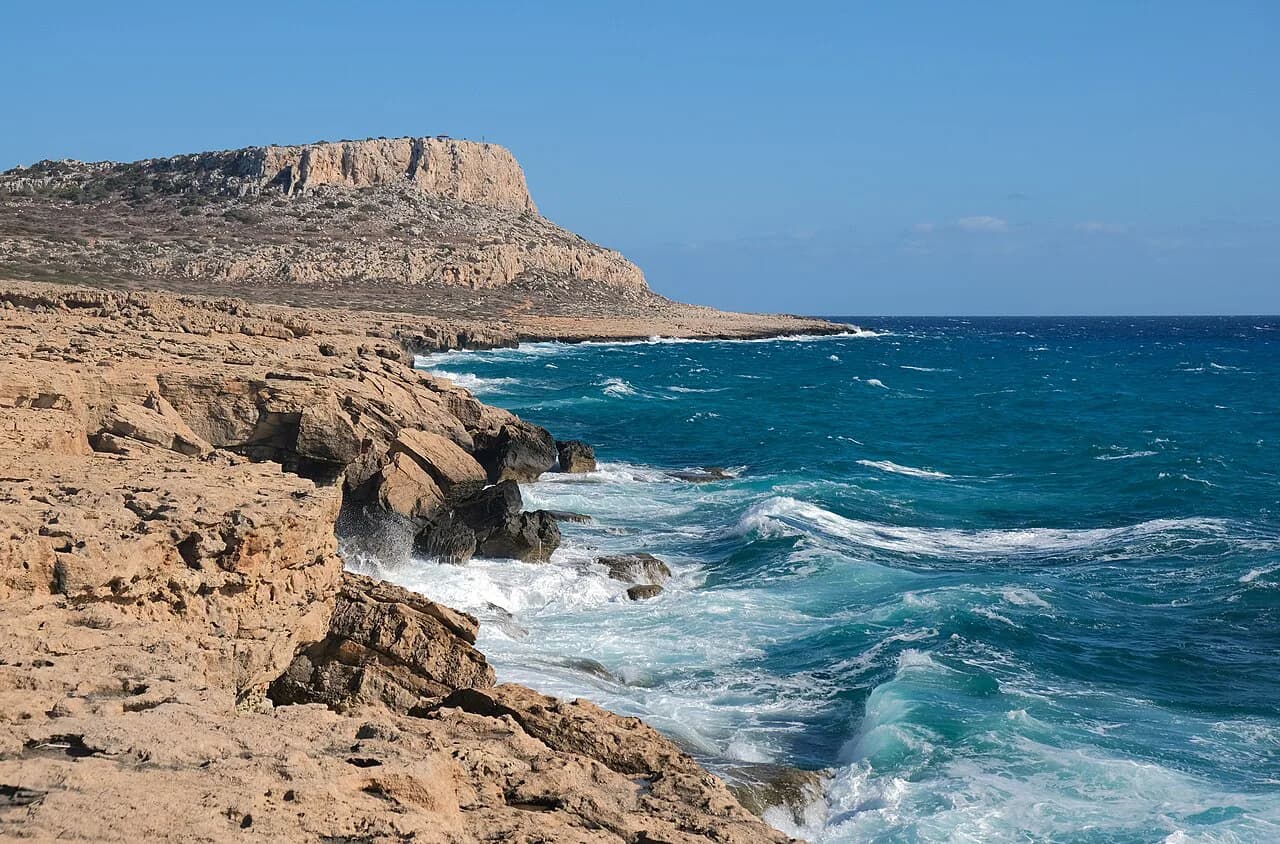
Close the loop on the east coast: Ayia Napa for the monastery and harbour, Protaras for the coastal road, and Cape Greco for the clifftop views and sea caves. In high summer this corner fills up, so arrive early in the day and treat the afternoon as downtime rather than another stop. Outside July and August the same drive is far calmer.
Ayia Napa town itself is a resort first and a base second, which suits some travellers and not others; our comparison of Cyprus resorts sets out what each east-coast base offers. From here it is a straightforward run back to Larnaca Airport to drop the car.
Paying in euros and Turkish lira
The Republic of Cyprus uses the euro, so fuel, parking and museum tickets are priced in euros, and cards are widely accepted at larger filling stations and hotels. Northern Cyprus uses the Turkish lira, so a foot crossing means changing some cash or checking card acceptance on the day.
Cyprus has no motorway tolls, which keeps the driving budget simple: fuel, parking and any hire-car extras are the main costs. Fuel prices change, so fill up and check the price at the pump rather than budgeting from a fixed figure.
Summer heat and the best months for driving
Summer heat is the main constraint on a driving loop, not distance: sightseeing on foot at Kourion or the Nea Paphos mosaics is best done early, with the car providing shade and air conditioning between stops. Department of Antiquities sites and museums run seasonal hours, and some close on public holidays, so check the site's own page before a long drive.
Spring and autumn give the most comfortable driving and walking conditions, and they also make the mountain roads and the Akamas tracks easier to enjoy. Whatever month you pick, keep the driving days short and the stops specific rather than treating the island as a checklist.
Should you drive the whole island or base yourself?
Drive the loop if your trip is a week or more and the archaeological sites are the reason you came, because only a car links Kourion, Paphos and the Troodos in a sensible sequence. Shorten it to two bases, Paphos and Larnaca, if you would rather unpack once and make day drives, and keep Nicosia as a foot day with a Green Line crossing.
Book the car early for July and August, confirm the age and licence terms in writing, and photograph any existing damage before leaving the rental bay. Park and walk across the Green Line rather than testing the hire agreement, and you have the whole planning problem solved.
Explore more Cyprus guides
Sources
Notes for your Cyprus trip
Optional updates to our Cyprus guides.
You might also like
Continue reading
More guides you'll find useful