Cyprus History: A Timeline Tied to the Sites You Can Visit
A plain timeline of Cyprus history, from Neolithic Choirokoitia and the city-kingdoms to the Lusignans, Ottomans, British rule and the 1974 division.
On this page
Cyprus history runs from a Neolithic village settled more than 9,000 years ago to a capital still cut by a UN buffer zone, and almost every period left something a visitor can walk around. This guide lays the periods out in order and names the place to see each one, from Choirokoitia and the Paphos mosaics to the Lusignan abbeys above Kyrenia/Girne and the Venetian walls of Nicosia/Lefkoşa. It is a background piece for planning: dates come from published histories, and site practicalities such as hours and tickets belong to the Department of Antiquities and the individual sites.
The island is the third largest in the Mediterranean, after Sicily and Sardinia, sitting in its eastern corner close to Turkey and Syria. That position explains most of what follows: whoever controlled the eastern Mediterranean trade routes wanted a base here, and each ruling power left buildings, place names and language behind. Read the timeline first, then use the site pointers at the end to match periods to places on your route.
Cyprus history at a glance: the periods in order
The sequence most visitors need is short. A Neolithic farming village at Choirokoitia; Bronze Age copper wealth under the name Alashia; Greek settlement and a set of city-kingdoms; Rome from 58 BCE; Byzantine rule with Christianity official; Richard the Lionheart in 1191 and then three centuries of Lusignan Kings; Venice from 1489; the Ottomans from 1571; Britain from 1878 and a Crown Colony from 1925; independence in 1960; and division after 1974.
Two framing points make the rest easier to follow. The last island-wide census was in 1960, when about four-fifths of the population were Greek Cypriot and just under a fifth Turkish Cypriot, so later figures are not directly comparable. And Nicosia is the last divided capital in Europe, which is why a single city appears in both the Byzantine and the modern sections of any Cyprus timeline.
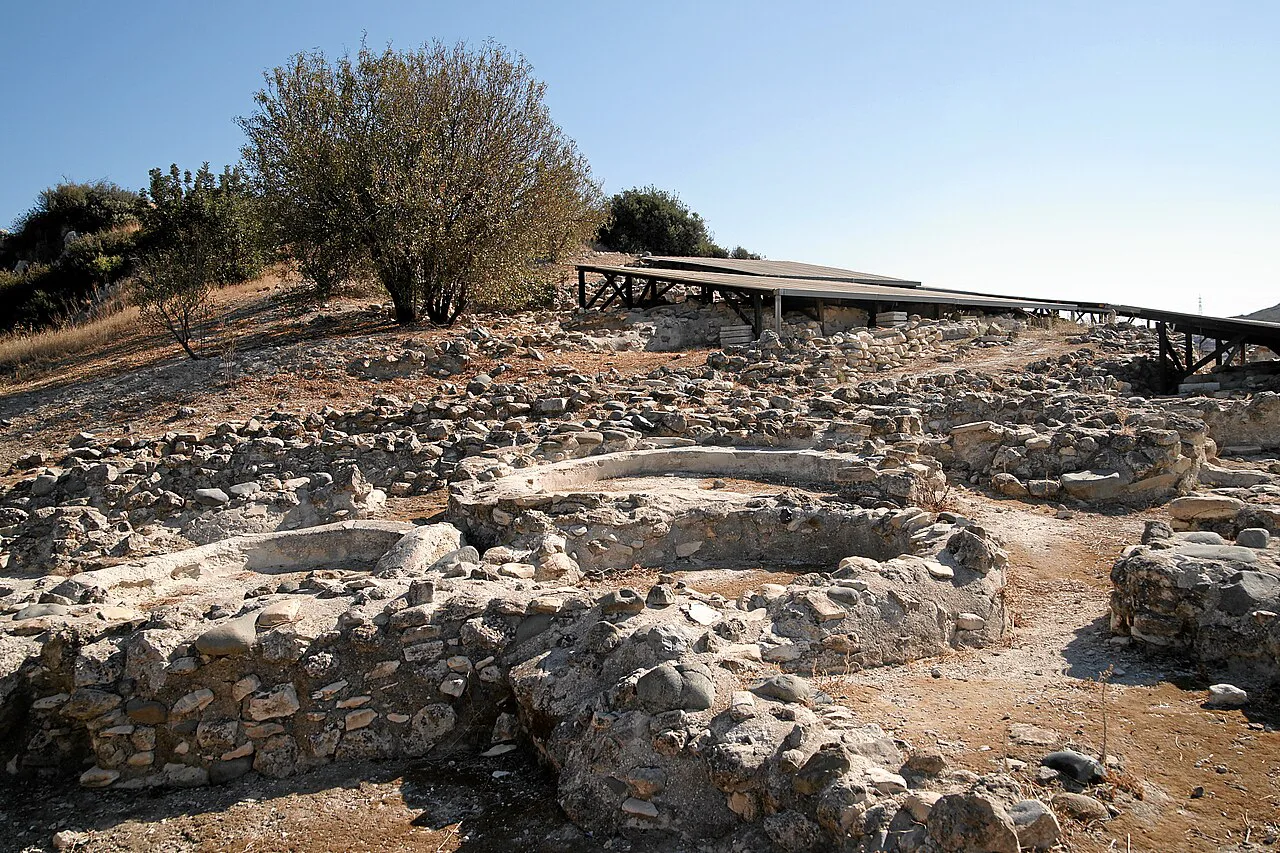
Neolithic and Bronze Age Cyprus: Choirokoitia, copper and the name Alashia
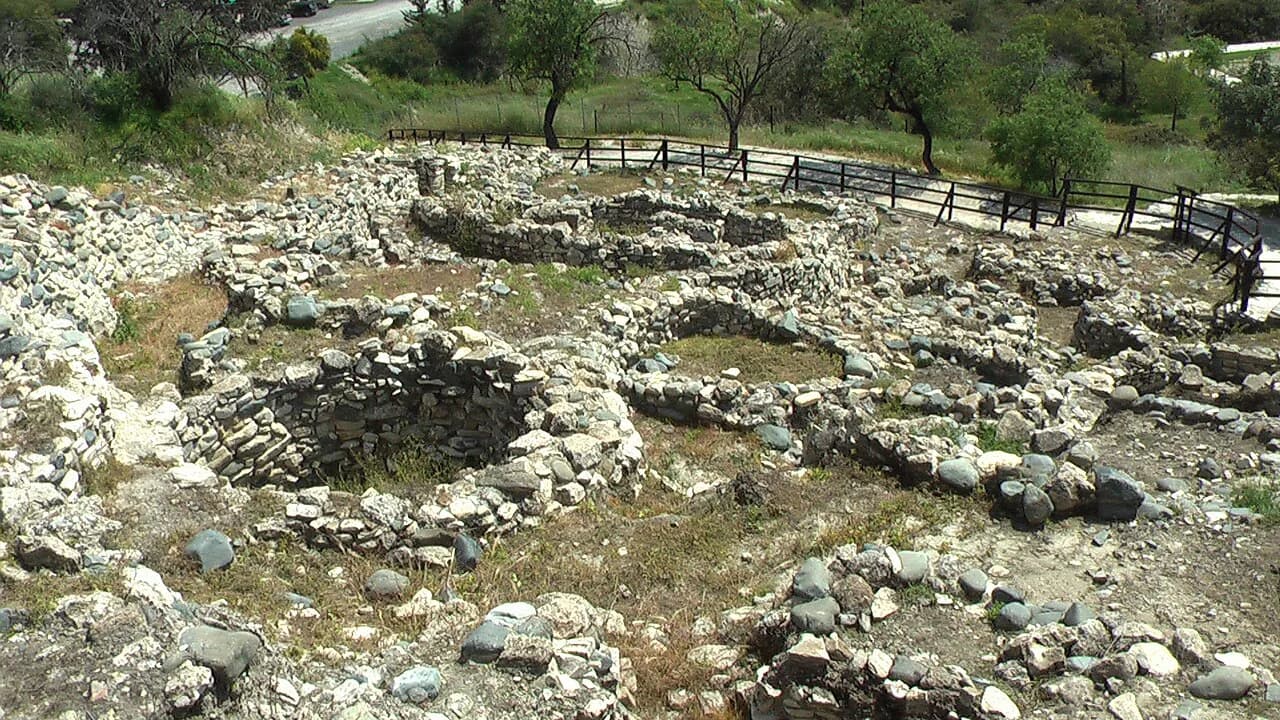
The oldest settlements found on the island date from the Neolithic period, with stone vessels and then pottery in use, and the Chalcolithic settlers who followed discovered copper in western Cyprus. Choirokoitia is the Neolithic village to see, described as among the best-preserved prehistoric sites of the eastern Mediterranean. It sits in the Larnaca district beside the Nicosia–Limassol motorway, which makes it an easy first stop on a drive inland from Larnaca.
Planning tip: Choose one layer and follow it rather than trying to cover 9,000 years in a week.
Where to start: Neolithic and prehistoric: Choirokoitia, inland from Larnaca. Roman: the mosaics of Kato Paphos and the clifftop ruins at Kourion, west of Limassol.
Copper then reshaped the island's economy. From around 2400 BC prospectors from Anatolia explored Cyprus for the metal and settled in the foothills of the Troodos mountains, where the ore was; in the early Bronze Age metal use spread and Cyprus began exporting copper. During the great trading centuries that followed, the island was known as Alashia, a name that appears in Egyptian and Hittite records.
After 1400 BC waves of Greek merchants and settlers, Mycenaeans and Achaeans, reached the island and spread the Greek language, religion and customs, gradually taking control and establishing the first city-kingdoms. The cult of Aphrodite flourished in the Geometric period that followed, a time of prosperity with ten city-kingdoms. A further explanation for the island's name links it to kopher, a Hebrew word for copper, which is a reminder of how closely metal and island were tied.
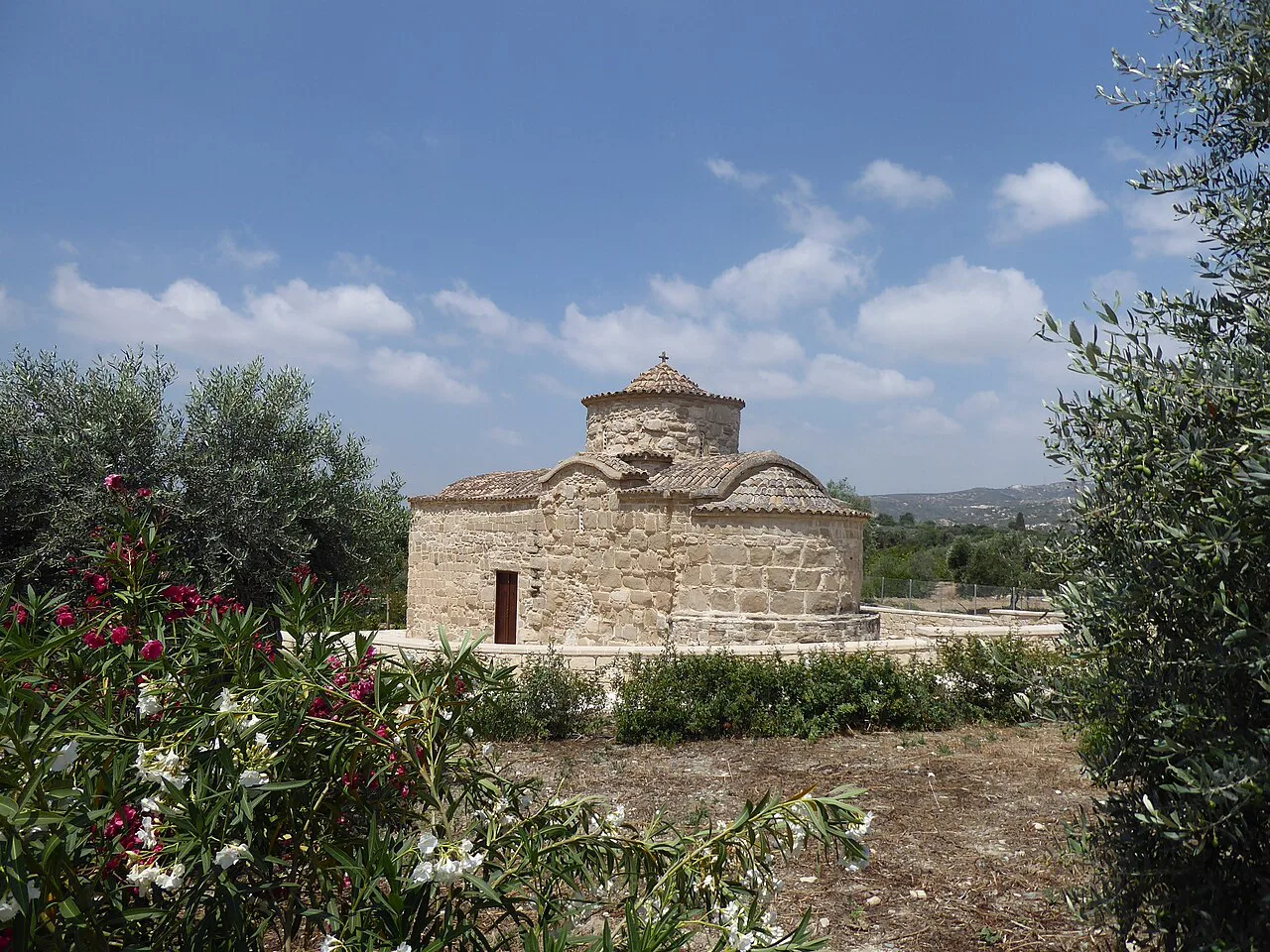
Greek settlement, the city-kingdoms and the cult of Aphrodite at Paphos
The Hellenization of Cyprus was complete by the Geometric period, and the ten city-kingdoms that emerged became tributary to Assyria, Egypt and Persia in turn during the Archaic and Classical era. King Evagoras, who ruled from 411 to 374 BC, briefly unified the island and made it an important centre of the Greek world. Alexander the Great took Cyprus into his empire between 333 and 325 BC, and after his generals fought over the succession the island passed to the Ptolemies of Egypt, who made Pafos the capital.
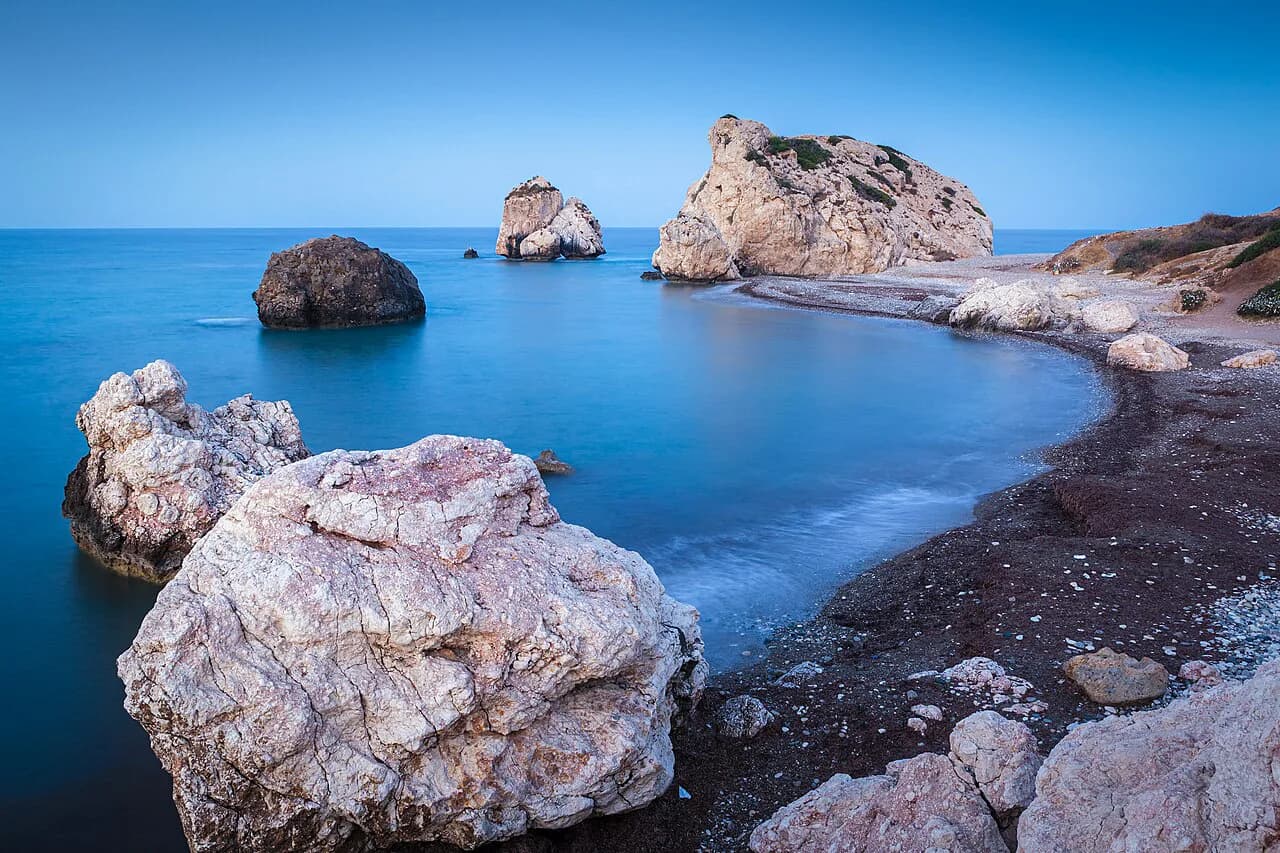
Aphrodite was said to have risen from the sea at Paphos, and her cult was central to the island's identity long before the Roman mosaics were laid. For a visitor, that means the western circuit around Paphos carries the deepest layering of Greek myth, Hellenistic capital and Roman rebuilding in one place. Budget time for the archaeological park at Kato Paphos rather than treating it as a photo stop; the mosaics are the celebrated remains and reward a slow look.
Roman Cyprus: Paul and Barnabas, earthquakes and the mosaics at Paphos
Rome annexed Cyprus in 58 BCE, and Christianity arrived early: Saints Paul and Barnabas converted the Roman proconsul, who became the first Christian ruler in the world. Freedom of worship was granted in 313 and Cypriot bishops attended the Council of Nicaea in 325. The period was also marked by earthquakes that forced cities to be rebuilt, so much of what survives is a later layer on older ground.
The Roman remains that travellers know best are the mosaics at Paphos, floors from the houses of wealthy residents and now the town's most celebrated ancient remains. Kourion, on the coast west of Limassol, is the other obvious Roman stop, with its clifftop setting above the sea. Both are Department of Antiquities sites, so check current opening hours and ticket prices with the authority before you build a day around them.
Byzantine Cyprus: basilicas, Stavrovouni and the autonomy of the Church of Cyprus
When the Roman Empire divided in 395, Cyprus became part of the Eastern Roman Empire, and Christianity spread rapidly under Byzantine rule with the first Orthodox Church established on the island. Empress Helena visited and founded Stavrovouni Monastery, and the era saw earthquakes and rebuilding, including large basilicas. In 488, after the discovery of St Barnabas's tomb, Emperor Zeno granted the Church of Cyprus full autonomy; its self-governing status had earlier been recognised at the Council of Ephesus in 431.
Arab raids began in 647 and continued, on and off, until 965, when the Arabs were expelled from Asia Minor and Cyprus; the TRNC Public Information Office records 24 expeditions between 632 and 964. For travellers, this is the period that explains the island's dense scatter of painted churches and old monasteries, many in the Troodos foothills.
Richard the Lionheart, the Knights Templar and the Lusignan kingdom
In May 1191 Richard I of England arrived in Cyprus on his way to the Third Crusade and took the island from Isaac Comnenus. He sold it to the Knights Templar, who found they could not hold it and gave it back, and in 1192 Richard sold it to Guy de Lusignan, the deposed king of Jerusalem. Richard also married Berengaria of Navarre on Cyprus and had her crowned Queen of England there.
Lusignan Kings and queens ruled from 1192 to 1489, a Latin Catholic aristocracy over a Greek Orthodox population, building Gothic cathedrals and abbeys. Famagusta/Gazimağusa became one of the richest cities in the world in this period, especially after the Crusader mainland fell, and the port's wealth is what makes its surviving walls and churches worth a full day. In Nicosia/Lefkoşa, the Selimiye Mosque began life as a 13th-century Lusignan cathedral before its later conversion.
Bellapais Abbey, in the hills above Kyrenia/Girne, is the Lusignan monastery most visitors see, and the castle at Kyrenia is the other headline stop in the north. If you are following the medieval thread, plan a loop that takes in the abbeys and fortresses rather than treating each as an isolated stop; the castles and monasteries guides pull the options together.
Venice, the walls of Nicosia and Famagusta, and the Ottoman conquest of 1571
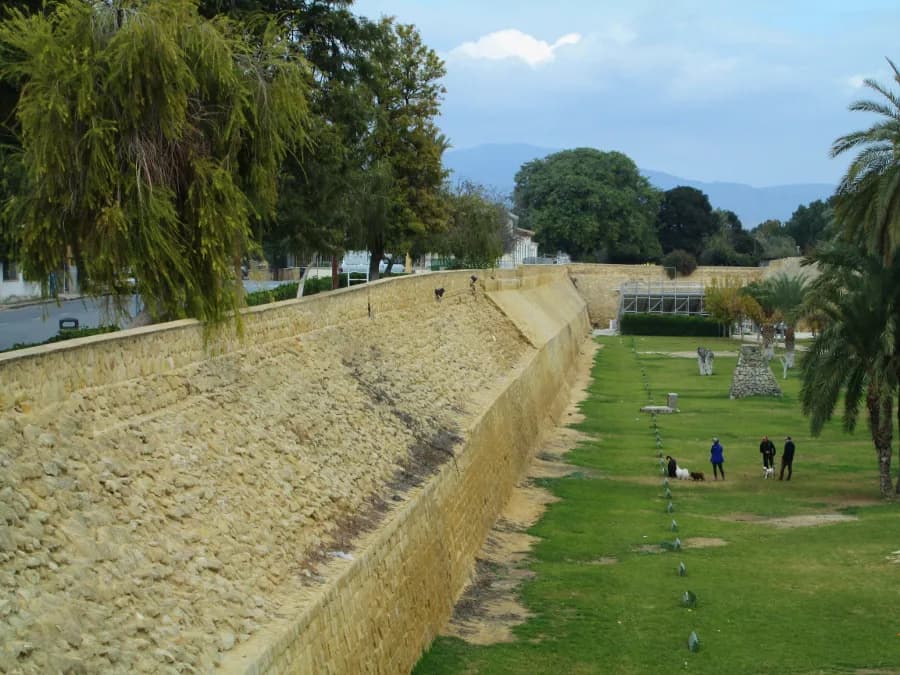
The last Lusignan queen, Caterina Cornaro, ceded the island to Venice in 1489. Venice's aim was to secure the sea route and supply line for its ships in the eastern Mediterranean, so it fortified the island against the Ottomans, building formidable walls around Nicosia/Lefkoşa and Famagusta/Gazimağusa that were considered works of art in military architecture. Those walls still shape both towns: in Nicosia they define the old city, and in Famagusta they enclose the historic core.
Ottoman rule began with the fall of Ammochostos, as Famagusta was then called, in 1571, after a siege the histories describe as savage. The Latin leadership was expelled and the Orthodox Church restored, with the archbishop becoming the people's representative to the Sultan and a political role he kept into the twentieth century.
Ottoman Cyprus: the restored Orthodox Church and the Turkish Cypriot community
The Ottomans swept away the Latin feudal order and settled Anatolian Turks on the island, founding the Turkish Cypriot community. For three centuries the two communities lived intermixed, village by village. When the Greek War of Independence broke out in 1821, many prominent Cypriots, including the archbishop, were executed, a moment that hardened the Church's political role.
The Ottoman centuries are the hardest to see as a single trail, because much of the evidence is in the everyday religious architecture of towns and villages rather than in one flagship ruin. A practical approach is to pair a Venetian walled town with a converted or Ottoman-era mosque, and to read inscriptions rather than expecting labels.
British Cyprus: 1878 administration, the 1925 Crown Colony and the EOKA campaign
Britain assumed administration of Cyprus in 1878, annexed the island in 1914 after the Ottomans entered the First World War on Germany's side, and made it a Crown Colony in 1925 under the Treaty of Lausanne, by which Turkey relinquished all rights to the island. Britain valued it as a strategic base, and during the Second World War Cypriot volunteers served in the British forces.
From the start, most Greek Cypriots, led by the Church, wanted enosis, union with Greece, which Britain refused and Turkish Cypriots feared. In 1955 EOKA launched an armed campaign against British rule, and Britain fought a four-year counter-insurgency while intercommunal tension rose sharply. The Zurich and London agreements that followed produced independence rather than either union or partition.
Independence in 1960 and the power-sharing constitution
Cyprus became an independent Republic in 1960 with an intricate power-sharing constitution: a Greek Cypriot president and a Turkish Cypriot vice-president, each with a veto, and fixed communal quotas. Archbishop Makarios III was elected first President on 13 December 1959 and Dr Fazıl Küçük first Vice President. Britain kept two military bases on the island, which remain sovereign base areas today.
The new Republic joined the United Nations, the Council of Europe and the Commonwealth, and later the European Union. It is the only EU country with part of its territory outside its government's control, a fact that frames everything written about the island's modern geography.
1963–64 breakdown, UN peacekeepers and the Green Line through Nicosia
The constitution proved unworkable, and in December 1963 fighting broke out. Turkish Cypriots withdrew from government into armed enclaves, hundreds were killed on both sides, and a UN peacekeeping force arrived in 1964 and has never left. The UN buffer zone, the Green Line, has divided the capital since 1964 and the island since 1974.
For a visitor, the Green Line is not an abstraction: in Nicosia/Lefkoşa it runs through the middle of the old city, and crossing points allow travel between south and north. Take your passport, check the current crossing arrangements with the UN mission or the Republic's authorities, and confirm what your hire-car insurance covers before driving across.
1974: the coup, the Turkish invasion and the division of the island
On 15 July 1974 the military junta ruling Greece staged a coup in Cyprus to force enosis. Five days later Turkey invaded and, in two offensives, took the northern portion of the island, usually given as about 36 per cent. Since then the island has been physically divided: an internationally recognised Republic of Cyprus in the south, a self-declared Turkish Cypriot state recognised only by Turkey in the north, and the UN buffer zone between them.
Travellers meet the 1974 line most directly in Nicosia and at the closed section of Varosha, the Famagusta/Gazimağusa suburb that has been fenced and empty for decades. It is a place to walk quietly and read the signage rather than to take a position. Contemporary reporting and the museums in both parts of the island set out the sequence, and the practicalities of visiting the north are covered in the guides to Kyrenia/Girne and its history.
Where to see each period: a short site-by-site pointer list
Neolithic and prehistoric: Choirokoitia, inland from Larnaca. Roman: the mosaics of Kato Paphos and the clifftop ruins at Kourion, west of Limassol. Byzantine and medieval religious building: the painted churches and monasteries of the Troodos foothills, with Stavrovouni and Kykkos Monastery among the best-known foundations.
Lusignan and Venetian: the abbeys and castles above Kyrenia/Girne, the walls and Selimiye Mosque of Nicosia/Lefkoşa, and the walled core of Famagusta/Gazimağusa. Modern: the Green Line in Nicosia and the buffer zone, best understood with a museum first. If you want the medieval layer in more depth, the Cyprus monasteries guide and the castles guide both map the buildings onto a route. The museums guide covers the collections that supply the context the sites themselves do not always explain.
Which period should you build your trip around?
Choose one layer and follow it rather than trying to cover 9,000 years in a week. A Roman-and-Byzantine route around Paphos, Kourion and the Troodos churches works well from a base in the west; a Lusignan-and-Venetian route through Kyrenia/Girne, Nicosia/Lefkoşa and Famagusta/Gazimağusa needs a car and a passport for the crossing.
Whatever you pick, treat opening hours and tickets as things to confirm with the Department of Antiquities or the individual site, because they move with the season. The history is the easy part; the logistics of a divided island are what reward a little planning.
Explore more Cyprus guides
Sources
Notes for your Cyprus trip
Optional updates to our Cyprus guides.
You might also like
Continue reading
More guides you'll find useful