Castles in Cyprus: Which to Visit and How to Plan
Castles in Cyprus span Kyrenia, St Hilarion and Kantara in the north, plus Kolossi, Limassol and Larnaca. Compare what each offers and plan a practical visit.
On this page
The castle to build a day around is Kyrenia Castle, because its walls enclose a shipwreck museum as well as the fort itself; after that, choose by region rather than chasing a whole-island trail. The island's castles fall into three practical groups: harbour forts at Paphos, Limassol and Larnaca, the walled city of Famagusta, and the hilltop ruins of the Kyrenia range in the north. What follows covers what each is like, how much time it takes and the driving and crossing decisions that shape a short break.
What a castle visit in Cyprus involves
The coastal forts are compact: Paphos Harbour Castle sits at the end of Kato Paphos harbour, Larnaca Castle guards the seafront, and Limassol Castle stands in the old town, so each fits into a morning or afternoon alongside other sights. Kyrenia Castle is a different scale, with a central parade ground, ramps to the upper walls and several separate spaces inside. Read them as two different kinds of outing and you will plan sensible days.
The northern hill castles demand effort and reward it with position. St Hilarion, Buffavento and Kantara sit along the Kyrenia range, where the drive is slow and the walking uneven, so they suit travellers with a car and a full day rather than a rushed half-day. Kolossi Castle, by contrast, is a single compact keep near Limassol, easy to combine with Kourion. If you want the wider context of the island's fortifications, from Byzantine walls to Lusignan and Venetian rebuilding, the Cyprus history guide sets out the sequence.
Allow for heat and surfaces whatever the castle. Hilltop sites mean rough ground and steps in full sun, and the coastal forts offer little shade; a morning slot is cooler and quieter than midday. Department of Antiquities sites can close on public holidays and may keep seasonal hours, so confirm before you build a day around one.
Kyrenia Castle and its shipwreck museum at the harbour
Kyrenia Castle stands at the entrance to Kyrenia harbour and is the most accessible of the north's historic sites, in a good state of preservation and open to the public. You enter through a gate in the north-west corner and walk up a long ramp past the tomb of an Ottoman admiral to the central parade ground, which is lined with guardrooms, living quarters and stables.
Getting there: The coastal forts are reachable by bus, but the hilltop castles of the Kyrenia range and Kolossi are not, so a hire car is the difference between seeing two castles and seeing six over a week.
If you only see one: Start with Kyrenia Castle if you are heading north: its harbour setting, Venetian walls and shipwreck museum make it the one castle that rewards a proper half-day, and St Hilarion above it is the natural second stop.
The present look of the castle is largely Venetian, from around 1489, when the walls were thickened and reinforced to resist artillery and the entrance was protected by a gatehouse that still stands; a 12th-century Byzantine church, St George of the Castle, was kept inside the walls. Ramps lead up to the battlements, and with care you can walk the full circuit for views over the harbour. The Lusignan royal apartments and a small chapel sit above, while dungeons, storage rooms and the gunpowder magazines lie deeper in.
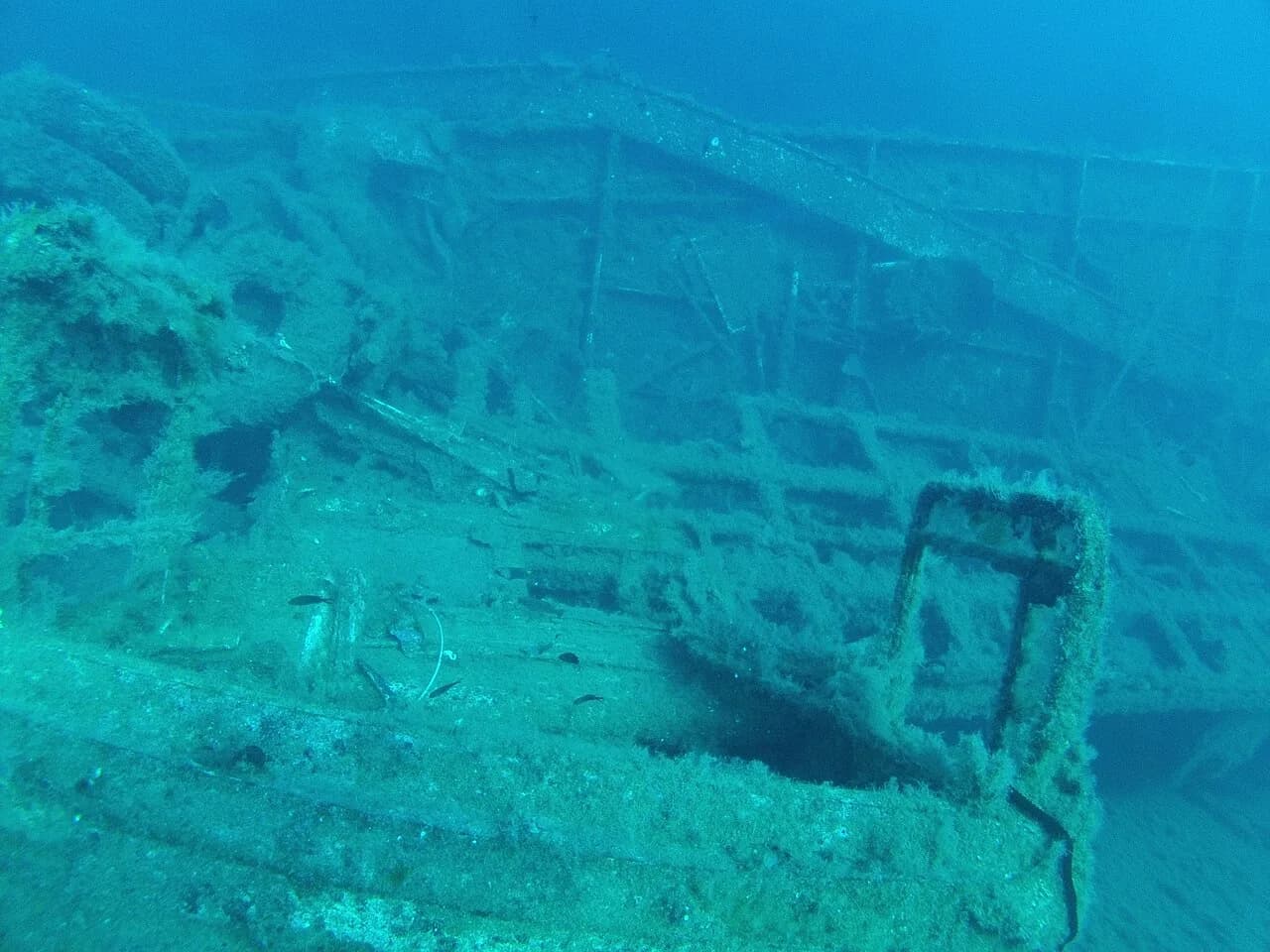
The reason to give Kyrenia Castle more than a quick lap is the shipwreck museum. In 1965 divers off the north coast found a trade vessel dated to about 300BC, carrying amphorae of almonds and wine among its cargo, and the hull is kept in a controlled atmosphere to preserve it. That single exhibit justifies a longer stop than the harbour fortresses elsewhere on the island.
St Hilarion Castle: the hilltop ruin above Kyrenia
St Hilarion Castle sits high above Kyrenia and is listed among the island's castles alongside Buffavento and Kantara, the three that guard the Kyrenia range. Its appeal is the position and the ruined spread of towers and walls rather than furnished rooms, so treat it as a hill walk with a castle attached. Wear proper shoes and carry water.
Because the castle climbs across a ridge, the visit involves steps and uneven tracks, and the drive up is winding. Give it a half-day including the road, and go early to avoid the worst heat and the narrowest parking conditions. The monasteries of the Kyrenia range, such as Bellapais Abbey, sit nearby and pair naturally with a castle morning.
Buffavento and Kantara: the quieter castles of the Kyrenia range
Buffavento and Kantara draw far fewer visitors than St Hilarion and suit anyone who wants the range without a crowd. Both are hilltop sites reached by narrow roads, with walking once you arrive; the reward is the outlook across the range towards the coast. They are best treated as one outing on a separate day rather than squeezed alongside St Hilarion.
Check road conditions and your hire-car cover before heading up, since the approaches are steep and unsurfaced in places. A small car is easier on the narrow bends, and an early start leaves margin for the slower driving. For a change of register, the painted churches and monasteries of the island make a gentler counterpoint to a day of walls and towers.
Famagusta: Othello's Tower and the walls of the old city
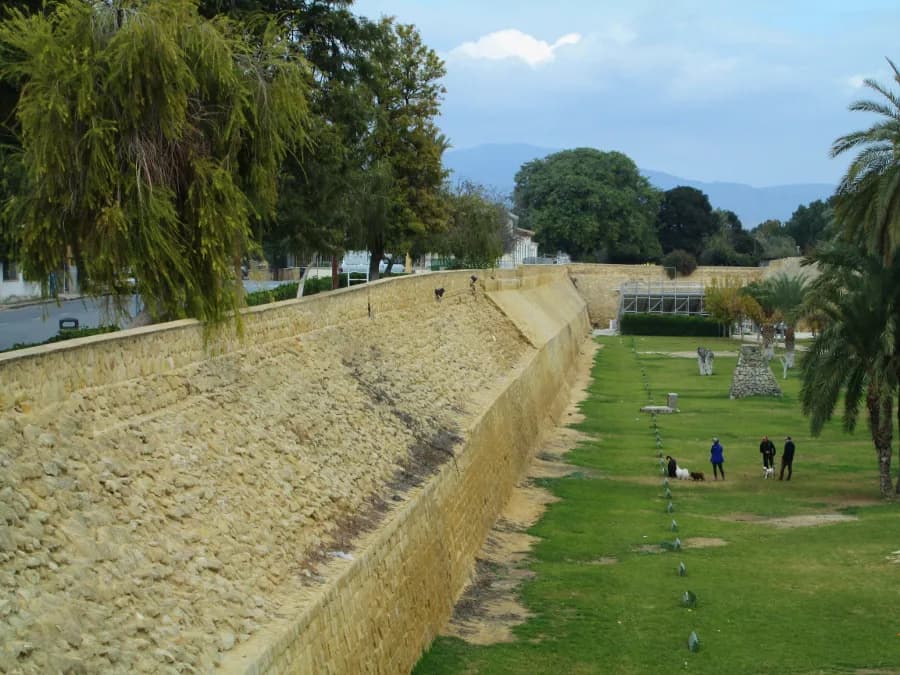
In Famagusta (Gazimağusa) the castle interest is Othello's Tower, set within the Venetian walls of the old city. It is a town sight rather than a hill climb, so it fits into a walking day among the walls, gates and squares. The old city rewards a slow circuit on foot.
Famagusta lies in the north, so reaching it from the Republic means crossing the Green Line. Crossings are made by road with a passport, and hire cars need insurance that covers the north; confirm this with your rental company before you set off, because standard policies may not include it. Driving is on the left throughout the island and the north uses the Turkish lira, though euros and sterling are widely accepted there.
Kolossi Castle: the compact keep near Limassol
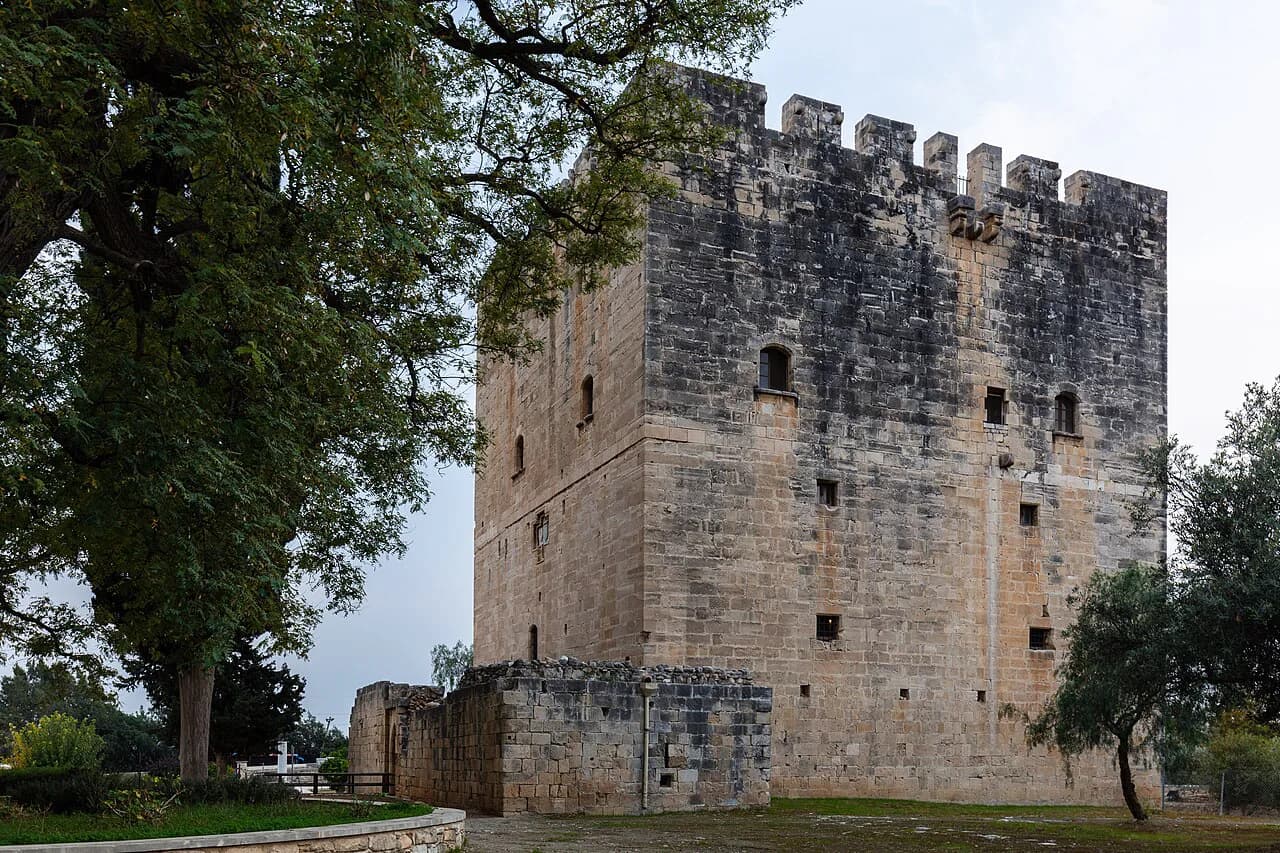
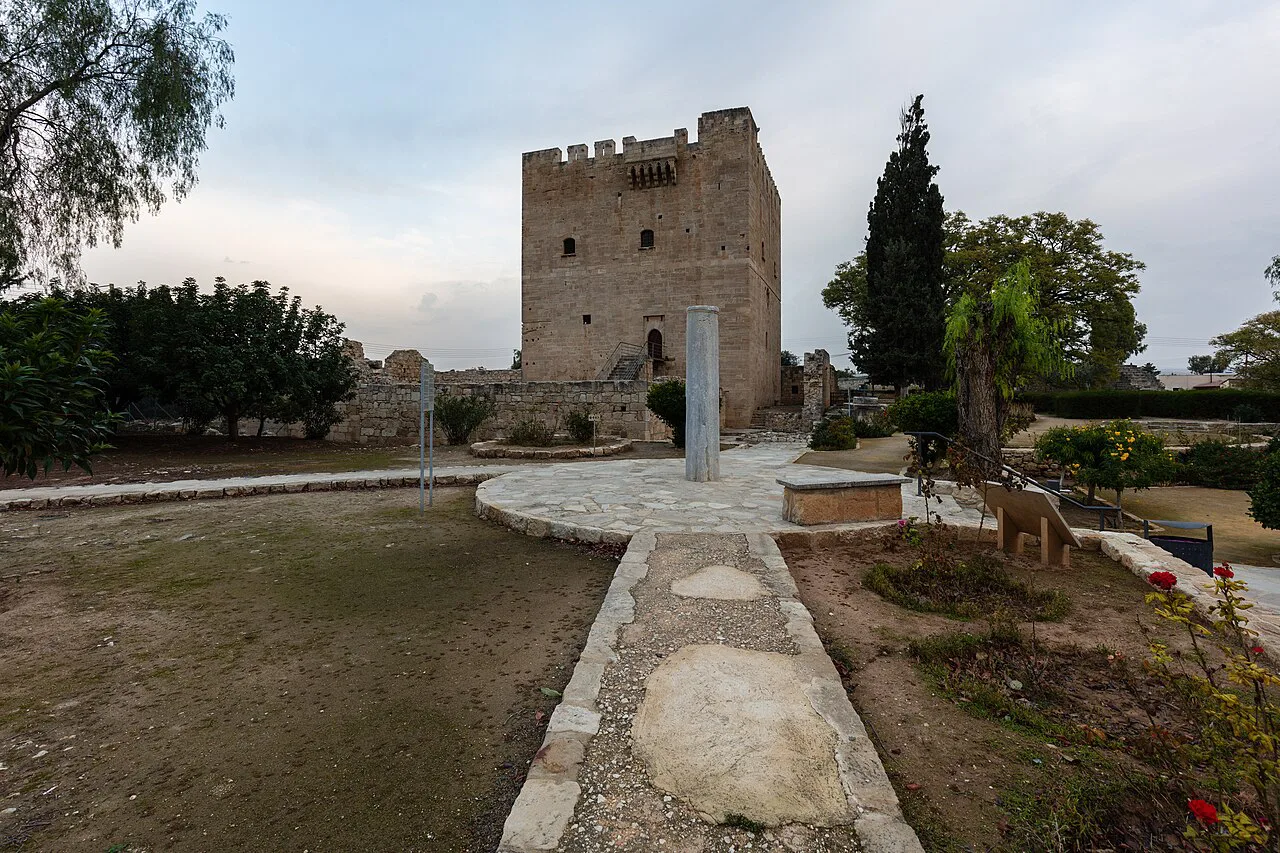
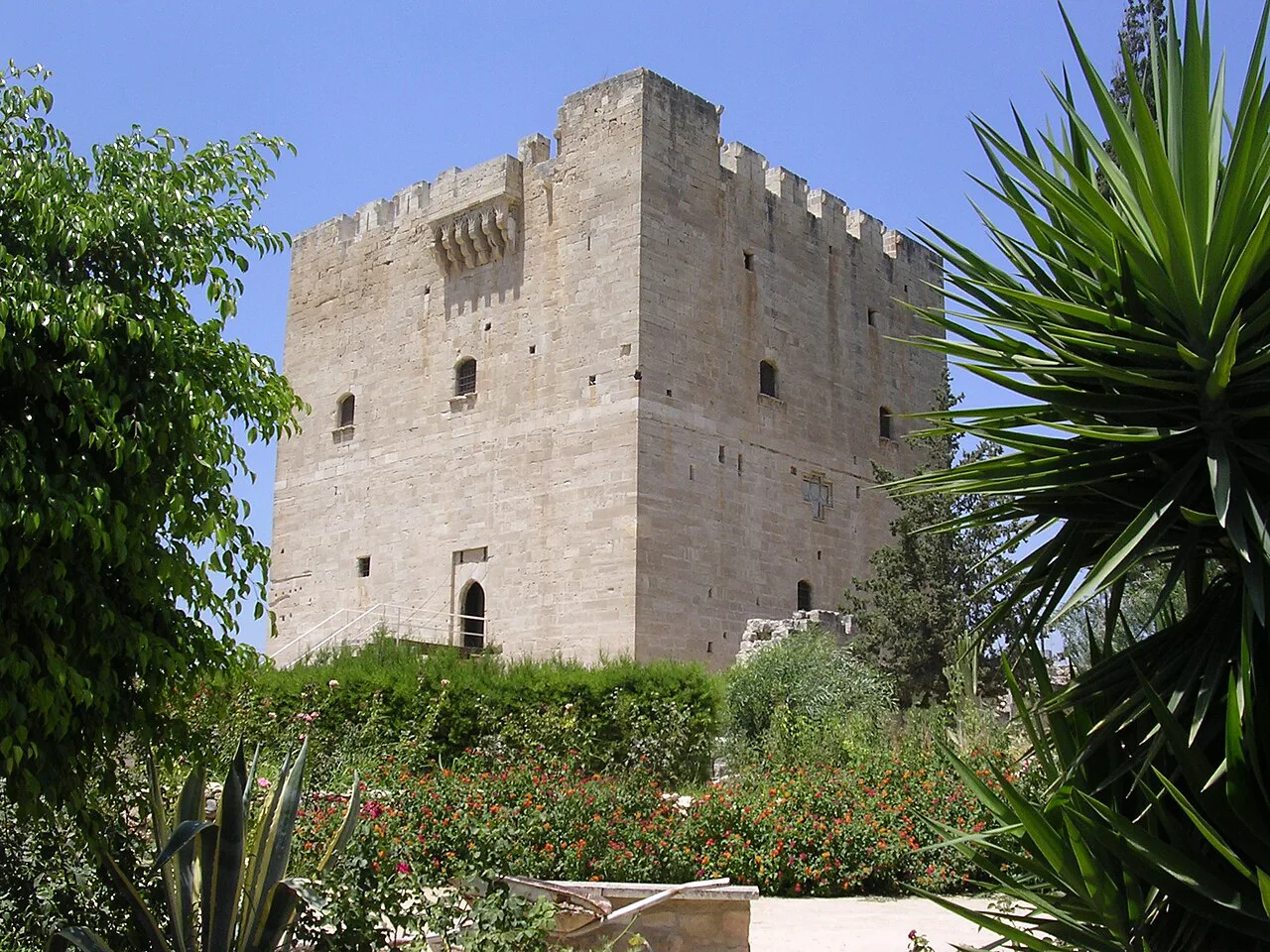
Kolossi Castle is a single tall keep with a courtyard, standing in the countryside near Limassol, and it takes far less time than a hilltop ruin. Its appeal is the concentrated shape of the building and the way it rises straight out of flat ground, which makes it a good short stop on a driving day. Pair it with Kourion and the coast road rather than making it a destination in itself.
The castle is a Department of Antiquities site, so seasonal hours and holiday closures apply; confirm the day before you go. An hour on site is enough for most visitors, leaving the rest of the day for the surrounding archaeological sites and the road back into Limassol.
Limassol Castle and the old town
Limassol Castle, also called the medieval fort, stands in the old town within easy walking distance of the centre and the seafront. It is a town castle, built into the street pattern, so you can combine it with the market lanes and the promenade without a car. The compact scale makes it a sensible stop on a hot day when a hilltop is out of the question.
Because it sits in the city, it is also the easiest castle to visit by bus or on foot if you are based in Limassol without a car. Allow an hour for the fort and rather longer for the old town around it.
Larnaca Castle: the small fort on the seafront
Larnaca Castle is a small fort on the seafront at the northern end of the promenade, close to the town centre and the marina. It is the least demanding castle on the island to reach on foot, which makes it a natural stop before or after a flight from Larnaca airport. The scale is modest, so treat it as a short visit rather than a half-day.
Paphos Harbour Castle: the landmark at Kato Paphos harbour
Paphos Harbour Castle, the fort at the end of Kato Paphos harbour, is the landmark most visitors see first. It is a short walk from the harbour restaurants and the Kato Paphos seafront, which makes it easy to fold into an evening stroll rather than a dedicated trip. The fort is small, so the visit is brief.
Kato Paphos is the busiest part of the island in summer, so go early or late to avoid the crush at the harbour. The larger archaeological draw nearby is the Paphos Archaeological Park with its mosaics, which deserves its own slot in the day rather than being tacked on after the fort.
Getting between them: car hire, buses and the Green Line
A car makes the castles practical. The coastal forts are reachable by bus, but the hilltop castles of the Kyrenia range and Kolossi are not, so a hire car is the difference between seeing two castles and seeing six over a week. Driving is on the left, roads to the range are narrow and winding, and an early start buys you cooler air and easier parking.
If your itinerary combines north and south, you will cross the Green Line by road at a designated crossing point with your passport. Hire cars need insurance that covers the north, which rental companies do not always include as standard, so arrange it before you travel rather than at the crossing. The Republic uses the euro and the north the Turkish lira, with euros and sterling widely accepted in the north.
Choosing which castles to see on a short break
Base yourself in one or two places and pick castles by region. From Paphos, Paphos Harbour Castle and Kourion's archaeological sites fill a day; from Limassol, Kolossi and Limassol Castle pair naturally; from Larnaca, the seafront fort fits around the airport. In the north, Kyrenia Castle is the anchor, with St Hilarion above it and Buffavento and Kantara for a second, quieter day.
Two constraints shape the plan: heat and closed days. In summer, hilltop castles are best walked early, and coastal forts are better late; Department of Antiquities sites keep seasonal hours and close on some public holidays, so confirm before building a day around one. The wider picture of the island's religious and defensive buildings, from Stavrovouni Monastery to the painted churches, is covered in the guide to Cyprus churches.
If museums are part of the plan, the Cyprus Museum in Nicosia and the regional museums of Limassol and Larnaca fill the gaps between castle visits, and the shipwreck museum at Kyrenia Castle is the one castle exhibit that justifies a longer stop on its own.
Which castle should you see first?
Start with Kyrenia Castle if you are heading north: its harbour setting, Venetian walls and shipwreck museum make it the one castle that rewards a proper half-day, and St Hilarion above it is the natural second stop. In the south, build days around bases rather than a single route, pairing Kolossi with Kourion and Paphos Harbour Castle with the Kato Paphos mosaics.
Travellers with a car and a taste for heights should give Buffavento and Kantara a separate day of their own, while anyone relying on buses should concentrate on Limassol, Larnaca and Paphos, where the forts sit in the towns. Whichever you choose, check the Department of Antiquities site before you set out, since hours and holiday closures change with the season.
Explore more Cyprus guides
Sources
Notes for your Cyprus trip
Optional updates to our Cyprus guides.
You might also like
Continue reading
More guides you'll find useful