Things to Do in Cyprus: Archaeology, Castles and Boat Trips
Plan Cyprus around mosaics at Kato Paphos, Kourion, Kykkos Monastery, Kyrenia Castle, Troodos villages and Blue Lagoon boat trips.
On this page
Cyprus works best when you pick two or three themes — Roman mosaics, mountain monasteries, castles, boat trips — and build days around them rather than chasing every sight on the island. The rewards are concentrated: the Paphos mosaics and Tombs of the Kings sit minutes apart, Kourion has a coastal setting above the sea, and the Troodos holds Kykkos Monastery and painted churches within a winding hour or two of each other. This guide groups those places by theme and coast, with notes on heat, crowds and how long each one needs.
The island divides cleanly for planning: Paphos and the west for antiquities and the Akamas coast, Limassol and Kourion for the south, Larnaca for its salt lake mosque, Nicosia for the divided old town, and Ayia Napa and Protaras for Cape Greco and boat departures. North of the Green Line, Kyrenia/Girne and Famagusta/Gazimağusa hold the castles and harbour walls. A Cyprus map is worth pinning up before you book anything, because road time between the west and the east coast decides how many days you actually get.
What to see in Cyprus: the short answer
The unmissable quartet is the Kato Paphos mosaics and Tombs of the Kings, Ancient Kourion, Kykkos Monastery and Kyrenia Castle — one archaeological park, one coastal city-site, one mountain monastery and one harbour castle. Add Petra tou Romiou (Aphrodite's Rock) as a short roadside stop, Hala Sultan Tekke by Larnaca's salt lake, and a boat day to the Blue Lagoon or for turtle watching. Painted churches in the Troodos and hill villages such as Omodos and Pedoulas fill the gaps between them.
Treat the list as geography, not a ranking. The west around Paphos holds the densest cluster of Department of Antiquities sites and the Akamas peninsula; the south around Limassol holds Kourion; the east holds Cape Greco and the boat trade. If you have five days, stay west and take one long day east; with ten days, split the island and consider a night or two in the north. The wider shortlist of best places to visit in Cyprus follows the same west-east logic.
Roman mosaics and archaeology at Kato Paphos
Kato Paphos Archaeological Park is the reason many people come to Cyprus: the House of Dionysos and neighbouring villas hold Roman floor mosaics of hunting scenes, myths and seasons, still in place where they were laid. The park also contains the Asklepion, an Odeon and the ruins of a Roman governor's seat, so allow at least half a day rather than an hour. The Tombs of the Kings, a separate site a short drive or walk away, are rock-cut tombs of the Hellenistic and Roman period, cut into the coastal cliff and open to the sky.
Is Larnaca or Paphos better as a base? Paphos puts the mosaics, Tombs of the Kings, Petra tou Romiou and the Akamas boat trade within easy reach, so it suits an antiquities-led trip. Larnaca is closer to the airport and handy for Hala Sultan Tekke, Nicosia and the east coast, but it is further from the main Roman sites.
What is the prettiest town in Cyprus? The mountain villages of Pedoulas and Omodos, Kyrenia/Girne's harbour in the north and the old town of Nicosia all have strong claims, depending on whether you want stone lanes, a harbour or a walled city. Kato Paphos is a resort strip rather than a pretty town, though its archaeological park is the island's highlight.
What is special about Cyprus compared with other Mediterranean islands? Cyprus combines in-place Roman mosaics, a divided capital with a Green Line you can cross on foot, a mountain monastery tradition with painted churches, and two currencies across one island. Kykkos Monastery, Kourion and Kyrenia Castle in a single trip is hard to match elsewhere.
Both sites belong to the Department of Antiquities, and their opening hours shift with the season, so check the Department's listings for the days you are there rather than relying on a remembered timetable. Go at opening time in summer: the mosaics are under cover but the tombs and park paths are fully exposed, and midday heat drains a visit fast. Kato Paphos is also the island's busiest corner in high season, so early or late beats a coach-hour arrival.
Tombs of the Kings and the Paphos mosaics
Pair the two Paphos sites in one day and you get the island's best single lesson in Roman Cyprus: mosaics in town, necropolis on the cliff. The Tombs of the Kings reward a slow walk down into the sunken courtyards, where columned facades were carved into the rock for wealthy families. There is little shade and the ground is uneven, so sturdy shoes and water matter more than a camera.
Kato Paphos itself is a resort strip of hotels and tavernas around the harbour and the park, which makes it convenient but crowded; the older centre, Ktima, is quieter and higher up. If you want one base for the west, Kato Paphos puts the mosaics on your doorstep, while Coral Bay and the Akamas road suit travellers heading north up the coast. Our guide to Cyprus resorts compared sets out what each base is actually like rather than which is best.
Ancient Kourion and its coastal setting
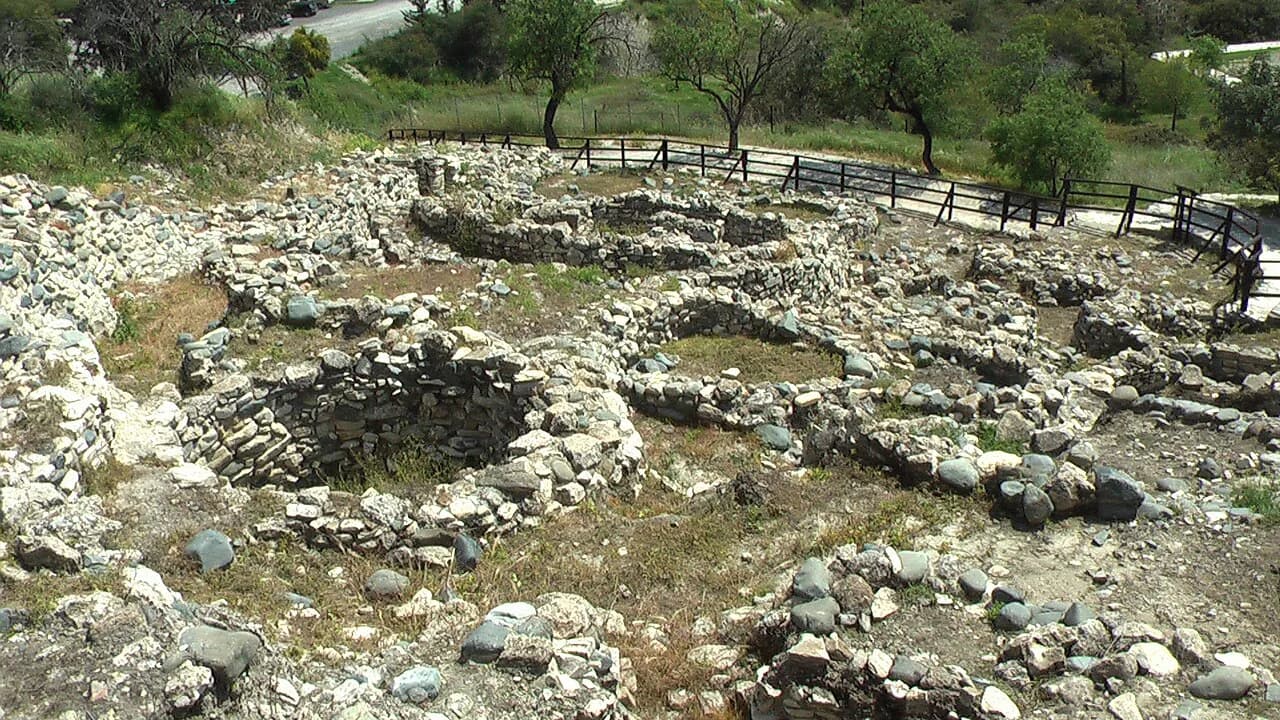
Kourion is the most dramatically sited ancient city on the island, a Greco-Roman town spread along a bluff above the sea west of Limassol, with a theatre and a row of mosaics in the House of Eustolios. The views along the coast are half the visit. Combine it with the Sanctuary of Apollo Hylates a short drive inland, where a reconstructed temple and a long sacred way give a quieter counterpoint to Kourion's crowds.
Kourion is exposed and hot by mid-morning in summer, with little shelter beyond the House of Eustolios, so an early start is worth the alarm. The site is run by the Department of Antiquities and seasonal hours apply, so confirm before you drive out. Limassol, twenty minutes away, makes the obvious base for a Kourion morning followed by the old town or the promenade in the afternoon.
Petra tou Romiou (Aphrodite's Rock)
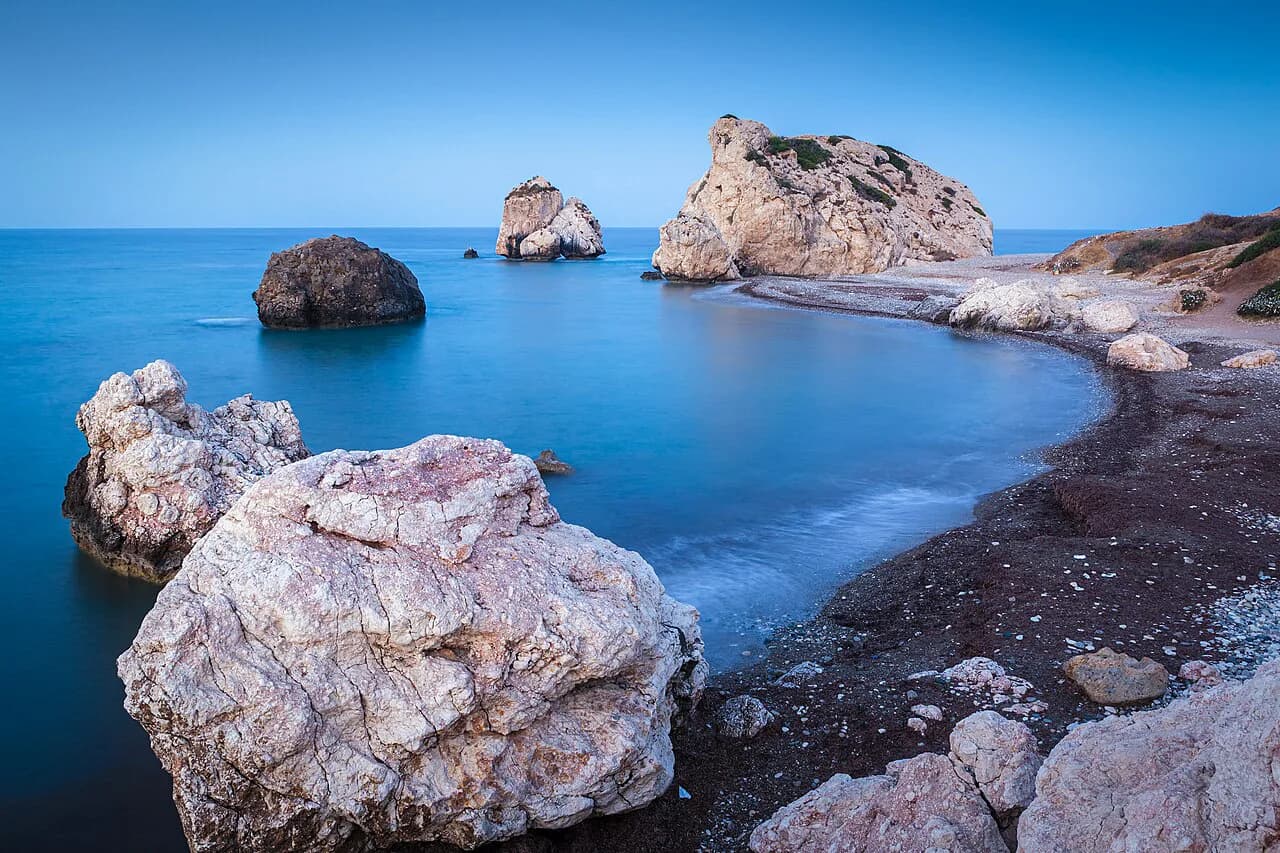
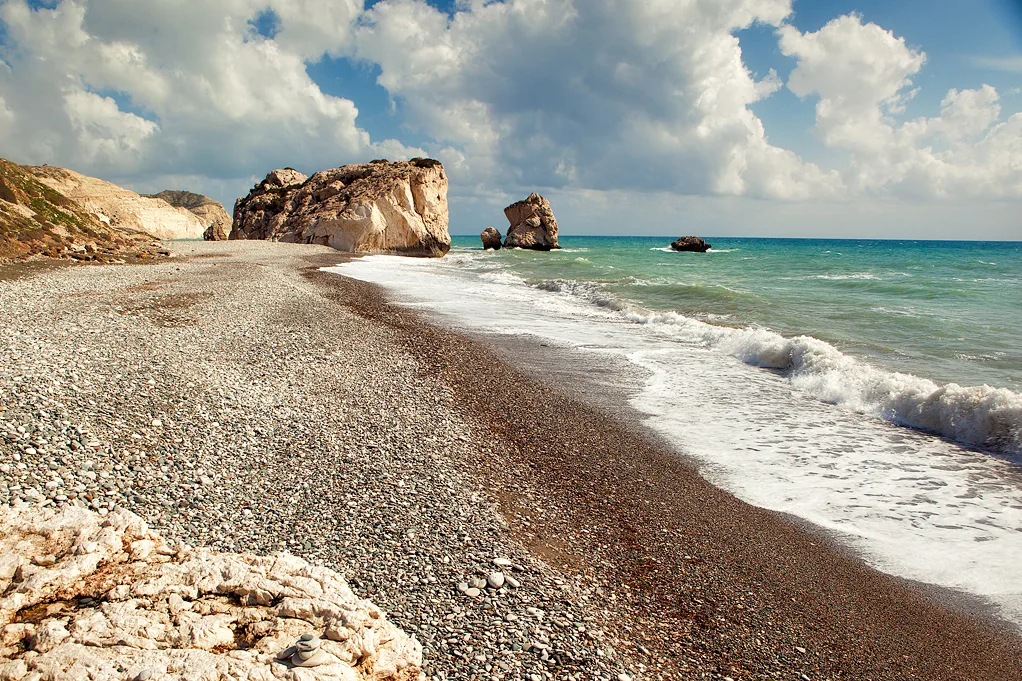
Petra tou Romiou is a stack of sea rock on the Paphos-Limassol road where, by tradition, Aphrodite rose from the waves; it is a viewpoint and a pebble beach, not a site that needs a half day. Stop for the photographs and a swim if the sea is calm, then move on. The car park sits right by the road, and the stop fits naturally between Kato Paphos and Kourion on a west-to-south driving day.
The beach is pebbly and the water deepens quickly, so it suits a quick dip rather than a long family afternoon. Because it sits on the main coastal road, it works best as a break in a driving day rather than a destination. If your day is already tight, the view from the roadside is nearly as good as the walk down.
Kykkos Monastery and the Troodos villages
Kykkos Monastery, high in the Troodos, is the island's richest and most visited monastery, known for its gilded interior and the icon tradition attached to it. The drive up is winding and slow; a guided day tour removes the strain if you are not a confident mountain driver, and tours typically combine Kykkos with a village lunch and a stop at a wine village. The smaller Panayia Chrysorrogiatissa Monastery makes a quieter second stop on the same loop.
The Troodos villages — Pedoulas for its setting, Omodos for its stone centre — are the natural places to break the drive, and they give the mountain day a human scale beyond the monasteries. Roads are narrow and constantly curving, so budget more time than the distance suggests and skip the loop if anyone in the car gets car sick. Mount Olympus (Chionistra), the island's high point, sits within the same massif.
Painted churches and monastery stops in the Troodos
The Troodos holds a cluster of painted churches whose interiors are covered in Byzantine and post-Byzantine frescoes, several of them listed for their art rather than their size. They are working churches, often locked outside service times, with keys sometimes held locally — the practical approach is to plan around a Sunday liturgy or to check with the village before making a detour. A monastery stop such as Kykkos or Chrysorrogiatissa anchors the day.
Because the churches sit in small villages linked by mountain roads, a car is close to essential and a full day is realistic for two or three stops rather than a grand tour. If you would rather not drive the passes, a guided Troodos day covers the same ground with someone else at the wheel. Either way, the mountain is the coolest part of Cyprus in summer and a sensible escape from the coast.
Kyrenia Castle and the harbour in north Cyprus
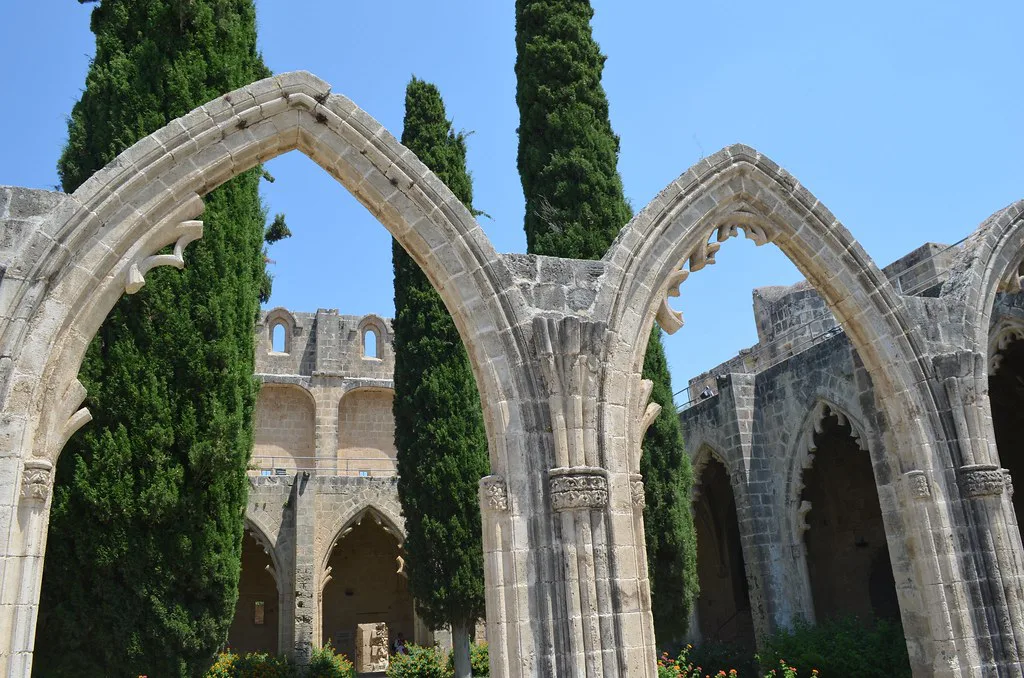
Kyrenia/Girne is the north's harbour town, with a horseshoe of cafés and boats below a squat Venetian castle that now houses the Shipwreck Museum and its recovered wreck. Walking the castle walls gives you the harbour view back, and the town centre is compact enough to cover on foot in an afternoon. The castle is a state-run site, so check current hours at the entrance or through the tourism office before planning the day around it.
North of the Green Line the currency is the Turkish lira, and euros and sterling are widely accepted in tourist areas, but change and card handling vary by business, so carry some lira for small purchases. Kyrenia is also the natural base for the north's castles and the Beşparmak range behind it. Driving rules are the same — Cyprus drives on the left throughout the island.
Hala Sultan Tekke Mosque near Larnaca
Hala Sultan Tekke sits on the edge of Larnaca's salt lake, a mosque and shrine in a quiet garden setting that makes a calm hour between the airport and the town. The lake itself is a stopping point for flamingos in winter, though the birds are seasonal and not guaranteed. Larnaca's seafront and its palm-lined promenade are the obvious pairing for the same morning.
Modest dress is expected at the mosque, and the site is a place of worship rather than a monument, so keep voices low and check whether the interior is open to visitors on the day. Larnaca itself is a convenient first or last stop because the airport is close, with the old town and its church of St Lazarus within walking distance of the seafront. Our Cyprus cities guide weighs Larnaca against Paphos and Limassol for a short break.
The Old Town of Nicosia and the Green Line
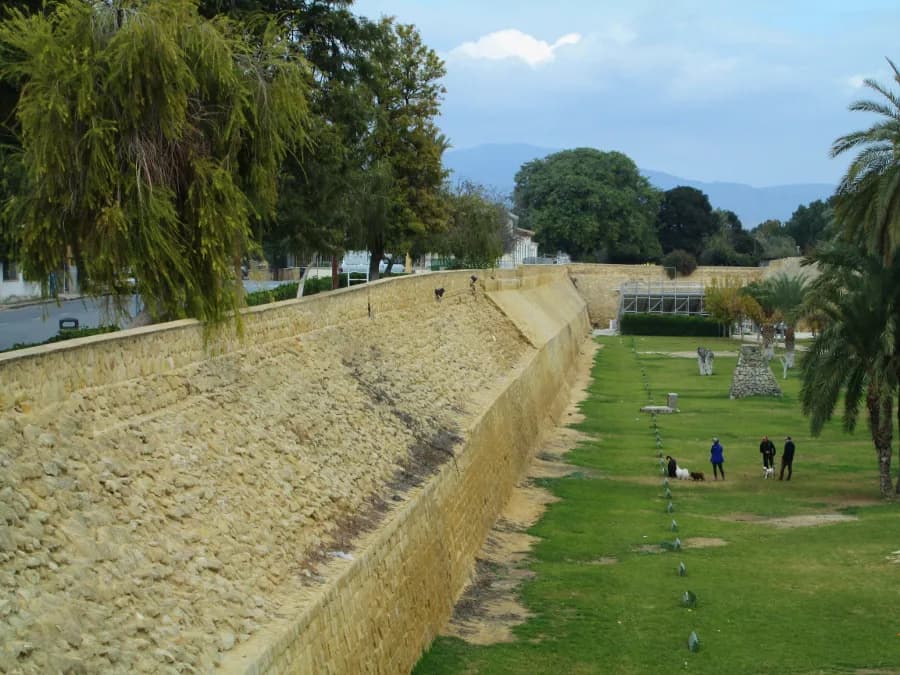
Nicosia/Lefkoşa is the last divided capital in Europe, and the Green Line runs through its old town, with Ledra Street the best-known pedestrian crossing between south and north. Walking the south's old lanes, the Venetian walls and the buffer-zone viewpoints takes half a day; crossing on foot at Ledra Street gives you the north's Büyük Han caravanserai and Selimiye Mosque on the other side. Carry your passport, expect a short formal check, and note that opening hours of the crossing are set by the authorities rather than by shops.
Crossing with a hire car is a separate question from crossing on foot: many rental agreements restrict or exclude the north, so confirm the policy with your company in writing before you drive up. For a first visit, walking across at Ledra Street is the simplest way to see both sides in one day without insurance complications. The old town is compact, so a day on foot covers the main sights without a car at all. If you want the full island in one route, our Cyprus itinerary lays the days out west to east.
Cape Greco National Forest Park and the east coast
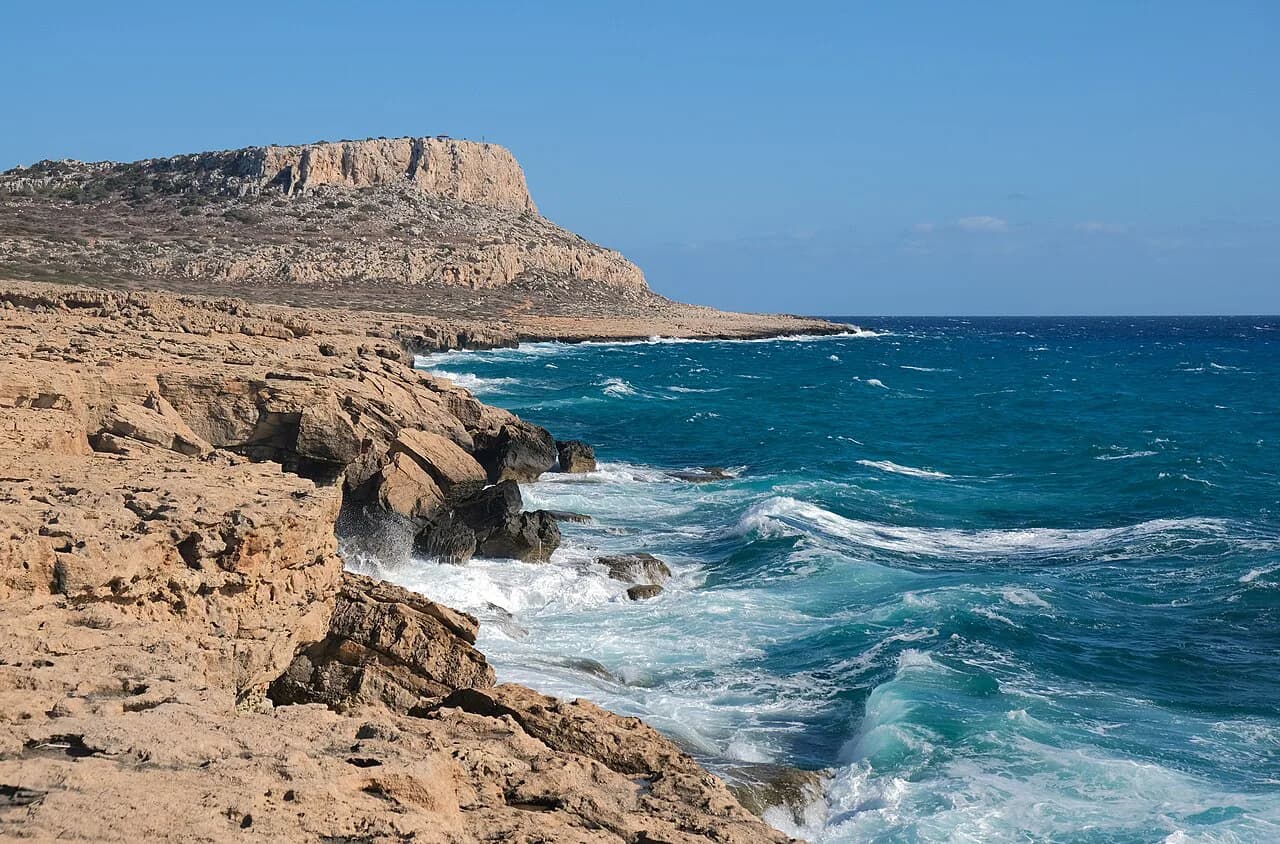
Cape Greco National Forest Park is the rocky headland between Ayia Napa and Protaras, with sea cliffs, a sea cave, and the Love Bridge arch, all reached by a short drive and then on foot. The paths are exposed and the car parks small, so early morning is far better than midday in summer, and the same is true of the coastal path between Ayia Napa and Protaras. It is a landscape to walk into rather than a sight to tick off.
The east coast is where most boat trips leave, and Ayia Napa and Protaras are the main bases for them. If you are choosing between the coasts, the east is flatter and more resort-led, while the west has the denser antiquities. Our guide to Cyprus car hire explains what to expect when you pick up a car at Larnaca or Paphos airport.
Just outside the resort strip, the coastline around Ayia Napa hides small coves and sea caves best reached with your own transport. The east is also the easier place to add a half-day on the water without committing a whole day to boat travel.
Boat trips: the Blue Lagoon and turtle watching
The Blue Lagoon, on the Akamas peninsula near Paphos, is reachable only by boat, with clear turquoise water in a rocky cove; boats also run from Ayia Napa and Protaras on the east coast. Turtle-watching boat trips are a separate product and typically combine a swim stop with time watching turtles from the boat or in the water, with the operator dictating how close you get. Both are seasonal and weather-dependent, so book through a named operator and confirm the departure point and time directly.
Choose the west for the Blue Lagoon and the east for shorter coastal trips, and expect an early departure if you want flat water and fewer people. For the wider choice of operators by harbour, our Cyprus boat trips page sets out the main departure points, including Coral Bay in the west.
How long each place needs
Rough planning figures: half a day each for Kato Paphos and Kourion, a full day for the Troodos with Kykkos, two to three hours for Kyrenia Castle and harbour, and half a day for Nicosia's old town. Petra tou Romiou takes twenty minutes, Hala Sultan Tekke an hour. A boat trip costs you most of a day once transfers and boarding are counted.
Order the days by geography: two nights in Paphos covers the mosaics, the tombs, Petra tou Romiou and the Akamas boat; two nights in Limassol or Larnaca covers Kourion and the east; a night in Nicosia allows both sides of the Green Line on foot. Do not try to see the west and the far east on the same day — the drive eats the sightseeing. That sequencing is what our west-to-east Cyprus itinerary assumes.
Getting around: car hire, buses and crossings
Cyprus drives on the left throughout the island, and a hire car is the practical way to reach Kykkos, the Troodos churches, Cape Greco and the Akamas, where buses are thin. Confirm before booking whether your rental agreement allows travel north of the Green Line and whether the insurance covers it; many policies exclude it. Cypriot roads are generally good, but mountain roads are narrow and slow.
Travellers arriving on a package will find transfers easy between Larnaca or Paphos airports and the resort strips, but public buses between towns are limited and slow for sightseeing. If you plan to cross the Green Line, do it on foot at Ledra Street rather than with a car you have not cleared. Carry your passport for the crossing and allow extra time at busy periods.
When to go and summer heat
Summer in Cyprus is genuinely hot on the coast and brutal at exposed archaeological sites, so in July and August plan to be at Kourion or the Tombs of the Kings at opening time and to be in the sea by early afternoon. The Troodos is cooler and is the obvious escape from the heat. Spring and autumn are the most comfortable months for walking around ancient sites and Cape Greco.
Boat trips, monastery visits and the north's castles are all subject to seasonal hours, and Department of Antiquities sites change their timetables through the year. Check the opening days of the sites you care about before you lock your itinerary, especially around public holidays. The shoulder months also thin the coach crowds at Kato Paphos and Cape Greco.
What things cost in euros
The Republic of Cyprus uses the euro, and the north uses the Turkish lira, with euros and sterling widely accepted in tourist areas there but change often given in lira. Department of Antiquities sites and state museums charge admission, with reductions for some visitors; current ticket prices are published by the sites themselves rather than fixed across the island, so check before you go. Boat trips and guided tours are priced per operator, with the departure point and inclusions deciding the figure more than the destination.
Car hire prices swing with season and with the excess you agree, so compare the total including insurance rather than the headline daily rate. The same applies to guided Troodos and boat days: ask what is included — lunch, entry fees, hotel pick-up — before you compare two prices. Keep euros in cash for small sites and village churches.
Which places should make your shortlist?
If you only have three days, build them around Paphos and Kourion: mosaics and the Tombs of the Kings on day one, Petra tou Romiou on the way to Kourion on day two, and Kykkos or a boat day on the third. With a week, add the east's Cape Greco and a boat trip from Ayia Napa or Protaras, and give Nicosia a day if the Green Line interests you.
The trade-offs are road time and heat, not hidden gems. Group sights by coast, start early at exposed sites, and settle hire-car and Green Line questions before you travel. That plan turns the island's list of sights into a sequence you can actually walk through.
Explore more Cyprus guides
Frequently Asked Questions
Is Larnaca or Paphos better as a base?
Paphos puts the mosaics, Tombs of the Kings, Petra tou Romiou and the Akamas boat trade within easy reach, so it suits an antiquities-led trip. Larnaca is closer to the airport and handy for Hala Sultan Tekke, Nicosia and the east coast, but it is further from the main Roman sites. Choose by what you want to see, not by which town is bigger.
What is the prettiest town in Cyprus?
The mountain villages of Pedoulas and Omodos, Kyrenia/Girne's harbour in the north and the old town of Nicosia all have strong claims, depending on whether you want stone lanes, a harbour or a walled city. Kato Paphos is a resort strip rather than a pretty town, though its archaeological park is the island's highlight. The Troodos villages are the most photogenic in a short visit.
What is special about Cyprus compared with other Mediterranean islands?
Cyprus combines in-place Roman mosaics, a divided capital with a Green Line you can cross on foot, a mountain monastery tradition with painted churches, and two currencies across one island. Kykkos Monastery, Kourion and Kyrenia Castle in a single trip is hard to match elsewhere. The compact scale means you can cover a lot in a week if you plan by coast.
Do I need a car to see the main sights?
A car makes the Troodos, Cape Greco, the painted churches and the Akamas far easier, since buses are thin outside the resort strips. Paphos and Limassol are workable without one if you stay central and take tours for the mountain day. Confirm your rental agreement covers any travel north of the Green Line before you book.
Sources
Notes for your Cyprus trip
Optional updates to our Cyprus guides.
You might also like
Continue reading
More guides you'll find useful