Lala Mustafa Pasha Mosque, Famagusta: St Nicholas Cathedral Guide
The Lala Mustafa Pasha Mosque in Famagusta was built as the Latin Cathedral of St Nicholas and converted into a mosque in 1571. Here is what to see and how to visit.
On this page
The Lala Mustafa Pasha Mosque is the former Latin Cathedral of St Nicholas in the walled city of Famagusta, converted into a mosque in 1571 and renamed after an Ottoman vizier. It is the most rewarding building inside the walls and the natural centrepiece of a half-day walking circuit. This guide covers the Gothic exterior, what the conversion changed, and how to pair it with the Land Gate, Othello's Tower and the Sea Gate.
What the Lala Mustafa Pasha Mosque actually is
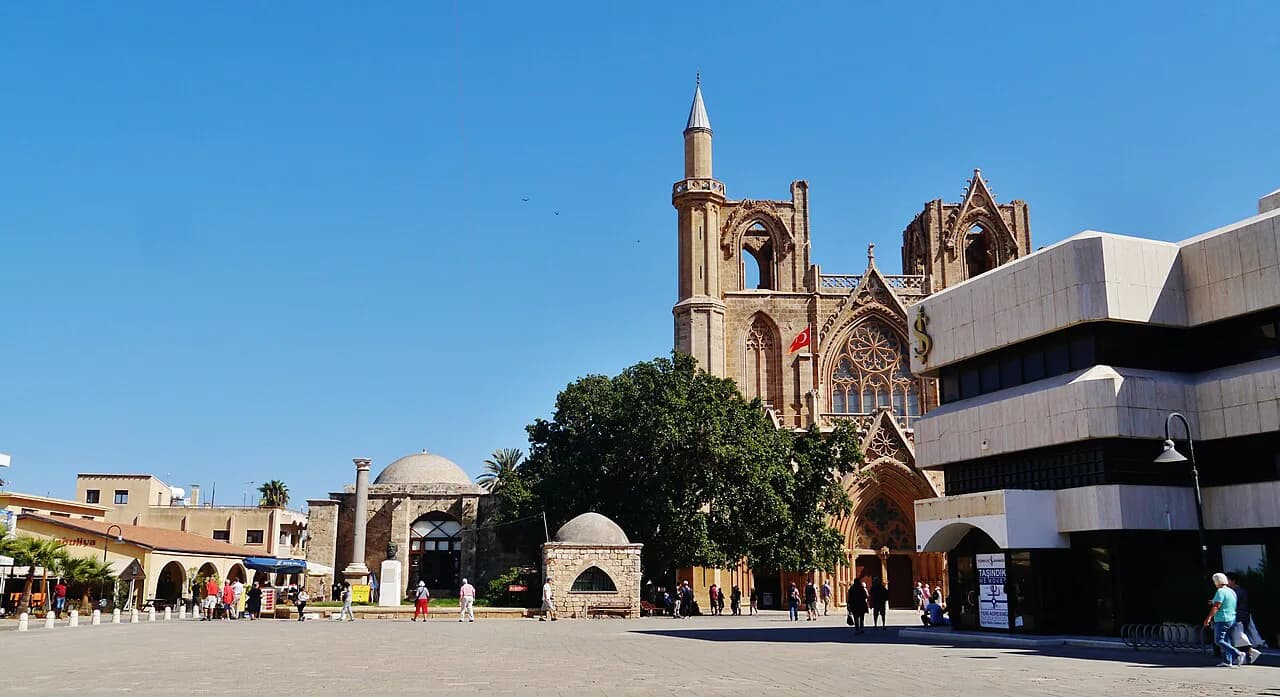
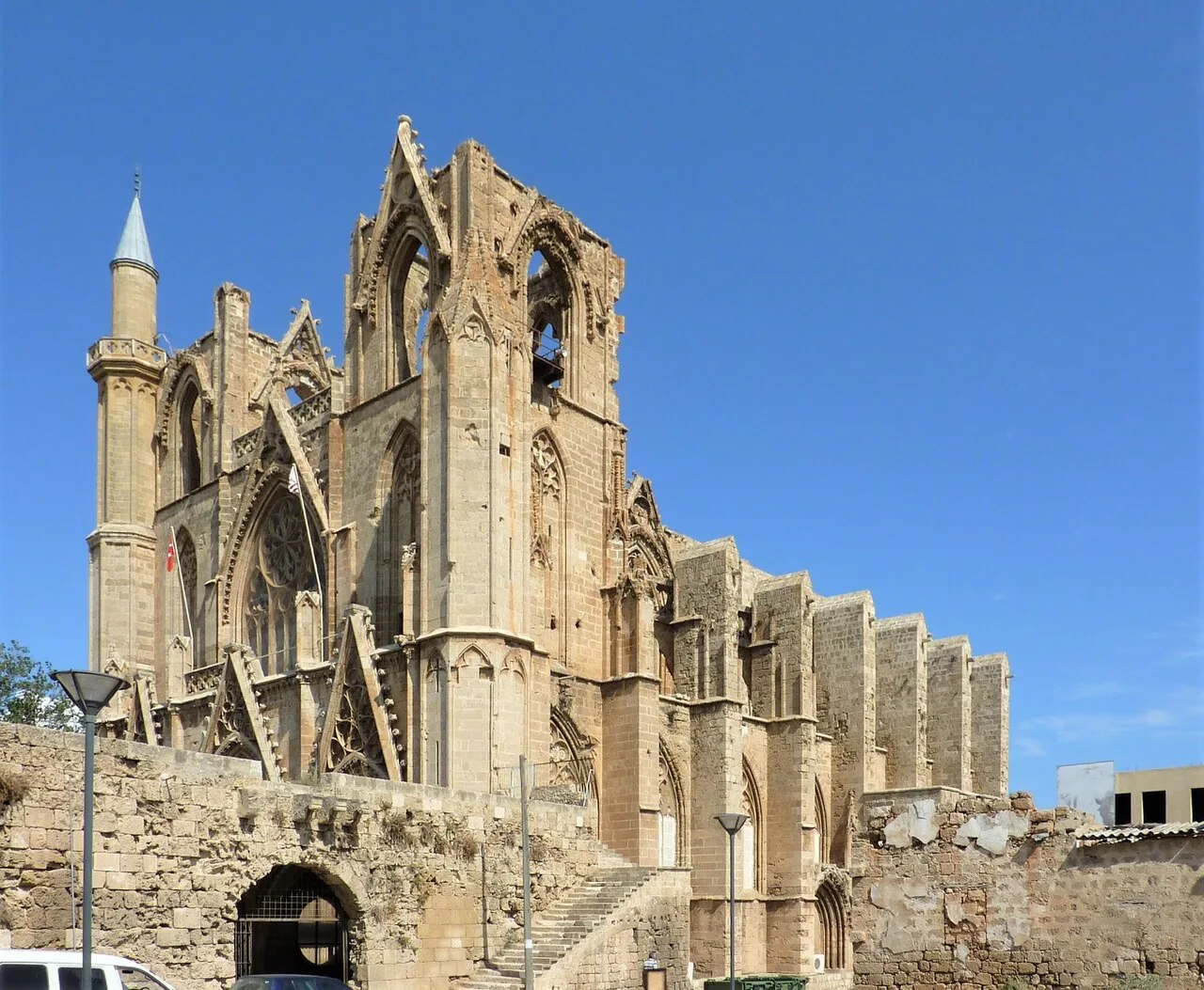
St Nicholas was built as the cathedral of a wealthy medieval port, which is why its west front reads like a French Gothic church transplanted to the eastern Mediterranean. In 1571 the Ottoman forces that took Famagusta converted it into a mosque and named it after Lala Mustafa Pasha, the vizier behind that campaign. The building has served two faiths and still dominates the skyline of the walled city, so give it time rather than photographing the facade and moving on.
Where it stands in the walled city, and how to walk there
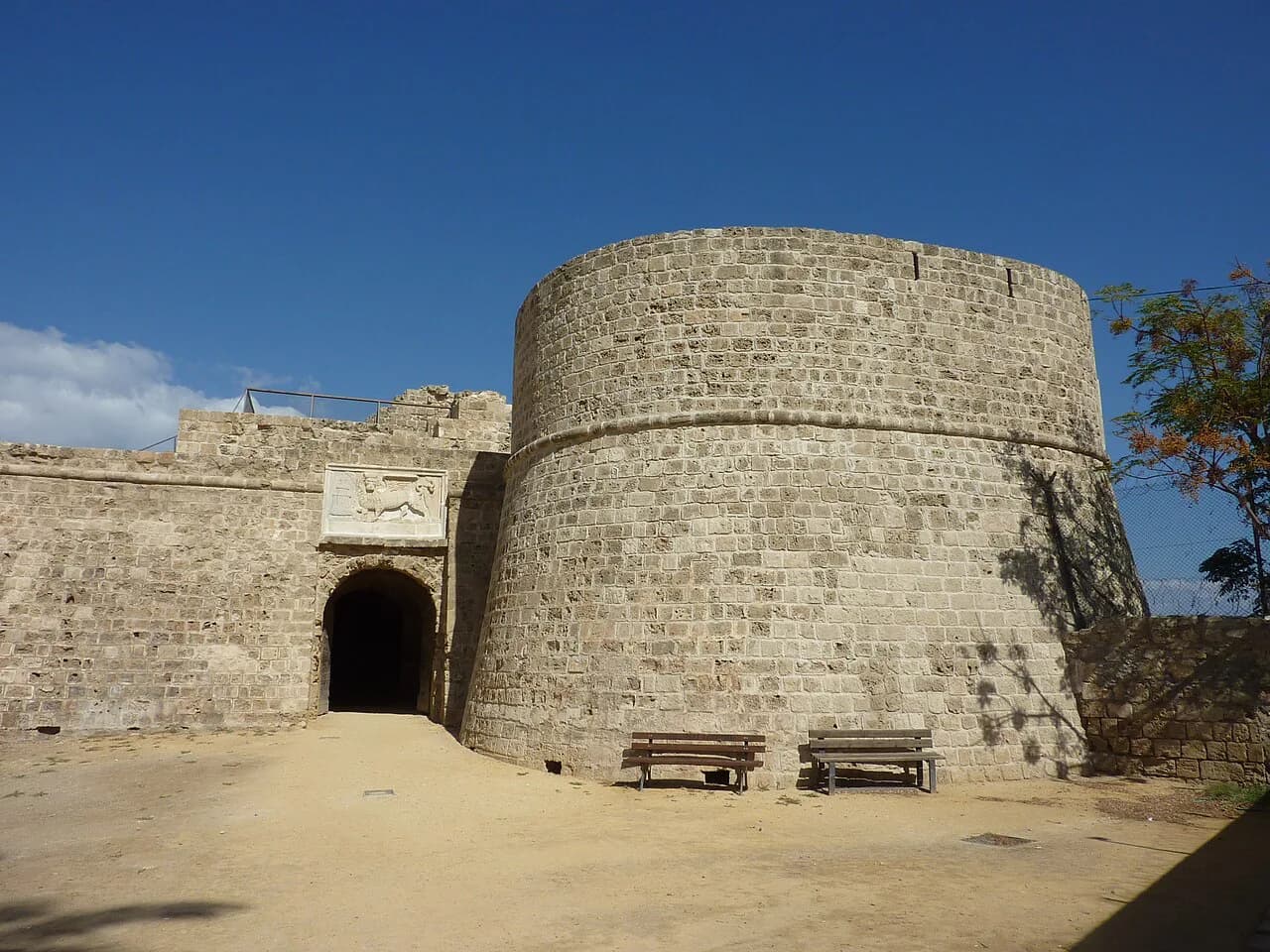
Most visitors enter the old town through the Land Gate in the south-western corner of the fortifications, where a tourist information centre just inside stocks leaflets and maps of the city's sights. From there the monuments string together on foot in a compact circuit, so a car is a liability inside the walls. The gate and the streets behind it are covered in our guide to the old town.
Walk in, climb the Ravalin Bastion beside the gate for a view over the fortifications, then head east through the grid of streets towards the cathedral. The walls run roughly three kilometres around, so a planned route beats random wandering. Allow at least half a day for the walled city as a whole; the ground is flat and the distances short, and heat is the real constraint.
For orientation before setting out, a Famagusta map showing the walls, gates and monuments saves a lot of circling. Start at the Land Gate and work anticlockwise towards the sea.
The Gothic exterior: west front, portals and tracery
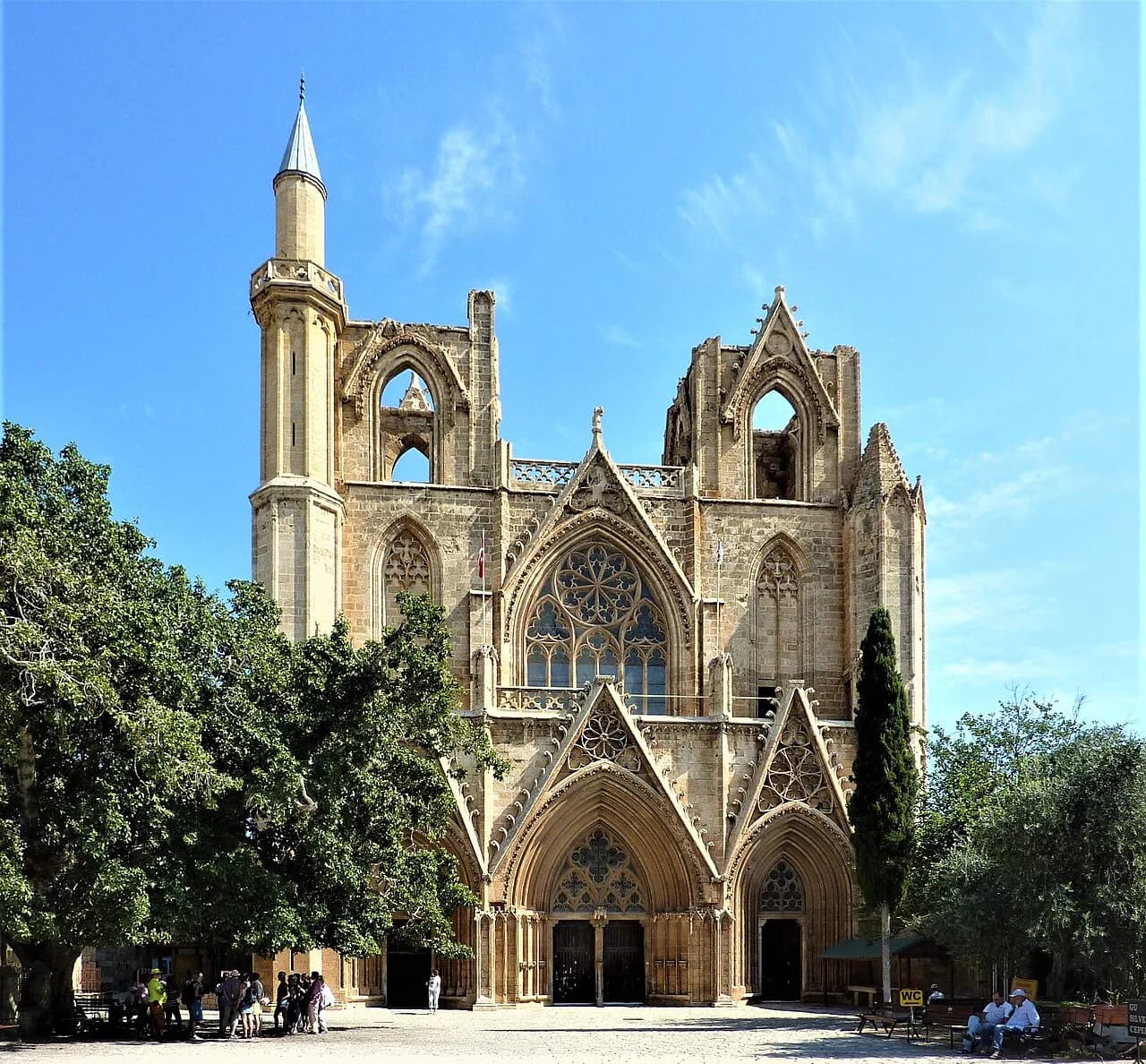
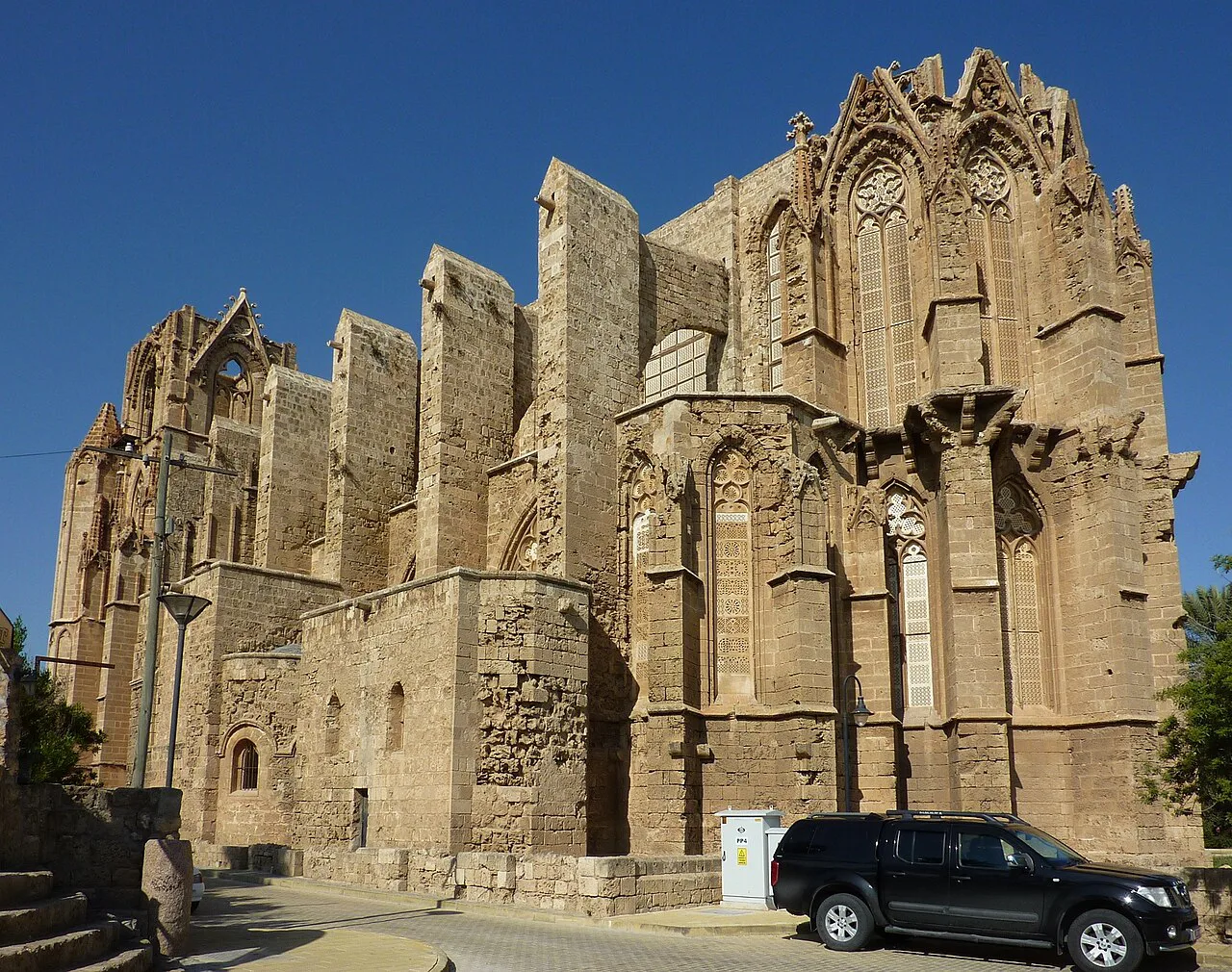
Stand back on the street west of the building to take in the composition: a deep recessed portal, a rose window above it and tiers of Gothic arcading that came through the conversion intact. The proportions are what mark this out from the modest Ottoman mosques elsewhere on the island. Look closely at the sculpture and mouldings around the main door rather than snapping and leaving.
The most obvious external change is the minaret, which rises beside the Gothic fabric and makes the building instantly readable as a mosque from a distance. The two idioms sit together without any pretence of harmony, and that tension is the most interesting thing about the facade. Morning light from the square to the west is easiest for photographs.
Inside: how a cathedral reads as a mosque
Inside, the tall nave and side aisles remain, but the liturgical furniture is gone and the space is arranged for prayer. A mihrab indicating the direction of Mecca and a minbar for the sermon are the fittings that matter, and the stripped-back interior makes the verticality of the vaulting easier to read than in a cluttered church. Expect a working place of worship, not a heritage display.
The original dedication to Saint Nicholas explains the maritime flavour of a port city's principal church. After 1571 it took the name of Lala Mustafa Pasha, whose campaign brought Famagusta under Ottoman control. Both names are worth knowing, because signs and locals use them interchangeably.
The names behind the building: St Nicholas, Lala Mustafa Pasha, Gazimağusa
Famagusta is Gazimağusa in Turkish, and the dual naming runs through every sign, map and timetable in the area. Knowing both is practical: you will see Gazimağusa on road signs and Famagusta on English-language material, and they mean the same place. Our Famagusta (Gazimağusa) Guide covers the wider town beyond the walls.
The Ottoman conquest that renamed the cathedral reshaped the walled city, whose Greek Cypriot population was moved outside the walls in the 1570s, creating the suburb that later became Varosha. That layering makes the mosque more than a pretty facade, and the surrounding streets are still laid out on the Ottoman pattern.
Visiting etiquette and practicalities
This is an active mosque, so dress modestly: shoulders and knees covered, and women should carry a scarf for their hair before entering the prayer hall. Remove shoes at the threshold, keep voices low and avoid walking in front of anyone praying. These are general expectations for Cypriot mosques rather than rules published for this building, so read the notices at the entrance before going in.
Congregational prayer interrupts visits, particularly around midday on Fridays, when the hall may be closed to non-worshippers. Opening hours for the mosque are not established in these pages, so confirm them with the tourist information office by the Land Gate or at your accommodation on the day. Do not build the rest of your day around a single window.
No admission price is published, so budget nothing for a ticket and confirm any arrangements on arrival. North Cyprus uses the Turkish lira, with euros and sterling widely accepted in tourist areas, so carry small notes for nearby cafes and shops.
Combining it with Othello's Tower, the Sea Gate and the walls in half a day
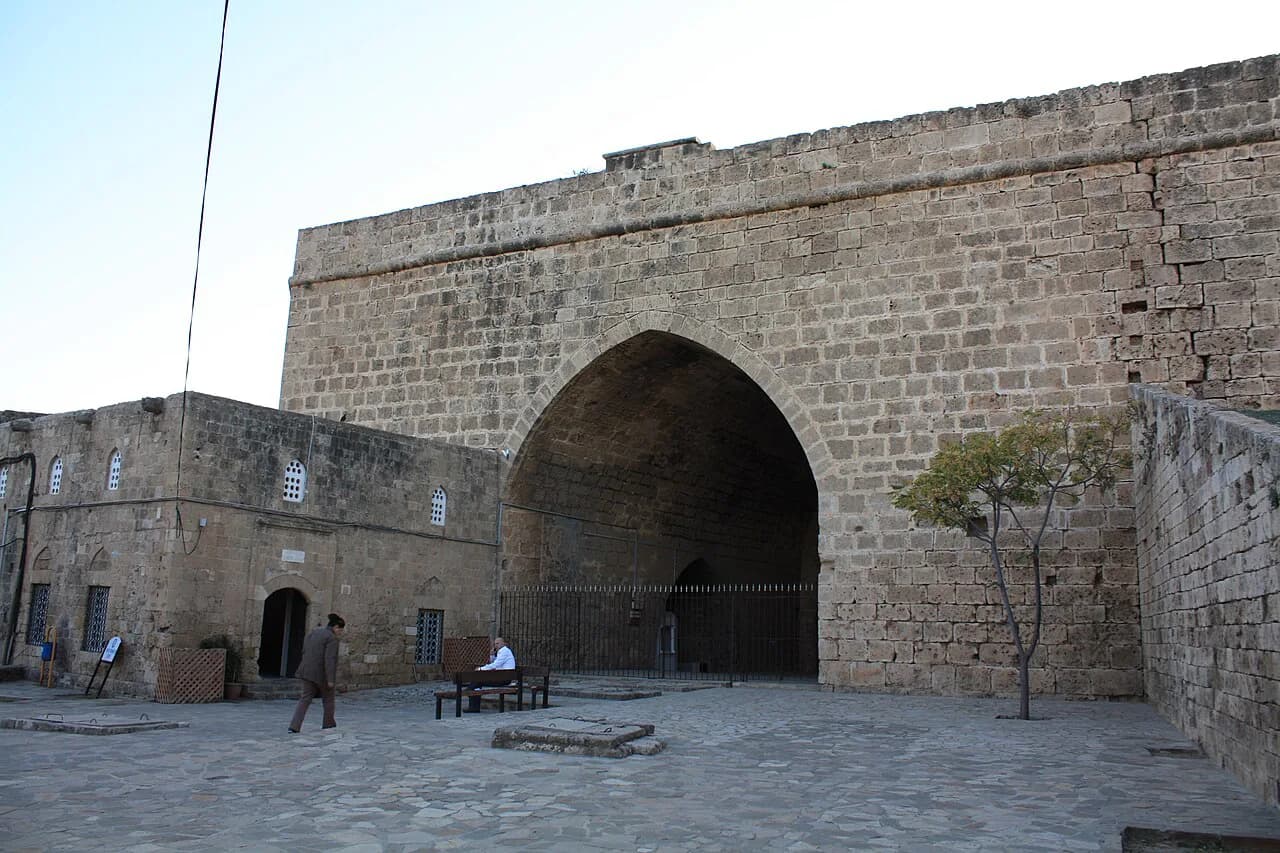
A sensible half-day route starts at the Land Gate, takes in the Ravalin Bastion and the cathedral, then continues east to the Sea Gate and the waterfront. The Sea Gate, or Porta de Mare, was one of the two original entrances to the walled city, and the walls near it give the best sense of the fortifications. Othello's Tower is a short walk beyond.
Othello's Tower, the citadel at the corner of the walls, is the other unmissable medieval set piece and pairs naturally with the cathedral on one loop. Our guide to Othello Castle in Famagusta sets out what to see there.
With a car, the ruins at Salamis and the St Barnabas monastery lie a short drive north of Famagusta and extend the day naturally. Neither fits alongside a full walled-city circuit, so pick one. See our guide to Salamis, Cyprus for what the site involves.
Trade-offs: crowds, heat and the Varosha fence
The walled city draws visitors through the day, and the cathedral square is a natural stopping point. Come early or late to have the west front largely to yourself. Summer heat inside the walls is fierce, with little shade between monuments, so plan a long lunch rather than pushing through.
Varosha, the fenced former resort south of the walls, can be viewed from outside along the Palm Beach area; the zone behind the guarded fences cannot be visited, and even taking pictures was reported as prohibited. Respect the guards and the signs. Our guide to the Varosha guide explains the background and what you can see from outside.
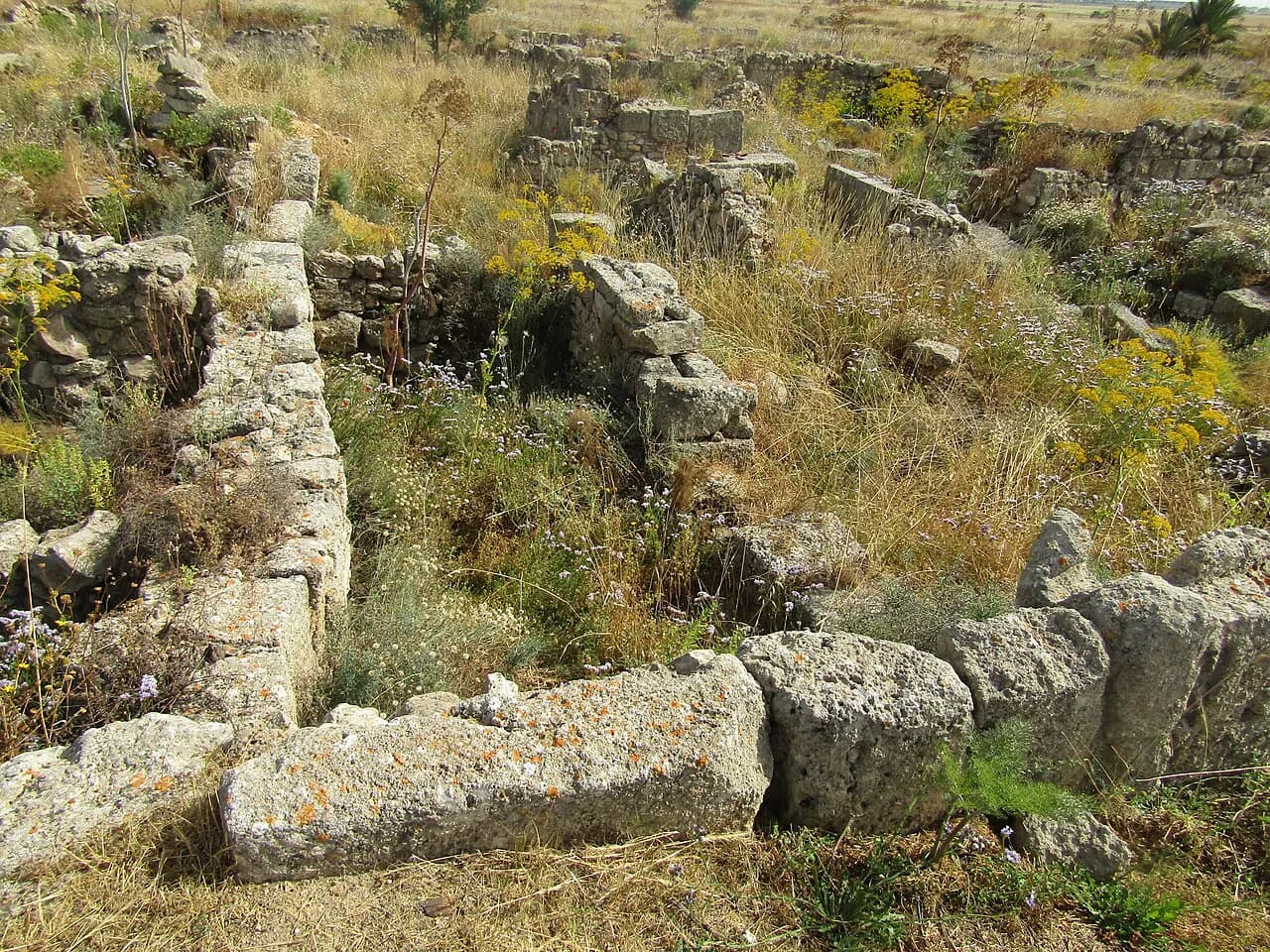
Enkomi, the Bronze Age city near Tuzla north of Famagusta, is a quieter alternative when the walled city feels crowded, though its ruins are far less legible. Most of the finds went to the British Museum, so the site is for atmosphere rather than objects. Our Enkomi: The Bronze Age City Beyond Famagusta guide sets out what remains.
Is the Lala Mustafa Pasha Mosque worth your half-day?
Yes, if you treat it as the anchor of a walled-city walk rather than a five-minute photo stop. The Gothic west front, the minaret and the converted interior tell the story of Famagusta better than any single sign, and the gates and towers around it fill a satisfying half-day. Go early, dress for a mosque, and confirm prayer times locally before setting out.
Explore more Famagusta guides
Frequently Asked Questions
Do I need a ticket to visit the Lala Mustafa Pasha Mosque?
No admission price is published and it functions as an active place of worship rather than a ticketed monument, so expect to enter free of charge. Confirm locally, as access can change around prayer times and special occasions.
How long should I spend at the Lala Mustafa Pasha Mosque?
Allow 20 to 30 minutes inside the building itself, plus time on the street to study the west front. The mosque works best as one stop on a half-day circuit that also takes in the Land Gate, the Ravalin Bastion, the Sea Gate and Othello's Tower.
What should I wear to visit the mosque in Famagusta?
Cover shoulders and knees, and women should bring a scarf for their hair. Remove shoes at the entrance and keep voices low inside the prayer hall. Read the notices at the door, as these are general expectations rather than published rules for this building.
Sources
Notes for your Cyprus trip
Optional updates to our Cyprus guides.
You might also like
Continue reading
More guides you'll find useful