
Archbishop's Palace, Nicosia: What You Can See and When

The Archbishop's Palace in Nicosia is not a museum you buy a ticket for: it is a working complex of the Church of Cyprus, and the parts a visitor can reliably enter are the two museums housed in the 18th-century Old Archbishop's Palace. Those museums open Tuesday to Friday and Saturday mornings, are closed Monday and Sunday, and charge no entrance fee. This guide separates the old building from the new Neo-Byzantine block beside it, then covers layout, timing and what sits within walking distance in the old town.
Where the palace stands in old Nicosia and how to reach it
The palace sits in the heart of Lefkosia, within the Venetian walls of the old town, on Isaakiou Komninou, close to the Archbishopric quarter that clusters around the cathedral. It is a short, level walk from the main shopping streets and squares of the old centre, so most visitors arrive on foot rather than by car.
If you are coming from the modern city, cross the old town on foot via Ledra Street, which runs north from the shopping core towards the Green Line, and turn into the streets of the Archbishopric quarter. Allow a comfortable margin — the old town repays slow walking, and the palace is one stop rather than a destination on its own.
Nicosia has no historic centre large enough to need a car, and parking inside the walls is scarce, so a taxi or bus drop at the edge of the old town plus a walk is the simplest approach. The wider set of sights around the centre is covered in our guide to Nicosia Attractions, which is worth reading before you fix an order of visit.
The old and new palaces: an 18th-century building and the Neo-Byzantine block
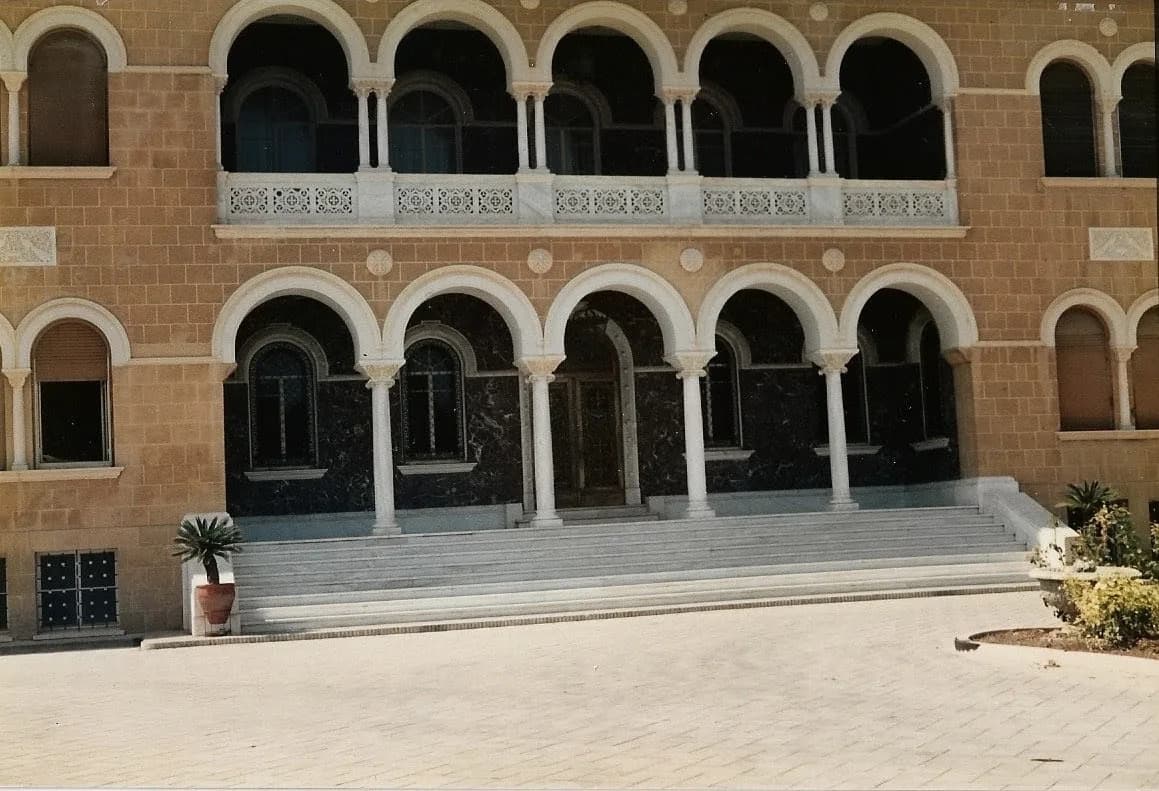
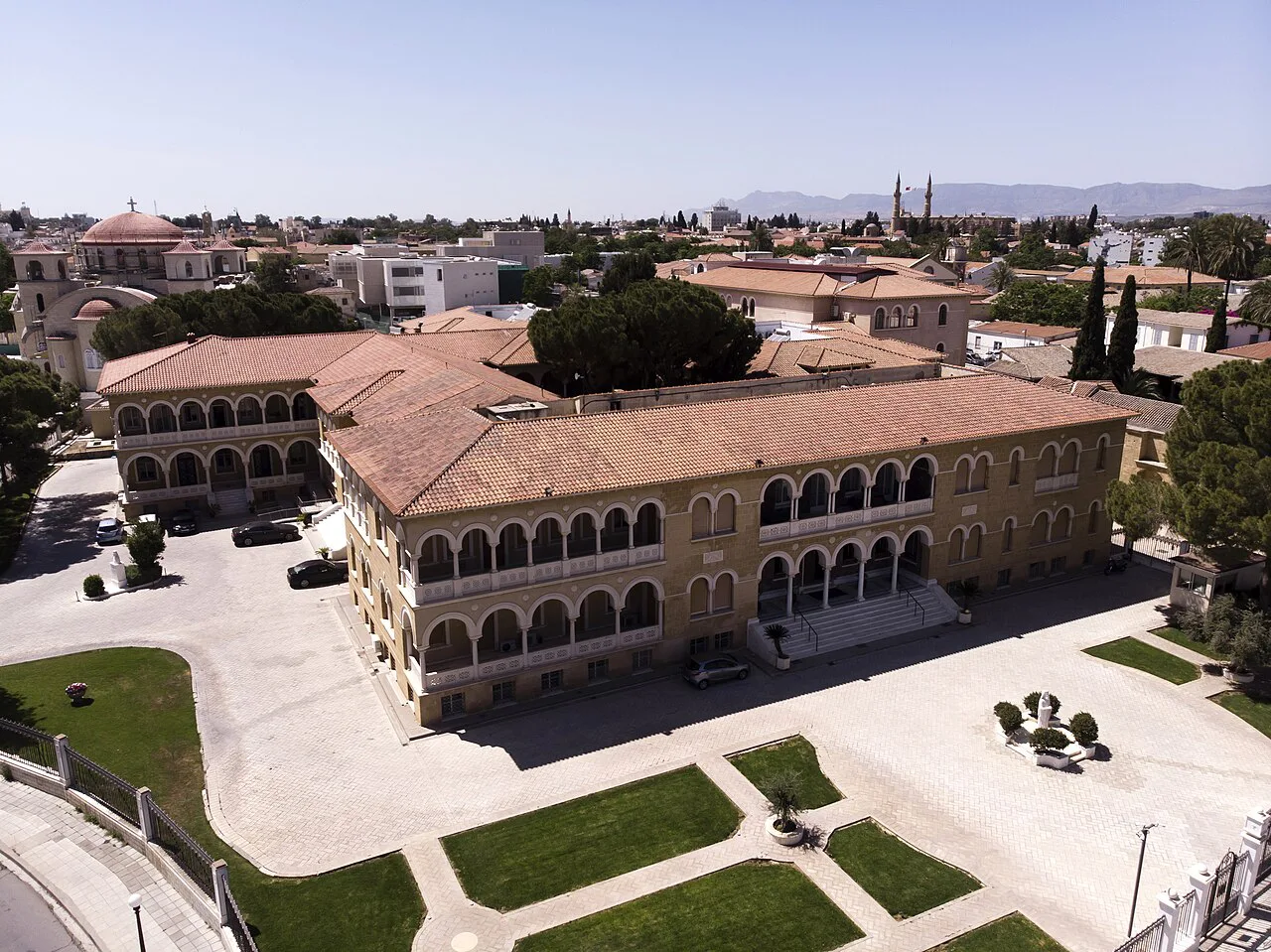
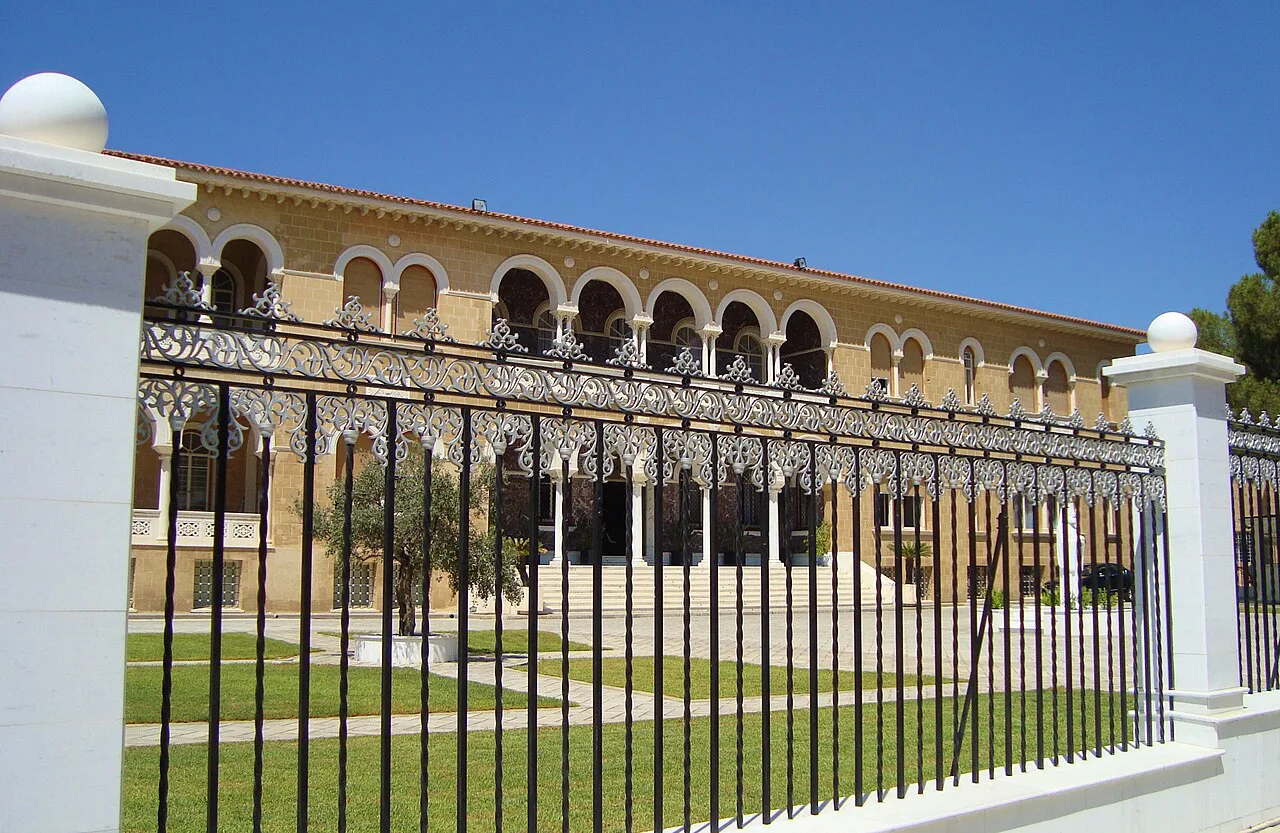
Two buildings share the name. The Old Archbishop's Palace is an 18th-century two-storey building closely tied to modern Cypriot history; beside it stands the new Archbishop's Palace, a two-storey stone building in Neo-Byzantine style that houses the offices of the archdiocese and the archbishop's residence. It was built between 1956 and 1960 under Archbishop Makarios III, and it also contains the Byzantine Museum and the Library of the Archbishopric.
That distinction matters at the door: the new block is an administrative and residential building, not a visitor attraction, and its role is to house the archdiocese, the museum and the Library. Knowing which facade you are facing saves the confusion of looking for an entrance that is not there.

What the complex holds: museums, Library and collections
Since the new Archbishopric was completed, the Old Archbishop's Palace has housed the Folk Art Museum and the National Struggle Museum, so the historic building itself is where the visitor-facing collections sit. The new palace holds the offices of the archdiocese together with the Byzantine Museum and the Library of the Archbishopric.
For the icons and religious art that give the quarter its weight, the Byzantine Museum is the collection to plan around, and it is covered in its own guide with the details that change by season. If your interests lean towards the island's archaeology rather than its church history, the Cyprus Museum sits outside the old town and makes a natural half-day in the modern city.

The Archbishop Makarios III apartment and its narrow visiting window
Part of the palace complex is the apartment where Archbishop Makarios III spent his last years, kept with memorabilia of his life and career. It is open on 19 January between 08:00 and 13:00, after consultation with the Archbishop's Palace, and there are no provisions for wheelchair access. Treat that arrangement as the published opening rather than a standing daily one, and telephone the palace to confirm before travelling for it.
The historical outline is plainly documented: Makarios III was born in Panagia village in Paphos district in 1913, studied theology and law in Athens and the United States, served as Bishop of Kitium and Archbishop of Cyprus, and became the first President of the Republic of Cyprus in 1960, holding office until his death in 1977. The apartment's memorabilia are best read with that sequence in mind.
Folk Art and National Struggle museums: visiting hours and free entry
The Old Palace museum listings give opening of Tuesday to Friday 09:00–16:00 and Saturday 09:00–13:00, closed Monday and Sunday, with free entrance. Saturday's morning-only finish is the trade-off to plan around: a late Saturday arrival leaves too little time for both collections.
Build your day so the museums come first and the rest of the old town after, since the noted weekday closing is 16:00. Because these are secondary listings rather than a current Archbishopric notice, telephone the palace on +357 22554600 to check the hours, and any public holiday, before making the trip.
How much time to allow and how to combine it with old Nicosia
Allow roughly an hour for the two Old Palace museums together, and add the Byzantine Museum in the new block if you want the icons, which turns the stop into a half-day. The quarter rewards that pace because the cathedral, the Archbishopric buildings and the streets around them sit within a few minutes of each other.
A sensible order is the palace museums in the morning, a walk west to the Venetian walls and Famagusta Gate in the afternoon, and the covered market streets between them. That route keeps you inside the walls and avoids repeated crossings of the busy modern centre.
Summer heat changes the calculation more than distance does: the museums are indoor and shaded, so put them in the hottest hours and walk the streets early or late. Winter visitors have the opposite freedom and can spread the same route across a full day.
What to expect in practice: restricted access to a working monument
The palace is a religious, national and political monument first and a visitor site second, so parts of the complex are administrative and closed to casual visitors. The listed visitor offer is the Old Palace museums with their given hours and free entry, plus the Byzantine Museum and Library in the new building.
A visitor has reported that the palace opens to the public only on the day of the Archbishop's name day, which underlines how limited general access is. Treat that as a visitor observation rather than a rule, and rely on the museum listings and a telephone call for anything outside them.
Nearby options in the same part of old Nicosia
Within a few minutes of the palace you can reach the Selimiye Mosque, the Gothic former cathedral converted to a mosque, which anchors the northern end of the old town walk. Pairing it with the Archbishopric quarter gives you the two faces of the walled city in a single loop.
Ledra Street and the streets around it carry the shops, cafes and crossing point towards the Green Line, so the palace fits naturally into a day built around the old town rather than a separate excursion. Our wider list of things to do in Nicosia helps you slot the museums into a realistic order.
Is the Archbishop's Palace worth the stop?
Yes, if you go for the museums rather than the building: the Folk Art and National Struggle collections in the Old Palace are listed as free and open Tuesday to Friday and Saturday mornings, with Saturday the tightest slot. Pair them with the Byzantine Museum in the new block and you have a solid half-day of church history and Cypriot craft in the old town.
Skip the detour if you were hoping to tour the archbishop's residence or the Makarios III apartment on any given day; the apartment's published opening is a single date each January, and the new palace is administrative. Check the museum hours and the apartment arrangement by telephone on +357 22554600 before you set out.
Explore more Nicosia guides
Frequently Asked Questions
Is the Archbishop's Palace in Nicosia open to the public?
The new Archbishop's Palace is an administrative and residential building for the archdiocese rather than a visitor attraction. Public access centres on the museums in the 18th-century Old Archbishop's Palace and on the Byzantine Museum and Library in the new block.
Do you need tickets for the Archbishop's Palace?
Entrance to the Folk Art Museum and the National Struggle Museum in the Old Palace is listed as free, and no ticket is needed for those collections. The listing gives Tuesday to Friday 09:00–16:00 and Saturday 09:00–13:00, with Monday and Sunday closed; telephone +357 22554600 to confirm current hours.
How do you get to the Archbishop's Palace from Nicosia old town?
It is a short walk within the Venetian walls on Isaakiou Komninou, in the Archbishopric quarter near the cathedral. Coming from the modern city, walk in via Ledra Street and continue to the church quarter; a taxi to the edge of the old town also works.