
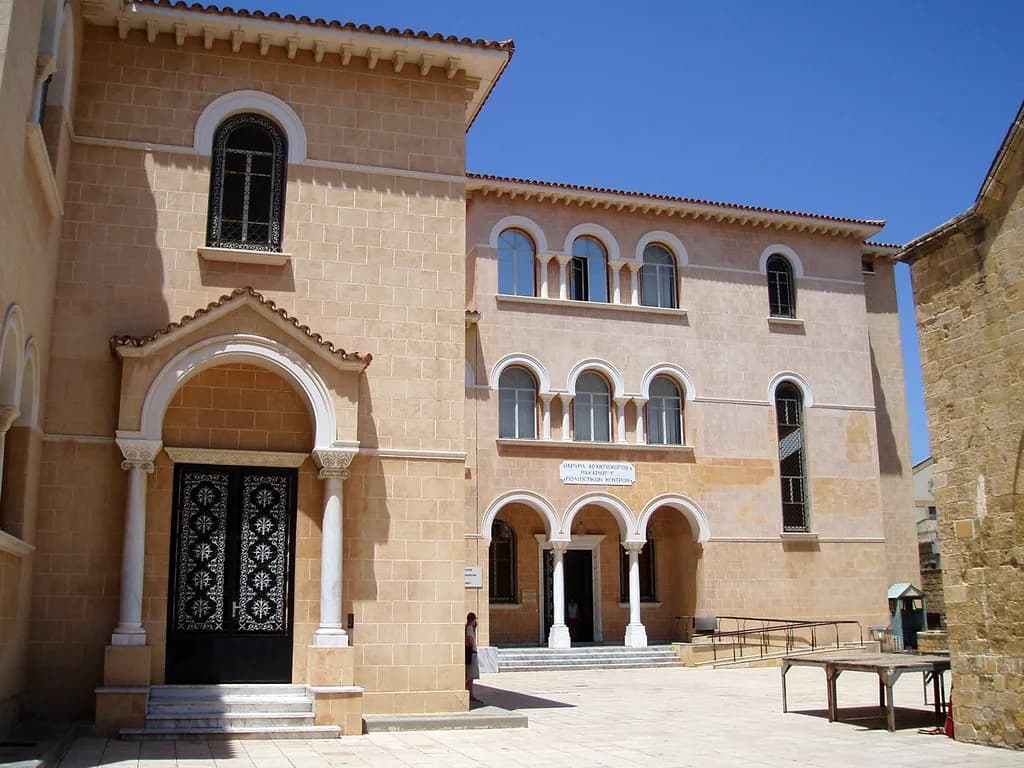
Byzantine Museum, Nicosia: Visitor Guide to the Archbishopric Collection
The Byzantine Museum in Nicosia is worth an hour or two if you want the island's richest collection of Byzantine art, and the visit centres on a single courtyard address on Plateia Archiepiskopou Kyprianou inside the walled city. It holds more than 200 icons from the 9th to the 19th centuries, plus sacred vessels, vestments and books. This guide sets out where the museum sits, what to make time for inside, the ticket categories and how to pair the visit with the surrounding old town.
What the Byzantine Museum is and why it earns its place in your day
This is a collection of church art rather than a general archaeology museum, so the draw is icons and liturgical objects gathered from across Cyprus. Visit Cyprus calls it the richest and most representative collection of Byzantine art on the island, which makes it the natural counterpart to the broader archaeological collections elsewhere in the city. If your interests in Nicosia run to Venetian fortifications and the divided old town as well as painted panels, use the Nicosia Attractions: 11 Visitor Guides page to see how the museum fits alongside the rest.
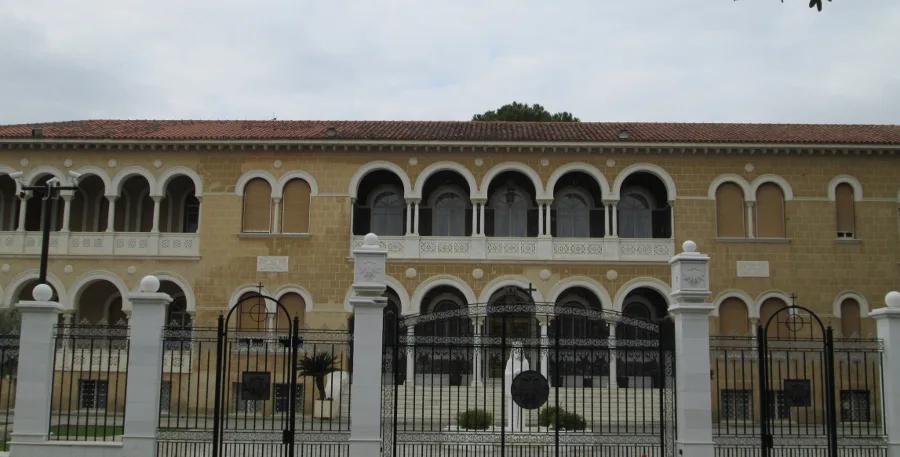
The museum occupies part of the Archbishopric complex, and that setting shapes the visit: you are seeing church treasures in the grounds of the Archbishop's Palace rather than in a purpose-built gallery. Expect a compact, focused route through rooms of icons rather than a sprawling museum that takes a whole afternoon. The result is a stop you can slot into a morning or an early afternoon without exhausting the rest of your city plan.

Where it is: Plateia Archiepiskopou Kyprianou and the Archbishopric
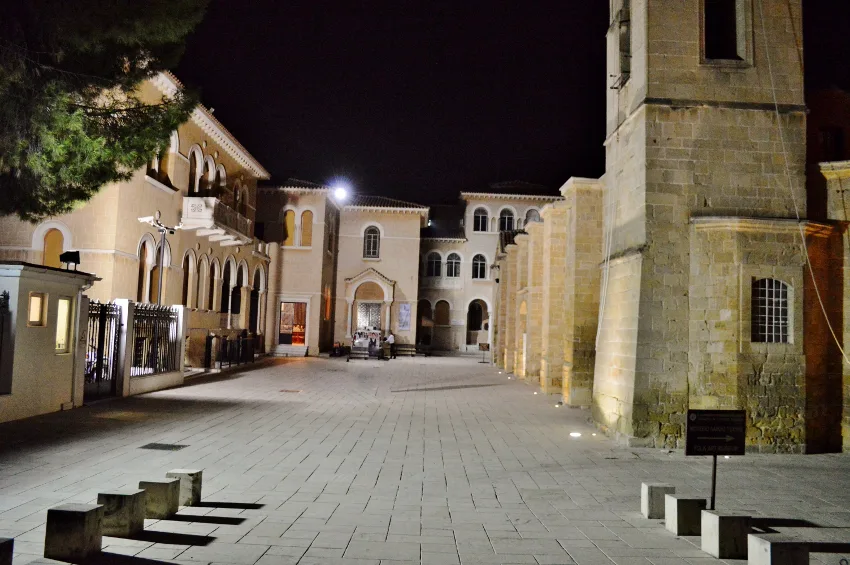
The museum is at Plateia Archiepiskopou Kyprianou, inside the Archbishopric in the walled city of Lefkosia, the name Visit Cyprus uses for Nicosia. That puts it in the historic core rather than the newer streets beyond the walls. Arrive at the square and look for the Archbishopric buildings; the museum is within that complex, and the square itself is a useful landmark to navigate back to.
Because the address is inside the old town, the museum works best as part of a walk through the walled centre rather than a drive-and-park stop. The Venetian Walls of Nicosia mark the edge of that old town and give you a clear mental map of north, south, east and west before you start threading through streets. The walls are a landmark to orient by, not a formal entrance gate to the museum.
How to get there on foot through the old town
On foot, the simplest approach is to come through the pedestrian heart of the old town and aim for the Archbishopric square. Ledra Street Nicosia is the natural reference point for many visitors: it is central, easy to find and lets you walk north-west rather than trying to solve parking in narrow lanes. Allow time for the walk itself rather than treating the museum as an isolated errand.
If you are coming from the eastern side of the old town, Famagusta Gate is a useful landmark for the edge of the circuit and a sensible point to enter the lanes. From there, the museum sits within the same walled core, so you are not crossing the city boundary to reach it. Build the walk so the museum is one stop among several, and keep a note of the square name in case you need to ask the way.
What to see inside: icons from the 9th to the 19th centuries
The core of the collection is more than 200 icons spanning the 9th to the 19th centuries, alongside sacred vessels, vestments, robes and books. Visit Cyprus singles out the 12th-century icons as a highlight, noting that the period was a peak for iconography. Pace your route around those panels first, then work through the cases and textiles at a slower speed.
Look at the way the icons are grouped: the collection traces Byzantine art through several centuries, so dates and styles shift as you move through the rooms. If your interest is in painted churches and what survives in situ, this indoor collection gives context for the decoration you may later see in village churches. The advantage of a city museum is that the pieces are close to eye level and accompanied by labels rather than high on a domed ceiling.
The Panagia Kanakaria mosaics from Lythragkomi
Among the most notable exhibits are 6th-century mosaics from the church of Panagia Kanakaria in Lythragkomi village, which Visit Cyprus describes as brought back to Cyprus after being illegally exported from the occupied part of the island. That backstory makes them the emotional centre of the museum for many visitors, and they reward a deliberate stop rather than a passing glance. They are also the reason to read the display text before you move on to the icon cases.
The mosaics sit in the context of a collection largely made up of icons, so they stand out as the earliest material in the display. If you have an interest in the island's painted churches and the survival of early church art, make this the first room you seek out after the ticket desk. Time your visit around the mosaics and the 12th-century icons and you will have covered the two anchors of the collection.
Sacred vessels, vestments, robes and books
Beyond the icons, the collection includes sacred vessels, vestments, robes and books, which give a sense of church life and ritual rather than only painted panels. These objects are best viewed slowly, because the detail is in embroidery, metalwork and handwritten pages rather than in a single image. They also make the museum a reasonable stop for travellers with a general interest in craft and history, not only those who know Byzantine iconography.
Ticket prices, group and reduced rates, and free entry categories
Admission is €7 for individual visitors, according to Visit Cyprus, which is a modest charge for a collection of this quality. Groups of more than 10 people pay a reduced ticket of €4, and reduced admission is also offered for children up to 18 years of age and pensioners aged 65 and over. That combination means a family with teenagers will pay less than the headline adult rate.
Visit Cyprus also lists free access for groups of children, students and uniformed soldiers, as well as holders of ICOM and ICOMOS cards and journalists. Bring any relevant card with you rather than assuming the desk will accept a digital copy. If your group is close to the 10-person threshold, decide before you arrive whether you want to be treated as a group for the reduced rate.
Opening hours, the closed day and public holiday closures
The museum opens Tuesday to Saturday from 09:30 to 17:00 and operates all year round, per Visit Cyprus, so Monday and Sunday are not visiting days. It is closed on public holidays, which matters if your trip falls around a Greek Orthodox or national holiday period. Build the museum into a Tuesday-to-Saturday window and leave the closed days for other parts of the city.
Visit Cyprus notes that opening and closing times as well as entrance fees are subject to alterations without notice, so check before you visit.
How long to allow and how to pace the galleries
Allow roughly one to two hours to see the collection at a steady pace, starting with the 12th-century icons and the Kanakaria mosaics before the slower textile and manuscript cases. The density of icons rewards a second look at a few pieces rather than a complete catalogue read. If you are visiting in summer, the indoor galleries also give you a break from the heat of the old town streets.
A sensible sequence is icons first, then mosaics, then the vessels and books, so the earliest material and the highlight pieces are not left until your energy drops. Pair the visit with a walk rather than another museum immediately afterwards, and leave the heavier collections for a separate day. That way the museum stays memorable rather than blurring into a run of display cases.
Nearby sights in the Archbishopric area to pair with the visit
The Archbishop's Palace and the surrounding square make a natural pairing with the museum, since the museum sits within the same complex. A short walk brings you to other old-town sights, including the Selimiye Mosque (Selimiye Camii), Nicosia, a mosque in the northern part of the walled city. These pairings let you build a half-day route without needing transport between stops.
For a different strand of the city's history, the Lapidary Museum in Nicosia is a small collection of stonework that pairs well with the church art without repeating it. If you want the island's broader archaeology, the Cyprus Museum, Nicosia lies outside the walled core and deserves its own slot in the itinerary. Choosing between the two comes down to whether you want church treasures or a wider archaeological sweep.
Walking routes through the old town also pass the Büyük Han, Nicosia, a courtyard caravanserai that gives a different architectural experience from the museum galleries. The Omeriye Mosque, Nicosia is another nearby stop on a loop through the lanes. Grouping two or three of these with the Byzantine Museum keeps the day coherent without turning it into a checklist.

Contact details and the foundation website
Visit Cyprus lists the museum telephone as +357 22 430 008 and gives the reservations line as 22430008, staffed 8:00 to 2:30 Monday to Friday, with an email address for further information. Use the phone line if you are bringing a group or need to confirm the reduced rate before travelling. The same source gives the foundation website as makariosfoundation.org.cy for background on the collection.
Is the Byzantine Museum worth building into your Nicosia day?
Yes, if you want the island's strongest single collection of icons and church treasures, and the €7 individual ticket, reduced categories and Tuesday-to-Saturday hours make it easy to plan around. Book it into the middle of a walking day in the walled city rather than treating it as a separate excursion, and put the 12th-century icons and the Kanakaria mosaics at the front of your route. Because hours and fees can change without notice, confirm the current position before you set out.