
Büyük Han, Nicosia: visiting the old city's Ottoman caravanserai

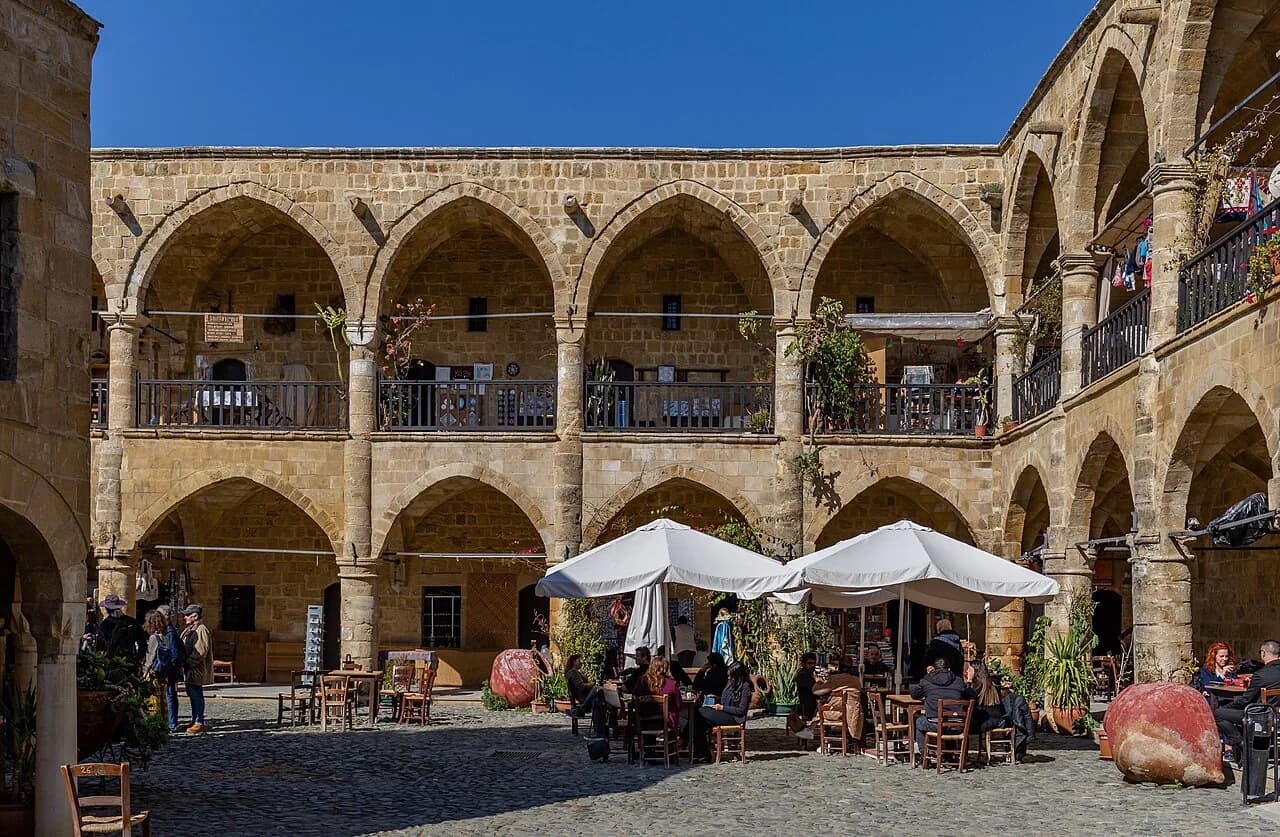
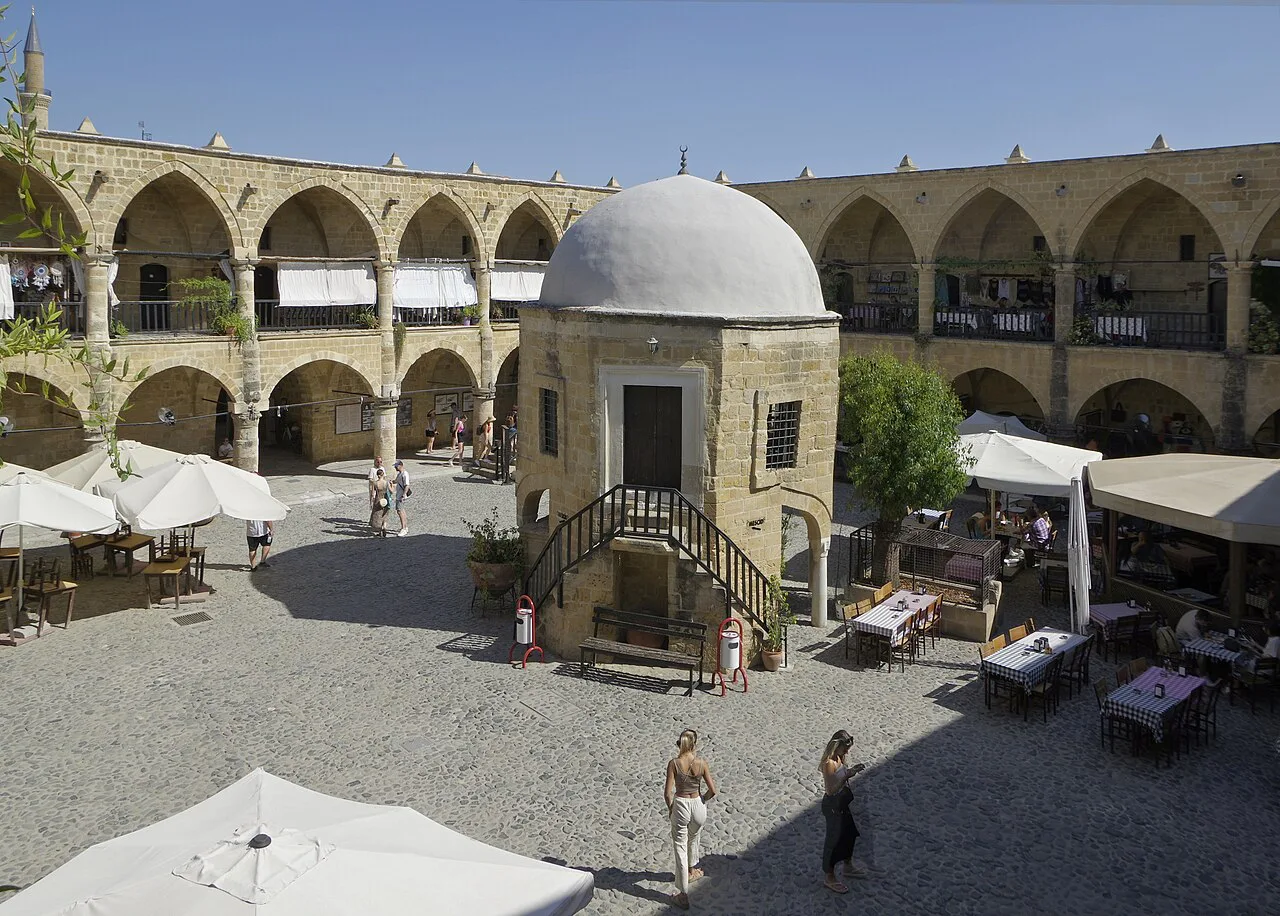
Büyük Han is a two-storey Ottoman caravanserai in the walled old city of Nicosia/Lefkoşa, built soon after the 1570 Ottoman conquest to lodge travelling merchants and pilgrims. Its galleries frame a square courtyard with a small domed mosque and fountain, and the ground floor now holds craft workshops and cafés. This guide covers where the han sits in the old city, how to walk to it across the Green Line, what to read in the courtyard, and how long to allow.
What Büyük Han is
The Department of Antiquities dates the Great Inn (Büyük Khan) to directly after the Ottoman conquest of Cyprus in 1570, most likely 1572, and attributes it to Muzafer Pasha, one of the generals in the siege of Lefkosia who later became governor. It served merchants and pilgrims passing through the city, which explains the scale: a stone block with lodgings above and storage below.
Atlas Obscura records that the building served as a prison from 1892 to 1903, a detail that shows how a caravanserai could be recycled once the caravan trade faded. The restored galleries are now given over to shops and workshops, so you are reading a working building rather than a ruin.

Where it sits in walled Lefkosia
Büyük Han stands in the northern, Turkish Cypriot-administered part of the walled city, west of the Selimiye mosque, the former Latin cathedral of St Sofia. The cathedral began possibly in 1209, was inaugurated in 1326 and became a mosque after 1570, with two minarets added to its west end. That puts the han a short walk from the city's largest surviving Gothic church.
Immediately south of the cathedral is the Bedestan, a building with Byzantine and Gothic features, later used as a covered market. The Sultan's Library, a three-domed building of 1829 with a collection of Turkish, Arabic and Persian manuscripts, sits at the cathedral's eastern end. Together with Büyük Han, these form a compact circuit of Ottoman-era monuments.

How to get there on foot
The usual approach is on foot through the walled city, starting from Eleftheria Square on the south side. Lefkosia Municipality, the Deputy Ministry of Tourism and the Nicosia Tourism Board run a free guided walk of the old city that begins and ends at the Old Town Hall on the square and takes about 2 hours 45 minutes, in English, with booking through the organisers.
Laïki Geitonia, a pedestrian quarter of restored 18th-century townhouses now used as shops, tavernas and craft centres, lies about 200 metres east of Plateia Eleftherias and makes a natural first stop on the walk north. From there, head towards the Selimiye mosque and the han is a few minutes further west.
On foot from the south, the route passes along or near Ledra Street, the pedestrian spine of the modern centre and the site of the main crossing point. Allow a steady 20 to 30 minutes from Eleftheria Square to the han, more if you stop at the cathedral and Bedestan on the way.
What to look for in the courtyard
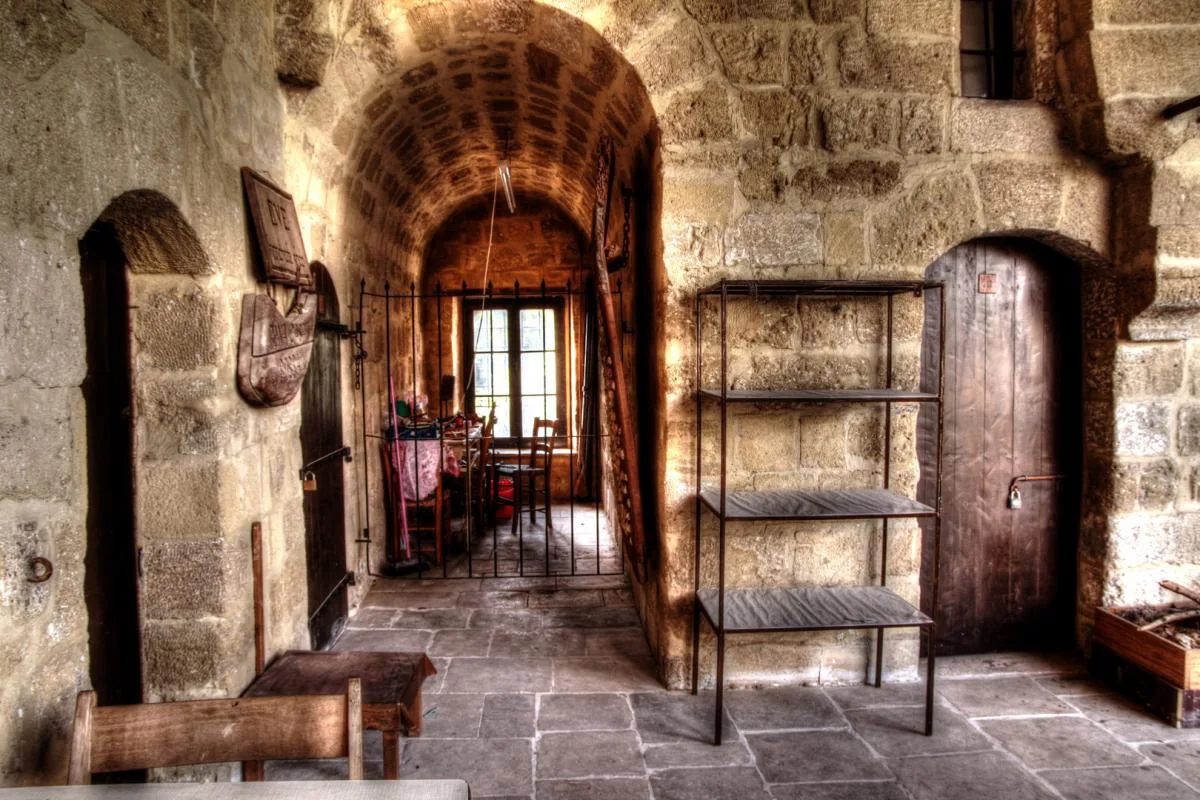
The khan has a square ground plan with two floors around a large open courtyard, the interior gallery roofed with groin vaults and carried on rows of arches supported by stone columns. The Department of Antiquities notes small windows at upper level, which gave each lodging room light without opening the gallery to the weather. Walk the full circuit of the upper gallery for the clearest sense of how the building worked.
In the middle of the courtyard stands an octagonal miniature domed mosque with a fountain, added in the 19th century, a small structure that reads as a pavilion rather than a place of congregation. The main entrance on the east side is a large marble gate assembled from architectural elements taken from older buildings, so look at the carving rather than treating it as a plain doorway.
What is there now
The restored galleries hold craft workshops and small shops, and the courtyard is the natural place to pause over a drink. No official source lists individual traders inside the han, so treat the units as a browse rather than a checklist and see what is open on the day.
How long to allow
A courtyard visit takes under an hour: one circuit of the galleries, a look at the domed mosque and fountain, and a stop at the gate. Add time if you plan to sit in the courtyard, and rather more if you are combining the han with the Selimiye mosque, Bedestan and Sultan's Library, which together fill a half day in the northern old city.
Opening hours for Büyük Han vary and the Department of Antiquities publishes nothing specific for the building, so check the gate times when you arrive in the old city before planning the rest of the day around it. Mornings are cooler and quieter than the middle of the afternoon, particularly between June and September.
Nearby museums on the south side
Back across the Green Line, the Byzantine Museum at Plateia Archiepiskopou Kyprianou, within the Archbishopric, holds more than 200 icons from the 9th to the 19th centuries plus sacred vessels and vestments. It opens Tuesday to Saturday 09:30 to 17:00 all year, closes on public holidays and charges €7 for individual visitors, with reductions for groups, children, pensioners and card holders.
One of its exhibits is a group of 6th-century mosaics from Panagia Kanakaria at Lythragkomi, brought back to Cyprus after illegal export from the occupied part of the island. Seeing them is a useful counterpoint to the Ottoman buildings across the line.
Crossing the Green Line to reach it
Büyük Han lies north of the Green Line, the buffer zone that has divided Lefkosia since 1974, so reaching it means crossing at a designated point on foot. The Ledra Street crossing is the most convenient for this part of the old city and puts you within a short walk of the han. Bring your passport, since the crossing is a controlled checkpoint in both directions.
If you arrive by hire car, park on the south side and walk across; insurance cover usually does not extend to the north, so confirm the terms with your rental company before driving over. Allow extra time on the return leg, when queues at the checkpoint can build in the late afternoon.
The old city is ringed by the Venetian Walls of Nicosia, a circuit of 16th-century walls and gates that still shapes how you move around it. Coming from Eleftheria Square or the Famagusta gate area, you enter through or beside these fortifications before reaching the han.
For the rest of the walled city, from the Cyprus Museum to the municipal garden, use the Nicosia Attractions: 11 Visitor Guides hub to plan a route that fits around the crossing. It is worth plotting the south-side sights for the same day so you cross the line only once.
Is Büyük Han worth the crossing?
Yes, if you are already spending a day in divided Lefkosia. The han gives you a complete Ottoman caravanserai you can walk through in under an hour, and it sits within a few minutes of the Selimiye mosque and Bedestan, so the crossing earns its keep.
Build the day around a morning crossing at Ledra Street, the han and cathedral first, then the Byzantine Museum after you return south. Check the crossing arrangements and the museum's public holiday closures before you set out, and carry your passport.
Explore more Nicosia guides
Frequently Asked Questions
Can you visit both sides of Nicosia in one day?
Yes. Cross on foot at a designated checkpoint such as Ledra Street with your passport, see Büyük Han and the Selimiye mosque in the northern old city, then return south for the Byzantine Museum and Eleftheria Square. Allow for queueing at the checkpoint in both directions.
Is Nicosia divided in two?
The walled city is split by the Green Line buffer zone, with the northern part administered by the Turkish Cypriot authorities and the southern part by the Republic of Cyprus. The border runs through the historic centre, which is why sights such as Büyük Han sit on the northern side.
Do you need a ticket for Büyük Han?
No ticket price is published for the han; it functions as a courtyard building with shops and cafés rather than a gated monument. Confirm the current access arrangements when you arrive in the old city.
How long does it take to see Büyük Han?
Under an hour covers the two-storey galleries, the 19th-century domed mosque and fountain, and the marble east gate. Add time if you want to sit in the courtyard or continue to the Selimiye mosque and Bedestan nearby.