
Selimiye Mosque (Selimiye Camii), Nicosia: what to see inside

The Selimiye Mosque is the largest and oldest surviving Gothic church in Cyprus, and it is the most rewarding building to step into in the walled city of Lefkosia. It began as the Latin Cathedral of St Sophia, was inaugurated in November 1326, and became a mosque after the Ottoman conquest of 1570. This guide covers where it stands, how to walk to it, what survives of the Gothic fabric and what was destroyed, and how much time to give it.
What the Selimiye Mosque actually is
The building belongs to the pure Gothic style of the early twelfth century, and its interior measures 66 by 21 metres. Construction ran in fits and starts over roughly 150 years, so it was never quite finished: the southwest tower and the upper floor of the portico were never built at all.
The first phase may have started as early as 1209, under Frankish rule, and the eastern end was complete by 1228. Work on the side aisles and much of the nave followed, and the archbishop Giovanni del Conte or de Polo saw the nave, roof buttresses, façade and a baptistery chapel finished between 1319 and 1326. An earthquake in 1347 led to further repairs, which is when the portico and northwest tower went up.
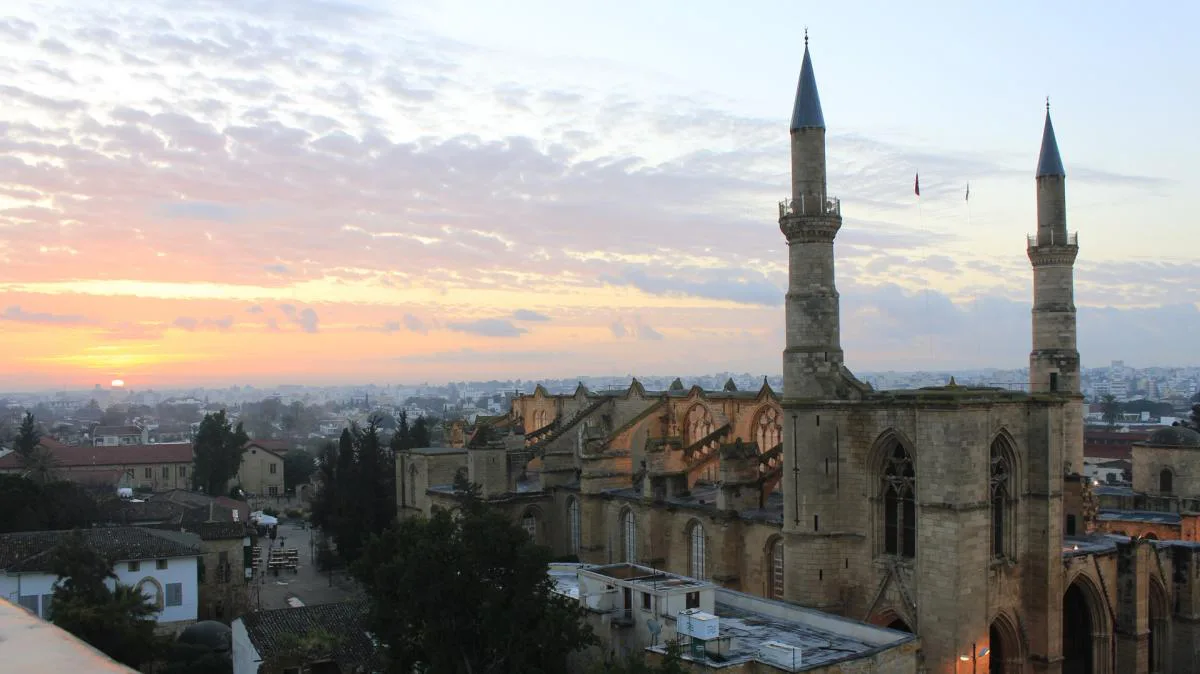
After the Ottoman takeover of Lefkosia in 1570 the cathedral was turned into a mosque and two minarets were added at the west end. In August 1954 it was renamed Selimiye in honour of Sultan Selim II, who reigned during the Ottoman conquest of the island.

Where it is in the walled city
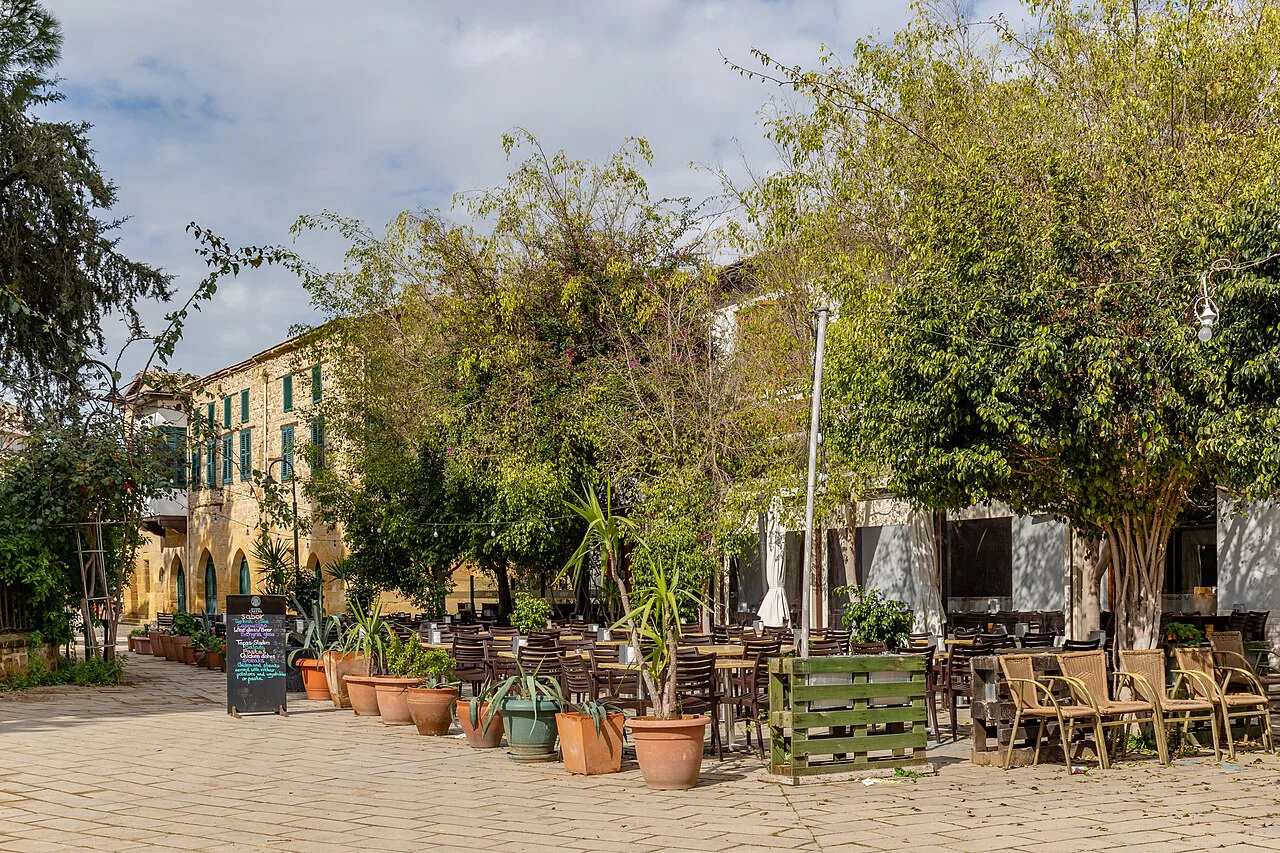
The mosque stands inside the walled city of Lefkosia, in the northern part of Nicosia, and the Department of Antiquities describes its setting as the occupied part of the walled city. Approaching on foot, you will usually come upon it from the south through the busy shopping lanes rather than from a car park. For the wider set of sights around it, see Nicosia Attractions.
The Bedestan, once the church of Panagia Odegetria, sits very close by and just south of the cathedral. Its position makes the mosque easy to fix on the map: find the Bedestan and you have found the Selimiye. The surrounding lanes are narrow and largely pedestrian, so plan to arrive on foot rather than by car.

Getting there across the Green Line
For most visitors the route is to cross the Green Line on foot at a central crossing point and walk north into the walled city. Carry your passport, since the crossing is a border check rather than a formality, and allow extra time for the queue rather than treating it as a two-minute step. Ledra Street is the obvious approach from the south and feeds directly into the pedestrian lanes that lead to the mosque.
If you are driving, leave the car on the southern side and walk over; check that your hire-car insurance covers crossing the line before setting out. The old town is ringed by the Venetian Walls of Nicosia, and the crossings sit inside that circuit, which makes a walking circuit of the centre straightforward once you are through.
What to see outside
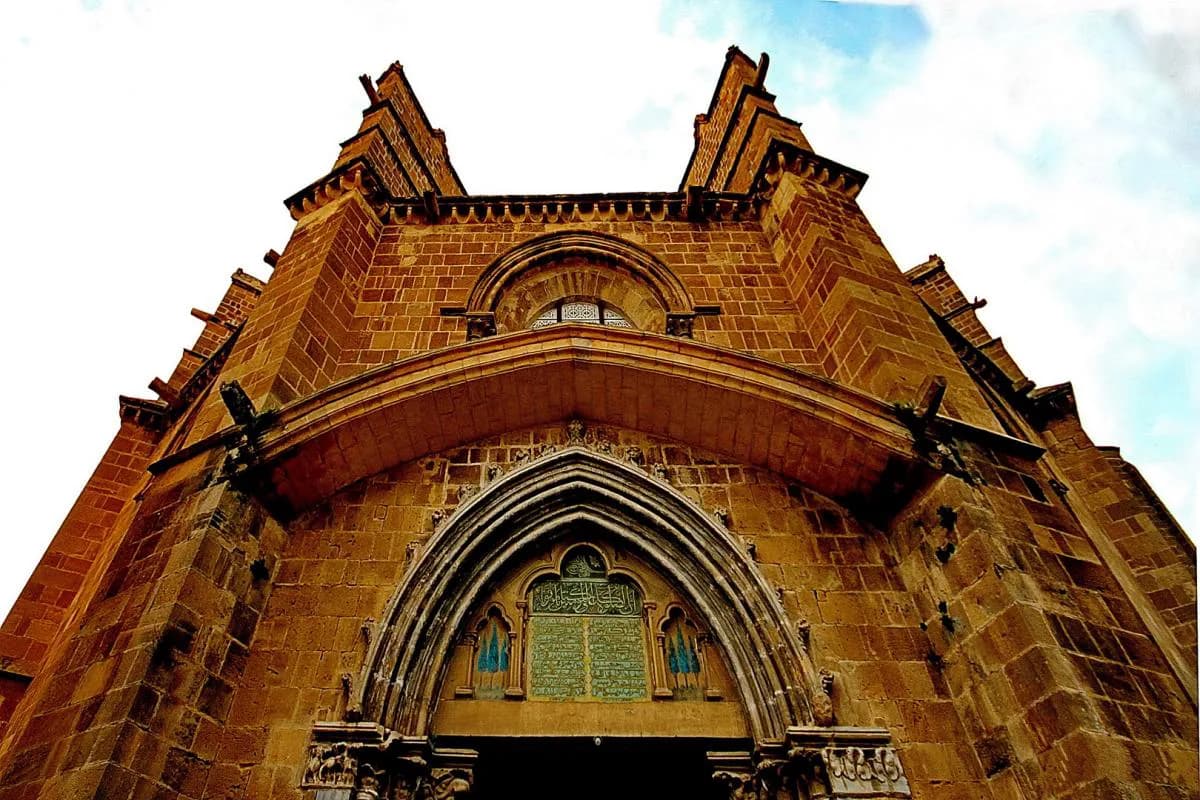
Start with the west front, where three entrances are framed by important architectural sculpture. The main doorway carries an especially rich frame, and three of the four arches are decorated with reliefs of Kings, prophets, apostles and bishops. Look up for the two minarets added to the west part after 1570, which now dominate the skyline above the Gothic portals.
The massing rewards a slow lap: a building begun in the twelfth-century Gothic idiom and never completed reads quite differently from a finished cathedral, and the missing southwest tower is part of that. The façade sculpture is the finest exterior detail to seek out before you go in.
What to see inside
Inside, the scale is the thing: a 66 by 21 metre hall of Gothic arcades, now stripped of almost all surface decoration. The rich sculptural programme, the frescoes and the stained glass showing scenes from the Old and New Testaments were destroyed at the time of the Ottoman conversion, along with the funerary tombstones of Lusignan Kings and princes. That loss explains why the interior reads as plain Gothic rather than the colour-filled church you might expect.
Read the arcades rather than hunting for ornament: the rhythm of the piers and the sheer length of the nave carry the building. The baptistery chapel added in the western part of the southern wall during the 1320s is a detail worth locating as you walk the aisles.
How long to allow and when to go
Give the mosque itself 20 to 30 minutes, enough for the exterior sculpture, the minarets and a full walk of the interior. Pair it with the Bedestan and the Sultan's Library and the whole group works as a 60 to 90 minute walk. The walled city is compact and shaded in parts, so a morning start leaves the afternoon free for the rest of the centre.
This is a working mosque, so dress modestly, keep voices low and avoid walking through during prayer; a scarf and covered shoulders and knees are the safe default. The Department of Antiquities page covers the building's history but does not publish visitor opening hours, prayer times or ticket prices.
Nearby in the walled city
Just south of the cathedral, the Bedestan is a Byzantine and Gothic hybrid that served as a covered market and grain store under Ottoman rule; its decorated Gothic north entrance, added at the end of the fifteenth century, is the detail to find. At the eastern end of the Selimiye stands the Sultan's Library, a small three-domed building of 1829 with walls covered in Arabic calligraphy and a collection of Turkish, Arabic and Persian manuscripts.
To the west of the cathedral, the Buyuk Khan was built soon after 1570, possibly in 1572, as an inn for travelling merchants and pilgrims. Its square courtyard, arcades, marble gate and small nineteenth-century domed mosque make it a natural last stop on the circuit. The guide to Büyük Han, Nicosia has the finer detail if you want to linger there.
Is the Selimiye Mosque worth the crossing?
Yes, if you are already in central Nicosia: the Selimiye is the strongest single piece of Gothic architecture on the island and the crossing on foot is short. Build the visit into a walled-city walk with the Bedestan, the Sultan's Library and the Buyuk Khan, and treat the 60 to 90 minutes as the unit of time.
Explore more Nicosia guides
Frequently Asked Questions
Is Nicosia in the north or south of Cyprus?
Nicosia is inland and divided: the Republic's capital lies south of the Green Line, while the walled city's northern part, where the Selimiye Mosque stands, is reached by crossing on foot at a central crossing point with your passport.
Do I need a ticket for the Selimiye Mosque?
The Department of Antiquities page describes the building and its history but publishes no ticket price or opening hours, so check the current position before you travel rather than assuming either free entry or a charge.
Can non-Muslims go inside?
The building is a working mosque, so visiting is subject to prayer times, which are not published on the heritage page. Dress modestly, keep quiet and time your visit outside prayer if you are unsure.